

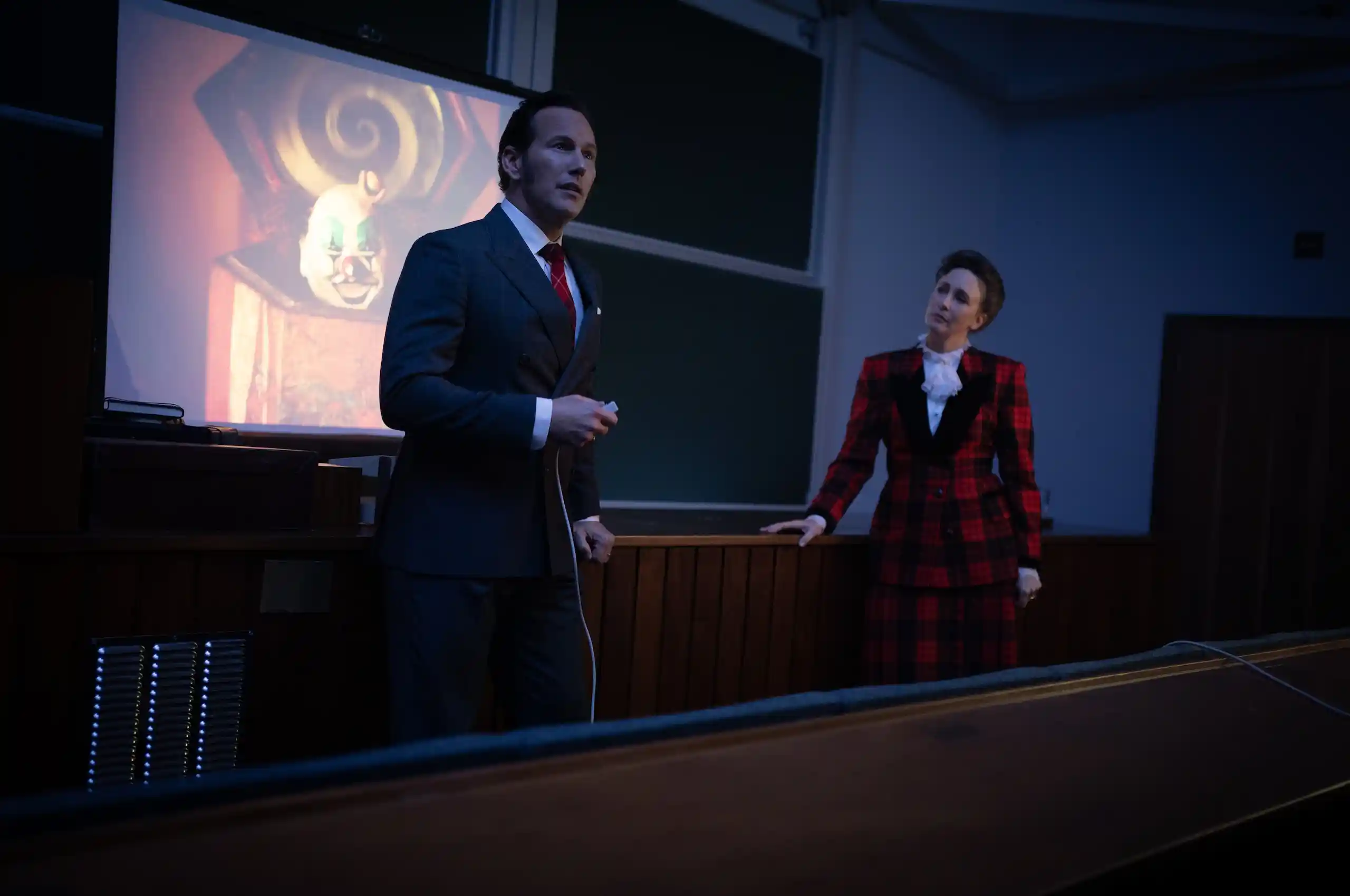
The lore surrounding The Conjuring universe runs deep. Ever since its first horror movie terrified audiences in 2013 with its eerie storyline of hanging trees, demonic witches hiding in basements, and the very real paranormal career of demonologist couple Ed and Lorraine Warren (played throughout the franchise by Patrick Wilson and Vera Farmiga, respectively), The Conjuring franchise has held horror fans and supernaturalists in the palm of its gnarled, ghostly hand.
Now the latest addition to the universe, The Conjuring: Last Rites, is set to reunite the paranormal investigators as they take on the infamous Smurl haunting, in which the case of a demon-haunted house in West Pittston, Pennsylvania baffled the real-life Warrens in the 1980s. This is also reportedly the last film in the franchise to see the Warrens tackle a case side by side.
Serving as the horror featureFeatureA guest appearance by another artist on a song, usually credited as featuring or ft. in the title. Features introduce each performer to the other's fans, and they can sparkGo to Feature Glossary’s producer is Peter Safran, who is currently the acting co-chairperson and co-CEO of DC Studios alongside James Gunn. In this interview exclusive to Rolling Stone Philippines, Safran spoke on collaborating with director Michael Chaves, the preparation process behind researching the Smurl haunting, and how the franchise has turned him from a skeptic to a believer.
This interview has been edited for brevity and clarity.
Can you talk about director Michael Chaves?
I loved Michael Chaves’ short film, which was basically his audition to get The Curse of La Llorona. I thought, “Here’s a guy that really knows how to craft scares.” That really was his forte. And over the years, he’s really grown into this accomplished filmmaker who cannot only handle the scares—that’s a given—he’s going to be great at that.
But he is also able to tap into the emotional content of these screenplays and bring depth and resonance. I think that’s this amazing mix that’s truly special and something that really separates him from the pack. I knew we were in safe hands when Michael agreed to step into the director’s shoes for The Conjuring: Last Rites. I knew that we had something special, and that he—and all of us—were really intent on leaving this franchise on a very, very high note.
You know, it’s not easy to follow James Wan. James is truly the consummate horror filmmaker who blends scares and emotion in a unique and beautiful fashion. But I think that Michael has learned so much from James over the years, and there really could not have been anybody better to handle this entry than Michael.
What made you decide to make “The Conjuring: Last Rites”?
James and I were really adamant that we weren’t going to make a fourth film unless we felt that it could be a truly worthy successor to the universe that we had built. We were not going to make it unless we loved the story and the journey the Warrens were now taking—and all of it was underpinned by a strong emotional framework. Being in a position of not having to make a sequel gives you the opportunity to settle in and ensure that the screenplay is great.
To make sure that you have the filmmaker you want, and the resources to support the film you want to make. Warner Bros. and New Line couldn’t be more supportive of the franchise and of us. They are champions of quality, particularly when it comes to the Conjuring Universe. We had the luxury of not having to make a movie—we could make it when we felt it was right.
What can movie audiences look forward to, apart from the scares?
I think we knew that the Smurl case was going to be the finale of this chapter of the Warrens . We had known that for a little while. David Leslie Johnson-McGoldrick — our writer who also wrote the second and third films — was really emphatic on the idea. He had a great concept that he and James fleshed out, which ultimately became The Conjuring: Last Rites.
One of the ongoing things that Michael Chaves and I talked about was that we needed to make a film that not only scares the shit out of people, but also moves them to tears with true emotion. I believe the bar for theatrical movies has only gotten higher over the last decade. Your film has to be a commentary on the human condition to some degree. And I kept saying, “If we can scare them and make them cry, we’re going to have a winner on our hands.” And Michael took that to heart and delivered a beautiful movie. If you stripped out the scares, it would still play as an incredible family drama.
It was really wonderful to establish Judy early on in The Conjuring as just a little girl. We as an audience have gotten to watch her grow up through subsequent films. Now, she’s fallen in love and is on the verge of starting her own, new life. I love that we’ve been able to take the audience on this journey. As a parent, it’s also very moving to be able to explore the idea of letting your child out into the real world, knowing that you can’t really protect them from everything. You have to trust that you’ve imbued them with the intelligence and the emotional wherewithal to handle whatever comes their way.
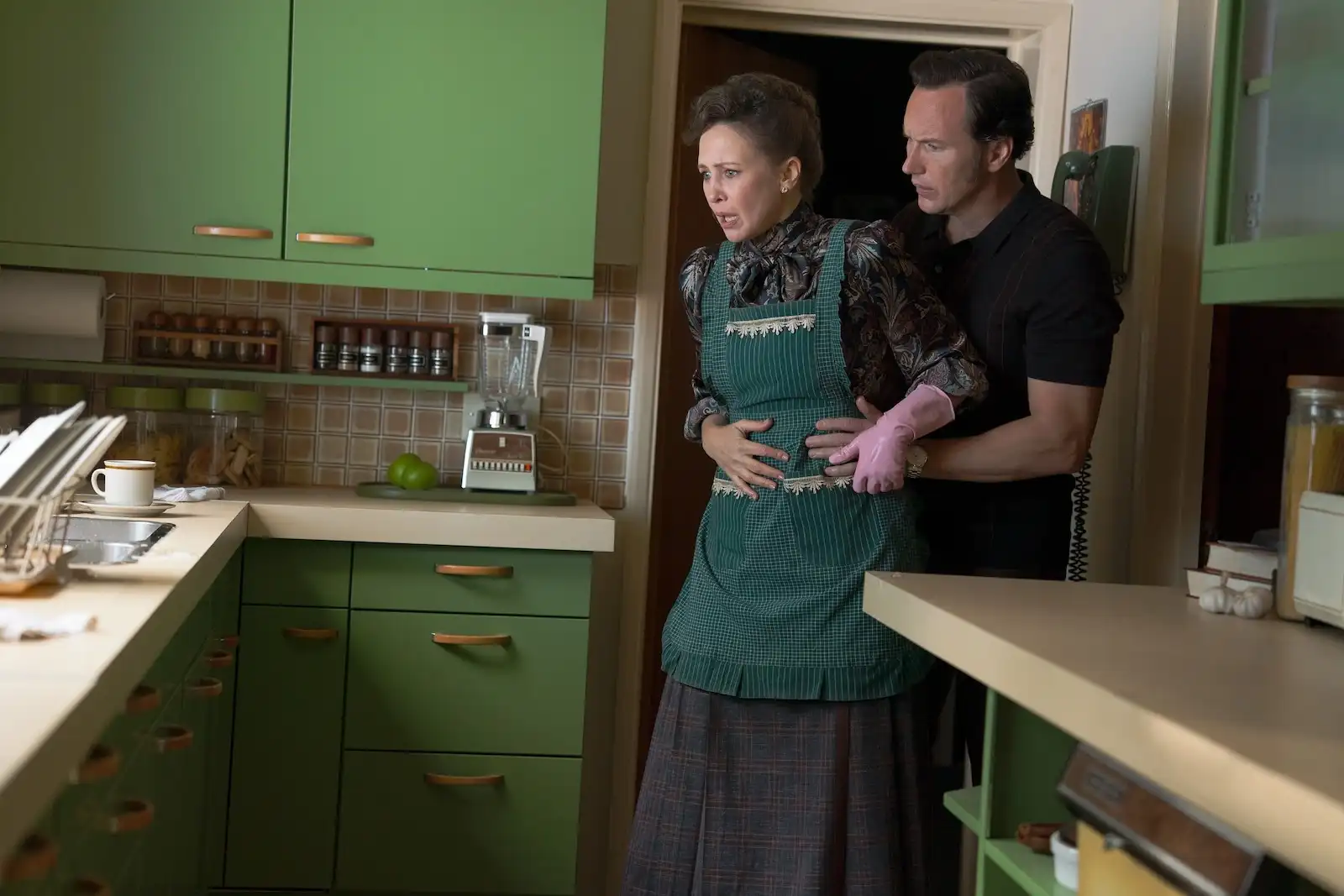
And here, all Lorraine [Vera Farmiga] wants to do is protect Judy [Mia Tomlinson]. She’s at the point of realization that to protect her, she actually has to let her go and experience what her own power is. Judy can no longer hide it nor run from it. Ultimately, Judy recognizes that she needs to fight by Ed [Patrick Wilson] and Lorraine’s side—that’s a huge watershed moment for them as a family and ultimately sets them up for the rest of their lives together.
Where do we find the Warrens in this film?
We always like to place our Conjuring Universe movies within a certain timeframe, but without it feeling like a stereotype of the period. The first movie was in the ‘70s, but it wasn’t “Saturday Night Fever” disco ‘70s. It was still firmly in that era, but also felt universal, like it could have been happening at any point.
We’re doing the same thing with this film. It’s firmly set in the ‘80s, 1986, but doesn’t feel like a parody of the times. It’s just the world in which these characters lived. Ed and Lorraine are in the latter stages of their journey as paranormal investigators. They’re both contemplating hanging it up, because Ed has not been well. And these experiences take a tremendous toll on Lorraine.
As they’re getting older, I think they recognize that they probably need to be looking after themselves, rather than solely focusing on looking after those in need. Unfortunately, for them, because of their innate goodness, they actually can’t walk away from it. If there are people that are in need, they want to be there to help, and so they become involved with the Smurl family.
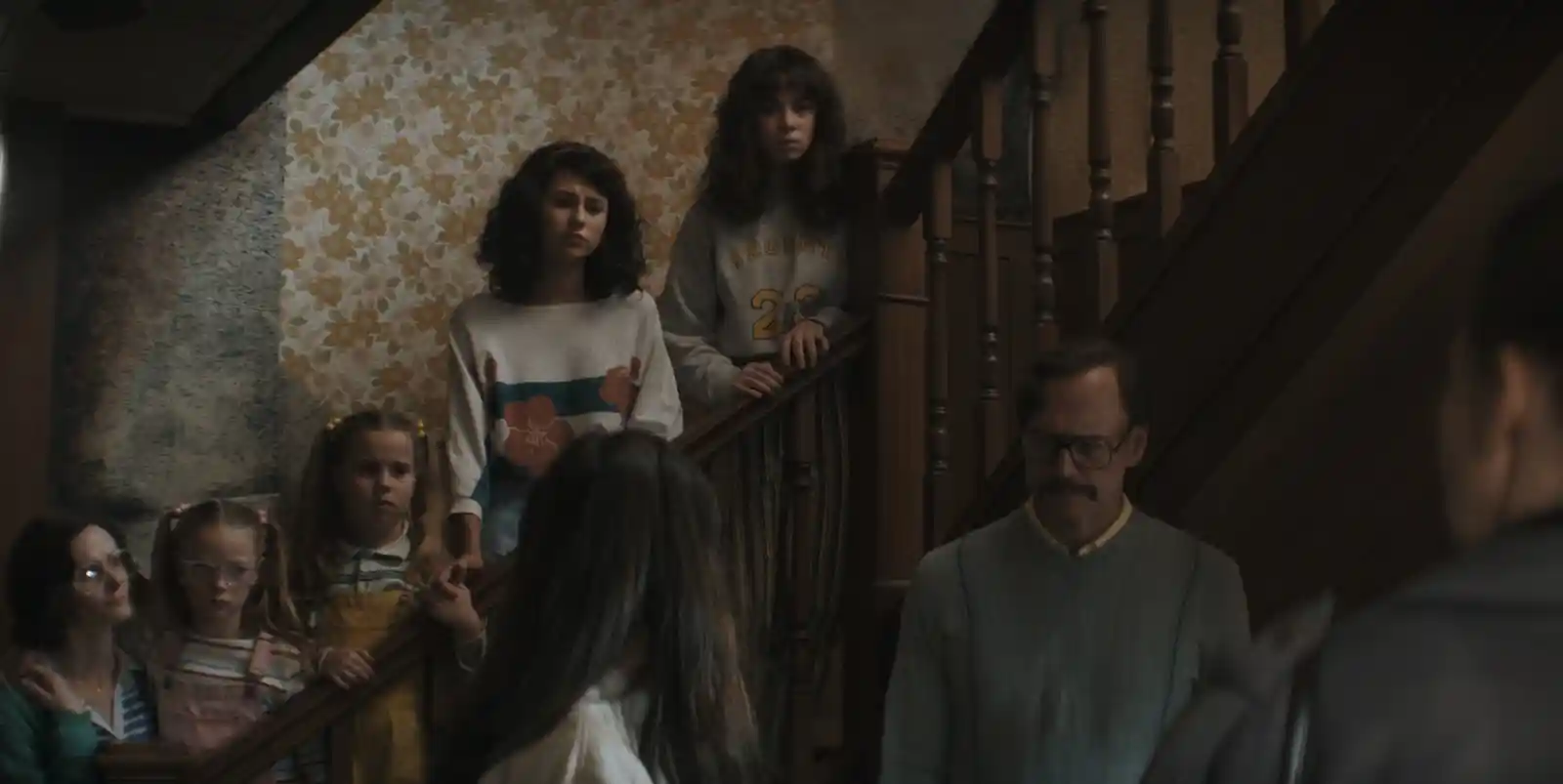
Can you tell us a little bit about newcomers Mia Tomlinson and Ben Hardy?
We’ve been a little bit spoiled by having Patrick and Vera for all these years being front and center. So, the idea of adding two new major characters that are every bit as front and center as Ed and Lorraine was daunting. But finding Mia Tomlinson and Ben Hardy just put us at ease. They were both able to embody the goodness that the Warrens have. And they are tremendous as actors and were able to accomplish everything Michael Chaves asked of them and more. We were able to lean on them very heavily, and they did just an incredible job.
Has the franchise turned you into a believer?
Initially, I was more a skeptic than a believer. But over the course of making these films—and meeting so many involved, from the Perrons, to the Hodgsons, to the Smurls, and especially Lorraine Warren, with her innate sense of goodness, faith and belief—I really feel that these things are real. I feel that these things happen. Spending time with these families, speaking with them… they’re not fabricating it. To them, it is 100% real. I think there are things out there that we’re not aware of, that we’re not necessarily in touch with. It’s been a fascinating learning experience over the course of the last dozen years.
Disclaimer: The article was provided by a third-party content partner, published on Rolling Stone Philippines with permission as an exclusive for the Philippines.
Recommended Video