

The aftermath of the many anti-corruption rallies that swept across the nation on September 21 still has us seething over this never-ending fight against the worst of the worst in the government. The investigation into the ghost flood control projects continues, with more government officials being implicated in the scandal. The 216 protesters arrested at Mendiola — including 91 minors — are still in custody, turning our attention to the reports circulating on the police brutality exhibited by the Manila Police District against civilians and those arrested.
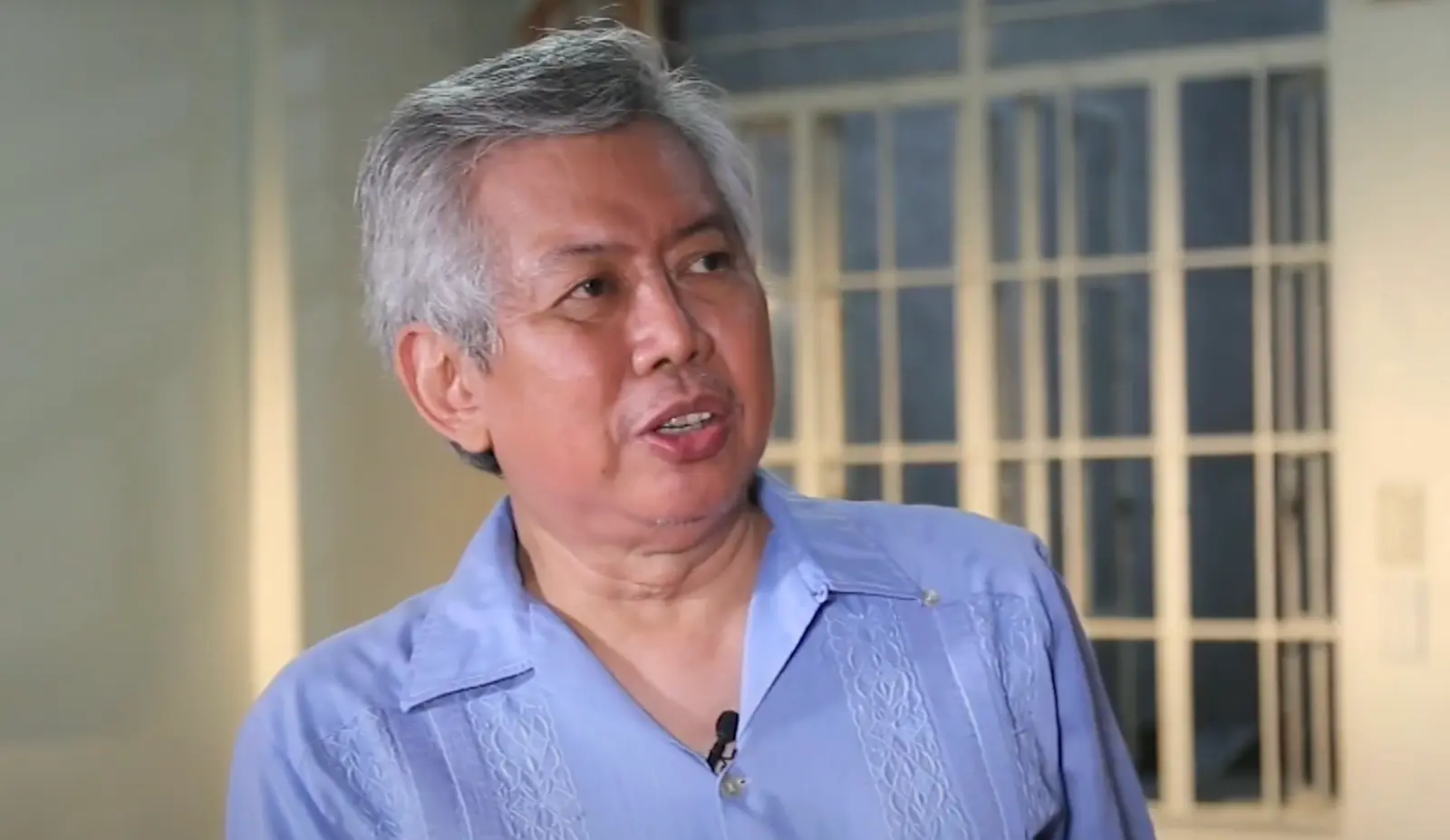
History has a way of repeating itself, especially in the Philippines, and our country’s best writers have always chronicled these historical moments. Award-winning journalist, author, screenwriter, and activist Pete Lacaba is one of those writers whose works remain essential to understand our future and history.
“[Lacaba] puts you right on the scene,” Nick Joaquin once wrote of his protégé. “You feel the weather, you smell the mood, you see the clothes and faces, you hear the talk. And just by reporting all this exactly, he communicates the emotion, even the meaning, of what’s happening without having to spell it all out.”
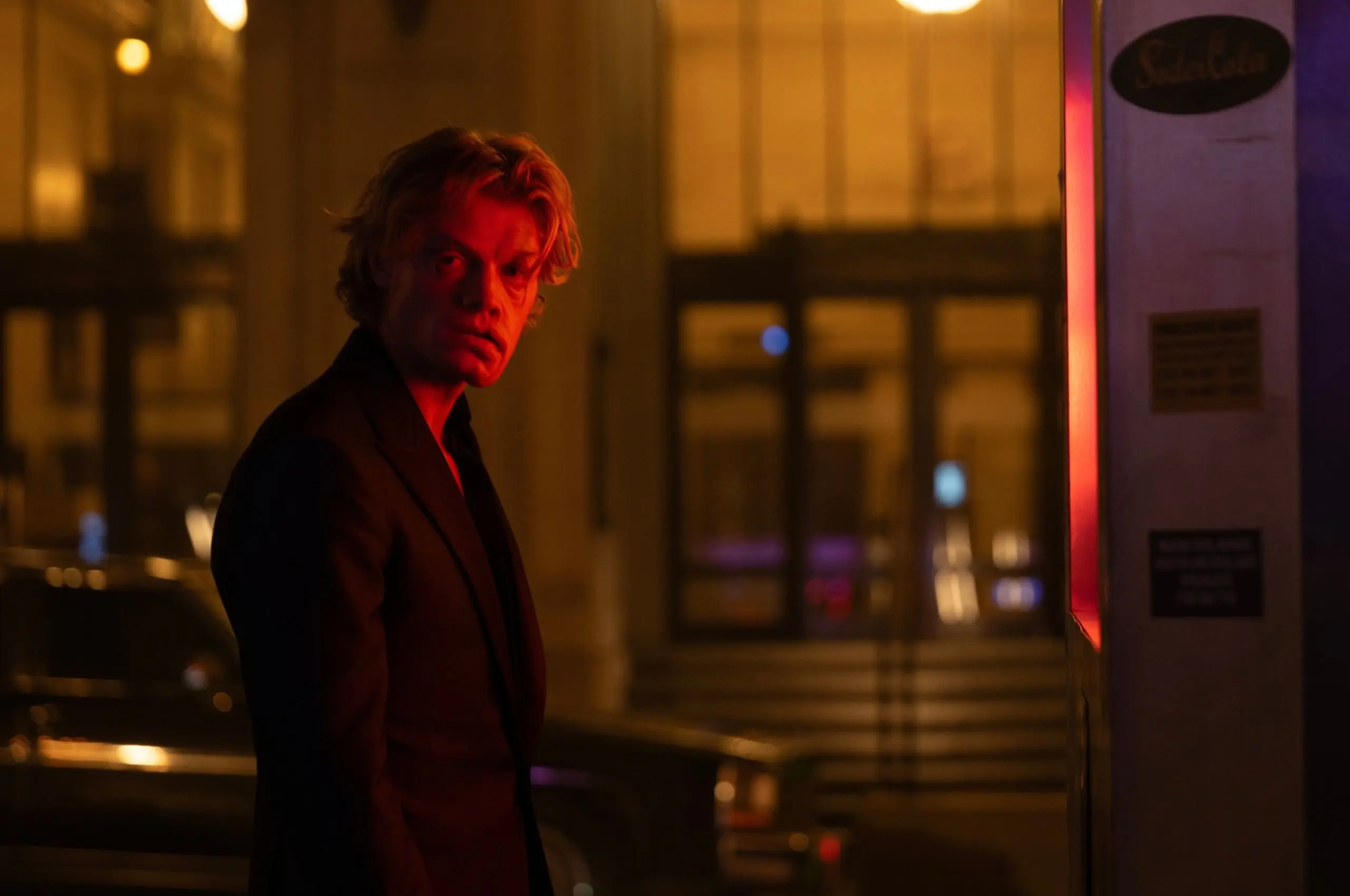
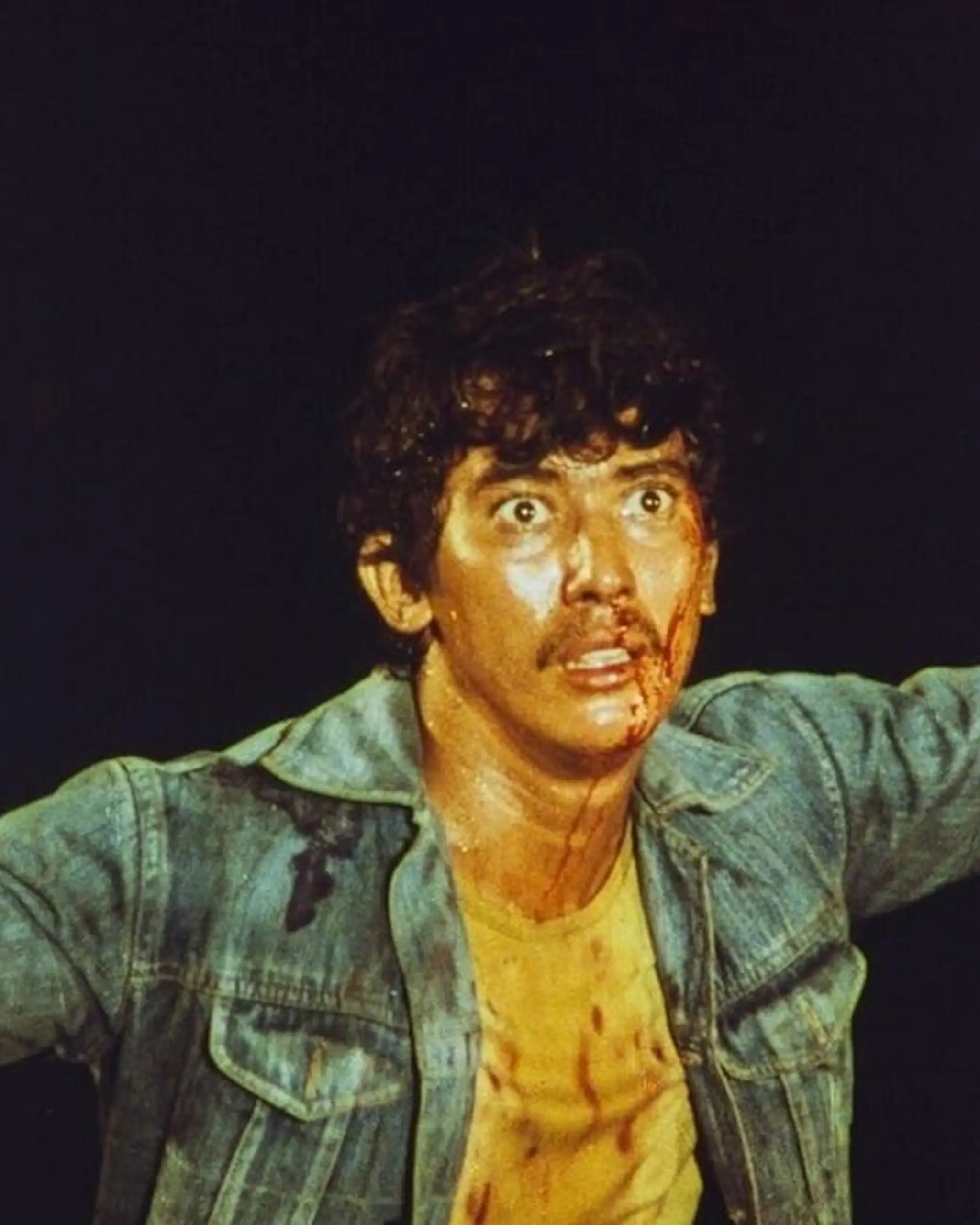
Lacaba’s work, specifically on the silver screen, is currently facing a resurgence. The 1979 crime thriller Jaguar, directed by Lino Brocka and the screenplay of which Lacaba co-wrote with National Artist Ricky Lee, was digitally restored last year through the Film Development Council of the Philippines’ film restoration program, and the 4K version finally premiered in the Philippines as part of the 7th Sinag Maynila Independent Film FestivalFilm FestivalAn organized event that screens a curated selection of films, often with premieres, awards, and talks with filmmakers. Festivals are important launching pads for independent and international cinema, and inGo to Film Festival Glossary this September.
The film centers on the tragic security guard Poldo (Phillip Salvador) as he becomes swept up in the glittering, drug-fueled, and dangerous life of his wealthy employer, Sonny Gaston (Menggie Cobarrubias). Although Poldo sees his newfound friendship with Sonny as his ticket out of the slums of Manila, he is nothing more than an exotic pet that his boss can easily throw away on a whim. Poldo’s nickname “Jaguar,” as one of Sonny’s rivals points out, is merely the word “gwardiya” with the syllables reversed. Based on the 1960 Brown Derby Shooting documented by Joaquin, Jaguar went on to win multiple FAMAS and Gawad Urian awards, and was nominated for the prestigious Palme d’Or at the 1980 Cannes Film FestivalFilm FestivalAn organized event that screens a curated selection of films, often with premieres, awards, and talks with filmmakers. Festivals are important launching pads for independent and international cinema, and inGo to Film Festival Glossary.
“Nung pinapanood ko kanina ‘yong pelikula, hindi ko nakikita as ‘luma,” Lee said during Jaguar’s recent post-screening Q&A session at the Sinag Maynila opening night, with Lacaba next to him. “‘Yong great divide between the rich and poor, nakita ko pa rin ngayon kung paano namamanipula, na-exploit, nagagamitan ng makapangyarihan ‘yong mahihirap.”
“May napakarelevant ng mensahe,” added Lee, “at ‘yong storytelling niya, parang ibang klaseng perspective… gustong makita ng mga tao ‘yong social issues sa mata ni Lino.”
Storm Chasing
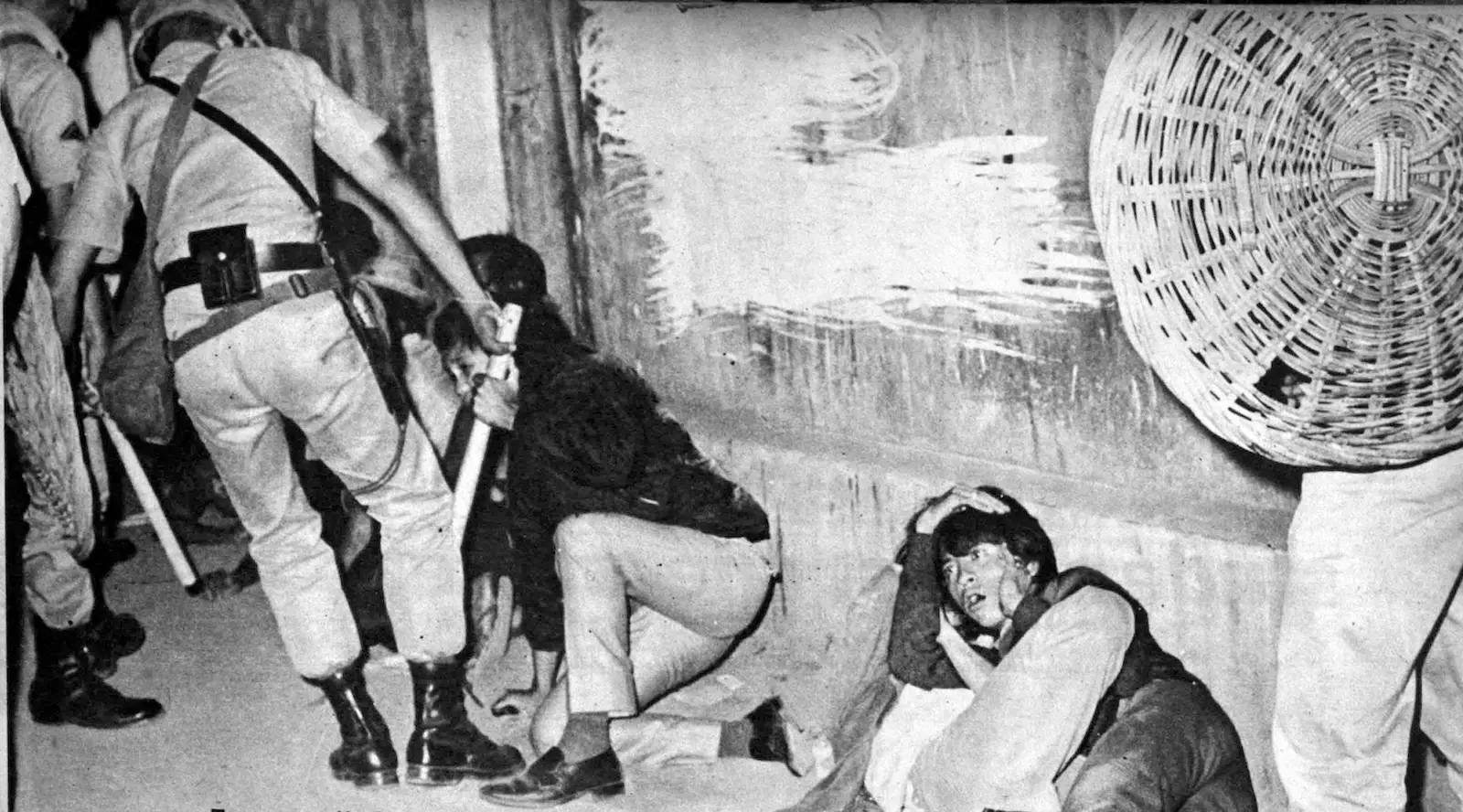
However, Lacaba first stepped into the realm of storytelling as a journalist, having prolifically covered the First Quarter Storm, martial law, and the People Power Revolution. To read Lacaba’s coverage of the ‘70s protest movements is to stand with the reporter in the middle of the storm.
In his reportage, compiled into the National Book Award-winning collection, Days of Disquiet, Nights of Rage, Lacaba’s identities as journalist and as activist become indistinguishable from one another. Lacaba wrote of his first-hand experience on January 26, 1970, at the protest that broke out during former president Ferdinand Marcos Sr.’s State of the Nation address: “No joiner of demonstrations in my antisocial student days, I now wanted to know how it felt like to be in one, not just as journalistic observer but as participant, and I wanted to find out what treatment I could expect from the authority in this disguise. I found out, soon enough, and the knowledge hurt.”
Lacaba wrote of the violence he saw unfold that day, on what is widely considered the turbulent beginning of the First Quarter Storm. “In the parliament of the streets, debate takes the form of confrontation,” wrote Lacaba when describing the altercations between the police and student demonstrators. Finding himself close to three young members from Kabataang Makabayan, a youth organization eventually banned by Marcos, Lacaba watched as 10 police officers cornered one of the protesters for a beating.
“The boy in the center crumpled to the ground and stayed there cringing, bundled up like a fetus, his legs to his chest and his arms over his head,” he wrote. “The cops made a small tight circle around him, and then all that could be seen were the rattan sticks moving up and down and from side to side in seeming rhythm.”
Cries in the Night
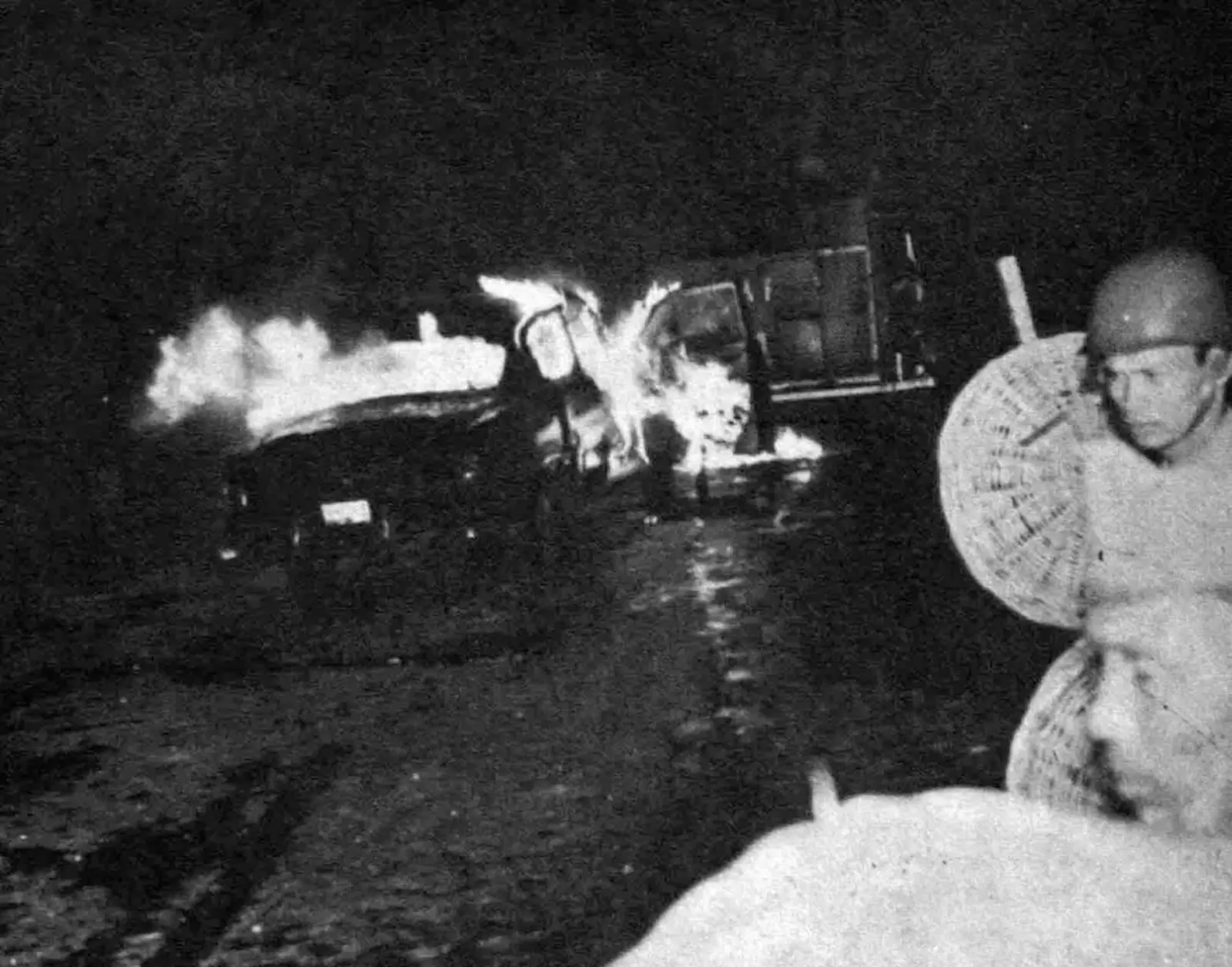
Lacaba himself had been vocally critical about the Marcos regime. His most scathing work against Marcos came in the form of Prometheus Unbound, an anti-dictatorship poem that he’d managed to get published by Focus Magazine, a publication supportive of the Marcoses. While the poem itself seems politically neutral (unless you pay attention to Lacaba’s mention of fetters and a god who dares to resist), reading the first letter of each line reveals Lacaba’s real message: “Marcos Hitler Diktador Tuta.”
In 1974, Lacaba was taken from his home and thrown into Camp Crame. He was detained without charges for nearly two years. While his written account of the time is laced with his classic sense of wit, it does little to mask the bloodiness of his imprisonment. “The lieutenant was an Arnold Schwarzenegger pumping-iron type, and at that time I was a 111-pound weakling,” wrote Lacaba. “That single punch sent me reeling against the bathroom’s tiled wall.”
In a report published in 1976 by Amnesty International, Lacaba detailed the many torture methods used against him, including one called the “San Juanico Bridge,” named after the same bridge built during martial law and dedicated by Marcos to his wife Imelda. Forced to lay his head on one steel cot and his feet on the edge of another cot, Lacaba’s torso hung in mid-air. “But even before gravity could take its toll, somebody close by would give me a kick in the stomach and bring my body down to the floor,” he wrote. “The steel cot scraped skin off my nape as I slid down.”
“The torture of my father is just one story among many, and I believe these stories need to be heard,” wrote his son Kris Lanot Lacaba in the afterword of Days of Disquiet, Nights of Rage. “Nowhere but in these stories are the cries in the night more piercing.”
Pete Lacaba Continues to Resist
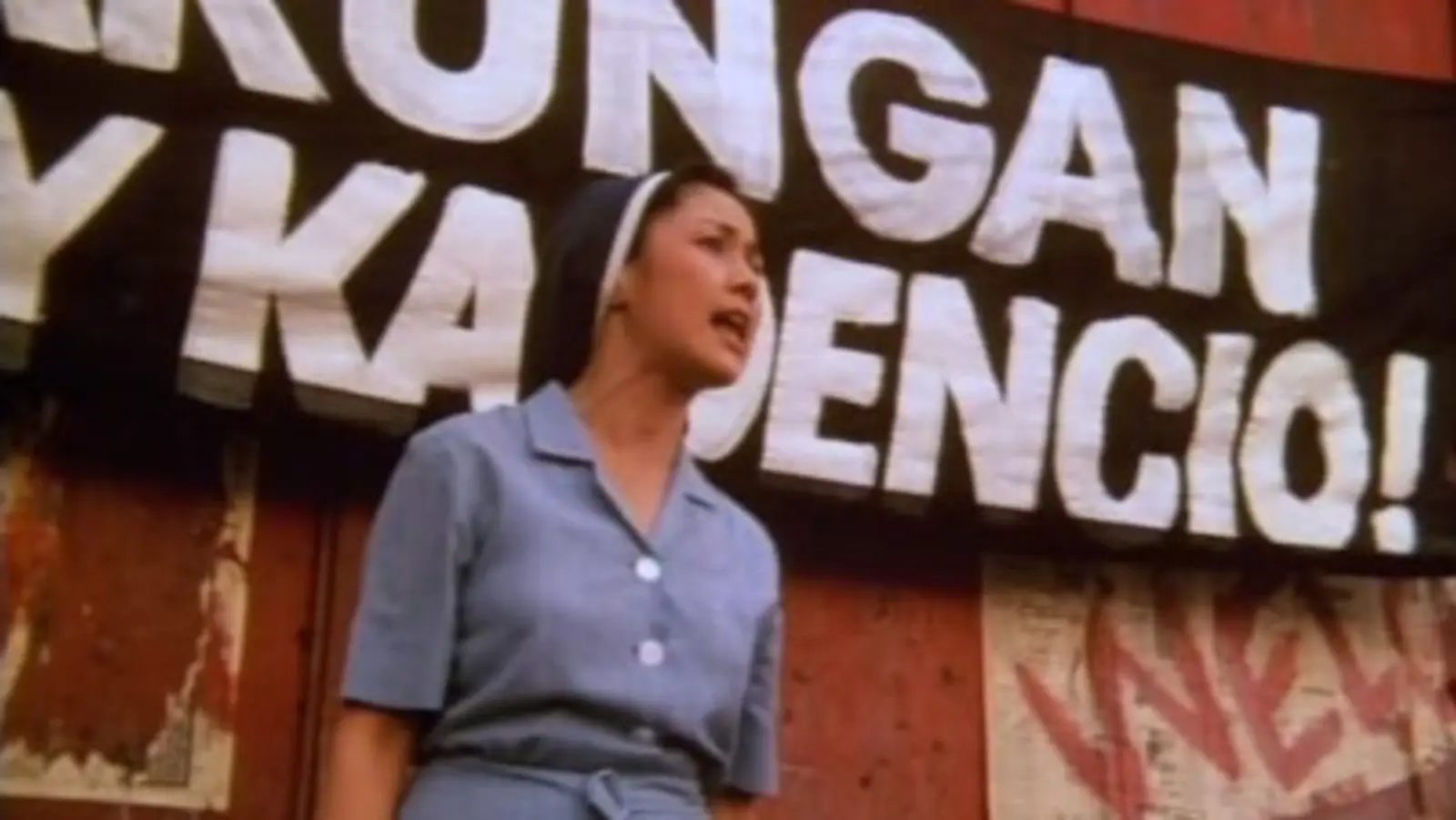
Despite the violence, Lacaba did not waver. Besides going on to write Jaguar, his other major works on the silver screen include co-writing the screenplay for Sister Stella L., a 1984 martial law drama directed by Mike de Leon that follows its titular nun (played by Vilma Santos) as she slowly begins to realize that she must take a stand against the Marcos regime. “Kung hindi tayo kikilos,” she says, “sino ang kikilos? Kung hindi ngayon, kailan pa?” Film critic Noel Vera even notes how Sister Stella L. is more a Lacaba film than De Leon’s. “So distinctive is his authorial voice,” Vera wrote.
Although Sister Stella L. was a commercial failure upon its release, it has since grown to become one of Philippine cinema’s most critical and unflinching looks at the martial law era. “Just as the film is about Stella L.’s political awakening,” wrote Slate Magazine, “De Leon and Lacaba clearly aimed for the narrative to be a wake-up call for their audiences.”
In 2024, it was announced that Sister Stella L. was undergoing digital restoration at the L’Immagine Ritrovata in Bologna, Italy.
But Lacaba was not critical of Marcos’ regime alone. The 1989 Brocka-directed thriller Orapronobis, which screened at the 1989 Cannes’ Out of Competition section, pointed a subtle finger towards those using former president Corazon Aquino’s rise to power for their own, bloody gains. Set in the optimistic days after the People Power Revolution, Orapronobis follows ex-revolutionary Jimmy Cordero (Salvador), who, after investigating the acts of terror committed by the movie’s titular terrorist cult, learns that the only path towards social justice is far from a peaceful one.
“The message… is intended to alert the rest of the world to what has happened to the dream of democracy promised by Mrs. Aquino,” wrote The New York Times. “Following the lead of Amnesty, [the film] does not directly blame the President, but those of her supporters who are using her revolution for their own ends.”
Lacaba’s life and work remind us that activism, in its many forms, has become embedded in our country’s historical struggle towards social justice. “To deny these stories is to attach the truth,” wrote his son. “To deny these stories is to repeat the violence dealt to the victims, and to insult ourselves as a people.” In the face of another wave of government scandals and increasingly frustrating examples of corruption, revisiting Lacaba’s oeuvre serves as a reminder that the country has navigated these storms before and can do so once again.
As Lacaba once wrote, “The First Quarter Storm was over. But the cultural revolution is still going strong.”
Recommended Video

Rolling Stone Philippines Voices Issue, Now Available at SariSari Shopping