

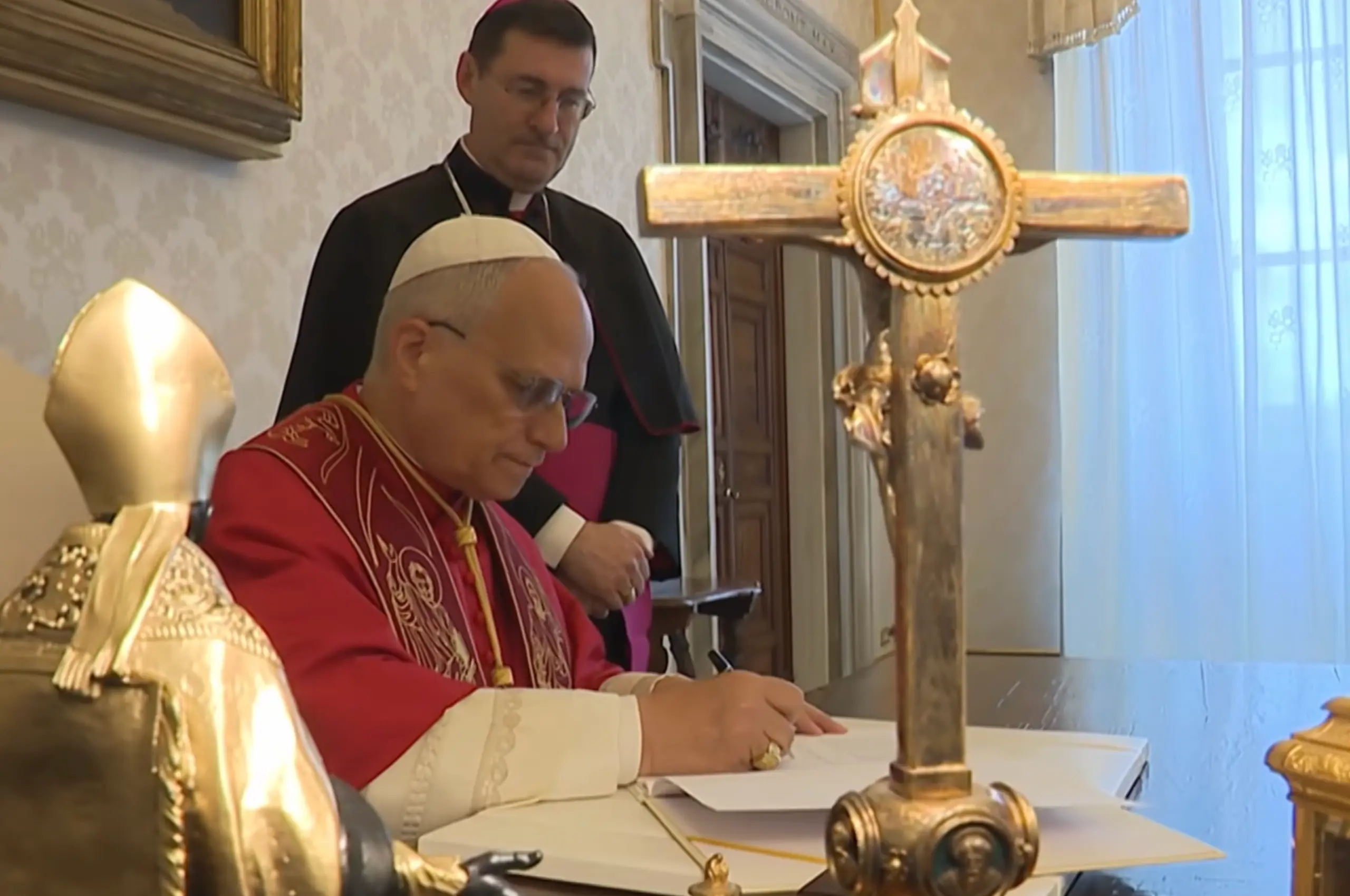
Pope Leo XIV’s very first encyclical, “Magnifica Humanitas,” is finally here, and it contains strong warnings about artificial intelligence (AI).
In the encyclical, published on May 25, the Pope wrote about the “grandeur of humanity” in the face of advancements in AI in the encyclical’s third chapter. “As technological development rapidly transforms languages, relationships, institutions, and forms of power, we believers must and can choose which projects to work on and in what manner, so as to safeguard and value the grandeur of humanity that has been given to us as a gift,” he said.
He also cited the encyclical “Laudato Si,” writing that Pope Francis “denounced the growing dominance of a technocratic paradigm in our globalized world: the tendency to let the logic of efficiency, control, and profit alone shape personal, social, and economic decisions.”
Pope Leo XIV said that AI models “do not undergo experiences, do not possess a body, do not feel joy or pain, do not mature through relationships, and do not know from within what love, work, friendship, or responsibility mean.” He also warned that AI lacks a moral conscience, cannot judge good and evil, and cannot be held responsible for its consequences.
What ‘Disarming’ AI Means
The Pope also acknowledged that AI chatbots can be “at times genuinely helpful” when it comes to imitating “positive human connection,” such as when it offers users words of advice or empathy. But he said that for less discerning users, it can be “misleading, creating the illusion of a relationship with a real personal subject.”
Furthermore, he touched on the harm that AI data centers create on the environment. “Current AI systems require enormous amounts of energy and water, significantly influencing carbon dioxide emissions, and place heavy demands on natural resources,” he said. “For this reason, it is essential to develop more sustainable technological solutions that reduce environmental impact and help protect our common home.”
Pope Leo XIV also put an emphasis on “disarming” AI, or resisting its power over humanity in politics and the economy. “To disarm [AI] means discrediting the assumption that technical power automatically confers the right to govern. To disarm does not mean rejecting technology, but preventing it from dominating humanity.”
Frequently Asked Questions
In Magnifica Humanitas, Pope Leo XIV warned that AI lacks moral conscience, cannot feel or experience life, and must not be allowed to dominate human society or governance.
Published May 25, Magnifica Humanitas is Pope Leo XIV’s first encyclical. It addresses AI’s threat to human dignity, its environmental costs, and the need to “disarm” its power.
“Disarming” AI means rejecting the assumption that technical power grants the right to govern. It does not mean abandoning technology, but preventing it from dominating humanity.
No. While the Pope acknowledges AI can sometimes be helpful, he warns it creates the illusion of real relationships, which can mislead less discerning users into false emotional bonds.
The Pope said AI data centers consume enormous energy and water, contribute significantly to carbon emissions, and must be made more sustainable to protect the environment.
Recommended Video