

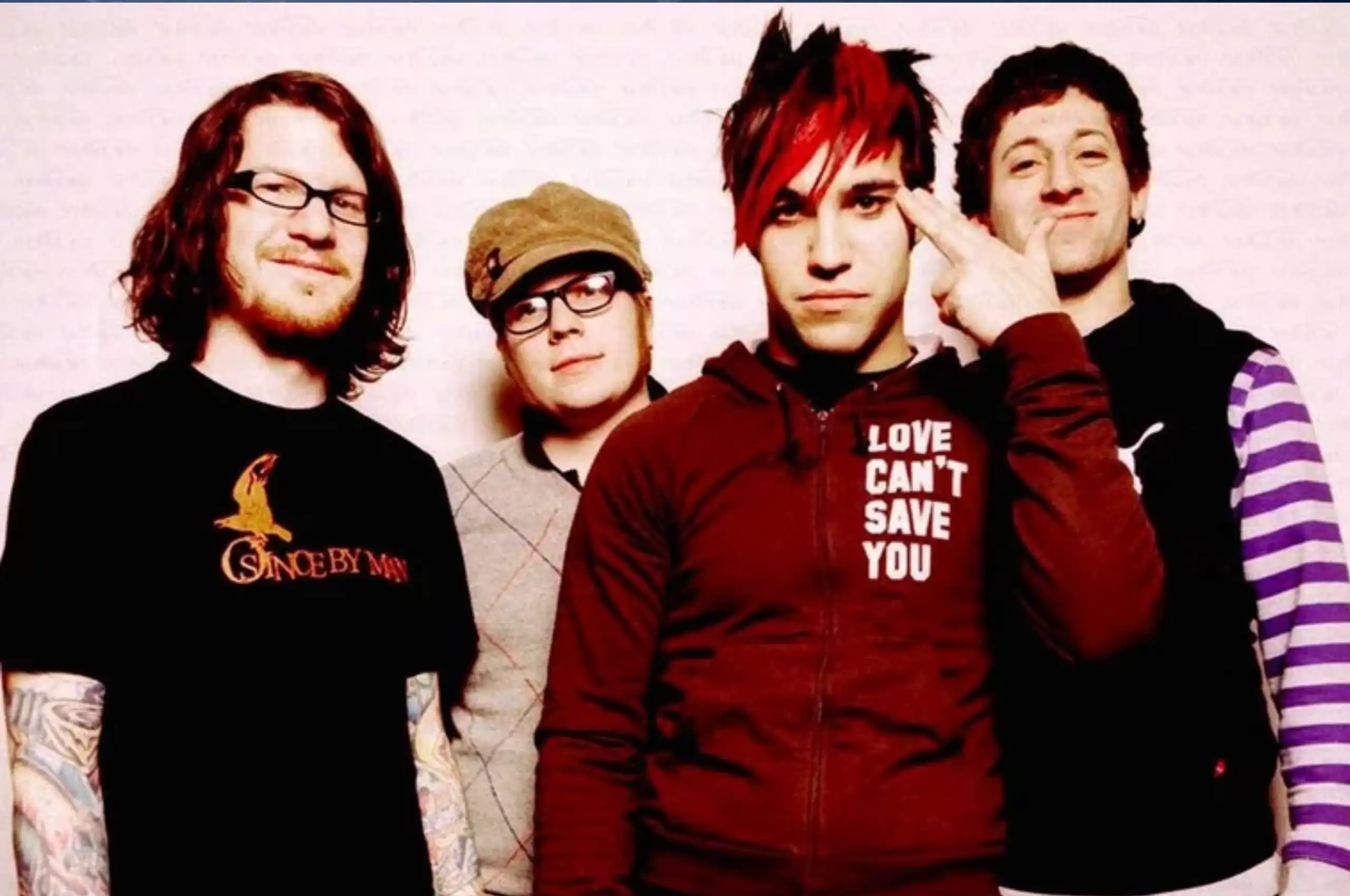
Fall Out Boy’s From Under the Cork Tree remains one of the most influential albums in pop-punk history 20 years after its release. What began as a Chicago basement project between high school friends turned into a global phenomenon, pushing a once-undergroundUndergroundArtists, venues, and scenes that operate outside mainstream attention and commercial systems, often driven by passion rather than profit. The underground is where many new sounds begin, and its word-of-mouthGo to Underground Glossary sound into the center of mainstream culture.
Released in May 2005, the album cemented the band’s identity, transforming vocalist Patrick Stump, bassist Pete Wentz, lead guitarist Joe Trohman, and drummer Andy Hurley from small-venue regulars into arena headliners.
From Under the Cork Tree was both messy and magnetic — a record that carried the emotional weight of adolescence while sneaking into the Top 10 of the Billboard 200 chart upon its release. Its breakout singles, “Sugar, We’re Goin Down” and “Dance, Dance,” became instant anthems that blurred the lines between emo, punk, and popPopShort for popular music, a broad genre built on catchy melodies, clear hooks, and polished production that aims to reach a wide audience. Pop constantly borrows from other styles, andGo to Pop Glossary, ushering in a new era for the genre. Earlier this year, Rolling Stone listed the album among the 250 Greatest Albums of the 21st Century, while “Sugar, We’re Goin Down” landed on its list of 250 Greatest Songs of the Century.
The band’s sudden leap from undergroundUndergroundArtists, venues, and scenes that operate outside mainstream attention and commercial systems, often driven by passion rather than profit. The underground is where many new sounds begin, and its word-of-mouthGo to Underground Glossary heroes to MTV regulars wasn’t easy. Wentz and Stump spoke to Rolling Stone about celebrating the 20th anniversary of From Under the Cork Tree.
“You can be slugging it along one show at a time,” Stump told Rolling Stone. “And there’s this really gradual slow burn, but then the jump can be overnight.”
That leap also drew backlash from fans who accused the band of selling out — a criticism that didn’t faze them.
“On that tour, we ended up playing one arena and I remember thinking people would start with the idea of ‘“selling out’” or something,” Wentz says. “It was like, ‘“Why not?’” Listen, we grew up in hardcore bands and with the idea of leaning into and creating satire and provoking conversations about it.”
We’re Goin’ Down Swingin’
From Under the Cork Tree did exactly that. The record helped define the mid-2000s emo explosion, creating a template that artists like Panic! at the Disco, Paramore, and My Chemical Romance would build upon. The album’s emotional directness and sharp wordplay. Heard in tracks like “A Little Less Sixteen Candles, A Little More ‘Touch Me’” and “Sophomore Slump or Comeback of the Year” still resonate with fans who grew up shouting every lyric in their bedrooms.
For the band, the album’s success was proof that deeply personal songwriting and vulnerability could exist within the popPopShort for popular music, a broad genre built on catchy melodies, clear hooks, and polished production that aims to reach a wide audience. Pop constantly borrows from other styles, andGo to Pop Glossary mainstream. The record was raw, melodramatic, and sincere, all the things that made it timeless. As Fall Out Boy reflects on the record’s two-decade legacy, fans continue to speculate whether they’ll tour the album in full.
“I can’t wrap my head around how to do it in an earnest way,” Stump said in the Rolling Stone interview. “People believe the only reason you’d make popPopShort for popular music, a broad genre built on catchy melodies, clear hooks, and polished production that aims to reach a wide audience. Pop constantly borrows from other styles, andGo to Pop Glossary music is for money, but I swear I’m not motivated by that. If people want to see us perform Cork Tree, they should come see us now.”
Whether or not that full-album tour happens, From Under the Cork Tree endures as a cultural artifact — a bridge between DIY roots and mass-market success, between eyeliner-streaked angst and mainstreamMainstreamThe ideas, styles, and works that reach the widest audience and dominate popular attention, such as radio hits and blockbuster films. The word is often set against indie or underground,Go to Mainstream Glossary appeal. Two decades later, the record still defines what it meant to grow up pop punk and watch your scene take over the world.
Recommended Video