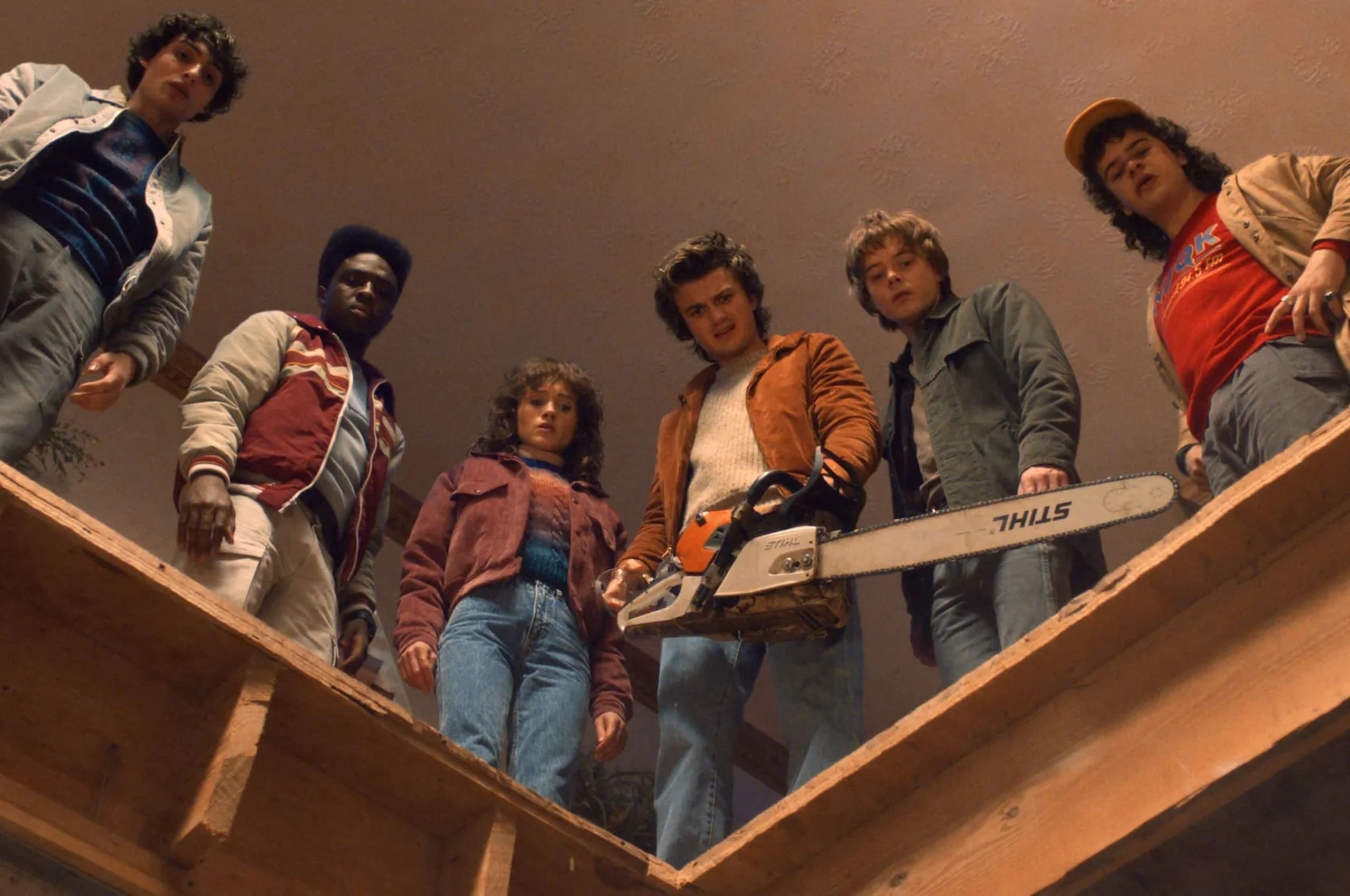
The world didn’t exactly ask for another apocalypse, yet Stranger Things Season 5 has arrived. Volume One introduces viewers to a Hawkins scarred by the opening of the Rifts, under military quarantine, and a vanished Vecna whose plans remain unknown. Every news cycle delivers another calamity, each disaster blurring into the last, leaving audiences bracing for what comes next. The show’s escalating stakes feel less like escapism and more like an uncanny reflection of living in a world that’s constantly on fire.
Hawkins has survived government cover-ups, interdimensional predators, and mind-controlling psychopaths for five seasons. Its horrors feel tangible and, in some ways, familiar. The series frames survival not only as a confrontation with the Upside Down but as endurance in the face of fear itself.
Rolling Stone Philippines spoke with the cast about growing up on the show and how both their characters and the crises they face continue to resonate with viewers navigating a world without stability.
In a culture obsessed with closure, the final season asks a quieter, more unsettling question: what do people become while waiting for the end to arrive?
Coming of Age in Turbulent Times
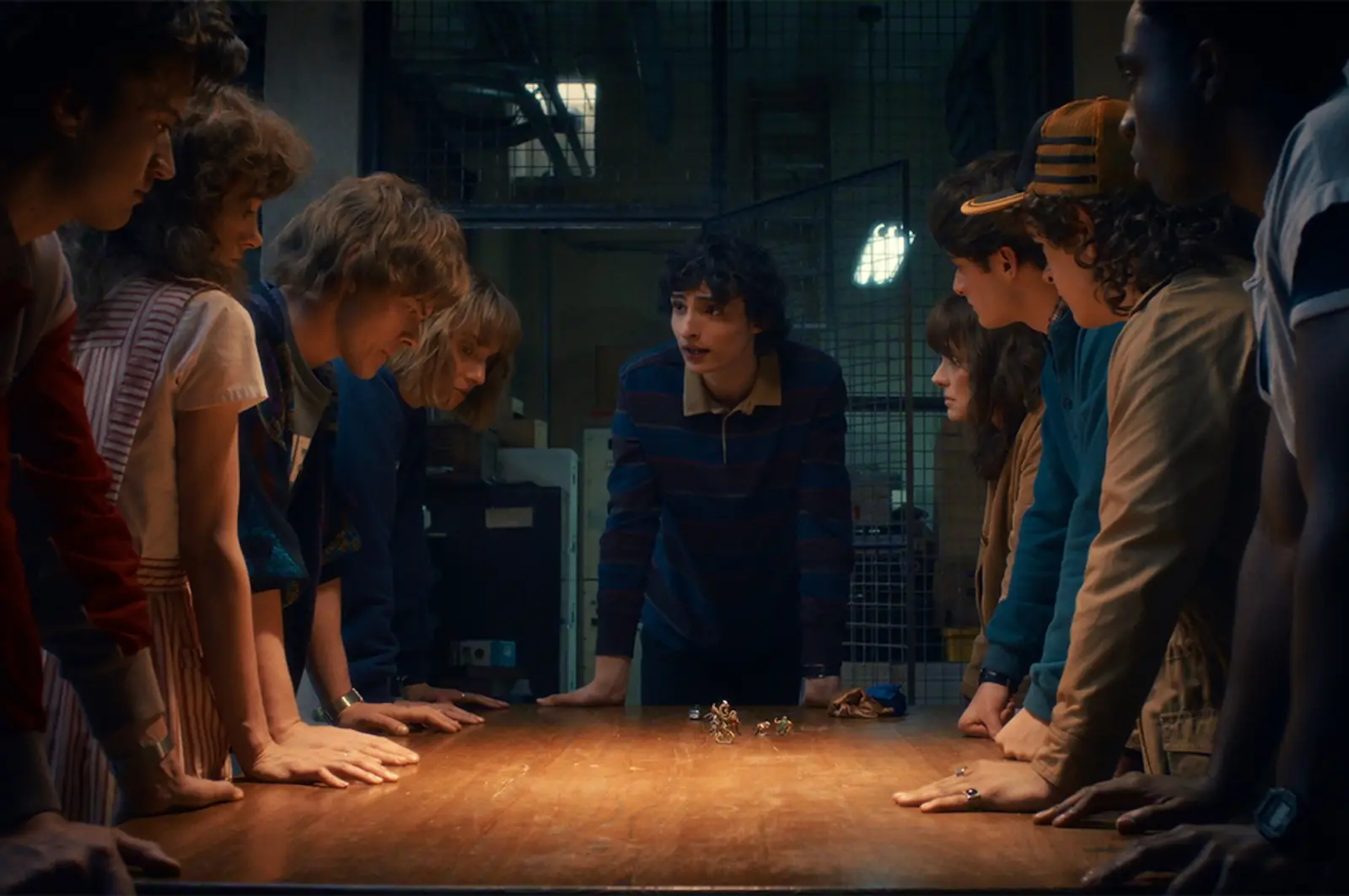
Since 2016, Stranger Things has tracked the development of both its characters and its audience. Viewers first met Eleven, Mike, and the rest of The Party amid the awkward, hypercharged anxiety of adolescence, then followed them through early adulthood, pandemic malaise, and the slow creep of economic precarity.
Season after season, the series shows that its coming of age story works through the pressure its characters face. The shifts in love, loss, and self-discovery build on each other until moving through a single day feels like an achievement shaped by everything they carry. Finn Wolfhard points to that universality. “I think because each character sort of has something that the audiences can connect to and relate to,” he tells Rolling Stone Philippines. “It goes beyond time. It goes beyond time periods. It just is something that is universal that people can relate to on every level.”
Resilience in the Face of Fear
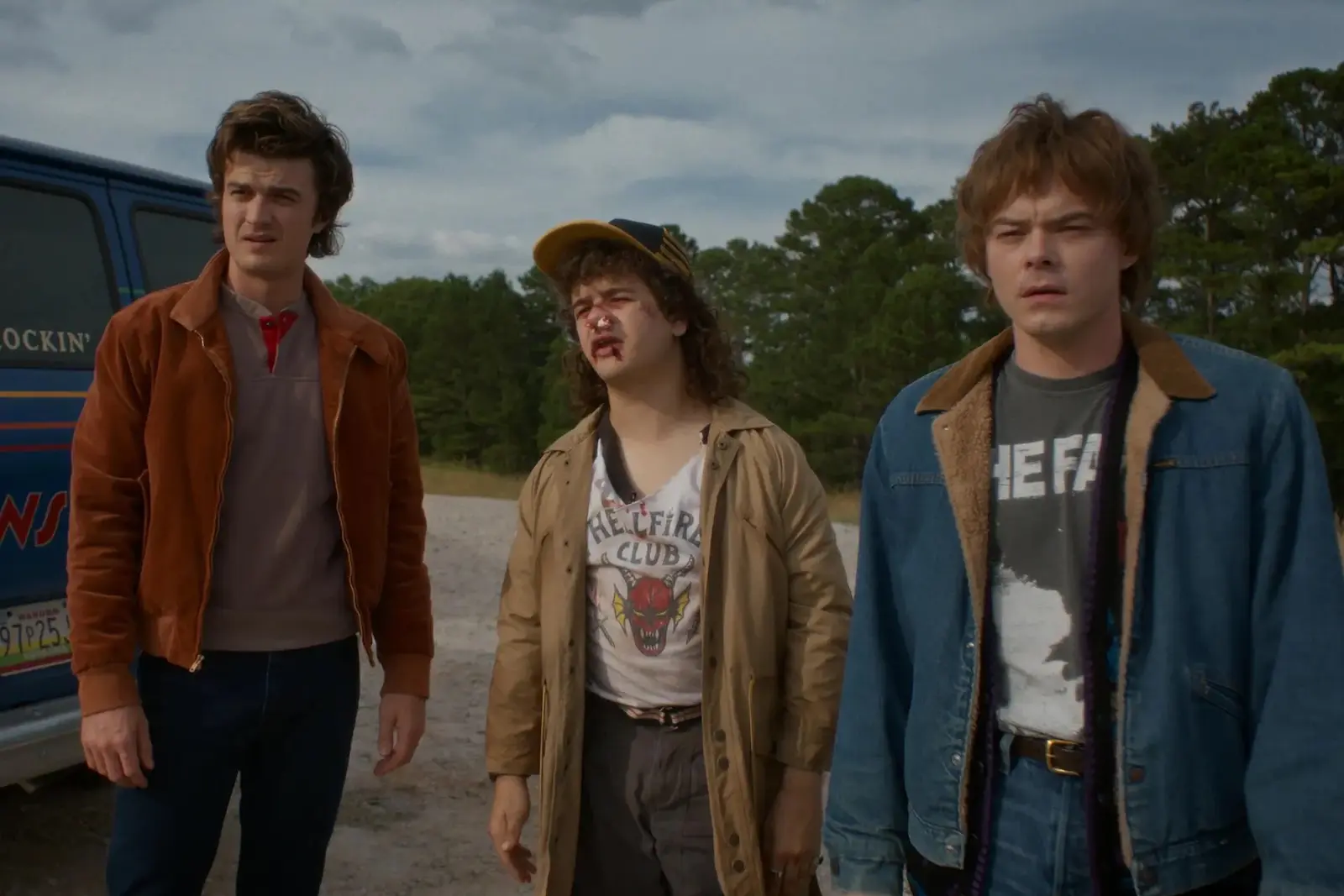
That universality bleeds into mental health. Caleb McLaughlin frames the Upside Down as a reflection of the mind, saying, “It represents our inner thoughts, the unseen battles we face.” The town itself is no safer. Children carry responsibilities that exceed their years while the world around them fractures. A few adults manage to hold pieces of the town together, but there are no reliable institutions and no steady systems to fall back on. Yes, these young people are expected to hold the future together.
Identity itself becomes a moving target, a balancing act between who they are and who they must appear to be to survive. It is a daily grind that would wear out anyone older, let alone teenagers and twenty-somethings trying to endure extraordinary circumstances. As in real life, survival feels like an achievement in itself, and the slightest win comes tinged with exhaustion, unease, and the faint recognition that the next challenge is already waiting around the corner.
Survival is Social
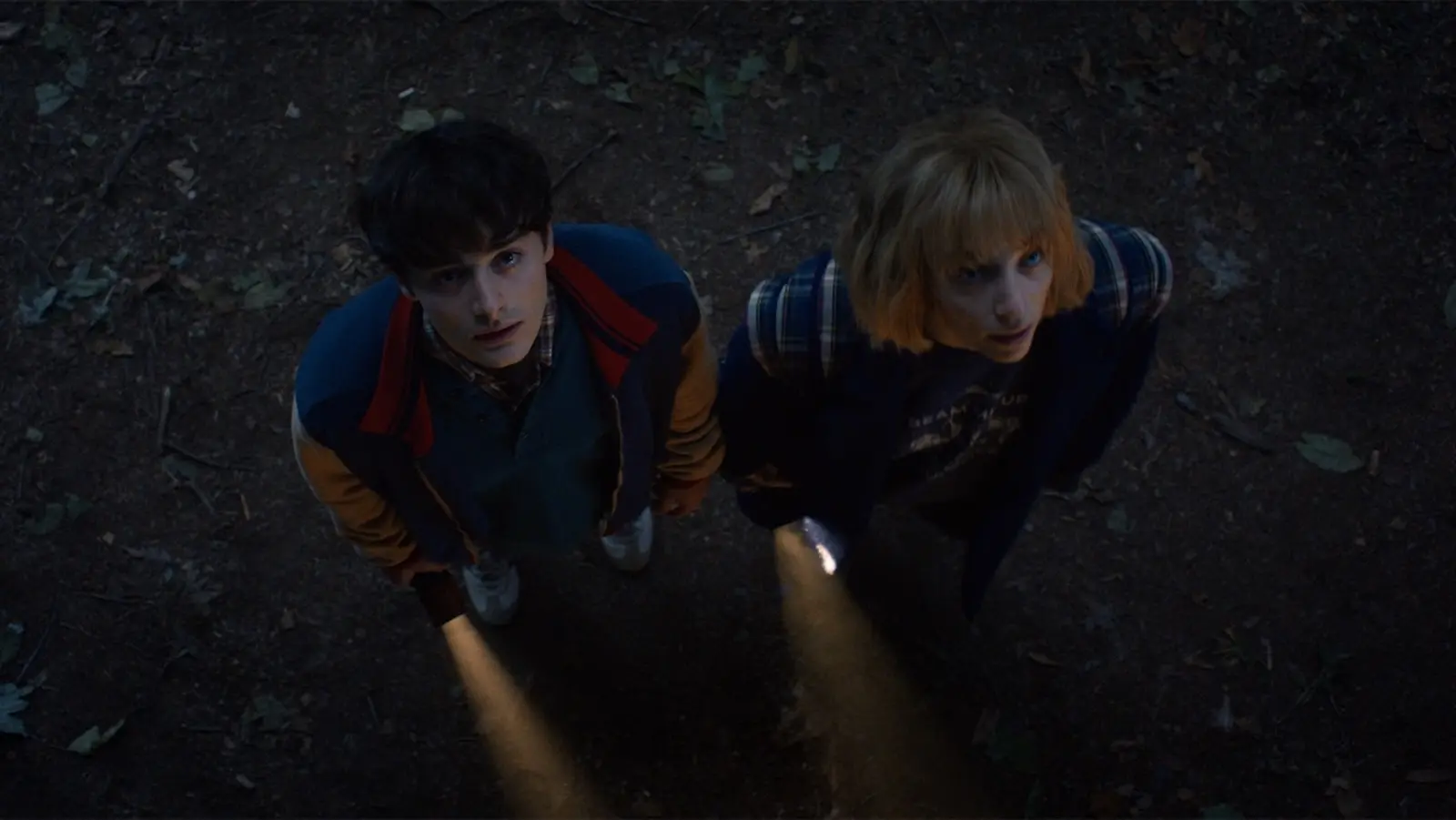
“Friends don’t lie. Friends stick together,” McLaughlin says, recalling lines that have become part of the cultural vocabulary not because they emerge from trial and not merely because of sentimentality. Lucas and Mike now face adulthood as partners whose strengths complement one another. “When they work together, things happen,” he adds. “We know how one another works. We come together, and we make it happen.”
Friendship has always been the heartbeat of Stranger Things, and in Season 5, that heartbeat is louder than ever. Natalia Dyer frames the season as an exploration of what it means to “show up for the people you love.” At the same time, Maya Hawke adds that the relationships in Hawkins — whether rooted in family, romance, or work — all grow from a shared trust. “As the stakes get higher,” she says, “the bonds of friendship have to get even stronger. And you really, really feel them this season, while also seeing everyone allow each other to be their fullest selves.”
For the cast, growing up on set mirrored the lessons Hawkins’ teens learn on screen. McLaughlin reflects, “I was still learning myself, learning friends, building friendships, and the show really taught me what friendship was. I built that with these guys. It’s basically the foundation of my life.”
When the systems around you fail, having a team that knows your strengths, covers your weaknesses, and shows up when it matters becomes the difference between chaos and endurance. Stranger Things makes that explicit: the monsters, the crises, even the Upside Down itself are survivable only because someone has your back. In a world that often feels like the end of the world, real resilience is built together.
Monsters and Humans
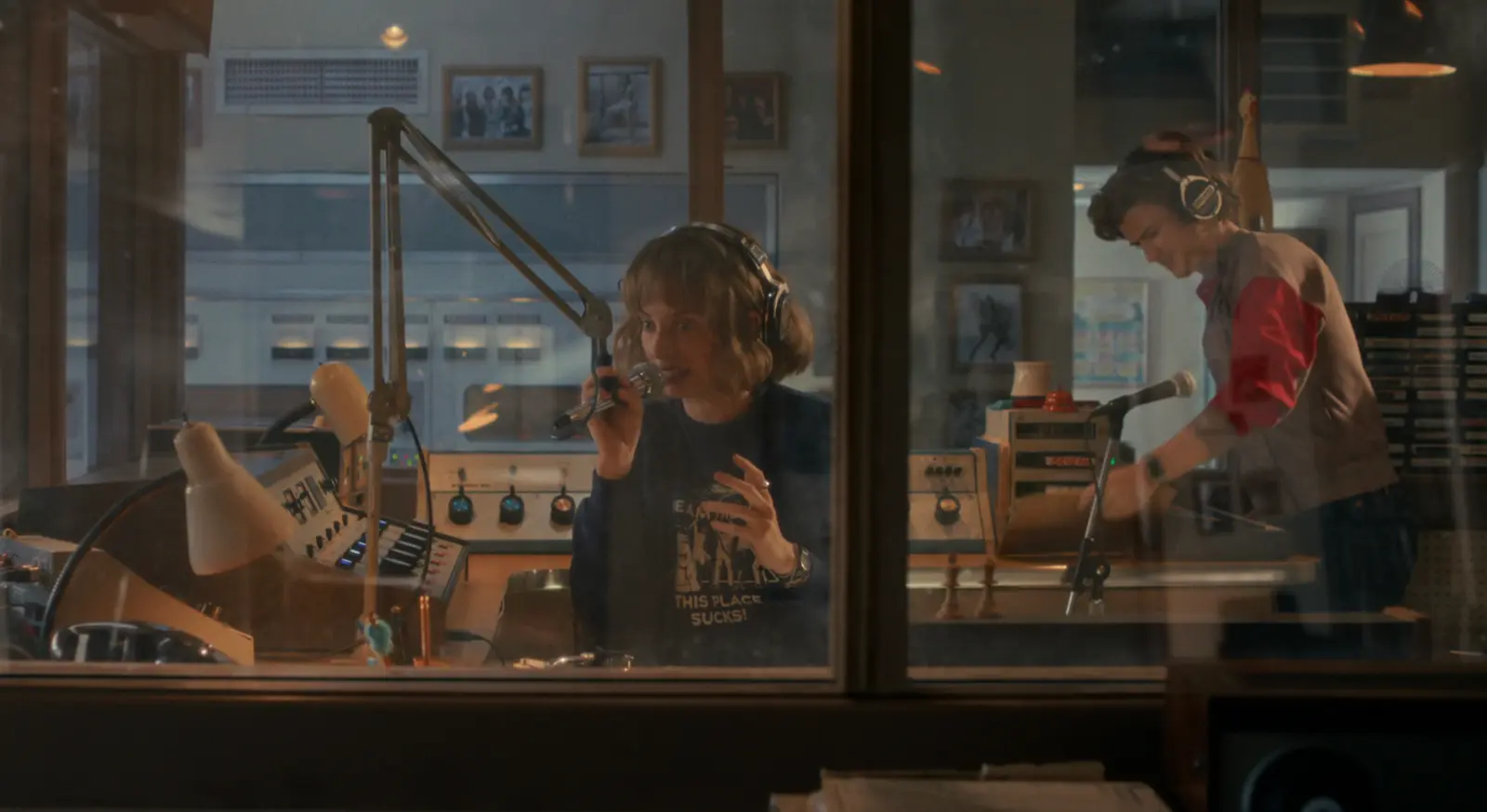
People often talk about Stranger Things as if it can be summed up by a few recognizable traits: the ‘80s references, the Spielbergian sense of wonder, the analog textures of a world that feels safer in retrospect. While there is comfort in familiarity and nostalgia, the cast points out that the show’s resonance comes from something more intimate, shaped by the inner lives of its characters rather than the stylistic choices around them.
“There’s a subtextual, allegorical layer that resonates with a lot of people,” McLaughlin says. “What’s very interesting about the show is that it’s a real portrait of how humans are. There’s a lot of insecurity, a lot of fear, a lot of excitement, a lot of love. And it is expressed in a fun way in this world that the Duffers built with the Upside Down. The supernatural world offers an escape where it’s like, oh, it’s not real, but we’re still able to connect with people on a human level.”
Noah Schnapp, “We all want to feel a part of something and included. You really feel like you belong when you watch this show and feel like you’re OK for who you are, and that’s what makes it so great.”
For a show about creeping vines, flickering lights, and a town that can’t seem to keep some of its residents alive for more than a week, Stranger Things has always been more interested in the monsters inside than the monsters outside. The Upside Down terrifies, sure, but it also reflects all the awkward, anxious, heartbreakingly human stuff we live with anyway. That’s why people have stuck with it for nearly a decade: the supernatural is wild and flashy, but the story underneath is about being human.
Ending, Again
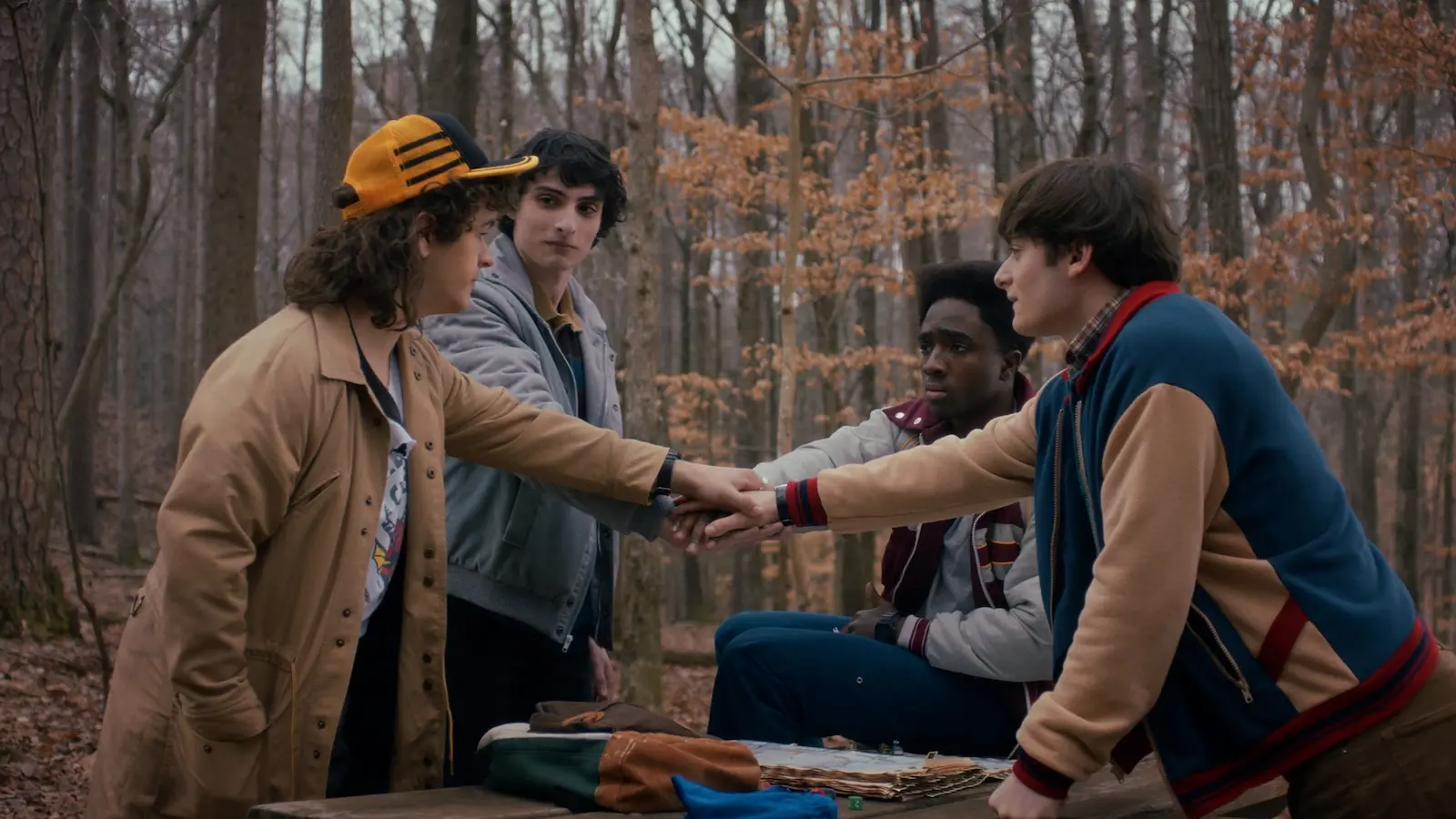
The latest season isn’t about the Upside Down or impossible monsters alone. The Duffers’ decision to film the actors’ final scenes on their actual last days adds an extra layer of weight. Millie Bobby Brown reflects on the intertwined fates of Eleven and Will, while Schnapp emphasizes that growth is messy and cumulative. “You don’t have to know it all,” he says. “You have to keep showing up every day.” Dyer adds, “It’s about what it means to be a friend, to love, and to protect and care for someone on a bigger scale.”
Even as Hawkins crumbles under pressure, the series makes clear that survival is relational, not heroic. The monsters, the crises, the chaos are only insurmountable if faced alone. Stranger Things has always thrived on friendship, loyalty, and the human moments between supernatural shocks, and Season 5 places those connections at the forefront. For nearly a decade, viewers have grown alongside the cast, finding resonance in all the moments mirrored in Hawkins.