

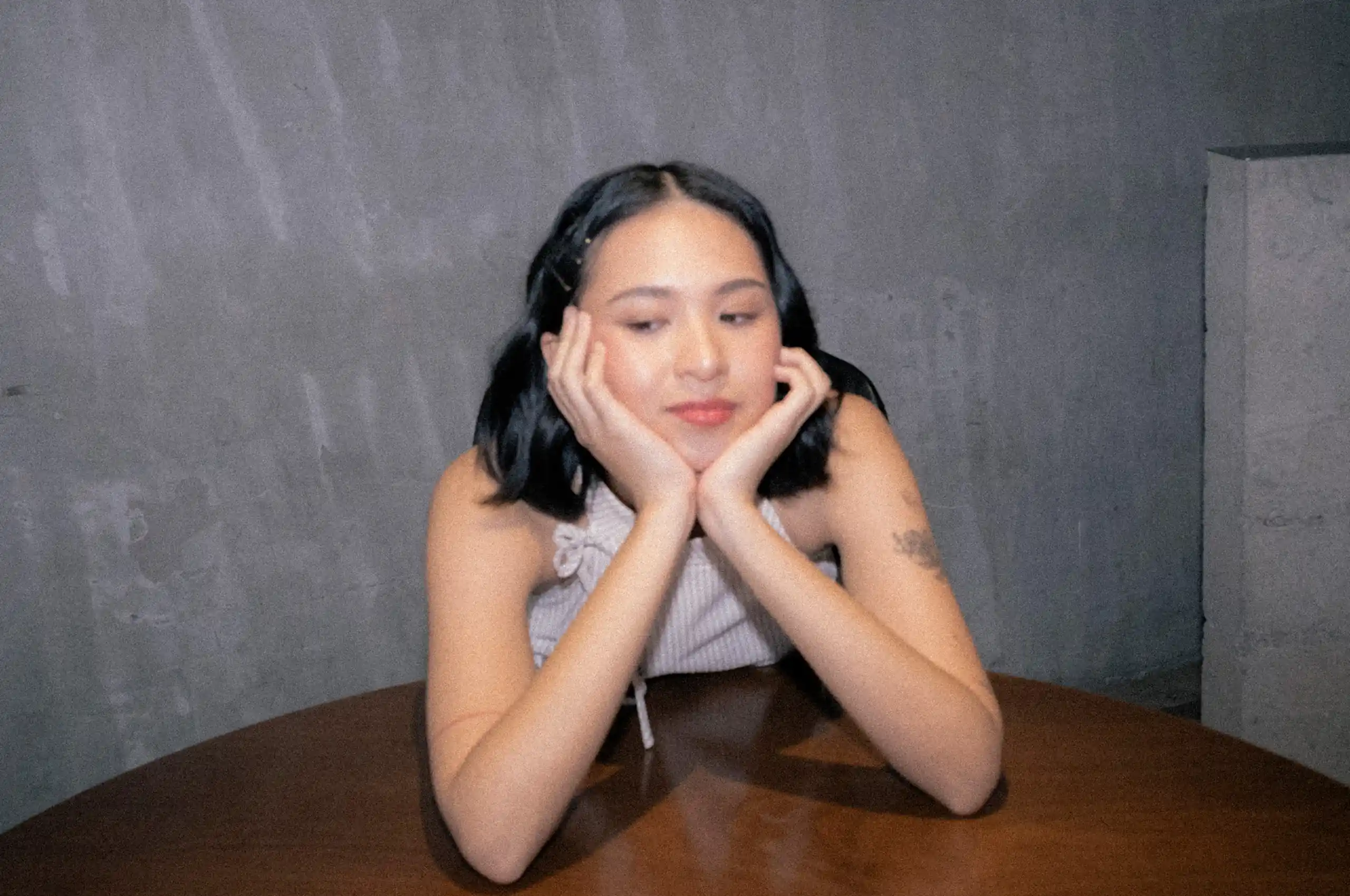
Over a decade into her career, indie-folk singer-songwriter Clara Benin is still finding ways to return to herself artistically. At her 10th anniversary show at the Metropolitan Theater in October 2025, she revisited her earliest songs while celebrating both her debut album Human Eyes and EP Riverchild. The milestone reset her relationship with her craft, but that doesn’t mean she’s leaving behind what she’s learned along the way.
Working with other artists such as Lola Amour, One Click Straight, and Dane Hipolito on countless love songs and collaborations, there remains an unmistakable quality to her music that feels inward and personal. “I’m not much of a performer,” she tells Rolling Stone Philippines. “I’m not much of a singer even. I really think I’m a songwriter first before all of those things.”
This self-awareness speaks to Benin’s longevity. Looking back on her material forced her to confront the version of herself that first picked up a guitar, and in doing so arrived at the kind of artist she wants to be now. She describes the songwriting process as grounding, something that made her more intentional in being vulnerable.
Trying Something New
Her latest singles, “muscle memory” and “the one to blame,” show how her sonic palette has expanded as she has grown more mature. It took reaching that milestone for her to realize it was possible to push the envelope. That revelation led her toward a more atmospheric and organic sound, one stripped of excess and centered on texture, space, and presence. While working on her upcoming EP, Benin tells Rolling Stone Philippines that she deliberately avoided synths and electric guitars, choosing instead to build songs around acoustic guitar and voice.
“I explored a different tuning for this EP. It’s an open tuning, not the standard, and it kind of broke the mental pattern in my head of how to write a song. It opened up something new for me and made me fall in love with my guitar again.”
“Celebrating the 10th year of my career and revisiting those songs really did something to me,” she says. “It made me go back to my roots and reminded me why I started music in the first place, and that experience pushed me to create new songs again.”
Even the percussion came from field recordings — leaves, trees, and ambient noise — making the natural world part of the arrangement, with the help of her frequent producer Francis “The Ringmaster” Lorenzo, who had been a fixture in the shoegaze and electronic music scene in the early 2010s. It allowed her voice to move beyond its traditional role and function as an instrument itself; layered, looped, and embedded into the sonic environment rather than simply sitting on top of it.
Opening New Paths

Her guitar, however, remains the emotional anchor. When she began changing the tunings of her guitar, the unfamiliar shapes and resonances forced her to listen differently, and in turn, write songs differently. Benin was able to reopen a sense of discovery that can be difficult to access after years of working within the same patterns.
“I explored a different tuning for this EP. It’s an open tuning, not the standard, and it kind of broke the mental pattern in my head of how to write a song,” she says. “It opened up something new for me and made me fall in love with my guitar again.”
That willingness to explore hasn’t come at the expense of what has always defined her. Benin’s music still carries the diaristic intimacy that first drew listeners to her during the early wave of Filipino folk-pop in the mid-2010s. But her relationship with vulnerability has deepened. Songwriting, she says, has always been a form of peace, and over time it has helped her better understand herself.
“Songwriting has always been like therapy to me,” she says. “The more I write songs, the more I get to know myself, and the more comfortable I become in my vulnerability.”
Frequently Asked Questions
Clara Benin deliberately stripped back digital elements, avoiding synthesizers and electric guitars in favor of acoustic guitar, vocal layers, and field recordings. Produced alongside Francis “The Ringmaster” Lorenzo, the arrangement integrates ambient natural sounds like rustling leaves and trees as percussion.
Clara Benin adopted non-standard open guitar tunings to break established mental patterns and habits developed over her ten-year career. The unfamiliar chord shapes and resonant tones reopened a sense of artistic discovery, forcing her to listen and write differently.
In October 2025, Clara Benin celebrated her 10th anniversary in music with a headline concert at the Metropolitan Theater. The performance revisited material from her debut album Human Eyes and her EP Riverchild, prompting a return to her acoustic, diaristic songwriting roots.
Throughout her career in the Filipino indie-folk and pop scene, Clara Benin has collaborated with major local acts including Lola Amour, One Click Straight, and Dane Hipolito, establishing herself as an influential voice in modern OPM.
Clara Benin views herself primarily as a songwriter rather than a conventional vocalist or stage performer. She treats composition as a grounding, therapeutic process that allows her to explore emotional vulnerability, personal identity, and organic acoustic soundscapes.
Recommended Video