

One night, 16 years ago, Maria Ressa, Nobel Peace Prize winner, Rappler founder, and inaugural Rolling Stone Philippines cover personality, was amongst the who’s who of Philippine journalism, who gathered for one reason, one woman: Cheche Lazaro, the veteran journalist who led Probe and shaped Philippine investigative journalism as we know it today.
That night, Ressa raised her glass to Lazaro for changing her life and “for showing us we have the power to make our dreams come true.”
In 1987, Ressa, then a Fulbright scholar in search of what to do next, was approached by Lazaro, who at that time was the head of ABS- CBN’s Public Affairs department, to join her in leaving the network to start her own company.
“A network executive who wanted me to stay with the station said, ‘Bakit ka sasama kay Cheche? Probe can’t work. That’s not what Filipinos want. Mabuti pa, pag-tanggahin niyo na lang si Cheche,’” Ressa once said.
The statement confirmed what Ressa already knew in her heart, that joining Lazaro was the right thing to do. In a post-martial law Philippines, the opportunity to build something new, something brave, from the ashes of a dictatorship was what journalists dreamed of.
“We had a great show idea. We could put it together, but nobody was going to air us. So that was a crazy, stupid idea, right?”
Over a text last February, Ressa tells Rolling Stone Philippines that Lazaro is the reason she stayed in the Philippines. “Probe changed my life,” she says.
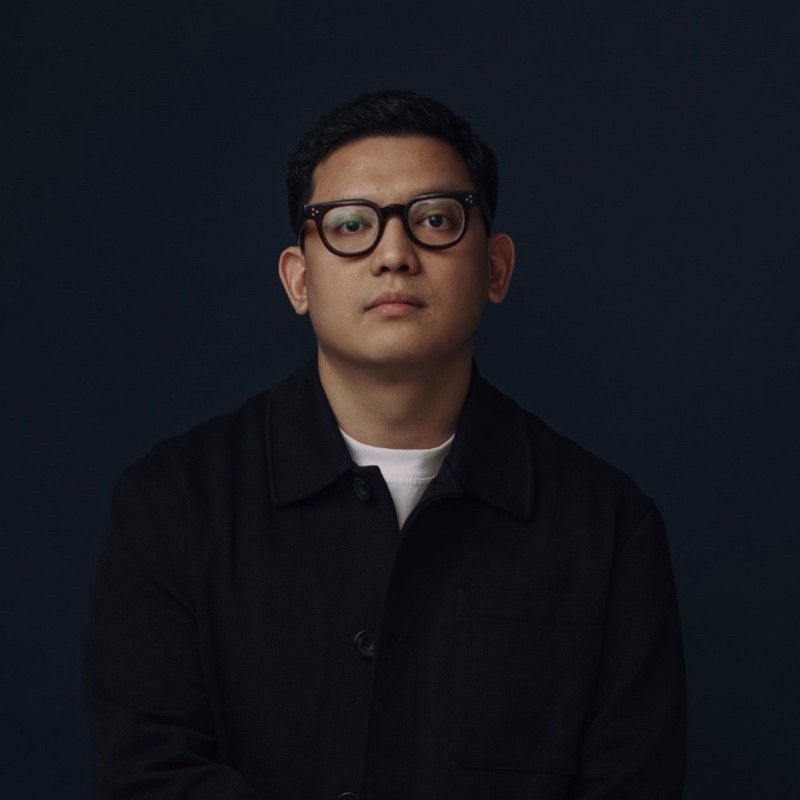
Ressa wasn’t the first nor the last journalist that Lazaro has helped across the years. So many of today’s stalwart journalists were molded by Lazaro and their work at Probe. From names such as Luchi Cruz-Valdes, Howie Severino, and Ricky Carandang to Karen Davila and Atom Araullo, Probe was where they learned how to be investigative journalists.
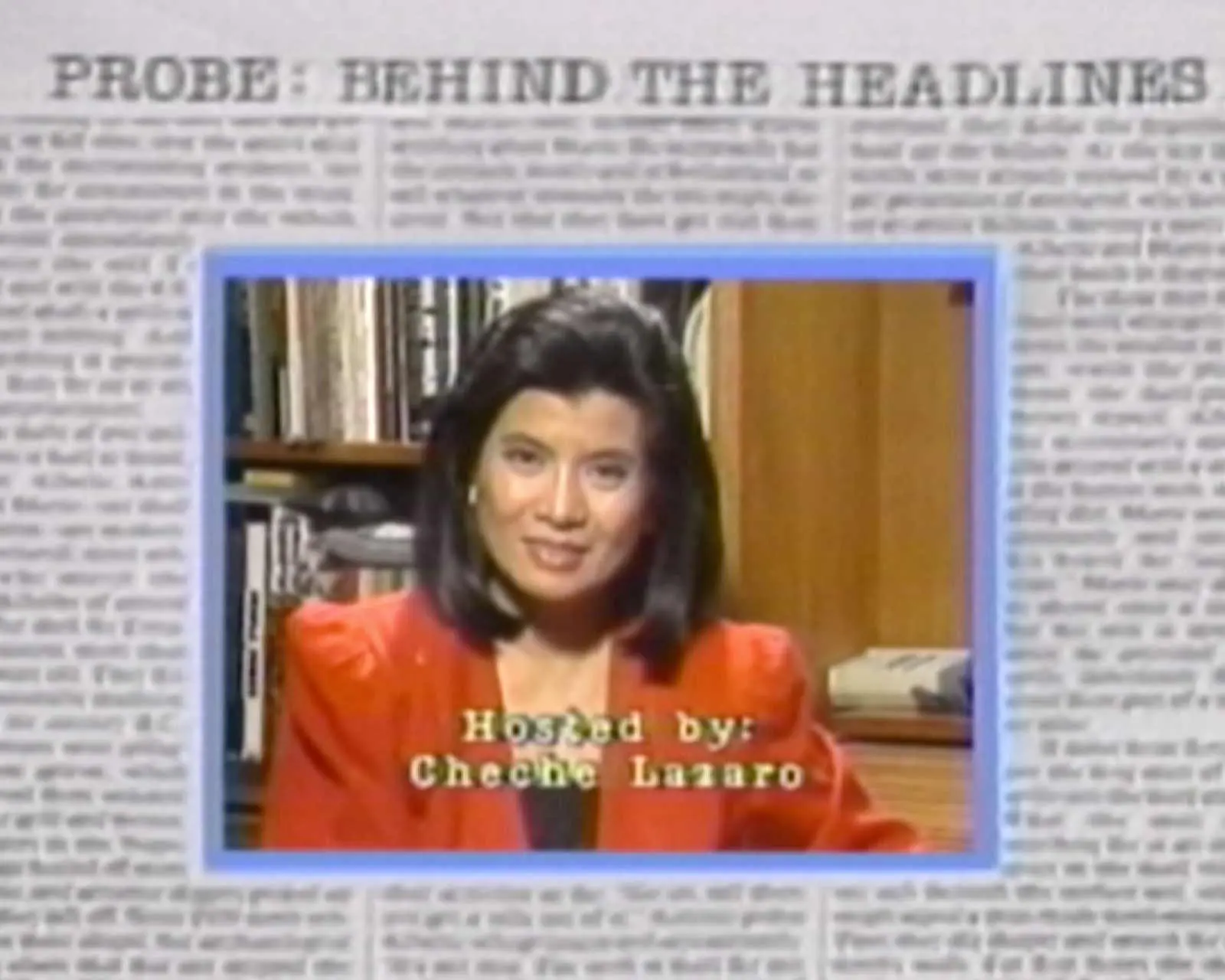
Probe began as a production company in 1987, with Lazaro at the helm alongside Ressa and Cruz-Valdes. They knew what they wanted to do: in-depth investigative stories, the kind that CBS News’ 60 Minutes made. But in order to do that, they first needed equipment, and more importantly, they needed airtime.
“During that time, we had no cameras and we had no editing machines. What are we going to do?” Lazaro tells Rolling Stone Philippines. “My husband said, ‘We have a little savings. Let’s use the money to buy the equipment.’ We bought the equipment little by little. And Maria, who was visiting her parents in the States, would come back and bring an editing machine slowly.”
They started production in her son’s bedroom and worked towards producing and covering the stories they wanted to. Lazaro admitted that it was hard to get airtime despite their experience in broadcast journalism. It wasn’t until GMA 7 took a chance on them and gave Probe their first big break. Probe aired its first episode on the MV Doña Paz tragedy. It found an audience, and the rest, as they say, is history.
It’s been nearly four decades since Probe was founded, and so much of journalism has changed. Mostly for the worse. Gone are the halcyon days of Teodoro M. Locsin, Betty Go-Belmonte, and Letty Jimenez-Magsanoc when journalists headed their publications long before multi-billionaires owned media companies for their own political gains. Lazaro is one of the last of her kind, but she’s also built a new generation of journalists who continue to speak truth to power and hold them accountable.
In this Rolling Stone Philippines Interview, Lazaro’s colleagues from across the decades ask her about the early days of Probe, the sad state of journalism today, and whether journalists should be blamed for it.
This interview has been edited for clarity.
We got some questions from some of your colleagues throughout the years, but I’ll start with something a little more pressing. I’m not sure you’ve heard about it already, but in the last 12 hours or so, there were massive layoffs in The Washington Post, and the immediate conversation became how it’s a really dark time for journalism with moguls like Jeff Bezos being able to control the media and ruining The Post’s credibility. You’ve also had to deal with that in your career, dealing with owners and big companies. Are you seeing echoes of your experiences in how journalists and the media are being treated by the bigger corporations?
I think during the time that we were practicing journalism, [that] was done very subtly and in small steps, not like it is now in big strokes, where, for example, the President of the United States declares that this is a fake news organization and files cases against them. These corporations are forced or under pressure to settle so that they remain in the good graces of that president. The face of media is changing in that way, because before, we used to perceive media as an independent source of information, as a source of news that we could trust. Now, there is this added element of doubt being injected. Is this really true, or is this fake news? And even legitimate media is being accused of this, because leaders or powers, be they political or business, are exercising their power over media, and that exercise of power not only comes from their political grip on the levers of power that they can manipulate, but mainly from money, which, as we know, fuels or has to support media for it to continue and be effective. And that’s really changing, and the changes are radical. You see it happening now, and even in our own situation with social media coming up and becoming, sometimes, the main source of information for many, many people, you see different patterns forming and media being caught in the middle.

How did you balance being a journalist and your “corporate responsibilities,” so to speak?
Being a young, idealistic group [at Probe], we said, “Okay, our integrity is important here. We want to protect the truth. We want to be a credible source of information in the stories that we tell, and therefore we will not do anything that runs counter to the principles that we hold dear to us.” But there is the consideration when you’re making a story: you need money to be able to continue writing, going out, shooting stories, paying salaries, paying for the gas of the car that takes you around, paying for airplane tickets that will bring you to a place where you want to cover. And sometimes when you’re young and idealistic and feisty and brave and whatever other adjectives you can add on to that, you see through it, and you say, “We’re going to do this.” And those were crossroads that we had to deal with. We had to think very hard. How do we balance our desire to bring the story truthfully and with integrity, and at the same time, not sell out?
“As we mature, we realize, sometimes when we are so rabid and so gung ho about what we believe, we’re not being realistic.”
For example, at one instance, I think we were going to do something about breastfeeding and there was a company that wanted to advertise or sponsor the segment. So these people, who are handling marketing, called us up and said, “There’s this group that wants to sponsor the story, but we can’t talk so much about breastfeeding because they’re selling milk.” So how can you advocate breastfeeding, which will say first and foremost, that breast milk is the best milk for babies? They’re contrary statements. So that’s one dilemma. So we weigh it, is it important for us to promote canned milk, or is it important for us to promote breastfeeding? What do we owe our audience? What kind of message do we want to send out?
Sometimes, it’s easier said than done. And as we mature, we realize, sometimes when we are so rabid and so gung ho about what we believe, we’re not being realistic. Because, yeah, you can protest all you want, but then you don’t get the advertising. What happens? How do I pay my salary? So it’s really a delicate balance. It is difficult.
And on hindsight, now that I’m already many, many years away from it, when I look back, I always appreciate our feistiness and our determination to give the truth, but I also appreciate how difficult it was for me, as the person who was also in charge of the business side, to balance those two elements.
Given all that, Pinky Webb wanted to know, if you could have done it all over again, would you have done anything differently?
Offhand, I’d say “no” because I still firmly believe that we swam against the tide when we were starting. People said you can’t be successful with an investigative news magazine. People don’t like being investigated. We want talk shows where they just talk and talk, but to pursue an investigative line is foolish. Nobody’s going to talk to you here. And even if they talk to you, they won’t tell you the truth. So we were faced with that challenge. We were young, we were idealistic, maybe foolish could have been attributed to us, because we just went straight ahead. You’re like a bull in a china shop. You’re just moving all over the place, and you don’t really know where you’re going. So, in hindsight, what would I have done? I would have listened to our marketing team, but no, not really, at the same time. [Laughs]
We were not aware that it was a great risk. Well, we got sued for it. We got brought to court. We did a story on dynamite fishing. We had video of the dynamite being blown up. We went underwater. We saw the coral reefs turn white. We saw the fish floating. We did the story, and we were sued for libel. Another story we did was on the teachers who were not receiving their pension pay. We interviewed one teacher who had this thick file of all of the receipts of all of the payments that she made on a monthly basis, and was due her when she retired. She didn’t get anything. So that was the story. They sued us for libel, and I went to court, and I had to pay a lawyer from my personal funds. It cost us. It cost me.
“When I look back, I always appreciate our feistiness and our determination to give the truth, but I also appreciate how difficult it was for me.”
Again, out of ignorance, would we have done that story? I think so because when you’re doing a story, you’re always questioning yourself, “Who am I doing this story for? Is it to look good? Self-propaganda?” To others, it may not seem that way. They may think, “Oh, no, you’re just doing this just to become a popular show.” But these are not popular topics. I mean, it would have been easier for us to move into the easier stories, but somehow, by some crazy idea, we had very young, idealistic producers who thought up all kinds of stories that needed to be told.
So again, would I change anything? Not really, maybe a little bit more maturity in deciding. Maybe not too rash. Maybe to listen a little bit more. But doing the story, we would still have done it, I think.
Maybe the benefit of what you went through is not in the sense of wanting to change things, but that there’s now an understanding that comes from what happened. That’s something I want to ask since you’ve had a really storied relationship with Maria Ressa. You started Probe together alongside fellow journalist Luchi Cruz- Valdes. Did Maria ever ask you for advice when she was going through similar things with Rappler and with all the cases that she had to go through?
Maria’s famous line to me is “Cheche, I’m so tired.” [Laughs] We exchange a lot of stories about what’s happening to us on a personal basis and to our companies. She knows very well how much I admire her, her grit, her tenacity, her talent. When we were working together, we complemented each other’s strengths, and she has remained a very good friend, although now I see her less and less because she’s getting busier than busy. So did she ever consult me? I don’t think she has to consult me.
How do you usually respond when she tells you she’s tired?
I tell her, “It’s your fault.” [Laughs] No, no, no. I tell her, “Maria, that’s what you told me the last time I saw you.” Because she really exhausts herself at both ends of the candle because she’s a girl in a hurry. She has messages to share. I’ve slowed down considerably, but she hasn’t.
“How do we balance our desire to bring the story truthfully and with integrity, and at the same time, not sell out?”
This next one is from another one of your former colleagues, Judith Torres: How has your dynamic evolved with Maria over the last 40 years?
It’s remained the same and different, the same because we still slouch around and exchange stories about our personal lives. It has changed because what surrounds her now is different. After getting the Nobel Peace Prize, it has broadened her horizon dramatically. She now is an international figure. She has leapt forward by eons ahead of me. I don’t think I can ever catch up, truth be told, but we remain close, although not as frequently meeting with each other.
In an old speech Maria shared with us, she talked about how when she decided to work with you, she really didn’t have a home here in Manila, and you let her stay with you, and you welcomed her into your home for three years or so. What was that like, in terms of how you saw your job? Because it’s one thing to start a business and lead a team but to have that deep a bond and trust with someone you were working with and making something new, I’m really curious what that relationship was like.
I didn’t know squat about business, okay? Nothing. I can’t even balance my checkbook. But again, like a bull in a china shop, we went head on. I met Maria when I was at ABS-CBN, and I was head of the Public Affairs, and so there was this girl who came around, and she was introduced to me as a Fulbright scholar who was in the Philippines for a few months to do some work. She came to my office, we met, and we just struck it as friends, right? I liked the way she talked, not her accent, but the stuff that she was saying. I told her about what I thought I admired about 60 Minutes because I had been fixated on that show. And I said, “I want to do something like that.” I was just forming the public affairs group at that time, and so she was directing the news show at PTV 4, and I don’t know exactly where she was staying, but I said, “Hey, I have an extra room in my house. Why don’t you come and stay with us, and let’s find out what we can do?”
Both of us were thinking, “Why don’t we put up an investigative magazine show here?” So when we proposed it, it wasn’t welcome at ABS-CBN. They were saying, “No, it won’t work. How can you do something like that? It’s better that you have something like an entertainment show or a talk show, but an investigative news magazine won’t work.” So we said, “Let’s try it.” So eventually they gave us a slot. We were like two crazy chemists in the lab, putting things together and trying to see if it worked. So it wasn’t working for them. And I said, “You know, Maria, I think what we should do is start a company. We should really strike out on our own, because then we can design it the way we want to do it.” Of course, that was a crazy idea, because we were going to start a company. We had no airtime. We had a great show idea. We could put it together, but nobody was going to air us. So that was a crazy, stupid idea, right?


Do you remember the MV Doña Paz? It was this ship that ferried people from Leyte to Manila, and I don’t know what their route was, but there were more than 1,000 passengers in that boat. It capsized. So it was a major sea disaster that brought all of the foreign crews to the site. We said, “We’ll do this as our first show.” So we went to the piers. We went on top of the boats. We did everything. We went on the little boats that went out looking for bodies. We were there when they pulled out the bodies. We were there when relatives claimed the bodies. We were doing stories on the lives of those who had lost their lives. We were fully immersed in the story. So we put it together, but we had no airtime, so we burned the midnight oil simultaneously.
We were waiting for months and months to get airtime. Finally, Channel 7 said, “Okay, we’ll give you a chance. We’ll give you this airtime on a certain date.” We did, and the MV Doña Paz got an audience, not a huge audience, but there was interest in the story. Then we asked for airtime again. They said, “Okay, we’ll give it to you maybe next month,” or something like that. And we did something on the Charles McDougald gold digging experiment in Intramuros. So we would stay up all night in the dig site. And we were the only ones who did it. We brought the cameras down into the bowels, as far as they went.
Read the rest of the story in the Anniversary Issue of Rolling Stone Philippines.
Pre-order a copy on Sari-Sari Shopping, or read the e-magazine now here.
Frequently Asked Questions
Cheche Lazaro, then head of ABS-CBN’s Public Affairs department, met Maria Ressa, a visiting Fulbright scholar, in 1987 and invited her to live in her home while they developed an investigative news magazine, eventually leaving the network to found Probe independently.
Probe’s first episode covered the 1987 MV Doña Paz tragedy, a sea disaster that killed over 1,000 passengers. The team covered the piers, recovery boats, and grieving relatives after struggling for months to secure airtime from GMA 7.
Yes. Probe was sued for libel after a story on illegal dynamite fishing that showed damaged coral reefs, and again after covering teachers who never received pension payments they were owed, with Lazaro personally covering legal costs.
Lazaro says winning the Nobel Peace Prize broadened Maria Ressa’s horizons dramatically, turning her into an international figure. Despite Ressa’s rising global profile, Lazaro says their personal bond and habit of exchanging stories has remained largely unchanged over 40 years.
Lazaro says corporate and political pressure on media has shifted from subtle influence to overt control, citing government pressure on U.S. outlets to settle cases. She notes money increasingly shapes editorial independence, eroding public trust in legitimate journalism.