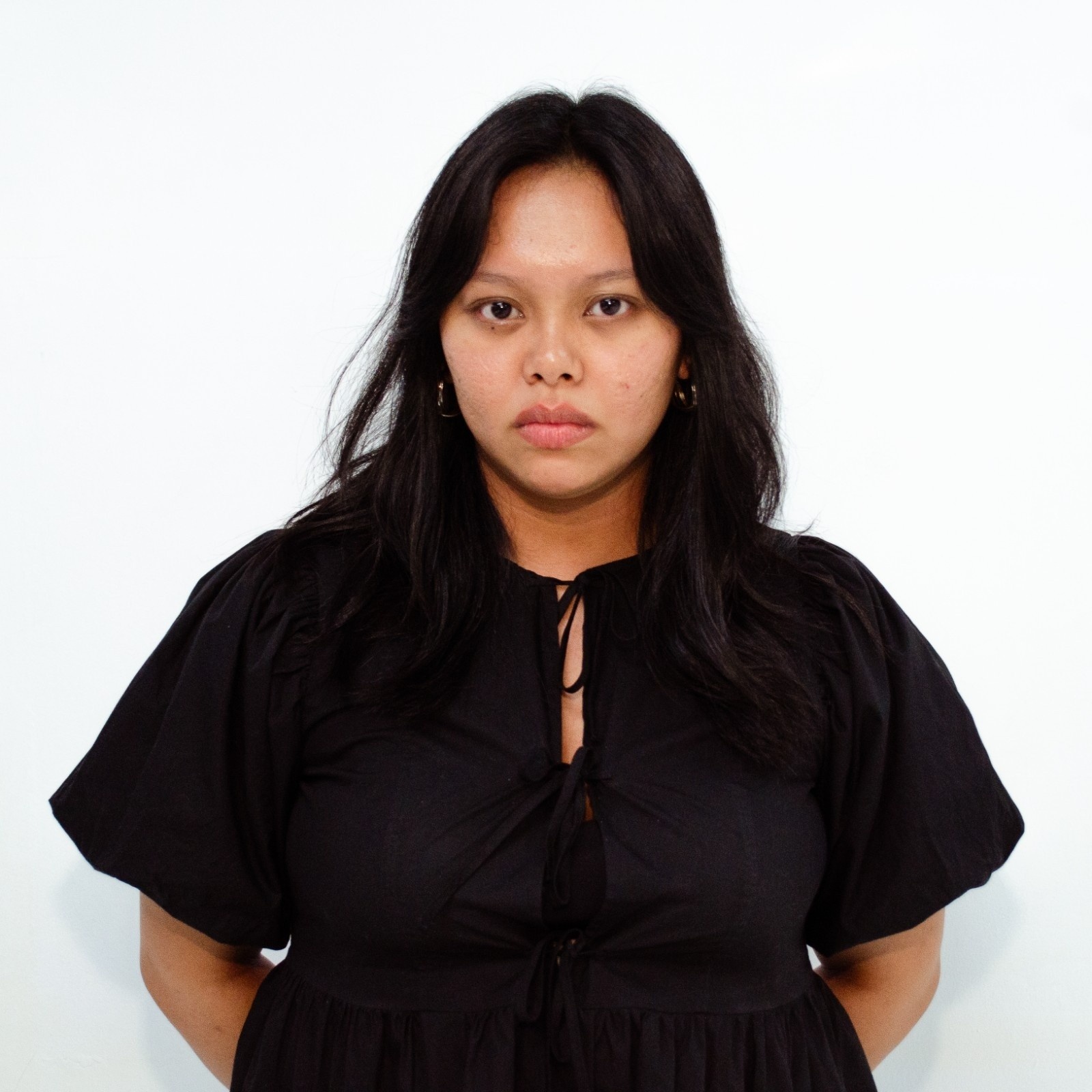


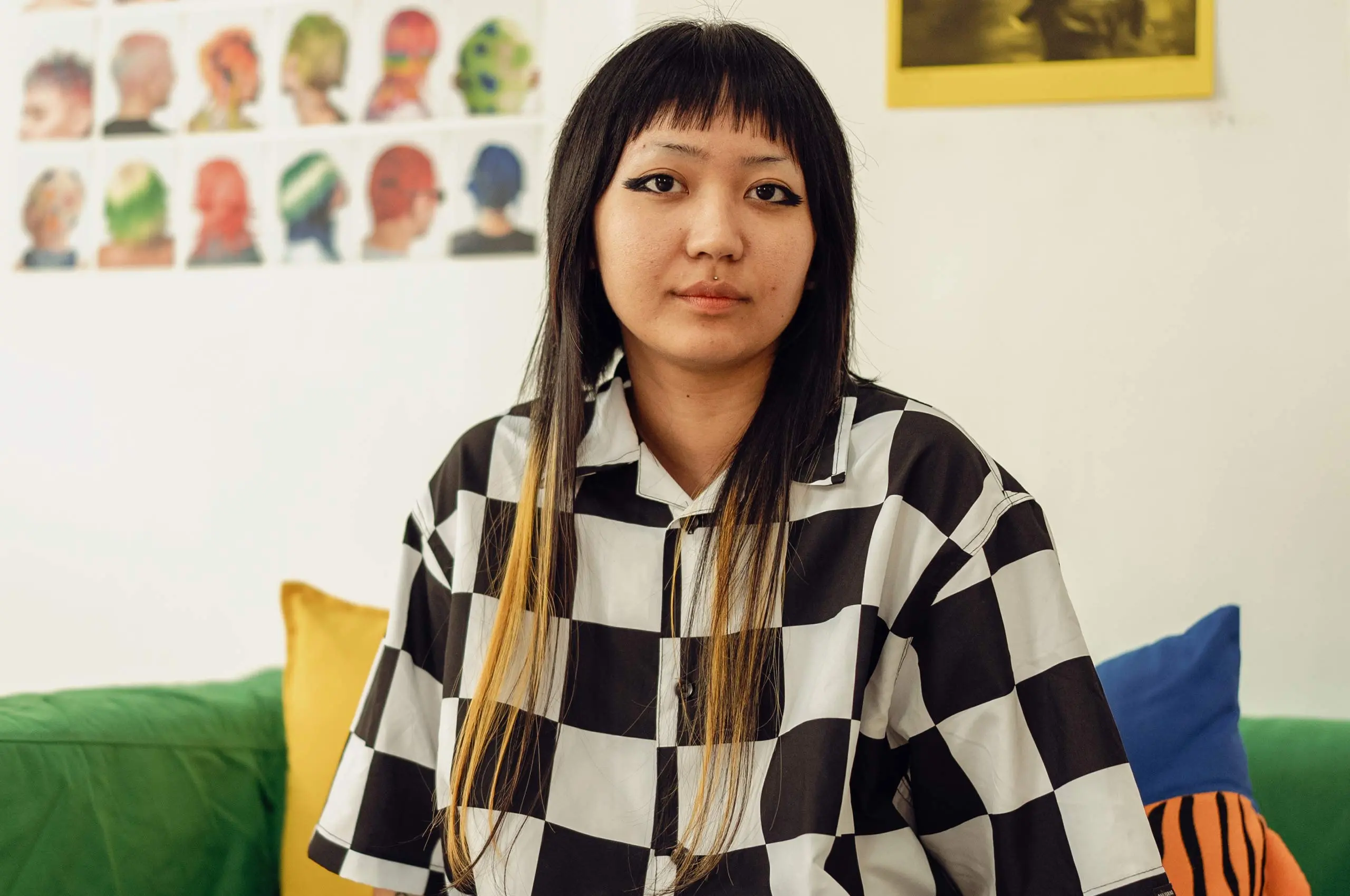
When artist and hairdresser Rej Hidalgo tells you, “Amat ko talaga ‘yung hair,” you believe her.
Hidalgo has been coloring hair since 2012, after she graduated from high school, but recalls cutting her friends’ hair in classrooms way before then. “Ako ‘yung taga-gupit nila sa classroom, to the point na galit sa akin ‘yung parents kasi ‘di naman nagpaalam ‘yun e. Pag-uwi nila, may bangs na ‘yung anak nila,” she tells Rolling Stone Philippines. Today, under the hair studio Magpatina, her clients range from Brian Black, also known as drag queen Naia, and photographer Geloy Concepcion to musicians such as Raymund Marasigan and ena mori. Aside from crafting colorful, charm-adorned hair extensions sold at art consignment store Favorite Edition at Cubao Expo, the self-taught hairdresser has also worked as a stylist, collaborating with streetwear brand Salad Day on a campaign last August.
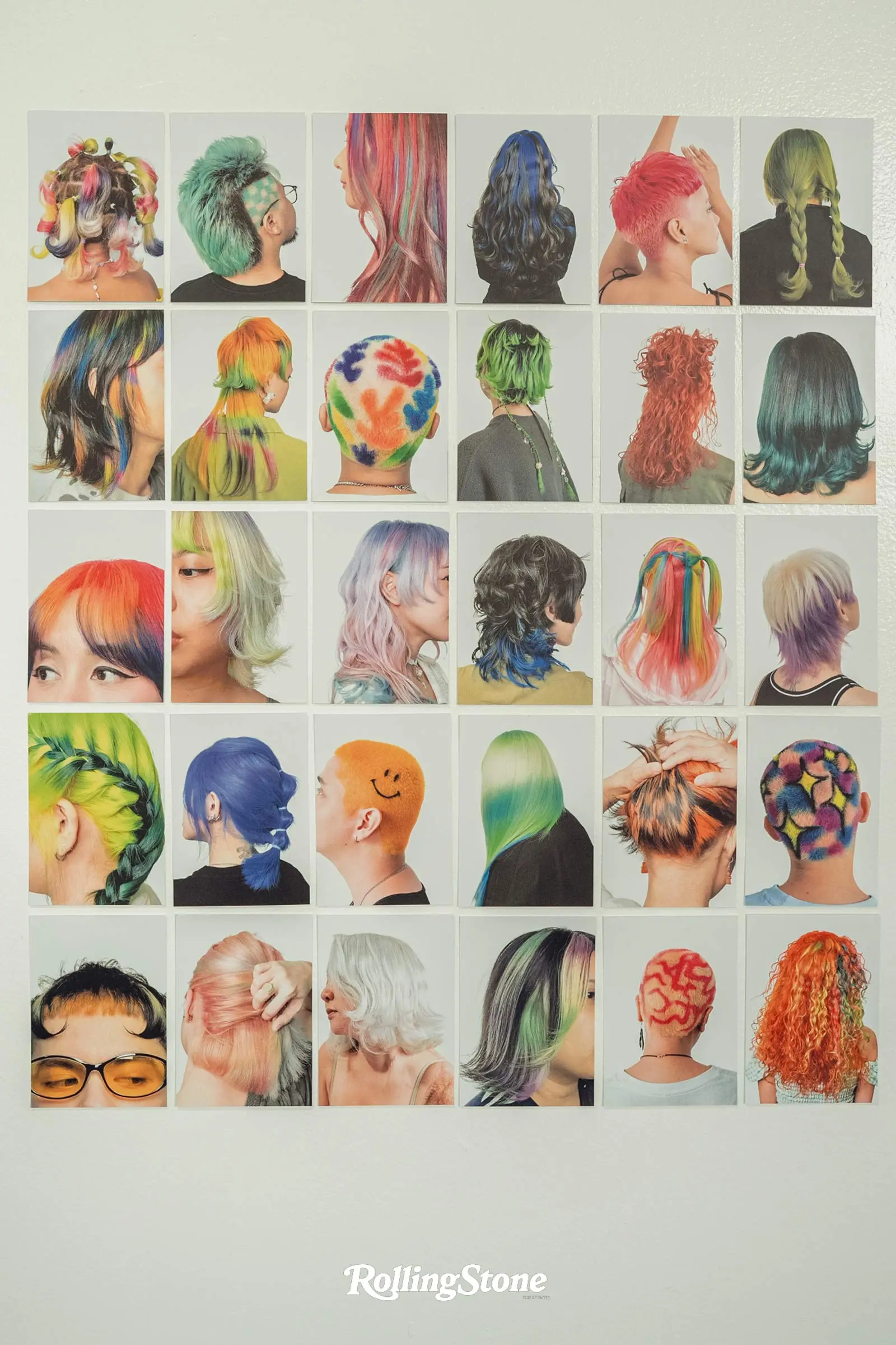
It’s very easy to see why people are drawn to Hidalgo’s work. There isn’t a dull head on Magpatina’s Instagram page, every look a bold cut or a striking array of colors in fun patterns. Hidalgo prides herself on being a hairdresser who doesn’t judge her clients and is keen to meet their vision, whether it’s natural colored curls on singer-songwriterSinger-SongwriterA musician who writes and performs their own songs, usually with just a guitar or piano. Singer-songwriters are valued for honest, personal storytelling, and many of the most beloved voicesGo to Singer-Songwriter Glossary Shanne Dandan, or a bixie streaked with neon pink.
“Sobrang rewarding ‘yung makita mo na na-GGSS (gandang-ganda sa sarili) ang client,” she says. “Meron akong na-re-receive na comments from older clients na [nagsasabi], ‘Eto ‘yung dream [hair] ko when I was 20.’”
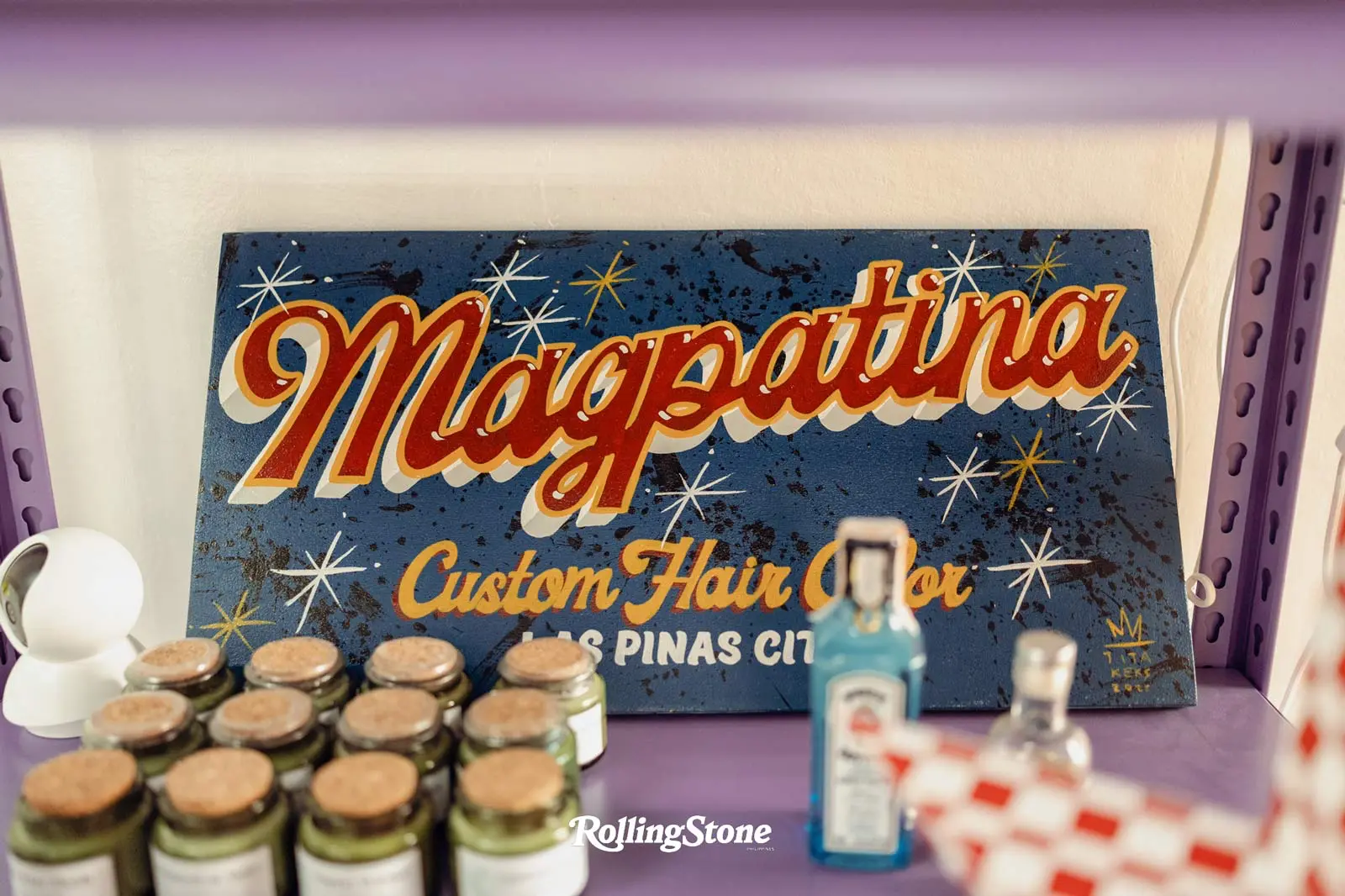
After almost a decade of doing home service, working in her college dorm, and accommodating clients in her Las Piñas home studio, Hidalgo moved Magpatina to the First United Building in Escolta, Manila in November 2025 to better serve clients from the north and south.
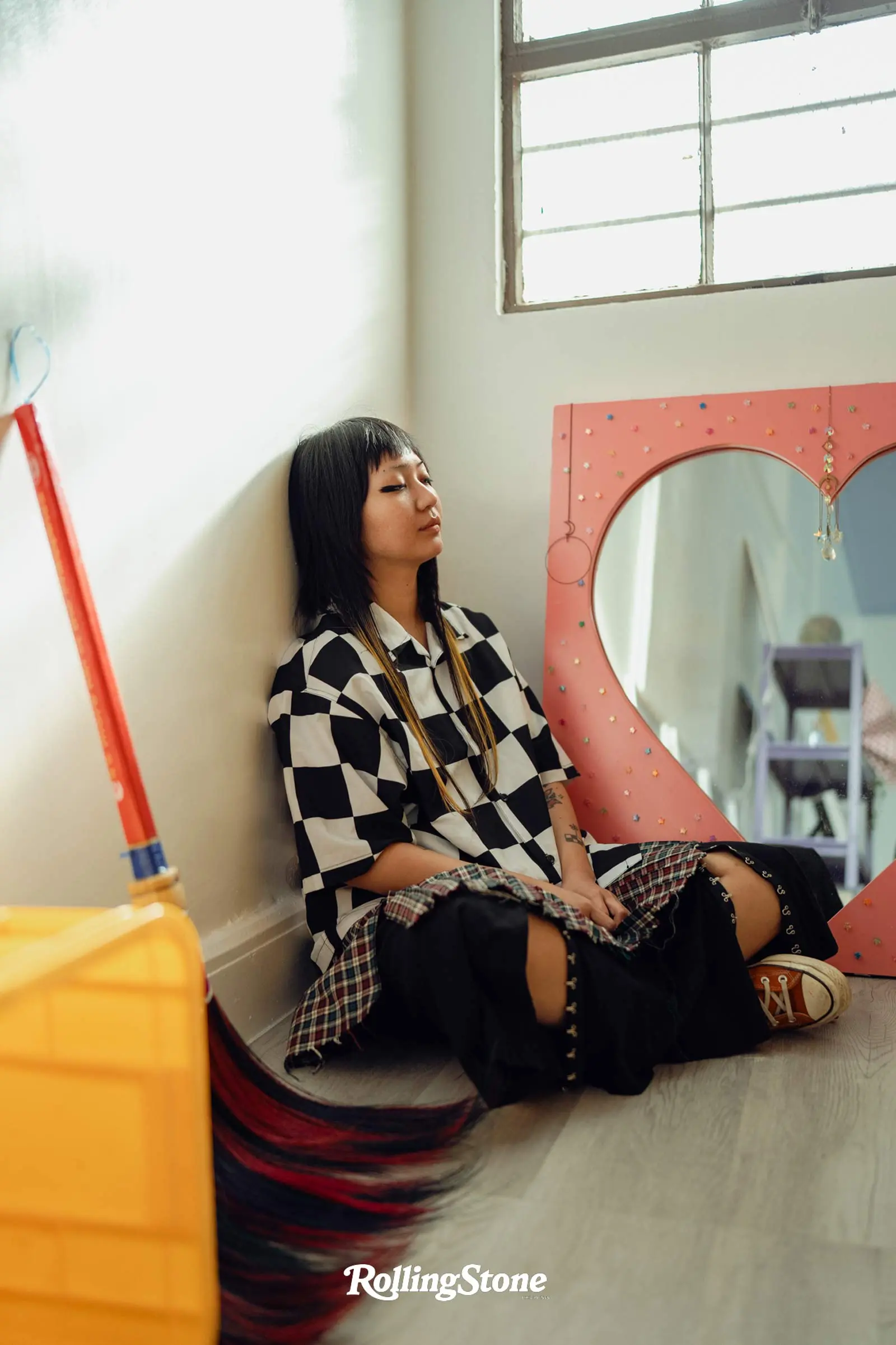
In the soft-opened Escolta studio, everything from the wash station to the basket of nail art accoutrements is sunlit, thanks to the corner unit’s large windows. The space is also decorated with a host of statement pieces, a heart-shaped mirror and a checkered rug here, and Jake Versoza’s “Inosente lang ang nagtataka” photo (gifted by the photographer himself) there. But what stood out to me was the multicolored walis tambo from Baguio, streaked vibrant blue, pink, green, and violet. I thought that if I were ever to get my hair done at Magpatina, the broom would be on the moodboard.
“Kahit ano talaga na trip mo, kunwari favorite mong damit, pwede nating i-translate ‘yan. ”
Hidalgo says she prefers it when her clients draw inspiration from everyday objects and provide her with keywords. “Natutuwa ako ‘pag ‘yung inspo nila hindi kopya from someone else. ‘Yan ‘yung sobrang nakaka-excite,” she says. “Kahit ano talaga na trip mo, kunwari favorite mong damit, pwede nating i-translate ‘yan.”
From there, she forms mind maps, a practice developed during her studies at the University of the Philippines College of Fine Arts. “Hindi ako masyadong magaling mag-paint e, hindi ako nag-excel doon sa school namin,” she says. “Pero ‘yung process ng visual studies, ‘yung mind maps, ‘yung mag-ko-collate ka ng ideas, doon ko nakuha ‘yun.”
Hair Business
Hidalgo tries not to separate herself from other hairstylists, even though her process and style differ vastly from neighborhood and mall salons. “In-o-own ko ‘yung term na ‘beautician’ kasi for the longest time, mababa ‘yung tingin doon. May misogyny ‘yun e. Ang mga OG beautician natin, mga women and gays.”
In the Philippines, prices for services at salons can go as low as below P100, but can “Kahit ano talaga na trip mo, kunwari favorite mong damit, pwede nating i-translate ‘yan. ” also go well into the thousands at high-end studios. Either way, Hidalgo believes that Filipino hairdressers aren’t even paid enough for the demanding services they render.
“Uso pa naman ‘yung tumatawad sa salon. Tatawaran mo ba ‘yung gagawin sa ulo mo? Hindi ba nakakatakot ‘yun?” she said, laughing. “Sa ibang bansa, mataas ang value [ng mga hairdresser]. Ang mahal kasi may regulation, may licensing. Dito, ‘yung nangyayari, all-around [ang mga hairdresser], walang mga specialty. Pagod talaga ang mga stylists. They’re also not allowed to say ‘no’.”
By contrast, Magpatina operates strictly on an appointment basis, with each session scheduled around the time and labor Hidalgo believes a service actually requires. A client isn’t simply paying for dye or a haircut, but for the consultation, the concept-building, and the hours spent executing a look that may involve multiple colors or techniques. It’s a setup that allows Hidalgo to pace her work and avoid the assembly-line model common in many salons, where stylists are expected to juggle several clients at once.
The system is also a small way of asserting that hairdressing should be treated as skilled work rather than quick service. At the same time, Hidalgo’s careful not to frame Magpatina as a lone alternative. “Dapat magkaroon pa ng spaces [kagaya nito]. Marami naman na,” she says, pointing to other artists carving out similar studios across the country, from a creative barber in Bacolod to Dencio Aguilar of San Juan’s Menstribe. If anything, Hidalgo hopes Magpatina is simply one of many more spaces proving that beauticians can work and be valued differently.
This story first appeared in Rolling Stone Philippines’ Anniversary Issue
Get a copy on Sari-Sari Shopping, or read the e-magazine now here.
Frequently Asked Questions
Magpatina is an independent, appointment-only hair studio specializing in custom hair color, alternative cuts, and hair extensions. Founded by Rej Hidalgo, the studio is located in the historic First United Building in Escolta, Manila.
Self-taught hairdresser and UP Fine Arts graduate Rej Hidalgo owns and operates Magpatina. Her client roster includes musicians, visual artists, and performers such as ena mori, Raymund Marasigan, Geloy Concepcion, and drag queen Naia.
Hidalgo reclaims ‘beautician’ to counter the historical misogyny and stigma attached to women and LGBTQ+ beauty workers in the Philippines. She advocates for treating hairdressing as skilled, regulated art rather than disposable labor.
Unlike high-volume salon assembly lines, Magpatina operates strictly by appointment. Each session allocates dedicated time for consultation, moodboard conceptualization, and technical execution, ensuring customized care without juggling multiple clients simultaneously.
Hidalgo encourages clients to bring inspiration from everyday objects, wardrobe colors, or moodboards rather than copying existing hairstyles. Drawing on her fine arts training, she creates mind maps to translate these concepts into custom hair art.
Recommended Video