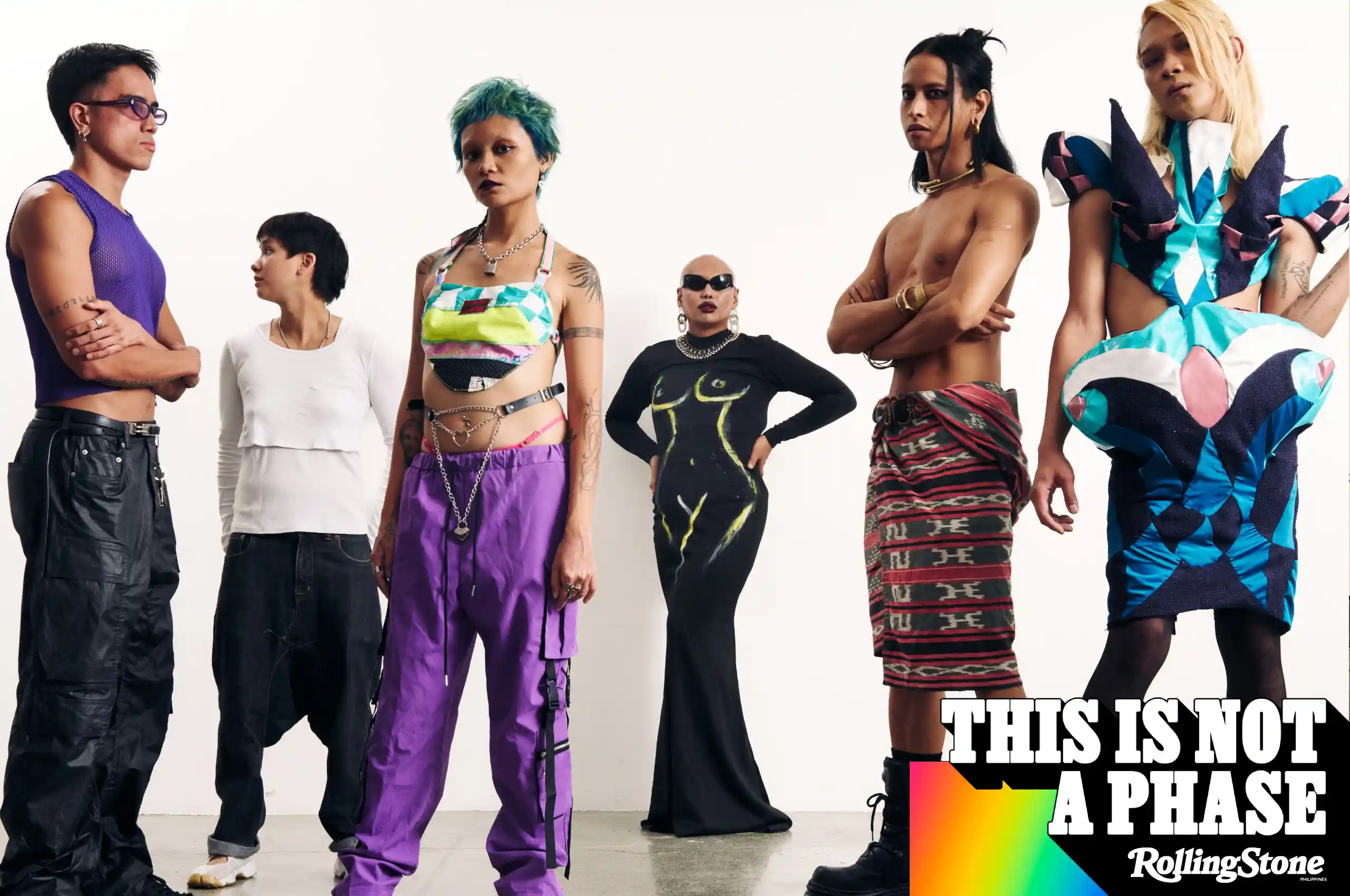
Over the last 10 years, ELEPHANT has learned just how hard it is to throw a good party.
The queer music collective started back in 2017 as a weekly dance party at the now-closed nightclub, XX:XX. ELEPHANT survived the club’s closure, despite a number of years lost to the pandemic. Now, it has become one of the most well-established groups in Manila’s nightlife scene.
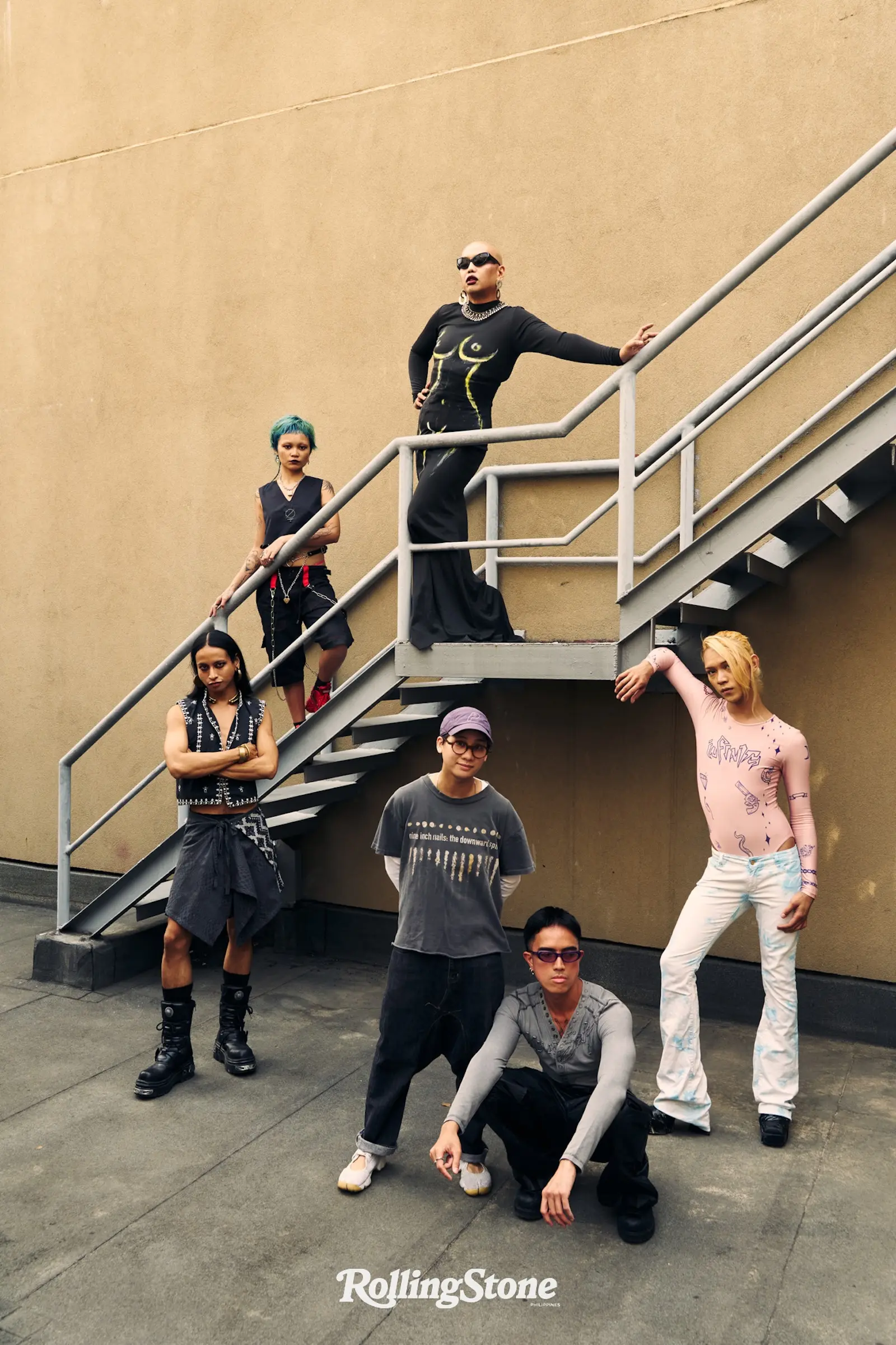
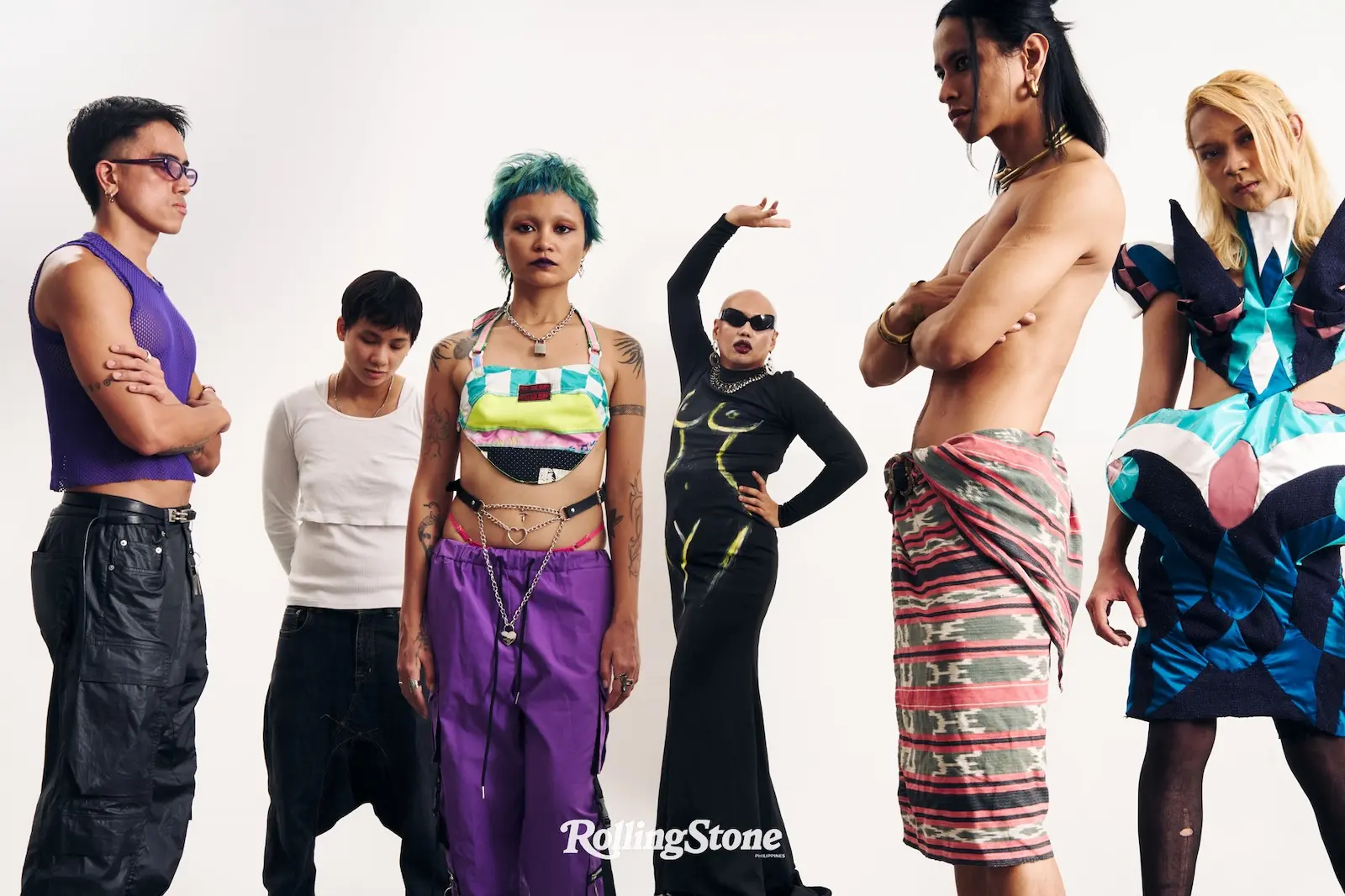
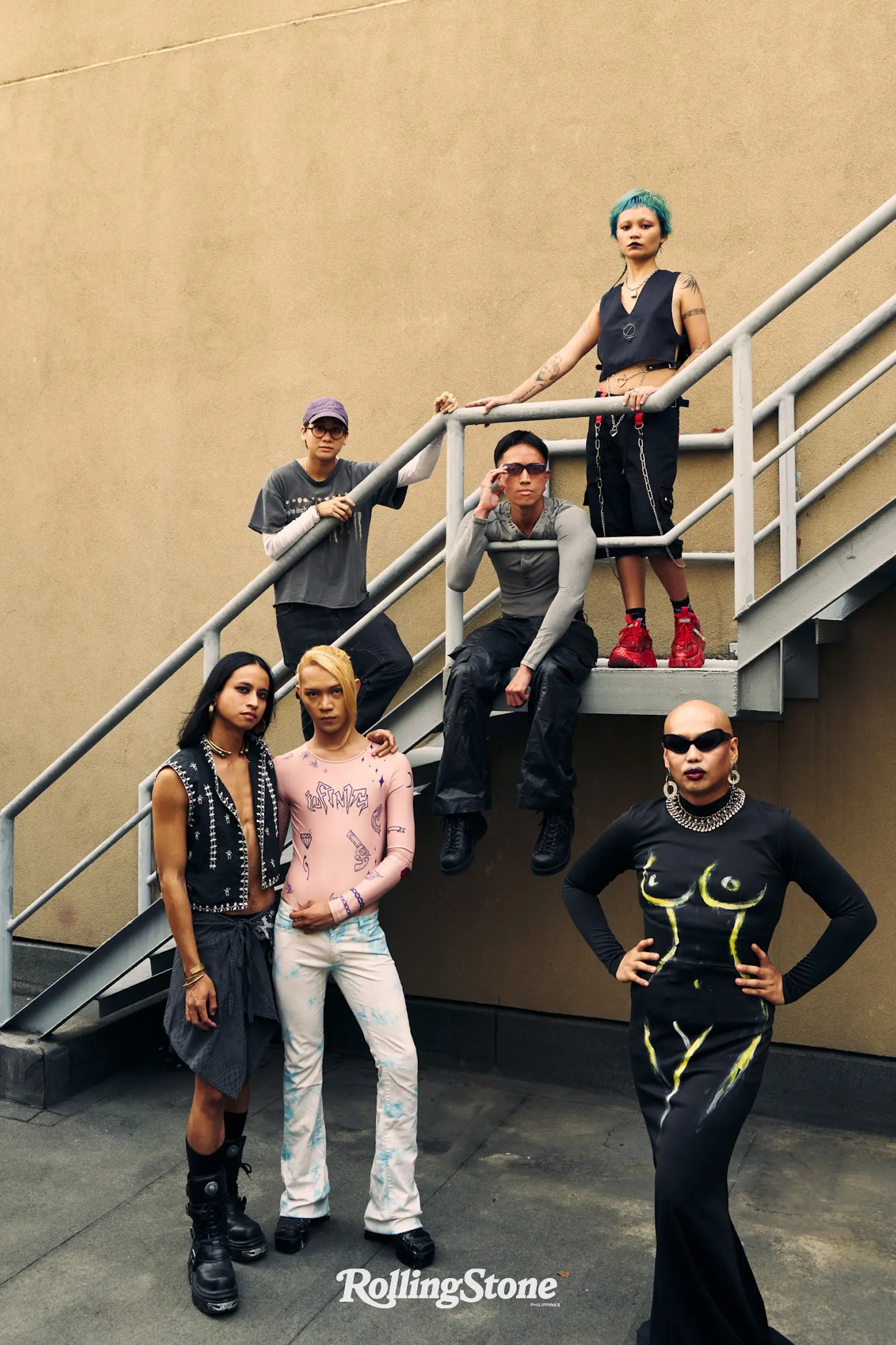
“Our first year of doing ELEPHANT was sort of a struggle,” said co-founder Shahani Gania, also known as the drag performer SuperStarlet XXX. With Gania during the Rolling Stone Philippines shoot were fellow ELEPHANT organizers Andi Osmeña (who DJs under the name Baby Ikea), Aly Cabral (who is also a vocalist, composer, and DJ under the moniker t33g33), production designers Paul Jatayna and Bruce Venida, as well as the group’s resident door bitch Lance Navasca. “And now, 10 years later, things are always changing. There’s always a new person who comes in, bringing in their energy, contributing it to the party,” Gania adds.
Gania, Osmeña, and Cabral sat down with us to speak candidly about the rise of ELEPHANT in local queer nightlife, the importance of the dance floor as a safe space, and how the scene has changed drastically over the course of a decade.
What makes a good party?
Osmeña: For me, good people make a good party. As long as everyone in the room has the right intentions and brings the good energy, then it’s gonna be a fun time.
Gania: It’s the people who come to your party who make a good party. So it’s a mix of everyone, a mix of people who you love, love you back, and love each other.
Cabral: For me, what makes a good party, other than good people present, is a safe environment. Something comfortable for every kind of person.
Can you tell us more about the early days of ELEPHANT?
Gania: Our first year of doing ELEPHANT was sort of a struggle. At the time, we did have a venue. But it was the concept of doing a weekly queer techno dance party. Back then, it was mostly pop for the queer scene and doing techno at the time was new. So that first year, we were struggling to find people who could come to our party regularly. There were really times that first year na we would only have five, 10 people in the venue, including the DJs.
A year after, that’s when things lifted off. We started seeing more people regularly. And now, 10 years later, things are always changing. There’s always a new person who comes in, bringing in their energy, contributing it to the party.
I remember there was a time when ELEPHANT parties went online because of the pandemic. What was that like?
Gania: I was feeling medyo crushed, medyo sad ako. Pero, we understood that we had to rest for a bit. I think the first thing we did when the pandemic happened was make a group chat with everyone [who] we saw regularly in ELEPHANT. Keep the community together. It was such a difficult, dangerous time.
But during Pride Month [in 2020], we thought, “Okay, it’s time to throw an online party.” We know that the people who go to ELEPHANT regularly are creative people. So we talked to people who create videos, we asked DJs to submit tracks.
Osmeña: I remember that time… It was really, really hard on nightlife in [general], for obvious reasons. It was really admirable to see that we were able to raise funds and provide mutual aid at that time.
As partygoers yourselves, how did joining ELEPHANT change the way you see Manila’s nightlife scene?
Osmeña: [In 2017], I’d just graduated high school and I remember my sister telling me that there’s a queer night thing I should go to. My first ELEPHANT party was “Fuck Art, Let’s Dance,” and I remember we were passing around a cake, and it felt like this lawless place. [Laughs] It was just a joy to be part of it, coming from such a strict, conservative Catholic high school.
Cabral: It definitely felt like such a liberated environment. I also joined ELEPHANT after the pandemic. Before, I was working in Dirty Kitchen [in Quezon City], and before that, I would also go to some parties on Thursday nights and just be a spectator. I was just in awe of all the music and the art and the performances.
After I joined, it was… formative for me, because I felt like ELEPHANT really helped me come out of my shell. I still remember when… I had my first live performance with ELEPHANT. They really gave me a platform to release all my ideas and discover myself and my identity as a queer person.
Gania: Before ELEPHANT, I was already throwing parties… It’s something I enjoy doing. As someone who’s getting older doing nightlife, it grows on you that you have a responsibility in making sure that the people who enter your door are safe or are going to be alright.
“Feeling ko ‘yung misconception ng mga tao about queer nightlife is that it’s always hedonistic. Like, ‘Let’s do everything! We’re all gay here! We’re all queer here!’” [Laughs]
Osmeña: A lot of it is pushing boulders up a hill. [Laughs] Ever since the pandemic, we didn’t really have a home club. For a while, we had Gravity Art Space, but it had different demands since it wasn’t necessarily a nightclub. We had to learn how to book our own sound systems, how to set up the lights ourselves. It was really a do-it-yourself thing.
Cabral: I feel like every time we make a party, we’re building a world somehow. Because it’s a whole environment and it’s temporary, it just lasts one night. But the feeling after the party always lasts. It stays with you. It’s an ecosystem, so there’s a lot of labor and love that goes into it.
Osmeña: There are a lot of moments when we’re egressing until 7:00 a.m. and the sun is up, and we’re sweaty and carrying our subwoofers out. Those are the moments where you think to yourself, “I’m only here because I love this.” [Laughs]
Do you feel there are still misconceptions about queer nightlife in Manila?
Gania: Feeling ko ‘yung misconception ng mga tao about queer nightlife is that it’s always hedonistic. Like, “Let’s do everything! We’re all gay here! We’re all queer here!” [Laughs]
We’re all here to take care of each other, watch out for each other. Ever since I learned about this, I believed in it: that the queer struggle is a class struggle. As a queer person, there’s always somebody who needs more help than I do, who needs more care than I do. As much as possible, we apply that sa ELEPHANT. There’s always a trans person with less privilege who needs the platform. There’s always a queer person who needs this job more. These are the people who we want to platform and who we want to see sa ELEPHANT na nasa door, nasa stage, behind the scenes.
Cabral: There is that responsibility to uplift the people who need the space. There’s a [sector] of the community who just go out to party because they can spend the money and have the privilege. But there are also queer people who need release, who need to move their bodies to get over their struggles at the moment. And I really feel like ELEPHANT became that space where they can find like-minded [queer] people, where they can go all out and be themselves and feel free.
What’s next for ELEPHANT as a collective?
Gania: ELEPHANT keeps changing. That’s one thing I’m sure of. We welcome the energies that come in and leave their contributions. It’s gotten bigger. Now we’re connecting with different communities outside of the country.
It’s so different now, but at the same time, that’s what makes it exciting. Before the pandemic, we were a weekly Thursday night party. During the pandemic, we became an online party. And then after the pandemic, that’s when we got bigger and started throwing events, big raves.
This June, we’re going back to our roots. We have a residency in Poblacion at Kinki, so [we’re] back to doing Thursday night parties.
Osmeña: [Over] the past 10 years, dance music culture and queer nightlife have changed so much and it’s no longer a niche thing. 10 years ago, techno was considered a really, really niche thing. But now, it’s basically mainstream. And the fact that ELEPHANT is still around, and is still doing work that is relevant, is basically a reminder that there are still more boundaries to break.
Cabral: Of course, there’s still a lot of work to be done. Like with the SOGIESC bill. But on the good side, I feel like I’m happy that there are a lot of queer people coming out of their shell, going out, partying, and organizing their own raves.
Has the nightlife scene changed significantly since ELEPHANT started?
Osmeña: We’ve created our own economy around ELEPHANT and around nightlife. It’s not just a party, but it’s really an alternative mode of survival for us.
Gania: People are paid better nowadays. When I started doing nightlife, I only got paid percentages of ‘yung kinita ng bar. Parang meron lang nun budget to throw the party, alam mo ‘yan? We had to squeeze in kung magkano ‘yung ibabayad namin sa sarili namin as organizers, kasi wala kami sa equation. Pero ngayon, parang mas clear sa mga tao, sa mga organizers, that we have to become more equitable [when we pay] nightlife workers. It has to be more sustainable as a career.
Actually, proud ako sa ginawa ng ELEPHANT dito. Honestly, before the pandemic, we would get a budget of P5,000. That was our budget to throw a party, pay three DJs, and pay ourselves. Pero it was a struggle, because how do you get home? And we didn’t have jobs at the time.
When ELEPHANT came back after the pandemic, doon na tinaas ang talent fee of the DJs and everyone that we would hire. We started becoming more transparent on how much it takes to put up a party. We were able to raise the standard fee for a lot of local DJs. We were able to demand from venues that the artists, creatives, DJs working to make your space work should be paid this amount.
Cabral: ELEPHANT really made sure we’re all happy with what we take home after the party.
And not just on the side of people who are doing labor for the party, but also for the young, struggling queer people who usually couldn’t afford high ticket prices. So, for example, transit records started the community access ticket package for parties, which was like a pay-what-you-can ticket price for people from the low-income sector.
And finally… What’s one thing the straights can learn from queer parties?
Osmeña: Dancing! [Laughs] Or hmm… It’s not always about looking cool. I feel like when people learn that you work in nightlife, they’re like, “Oh, you must be so cool.” But no, it’s really just about bringing good energy. And I actually prefer when a party has nerds! That’s how I know it’s a safe space.
Gania: If there’s something that I would like them to learn… At these parties, social hierarchy doesn’t work. Just let people in. Stop judging people for what they wear, the labels on their clothes, or things like that. Welcome everyone. Welcome the people who need it. I mean, of course, we should be able to safeguard a space properly. I think that’s one of the [other] things that I want straight people to learn about queer parties: how to safeguard your space so that the people who go inside, who will attend your party, feel safe.
Cabral: I think all straight people should learn how to be allies in the movement for queer rights and equality, because discrimination still exists. That’s why queer parties still exist. That’s why we have to make queer parties because we need these spaces where we can feel free. So we can eventually reach the point where we don’t need to gatekeep things in the queer scene, and everybody can just be free to be themselves.
Frequently Asked Questions
ELEPHANT is a queer music collective that started in 2017 as a weekly dance party and has grown into a major part of Manila’s nightlife scene.
According to ELEPHANT, good people, good energy, and a safe, welcoming space for everyone.
The collective moved online, hosted virtual events, and helped keep its community connected through mutual aid efforts.
ELEPHANT has created opportunities for queer creatives, promoted fair pay for artists, and helped grow Manila’s queer nightlife culture.
The collective continues to evolve with bigger events, new collaborations, and a return to regular Thursday night parties.
Recommended Video