

Many industrialists say artificial intelligence (AI) is the future, as the world fills with chatbots, generative images and videos, autonomous vehicles, and data centers supporting the boom, such as the proposed Pax Silica here in the Philippines. As we are constantly told to adapt or risk being left behind, reports of its controversies headline so much of today’s news.
With AI becoming more and more influential, concerns regarding its existential, environmental, and political impact grow louder and louder. If it truly is reshaping life as we know it, the questions about who’s behind it all and how they can control our future need to be asked.
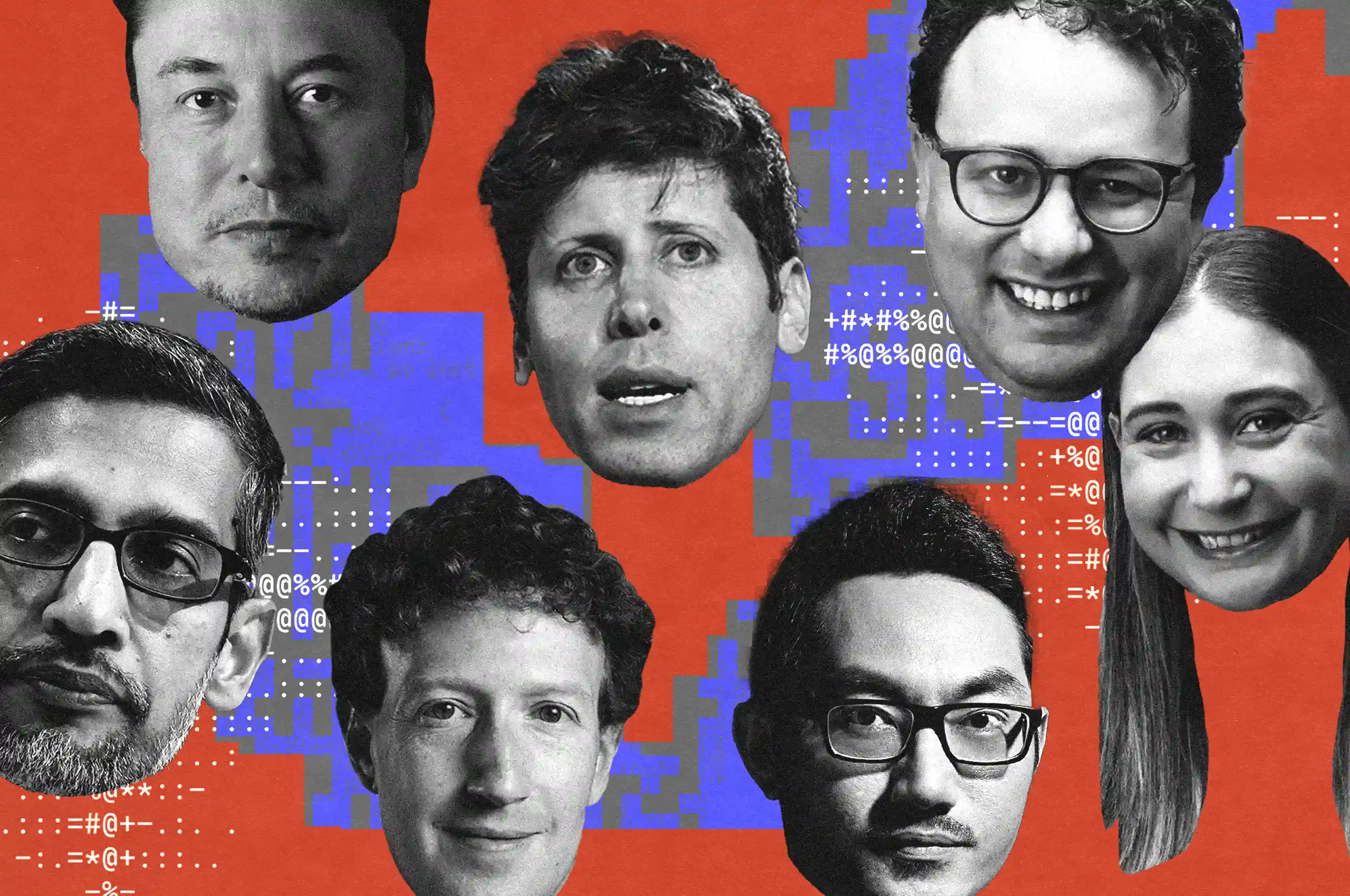
Here are some of the biggest names in AI and the controversies surrounding them.
Elon Musk / SpaceXAI
Musk is arguably one of the most recognizable and controversial tech figures today, not just because he owns an AI company, but also because of his influence as the richest man in the world. The billionaire entrepreneur entered the artificial intelligence race as a co-founder of OpenAI before breaking away, later acquiring xAI and rebranding it as SpaceXAI. Musk argued that it would be a good idea to launch the system into space and build orbital data centers. This system is also behind Grok, an alternative to ChatGPT and Claude.
But his ambitions have attracted criticism, most specifically with the chatbot Grok after instances where it generated offensive and inappropriate content. According to The Guardian, a survivor of child sexual abuse has sued Grok for generating illegal pornographic images that depict her without her knowledge. Aside from this instance, the company also faced previous lawsuits centered on how its chatbot has continued to produce and distribute illicit, AI-generated images of child sexual abuse and other violence.
Meanwhile, satellite data in September 2026 suggested that SpaceXAI contributed to hazardous nitrogen oxide air pollution in Mississippi and Tennessee, where the company’s data center is located. The company has already disputed such claims, but others continue to raise concerns.
Sam Altman / OpenAI
Various U.S.-based surveys show that Altman’s OpenAI, specifically its ChatGPT tool, is the most widely used system in the country. PhilStar.com reported that Filipinos are among its top users worldwide, landing in sixth place with 42.4 percent of users in 2025. Just recently, Filipinos have jumped into another AI trend, generating images of themselves to see what they might have possibly looked like in the ‘80s through ChatGPT. And this isn’t even the first trend where the country has utilized AI.
What’s more concerning, though, is that not only do people feed images of themselves into public data systems, but they do the same with their mental health problems. OpenAI reported that over 230 million users utilize ChatGPT for mental and wellness questions every week. At the same time, the company has faced multiple product liability cases for its sycophantic AI architecture, leading to emotional manipulation and other mental-related negligence claims. This resulted in Social Media Victims Law Center and Tech Justice Law Project filing seven suicide lawsuits against them in California state courts in November 2025.
The company also remains locked in a major copyright battle with The New York Times over its use of copyrighted material to train AI models without authorization, although the company has found an ally within the Trump administration, as it backs them up in the ongoing dispute.
Amodei Siblings / Anthropic
Dario and Daniela Amodei were once part of OpenAI before resigning over disagreements on safety and commercialization. They thus co-founded Anthropic as their new venture, marketing it with safety at its core. Under their company, their flagship chatbot, Claude, has positioned itself as a major competitor to ChatGPT.
The company faced a copyright infringement case in 2024 after its Project Panama was exposed. Through the project, they allegedly destroyed millions of books and then scanned them to make their systems more factual and analytical, meaning that centuries of human-written material were wrecked to strengthen their technological model. Anthropic paid $1.5 billion to the authors involved to settle the case.
Anthropic recently released a 154-page report saying that its “bad actors” have utilized Claude for state-sponsored surveillance, propaganda operations, and other dangerous work. The cases specifically include Chinese-linked operations targeting Uyghurs and political dissidents, Russian espionage and propaganda efforts, and attempts to develop software for missiles, armed drones, and electronic warfare systems, with cases spanning from December 2025 to August 2026.
This September, Anthropic’s ex-staff, Jacob Coxon, revealed the “serious” risks that AI could pose for humanity, saying that everyone could “die in the immediate future” due to the rate of its progress.
SERGEY BRIN / gemini
You have probably used Gemini unintentionally, with Google searches instantly showing summarized results or an AI Overview through its integrated AI model. Google’s push to embed the AI system across search, cloud storage Google Drive, and its companion applications like Google Docs has raised concerns about how much personal information is being fed to and used by the system.
Al Jazeera reported on how Gemini gained controversy after its generative AI showed bias in its algorithm, particularly in how it generates women and people of color, even over-sexualizing them despite the prompt not asking it to. Google also faced a lawsuit in early 2026, a wrongful death case, after Gemini allegedly instructed a man to kill himself.
Gemini is now under the oversight of Sergey Brin, a co-founder of Google along with Larry Page.
Mark Zuckerberg / Meta
No stranger to controversy thanks to the many issues his social media juggernaut Facebook has been embroiled in, Zuckerberg is now moving away from it and positioning Meta as an AI company. He’s also betting billions on it to spread further, developing its Large Language Model Meta AI (LLaMA) content models and integrating it into widely used social media platforms like Facebook, Instagram, Messenger, and WhatsApp.

Back in July, Meta garnered concerns over its AI-powered image generation tool, Muse AI, over privacy and safety after it allowed users to tag public profiles to generate images without their consent. This prompted Meta to disable the feature days after its launch. The company also recently faced backlash after Meta AI’s suggested prompts were becoming invasive, surfacing personal information and old photos from content accessible through its many platforms.
In August 2026, Reuters reported that Meta agreed to pay up to $18 billion to settle multi-state lawsuits in the U.S. involving children and teens’ social media addiction, as well as claims that they were collecting personal data from minors without proper parental consent. While the company denied its faults, it also agreed to include nationwide changes to its services.
Liang Wenfeng / DeepSeek
Liang Wenfeng’s AI startup in China, DeepSeek, became one of the biggest names in the industry after its models appeared to be capable of competing with other Western-based large language models. And this is also precisely why it got caught up in a controversy.
The allegations were centered on how DeepSeek was distilling AI models from Anthropic and other U.S. based companies in order to train its model faster and for a fraction of the cost, reportedly relaying over 12 million exchanges to systems like Claude without the knowledge of its users. In 2025, the company faced a data-security incident after the tool leaked one million sensitive records due to a misconfigured cloud storage.
A test by NBC News also showed that the tool seems to censor itself when asked about politically sensitive issues within China. As the Chinese government can manage the system or request data from its data centers, this censorship only raises questions about how an increasingly influential Chinese AI system could become another vehicle for state propaganda.
FREQUENTLY ASKED QUESTIONS
Elon Musk, Sam Altman, Dario and Daniela Amodei, Sergey Brin, Mark Zuckerberg, and Liang Wenfeng lead six of AI’s most scrutinized companies — SpaceXAI, OpenAI, Anthropic, Gemini, Meta, and DeepSeek — each facing distinct controversies as of 2026.
SpaceXAI’s chatbot Grok has faced lawsuits over generating illegal child sexual abuse imagery, including one from a survivor depicted without consent. The company’s Mississippi and Tennessee data centers have also drawn scrutiny over nitrogen oxide air pollution, which SpaceXAI disputes.
OpenAI faces product liability suits alleging its chatbot’s sycophantic design caused emotional manipulation and mental health harm, including seven wrongful-death suicide lawsuits filed in California in November 2025. It also remains in a copyright dispute with The New York Times.
Anthropic’s 154-page report detailed “bad actors” using Claude for state-sponsored surveillance and propaganda, including Chinese operations targeting Uyghurs and dissidents, Russian espionage, and attempts to build software for missiles, drones, and electronic warfare systems.
Meta’s Muse AI let users tag public profiles without consent before being pulled days after launch. Meta AI drew criticism for surfacing users’ old photos, and Meta agreed to pay up to $18 billion, settling child social media harm lawsuits.
Recommended Video