


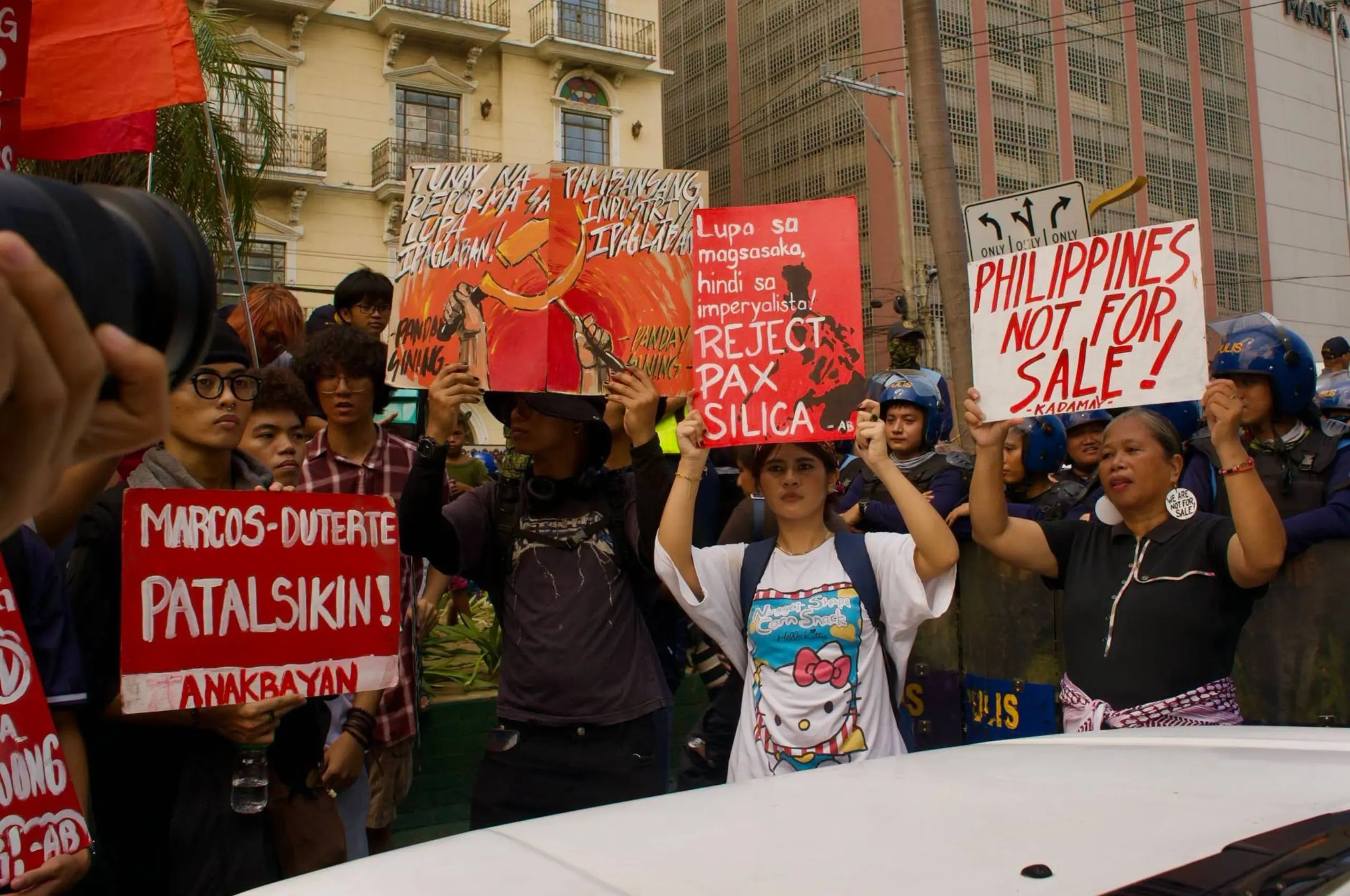
It was not a warm welcome for United States Secretary of State Marco Rubio when he arrived in the Philippines ahead of the ASEAN Foreign Ministers’ Meeting in Manila. On Wednesday, July 22, a clash broke out between police and protesters in Pasay, where progressive groups gathered to denounce Rubio’s visit, U.S. military presence in the Philippines, and the proposed Pax Silica Economic Security Zone in New Clark City, Tarlac.
In the weeks ahead of Rubio’s arrival, concerns have mounted over the proposed construction of a 1,618-hectare semiconductor hub in Tarlac, which is in line with Pax Silica, the U.S. government’s project to secure a global supply chain for AI. The Philippines joined the initiative in April, causing outrage among environmental and human rights activists, who worry that the manufacturing hub and related mining activities would harm local environments and communities.
But what exactly does it mean for the Philippines to be a part of Pax Silica?
What is Pax Silica, and What is the PH’s Role in It?
Pax Silica is the U.S.’ effort to challenge China in the tech manufacturing industry. Since its establishment in December 2025, the coalition has been joined by 23 signatories, including the European Union, Israel, Japan, India, South Korea, Singapore, the United Arab Emirates, the United Kingdom, and the Philippines.
Each participating country offers something valuable to developing AI. For example, Singapore and the UAE house AI data centers, while Japan and South Korea are major tech manufacturers.
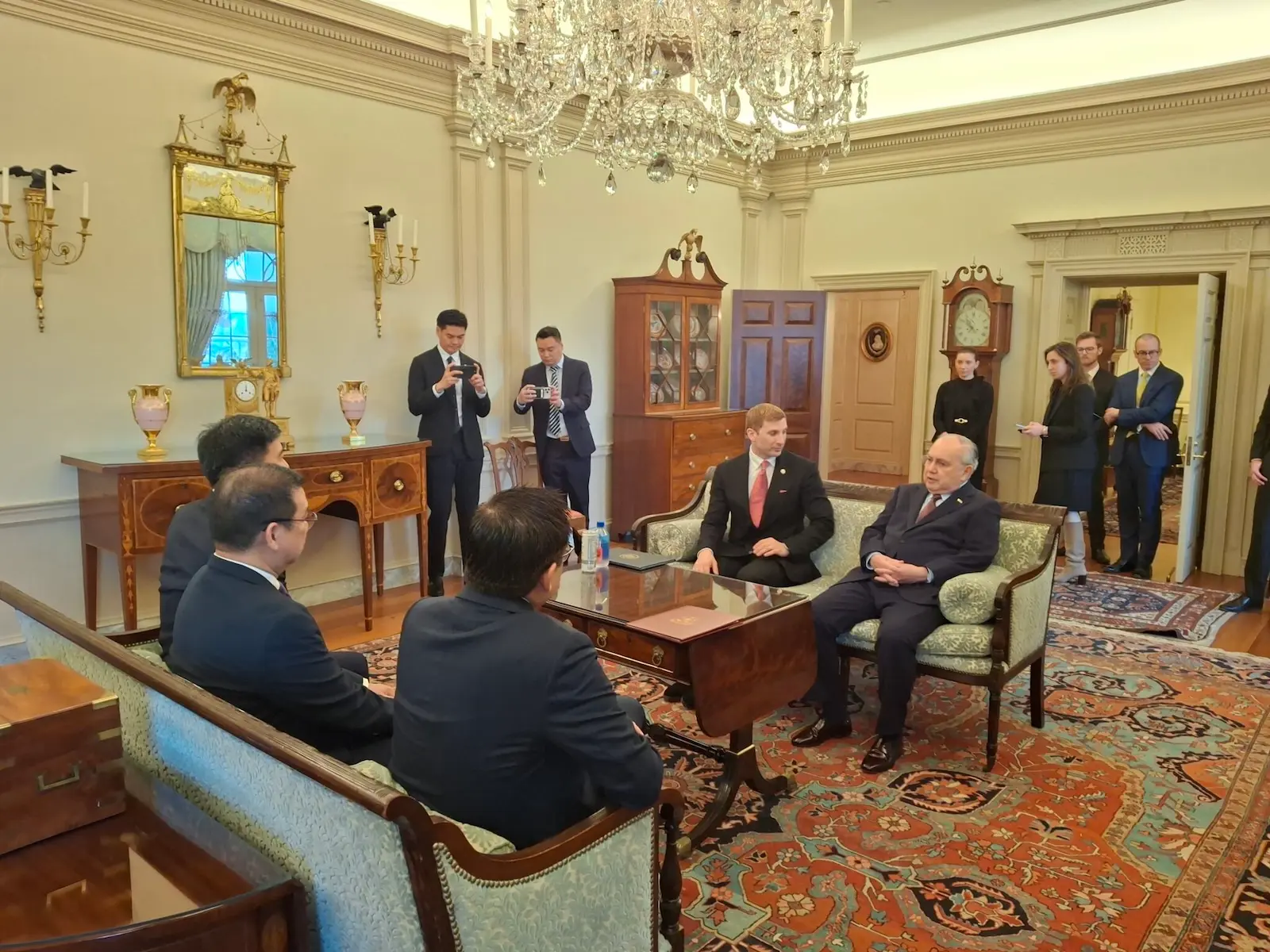
So, what does the Philippines have to give? The Philippines is the world’s ninth-largest semiconductor exporter, with the semiconductor sector being the country’s largest export, according to a 2024 report by the Organization for Economic Co-operation and Development (OECD). Rappler reports that the Philippines is also home to “untapped” sources of rare earth elements and other minerals like copper, nickel, and zinc, which are all essential to manufacturing electrical and electronic components. Pax Silica is therefore expected to bolster the country’s performance in the mining and semiconductor sectors.
“By joining Pax Silica, the Philippines is ensuring that our mineral resources and strategic location are not simply supporting global industries from the margins, but are actively harnessed to build the industries of the future,” Finance Secretary Frederick Go said in a statement in April.
Why Do Activists Oppose the Pax Silica Deal?
The Kilusang Magbubukid ng Pilipinas (KMP) criticized the Philippines’ participation in Pax Silica as a “massive sell-out” of the country’s natural resources that will “worsen land and resources grabbing, extraction, and militarization in the countryside.”
“Tayo ang gagawing tagasuplay ng murang hilaw na materyales at low-value processing tulad ng assembly, testing, at packaging, habang sa [U.S.] ang teknolohiya, kontrol, at tubo,” KMP said in a statement.
In June, the Makabayan bloc, consisting of ACT-Teachers Rep. Antonio Tinio, Gabriela Rep. Sarah Elago, and Kabataan Rep. Renee Co, filed a House resolution seeking to probe Pax Silica, saying that the project would only benefit the U.S. and its military.
“This direction will further subordinate the Philippines to U.S. strategic priorities and expose our people, economy, and environment to heightened risks,” Makabayan said earlier in April. “By hosting a hub explicitly designed to support U.S. supply chains, the Philippines is being positioned to provide the tech requirements of the US war machine and to serve the evolving needs of a militarized bloc.”
Frequently Asked Questions
Pax Silica is a United States-led coalition formed in December 2025 to secure a global supply chain for artificial intelligence and challenge China’s dominance in tech manufacturing. It now has 23 signatories, including the European Union, Japan, India, South Korea, Singapore, and the Philippines.
The Philippines joined Pax Silica in April as the world’s ninth-largest semiconductor exporter, according to the OECD. Finance Secretary Frederick Go said the country’s mineral resources and strategic location would be harnessed to build future industries rather than support global supply chains from the margins.
The proposed Pax Silica Economic Security Zone is a 1,618-hectare semiconductor hub planned for New Clark City in Tarlac. It is designed to anchor Philippine participation in the U.S.-led AI supply chain through manufacturing, assembly, testing, packaging, and related mining activity.
Groups including the Kilusang Magbubukid ng Pilipinas argue that Pax Silica amounts to a sell-out of Philippine natural resources and will worsen land grabbing, extraction, and militarization in the countryside. The Makabayan bloc filed a House resolution in June seeking a congressional probe into the project and U.S. involvement.
Protesters clashed with police in Pasay on July 22, 2026, as U.S. Secretary of State Marco Rubio arrived for the ASEAN Foreign Ministers’ Meeting in Manila. Progressive groups denounced his visit, U.S. military presence, and the proposed Pax Silica hub in Tarlac.
Recommended Video