

In the midst of the 49th ASEAN Summit in Metro Manila, the Philippines was making international headlines. Across the country, clashes between protesters and the police were filmed and posted on news outlets around the globe. In Manila, we saw scenes of the Aeta community taking a machete to a cyborg effigy of U.S. President Donald Trump, while other major cities, from Iloilo to Cebu, held their own demonstrations echoing the same sentiment. At the center of it all is Trump’s visit to Manila on Nov. 17 and activists’ fight against Pax Silica, the U.S.-led initiative to secure infrastructure for AI and advanced tech through partner economies. The plan proposes building an “industrial hub” on Philippine soil, and advocates point out that it could mean exploiting natural resources and forcing out Indigenous communities who’ve lived there for generations.
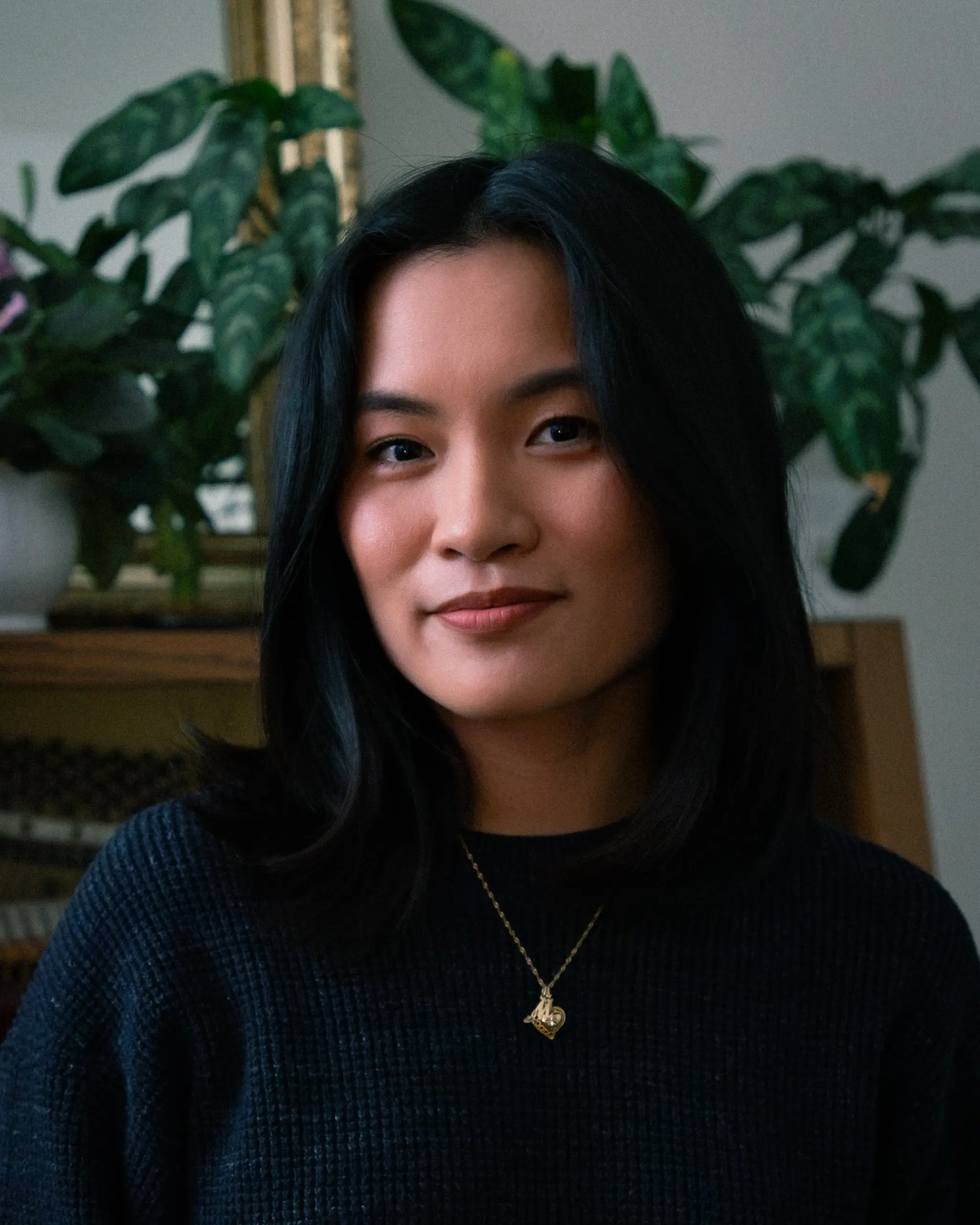
As the world watches how Filipinos stand up to Trump and modern-day colonialism, we turn to political strategist Paulina Mangubat, who was Deputy Chief Mobilization Officer for the U.S.’ Democratic National Committee (DNC). As head of content and creative, she and her team helped deliver a stunning blow to the president and the Republican Party by posting “thousands of times, [getting] over 13 billion views, and [reaching] five times more users than in the 2024 cycle.” Post-blue wave, Mangubat shares her social media strategy and how it can work overseas.
Tying it to the here and now in the Philippines, “A lot of it is documenting,” Mangubat tells Rolling Stone Philippines. “If people are showing up on the streets, or if there are clips going viralViralDescribes content that spreads rapidly across social platforms as people share it, remix it, and react to it. A viral moment can turn an unknown song, clip, or person intoGo to Viral Glossary, make sure they’re being pushed out there. Connect it to long-term infrastructure that can be used to win elections or resonate with people.” Case in point, her team actively engaged with the comments and directed people to the party’s registration tool iwillvote.com, which made it easier to track conversions. “We never wanted anything to just start and end within the feed. Show that energy on the ground and reflect it in a way that feels cool and aspirational, and makes people inspired to join in on that. That’s how I think about that sort of transition [from socials to real life].”
Fandom Tactics
Pulling from what played out stateside, Mangubat used memes, pop culturePop CultureThe everyday entertainment, trends, and media that large groups of people share, including music, film, television, fashion, and online content. Pop culture reflects what a society cares about at aGo to Pop Culture Glossary and fandoms as carriers for political messaging. “I knew that we needed to do something different and meet the moment, so what I did is put real posters in charge,” she says. When building out her team, she asked every candidate, “What are you into? What does your For You Page (FYP) look like?”
By modelling @democrats on fan accounts, everything from the Avengers to Avatar: The Last Airbender to a throwback interview of Selena Gomez became conduits for reaching new voters. “I talk to my team a lot about how international fandoms are the most rabid and most creative. In the Philippines, there’s a rich culture of fandomFandomA community of passionate fans organized around an artist, show, film, or franchise, sharing theories, fan art, merchandise, and tickets. Filipino fandoms are known for their energy, from street projectsGo to Fandom Glossary, like in the queer community, for example. Or like, there’s so many fancam editors who are obsessed with K-pop. We centered our work on emulating those fan communities that are already creating content for free about the things they love. There’s so much raw talent that could be organized, utilized, and called upon to make content and create that surround sound feeling of being in this together,” she adds. The DNC’s social team created a clip repository, where creators could easily download videos and assets to make their own content that felt authentic to their respective audiences. What set her team apart was “understanding how the life cycle of a media appearance can take you to all these corners of the internet. That’s really important in making sure you’re reaching real people and not just the folks who are already dialed into politics,” she explains. And for Democrats, it meant one thing: We’re so back.
In the same breath, she calls out Brazil’s recent elections as an illustration of how effective social can be. Back in the U.S., the party’s shift in strategy paid off.
Pulling Off the Impossible
Long before the 2026 midterm elections, Mangubat grew up in Arizona. With her mom from Quezon City and her dad from Cebu, her parents met as students at the University of the Philippines (UP) and, in the early ‘90s, moved to the U.S. as doctors. Just like other Fil-Am kids, she spent her summers visiting family in the Philippines. In her grandma’s house in QC, she recalls being surrounded by a mix of Tagalog, Hokkien, English, and some Mandarin thanks to her mom’s Filipino-Chinese heritage. Looking back on that time, she foreshadows her career in the digital space: “I didn’t have any friends [in the Philippines], right? So I was on the internet!”
Mangubat began her career at digital advertising agencies, and while making ads for Kamala Harris’ first presidential run, she met future boss Shelby Cole, Chief Mobilization Officer at the DNC. Craving hands-on campaign experience, she moved to Boston and landed a job as Digital and Creative Director for Michelle Wu’s mayoral campaign.
“That was a real aha moment for me. I was the eldest daughter of Asian-American immigrants working for another eldest daughter of Asian-American immigrants. A lot of her whys were similar to my whys. That was a life-changing experience getting to learn about the nuts and bolts of campaigning and fall in love with Boston through her eyes.” With a major win on her resume, Mangubat went on to do a two-year stint at Google before ending up at the DNC in 2024.
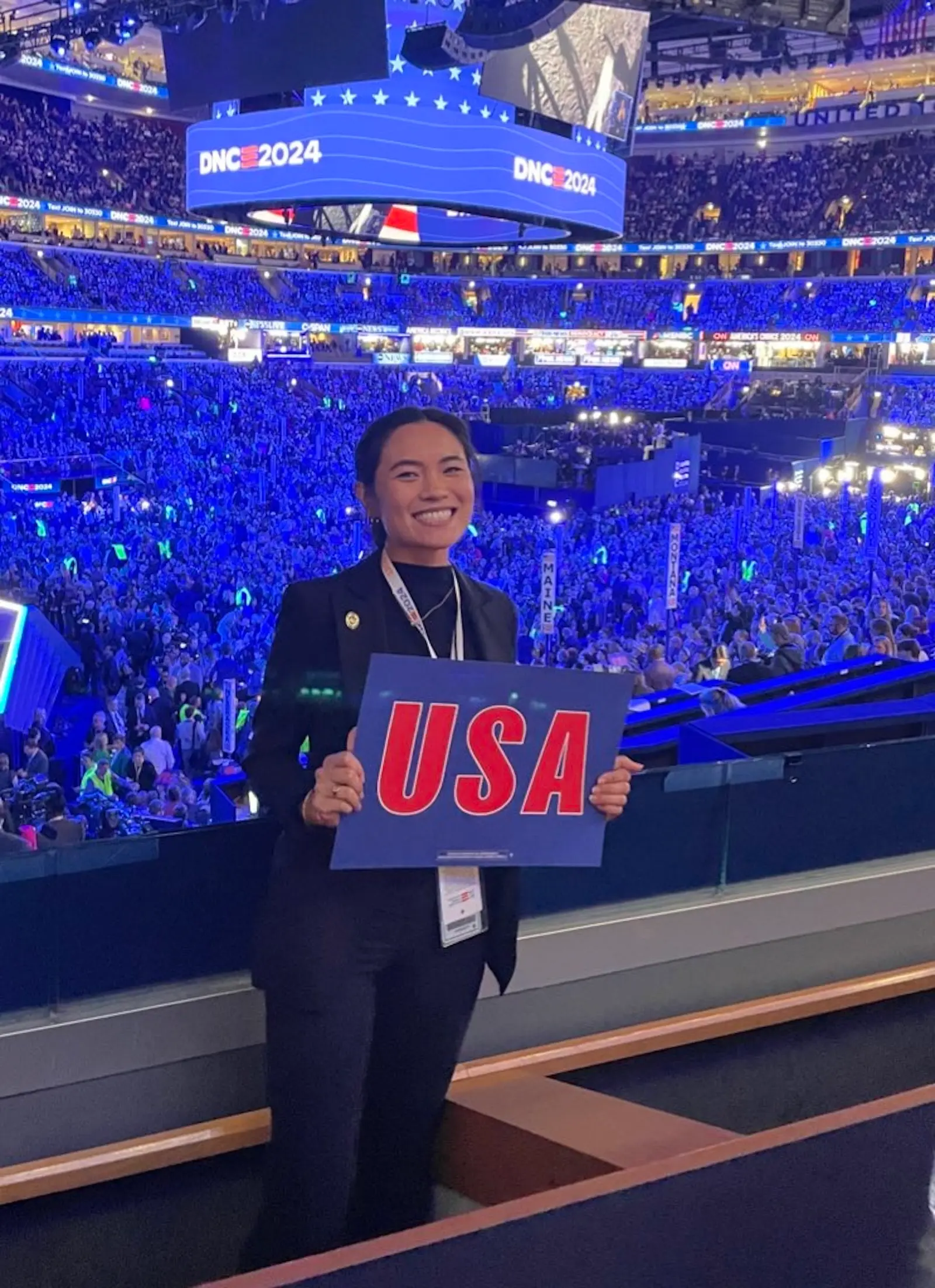
Paulina Mangubat at the 2024 Democratic National Convention in Chicago, Illinois. Photo courtesy of Paulina Mangubat
Since then, it seems that Mangubat and the broader Democratic Party have pulled off the impossible. For a start, Texas flipped blue and elected Gina Hinojosa as the state’s first Latina governor. “Everyone from Abdul El-Sayed to James Talarico and Amy Acton, all the Democrats who won tough races this year weren’t comparable to one another because they all ran to represent their own communities, and I think that that’s the thing that made them winning candidates,” Mangubat shares before wrapping up the thought with, “You are asking members of your own community — people who are your neighbors, people who you see around the grocery store — for their support. Where we lose people is where we start thinking that it’s literally about anything other than making your neighbors’ lives better.”
Stepping back and reflecting on the work, she’s witnessed the internet’s power and sway over democracy. “Social media has this democratizing effect. If you’re smart about using these algorithms to your advantage, you can make things go as viral as anything else in this world and get messaging in front of more people than TV or paid media.”
She brings up how her team used archived footage of Trump as ammo. “There were so many clips of Trump admitting that we can’t afford Medicare because we’re fighting these wars. Things like that. So we took his own words and put it in front of people who felt incredibly shafted by the Trump administration. I’d say regardless of where you are in the world, being able to use social media to show the realities of what’s happening is the most important thing you can do,” she adds.
“Regardless of where you are in the world, being able to use social media to show the realities of what’s happening is the most important thing you can do.”
You can’t talk about social media and Filipino politics without bringing up the Cambridge Analytica scandal, in which the Philippines was allegedly a testing ground for digital propaganda. Just this week, journalist Maria Ressa said in an interview, “Technology is the accelerant for the demise of democracy.” To that, Mangubat says, “At the end of the day, it’s about electing people who see the benefits of these tools, but also see the harm they can do. It’s weird to use a tool to then hopefully regulate and make it a little bit more democratic, a little less tech oligarch-coded. But that’s what all of our work is about: electing people who make people’s lives better and not worse.”
For now, Mangubat is taking a well-earned break. She’s looking forward to many things, from the next season of Heated Rivalry to the new Nathan Fielder doc, to the next generation of political strategists. “That part is personally something I’m excited about because it means that people from non-traditional backgrounds, people who haven’t seen themselves represented in government before, might feel like they have a fighting chance for the first time in a really long time.”
Before signing off, she shares her advice to the youth: “Whatever show you’re obsessed with, whether it’s Andor or Arcane, just post about it. Get in the habit of making things. Politics moves so quickly, and what we need is more scale. We don’t need people to paint the Sistine Chapel every single time. Be quick, understand how to connect to people, and create without the fear of flopping.”
Recommended Video

Rolling Stone Philippines Hall of Fame Issue, Now Available at SariSari Shopping