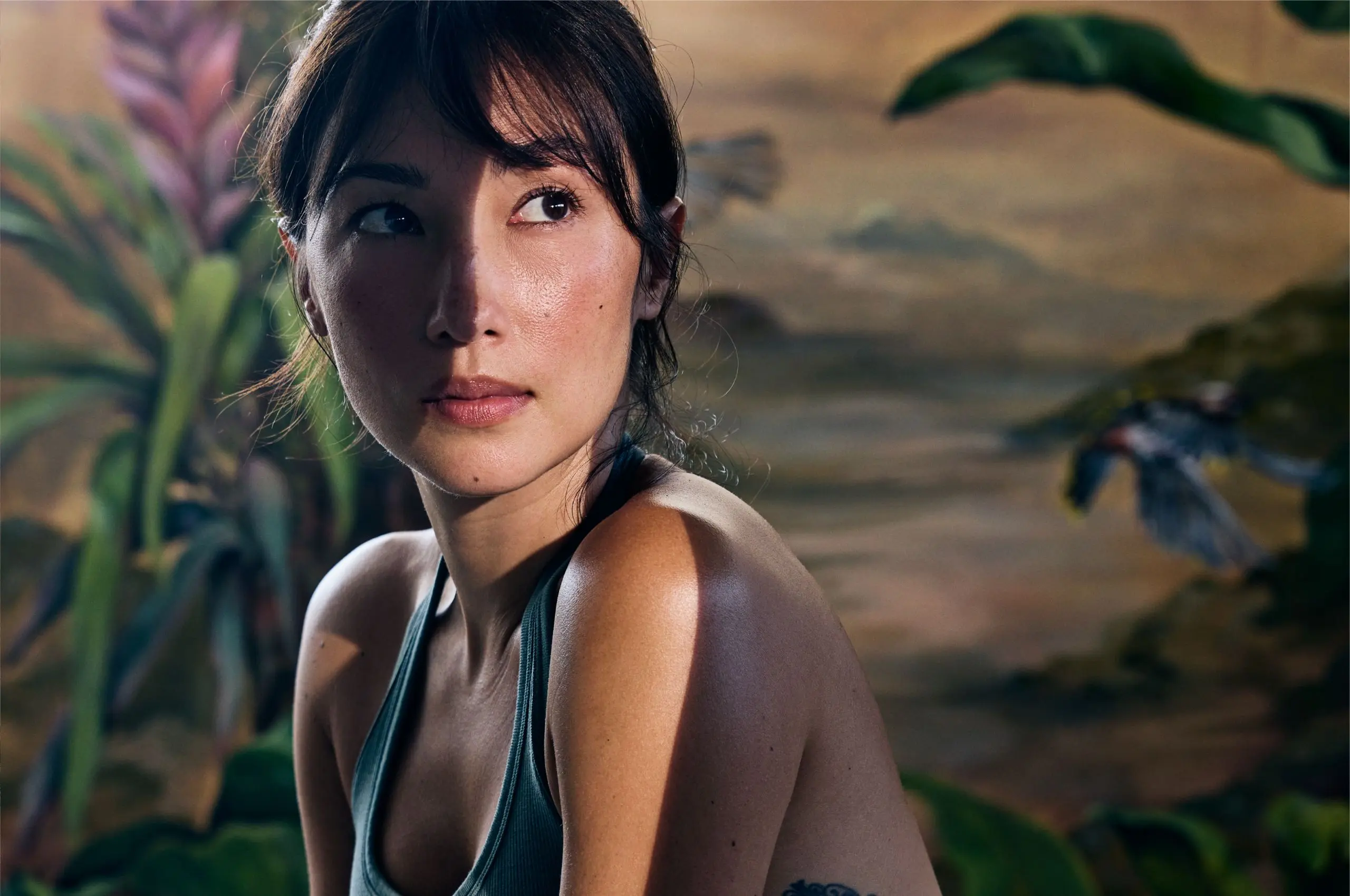
Model and actress Solenn Heussaff’s first solo exhibit in 2016, “Our People,” was inspired by the photos her father took in his travels. 10 years and a few other exhibits later, Heussaff returns with “Into the Unseen Garden,” a body of work that “explores the emotional landscape of growth.” At its center is the painting that draws on her experience dealing with her father’s dementia. “It’s kind of full circle because it’s still my dad at the core of things,” she tells Rolling Stone Philippines.
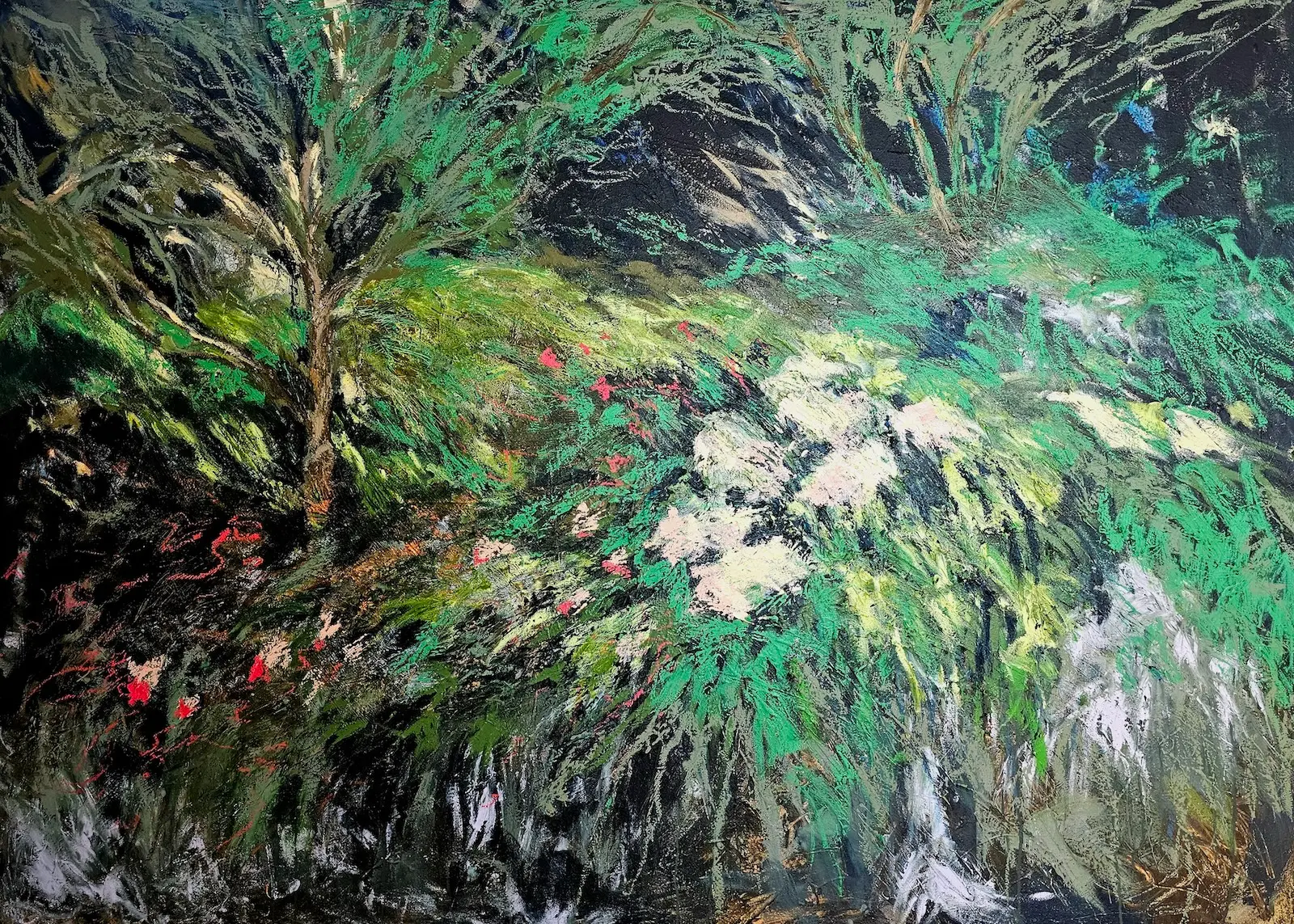
Like three other paintings in the series, “Where the Hortensias Sing” is characterized by broad, imprecise strokes depicting foliage and flowers set against — or obscuring — a darker background. There’s an impression of time passing in the long strokes, which feels apt for a painting inspired by the slow grief of tending to a sick loved one.
“Hortensias were always my father’s favorite flower,” Heussaff wrote in the exhibit dossier. “In this piece, they appear abstracted and blurred, reflecting how memory and identity can soften and dissolve over time.”
In her interview with Rolling Stone Philippines, the artist says she’s learned to process her father’s dementia by drawing on the works of Swedish painter-mystic Hilma af Klint, regarded as one of the first Western abstract artists. “She would talk to the spirits because her younger sister had passed away, and that’s what made her go into that phase of drawing all these,” Heussaff says.
“It’s a weird feeling of mourning someone who’s still alive. I just kind of felt [Klint] from that, and it kind of helped me with it. I’m not seeing spirits, though,” she adds.
Here, Heussaff talks to Rolling Stone Philippines about grief, new life, and why she makes art.
You had an interview with Elle Singapore, where you said that painting is the most challenging of all the different kinds of creative work you do. But what draws you to painting, specifically?
What draws me to painting is the alone time I get. Usually, when I’m in my studio, whether I’m feeling inspired or not, there’s always something that comes out. And I love that it forces me to keep trying and stepping out of my comfort zone every day until I get a piece I’m happy with. So it’s really that push. But at the same time, I’m not trying to prove myself to anyone. So it’s kind of that feeling of maybe proving to myself that I can do it, or that I just have to be persistent.
“I’ve found my own style, I think. But I’m still waiting for that moment when people can look at something and be like, ‘Oh, that’s Solenn.’”
I read that the paintings in the series were inspired by foliage and that they’re metaphors for the human experience. What are the similarities between humans and nature that you wanted to capture with these paintings?
[The series] is about the landscape as a subject, or foliage as a subject, but it’s also [these things] as language. When I observe plants or things that grow in my garden, I see that it really mirrors life or inner feelings. Let’s say you have a plant growing and you have a new leaf that emerges; it’s like when something new happens in your life and pushes you in a certain direction. And then at some point you’ll see the leaf wilt just like how things in our life come and go. And then it makes room for a new leaf to sprout, just like how all things move and shift constantly, because it’s meant to be that way.
That’s how growth happens for a person, because growth does not come from stillness. It really comes from emotional depth and difficult moments you have in your life, or the super happy moments. This is what the exhibit is about.
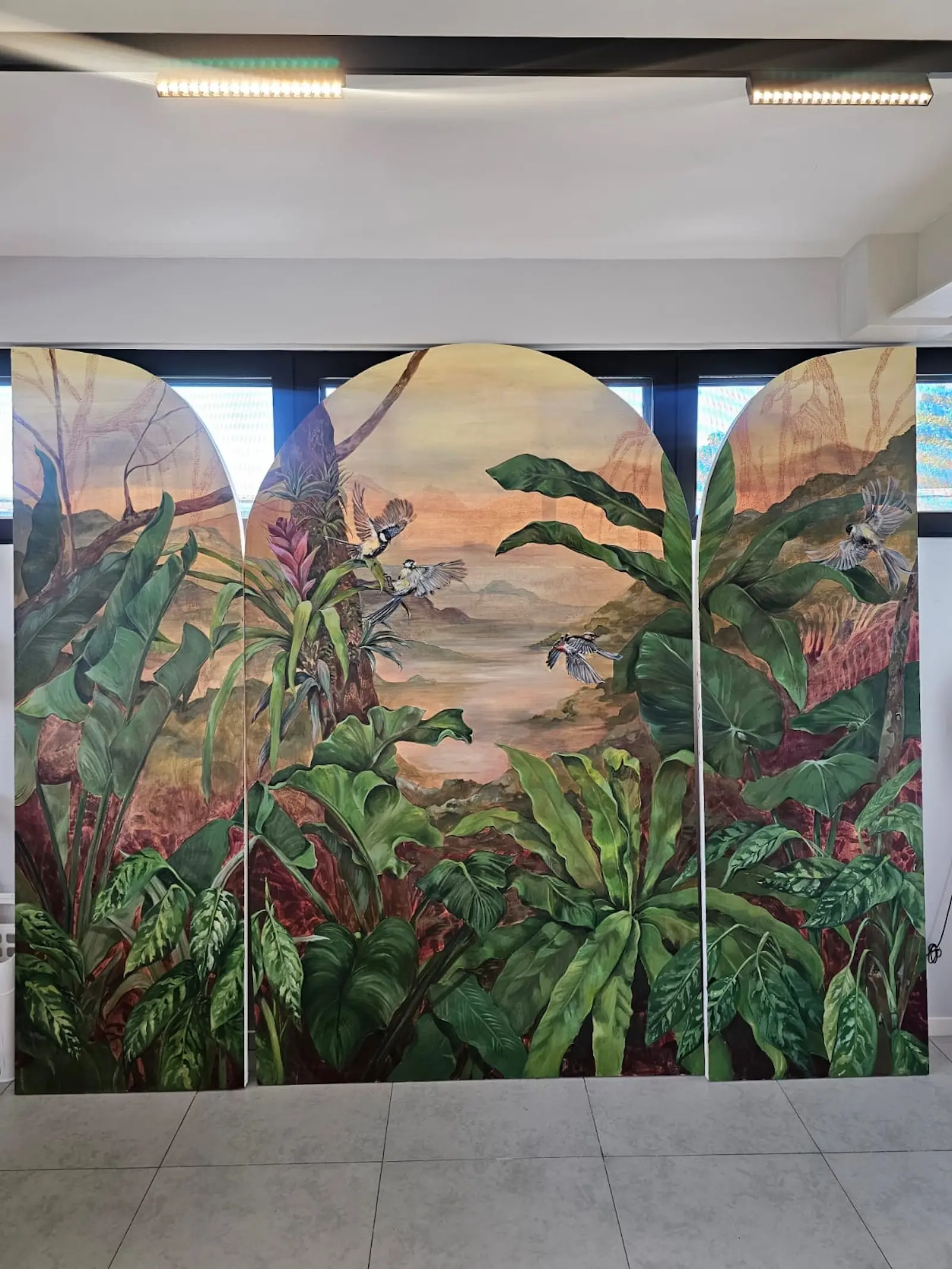
Change is constant, and if you don’t allow it to happen, then you stop yourself from going to where you could end up, potentially. That’s all of this. Like “The Portal,” for example. You look at it and you’re like, “Okay, it’s plants and birds.” But it’s really about finding peace within yourself when faced with something so, so big. It’s almost like a chapel window and you’re trying to find answers. But at the same time, it’s like stepping into a new world.
“Where the Hortensias Sing” does a great job of really capturing a sense of fleetingness, which is what Impressionism was about. A lot of the paintings here also seem to lean towards that style. Is that a style you’ve always been drawn to? Or is that something that you’re doing now because the concept necessitates it?
Actually, it’s my very first time doing this. Very first time painting with my hands, also. All the abstracts are almost purely hands, no paintbrushes. And I just found that there was this instant connection with the canvas, and my feelings were just heightened when it was my hands painting, and not a brush. I felt like the strokes were more emotional. And for “Where the Hortensias Sing,” I did want to portray that life is fleeting, that things change, and that even things that you didn’t ask for happen to you. You just have to find beauty in it, which is why some of it is quite dark, but you’ll have the bright red or the bright green.
I wanted to ask about “The Portal” because it’s a bit of a standout compared to the others. Can you tell me more about that?
I really wanted it to be like a window. When you’re faced with nature, sometimes it’s just so grand. It’s a bit scary when you’re facing a forest, but it’s so magical. You feel inspired, or you meet new people, or you come across a new creature. That’s what I wanted to portray with this.
Everyone’s asking me what the little balls are. I wanted to share it with my French heritage as well, [and make it] like a French window with the moldings and everything. But I also wanted it to be very Filipino, and something that reminds you of home. When I was young, my grandma had this chair, and [the armrest] ended with a ball.
Are there any artists whose work influenced or informed your work here?
For abstract — I mean, it’s not similar to [my work] — I love Hilma af Klint. I bought absolutely all her books. I’m going to her exhibit in Paris, and I’m so excited. She was very advanced for her generation because she was in the 19th century, so everything was in dark colors. It was mostly men in the art scene. People were making fun of her because she was a woman and she was speaking to spirits. She was a bit “krung-krung,” they said, because she would paint based on what the spirits were telling her. If you look at her artworks, it’s weird writing and then massive flowers or ovary-looking kinds of things.
But her color and her thought process are so now. It’s so crazy that it was in the 1800s, and she would talk to the spirits because her younger sister had passed away, and that’s what made her go into that phase of drawing all these. Before that, she was into realism. After her sister’s death, that’s when [the abstract style] happened.
My dad’s still with us, but he’s just not there. I told someone a while ago, it’s a weird feeling of mourning someone who’s still alive. It’s a very slow grief. I just kind of felt [Klint] from that, and it kind of helped me with it. I’m not seeing spirits, though.
How do you think you’ve evolved as an artist?
I don’t know; I still have a lot of work to do, but I do feel like I’m more confident with my strokes. My very first exhibit in 2015, I was so shy and thought, “No one’s going to come,” or they’d be like, “What the hell is this?”
But it was a success. I was so happy people received it well. The exhibit was all the faces from the world, because my dad used to take photos of his travels. So, I used all the faces from his photos. That’s when I first started painting. It’s kind of full circle because it’s still my dad at the core of things.
I’ve found my own style, I think. But I’m still waiting for that moment when people can look at something and be like, “Oh, that’s Solenn.” I’m not yet there because I’ve done so many different styles. But color-wise, you’ll know it’s me.
Frequently Asked Questions
Into the Unseen Garden is Solenn Heussaff’s painting exhibit exploring the emotional landscape of growth through abstracted foliage and flowers. Its central work draws on her experience caring for her father through dementia, using natural imagery as a metaphor for change, loss, and renewal.
Solenn Heussaff’s father’s dementia inspired “Where the Hortensias Sing,” a piece using his favorite flower rendered in blurred, abstracted strokes to reflect how memory and identity soften over time.
Heussaff turned to Swedish painter Hilma af Klint, one of the first Western abstract artists, after learning Klint began painting abstractly following her sister’s death. Heussaff found the parallel helpful for processing her father’s illness, though she clarifies she isn’t “seeing spirits” like Klint.
For this series, Heussaff painted abstract works entirely with her hands rather than brushes, for the first time in her career. She says the direct contact with the canvas heightened her emotions and made the resulting strokes feel more expressive.
“The Portal” is a standout piece in Solenn Heussaff’s “Into The Unseen Garden,” styled like a French window with decorative moldings. It depicts plants and birds as a metaphor for stepping into the unknown.
Recommended Video