

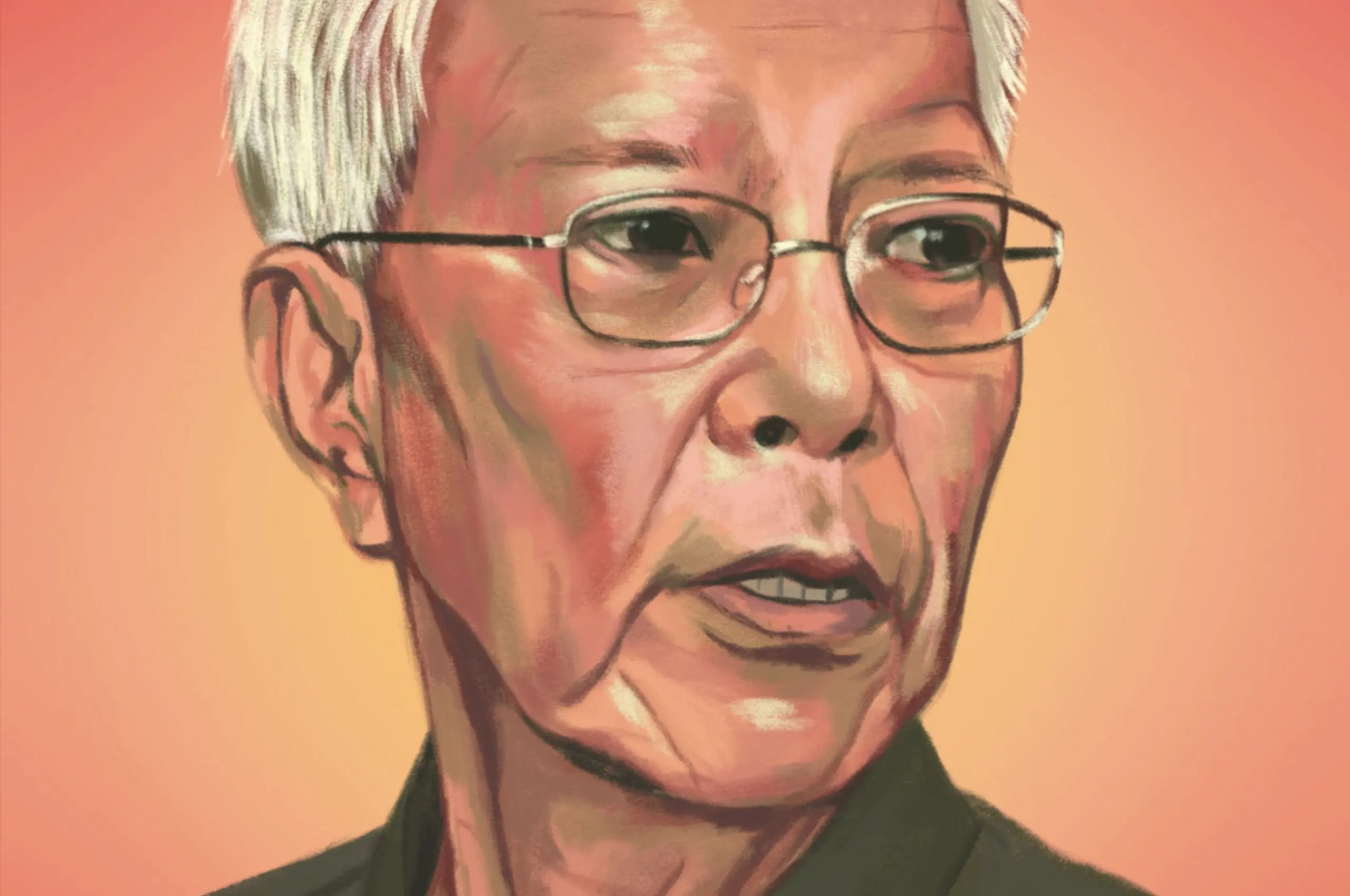
As it was for many of Gregorio C. Brillantes’ fans, it all began with “Faith, Love, Time and Dr. Lazaro,” a short story I read in a class on Philippine Literature. In a book that compiled the canon of Philippine short stories in English, Brillantes’ story stood out as particularly sophisticated, quiet, and internal. I was in my teens, and I remember being struck by the imagery and precise vocabulary — they transported me to a deep night in a faraway provincial town, presumably somewhere in Tarlac, and made the breadth of an aging country doctor’s life feel real in my bones.
In college, I found two of his short story collections in the De La Salle University library — The Distance to Andromeda and Other Stories (first published in 1960) and The Apollo Centennial: Nostalgias, Predicaments and Celebrations, which came 20 years later — and became mildly obsessed. With the uniquely kilometric titles, the exquisitely constructed sentences, and the big themes that played out in intimate lives. Few stories have broken my heart in the way “The Cries of Children on an April Afternoon in the Year 1957” has, or stirred a consciousness to the vagaries of privilege and power as “A Taste for the Fine Whiskey of the Bourgeoisie” (one of my favourite short stories of all time, with a final line that still rings in my ear). I have never rooted for a character as I have for Philip Lapus.
I decided to do my college thesis on Brillantes’ fiction. It was as good an excuse as any to meet the writer himself. To my everlasting surprise, it was fairly easy to arrange for an interview in the Pasong Tamo offices of the Philippines Graphic magazine, for which he was the managing editor.
He met me at the door at the top of a narrow stairwell, and I trailed him through a maze of desks piled high with paperwork. Months before, Brillantes had published one of my first short stories. He apologized for changing the title; the original didn’t quite work. Then he told me to sit on the side of his good ear.
We chatted for over an hour. He told me stories about growing up in Tarlac, his writing process and literary influences, and the time he paid John Updike a visit (they might have had a beer on Updike’s front lawn, or I might have imagined it). Brillantes had a dry kind of humour, and I was so starstruck I couldn’t tell when he was cracking a joke as he was telling it, and I ended up laughing tentatively, belatedly, inwardly horrified by the time delay.
Still, he was kind and generous enough not to make me feel like I was imposing on his time, and he sent me off with a couple of books from his office shelf. One of them was The Collected Stories of John Cheever, a well-thumbed paperback with a deep-red cover. It was one of his favorites, and he signed it with a personal note. I’ve carted this souvenir, along with his books, across countries and over the years, in the undying hope that his genius might rub off on me.
I have remained a fan since I first read his works; I have a vague memory of transcribing all his stories, word for word, as a graduate assistant at the University of the Philippines Creative Writing Center, which only made me more enamoured of them.
In recent years, I’ve visited him a couple of times. Every time I went to his house on Panay Street, it was the same feeling of being starstruck. And each time he’d let me shop his vast collection of books in his home library, screening the pile for the ones I could take home. On both visits, he told me, “Gawa kayo ng literary journal.”
It’s hard to overstate the kind of influence he has had on Philippine Literature; Brillantes is a writer’s writer, a voracious reader with wide interests and a deep devotion to craft, a kind of oracle whose prescient works are, remarkably, as relevant today as they were at the time they were written. Personally, the lifelong obsession has been to write as deeply, expansively, skilfully, and elegantly as him. I write because I want to write like Greg Brillantes.
This was originally published in the November 2025 Issue of Rolling Stone Philippines.
Recommended Video
- In This Article:
- Gregorio C. Brillantes
- National Artist