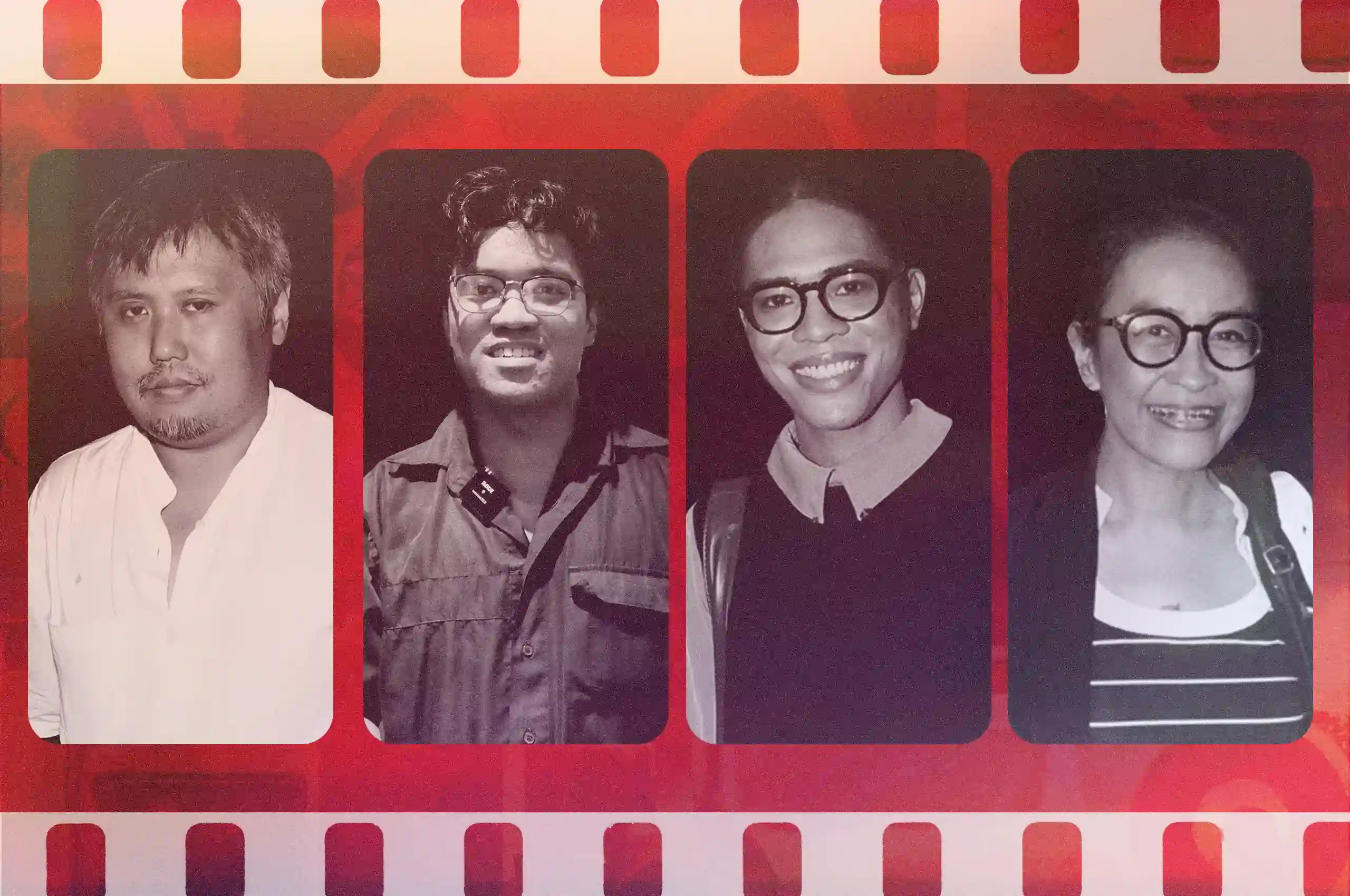
Rolling Stone Philippines hosted its State of Affairs event on August 7 at boutique cinema venue Sinepop in Cubao, Quezon City. The daylong gathering brought together film enthusiasts and practitioners to discuss the current state of Philippine cinema. One of the main highlights was the State of Cinema panel moderated by Film Development Council of the Philippines (FDCP) chairman and CEO Jose Javier Reyes, joined by Quezon director Jerrold Tarog, cinematographer Pong Ignacio, and producer Daphne Chiu-Soon.
Reyes underscored that the survival of local cinema depends not only on filmmakers but on audiences themselves. “But let us be aware that if we want to bring back the life, the vibrancy, and the significance of Filipino cinema, it’s not just the job of filmmakers, it’s the job of the audience,” Reyes tells the crowd. “It all depends on the audience. Kung hindi tayo maniniwala sa gawa ng Pilipino, sino ang maniniwala sa atin? Napakahalaga na bigyan natin ng supporta ang mga pelikula na makabuluhan, o kahit na ‘yung mga pelikula na kumakain lamang ng ilang oras natin, nagpapatawa o napapaiyak sa atin.”
This challenge set the tone for the Rolling Stone Philippines’ Guerilla Report video series, offering real-world perspectives from attendees and panelists to the question of: Ano ang kalaban ng Philippine cinema?
Behind the Scenes
Film critic Philbert Dy identified surging ticket prices as the most pressing issue, arguing that they limit audience access. “For as long as ticket prices are too high people actually don’t have access to Philippine cinema,” he says. “Even if they want to watch a movie they might want to save that money that they consider more essential.”
Others point to underlying sociopolitical issues as the key challenge for local cinema. Image-based artist Eric Bico suggests censorship as a major hurdle, while for critic Lé Baltar, the root problem is the country’s neoliberal structures. Baltar argued that the system has trickled down from producers to audiences, leaving people with little time or opportunity to go to the movies. Likewise, film journalist Lorna Lovelace pointed to piracy and overly harsh criticism as damaging forces, while PR consultant Javier Pimentel cited crab mentality, where industry players bring each other down instead of working together.
Sinegang publisher Jay Cruz stated that poor labor conditions on set, especially when perpetuated by directors or senior crew, are among Philippine cinema’s worst enemies. “There’s a controversy related to set mishaps,” he said. “If [producers] don’t care about labor, that really is the biggest enemy for me.”
It is clear that Philippine cinema faces multiple, intertwined challenges, and the fight for local cinema is not only about what happens behind the camera, but also about the choices made in front of the screen.