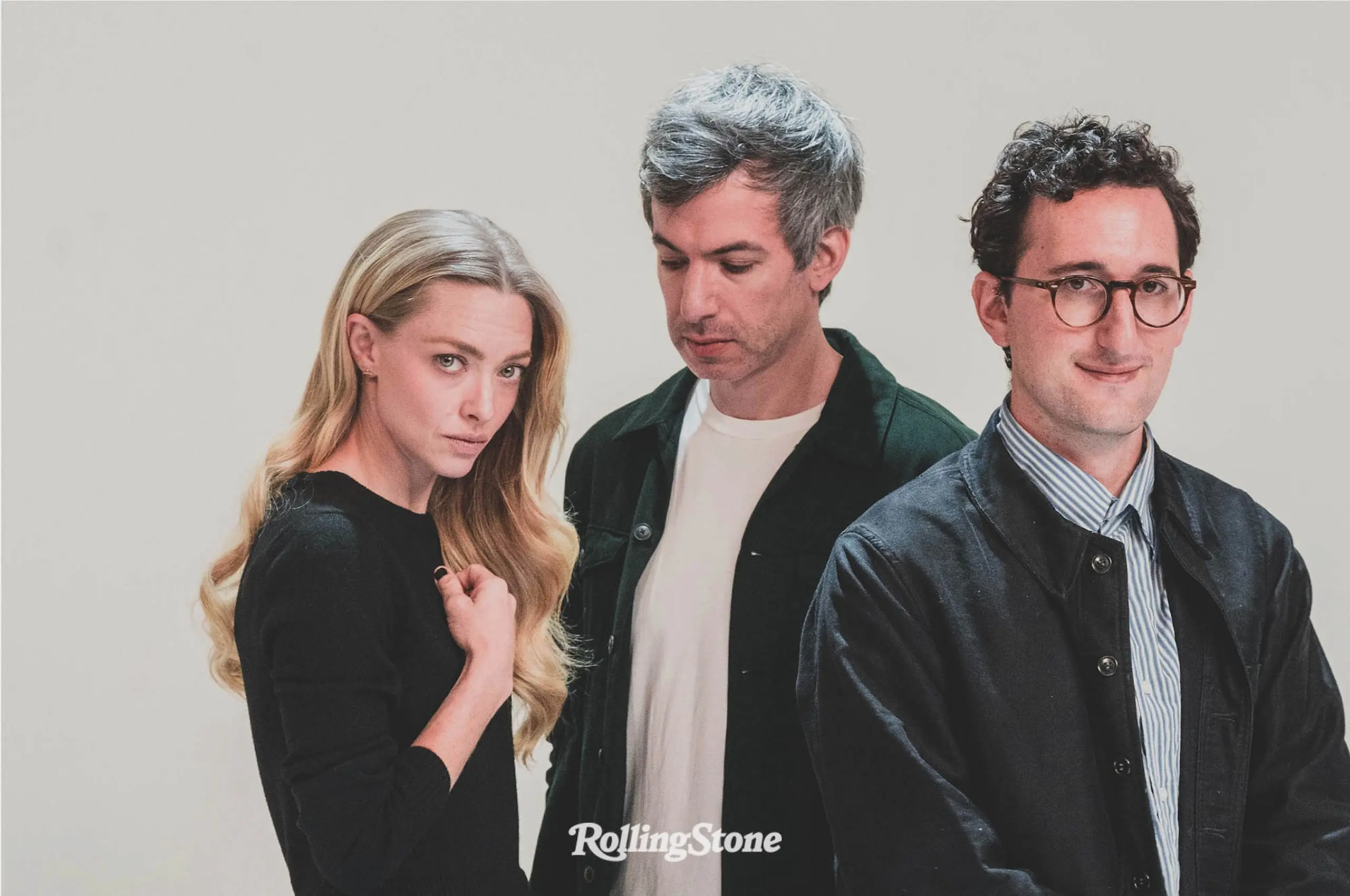


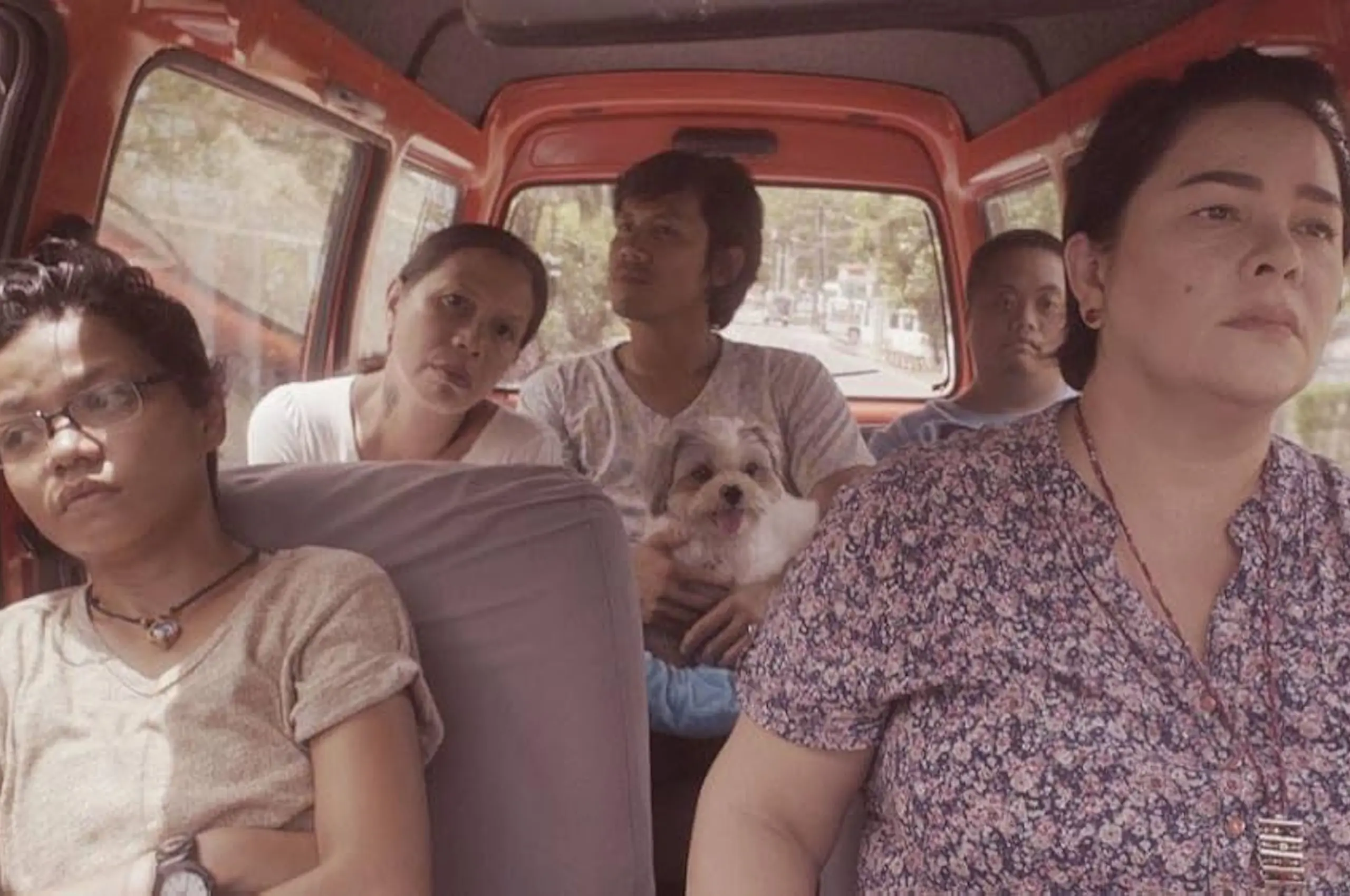
How do you drive from Cebu to Dumaguete, crammed in a multicab with three of your most dysfunctional family members, all while grappling with the death of your family’s patriarch as you make your way to his funeral? Such is the core dilemma of the Cebuano comedy-drama, Patay Na Si Hesus.
In 2016, writer Fatrick Tabada had no idea that his first-ever screenplay — which he’d written mainly to fulfill a final requirement at UP Diliman — would go on to become a main contender in that year’s QCinema International Film Festival. Tabada, born and raised in Cebu himself, had simply wanted to write about his own father. “I [hadn’t] seen my dad in 13 years, tapos nabalitaan na lang namin na namatay siya,” he said in an episode of Rolling Stone Philippines’ Greatest Hits. “Pumunta kami sa libing, tapos hindi kami umiyak. Then, a week later, namatay ang aso namin. Inilibing namin sa likod ng bahay, at umiyak kaming lahat.”
There’s a dryness to Tabada’s humor, which he lends to his characters throughout Patay Na Si Hesus. The film follows Iyay (played by the late Jaclyn Jose), a lechon vendor in Cebu who learns that her estranged husband Hesus has died in Dumaguete. Wanting to pay her last respects, Iyay rounds up her three grown-up children and forces them on a road trip between the Visayan islands (“à la Little Miss Sunshine,” Tabada told me). However, none of the three have any interest in attending the funeral: Jay (Melde Montañez) is busy being unemployed, Jude (Chai Fonacier) is dealing with a distant girlfriend and being deadnamed, and Hubert (Vincent Viado) is just happy to be on a family road trip.
To Tabada’s surprise, his screenplay was among the chosen few selected as part of QCinema’s Circle Competition, which granted rising filmmakers a lump sum of P1 million to get their projects off the ground. All he and director Victor Villanueva needed to do was secure the rest of the funding (because “P1 million lang was not enough,” Villanueva told me), find a reliable set of producers, actors, and crew members, and figure out the most efficient way to shoot from Cebu to Dumaguete, all in the span of 15 days.
“A lot of cinemas did not want to screen our film. There was a lot of pushback kay they wanted other films. Murag ang feeling nila was like, ‘Who wants to watch a Bisaya film?’”
“I thought sayon ra i-buhat ang kaning road trip movie,” Villanueva said half-jokingly when I asked him what he remembered about filming Patay Na Si Hesus. “Pero I will never do a road trip movie again. Kapoy kaayo siya. It was a logistical nightmare.”
Despite the hurdles that came with making the indieIndieShort for independent, describing music, film, or art made outside the major-label or big-studio system. Indie work often gives creators more freedom and a distinct voice, and in the PhilippinesGo to Indie Glossary project, the film’s cast and crew reaped the rewards of their hard work. The film took home two awards at the 2016 QCinema: the Audience Choice Award and the Gender Sensitive Film Award, the latter of which it won for its portrayal of Jude, Iyay’s trans son. It was screened across the Philippines the following year, before finding a second life in 2020 when it began streaming on Netflix (unfortunately, it has since left the streaming platform).
This November, just in time for its 10th anniversary, Patay Na Si Hesus returns to QCinema as part of its Rediscovery Program, which honors several standout films of QCinemas past. But before it hits screens once again, we’ve tapped some of the key players behind Patay Na Si Hesus to look back on the film’s history. From debates about whether or not the film should be basedBasedBased is slang expressing approval for someone unapologetically stating their genuine opinion, regardless of whether it's popular, controversial, or conventionally acceptable within discourse. Originally associated with certain online political subcultures,Go to Based Glossary in Cebu, to last-minute character changes to the script, to a surreal two weeks spent in the company of Jaclyn Jose fresh off her Cannes win, here are the moments that have stood out to the film’s director, writer, producer, and cast members, 10 years later.
‘Can’t You Make The Movie In Tagalog?’
Initially, Tabada had written his script in Tagalog, knowing that his Film Studies professor would not be able to understand Cebuano. However, he had always envisioned his characters speaking in Cebuano, living in Cebu, and throwing one-liners tailored to Bisaya humor. When QCinema’s judging panel accepted the script, though, there was some pushback on setting the film in Cebu.
Fatrick Tabada, writer: I remember when it was picked [to go to QCinema], producers were asking us, “Can’t you make this movie in Tagalog? And could you do different routes, like Manila to Baguio or Manila to Pampanga?” They were thinking it was easier for production.
I mean, as a filmmaker, I was really excited to see the release of my first screenplay. At the back of my mind, maybe I was starting to consider na baka medjo mahirap to find a producerProducerThe person who shapes how a record sounds, from arranging and recording to guiding performances and making creative choices in the studio. A great producer can bring out the bestGo to Producer Glossary to work on a Cebuano film. Just to get my film out there, you know…
“I really wanted to make a film that was not in Tagalog. I still feel, to this day, kulang ‘yung [Filipino] films na shot in languages other than Tagalog.”
Victor Villanueva, director: Naglisod gyud mi og pitch, kay naay usa ka member sa panel na dili gyud siya motuo… murag naingana siya, “I don’t believe you can find financing for this film!” So nagsingot gyud mi. Ning-bluff na lang ko, murag, “I have support for this film sa Cebu, I have locations na,” mga ingana [Laughs]. Luckily, ang panel, kung nagbasa na sila, ganahan gyud nila ang script. But I remember they asked, “Vic, what if mabuhat ninyo na mas Tagalog ang story? Para mas commercial?” We said na mag-consider lang mi, pero inside… di mi sure.
[We were having a hard time pitching to the QCinema panel, because there was one panel member who really wouldn’t believe us… they were saying things like, “I don’t believe you can find financing for this film!” So we were really sweating. I had to bluff and be like, “I have support for this film in Cebu, I have locations already,” things like that [Laughs]. Luckily, when they read the script, they really liked it. But I remember they asked, “Vic, what if you make the story more Tagalog? So that it’s more commercial?” We said we’d consider, but inside… we weren’t sure.]
Moira Lang, writer and producerProducerThe person who shapes how a record sounds, from arranging and recording to guiding performances and making creative choices in the studio. A great producer can bring out the bestGo to Producer Glossary: I remember I read the script and loved it on the first read. I was laughing. I knew the script still needed work. But I love when a script makes me laugh, and I really wanted to make a film that was not in Tagalog. I still feel, to this day, kulang ‘yung [Filipino] films na shot in languages other than Tagalog.
Early on, there was already this debate about [Bisaya versus Tagalog] kasi nahirapan kaming mag-cast ng mga anak. But I remember I was one of the ones who was really against it. I kept saying, “No, kasi ‘yun ‘yung extra challenge niya.” What really made me jump onto the project was the idea that we’d be shooting in Bisaya. I really put my foot down, kahit mahirap talaga ‘yung casting.
‘The Trans Experience?’
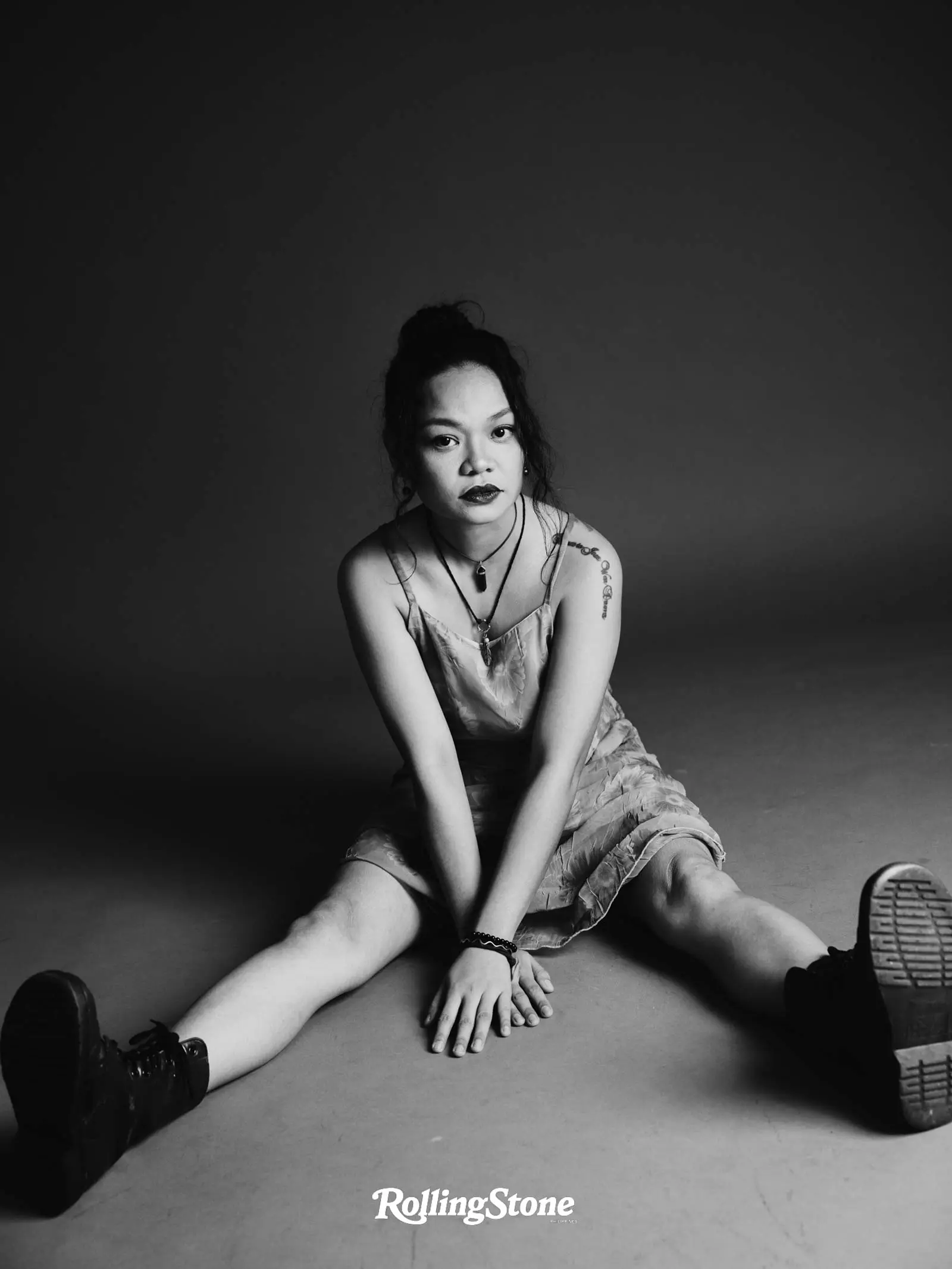
A week or two before shooting was supposed to start, the script went through a major change. Although the initial plan was for Iyay to have four children, this was reduced to three for two reasons: because the fourth sibling’s character arc didn’t pay off, and because there was no more room in the multicab. The fourth sibling was meant to be played by Chai Fonacier, but in order to keep her in the film, producers offered her the role of the third sibling — Jude, a trans man struggling with a failing relationship and the responsibilities of parenthood.
Lang: Another actor was supposed to play Jude. We’d already done all the auditions and casting, and we were two weeks before the shoot. But we decided that we couldn’t do four [children]… But we really wanted to keep Chai — not just because we loved her, but because she was a much better fit kasi [Cebuano] speaker talaga siya.
Chai Fonacier, actor: They told me they wanted me to play the fourth sibling. Her name was Vera and she was this college student who was a big perfectionist. So I was preparing for that. But one morning, about a week before the shoot date, one of the [producers] told me, “Chai, so, uh, we’re scrapping Vera.”
My first thought was, “There goes my job.” [Laughs] Immediately started thinking about other ways to pay the rent. But then he followed it up with, “Pero, Chai, would you be willing to play Jude?” I’d just woken up to take the call, kasi I’d had a long night before preparing for the shoot, so I said yes, then went back to bed. But when I woke up, I started panicking. “Oh my God, I’m playing a trans man? What do I know about being trans? The trans experience?” Nakamata gyud ko! [Laughs] Nagsugod na ko og pangutana sa akong friends, nagsugod ko og research, og basa, everything.
[That’s when I really wokeWokeWoke originally described heightened awareness of social and racial injustice, though the term has since become politically contested, used both as self-identification and dismissive insult. In Philippine discourse, woke frequentlyGo to Woke Glossary up! I started asking my friends, started doing research, reading up, everything.]
Moira asked me, “Unsay ganahan nimo? Ganahan ka og wig?” [“What do you want? Do you want a wig?”] At the time, I had really long hair. She asked me kung ok ra ba nako mag-tupi. So I said, “Sige, mag-tupi na lang ko.” [“Okay, I’ll get a haircut.”]
I had this fear na if this was going to be a low-budget film, it wouldn’t be easy getting a really really good wig! Daghan na man ta nakakita og mga movie where the acting is really good, but then you see… the wig… [Laughs]
I chopped all my hair off sa kaning gamay ra gyud nga salon somewhere in Talamban. I remember nga katong salon, adtoan gyud sa mga trans og lesbians. Ang barber… kibalo gyud niya ang mga specific needs of this demographic. To me, [the haircut] wasn’t a big deal, kay I was just thinking about the character. But then people started asking me, “Hoi, nag-tupi gyud ka?” Then I realized na, “Oh, ok, this is important for a lot of people.” Hair is more than hair.
‘Siya ‘Yung Heart Of The Film’
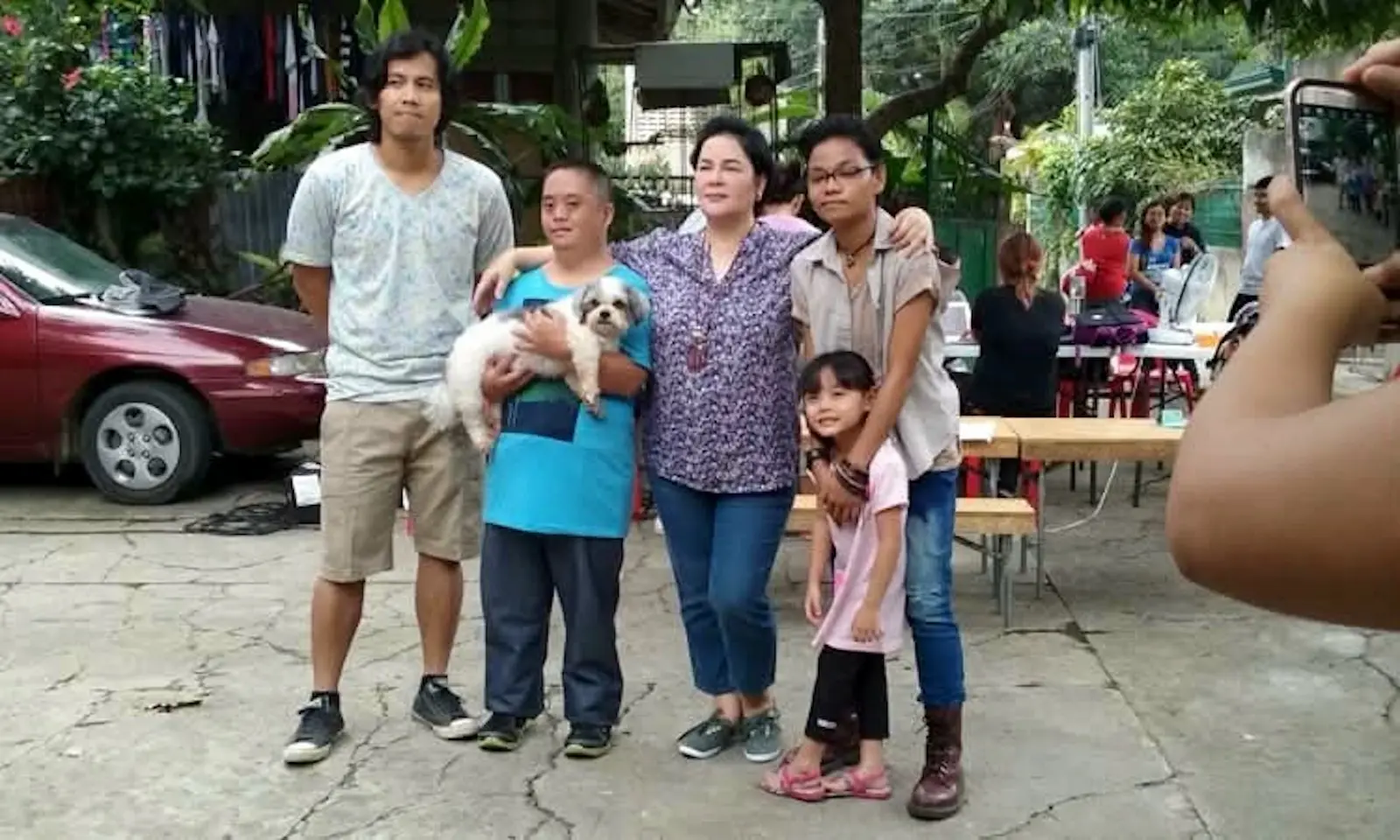
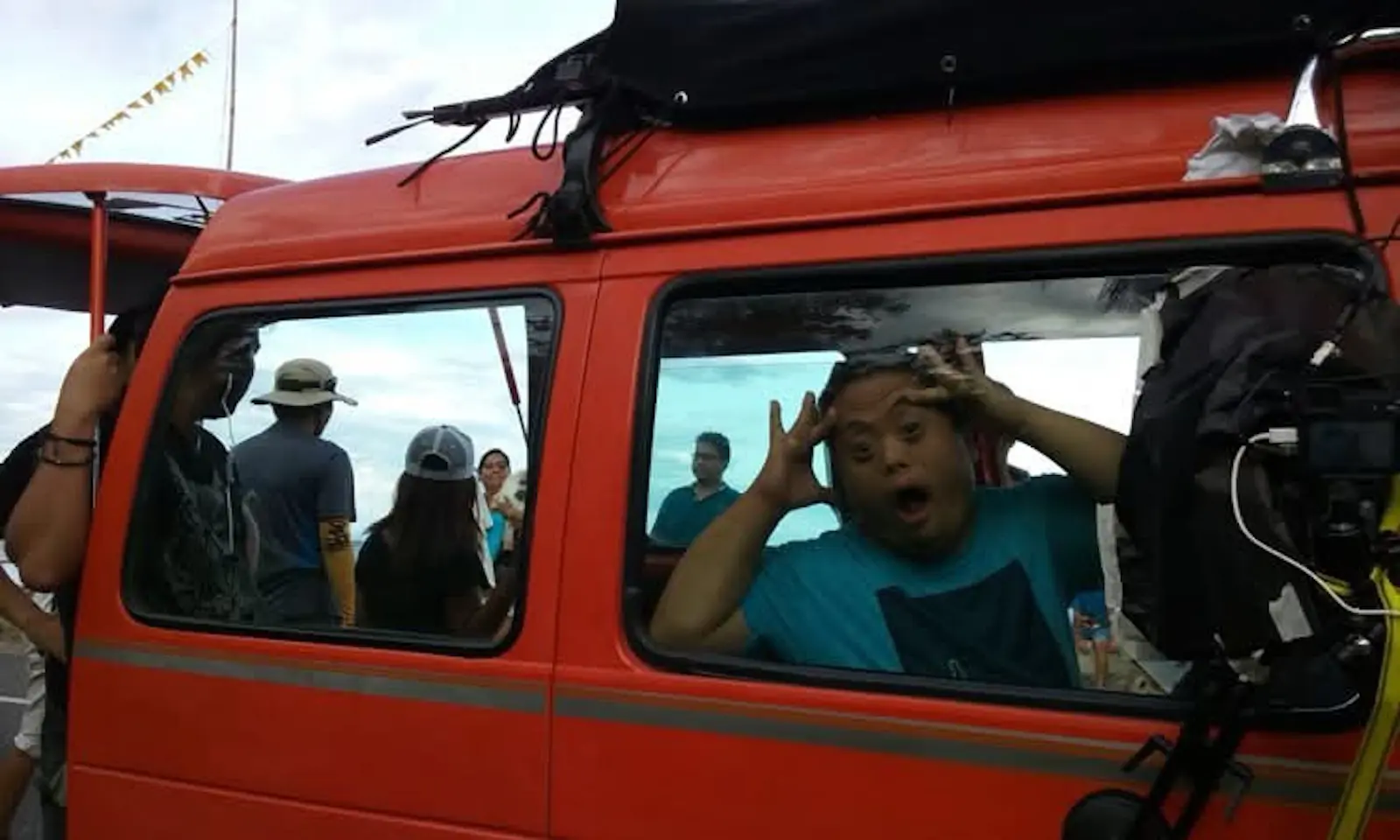
In order to cast Iyay’s eldest son Hubert, who has Down Syndrome, the film’s casting team put out an open call in Cebu for any aspiring actors with the same condition. After he auditioned and got the role, Viado was quick to show off his dancing skills and his own sense of humor, which Lang and Tabada frequently added to the script as revisions. Although Viado was unable to provide his own comments on working on Patay Na Si Hesus, his brother Philip recounted the experience.
Philip Viado, brother of actor Vincent Viado: What Vincent (and his sister Cora) agreed on was that nalingaw gyud siya sa experience. Wala man daw siya na kuyawan. [He had so much fun in this experience. He wasn’t scared at all.]
He had fun all the time, and he was treated well with respect, kindness, and understanding. All the cast helped and assisted him in his scenes. He was starstruck by Ms. Jaclyn Jose when he learned that she was the mother of Andi Eigenmann.
During the audition, they tested him on how he would handle or carry different types of dogs [because his character Hubert wouldld mainly be holding the family dog, Judas]. There was another person with Down Syndrome who auditioned, but he spoke English and not Bisaya.
Villanueva: Sa audition ni Vincent, I remember we were so worried about casting someone with Down Syndrome. Naa mi fear, or I guess preconceived notion, on how to treat him. Like basig di siya ka-follow og directions, ingana… pero pagabot si Vincent, feeling mi na murag angel siya. Sobrang buotan, and kabalo siya magistorya. We felt bad assuming na malisod siya i-handle. He was so kiat, pero maminaw pa siya. And tabian kaayo! Murag buangana ni oi, mag-joke-joke siya, ingana. We added the whole scene where na murag nawala siya, pero diay kibalo siya masakay og bus padong sa port, just to empower his character.
[We had a fear, or I guess a preconceived notion, about how to treat him. Like maybe he couldn’t follow directions. But when Vincent came in, he was like an angel. So well-behaved, and he knew how to talk. We felt bad assuming that he would be hard to handle. He was so rowdy, but he’d still listen. And so talkative! He’d act so crazy, make jokes, things like that. We added the whole scene where it seemed like he got lost, but actually he knew how to ride the bus to get to the port, just to empower his character.]
Lang: He was everyone’s favorite! Siya ‘yung heart of the film, for me. Maybe my favorite addition to the script was… that scene, when nawawala si Hubert, tapos hinahanap nila. Ikinukwento ni Iyay kina Jude at Jay, “Natakot ako kasi akala ko siya ‘yung magiging pinakamalaking problema. Tapos ngayon, siya pala ‘yung hindi.”
At one point, we were considering changing the role from someone with Down Syndrome to someone who was on the spectrum. I’m happy we didn’t change it and continued with Vincent. In the end, Vincent was the least of our worries. Siya ‘yung pinakamadaling katrabaho out of everyone. He was our joy, everyone’s joy. The movie would be unimaginable without him.
“This was one of the first big shoots I’d ever done, and there she was, and she had such a steady presence. Seeing Miss Jaclyn always felt like, ‘HALLELUJAH!’ She held our ensemble together.”
‘He Was Completely New to Acting’
Another first-time actor to join the main cast of Patay Na Si Hesus was Melde Montañez. The camera crew member was already friends with Villanueva, but had no intention of joining the project’s ensemble. But Villanueva and Lang had other plans.
Melde Montañez, actor: I was supposed to just be camera department! Wa pa sila nag-confirm, so I was really just waiting for them to call me. And then one day… nag-cycling pa gyud ko, but out of nowhere, nanawag si Victor nako. “Pupunta na ka sa office! Basta, adto na ka!” Hindi ko alam na ‘yung audition was for one of the main roles sa film. ‘Yung gusto ko was really to confirm kung part ko sa film crew. And this was very last-minute… murag the audition was mga three weeks before shoot.
I think doon sa audition, may mga ginagawa ko na pinagtatawanan silang Victor, and so hindi ako na-pressure. Doon lang lumalabas ‘yung pressure when I found out na si Miss Jaclyn Jose pala ‘yung makakasama namin sa shoot, tapos anak pa pala niya ako… I was like, “Hala!”
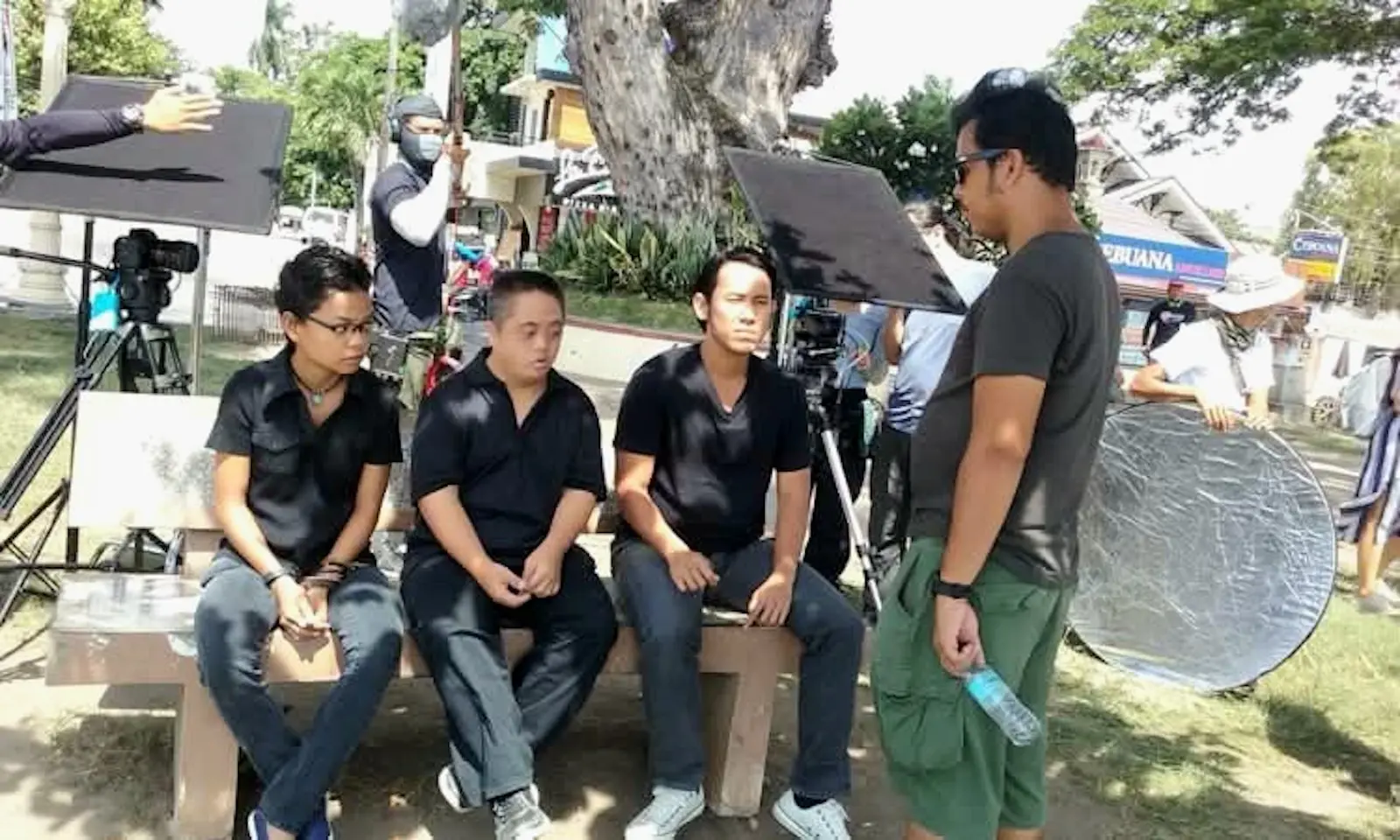
Fonacier: Melde wasn’t even an actor! Pero nakita siya ni Moira, and Moira said, “YOU!”
Lang: He did so well. Grabe ang deadpan [humor] ni Melde. Sobrang galing, and he could match the same deadpan humor ni Jaclyn. He was completely new to acting, and so scared. He almost backed out at times, and we had to keep assuring him that he was doing well. I’m so glad we stuck with him.
‘Seeing Miss Jaclyn Always Felt Like, ‘HALLELUJAH!’
Right before Jaclyn Jose flew to Cannes in 2016 to accept the Best Actress Award for her role in Ma’Rosa, producer Moira Lang approached her to say, “I have a feeling you’re going to win. And when you come home, I have a role that would be perfect for you.” Lang’s intuition turned out to be right, and, according to the producer, Jose returned to the Philippines adamant about working with her on a new project. This turned out to be Patay Na Si Hesus, and every crew and cast member can still remember how hard Jose worked on her Bisaya, how motherly she was to everyone on set, and how she loved a San Mig Light.
Villanueva: Niduol mi niya para i-pitch [Patay Na Si Hesus], and surprisingly, ganahan siya sa story. Niana siya, “Kibao ka? Nindot nga naa koy film nga, after a dark drama, naay comedy. I want something light.” Ang gusto gyud niya kay mag-learn siya og Bisaya. We gave her a language coach, and she had weekly lessons. Pero naglisod gyud siya, ha! Kay dili gyud niya nakuha ang accent. Pero natabangan gyud namo siya.
[We pitched [Patay Na Si Hesus] to her, and surprisingly, she loved it. She said, “You know what? It would be good if, after a dark drama, I had a comedy. I want something light.” What she really wanted was to learn Bisaya. We gave her a language coach, and she had weekly lessons. But she had a hard time! Because she couldn’t quite get the accent. But we helped her a lot.]
Montañez: Kaming duha ni Chai, every break, magtabang mi sa iyang Bisaya lines, lalo na kung naay mga curse words, like “Pisteyawa, oi!” [Laughs] Imagine every time na break kami, sinasabi mi na kanang ingana with Miss Jaclyn!
[Every break, Chai and I would help her with her Bisaya lines, especially if there were curse words, like, “Pisteyawa, oi!” Imagine us every time we were on break, saying things like that with Miss Jaclyn!]
Fonacier: Sige ra ko’g katawa karon [I’m laughing a lot now], but back then, there was so much awe when we were around her. This was one of the first big shoots I’d ever done, and there she was, and she had such a steady presence. Seeing Miss Jaclyn always felt like, “HALLELUJAH!” She held our ensemble together.
Even during the most difficult parts of the shoot, like this one time nga ning-abot mi hangtod alas dose, and kapoy na gyud mi tanan. Ningtawag siya namo, like, “Asa naman ang akong mga anak?” I don’t know if kahinumdom pa si Melde, pero niana ko, “Hoi Melde, kasabtan na ta ni.” [Laughs]. Pero pagabot mi diha, nangutana siya, “Umiinom ba kayo?” “Uh, opo.” “Sige, very good. Uupan na mo, bigyan ng San Miguel!” [Laughs] So naglingkod mi, under niining acacia tree, and I feel like she was trying to keep things bearable sa shoot. Lingaw kaayo siya.
[Even during the most difficult parts of the shoot, like this one time where we were still on set until midnight, and everyone was so fed up already. She called us, asking something like, “Where are my children?” I don’t know if Melde remembers this, but I said, “Hoi, Melde, we’re going to get scolded.” But when we reached her, she just asked, “Do you two drink?” “Uh, yes.” “Okay, very good. Sit down, you’re getting San Miguels!” So we sat under this acacia tree, and I feel like she was trying to keep things bearable at the shoot. She was so much fun.]
Tabada: She used to love San Mig Lights and Marlboro Reds. We shared a bottle and smoked together once, so… nalasing siya, and she was talking about her life, and paano siya naka-relate sa mga anak niya sa Patay Na Si Hesus, and with her own kids, too.
Villanueva: You know, naay [there were] times on set na medjo nagbangga mi ni Miss Jaclyn [when Miss Jaclyn and I would argue]. Usahay, feeling ko na murag personal attack siya sa nako [Sometimes, I would feel like it was a personal attack]. Kay I was this young filmmaker, and I was up against this Cannes-winning actress. But looking back, it feels so stupid… She was just trying to be collaborative, to include herself sa project.
I remember na happy siya with the film. Ningadto ko sa iyang funeral. I met Andie there, and niana siya, “Direk, thank you ha. Kasi that film introduced her to a younger generation.” I guess kasi Jaclyn was coming from this high drama background, with Lino Brocka and all… so [Patay Na Si Hesus] was a reintroduction daw for her to millennials and Gen ZGen ZThe generation born roughly between the late 1990s and early 2010s, raised with the internet and social media. Gen Z shapes trends in music, fashion, and online humor, and itsGo to Gen Z Glossary fans. Ingon ni Andie na it felt like an honor to her mom, na she could show that she was versatile, that she could do drama and comedy.
‘All Your Actors Are Crammed Together’
Because of their tight shooting schedule, the team behind Patay Na Si Hesus needed to make every day count as they filmed on the road. Tabada and Villanueva recalled the stress that went behind production.
Tabada: You know, this was an indie film. So the budget was small, and because we shot on the road, everything had to move fast. And shooting sa south of Cebu, from one place to another, plus the logistics of getting to Dumaguete… medjo nagasto gyud mi [We really had to spend].
But the hardest part was the time. When you’re shooting while you travel, you have to think about things like natural lighting, time of day, and the fact that all your actors are crammed together pa in the back of a small multicab…
Villanueva: Na-stress gyud ko. Naay usa ka scene na shoot pa mi sa Boljoon, pero ang barko nga among sakyan paingon sa Duma, molarga na! Siguro, naa pa mi sa shoot at 7 p.m., and mga 8 p.m. na molarga ang ship. We had to rush. As soon as nahuman namo ang scene, ningsyagit ko, “CUT!” Diretso mi’g empake and pupunta mi sa Santander.
[I was so stressed. There was one shoot where we were still in Boljoon, but the ship to Dumaguete was getting ready to leave. If we were still at the shoot at 7 p.m., the ship was leaving at 8 p.m.. We had to rush. As soon as we wrapped, I screamed, “CUT!” We went straight to packing up and rushing to Santander.]
Tabada: Oh my God, si Victor. [Laughs] If I remember correctly, that was the last boat from that port sa Cebu to Duma. So kung wa mi kaabot sa katong barko [So if we didn’t reach the ship], then it would have been another day of rescheduling, and we didn’t have the budget. Well, I mean, director siya, so normal ra man kung mobuto siya, especially kung wala na ang oras, or na-stress siya sa production.
‘A Lot Of Cinemas Did Not Want To Screen Our Film’
Despite Patay Na Si Hesus successfully debuting at QCinema in 2016, the team still needed to find a distributor. This proved to be a little more difficult, and it took a year, along with another local festivalFestivalA multi-act music event, often held over several days, where many artists perform across different stages. Festivals combine live music, food, art, and community, and they give audiences a chanceGo to Festival Glossary, to show distributors that there was a market for a Cebuano comedy-drama. The team partnered with Columbia Pictures Philippines to schedule nationwide screenings, but the hurdles — a lack of support from cinemas and an alleged blacklisting of producer Moira Lang — did not make things easier.
Villanueva: So sa QCinema, it was very well-received. We were even so surprised that it did so well.
But what we really wanted was na maka-nationwide screening ta. We sent it to film festivals all over the world, and even when nadaog siya [it won], we really wanted screenings sa Pilipinas. Timing sa 2017, naay usa ka film fest, ang [Pista ng Pelikulang Pilipino] by the [Film Development Council of the Philippines], and it was a chance to submit our film para naay nationwide screenings. We were selected, but our next problem was finding a distributor.
A lot of cinemas did not want to screen our film. There was a lot of pushback kay they wanted other films. Murag ang feeling nila was like, “Who wants to watch a Bisaya film?” Dili mi ang priority nila, or at the least gi-side-screening ra mi. Like, we’d only get two screenings sa hapon, or at 12 p.m. pa gyud. Kinsay ganahang motan-aw ana? [Who wants to watch that?]
Lang: I knew that the movie was going to be a hit — not just to Bisaya speakers, but to everyone, kahit nag-doubt ang mga distributors. When we pitched this to be distributed by [Columbia Pictures Philippines], they loved it and it was one of their first few times to release a local film.
We were really disheartened by other distributors who didn’t want to play our film because it was in Bisaya. They said that [we] should play it in Visayas and Mindanao lang.
But there were also cinema managers who didn’t want to play it not just because of the Bisaya, but because of… my involvement with the Metro Manila Film FestivalFilm FestivalAn organized event that screens a curated selection of films, often with premieres, awards, and talks with filmmakers. Festivals are important launching pads for independent and international cinema, and inGo to Film Festival Glossary (MMFF) in 2016. I was part of the executive committee and dahil sa ibang ginawa sa mga cinema at the time… parang they were not supportive of the changes we were trying to make sa MMFF. Basta, it became political and so it was a contentious period. And because of some of the… pronouncements I made, the interviews I gave, may mga distributors na na-offend, and I was blacklisted, basically. What an industry, ‘di ba?
I mean, hindi lahat, ha. Meron din naman malaking theater chains that supported us with [Patay Na Si Hesus], so pinalabas kami sa mga major cities throughout the Philippines. I’m not saying the whole movie distribution is rotten. There are still good people there. Pero may ilan na vindictive and really took it out on our film. I even confirmed it kasi… somebody [let slip] na ‘yung lack of [cinema distribution], it was because of [me].
Villanueva: You know what helped fill cinemas? Naay usa ka post sa FB ng Cinema Bravo with atuang poster. Daghan kaayo nasuko sa comments. [So many people got angry in the comments.] “Ang offensive ng title! Bakit sala ang pangalan?” “This is blasphemy!” “May God have mercy on your souls!” Naa pay, “Tatay Digong, please, turuan na ‘to!” [Laughs] There was a lot of hate sa poster, but at the same time… they were talking about us. So nagviral mi because of the bashers.
The good thing was we had word of mouth. ‘Pag first day, na-shock ko, kay akong phone, nasabo ug notifications, daghan ug comments, reactions, reviews about the films. Daghan gyud natanaw. Murag from 60 screens mi, the next few days, na-increase to 100. There was demand, and the cinemas were puno, or at least the ones I visited.
Nindot kaayo ang mga reactions from the mga Bisaya. Nagets gyud nila ang humor. Ang reaction was mainly, “Wow, ang ganda ng Bisaya, ‘no? Murag poetry, ‘no?” Sa Cebu, naka-four weeks mi. Same sa Manila. I think it was the second top-grossing film sa festival, and Bar Boys was the first. That was really my dream, na mabuhat ko og Bisaya na film. So na-fulfill na siya when we made this.
“I was young pa, and still had the freedom to take these risks… I miss that. Looking back, that movie changed my life because naka-career ko, and because of a Bisaya film, too! It opened doors for me.”
‘A Lightning In A Bottle Movie’
A decade after its release, Patay Na Si Hesus still holds up as one of the most well-known pieces of indie cinema to come out of the Queen City of the South. What’s more, the film has shaped the careers of several of the key players who worked on it, helping them find their footing in an industry that often overlooks filmmakers outside of Metro Manila.
Villanueva: I’m still surprised about how people reacted to it. And are still reacting to it. When I made it, I just wanted to make a movie. Ganahan ko og entertain ang mga tao [I wanted to entertain people], especially with a Bisaya na salida. Surprised gyud ko na, like in UP, there are entire studies about the film. I was really hoping na after we made it, naa pay madaghan na ihimo og Bisaya na salida [there’d be more Bisaya films being made.].
It was such a lightning-in-a-bottle movie. We had such good producers, the best crew, the support of so many local brands and LGUs. And I was young pa, and still had the freedom to take these risks… I miss that. Looking back, that movie changed my life because naka-career ko, and because of a Bisaya film, too! It opened doors for me. I hope it inspires younger Cebuano filmmakers, na kung pagka-instinctive og gahi’g ulo [hard-headed] sila, they can make something like this.
Tabada: To be honest, I’m always chasing that first high I had when writing [Patay Na Si Hesus]. When I was doing it, wala pa ‘kong pressure from production, producers, if makita ba ‘to, if may audience ba ‘to, if mag-approve ba ang pitch, ‘yun. Ngayon kasi, as a full-time filmmaker, ang daming factors to consider. Even the way I pitch, I have to think about streaming, audiences, ganun. When I first started, I just wanted to create, create, and create. I was even telling Victor, “I want to make a Bisaya film again. I miss making Bisaya films.”
Recommended Video