

Ninoy Aquino International Airport (NAIA) doesn’t have the best reputation. Two years ago, Australian price-monitoring firm Compare the Market ranked it last among 61 major airports worldwide, based on Google reviews, efficiency, accessibility, services, and cleanliness.
The news came as no surprise to Filipino travelers when it was published in November 2024, and it posed a significant challenge for New NAIA Infra Corp. (NNIC), which formally took over NAIA’s operations in September that year after being awarded the government’s privatization contract. But nearly two years after the handover, the airport’s three fully operational terminals have seen quite the revamp, with the free inter-terminal shuttle service, self-check-in kiosks, e-gates, rideshare terminals, and new lounges among its list of ongoing improvements.
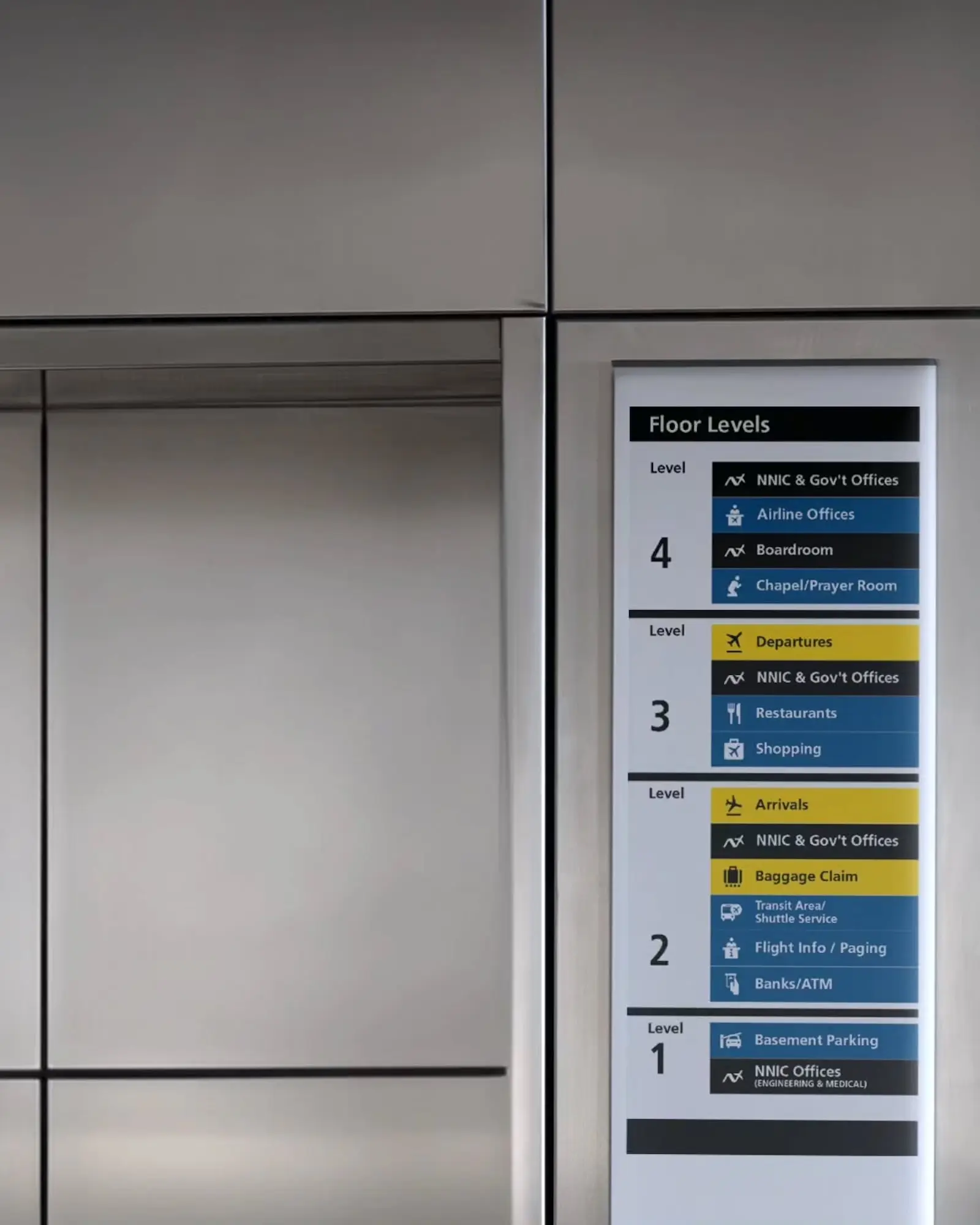
Often overlooked but crucial to a traveler’s overall experience are signage and wayfinders — only some of the things graphic design studio Inksurge has been working on since first giving NAIA’s brand a refresh in 2024.
Rex Advincula and Jois Tai, the designers behind Inksurge, recently posted about its brand identity and pictogram system designs for NAIA, giving a glimpse into the other changes in store for the airport’s three terminals.
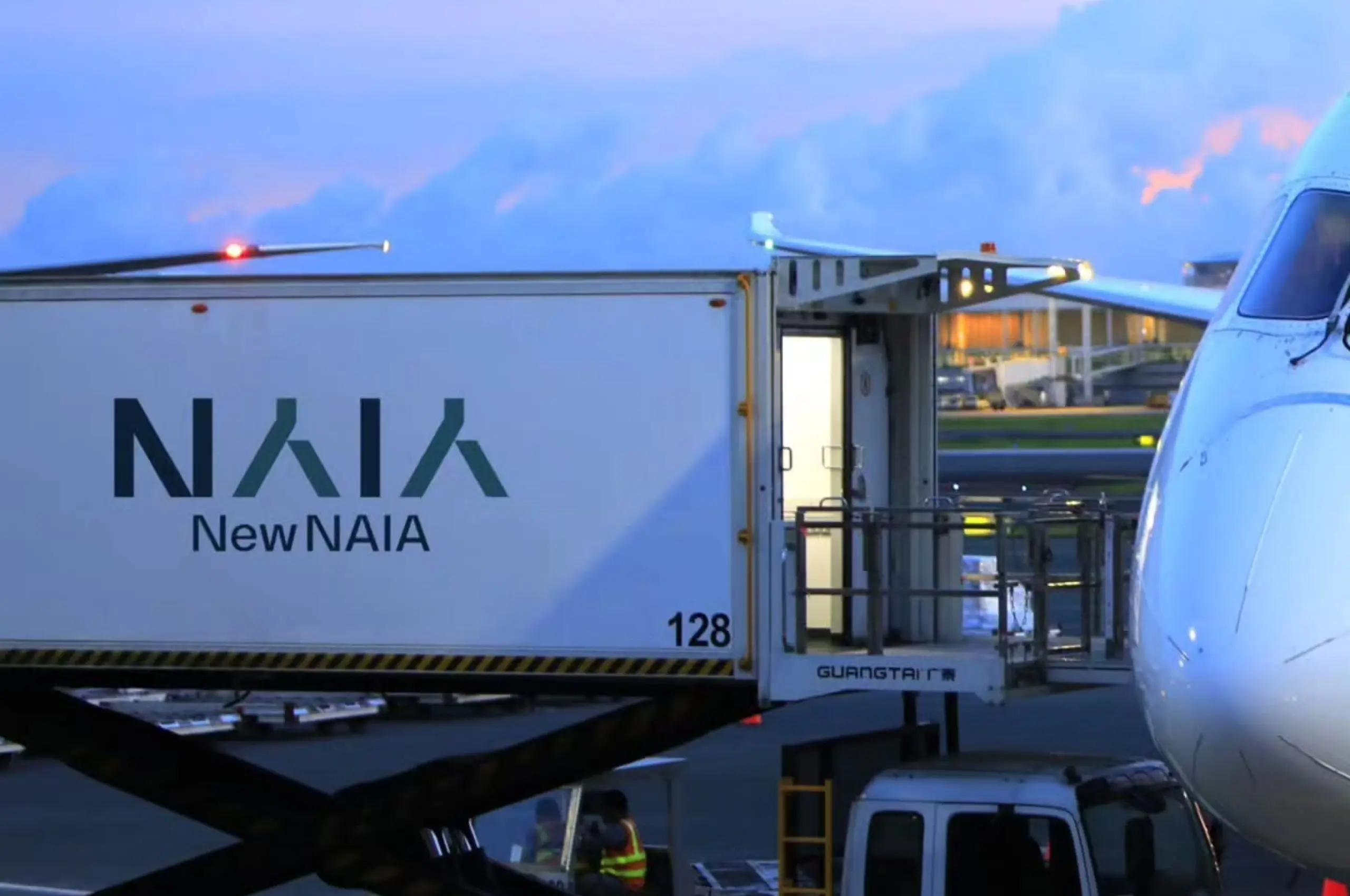
“We set out to create an identity that embodies the vision of elevating NAIA to a premier global hub, while ensuring the design maintains balance, prioritizing functionality and coherence over excessive complexity,” they said on Instagram, where they shared photos of the new logo and brand colors on baggage trolleys, buses, and passenger boarding bridges.
Tai and Advincula were prompted to share more about their work after graphic designer and content creator Eulah Araullo pointed out changes to NAIA’s branding in early August. “This year ko lang na-notice [ang branding] sa Terminal 3,” Araullo said in the video, which has amassed over 10,000 likes on Instagram. The creator went on to say that the branding is more consistent and prominent, seen in the airport’s LED screens, barricade tape, website, and social media pages.
Of the new NAIA logo, which consists of letterforms shaped vaguely like the terminals as seen from above, Tai tells Rolling Stone Philippines, “Ayaw namin siyang i-overdesign. We didn’t want to make it too complicated kasi it had to be something that’s easy to expand and apply [anywhere].”
Advincula also points out that the team didn’t have a solid brand system that was unified across the terminals to work with when they started planning the rebrand. “It’s a challenge kasi wala naman talagang brand identity ‘yung airports natin before,” he says.
“[The terminals] all had different managers handling them,” Tai adds. “‘Yun ‘yung goal namin, to standardize things para ipakita na pareho talaga lahat ng terminals.”
Navigating the New NAIA
The designers emphasize the importance of a new wayfinding system and signage in NAIA’s rehabilitation. “I think gusto [ng NNIC] ayusin ‘yung flow of traffic,” says Advincula. “‘Yung mga wayfinders, hindi pa na-iimplement, kasi marami pang moving parts, like ‘Okay, mauuna ba dapat ‘yung immigration before inspection?’ ‘Are we moving this wing to another section?’ Things like that.”
While all signages have yet to be replaced, new wayfinders have already been implemented in some parts of the terminals, easy to spot and legible, with Inksurge’s custom pictograms.
Tai also says NNIC is reevaluating the placements of existing signage. “Inaayos na talaga nila and evaluating kung this sign is really supposed to be here. Dati kasi, they just asked us to work on the exact same signs,” she says. “‘Yung goal namin, sana wala na kaming makitang mga temporary [sign] na bond paper.”
In addition to the improved wayfinding system, Inksurge says its next steps are to work on standardized packaging for food and souvenir concessionaires, as well as poster lightboxes for ads.
It goes without saying that the responsibility of mobilizing tens of thousands of passengers daily does not fall solely on the wayfinders, how they’re designed, and where they’re placed. Expansion is underway for Terminals 1 and 2, while a fifth terminal is also in the works, to increase NAIA’s overall annual capacity to 62 million passengers.
“We have made significant progress in less than two years, but there is still a lot more work ahead,” said NNIC President Ramon Ang when the consortium announced on Thursday, August 28, that it had remitted P78 billion to the government and spent P6.8 billion on modernization efforts.
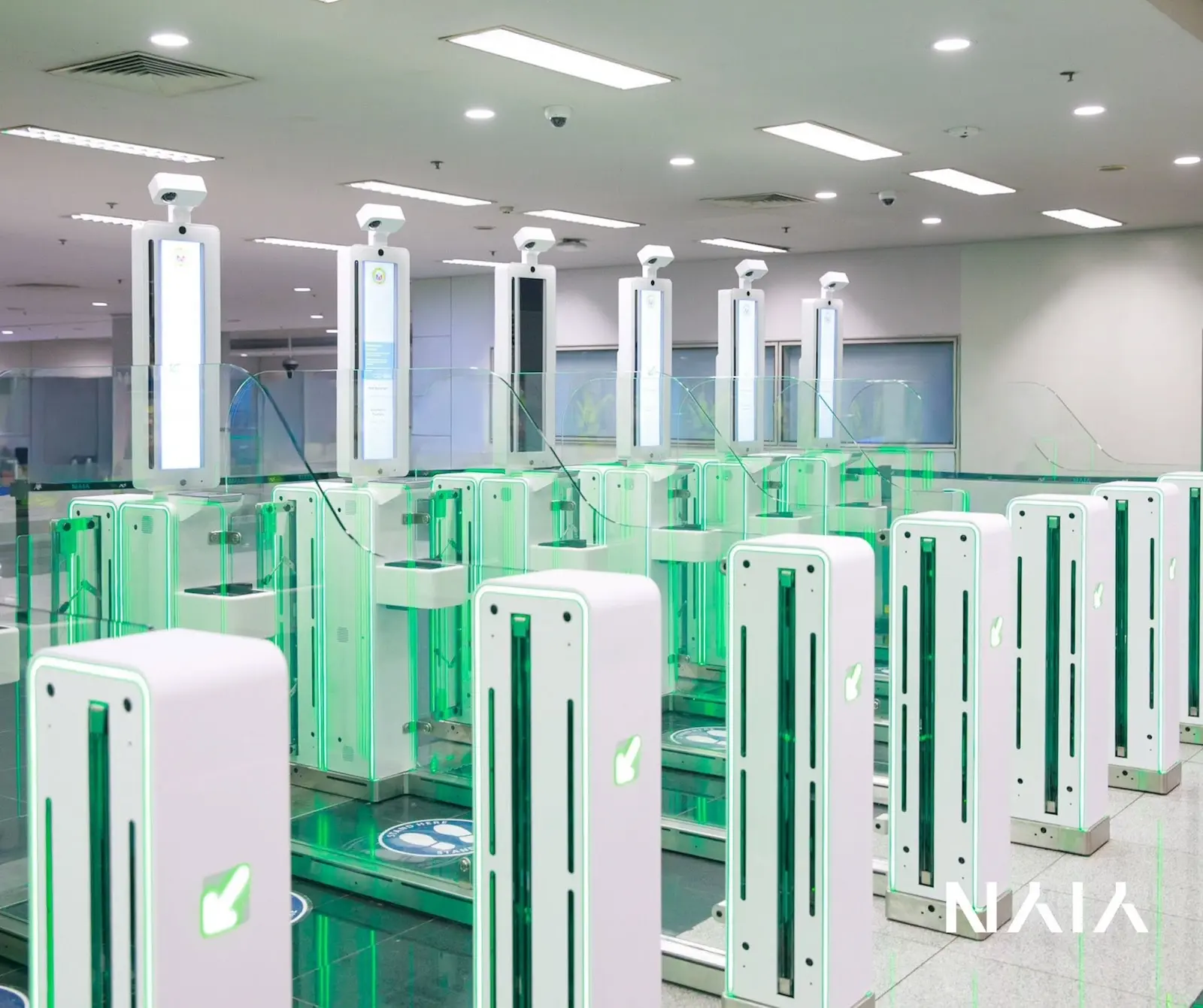
These efforts have come at the cost of travelers’ money, with the revenue from increased terminal fees (now P950 for international departures and P390 for domestic flights) going towards fixing air conditioning systems, walkalators (which seemed to never work until recently), escalators, and other old facilities. Whether these fees will ever pay off in time remains to be seen.
Still, it’s almost unbelievable to see this much money, planning, and effort finally being poured into NAIA after years of scrutiny and, for many Filipinos, resignation. Inksurge’s rebrand is a small but telling sign of decisive action. And while a new logo and wayfinding system won’t fix an airport on their own, they say a lot about the kind of airport NAIA can be: modern and orderly.
Frequently Asked Questions
Inksurge, the design studio behind NAIA’s rebrand, developed a new logo built from letterforms that echo the shape of the airport’s terminals from above, along with updated brand colors and a custom pictogram system used across signage, trolleys, buses, and boarding bridges.
Before the rebrand, NAIA’s three terminals were managed separately with no shared identity system. Designers Rex Advincula and Jois Tai said the goal was to standardize colors, signage, and visual language so passengers could recognize all three terminals as one cohesive airport.
New NAIA Infra Corp. (NNIC) took over airport operations in September 2024 after winning the government’s privatization contract. As of August 2026, NNIC President Ramon Ang said the consortium had remitted P78 billion to the government and spent P6.8 billion on modernization efforts.
Inksurge has rolled out new wayfinders with custom pictograms in parts of NAIA’s terminals, though not all signage has been replaced yet. NNIC is also reevaluating sign placement to improve passenger flow.
In 2024, Australian firm Compare the Market ranked NAIA last among 61 major airports worldwide, based on Google reviews covering efficiency, accessibility, services, and cleanliness — a ranking that underscored the scale of the challenge facing NNIC.
Recommended Video