Written and directed by Filipino-Australian filmmaker James J. Robinson in his feature debut, First Light is a quiet meditation on faith, corruption, and the cost of progress. The Australia-Philippines co-production premiered at the Melbourne International Film Festival on August 10, 2025, where Robinson won the Blackmagic Design Best Australian Director Award. It was finally brought home on Monday, June 22, with its vernissage held at the Ayala Museum.
Robinson’s Debut: Faith, Slow Cinema, and Rural Philippines
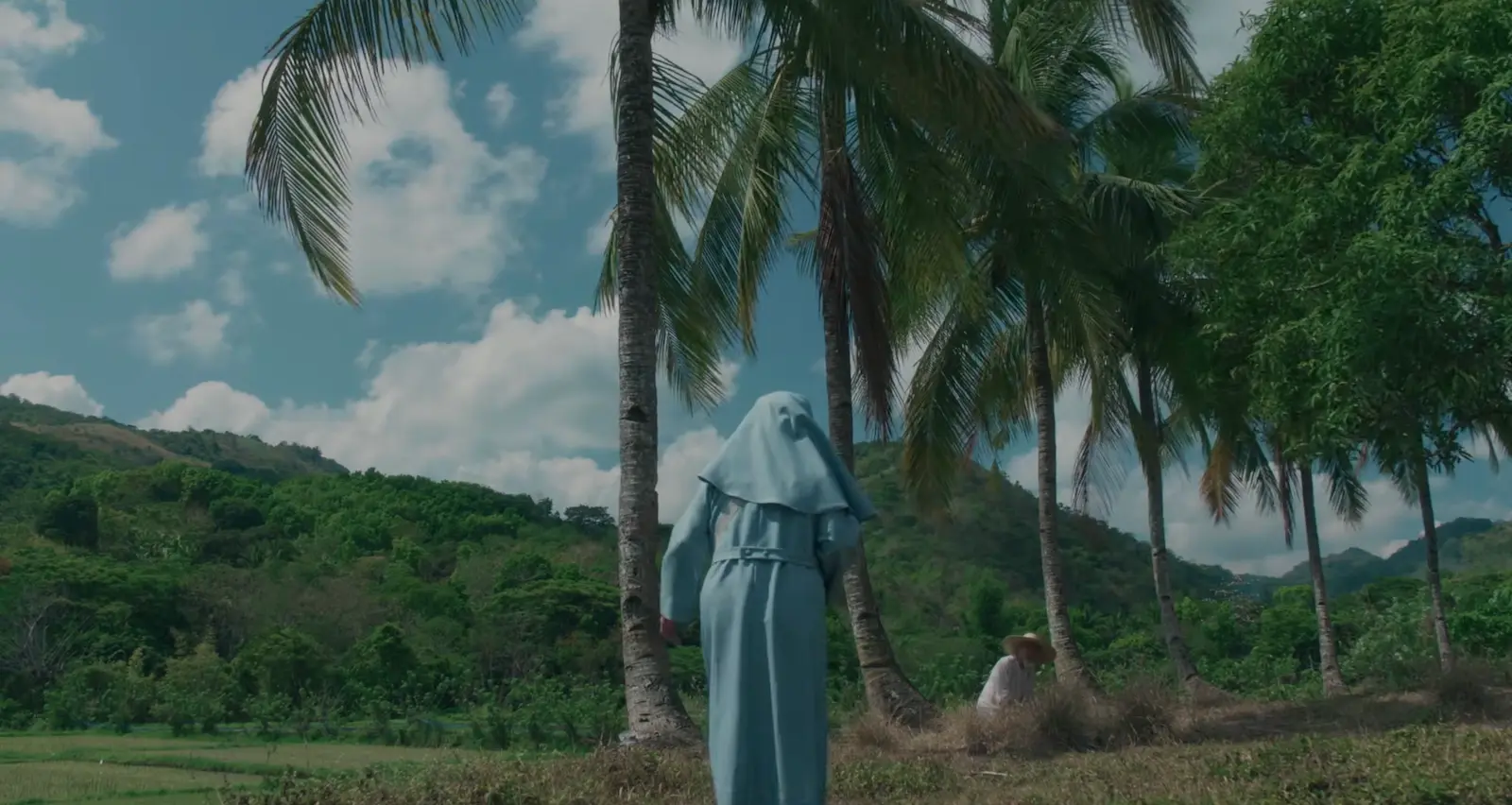
From its earliest frames, First Light establishes itself as a contemplative film, with lingering shots that easily categorize it as slow cinema. Cinematographer Amy Dellar bathes the rural landscape in striking blues and greens: the robin’s egg-colored nun’s habit, the verdant foothills of Rizal, and green rice stalks rising from a wet paddy that mirrors the sky during the blue hour. These cool tones are occasionally interrupted by warmer hues, primarily from candlelight, sand, and wood, creating a visual world that feels both serene and unsettled.
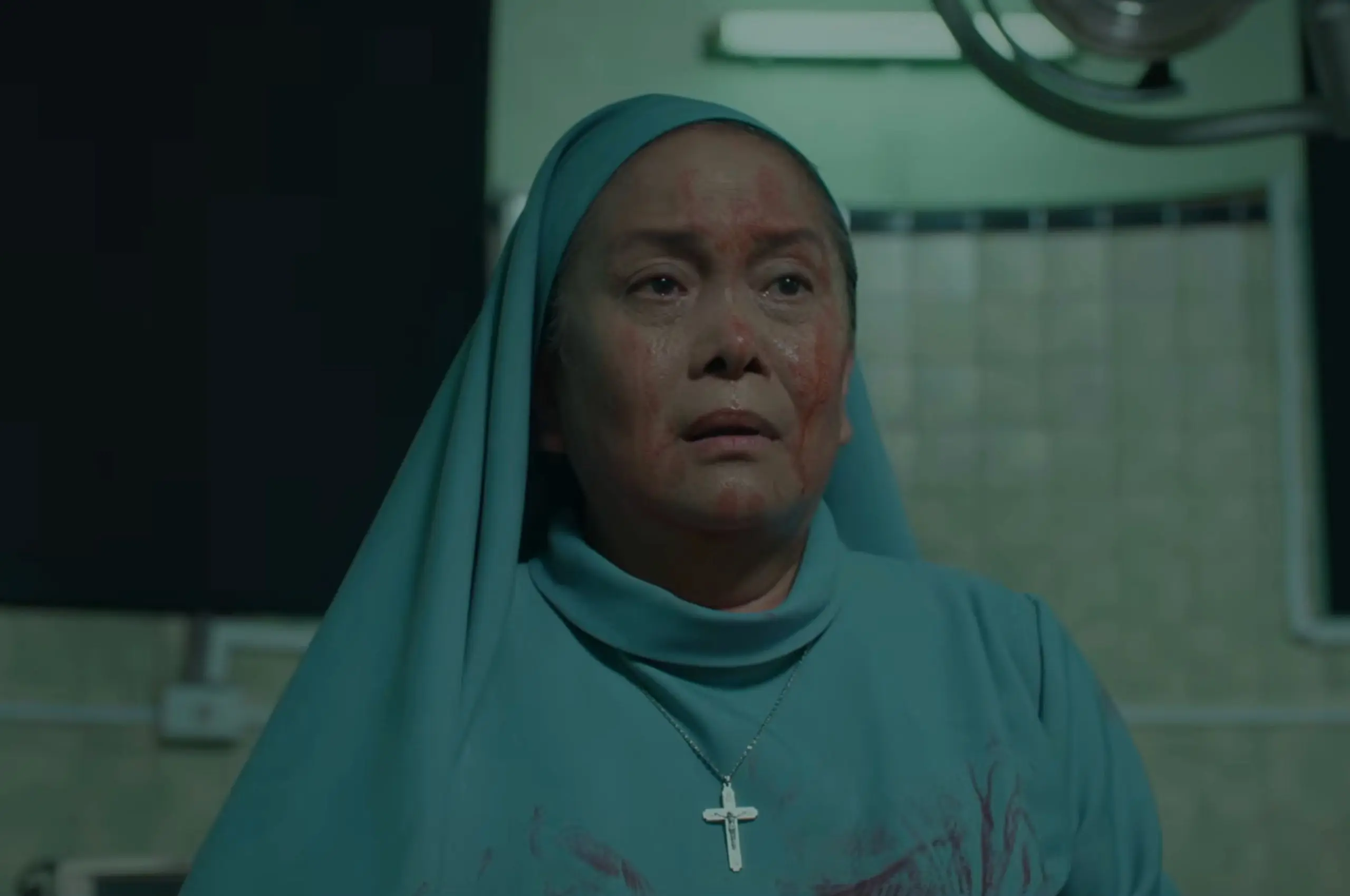
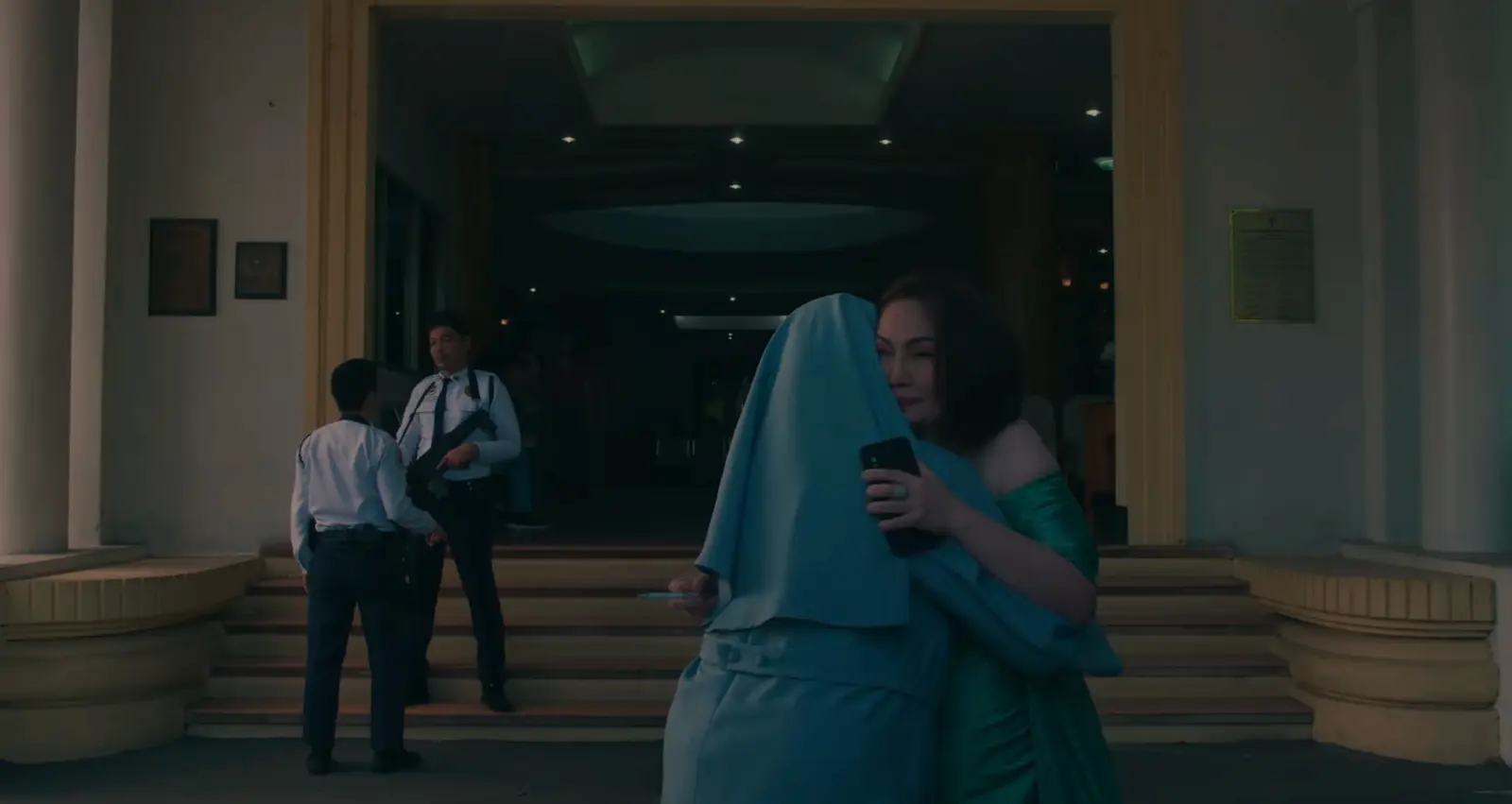
Ruby Ruiz plays Sister Yolanda, a nun who mentors a young postulant, Arlene (Kare Adea). Her daily routine includes visiting the sick at a nearby hospital and tending to the ailing mother of Linda dela Cruz (Maricel Soriano), who owns a construction company with her husband Edward (Rez Cortez). The dela Cruzes have become close friends of Yolanda, promising to sponsor repairs for the 400-year-old convent and gifting the nuns bottles of sparkling water.
Sister Yolanda: Faith Under Pressure
During one hospital visit, Yolanda is asked to deliver the last rites to a construction worker who is dying from injuries sustained in a workplace accident. The worker and his grieving father, Cesar (Emmanuel Santos), are employees of the dela Cruzes. As Yolanda questions why the doctor stopped operating on the young man, she finds herself in crises of faith and friendship.
The worker’s death and the circumstances surrounding it could easily set the stage for a thriller. But the audience already knows that this death was a product of systemic neglect, and Robinson isn’t much interested in making a whodunnit. Instead, First Light turns inward, asking: What is Yolanda’s place in this tragedy? Where is God in all this? And where is justice?
The bottles of sparkling water become a recurring motif throughout the film. It’s a mundane thing, and every time it pops up, the audience laughs. But the sparkling water is also a small luxury placed against the larger hardships surrounding Yolanda. During a candlelit dinner at the convent during a power outage, the nuns pass around glasses of the drink. Later, when Yolanda feels faint inside the church, Father Claridad (Soliman Cruz) offers her water. She gratefully accepts, until she notices the same bottle that Linda had gifted her earlier. Her expression sours. She takes a sip, then insists she feels better, only to avoid drinking more sparkling water.
Sickness and death linger throughout the unnamed rural town. Some are natural, while others appear to be symptoms of the consequences of unchecked development. The nuns complain about a foul smell surrounding the convent, which Father Claridad attributes to the humidity accelerating the decay of dead plants and animals in the forest. Yolanda, meanwhile, hides her own illness from the other nuns. In search of meaning, she returns to the farm where she grew up and dreams that it is being cared for by a farmer named Diwa (Kidlat Tahimik), only to wake up on a pile of gravel at a construction site.
The Unnamed Town: Locality, Corruption, and National Allegory
There are moments when the film’s dialogue feels clunky or unnatural, perhaps as a result of translation. An example of this is in a scene where Sister Arlene describes growing up “sa timog” (“in the south”), though she never specifies where exactly. It could be Batangas. It could be Cebu. The lack of specificity extends to the film’s setting itself. While parts of First Light were shot in Baras, Rizal, the characters never name a specific place.
But perhaps this information gap is intentional. The issues that the film explores are not confined to one province or community. Instead, it overtly speaks to a greater ill the entire country suffers: brazen urban development at the cost of people and nature. The problem isn’t unique to one locality, a fact made clear by last year’s flood control projects scandal, and so the unnamed rural town that First Light is set in feels more representative of the Philippines’ peripheries as a whole. In this way, Robinson succeeds in writing a story about corruption at odds with nature, and how faith — organic and organized — feeds one or the other.
Frequently Asked Questions
First Light is a Filipino-Australian slow cinema feature directed by James J. Robinson. It follows Sister Yolanda, a nun played by Ruby Ruiz, whose faith and loyalty are tested after a construction worker dies under suspicious circumstances in an unnamed rural Philippine town shaped by corruption and urban development.
First Light was written and directed by Filipino-Australian filmmaker James J. Robinson in his feature debut. It premiered at the Melbourne International Film Festival on August 10, 2025, where Robinson received the Blackmagic Design Best Australian Director Award. Its Philippine premiere was held at the Ayala Museum in June 2026.
Ruby Ruiz plays Sister Yolanda, a nun who ministers to the sick and forms a close friendship with a wealthy construction company owner. Maricel Soriano, Rez Cortez, Soliman Cruz, Kare Adea, and Kidlat Tahimik also appear in the film.
The sparkling water, gifted by a wealthy patron with connections to a worker’s suspicious death, becomes a recurring symbol of complicity and moral discomfort. Each time Sister Yolanda encounters the bottle, it quietly measures her willingness to accept comfort from those whose conduct she cannot fully endorse.
First Light withholds the setting’s name to frame the film’s critique of systemic corruption and unchecked urban development as a national rather than local condition. The unnamed rural town represents the Philippines’ broader peripheries.
Recommended Video