Professional wrestling has always moved faster than most art forms because the storylines adjust to how audiences react in real time. A hero can lose his spot the moment fans decide they prefer the villain. A planned storyline can collapse when the crowd refuses it. That tension has always made wrestling feel close to the way Filipinos understand conflict. People root for the good guy, the underdog, the small group fighting something larger than themselves. In local culture, that can look like a neighborhood standing up to a system or a community pushing back against a much bigger force.
The Philippines has lived its own version of wrestling arcs ever since the height of WWE programming, particularly Monday Night Raw, its flagship show. According to Nielsen data provided by the independent outlet Wrestlenomics, TV ratings for Monday Night Raw peaked in the 2000s alongside the skyrocketing popularity of wrestlers like Dwayne “The Rock” Johnson, Eddie Guerrero, Steve “Stone Cold” Austin, and Rey Mysterio. However, ratings declined in the early 2010s, which may be partly due to Monday Night Raw extending its usual two-hour slot to three hours, placing more ads to increase revenue while making more space for the new talent in their roster. Interest may have also dipped due to WWE’s paid subscriber tiers, and storylines that failed to create starpower every year. By the end of 2024, WWE saw its lowest TV ratings in its entire history, buffeted by the post-pandemic era that saw the decline of live audiences, and the unravelling of WWE co-founder Vince McMahon’s sex trafficking scandal.
But for some fans, their investment in the spectacle never faded. I have followed the scene long enough to know the emotional swings of face and heel turns, walkouts, new signees, releases, and the inside politics that shape those decisions. Wrestling has always blurred the line between what is real and what is staged, and that blend makes it feel more alive. Eventually, local fans saw the need to build something at home. That need gave rise to Pinoy wrestling.
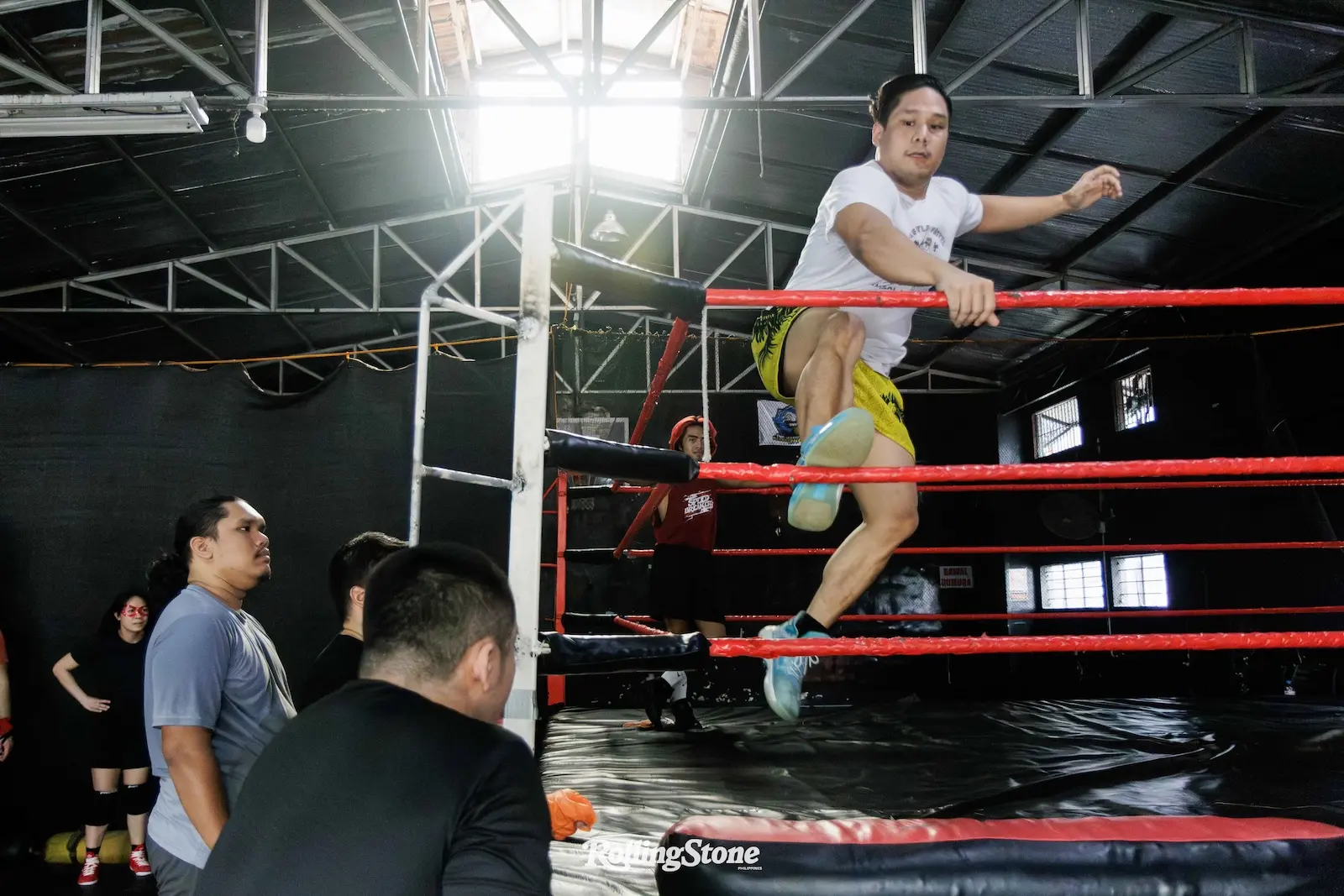
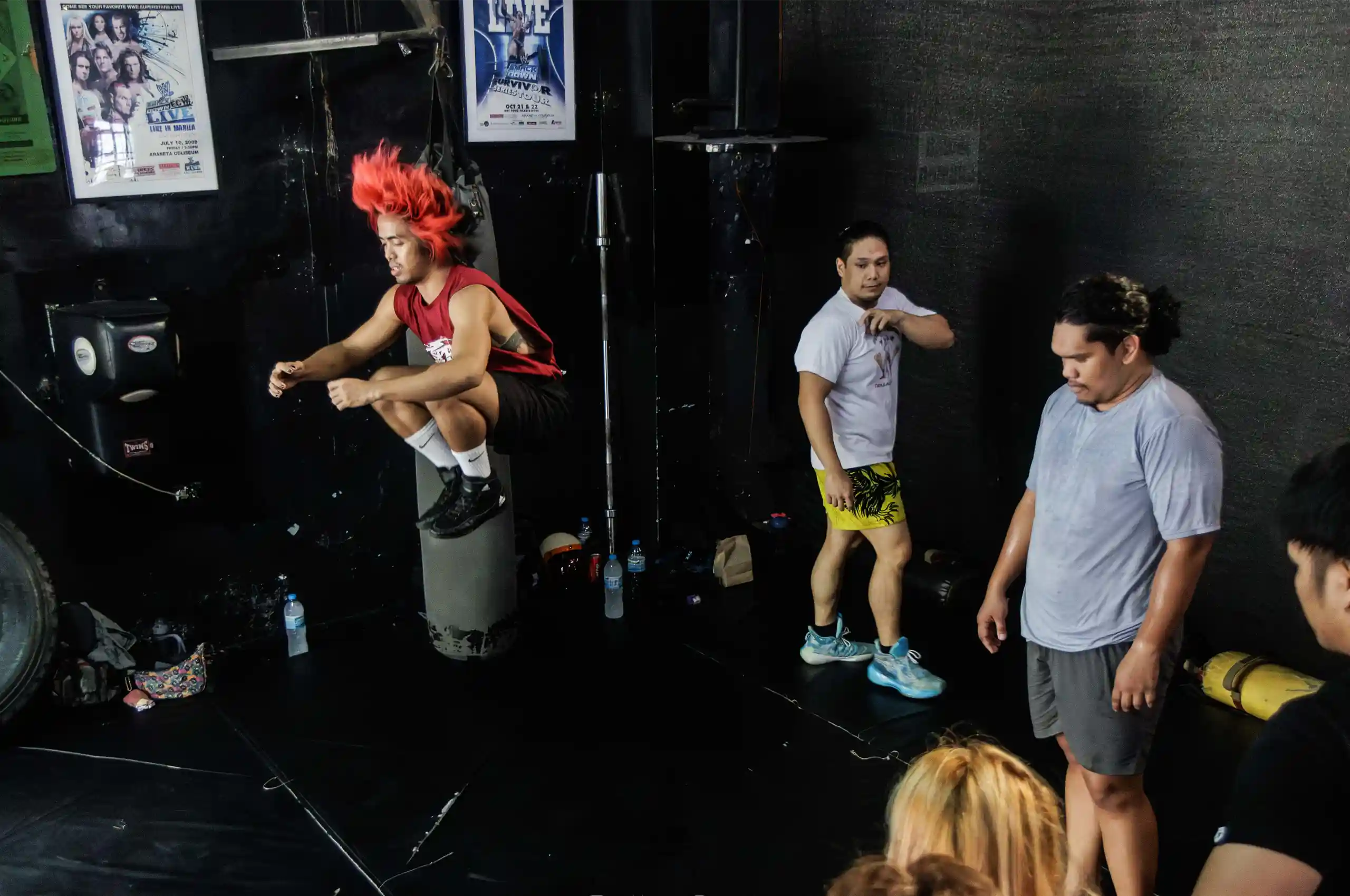
My first exposure to the local scene sits at the center of a residential block in Quezon City. A small gym breaks the silence with grunts, drills, instructions, chants, and gear hitting the mat.
This is the home of Puso Wrestling, an organization — what, in the industry, is known as a “promotion” — that began in June 2024. The spot, known to fans as Brawl Pit Bulusan, is a self-proclaimed “mecca” for wrestling in Manila.. The heat inside the room hits before the action starts. The training follows a routine that tests stamina, strength, timing, and patience.
The rise of Puso Wrestling also sits within a larger community that has been rebuilding itself for a decade. Promotions like Philippine Wrestling Revolution, Manila Wrestling Federation, World Underground Wrestling, Filipino Pro Wrestling, and Dexcon have each built their distinct community in defunct gyms, training facilities, and venues: PWR’s boxing ring in Makati Cinema Square was fostered by hardcore wrestling fans from the 2000s; Filipino Pro Wrestling’s makeshift ring in the dining hall above Kowloon House, Quezon City, proved that you can practice and hold up anywhere with a young crowd.
And now, the small hybrid basketball court and boxing gym that is Brawl Pit Bulusan has been bringing in new wrestlers, experimenting with different styles and keeping the local circuit alive through their own grind. Their work laid the foundation for a generation that wanted more than just one place to learn or perform. Puso stands out for how its wrestlers run the sound, the cameras and the storytelling themselves, but it exists alongside a wider ecosystem that has kept Philippine wrestling moving even when resources were scarce and crowds were small.
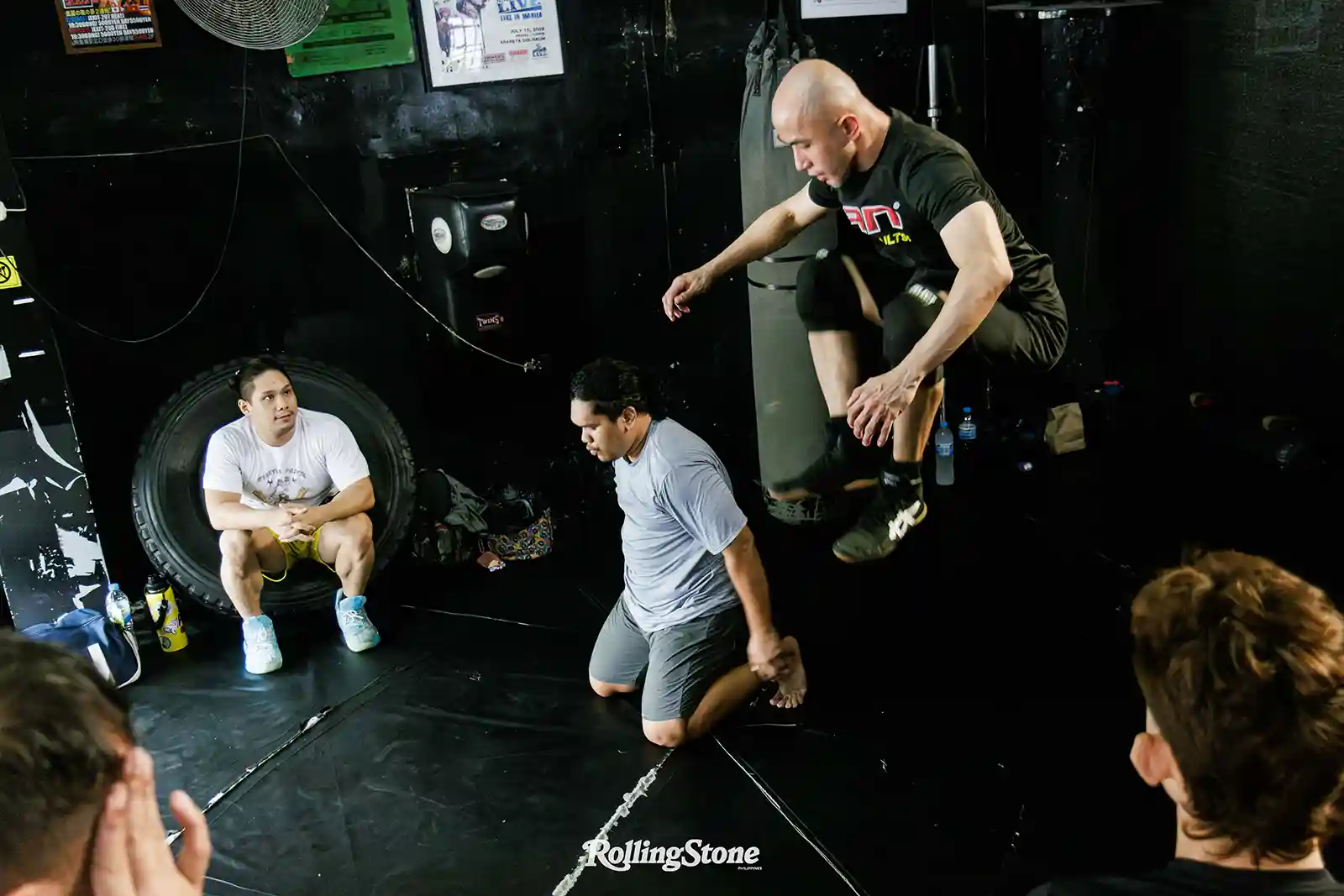
Their upcoming event ALAMAT, happening in the same venue on November 30, is a month and a half away from the visit, as of this writing. The roster runs through drills that refine characters, tighten footwork, and deepen their chemistry with the room. You have the “Fastest Pinoy Wrestler” Robin Sane, the tall dark overlord Aaron Liwanag, and other rookies who spend their Sundays not with their friends and families, but the half-day of training non-stop. The place looks worn, but the attitude feels like it could lift the beams off the building.
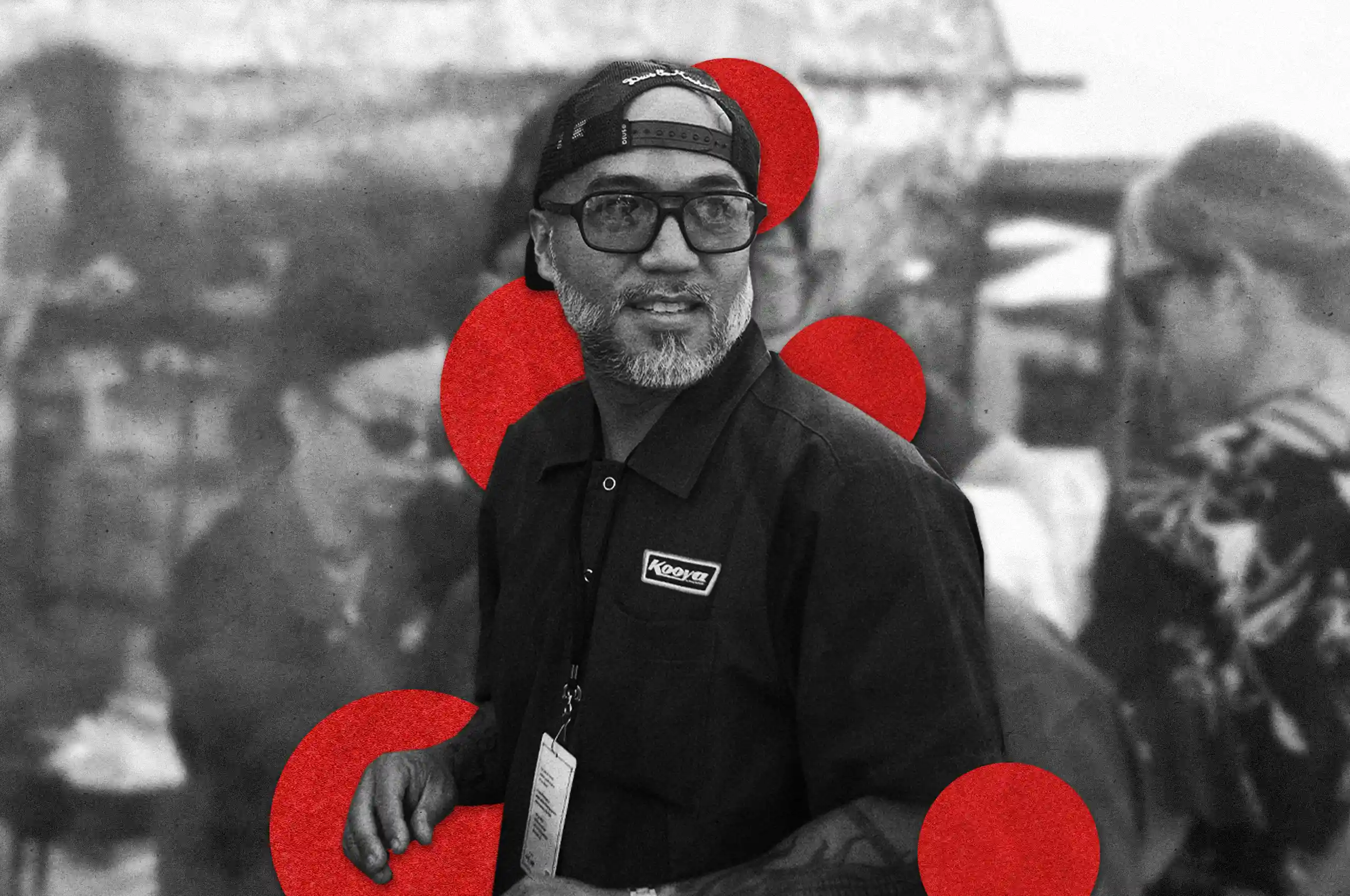
Jake De Leon is one of the main draws of the promotion, having debuted as a professional wrestler in 2014. When he came up to me to speak about Puso, his presence carried the weight of someone who has been through every version of the local scene, having moved from one promotion to the other since the beginning of his career. The “Filipino Fighting Rooster,” as De Leon is known — who is the current Dexcon World Champion and SETUP Thailand Pro Wrestling 24/7 Champion — helped define modern Pinoy wrestling, and his hard work in Puso comes from a place shaped by both hardship and pride.
He points out that the group had to rely on itself from day one, and that self-reliance has shaped how they handle character work, booking decisions, and the culture that keeps them together. The context of coming from the ashes of a previous promotion, Manila Wrestling Federation, to building up another one helped frame his words.
“We have cult members, we have chickens, we have superheroes, we have everything. I think the thing that separates us mostly would be our brand of Filipino identity.”
“[Puso Wrestling] is pretty much a promotion that is made by wrestlers and run by wrestlers. It’s basically our own love letter to Pinoy wrestling if you think about it,” De Leon tells Rolling Stone Philippines. “In MWF [Manila Wrestling Federation], there were showrunners and everything. But ever since MWF folded, we decided to put up our own thing.”
The shift from the old promotion to Puso pushed them to create a style that felt closer to Filipino behavior. De Leon talks about how the instincts he sees in local performers makes their characters funnier, louder, stranger, and more sincere. His description captures the experience of building personalities over a full year of trial and error.
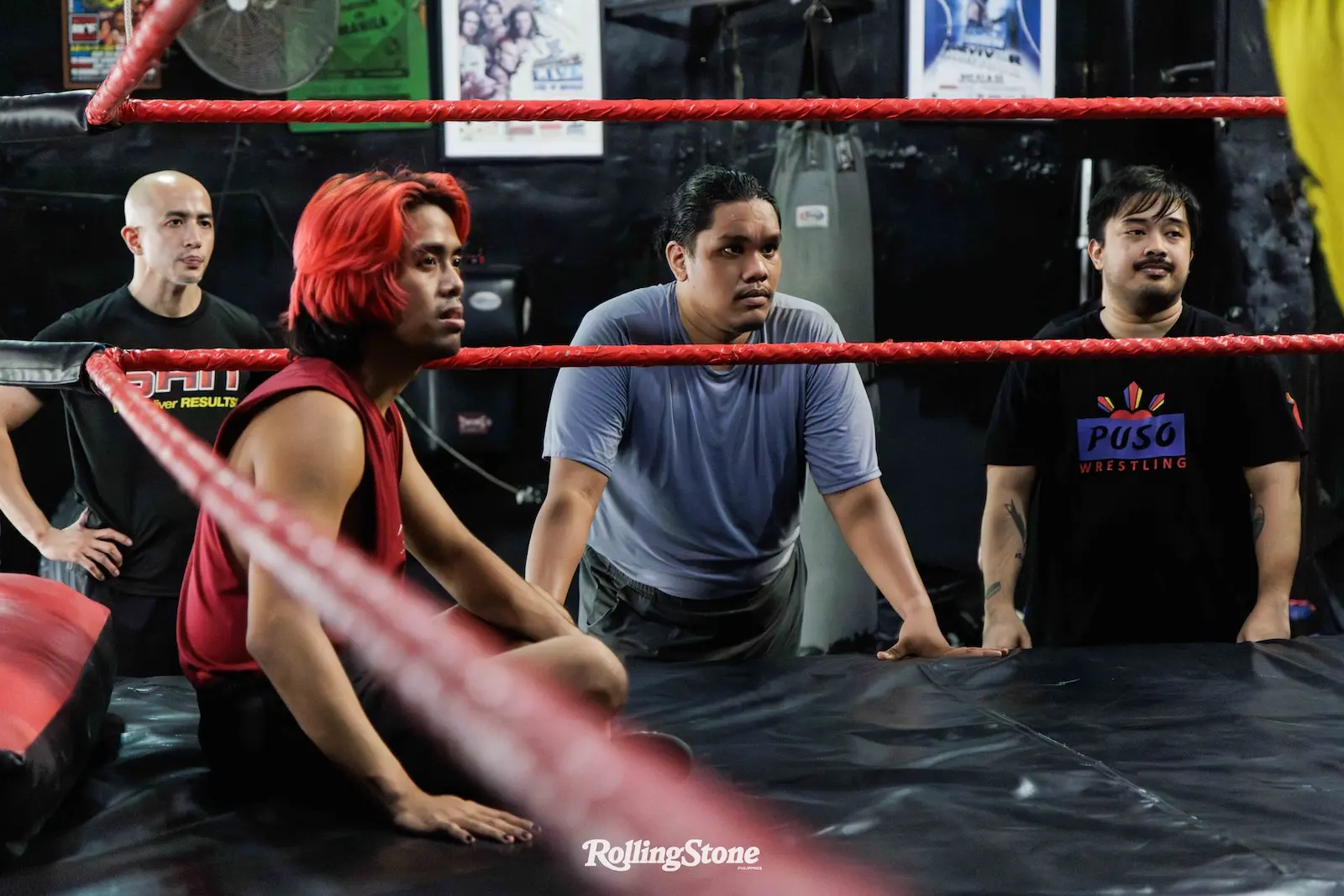
“The biggest difference is we’re naturally hammy,” he says. “If there’s an interview on TV, you see people in the background behind the reporter trying to get their airtime. But in Pinoy wrestling, we also have our own colorful characters but it’s true to Filipinos. We have cult members, we have chickens, we have superheroes, we have everything. I think the thing that separates us mostly would be our brand of Filipino identity.” He expands the thought by comparing a wrestling card (or a list of matches) to something familiar to every Filipino. “Basically, I view Pinoy wrestling as a sort of a fiesta where everything is colorful,” he says, explaining how the metaphor not only applies to the performance aspect of wrestling, but also the community that sustains it. “Everyone who comes in enjoys the show… There’s going to be good guys, bad guys, and everything. Story, drama, action, comedy. It’s a whole experience.”
Rituals, Labor, and the Cost of Staying
Whether it’s physical or mental, wrestling relies on several rituals that prepare every wrestler to be in character. There are environments, and the rituals in Brawl Pit Bulusan have to do with how difficult it is to get there, how hot it gets inside, and how rough the setup looks. De Leon sees those conditions as sacred, and part of what binds the audience and the wrestlers. The people who return every show attend for reasons that have nothing to do with comfort. That loyalty shapes how he sees the sport.
“We know [Brawl Pit Bulusan] is not an easy place to find. We know it’s not an easy place to drive to. But at the end of the day, the Pinoy wrestling audience still comes,” De Leon says. “So because we got an audience that comes back all the time, we sort of created a mecca. It’s like a church. Let’s say your church is so out of the way, but you like your church, you’ll go there. This place, it’s hot, it’s so out of the way, it’s hard to find; it’s weird, it seems dirty, but people still make their way to come here and enjoy themselves.”
“Even though I’m tired of the [concept of] Filipino resiliency, we apply it to pro-wrestling. And without the support [of the fans], we wouldn’’t be here.”
Current Pusong Pinoy Wrestling Champion Main Maxx carries another part of the story; his path moved through multiple promotions before he ended up with Puso. His patience, resilience, and loyalty make him feel like the soul of the roster. His experience helps him teach younger wrestlers while also admitting how much he has sacrificed to stay in the craft. That honesty colors every word he shares.
“[I’m] a bit tired [of seeing] promotions come and go,” Maxx tells Rolling Stone Philippines. “I think what keeps us pushing is really the Filipino resiliency that we see in social media. Even though I’m tired of the [concept of] Filipino resiliency, we apply it to pro-wrestling. And without the support [of the fans], we wouldn’’t be here. That’s why we keep pushing.”
Wrestling pulls time, energy, money, and physical strain. For Maxx, the craft only works when a wrestler accepts these costs without denying the reality of what they take away.
“Part of me realized that pro wrestling is not for everyone,” he says. “If it’s really the dream or the career you want, it takes more than attending weekly training. You also need to take care of your day jobs. When we’re training, we spend a lot on transportation [and] training fees. [That’s needed] for us to be consistent with pro wrestling.”
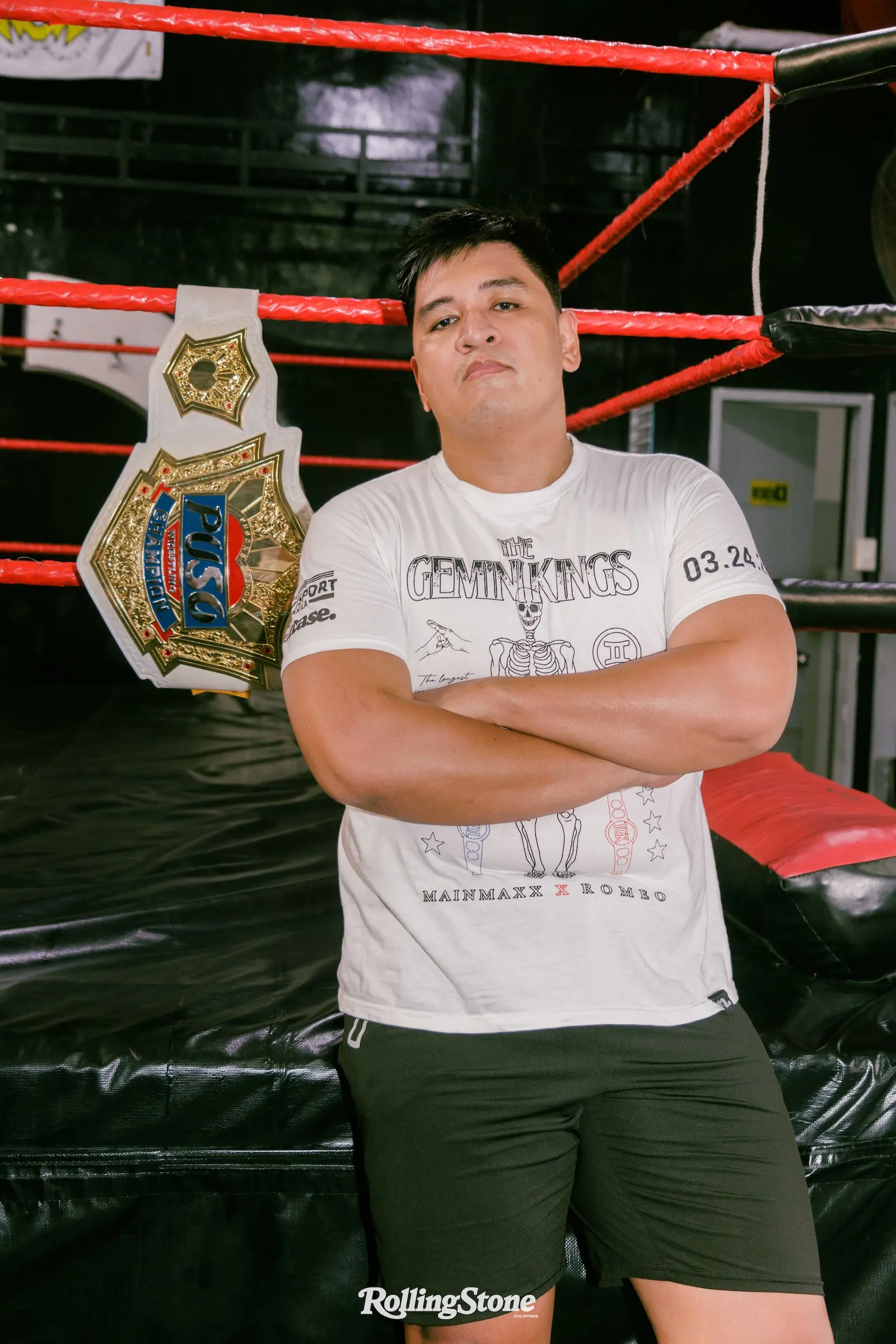
Pusong Pinoy Wrestling Champion
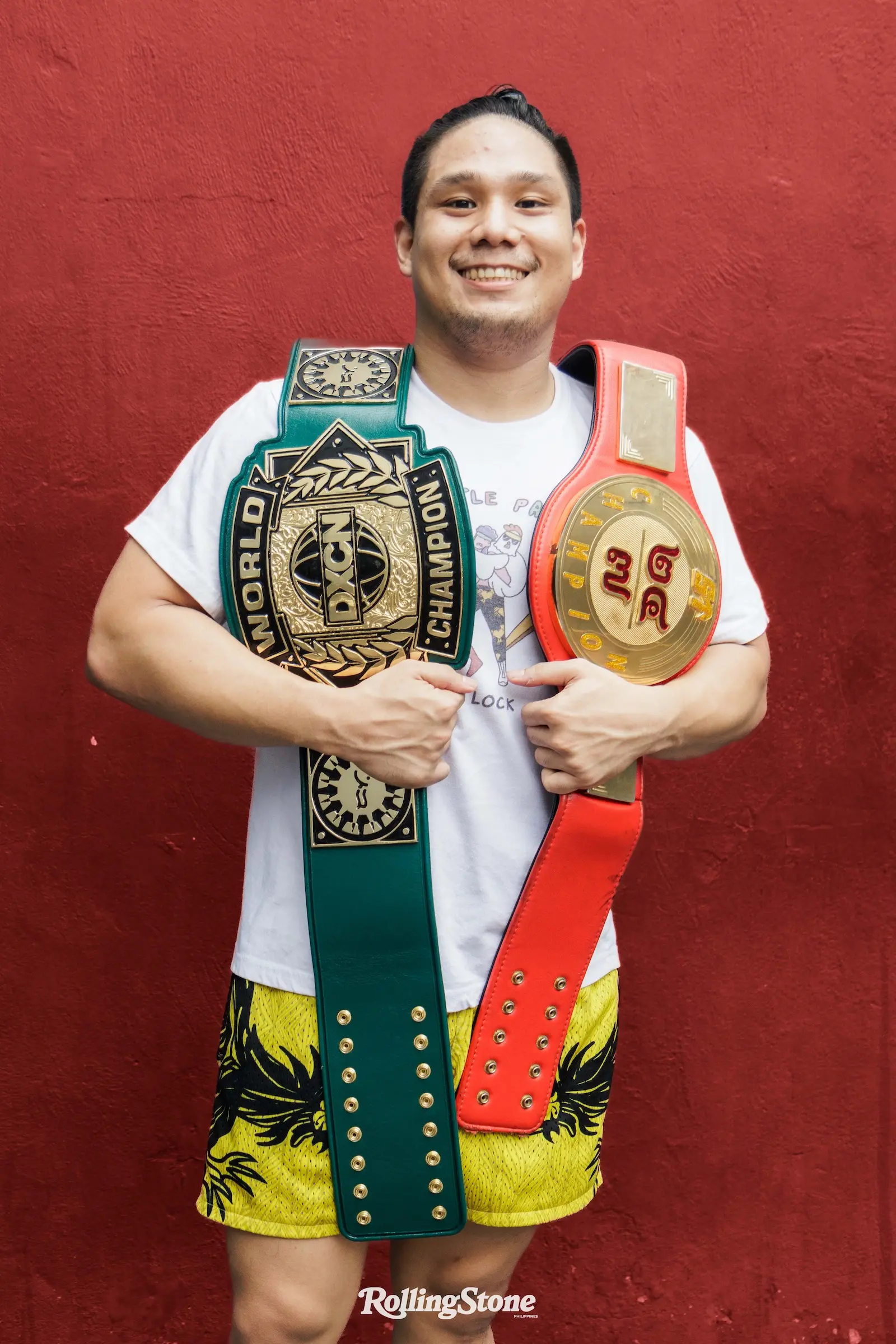
Maxx managed to carry the balance and he admits to it that it’s brutal from the get-go, but he talks about it with clarity instead of drama. His story resonates because the sacrifices feel familiar to anyone who splits time between passion and survival.
“It’s really a work-life balance,” he says. “It’s a huge sacrifice to balance it out: being a father, being a partner, being a pro wrestler, and being an employee. It’s really tough. At first, it’s really hard. There are a lot of sacrifices. But when you manage, the payoff is really something that I am proud of. Especially when I was crowned as a champion, it reflects my life. It’s bigger than pro wrestling when you achieve those things in life. I feel like I do matter in this world.”
Maxx sees the new roster of Puso Wrestling and many aspiring wrestlers in the couple of years as both a source of pride and pressure. Their growth measures whether his decade-long investment paid off.
“If I may say, sobrang swerte na [‘yong new kids] all have this luxury and the knowledge na pinapasa naman sa kanila. But at the same time, pressure ‘din sakin,” he says. “Kasi ang mentality ko, if they are not better than us, the future is not better than us. We fail as a senior, we fail as a veteran. Nagawa naman nito for 10 years, and it’s on us to pass that knowledge and continue the legacy, continue the industry for the next couple of decades.”
Women Who Built Their Space
The women of Puso are the literal heartbeat of the promotion. Super P stands as one of the most resilient figures in the room. She has recovered from torn ACLs during a Puso Wrestling livestream on Facebook earlier in the year and has kept pushing through a system that rarely gives female wrestlers adequate support. Her survival, like the promotion itself, came from necessity rather than choice.
“I think we’re all just stubborn,” Super P says. “The history of Puso is we are the remnants of an older promotion and that closed down against our will, so being the stubborn people that we are and we love wrestling so much we decided to just start things on our own so the DIY thing out of necessity because we had nothing.”
“We try to lead by example so that if there is at least one woman in the audience who says ‘Hey if they can do that maybe I can too,’ we’ve done our job.”
She and fellow female wrestler Joya talk openly about the future they want for women in the scene. Their vision includes better systems, safer spaces, and a strong division that they hope will one day become a separate promotion. Their insights reflect what they want to build over the next several years and how each match becomes an invitation for more women to join.
“Start creating this environment that’s a really good place for women to train,” she says. “We also have a set of guidelines to help protect women in our company, and at the same time us as female wrestlers. I think it’s our job to really show that we can keep up na this is a good place, that this is something fun for women. This is something where you can give all of your passion. So that’s up to us to show our best… We try to lead by example so that if there is at least one woman in the audience who says ‘Hey if they can do that maybe I can too,’ we’ve done our job.”
Joya adds to the discussion with a clear view of what women need inside a space like this. “Mas mabilis ka makakapag-invite, mas masasabi mo na pwede kang sumali dito sa amin kasi safe space ‘to,” Joya says. “Parang nakakahiya kasi sabihin, ay, nabastos ako dito pero sumali ka na, sige. Kaya masaya ako sa mga kasama ko talaga kasi never nilang pinaramdam na, ‘Ay, babae ka lang, ito ‘yong kaya mo, ito lang yung kaya mo.’ Hindi. China-challenge ka pa nila kung ano yung makakaya mo.”
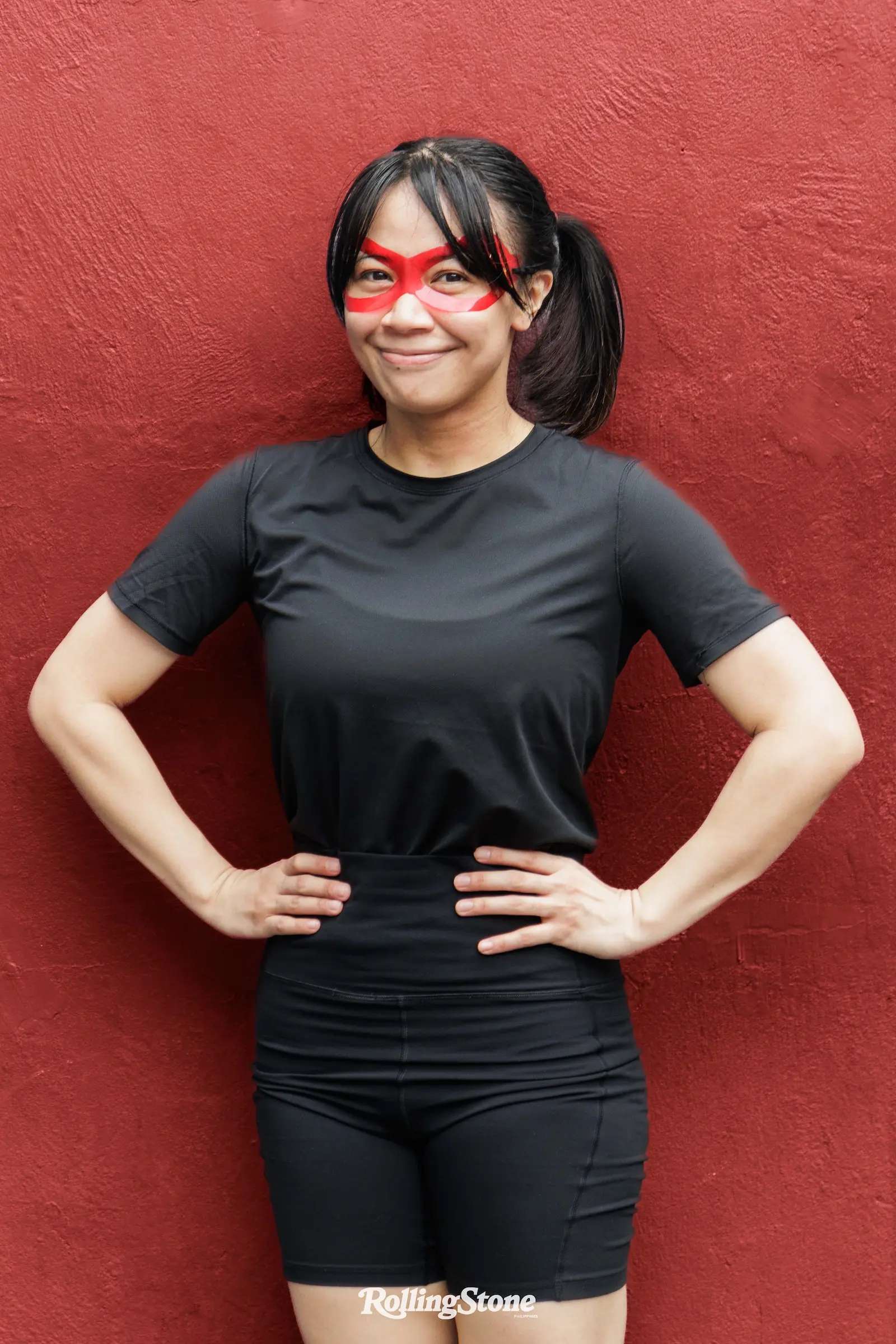
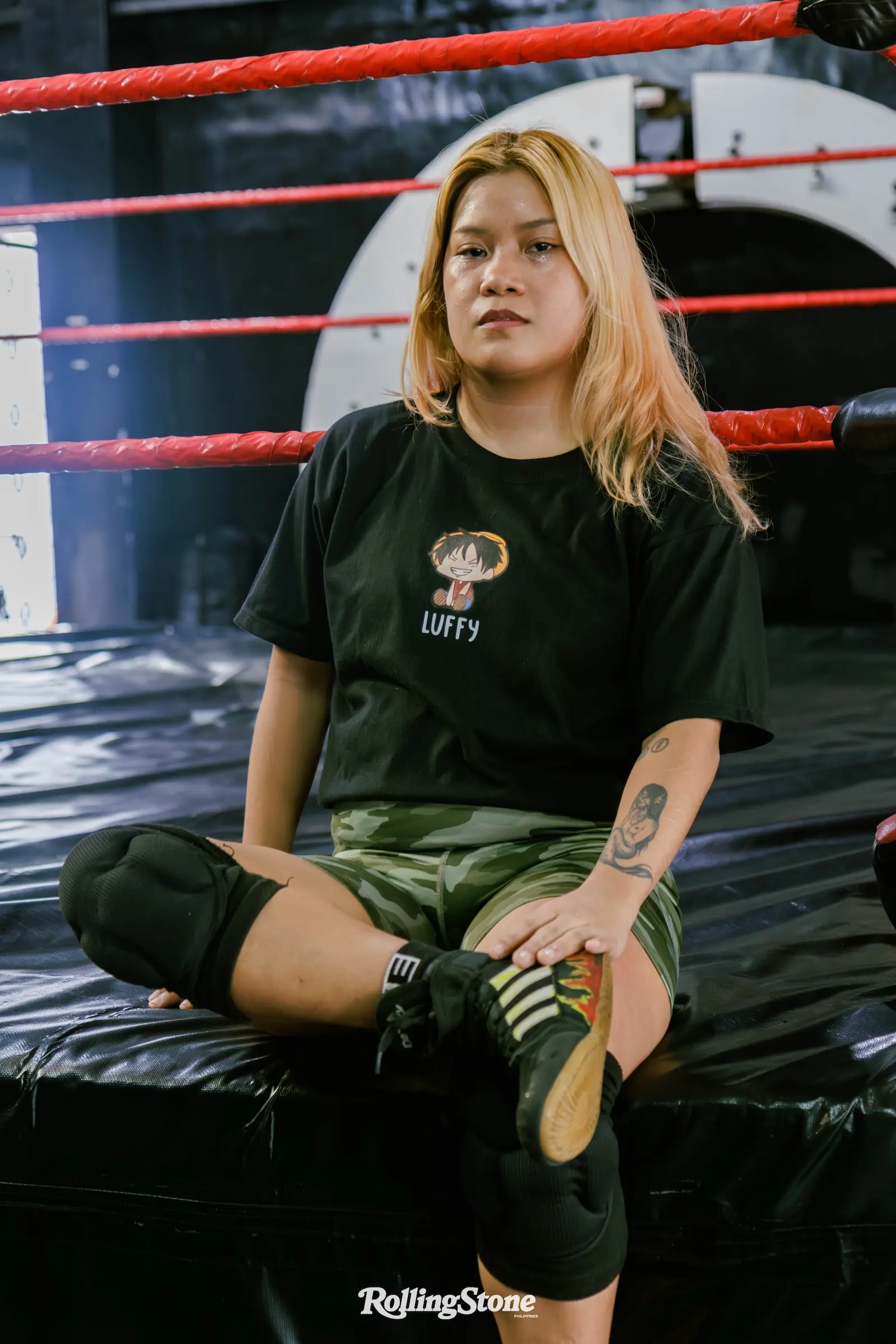
Her long-term dream is a more inclusive environment and an expanding roster of female wrestlers being able to book their own matches and building their story one at a time. “Ang gusto ko nalang is dumami pang mga Pinay wrestler,” she says. “Kasi mas masaya kapag mas maraming babaeng wrestler kasi pangarap ko rin kasi talaga magkaroon ng championship ng mga babae. Super cool. And sa Pilipinas kahit ilan lang kami mga babae, mas maraming kami kung ikukumpara mo sa mga Southeast Asian, wala pa kaming championship yan, kaya syempre exciting kapag meron na.”
Super P closes the loop by pointing to the first step. “The first step is to have a really robust women’s division in Puso Wrestling, which [is on its] way,” Super P says. “How many are we? I think we’re like seven or eight now. It’s growing, but the goal is to have our own show, our own promotion and for that to happen, we need more women in our roster, in our community and hopefully with all of our efforts. We’re inching our way towards that.”
De Leon and Super P define the promotion by describing the work as painful and rewarding in equal parts. The name Puso speaks for itself, and the culture around it runs on small victories the audience rarely sees.
“Sometimes it feels like suffering but sometimes you also feel a sense of pride,” Super P says. “There’s a sense of accomplishment because we are just like a bunch of wrestlers. We’re not producers, we’re not directors, we’re not necessarily promoters, we just learn how to be that. When you go to a Puso show, one of your wrestlers is your cameraman, one of your wrestlers is your lights guy, one of your wrestlers is your audio guy. Most of the time, that sense of accomplishment overshadows the suffering.”
De Leon closes the story with a thought that defines why the promotion works. Money, institutional support, or formal pathways to success is not enough for wrestling in the Philippines to sustain itself. What keeps the system alive runs deeper than competition.
“I hope they’re not taking it too harshly, but I feel like I‘m one of the wrestlers that get it the most,” De Leon says. “But I’m hoping that the amount of engagement that I get from them will help me get somewhere… Wrestling here feels like an act of love. It’s for the craft, the crowd, and the culture.”