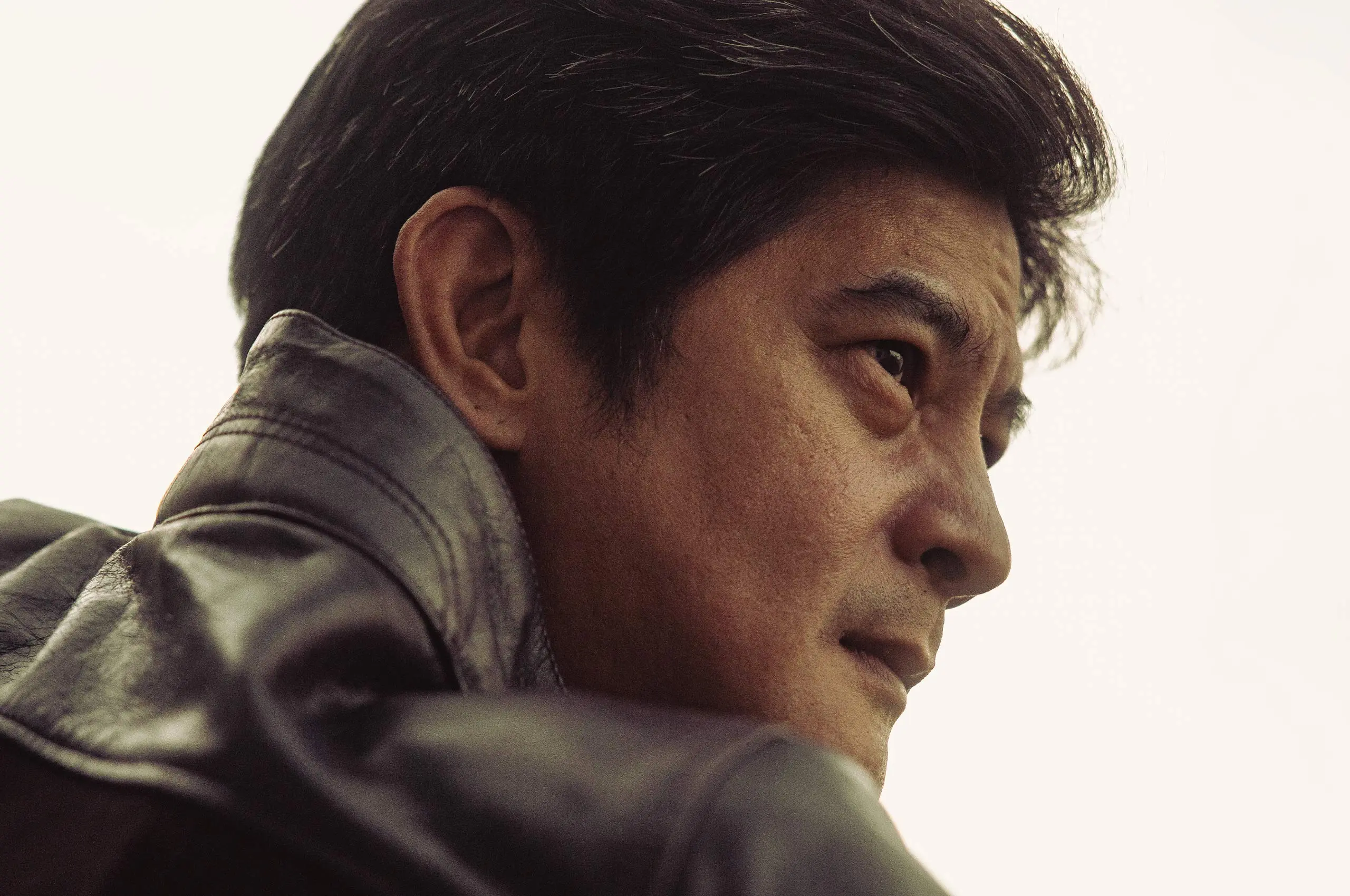
It’s tempting to call this a season of resurgence for Romnick Sarmenta. He was, after all, in a number of high-profile projects the past couple of years, including Jerrold Tarog’s big-budget historical biopic Quezon. What projects has Sarmenta done before the pandemic? It’s likely you will draw a blank, though he has done plenty. It’s a sign of an actor who can disappear into his role. It’s also indicative that the actor is more interested in the work than in fame.
But the 53-year-old acknowledges — perhaps even entertains — this idea of a resurgence, even if it’s a bit inaccurate. Sarmenta, an actor who started out as a child star in the late 1970s, was never really gone. He has been working, if a bit too quietly. But he was always there. It just so happens that you’re only paying attention again now.
“It’s flattering that the generations of my children will get to enjoy some of the things I get to be part of, the projects or narratives that they would be able to enjoy and carry with them,” Sarmenta told Rolling Stone Philippines. “That’s a gift. I think that’s a gift that I will never be able to give to myself.”
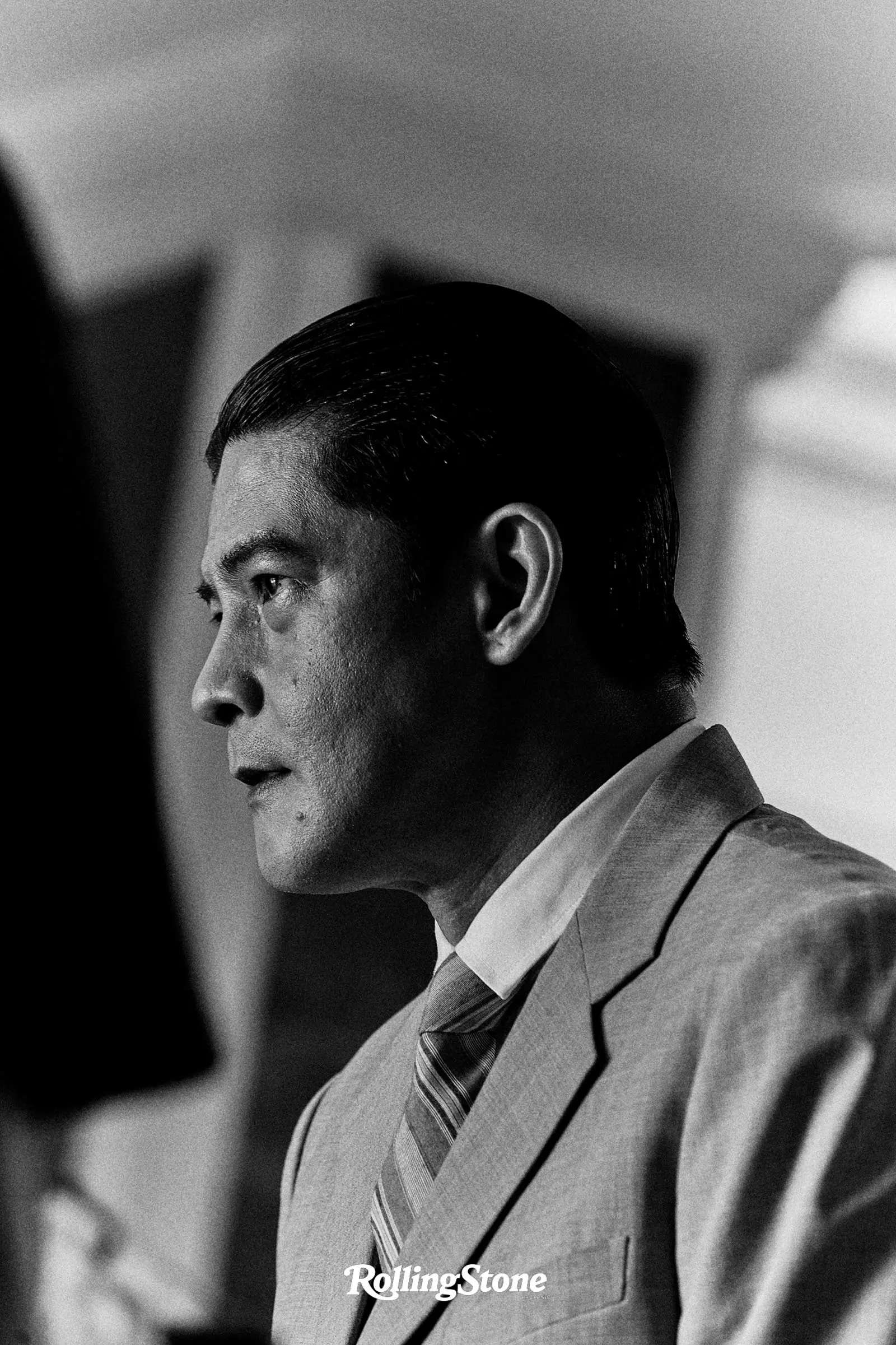
His schedule in 2025 proves this. “I was in Quezon. I was also doing two other projects parallel to that for the span of last year. It’s always two or three projects… I was mostly out of the house. May mga times na uuwi na lang ako para magpalit ng damit at maligo,” he said. Which means to say: it feels like Sarmenta is everywhere these days, not so much because this is his second wind — because it isn’t — but more like a function of the steady work he has been doing throughout the years.
Sarmenta’s breakthrough in show business came in his role as Peping in the 1970s soap opera Gulong ng Palad, an adaptation of a popular 1950s radio drama. From a child star, he transitioned to becoming a matinee idol. But perhaps his fans from the 1980s would best remember him for his onscreen partnership with actress Sheryl Cruz. Together, they starred in hit movies such as Puso sa Puso and Pardina at ang mga Duwende. Sarmenta became the prototypical Filipino movie star, unknowingly creating what felt like templates for the modern love team formula that launched many A-teams decades after his romantic lead reign.
Sarmenta, despite the trappings of fame, managed to transition from child star to young adult actor gracefully, no awkward stage or rebellious phase needed. He then did the most popular genre in the Philippine box office at the time: action films, in the vein of Robin Padilla, Jestoni Alarcon, and Philip Salvador.
He is aware that things could have gone south for him as a young actor in showbiz. But he was “very lucky,” he said, to have started his career “with people who care.” “With productions before, everyone treated everybody like family. And that kind of thing, I discovered when I was growing up, is unique. And you try to carry on that and apply that to the other sets that you go to. But there’s always something unique [about] each [production].”
But that sense of camaraderie faces a unique set of challenges when filtered through the lens of modern celebrity culture.

“I love the stage. I don’t know how I can substantially verbalize my love for theater. It was a late awakening.”
Having worked with the popular love teams of this time, Sarmenta comments, “It’s very different. And at the same time, it’s the same.”
He wasn’t as generous or casual about it in his youth, however. Sarmenta would not call it traumatic, though it was confusing. “I think a lot of us got confused, also with what a love team is for. There are those of us who fell hard for it, and there are some of us who got the assignment. At the same time, those who did, at one point naman, feeling ng fans nila that they were betrayed.”
Which is why Sarmenta likely wouldn’t be involved in a “love team” now. “Not for anything. It’s just that it was a bit of a struggle to get out of it. In my case, because my love team with Sheryl before was, modesty aside, kind of big, it was very hard to get out of it… The sad part about love teams is that people will try to find a reason to blame somebody for why the love team falls apart. And that’s unfair to both parties.”
He further explained, “I understand that there are good stories of people falling in love [at] my age, but I’d rather keep it like that. Let’s stick to the plot. Let’s stick to the narrative of the film and ‘wag na tayo magpaki- lig beyond that.”
The stories he is sticking with? The ones he believes in, Sar- menta said. For instance, his role as the timid (but possibly prob- lematic) Filipino teacher Eric in the stage adaptation of the psychological drama About Us But Not About Us. Written and directed by Jun Lana, the 2022 film was a “pandemic project” that Sarmenta felt was a “personal project” for Lana; he would not be surprised, he said, if the film ended up not being released at all. But it did — to great critical acclaim, at that — and is now adapted for the stage, directed by Tuxqs Rutaquio.
“I didn’t want to be critical of Eric in the film, because he was a pleasure to play. I learned a lot from him. I like to think that my character, they also taught me a few things here and there to pick up in my life, or to reflect upon,” he said.
This isn’t Sarmenta’s first foray into theater. He has done a number of stage productions since the 2000s, his first was under Dulaang UP, with the late actor and director Tony Mabesa, now National Artist for Theater. One of his most recent is The Impossible Dream, a one-act play that imagines a secret meeting between fraternity brothers Benigno Aquino Jr. (played by Sarmenta) and Ferdinand Marcos Sr. (played by Ron Capinding).

“I love the stage. I don’t know how I can substantially verbalize my love for theater. It was a late awakening,” he said.
“The discipline made me fall in love with acting again,” Sarmenta said. “‘Yung being present enough for each member of the past onstage, so that you know when something’s going wrong, and then you’re still able to continue the scene. Just that generosity, that give and take, that openness, made me fall in love again, with acting. I’ve been falling in love with theater progressively.”
“As long as there are good offers and stories that I can relate with or feel like wanting to be part of anything, sige, game. Walang problema.”
Sarmenta believes his acting skill “is a gift.” “Being able to do this, understanding that this is probably the only thing that I really know how to do, makes me want to stay. Not to have the great parts, not to be ‘that’ actor, but to tell stories.”
“I always think it’s a blessing. I’m always grateful for work. Without meaning to sound melodramatic in any way, I’ll work my butt off for my family. As long as there are good offers and stories that I can relate with or feel like wanting to be part of anything, sige, game. Walang problema.”
“What I don’t want to feel ever is ‘yung ‘bread trip’ lang. ‘Yung gagawin ko lang just because it’s paying me well. It feels like I’m throwing whatever gift was given to me,” he explained.
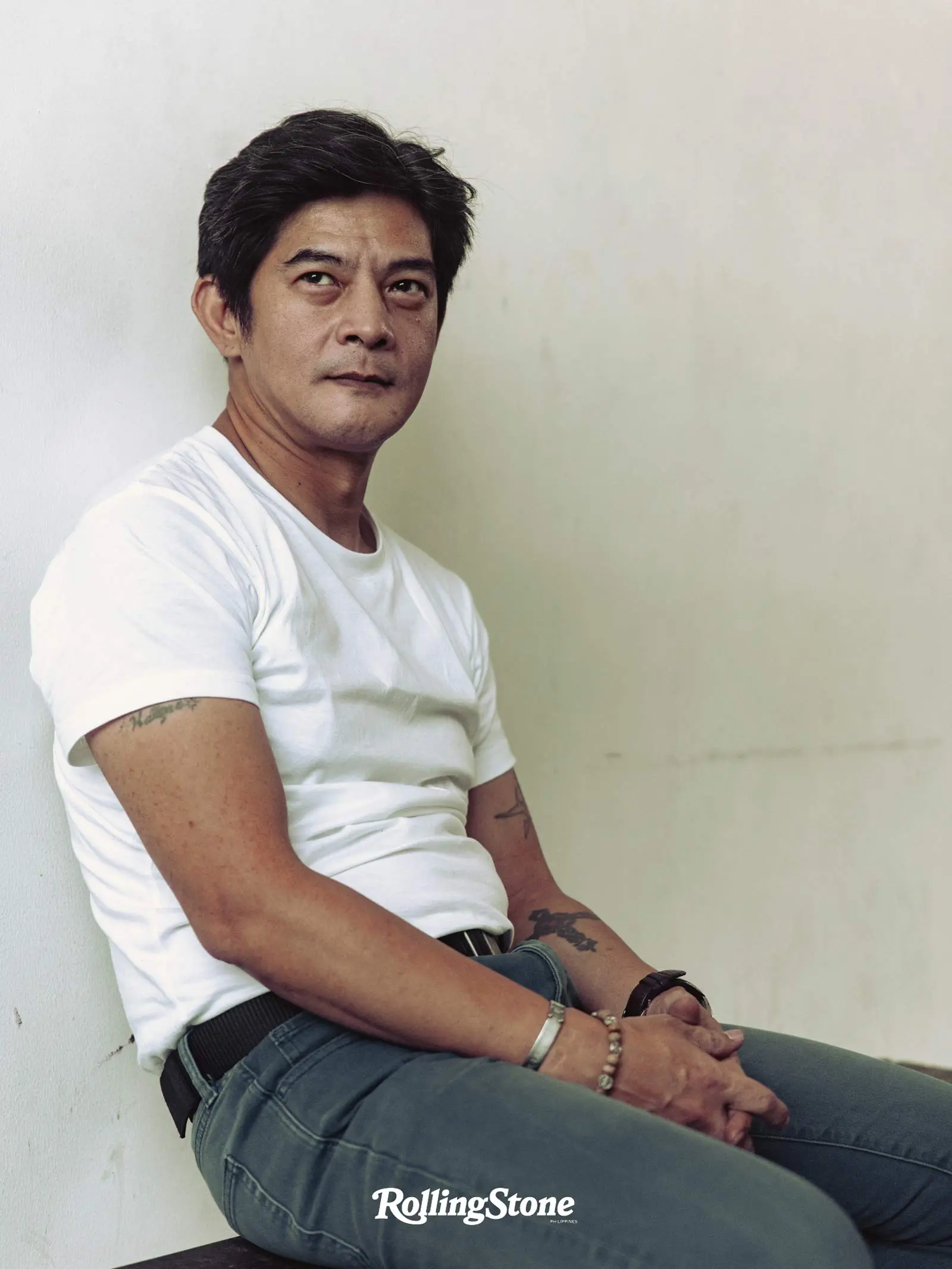
“I don’t feel burdened by it, but there’s this responsibility to be able to convey to those who are coming in that they, as early as now, must understand that they also have a responsibility to tell the good stories and to uplift the craft. It’s not just supposed to be a vehicle for stardom or popularity, because if you treat it like that, then go somewhere else,” Sarmenta also said.
This story first appeared in Rolling Stone Philippines’ Anniversary Issue
Get a copy on Sari-Sari Shopping, or read the e-magazine now here.