2016 is a decade ago, but because of a recent Instagram trend asking users to post photos of themselves from 2016, we are forced to look back at a point where everything mattered because of what it set in motion. The trend flattened an entire year into VSCO filters, flower crowns, and Tumblr quotes. What makes it worth sitting with is not the nostalgia itself, but how quickly memory smooths over the socio-political tension that actually shaped that year: Rodrigo Duterte’s ascent to Malacañang, which predated Donald Trump’s first term in the Oval Office by six months; the burial of the dictator Ferdinand Marcos Sr. at the Libingan ng Bayani; and over the pond, there’s #Brexit.
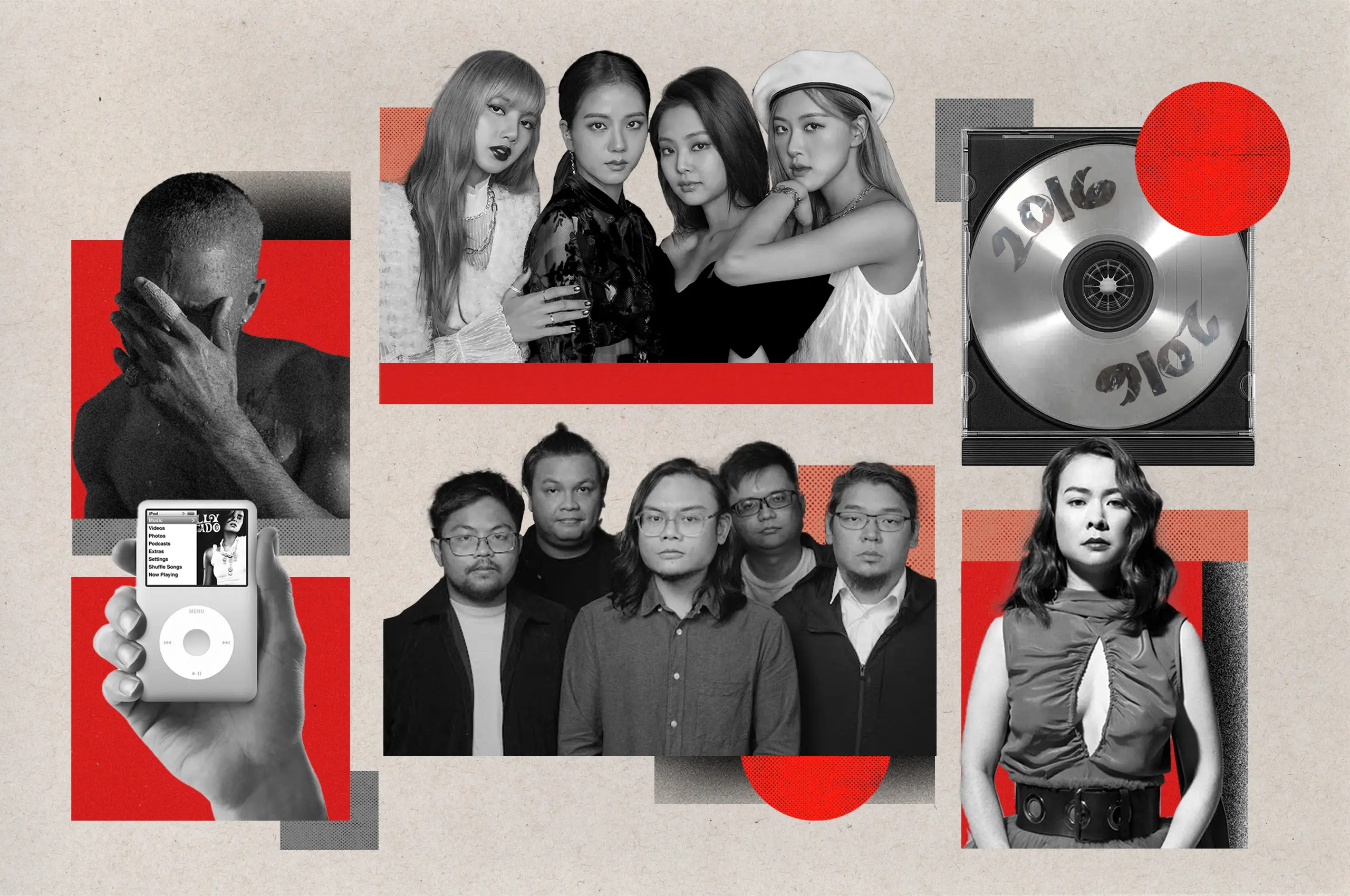
All the while, global pop leaned toward emotional candor, anxiety, and fragmentation. Frank Ocean’s Blonde landed as a document of online dread; Rihanna’s ANTI — the last time she put out an album — defined mainstream R&B with its lush arrangements. Both records mirrored identity, intimacy, and selfhood felt unstable under constant digital observation. That milieu defined what came next.
Remember Like It Was Yesterday
2016 was also the year when local music moved with similar energy. Indie bands filled small venues across Quezon City, playing for scenes that felt temporary even then. Mow’s in Matalino St. and the defunct Route 196 in Katipunan served as meeting points for the indie kids. Bands such as Oh! Flamingo, Autotelic, She’s Only Sixteen (later renamed SOS), tide/edit, and Ourselves the Elves toured around the Metro Manila indie circuit. Regrettably, many of the artists who lived fruitfully did not last, such as Ang Bandang Shirley. Venues closed down. Collectives dissolved. Algorithms took over and reshaped the attention economy. Nostalgia often forgets how brief those conditions were, and how much of that energy existed under pressure.
As 2026 rolled in, the music conversation online snapped back to a familiar reflex. BTS confirmed a world tour with a Philippine stop scheduled for early 2027 at the Philippine Arena. BLACKPINK announced a new EP titled Deadline to commemorate 10 years since the group’s debut 10 years ago. Mitski resurfaced with a teaser for “Where’s My Phone?” Rumors circulated about a new album from The 1975, fueled by overheard comments and fan speculation. None of these signals a return to the past. Instead, it points to artists operating within a longer arc, shaped by patience, recalibration, and systems that did not exist in 2016.
Optimism in 2026 does not come from pretending things eased up. Political instability continues; Trump is back in the White House and continues to strangle world politics; ICE raids persist, terrorizing immigrants all over the country; the genocide in Palestine by Israel goes on even though there’s a ceasefire. In the Philippines, political prisoners remain jailed while flood control project bigwigs run scot-free.
These realities have always existed alongside music. The difference now is that we are made aware. Artists and audiences understand the stakes more clearly. Culture no longer exists above consequence.
Looking Forward
Looking back at 2016 offers comfort, especially when memory edits out the anxiety and uncertainty that marked the year. But that comfort can blur into distraction. It risks turning a turbulent moment into a mood board, flattening history into aesthetics rather than reckoning with what it produced.
Longing for 2016 confuses youth with possibility. But possibility never disappeared. Today’s scenes move slower, document themselves better, and demand sustainability. Artists consider sustainability, ownership, and mental health earlier, shaped by lessons learned the hard way.
Optimism in 2026 comes from participation. It comes from showing up, building scenes that protect their people, and refusing to mythologize years that already showed their cracks. The good days never lived in a specific calendar year. 2026 is everyone’s year when people pay attention and choose to stay engaged.