
VMX (formerly Vivamax) entered the Philippine streaming market in 2021 during a period when theatrical film distribution remained unstable after the pandemic. Operated by major media conglomerate Viva Entertainment, the platform quickly established itself through a steady output of original Filipino films produced specifically for streaming. Films premiered directly on the platform, where 80 out of the 100 movies produced in the company go direct to streaming, allowing for a faster turnaround and wider reach among subscribers in the Philippines and overseas. Much of its early success was tied to films that were admittedly tantalizing and sexual in nature, akin to Viva Entertainment’s run of DVDs in the early 2000s, titles that doubled down on sex scenes as central parts of their storytelling. These releases quickly became some of the platform’s most-watched films and helped define VMX’s public image in its first years.
Several of these films, including Death of a Girlfriend, Scorpio Nights 3, and Kitty K7, generated sustained viewership on the service. The platform also became closely associated with a new group of actors such as AJ Raval, Angeli Khang, Christine Bermas, and Azi Acosta, whose performances became widely circulated online. As VMX expanded its catalog, it also relied on a consistent pool of directors, cinematographers, and composers who worked across multiple productions within short timeframes.
Among them were music producer Peter Legaste and film composer Von De Guzman.

Both Legaste and De Guzman had long careers in film scoring prior to their involvement with VMX. Legaste worked on the romantic drama What If, and De Guzman did sound design for the historical thriller Mallari starring Piolo Pascual in 2023. In terms of their work for VMX, Legaste’s credits include Nerisa, Scorpio Nights 3, Suki, and X-Deal 2, while De Guzman composed music for Selina’s Gold, Call Me Alma, and They Are Mine, among others. Their work formed part of the platform’s early catalog during its period of rapid growth.
Legaste and De Guzman spoke to Rolling Stone Philippines about the realities of scoring VMX films, from working under rapid production timelines to producing the sound of sex scenes that range from intimacy to psychological tension.
Realities of the Job
For Legaste, the trajectory of his work brought him into a genre he had first encountered as an audience member, watching the original Scorpio Nights when he was younger.
“‘Pag tinitingnan ko ‘yung body of work ko, steamy movies at bomba films lahat. I’m very proud of it,” Legaste tells Rolling Stone Philippines. “Kasi nung high school, college, pinapanood ko lang sila. Tapos I got the privilege to be part of the art itself na ‘Oh my god, dati pinapanood ko lang ’to, ngayon part na ako, working na ako on those.’ For me, fulfilling siya.”
Both composers describe their work on VMX productions as part of the same process they use for other films. The starting point remains the script and the director’s intentions for the story.
“Regardless of the genre, the process remains the same,” De Guzman says. “The music should always be subservient to the narrative. Ideally, they give me a script, I read it, then I meet with the director. Habang binabasa ko ‘yung script, meron nang nabubuong concept ng sound world ng film kung ako ‘yung gagawa ng music.”
As VMX increased its release schedule in 2024, composers were often assigned multiple projects in succession. Legaste recalls how the volume of work increased shortly after the platform gained traction.
“Nung sumikat ‘yung Vivamax, sunod-sunod din ‘yung films ko. After Nerisa, nagkaroon ng iba pang projects in a span of months. Nag-skyrocket talaga,” Legaste says. “Pero challenging din kasi tight na ‘yung deadlines, lalo nung latter part. May time na release lang nang release, parang you constantly churn out these movies na parang vending machine. It feels like a job.”
De Guzman adds that the pace sometimes affected how much preparation time composers had. “Nowadays, parang gipit sa oras. Minsan hindi ko na nababasa ‘yung script.” De Guzman says. “They just send me the edited video already.”
Anatomy of a Sex Scene
Within these constraints, composers adjusted their approach depending on the tone of each scene. De Guzman points to the dramaSilip sa Apoy — where the plot revolves around a wife having an affair to his neighbor — as an example where the music needed to reflect the psychological condition of the character rather than function as a conventional romantic cue.
“Pagpunta natin sa Vivamax films, hindi naman lahat ng love scene steamy, sexy, o ‘animalistic.’ Depende sa story at depende sa eksena,” De Guzman says. “So hindi lahat puwedeng tunog seduction. Minsan may darkness, may violence involved. As a film composer, idadaan mo lahat ‘yan sa instrumentation at kung anong ginagawa ng instrument.”
Legaste describes a similar process in Scorpio Nights 3’s major sex scene, even pointing out how he added a sonic flourish to the notorious spit scene. “Binibase ko sa movement, sa intensity,” Legaste says. “You have to put yourself dun sa shoes nung guy or ‘yung girl na parang, ano ba ‘yung intensity nung nangyayari doon? Ano ba ‘yung feeling kapag ginagawa ko ‘to? Nakikita ko na pinagpawisan na siya. Tapos [dadagdag ako ng music] kung nasasarapan siya, nakapikit, nakangiti, tapos ‘yung galaw ba pabilis nang pabilis? Kailangan ma-translate ‘yun sa music, para at least ‘yung nanonood, na-fi-feel din niya kung ano ‘yung nangyayari sa eksena.”
“May misconception na, ‘Nag-score ka lang ng mga bold films.’ Pero for me, it’s music — art pa rin siya.”
Visual elements also influenced instrumentation for both producers. Film composers would only add something instrumentally strong if the scene would merit a film score. “Kapag pula ‘yung ilaw, ano ba ‘yung naisip natin? Kailangan dark o very sensual,” De Guzman says. “Red is very sensual. It could also symbolize the color of love. Kailangan ko ‘yung articulation, ‘yung bend, ‘yung hagod. ‘Yung hagod, ‘yan ‘yung nagpapalambot.”
Misconceptions about Sex
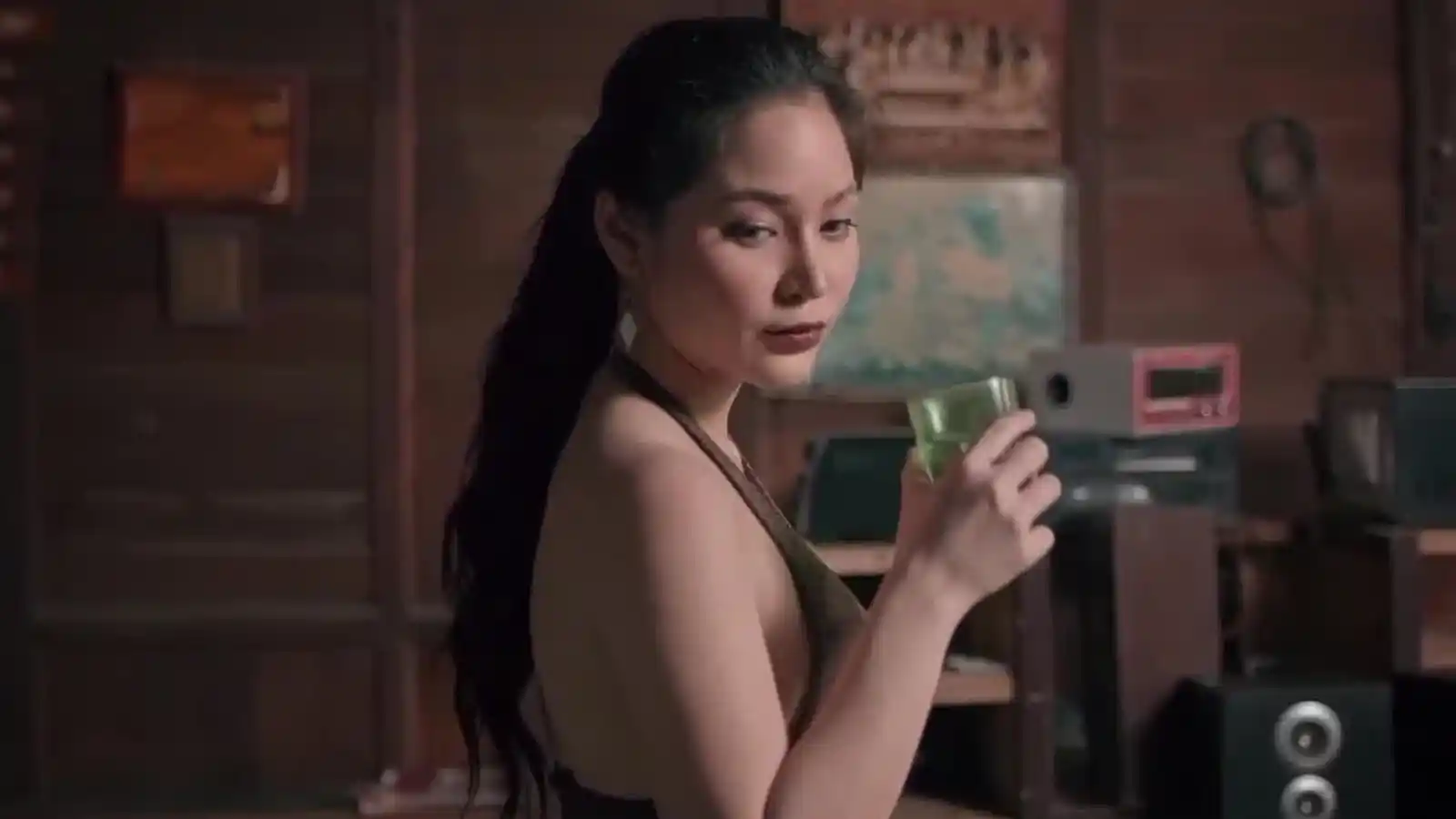
Both composers say reactions to their work vary depending on who they speak with. Some with eyebrow-raising reactions.. “When some of my friends learned I was doing some Vivamax films, may reactions na ‘You do that too?’ Medyo shy sila,” De Guzman says. “You already know there’s a misconception.”
Legaste adds that he does not separate these projects from his other scoring work. “May misconception na, ‘Nag-score ka lang ng mga bold films.’ Pero for me, it’s music — art pa rin siya,” he says. “And I can’t create more interesting music if I box myself sa action or romcom. You have to explore other genres para mabasag ‘yung framework at lumabas ka sa comfort zone.”
Beyond the Stigma
The shift toward streaming also changed how widely their work circulated. That VMX films were being watched in a multitude of private and everyday spaces is the least of De Guzman’s concerns. Film composers do their job regardless of the genre, and the growing visibility of these films has made that work become a normal part of their day-to-day lives. “I live in a condo, so my friends here are security guards, maintenance, especially sa lobby. Suddenly sila ‘yung nanonood ng Vivamax, sila ‘yung subscribers,” De Guzman says. “One day, [the security guards] saw my name, ‘Music by Von De Guzman.’ ‘Pag nakita nila ako, ‘Sir Von, ikaw ‘yun?’ Sabi ko, “Yes.” Instead na ma-embarrass, tumawa lang ako. Sabi [ng guards sa akin], ‘Ilan na subscribers niyo ngayon?’”
Legaste acknowledges that perceptions of the genre continue to evolve. “Sa iba taboo, pero it’s already 2026, guys,” Legaste says. “Come on. It’s an art. It’s a cool genre to do kasi ‘pag laging safe ka, hindi ka nakakapag-explore.”
As VMX continues releasing new titles, composers like Legaste and De Guzman remain part of its production cycle. Their work, often heard but rarely discussed publicly, continues to exist within a side of Filipino screen culture that has proven both commercially successful and persistently misunderstood.