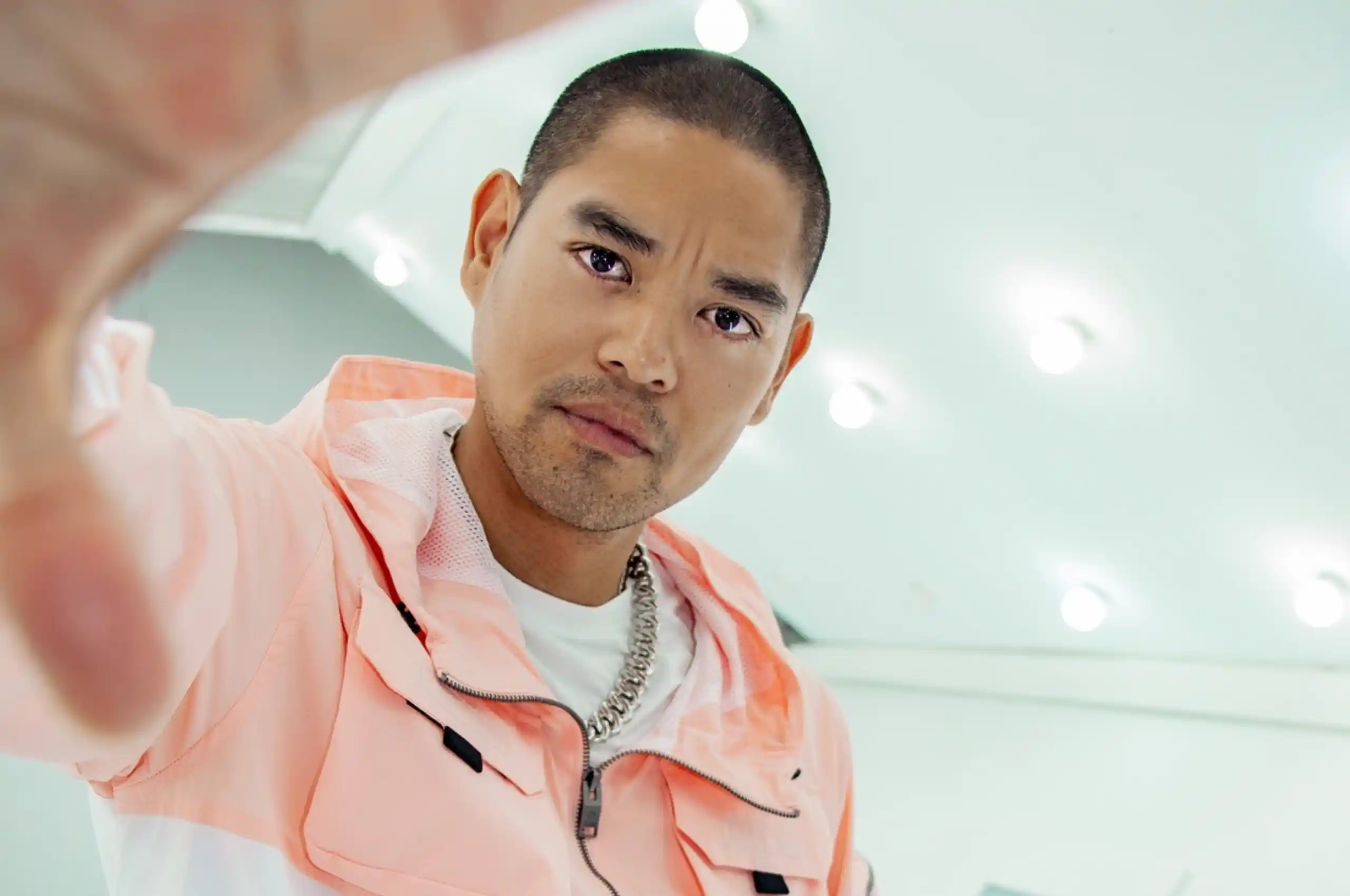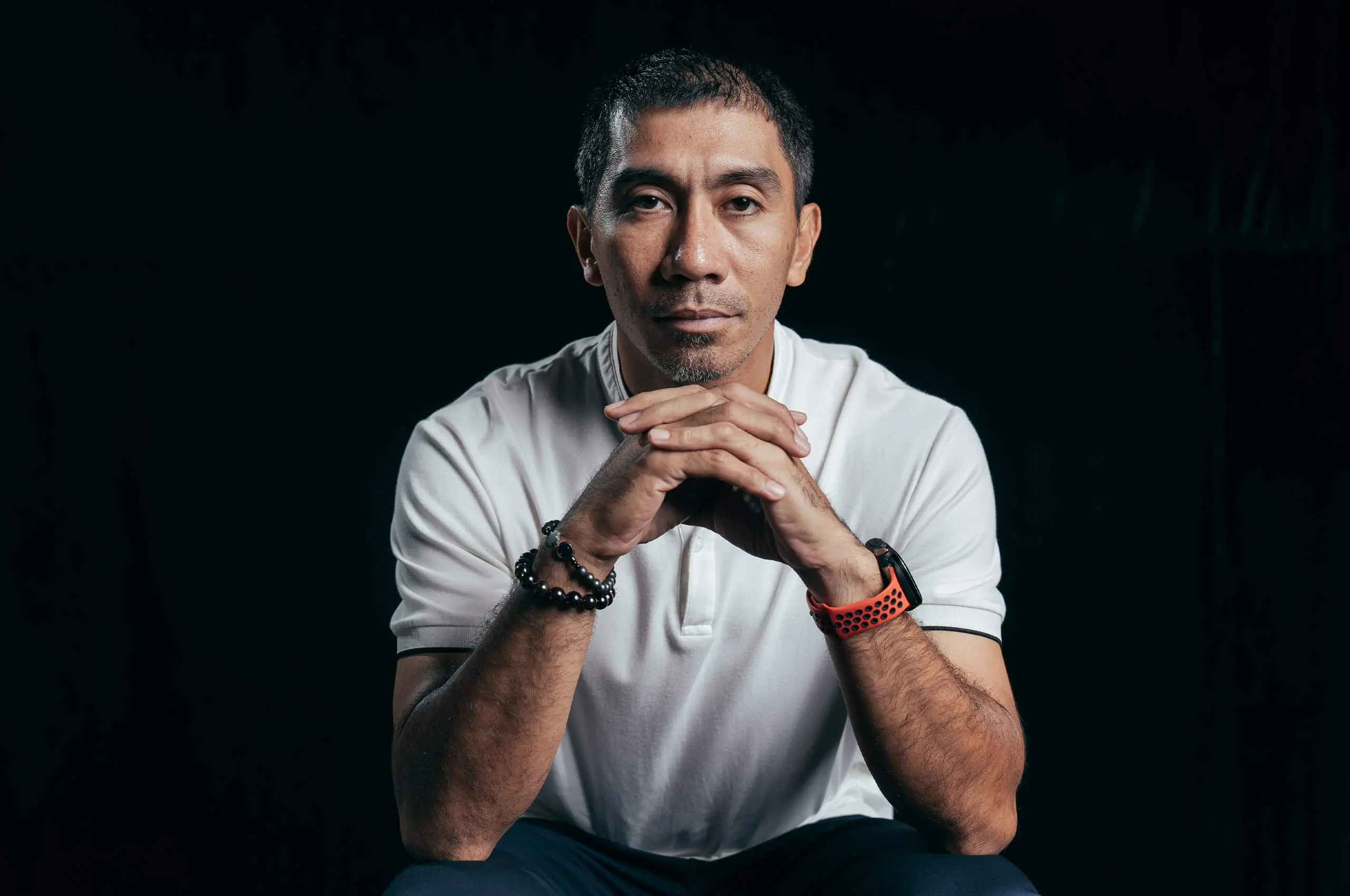
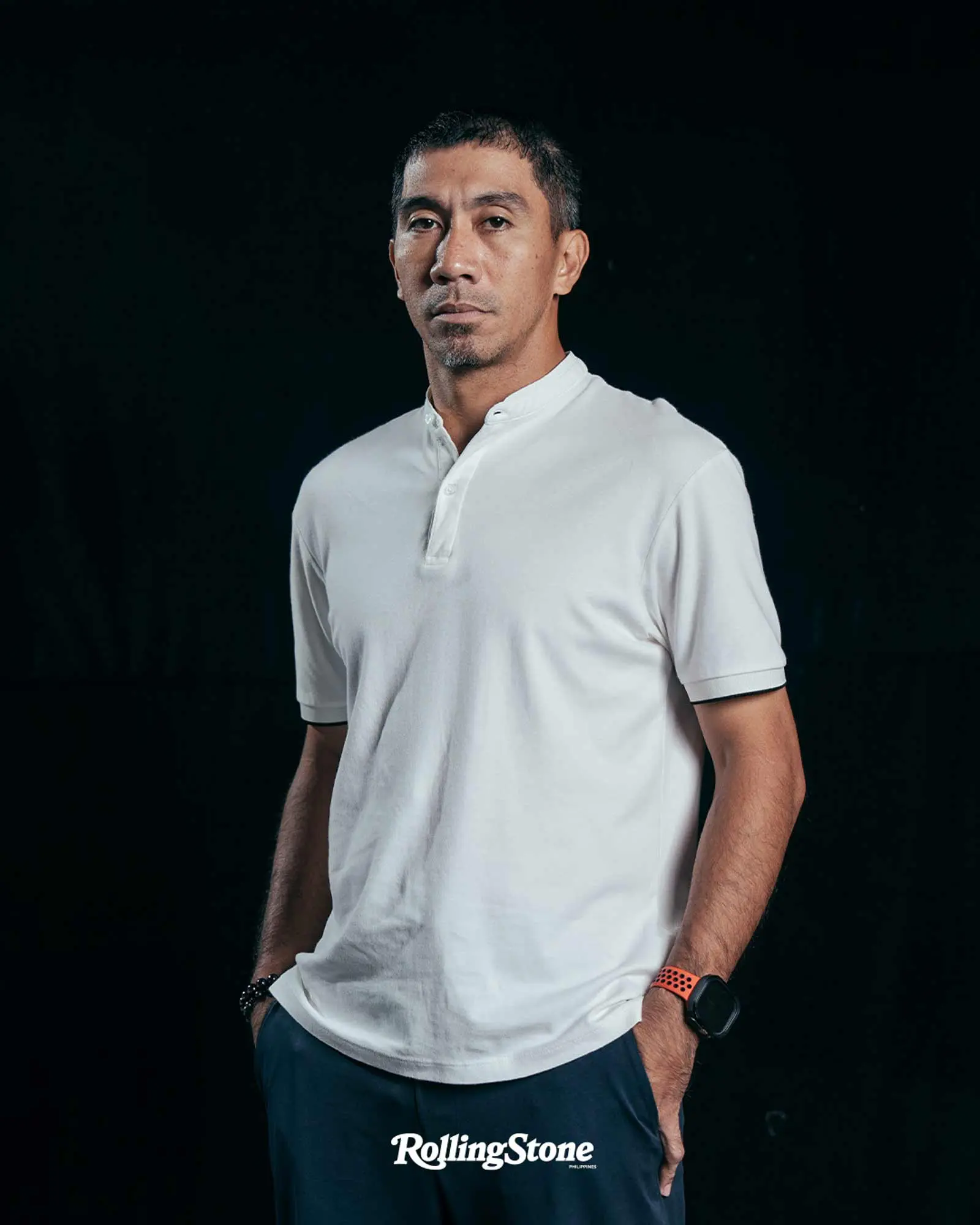
LA Tenorio says he is on his third life. The 41-year-old athlete-turned-coach has seen more than his fair share of wins and losses, on and off the court, but like any true competitor, it’s the mentality more than the trophies that makes a champion. From the moment he came into the world, he already had to beat the odds. “I was born a blue baby. I’m a sepsis baby, so I was in the incubator for a month,” he tells Rolling Stone Philippines. “It was really a life or death situation for a baby.” Those kinds of stories make everything else seem minute in scale and ephemeral, but Tenorio is an athlete after all, and for anyone in the world of sports, the struggles never leave you.
In his first year playing for the Ateneo de Manila University Blue Eagles, as the rivalry between Ateneo and De La Salle University Green Archers ignited once more, Tenorio found himself in the finals, trying to win his first University Athletic Association of the Philippines (UAAP) championship against their biggest rivals and back-to-back-to-back defending champions. It was Tenorio’s breakout performance. He scored 30 points as a rookie but lost the game. It was perhaps the biggest loss he had faced at that time. Maybe to this day. The intensity of the loss and the ridicule that came with it was something he had never really felt before.
“[UAAP] was really hardcore compared to the past years. It was really hardcore. Even the people outside, there are no cellphones [then], but if they see you, they mock you. Even the alumni, they mock you.”
This was Tenorio’s second life: the life of a superstar college athlete who then became one of the most prolific and reliable athletes in the history of the Philippine Basketball Association (PBA). He has the “Ironman” record for most consecutive games played in the history of the PBA at 744. He’s won eight championships and four finals MVP accolades. In 2013, Tenorio led Gilas Pilipinas, the country’s national basketball team, to a silver-medal finish at the Asian Cup and gave the country its first World Cup appearance since 1978.
In this Rolling Stone Philippines Interview, Tenorio talks about how that all came to a halt when he was diagnosed with Stage 3 colon cancer in 2023, the struggle to recover, and how he’s living his life today as a cancer survivor and a first-time coach in the PBA.
Noong college ka, you really made a name for yourself at an early age. Kamusta ‘yung feeling na ‘yun? As a student and as a kid, paano mo na-feel ‘yung fame and popularity noong time na ‘yun?
Well, honestly, when I came to Ateneo, it was a culture shock for me. I came from a school, all boys, I came from San Beda High School, and then I came from Don Bosco Makati, all boys also, prep to Grade 6. So actually, it wasn’t overnight fame and popularity. I was a loner.
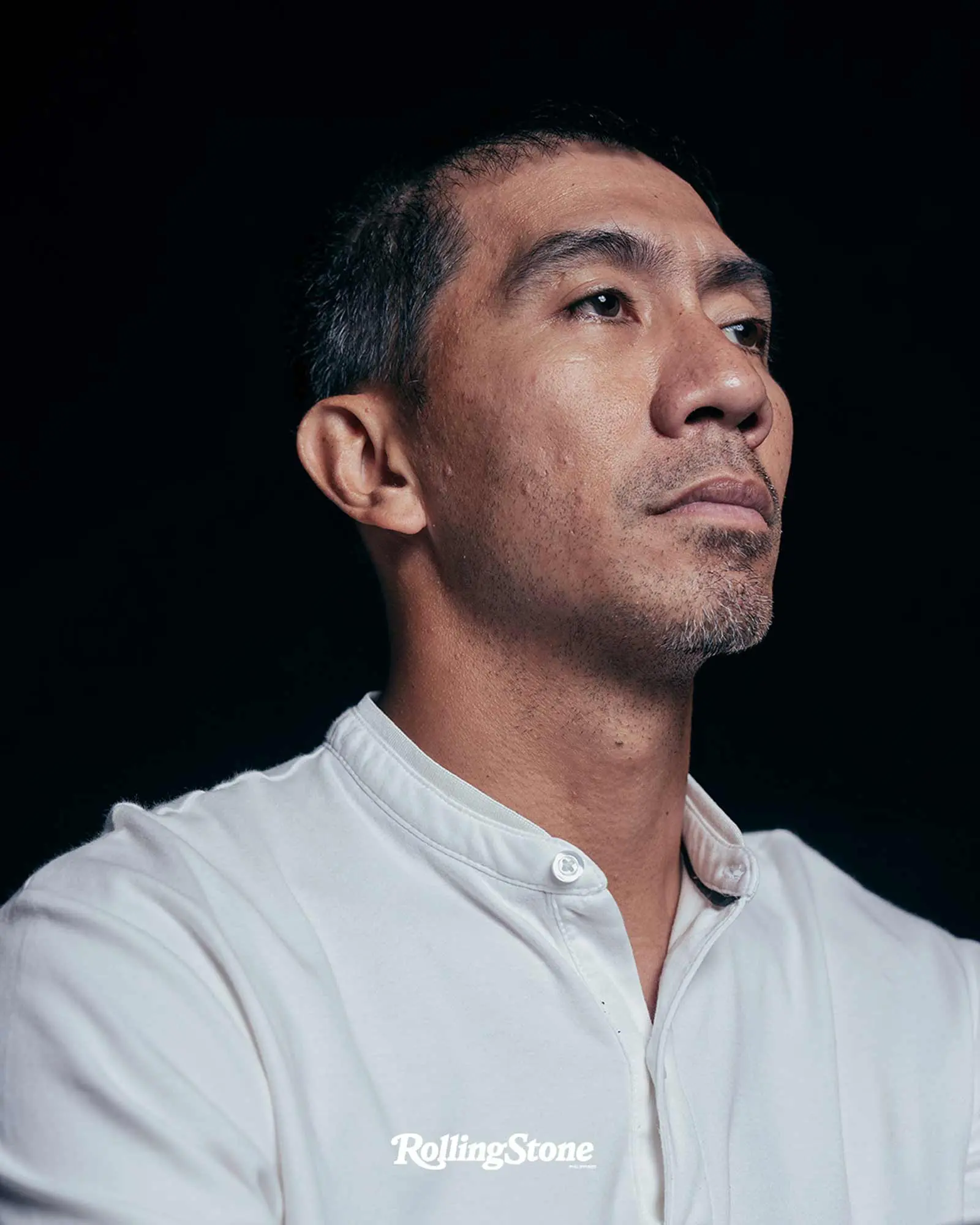
Talaga nung start?
Nag-start ang school noon, parang June, July. So, getting to know the people, people are staring at me, “Oh, is this the guy?” E that time, wala pang UAAP because the start of the UAAP was August. May mga lalaki na mahilig sa basketball, they will ask me na, “Oh, are you the one na ni-recruit ng Ateneo from San Beda?”
Star recruit.
Yeah, star recruit. Because I was the only one who got recruited that year. And in my batch, I’m the only UAAP player. E, of course, Ateneo, blockmates, ‘di ba? Ako rin, nagulat din ako. They started lang really getting to know me when I started playing UAAP.
Our dorm was in Varsity Hills. That time — I don’t know kung naabutan mo — wala pang mga intersections. Overpass lang. And I only ride a tricycle palabas, from the street, maglalakad ako. Sometimes, sasabay ako kay Enrico [Villanueva], kay Rich [Alvarez], sa kotse hanggang labas, and then mag-ta-tricycle ako. Pero ‘pag nauna ‘yung class nila or nauna ‘yung class ko, dahil senior sila, I walk with my backpack. And then, nung time na naglalaro na ako sa UAAP, nakikilala na ako, someone will offer me a ride. “Hi, LA, ‘di ba? Saan ka punta? School? Sabay ka na.” Ganun.
But in terms of pre-UAAP Ateneo?
Loner talaga. Kasi I’m not like Larry [Fonacier] and Magnum [Membrere], they’re in the same batch. Ako, wala ako e. Even ‘pag kumakain ako, on my free time, to be safe na lang, instead of umuwi ako kasi I have to walk again, I go to Moro Lorenzo. Doon na lang ako tatambay. I talk to the coaches. Wala kasi akong kasama e.
Every game, everyday, nakikilala na ako. Even the professors sabi, “Oh, you’re the guy! Congratulations!” Especially, when I played my rookie year, 2001, and then Game 3 against La Salle, where I scored 30 points — although we lost. After nun, ‘yun na talaga. As in, everyone, like the day after, moving forward until probably today. That’s how LA Tenorio started talaga.
So it was a hell of a ride, actually, before going through the, not really pro, but on that day itself. Grabe. Hindi naman ako kilala e. I’m no one. I’m a recruit player from somewhere. Pero after that Game 3, after the mass. Wala pang Gesu noon e, doon pa kami nag-mass sa Moro, ‘yung chapel doon, ‘yung Father Tito Caluag [Chapel].
Syempre malungkot. Iyak, ‘di ba? And then Coach Sandy [Arespacochaga] said, “LA, labas ka lang. May mga gusto lang lang makilala ka, picture.” When I went out of the Moro Lorenzo, I’m not kidding, full of students and all.
Na para sa ‘yo?
Oo. Parang, “Wow, ganito ba dito?” Parang nagulat ako. Wala namang nakakakilala sa akin. I’m just playing basketball, ‘di ba? Tapos doon na ako nakilala.
Sa bagay, siguro nung first year mo nga ‘pag banggitin nga ‘yung “Ateneo,” ang unang names,
si Enrico [Villanueva], si Wesley [Gonzales]…
Parang napasama ako. But it was hard, ‘no? Because from there, your question is, how did I feel? Ano ‘yung naramdaman ko?
It was hard also because, ilang taon lang ako noon, 18, 19, you have that responsibility already to watch out kung anong gagawin mo. Swerte pa ako, wala pang social media noon. So, literally, eyes lang talaga ang makakapag-judge sa ‘yo, ‘di ba? Hindi keyboards.
Pansin ka e.
Even in a restaurant, someone will pay our bill. Alam mo ‘yun? So parang it was hard, but it helped me moving forward. It helped me develop my values and character not only as a basketball player but as a person.
Good na binanggit mo ‘yung Game 3 kasi ‘yun ‘yung next question ko. It’s something na umabot ka sa pinaka–last game ng season but then kahit na you scored like 30 points, natalo kayo. So from ‘yung experience mo dun, how did you mature after that high-profile loss?
Honestly, I wasn’t happy with that because we lost. And I saw my teammates, especially the graduating students like Rainier [Sison], Paul [Tan-Chi]. We saw how they cried, and syempre ako, parang I’m not gonna be happy just because I performed like that. So, I was really sad. But I handled it really in a mature way, na I stuck with the team, with the value of the team. Team is more important than my performance. It didn’t get into my head. Definitely.
Maybe because ‘yung mga tao rin around me really ‘yung mga nag-advise sa akin. Number one is really Tito Arben [Santos]. Tito Arben is really my father figure ever since. Since he got me from San Beda and Tita Celda [Santos], they always reminded me how to act. So, they were really my parents. Kasi parents ko, pinaubaya na ako. They were staying in Batangas. So, sila [Santoses] na talaga.
“To be honest, [the loss is] much easier to recover in the PBA than the UAAP.”
Interesting na parang dun ka nag-gravitate towards “Saan ako pwedeng makakakuha ng advice outside of sports?” Kasi kahit papaano, you really had a successful career sa college, championship tapos multiple finals appearances. What was it like nung na-draft ka na? Were you thinking of the same expectations? Given nga na, 2006 ka na-draft, but it took quite a while para makakuha ka ng championship sa PBA. How did you deal with ‘yung naranasan mo sa college and then your first few years sa PBA?
My five years playing in Ateneo really helped me develop my mental toughness. Feeling ko napakalaking bagay na ‘yung ginawa sa akin nun kasi nalampasan ko lahat ‘yun. We know how the pressure is of playing collegiate basketball, especially for Ateneo and La Salle. We lost to La Salle in my last playing year in Ateneo. Kung medyo mahina-hina ‘yung player, I think he’s gonna retire or fold right away, ‘no? But, you know, those particular five years that I stayed and played in Ateneo, the values and the character that I learned, I brought to the PBA.
To be honest, it’s much easier to recover in the PBA than the UAAP.
Kasi?
When I was starting, ha. Because I’m just a regular player who’s starting to be a pro, but during my first few years in the PBA, I’m still thinking I’m in the UAAP. The pressure is still there, but honestly, it wasn’t the pressure. When I entered PBA, there were lots of vets already before me. I was just a rookie. So, kumbaga, sumusunod lang ako sa kanila. Unlike when I was in Ateneo, from the first year until the fifth year, I was the guy na nag-li-lead sa kanila. So, para sa akin, ‘yun ‘yon.
My first-ever PBA conference, we played in the finals. That was a best-of-seven. I was in San Miguel. We played against Ginebra under Coach Chot Reyes. He drafted me because I was an Atenean. Right away, in my rookie conference, we were up 2-0 in a best-of-seven, and then we lost 4-2.
Imagine how disappointing that was. But I easily recovered, unlike when I was playing in Ateneo. Siguro kung ganun ang mangyari, malamang hindi na ako lalabas ng bahay. Before kasi — I don’t know kung naabutan mo ‘yung era na ‘yun, but it was really hardcore compared to the past years. It was really hardcore. Even the people outside, there are no cellphones, but if they see you, they mock you. Even the alumni, alumni of La Salle, alumni of FEU, they mock you.
Intense talaga ‘yun.
Intense talaga. Super intense. Pakwento ka sa parents ko. Sobrang intense.
Nanonood ako noon talagang… compared to now, iba talaga.
So, it helped me a lot moving forward, going pro. And, ‘yun nga, easy to recover. I know how it is. I know how it feels. And I have that mental toughness already. Then, we just have to get back and work again. Because when you play in the UAAP, you’re gonna think of one year because you never know what’s gonna happen the next year. You might be out of the lineup because someone will take your spot. Unlike in the PBA, when you come in, you have a three-year contract right away. So you have three years.
So, yeah, there was a lot of disappointment, but in the end, it’s manageable.
Pero pressure nga kasi sa UAAP, ang maximum lang talaga five years. So talagang kung matalo ka sa isa, four na lang.
Isa pa ‘yun, your chances. So, what if in five years wala kang nakuha? ‘Yun ang mahirap e.
At least from that understanding, kinaya mo ‘yung first few hurdles sa PBA. But, going into your first championship sa PBA, it’s funny na, nung nanalo ka ng 2010, that was also the year na Most Improved ka. What do you think made you improve to win the championship that same year?
When I transferred from San Miguel to Alaska under Coach Tim Cone, he traded Mike Cortez for me. He immediately said, “You’ll be a big key for this team. You’re gonna start, you’re gonna play 30, 40 minutes.” So ako, parang “Okay, so now I have to work. I have to make it happen.” Hindi naman porket sinabi ng coach, steady na lang tayo. So I make it work.
So then, the whole conference, I was playing really well. And then, we went to the finals. Actually, we went to the finals twice. We lost the first one and then we won the second one. We lost the All-Filipino, but we won the Import 2010. So, I was playing well in the All-Filipino and then the second conference. So the awarding kasi it’s always after — three conferences now — but before it was two conferences. So, I was part of the rookie team when I was a rookie, and then after that, the Most Improved, two years after. And then part of the Mythical Five.
So, ina-attribute mo ‘yung pagka-develop mo to win that award kay Coach Tim?
Yes. Partly also.
Apart from him giving you the reins to start, ano ‘yung na-unlock niya sa ‘yo para you could take that next step?
To be a leader, to have that mentality of taking charge, even though I have vets and import with me. Anytime I can take charge, he let me be. Alam mo ‘yun? “Once you’re in the court, bahala ka. I trust you. Kung anong gagawin mo, they will follow you.”
But, having said that, it wasn’t easy because kailangan gawin ko na agad in practice ‘yun. Because if I do that in practice, then in the game, my teammates will follow me. Luckily, we won a lot of games. We were overachievers. And then we went to the finals two times that year. And then we won one championship. So, ‘yun, I gained the trust, ‘yung tiwala ng mga teammates ko.
So, once I’m on the court, the instructions na binibigay niya sa mga team niya, sa mga players, he expects me to do it already. “I trust you.” Well, most of the time, we always fight. I’m a feisty player before. Like, sagutan talaga kami on the bench, in the game. But it’s a healthy relationship, a healthy conversation. It’s just that because of the emotions of the game.
“When I went to Ginebra, I was really thinking para akong bumalik ng college. People are really watching you; every movement outside, inside the basketball court.”
Did you appreciate the game more as the leader of the team?
Unti-unti. Na-appreciate ko, “I can do this pala. I can make my import follow me.” Because those are imports, automatic, they should be higher than us. But I learned how to talk to them properly. Kahit sa mga teammates, Filipino. Since na-gain ko ‘yung trust nila, so every time I say [tactics] to them, ginagawa nila, and nangyayari. By doing that, sobrang na-appreciate ko, not only — siyempre na-appreciate ko ‘yung mga teammates ko — ‘yung sarili ko na, “Kaya ko palang gawin ‘yun; as young, as early as now, nagagawa ko.”
Kahit Alaska fanboy rin ako growing up, iba pa rin kapag sinabi mong athlete ka sa Ginebra e, parang ‘yun ‘yung pinnacle team, ‘di ba? And I think, in a lot of ways, you found a lot of your success there kahit high pressure team. Anong experience mo within those 13 years? How did you grow again by being part of Ginebra?
You know, funny thing is, when I went to Ginebra, I was really thinking para akong bumalik ng college. People are really watching you; every movement outside, inside the basketball court. Every time we post on social media, they’re gonna look at you, what you’re doing. So, parang college ulit na all eyes on me. Parang ganun. And it’s a bigger responsibility now because mas marami nang nakatingin sa akin, plus social media’s getting bigger at that time. Marami nang pwede silang sabihin.
“That’s my mentality. I’ll get the ball, I’ll take the last shot. I’ll take the blame kesa sila.”
And ‘yung sinabi mo na sa Alaska na overachiever kayo, parang sa Ginebra, championship or bust e.
Exactly. Hindi ka pwedeng matalo. That’s the term. Hindi ka pwede matalo. For them, win at all costs. They will really say that to your face. Those 13 years made me much, much tougher mentally.
Every game, I learned to accept mistakes. Even kapag ‘yung mga teammates ko ang nagkamali, ako ‘yung mag-a-admit na, “Hindi, ako ‘yung mali.” ‘Yung sinasabi ko sa sarili ko tsaka sa mga teammates ko before when I was in Ginebra, “Okay lang na ako na ‘yung magkamali kesa kayo. Wala akong pakialam kung magkamali kayo, sisihin niyo ko. Wala akong problema. But I want you guys to follow my lead and gawin nyo nang tama.”
And I also had the opportunity and the mentality, and because of that mentality, even in a last shot, I’d rather take the last shot than them. That’s my mentality. I’ll get the ball, I’ll take the last shot. I’ll take the blame kesa sila. Kasi I know my teammates.
As a leader, I have to know my teammates. Feeling ko, “‘Pag ito, hindi ito kakayanin. Fo-fold ito.” May mga ganun. So, I’d rather take it. If I miss it, I’ll take the blame. If I make it, then good. Kung magkamali ako sa huli, I’ll take it. But next game, for sure, I’ll do better. Ganun ang mentality ko when I was in Ginebra. And it wasn’t easy.
Read the rest of the story in the Anniversary Issue of Rolling Stone Philippines.
Get a copy on Sari-Sari Shopping, or read the e-magazine now here.