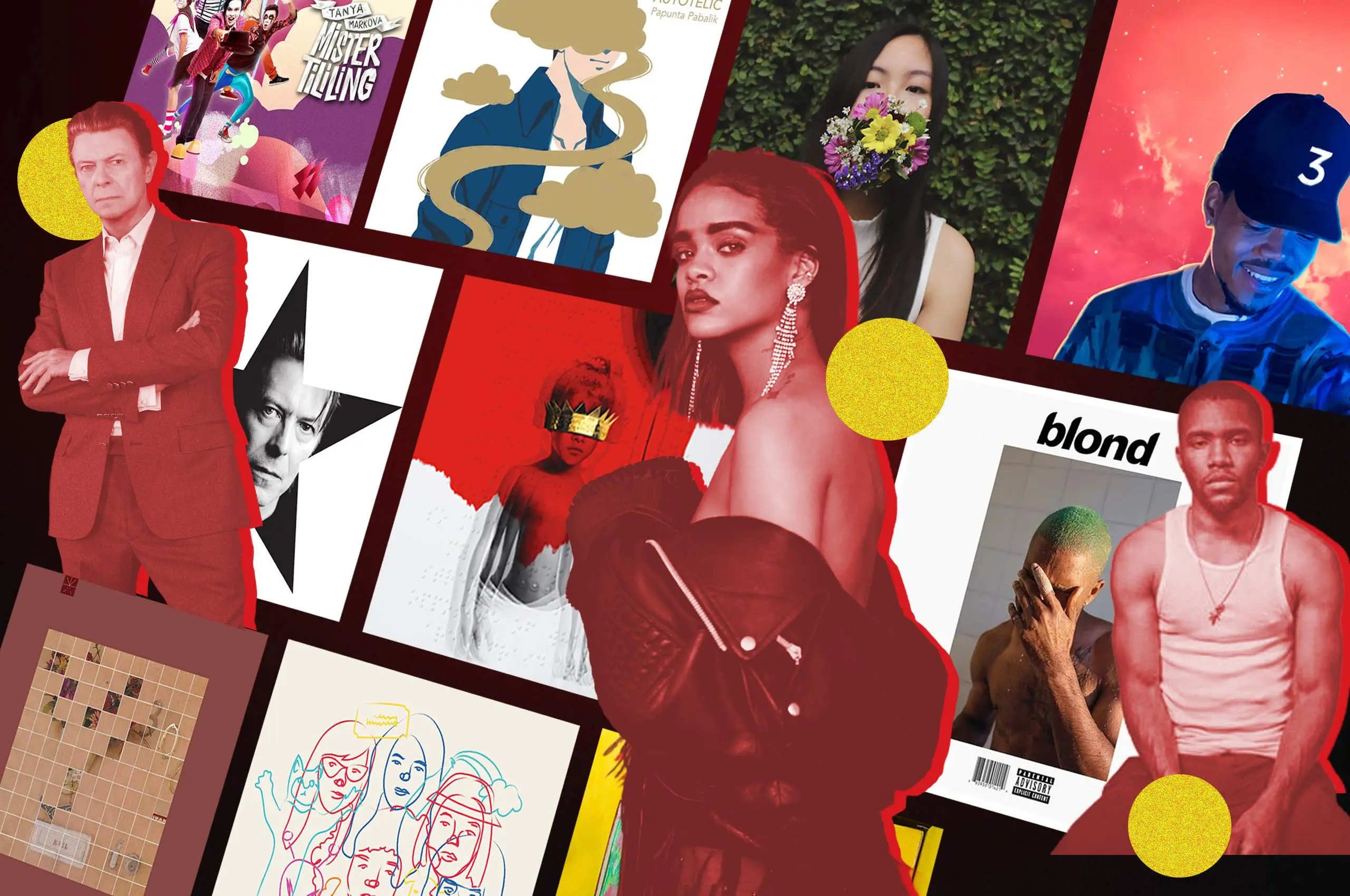
Across pop, rock, hip-hop, R&B, and the Philippine indie scene, several artists doubled down on vulnerability through fuzzy distortion, ambient experimentation, and sonic risk in their 2016 albums.
A decade later, these records from Frank Ocean, Rihanna, and Autotelic still connect because they were screenshots of youth culture. Albums that have multiple tracks that have amassed a billion streams, countless reissues and bootlegs, and a cult following that lasted for years. These records captured grief, joy, romance, chaos, and commentary on the cultural zeitgeist in ways that still sound alive.
2016 was the year albums reminded listeners why in-depth themes, chaotic production choices, and overall artistic statements in sound still matter.
Frank Ocean, ‘Blonde’
Frank Ocean’s sophomore album turned personal introspection into a generation’s language of love and longing. Blonde drifted through loneliness, online relationships, memory, and self-discovery with soft spoken delivery and sudden emotional falsettos. The beat switch in “Nights” felt like time splitting in half, while “White Ferrari” became a late-night confession for anyone learning how love fades. Its skeletal electronic — even borderline ambient — production left space for feelings to linger. Ten years later, its honesty still feels current.
David Bowie, ‘Blackstar’
Released days before David Bowie’s death, Blackstar felt like a farewell written in sound. Jazz textures, eerie art rock melodies, and cryptic lyrics circled mortality and legacy. Instead of retreating into pop rock sensibilities, Bowie leaned into the unknown. Songs like “Lazarus” turned pain into a reflection of one’s survival, making the album an allegory to an artist staring directly at the void with grace and curiosity.
Rihanna, ‘ANTI’
In ANTI, Rihanna stepped away from pure hit-maker status toward risk and ethereal production. From the raw ache of “Love on the Brain” to the icy sound design of “Needed Me,” the album blurred pop and alternative R&B with sheer swagger. It sounded freer, darker, and more personal than anything Rihanna had released before. Its influence still echoes across today’s genre-bending pop artists.
Touché Amoré, ‘Stage Four’
Grief drove every second of Stage Four by post-hardcore mainstays Touché Amoré. Told through the eyes and words of vocalist Jeremy Bolm confronting his mother’s death from cancer, he screams, whispers, and speaks with brutal honesty. The music grew more intense as the album progressed, capturing mourning in real time. Each track was another wave of pain crashing through acceptance, as in “Flowers and You” and “New Halloween.” Few albums have faced loss with this level of unwavering bravery.
Chance the Rapper, ‘Coloring Book’
Chance the Rapper’s gospel-tinged project Coloring Book overflowed with hope, family love, faith, and celebration. Songs like “No Problem” and “Same Drugs” balanced witticisms and pure joy of loving one another with guests such as D.R.A.M., Kanye West, Lil Wayne, Young Thug, and many more. Choirs met bright beats and playful flows, making the entire album rife with positivity, ultimately creating something infectious that isn’t prone to turning the rapper into a cornball.
Beyoncé, ‘Lemonade’
Betrayal and reckoning powered Lemonade, which was released by Beyoncé in 2016 as a surprise album paired with an HBO film. Moving across different genres of rock, country, blues, hip-hop, and pop, the record traced different stages of grief in the wake of personal and public fractures between her and her husband, Jay-Z at the time. Songs like “Don’t Hurt Yourself” alongside blues rock icon Jack White, “Sorry,” and “All Night” captured the pitfalls of a relationship so daringly open that it felt more like an Adele album. Arriving months before the 2016 U.S. election between Donald Trump and Hillary Clinton, Lemonade resonated as a personal document from one of music’s most private artists.
Solange, ‘A Seat at the Table’
The search for one’s identity is at the center of A Seat at the Table, Solange’s 2016 album. The album uses stripped drums, synths, and bass to take on womanhood in a tasteful soul experimentation. Songs like “Don’t Touch My Hair” and “Mad” confront the emotional labor required to be a Black woman in America. Appearances from Kelly Rowland, Lil Wayne, to name a few, expand the record’s perspective through her own shared history on her spirituality and independence. Solange’s third outing is musically and lyrically cohesive.
Hey! It’s Your Birthday, ‘Hey! It’s Your Birthday’
This Cebu-based band’s third release was proof that indie music could break beyond Metro Manila. Hey! It’s Your Birthday’s slowcore textures mixed with soft pop melodies were pretty unique at a time when the indie scene was ruled by pop-rock sensibilities. The self-titled album’s track listing moves between warmth and sadness with ease. It felt emotionally heavy in small ways. Hey! It’s Your Birthday showed that Manila was no longer the only center of meaningful Filipino indie storytelling.
Autotelic, ‘Papunta Pabalik’
Autotelic pushed pop rock forward with synth lines that felt bolder than most pop rock acts dared to explore. Tracks like “Laro” and “Languyin” paired emotional lyrics with driving energy, capturing youth restlessness and romance in pop motion. Papunta Pabalik became a gateway for listeners who yearned for heartfelt songwriting without leaving modern production behind.
Brickcity, ‘The Bones We Used to Share’
Quezon City’s Brickcity stood out with spoken-word sections, abstract themes, and raw intensity that influenced a generation of beginners in their own local scene. The Bones We Used to Share crossed post-hardcore with experimental structures, making each track feel unpredictable in terms of lyric and riff writing. The album resonated across audiences, from punk kids to indie listeners seeking something heavier and more in-depth. Its influence still surfaces in today’s emotional rock acts.
The Buildings, ‘Cell-o-phane’
With nods to Pavement and Pixies, Cell-o-phane delivered fuzzy guitars and clever, quirky songwriting. Abstract lyrics ranged from convincing yourself that Manila isn’t a trap, or how lucid you can be around your family, while a flurry of jazzmasters crash on the ground beyond repair. The Buildings balanced noise with melody, making alternative rock feel playful and smart.
Tanya Markova, ‘Mister Tililing’
Original Payaso Music headliners Tanya Markova doubled down on absurd humor in this record. Here, you get to date a zombie, and a broke man can woo a rich girl. Pop hooks flourished without losing musical polish in the midst of their chaotic songwriting. Songs like “Ang Darling Kong Zombie” mixed comedy with dire situations, making shock value strangely heartfelt. The album proved that fun and craft could coexist, earning the band a lasting cult following.