

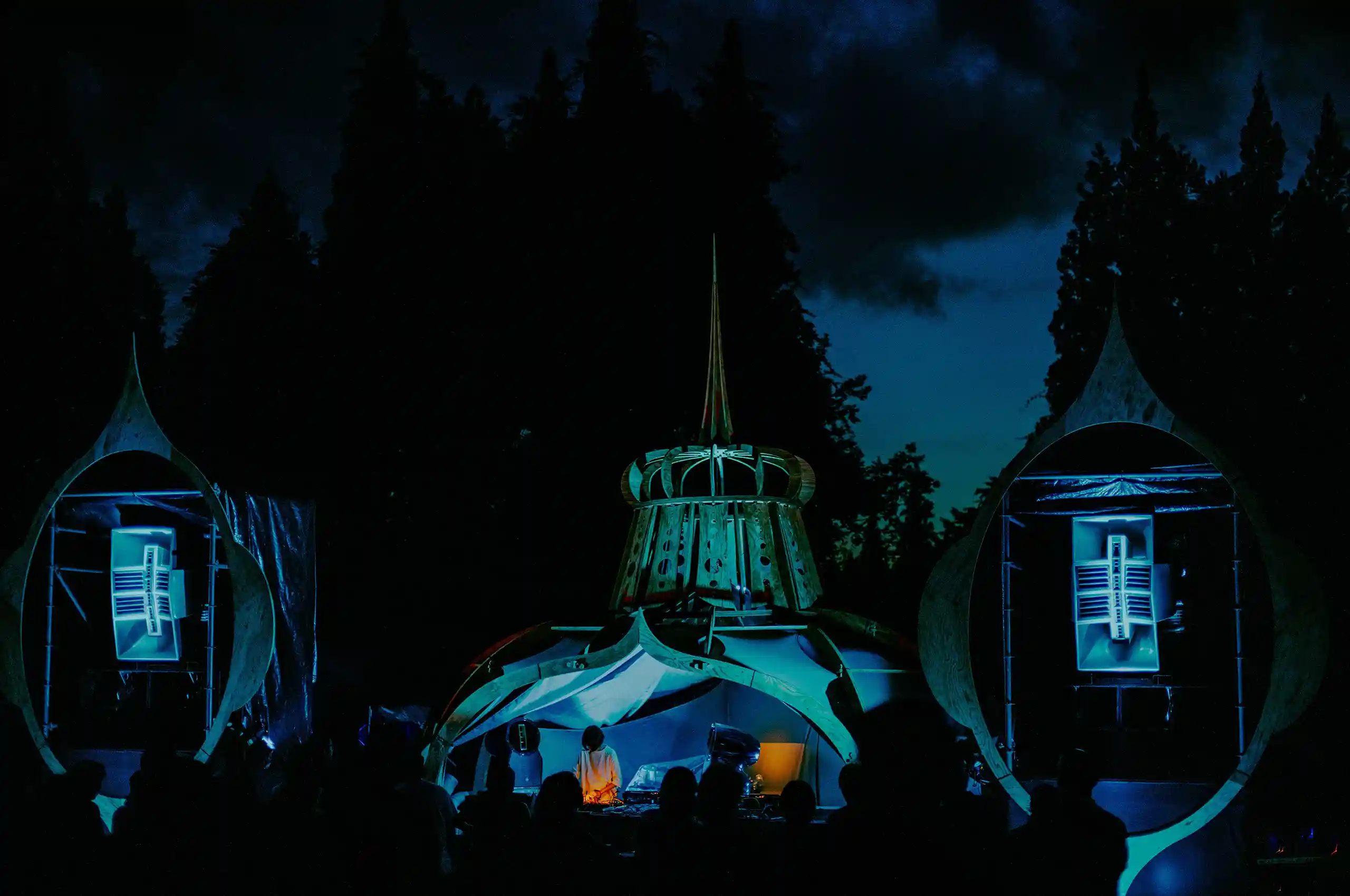
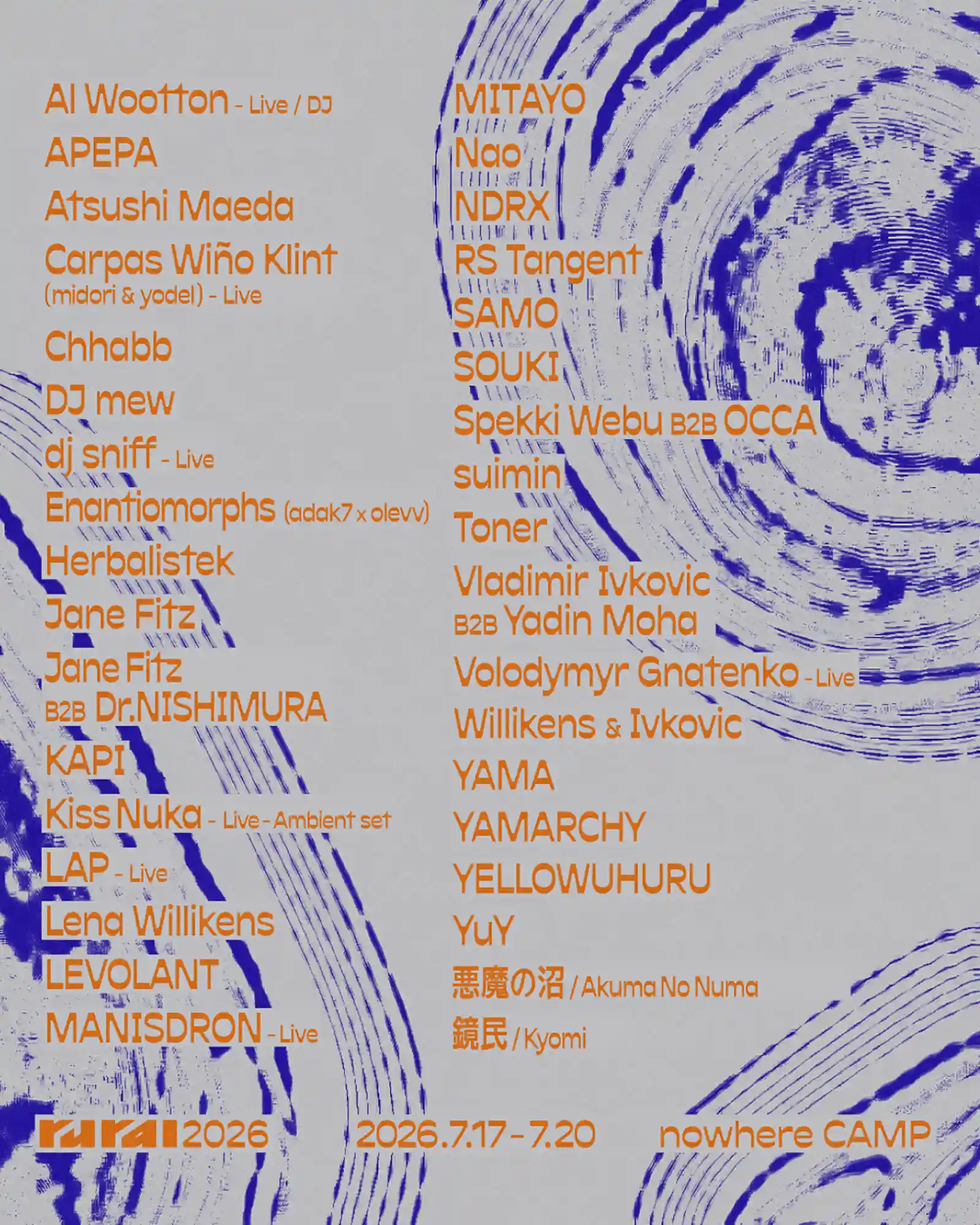
From July 17 to 20, Japanese outdoor music festivalFestivalA multi-act music event, often held over several days, where many artists perform across different stages. Festivals combine live music, food, art, and community, and they give audiences a chanceGo to Festival Glossary rural celebrates its 18th edition alongside local and international producers and DJs at the cutting edge of techno, ambient, and experimental music. What began as a small gathering with friends in 2009 has evolved into one of the country’s most respected festivals for dance and electronic music, set against the backdrop of Japan’s most scenic mountain views. This year’s festival will take place in Bandai-Asahi National Park, Fukushima.
Music festivals for dance and electronic music are booming in Asia. Within the last year alone, franchises like Belgium’s Tomorrowland, Las Vegas’ Electric Daisy Carnival, and the U.K.’s Creamfields established international editions in Thailand, while homegrown events like Wonderfruit (Thailand) and Magnetic Fields (India) are attracting audiences in the tens of thousands. Such business decisions often come with a desire to scale – to make a return on investment or, as they say, to go big or go home.
But after 18 years of mounting the music festival with five core members, rural founder Atsushi Maeda, who is also a DJ, made an impressive feat at not only maintaining the festival’s intimacy; the festival has remained true to how many boot-strapped music organizers start their careers without downplaying their passion or enthusiasm.
“We started almost impulsively with friends so, to be honest, it was far from what you would call a well-organized event,” Maeda notes as he explains how promotion during the festivalFestivalA multi-act music event, often held over several days, where many artists perform across different stages. Festivals combine live music, food, art, and community, and they give audiences a chanceGo to Festival Glossary’s early years was primarily through word-of-mouth. “Our budget was very limited, so we rented a simple tent for rain protection, used minimal lighting that friends brought in, and relied heavily on the help of our community to make it happen.”
However, the core idea of presenting techno with a pure, high-quality sound didn’t change from what rural is today, Maeda says, pointing to how persistent idealism helped the festivalFestivalA multi-act music event, often held over several days, where many artists perform across different stages. Festivals combine live music, food, art, and community, and they give audiences a chanceGo to Festival Glossary grow into the institution it is today. “I remember how the sound team enjoyed working with us, even while dealing with our ambitious requests. That collaborative spirit was very meaningful for us.”
Sound First
Over the last decade, the festivalFestivalA multi-act music event, often held over several days, where many artists perform across different stages. Festivals combine live music, food, art, and community, and they give audiences a chanceGo to Festival Glossary has partnered with sound engineers to meticulously tune its customized sound systems to the festival’s natural surroundings. This year sees the stacks of Void Acoustics and Danley Sound Labs return to the festival, and it is this commitment to exceptional sound quality that keeps attendees coming back.
“From the audience’s perspective, truly great sound is something that is immediately felt; it’s so impactful that it’s difficult to overlook,” Maeda says, explaining how his team even goes as far as tuning the sound system to each performer. “After each changeover, the texture and output of the sound often change depending on the artist’s style, so the sound engineers actively adjust and respond to those changes to maintain the listening experience.”
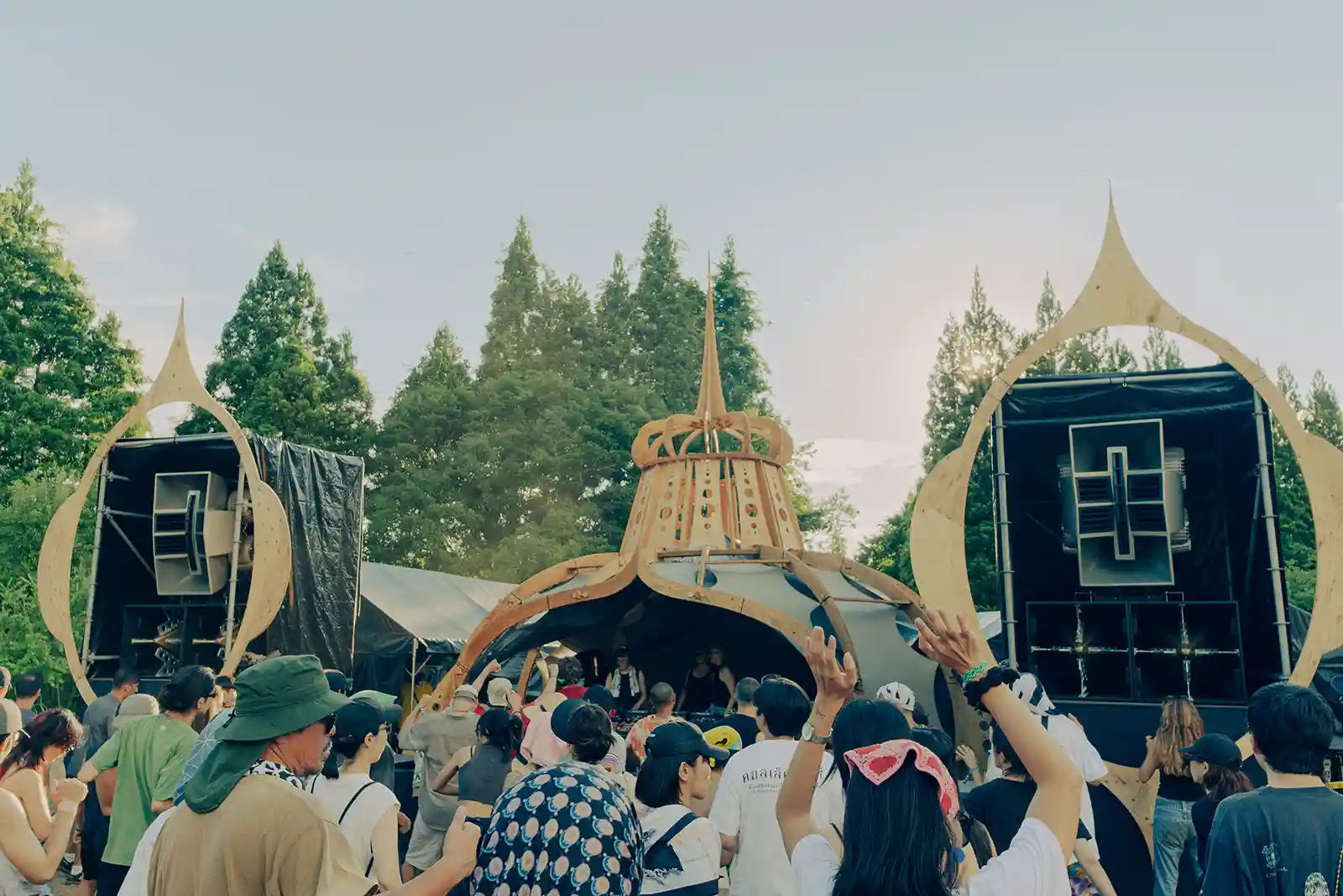
Nao, a resident DJ of rural, says the festival has fundamentally transformed the way she perceives music, in part due to rural’s “strong emphasis on the quality of sound,” which “extends far beyond simply listening to music or dancing.” “Rather than focusing solely on individual tracks or sounds, I have become more aware of how they resonate and interact within time and space,” she says.
This intuitive approach to sound and nature bleeds into their programming as well. This year, for example, sees the festivalFestivalA multi-act music event, often held over several days, where many artists perform across different stages. Festivals combine live music, food, art, and community, and they give audiences a chanceGo to Festival Glossary spread across one of Japan’s finest hot spring regions at the foot of Mount Adatara, one of the country’s 100 Famous Mountains. “The surrounding area has clean air, high-quality hot springs, and excellent local food,” Maeda says, explaining that some of the festival staff are mountain guides to the area. “These are all values created through coexistence between nature and people. Through rural, we hope to share these attractions and encourage visitors to return — not only before or after the festival, but also in different seasons.”
As for the music, the festivalFestivalA multi-act music event, often held over several days, where many artists perform across different stages. Festivals combine live music, food, art, and community, and they give audiences a chanceGo to Festival Glossary will see the styles of different artists interact in “interesting ways,” Maeda describes. For example, the reunion of Amsterdam-based DJ and producer Lena Willikens and Belgrade-born selector Vladimir Ivkovic as Willikens & Ivkovic marks their first shared stage in Japan in seven years. Jane Fitz, a native to London’s dance music scene since the ‘90s, will play a back-to-back set with Dr. Nishimura, one of Japan’s most prolific record collectors, following an encounter at a rural festival party in Goa, India, last January.
In fact, wider representation in this year’s line up is likely the result of rural’s efforts to expand their reach through popPopShort for popular music, a broad genre built on catchy melodies, clear hooks, and polished production that aims to reach a wide audience. Pop constantly borrows from other styles, andGo to Pop Glossary-up events across Asia, with talents like Chhabb and Kiss Nuka from Mumbai and Taipei’s YuY entering the mix. Long-time residents and newcomers from Japan and beyond are expected to grace the festival stage, fostered through organic connections made over the course of rural’s 18-year history. “We’ve gained more support from local collaborators over the years, and by building trust with them, we hope to continue developing the festival in a sustainable way,” Maeda says.
As momentum continues to build for Asia’s dance and electronic music scene, maintaining intimacy even at scale will be key for many organizers. Maeda notes that most events in Asia “are still club-based,” referencing cities in Taiwan and South Korea. Today, however, many dance and electronic music events in the Philippines operate from a DIY model after experiencing a boom in new music collectives, following nightclub closures during the pandemic. Clubs may offer a consistency that helps sustain regular audiences, but mounting an event from scratch offers more space for experimentation and a sense of ownership that is key to building a community from the ground up.
“Seeing this, I imagine [Asian organizers are] thinking about how to create better environments and improve sound quality and I believe that kind of curiosity and initiative is exactly what drives the development of a scene,” Maeda says.
Frequently Asked Questions
rural is an intimate Japanese electronic music festival founded in 2009, featuring international techno, ambient, and experimental artists in scenic outdoor locations.
The 18th edition takes place in Fukushima’s Bandai-Asahi National Park near Mount Adatara, an area known for natural hot springs and mountain views.
Engineers customize Void Acoustics and Danley Sound Labs systems to the natural terrain, actively adjusting the output to suit each artist’s performance style.
The lineup includes Willikens & Ivkovic, Jane Fitz B2B Dr. Nishimura, resident DJ Nao, and regional Asian talents like Chhabb, Kiss Nuka, and YuY.
Unlike large commercial events, rural maintains a small, community-driven scale focused on audiophile-grade sound, DIY culture, and sustainable natural integration.
Recommended Video