

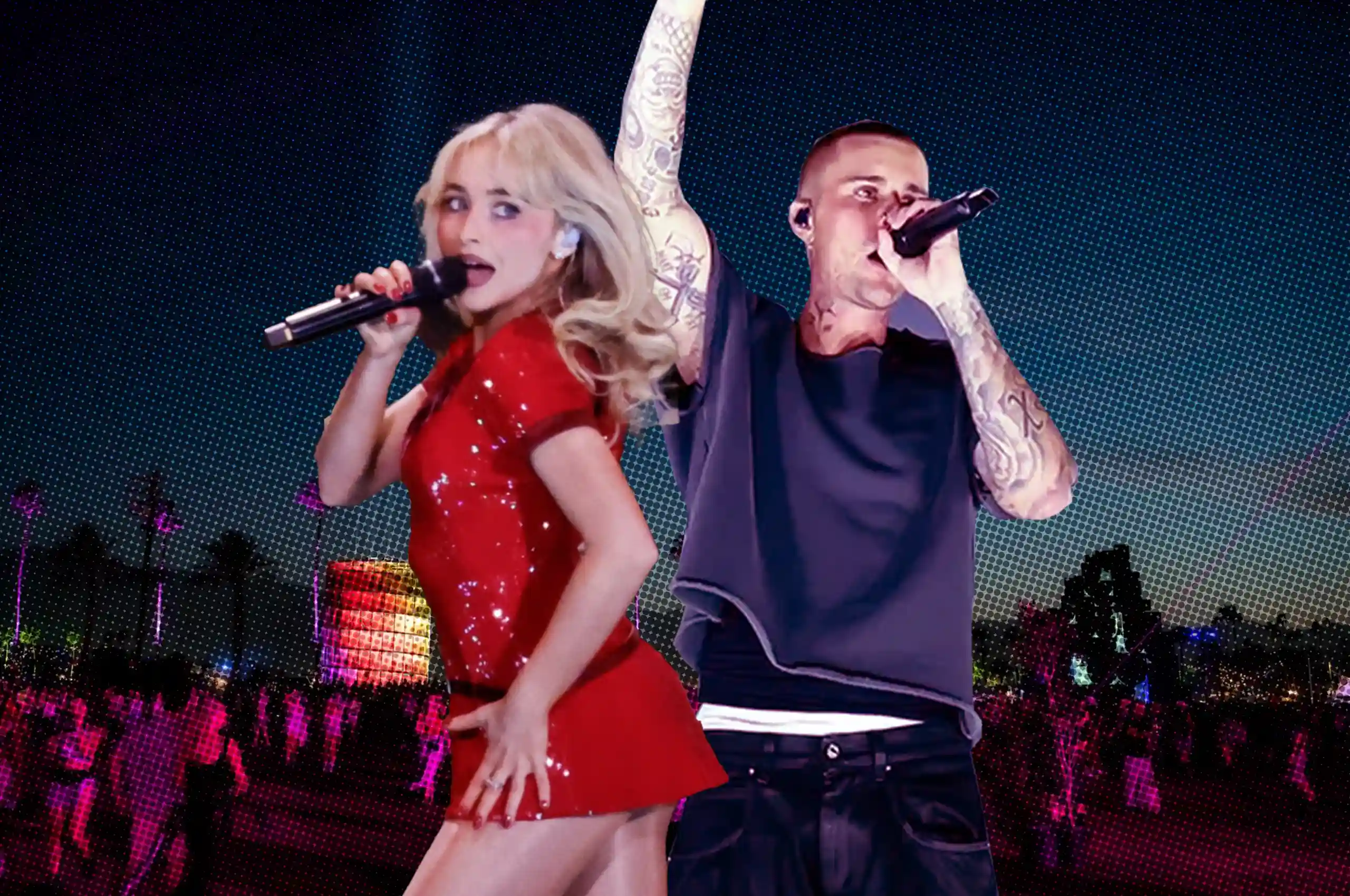
Although Coachella isn’t quite over just yet, two headliners have found themselves at the center of a messy, sexism-centric, online debate.
Sabrina Carpenter and Justin Bieber both took the festivalFestivalA multi-act music event, often held over several days, where many artists perform across different stages. Festivals combine live music, food, art, and community, and they give audiences a chanceGo to Festival Glossary’s main stage this past weekend, but fans have quickly pointed out that the two pop stars gave very different performances. On the one hand, Carpenter gave us 90 minutes of signature SabrinaWood glitz and glamor, running across her stage to ace multiple outfit changes and increasingly more elaborate set switch-outs (for her closing number, “Tears,” she rose from a water fountain attached to a Cadillac). She even brought in a roster of guests to join in on the fun, including Will Ferrell as an ornery tech guy, Samuel L. Jackson’s voice coming on halfway through “Juno,” and Susan Sarandon playing Older Sabrina while giving a seven-minute monologue about existential crises.
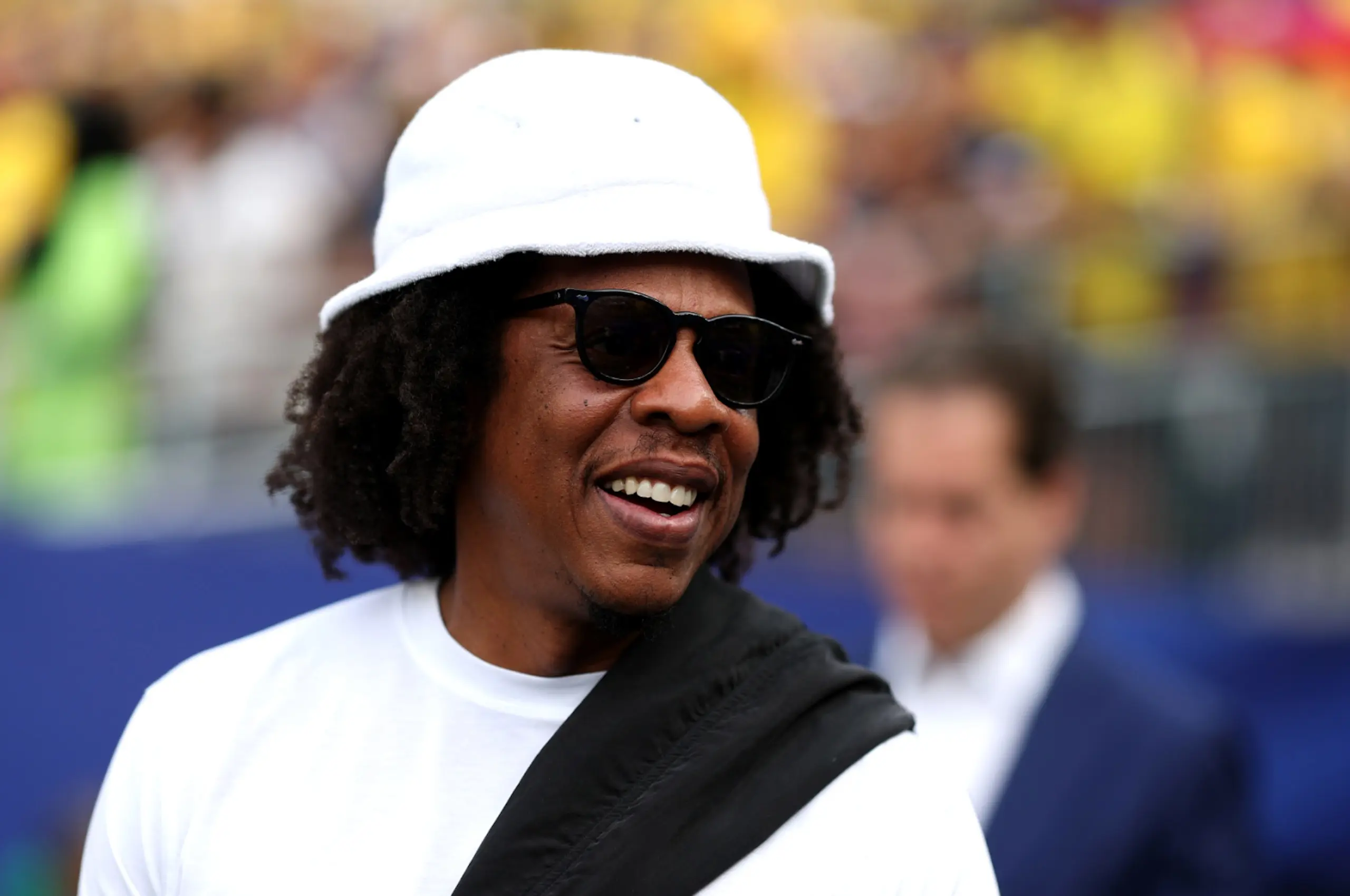
On the other hand, Bieber’s Coachella set was much more lowkey. “DJ Biebs” spent most of his time onstage alone, save for a few cameos from fellow collaborators Kid Laroi, Dijon, Mk.gee, and Tems. The first half of his set was so mid-tempo, featuring tracks from Swag and Swag II, that it eventually led to a “mid-set exodus,” according to Rolling Stone. But Bieber brought the energy back when he started screensharing his old YouTube hits, dueting with his baby-faced self to the music videos of “Baby,” “Beauty and a Beat,” and more. Was this very straight man-coded of him? Yes, it was, but the mainstage also loved it when he pulled up all his old viralViralDescribes content that spreads rapidly across social platforms as people share it, remix it, and react to it. A viral moment can turn an unknown song, clip, or person intoGo to Viral Glossary YouTube clips (e.g., classics like “standing on business” and him running into a glass door).
Mind the Gap, coachella
On any other day, perhaps Beliebers, Carpenters, and all fans in between wouldn’t be so quick to compare the two stars. However, news of Bieber scoring north of $10 million for both his Coachella weekends has stirred up online discourse about how a male artist can earn so much by doing the bare minimum, while a female artist like Carpenter has to pull out all the stops. Parts of the internet are rushing to defend Biebs, while others are calling him out for Straight Man Bieberchella and arguing that Carpenter deserved much more for all the effort she put into her performance.
It’s easy to get lost in the weeds of this debate, but it’s also important to remember that Carpenter and Bieber are very different types of performers. Carpenter has spent the past few years cultivating a maximalist, tongue-in-cheek, hyperfemme persona, so it only makes sense that her Coachella set mirrors that image. Of course she has dozens of costumed back-up dancers, a scaled-down version of the Hollywood Hills, and even a “Copacabana” remix of her track “Feather” (complete with Vegas-worthy feather fans).
Meanwhile, Bieber has never been the type to give over-the-top performances (and expecting him to wear a feather boa for something like “Copacabana” would feel strange and out of place). What’s more, in his own way, the YouTube rabbit hole he walked us through was probably more meaningful than any flashy showstopper he could have given us. Bieber’s a YouTube baby through and through, and he found his first taste of fame back in the early aughts by posting covers of “With You” and “So Sick.” And his audience, composed largely of millennial and Gen ZGen ZThe generation born roughly between the late 1990s and early 2010s, raised with the internet and social media. Gen Z shapes trends in music, fashion, and online humor, and itsGo to Gen Z Glossary devotees, grew up on YouTube with him, so the callback to his roots hits deep for many of us.
Is his Coachella set worth $10 million, though? That’s up for debate, and I’m hoping that his second weekend at the festivalFestivalA multi-act music event, often held over several days, where many artists perform across different stages. Festivals combine live music, food, art, and community, and they give audiences a chanceGo to Festival Glossary quells any lingering doubts about him as a headliner. But the disparity of both performances once again highlighted the pay gap between men and women. This isn’t the first time (and definitely not the last) that the gender pay gap has reared its ugly head. According to information hub Narrow the Gap, which based its findings on data from the U.S. Bureau of Labor Statistics, women in arts, entertainment, and media-based occupations made 92 cents to the dollar that men earned in 2023. In 2024, the UK Musicians’ Census reported that 51 percent of female artists have experienced gender discrimination within the industry and are, on average, paid a tenth less than their male counterparts.
In the world of Hollywood, the pay gap has been a near-constant issue among actors and actresses, with women like Jennifer Lawrence, Salma Hayek, and Emma Watson speaking out against it. To quote Beyoncé (who shared some of her own thoughts on the gap back in 2013): “We need to stop buying into the myth about gender equality. Equality will be achieved when men and women are granted equal pay and equal respect.”
Frequently Asked Questions
The online debate stemmed from contrasting performance styles and reported pay disparities between the two headliners. While Sabrina Carpenter delivered a high-budget, maximalist theatrical production, Justin Bieber presented a low-key nostalgic set, prompting criticism over industry gender double standards regarding artist effort and compensation.
Sabrina Carpenter featured dynamic choreography, guest cameos, elaborate set pieces, and multiple costume changes reflecting her hyperfemme aesthetic. In contrast, Justin Bieber performed a mid-tempo, stripped-back set featuring guest appearances and screen-shared throwback YouTube clips from his early career, appealing to nostalgic fan devotions.
Female headliners often face systemic pressure to deliver high-concept visual spectacles to justify top billing, whereas male performers are frequently permitted low-concept, minimalist sets. Industry data confirms a persistent gender pay gap across entertainment, with female artists earning significantly less on average than male peers.
Justin Bieber reportedly earned upwards of 10 million dollars for his two Coachella festival weekend appearances. The multi-million-dollar booking fee sparked widespread public scrutiny when contrasted with the comparatively higher production costs and labor invested in maximalist pop sets by female peers like Sabrina Carpenter.
Sabrina Carpenter’s Coachella performance showcased her signature tongue-in-cheek, maximalist pop persona through Hollywood-inspired set designs, theatrical cameos, and intricate choreography. Her elaborate production style deliberately leverages high-camp aesthetics to reinforce her status as a primary cultural force and visionary live entertainer in contemporary pop music.
Recommended Video