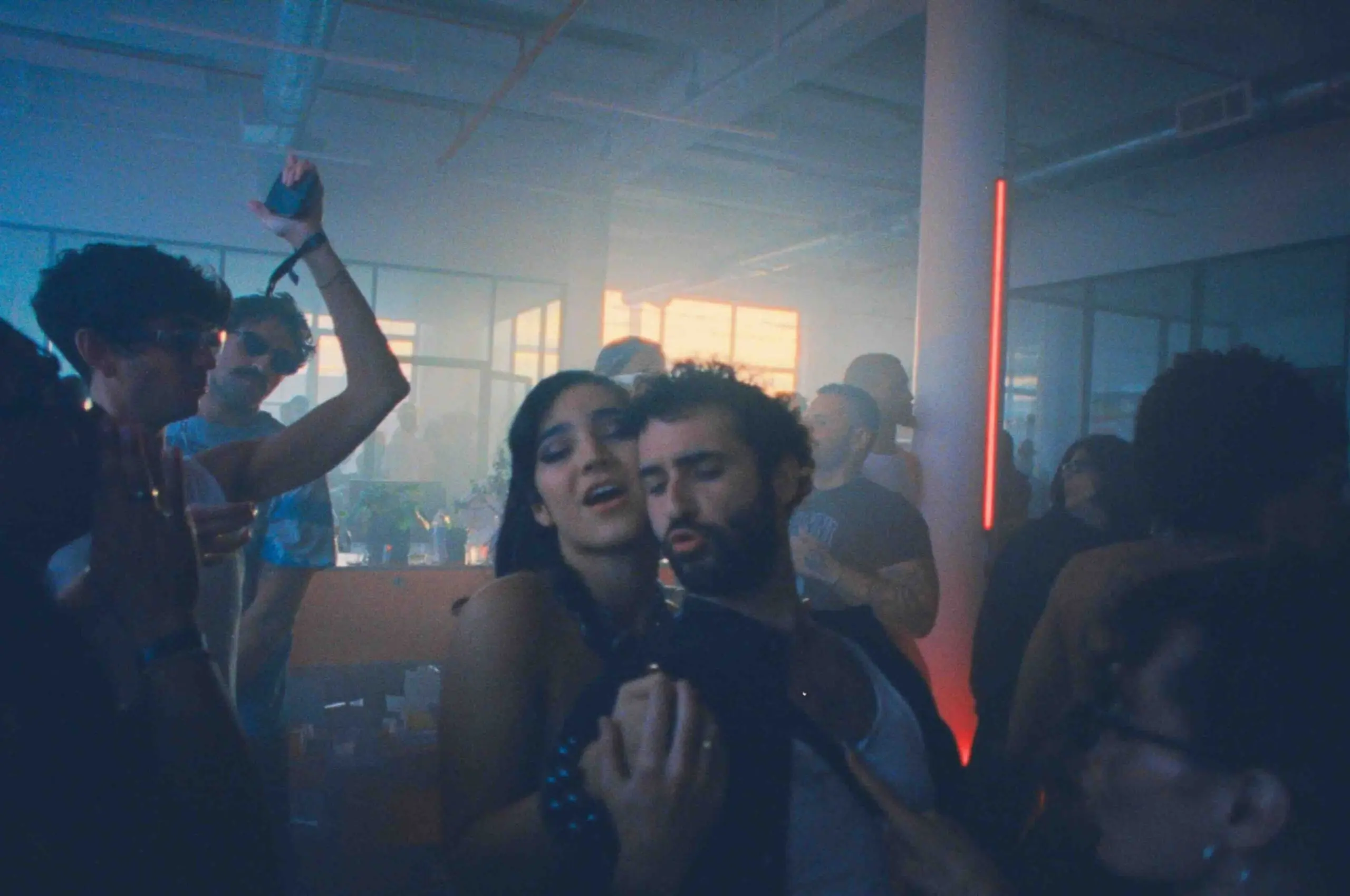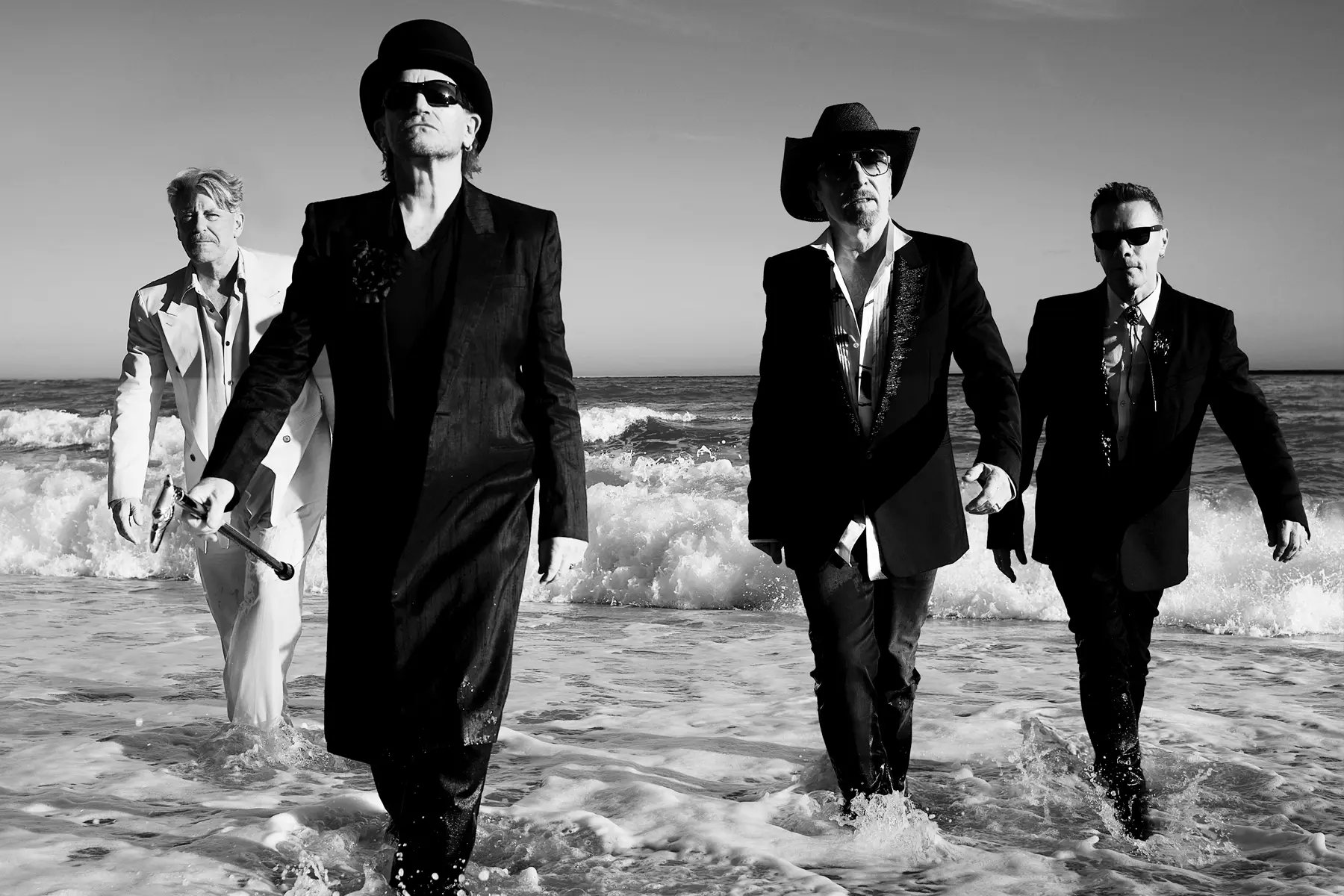



In 2003, a catchy novelty track called “The Spageti Song” sparked a nationwide dance craze ages before TikTokTikTokA social media platform for creating, sharing, and discovering short-form videos, featuring music, trends, challenges, and personalized content.Go to TikTok Glossary challenges made it trendy to do so. The song, produced by Lito Camo and performed by a girl group known as the SexBomb Girls, contained lyrics that doubled as instructional choreography. The lyrics “Spageting pababa, pababa nang pababa/ Spageting pataas, pataas nang pataas” triggered many a dance showdown at birthday parties and other social gatherings.
At the time, SexBomb had already risen to fame as backup dancers on the noontime show Eat Bulaga, where they performed in the popular segments “Meron o Wala” and “Laban o Bawi.” “Spageti” was their second novelty hit, following the almost equally popular “Bakit Papa?,” a single off their 2002 debut album Unang Putok.
Originally assembled in 1999 as a dance group of backup dancers for Eat Bulaga, their manager, Joy Cancio, thought of the project more as a way to help “the less fortunate have a life,” and support their families using their talents.
The group’s rise to fame was not planned. “Nagkataon na they were hired to promote a song and it became phenomenal, ‘yung Tom Jones na ‘Sexbomb,’ and nagkataon din ‘yung dance resonated with the masses,” said Cancio’s son John in an interview with CNN Philippines Life, November 2022.
Ask anyone from the Philippines what “The Spageti Song” sounds like and you’re likely to get an immediate response, complete with the moves to boot.
Pushing dancers to the next level of fame was also a goal, though it was one they didn’t think they could achieve right away. Many of the original SexBomb members entered Cancio’s agency because of their passion to perform, but at the end of the day, the gig was just a job; a way for them to put food on the table.
Though initially dismissed by the larger Philippine music industry because of their place as a novelty (a.k.a. gimmick-led) group, SexBomb’s success is notable in many ways, chief among which are the career heights that the artists of today can only dream of. These include becoming multi-platinum recording artists (Unang Putok got a Philippine Association of the Record Industry (PARI) platinum certification only a month after its release, meaning that it sold at least 40,000 units), top-billing on a record-breaking TV show with a seven-year run on a major network (GMA’s Daisy Siete had an average of 22 percent TV rating, according to AGB Nielsen at the height of its popularity), multiple film cameos, and sold-out concerts.
And, of course, who can deny the greatest achievement a performing artist could ask for: a permanent place in the Filipino cultural psyche. Ask anyone from the Philippines what “The Spageti Song” sounds like and you’re likely to get an immediate response, complete with the moves to boot.
The PH Training System

A meme post that circulated on social media in 2020 stated that SexBomb’s sales records within Asia were only broken when K-pop girl groups 2NE1 and Girls’ Generation came onto the scene, and while the claim has yet to be proven by an official entity (Cancio and former Sony BMG boss Narciso Chan confirm the PARI achievements, but cannot remember the official sales counts — former Focus Entertainment boss Butch Pura says it is because they “were not that particular with those things during those times”), it isn’t a stretch to say that they may as well be considered as one of the highest-selling female groups in the Philippines, considering how massive the SexBomb Girls became as a pop cultural phenomenon.
The two aforementioned K-pop groups came three to seven years after the success of the SexBomb Girls, when “I Don’t Care” (2NE1) and “Genie” (Girls’ Generation) were almost as ubiquitous here in the Philippines as “The Spageti Song.” 2NE1 and Girls’ Generation were a product of the Korean idol training system that transforms young talents into huge stars. In her book Idol Trainees’ Sweat and Tears, pop culture expert Lee Jong-im observes that K-pop superstardom often involves a significant financial investment and a harrowing pre-debut training process in which young talents are prepped for the stage. The combination of both, plus significant support from their government, is the reason that they’ve been able to achieve worldwide recognition.
“The media continue to perpetuate the narrative that a star is born by chance, and many people still believe that. But I realized the opposite is true,” said Lee in an interview with The Korea Herald about her book on the Korean training process.
“Initially it’s a physical thing… may classification system sa ulo. ‘Maganda ‘yan, gwapo ‘yan,’ ‘Yan muntik na maging pangit pero maganda.’ And then you have a feeling about these people, meron na silang magic. But you wanna validate it, so you send them to the workshops.”
Cancio didn’t know it at the time, but the dance training system that she developed for the SexBomb members was similar (albeit significantly less rigorous) to what was also going on in South Korea’s SM Entertainment with first-generation K-pop groups like S.E.S. and H.O.T, who debuted in 1997 and 1996, respectively. “Never nag-stop ang jazz class namin kahit they had Daisy Siete already, and lots of shows [on their schedule]. Part pa rin. [The girls had] to do warm-up and training.”
Interestingly, if there is anything that the Filipino entertainment industry has had a grasp of without having to look to the K-pop industry, it’s that a little bit of training and tweaks to a person’s appearance can do wonders for their image. Oftentimes, budding stars were discovered through nationwide talent searches and televised competitions like GMA Supershow, Starstruck, and Star Circle Quest (Fun trivia: 2NE1’s Dara actually got her start from this very show, back then known as Sandara Park).
Talent scouting is something that provided the bread and butter of major television networks, through legendary talent managers such as the late German “Kuya Germs” Moreno in the ‘70s and ‘80s, Johnny Manahan a.k.a. Mr. M in the ‘90s to early ‘00s, and Laurenti Dyogi in the 2010s. The three are said to have the Midas touch when it comes to finding the next big thing. Moreno, Manahan, Dyogi, and even SexBomb’s Cancio have said that an eye for talent is one thing, but what’s even more important is that the candidates they pick are trainable.
Speaking on The Howie Severino Podcast in 2021, Manahan explained his gut feeling when it comes to stars and the concept of the “X-Factor” that goes beyond physical looks and can be brought out through training.
“Initially it’s a physical thing… may classification system sa ulo. ‘Maganda ‘yan, gwapo ‘yan,’” he shared. “‘‘Yan muntik na maging pangit pero maganda.’ And then you have a feeling about these people, meron na silang magic. But you wanna validate it, so you send them to the workshops, you send them to dance instructors. And then after a certain time, you say, ‘How did that person do?’ That’s when they say, ‘Direk, may magic ‘yan. May garbo ‘yan.’ So you validate it.”
The Proto P-pop sound
Up until recently, no other song and dance group in the Philippines had reached (and maintained) the level of commercial success that SexBomb had in the early to mid-aughts. But there have been a few attempts to do so in the past using K-pop as a peg.
In 2008, Vicor founder and Viva Records CEO Vic Del Rosario wanted to herald change in the Filipino music landscape the way they did with Manila Sound. He reached out to record producer Marcus Davis — then known for his skill in creating pop music with a Pinoy touch (most notable at the time were the ABS-CBN station ID “Star ng Pasko” and “Kembot”) — to help him create groups comparable to the K-pop groups popular in the Philippines at the time.
“Boss Vic reached out to me and said, ‘Okay, I have this idea to start a record label. We’re gonna do Tagalog stuff but with a foreign sound to it, kind of modeling after the K-pop stuff,’” Davis told CNN Philippines Life in an interview.
The two ended up co-owning the Viva Records sub-label called Ppop, short for Pinoy pop. As creative director, Davis signed three groups: Pop Girls (of which pre-JaDine Nadine Lustre was a member), boy group XLR8, and co-ed group RPM. All three underwent the regular training expected of Viva talents, with special emphasis on their vocal and dance skills.
But when they started releasing music, they were criticized for looking and sounding dangerously close to the Korean groups that they were supposedly inspired by. Copying, Davis says, was common in the local music scene at the time, but wasn’t part of his original vision for the Ppop label.
“Our goal was [to] establish ourselves in the Philippines and make these young artists matter and make the music matter and make the creators behind the music matter in the hopes that that’s enough for this country to rally behind itself,” he adds.

Three years after the Ppop label was launched, Viva realized it wasn’t a profitable venture and decided to shutter it. “What we found [was] that the groups were getting more popular than the music, because the music was just copies of stuff they had already heard. So that was working, but we still never really found our own sound.”
By then, Davis decided to strike out on his own as a producer, but the label continued to produce pop groups with a similar formula.
After the Ppop label’s dissolution, it should be noted that other networks and agencies began assembling their own groups as well. There was the MCA Music group 1:43, responsible for one of the top 10 best-selling OPM albums at record stores such as Odyssey, Astroplus, and Astrovision in 2011. Viva also had the five-member group Chicser, who rose to fame from a dance video of the popular song “Teach Me How to Dougie.” 2016 also saw an influx of pop groups, thanks to televised talent competitions such as ABS-CBN’s Pinoy Boyband Superstar, which produced BoybandPH, as well as TV5 and Viva’s Born to Be a Star, which produced the groups Nitro and UGG (U Go Girls). Meanwhile, ABS-CBN’s Star Music also followed through, with groups like Gimme 5 and the It’s Showtime dance-only groups Hashtags and GirlTrends, which were composed of Star Magic talents and Pinoy Big Brother alums.
“What we found [was] that the groups were getting more popular than the music, because the music was just copies of stuff they had already heard. So that was working, but we still never really found our own sound.”
This move towards a group formula continued well into 2019, when Viva continued to launch girl groups such as the 45-member PPop Generation and Charmed, even partnering to manage SexBomb’s offshoot group, SB New Gen — though lackluster views and streams showed that they didn’t seem to hit the mark with the general public. All these groups faced the same criticism that Pop Girls and XLR8 did during their times: backlash on social media for being “copycats” of K-Pop, J-Pop, and Western pop.
Laying the Groundwork
As in any music industry, the sound of popular music in the Philippines has gone through several shifts over time. By the mid-‘00s, for example, rampant piracy and declining CD sales pushed record labels to play it safe. Davis recalls how the mainstream labels’ approach to pop music in those times was resistant to experimentation, designed to minimize any financial risk.
“What the [mainstream] record labels would do is that they would go to the cheapest producer, cheapest studio possible, and make the cheapest product possible, put the biggest celebrities’ face on it, and have them make the rounds,” says Davis.
“The reason why [covers] did so well was because the formula was simple: let’s get a big star and a popular song, and put them together, and that’s the safest option. It worked very well, but it’s glorified karaoke, and it can only last so long,” he adds.
Despite the negative reception towards the dance pop-leaning groups of the time, there is no denying that the 2010s were a seminal time period that laid the groundwork for P-pop as we know it today.
2013 onwards were breakthrough years for both budding artista-musicians and already established talents who wanted to experiment both in terms of visuals and sound.

In August 2013, Sam Concepcion, who rose to fame as a teen heartthrob after winning Little Big Star in 2006, released Infinite with an accompanying futuristic music video for the carrier single “No Limitations.” It was also the year that Sarah Geronimo, dubbed “Popstar Princess” after winning the singing contest Star for a Night in 2002, released her 10th studio album Expressions. Featuring “Ikot-Ikot” and “Tayo,” the album signaled a move towards a more holistic view of pop stardom that combined modern music sensibilities with polished visuals and choreography.
These shifts can be attributed to producers and composers of these songs as much as they are to the performers. And in the 2010s, chief among those were the composer duo Thyro & Yumi and the producer Jumbo “Bojam” De Belen and his company Flip Music.
It is Flip Music, along with Thyro & Yumi and other songwriting powerhouses like Nica del Rosario, Pow Chavez, Myk Conchada, and Mat Olivades, whose names line the credits of some of the more iconic pop songs and albums of that decade, including the Diary ng Panget OST, Geronimo’s “Tala,” and later on in the 2020s, BINI’s Talaarawan album.
What “Ikot-Ikot” and “Kilometro” did for Geronimo was elevate the Filipino pop sound, proving that mainstream success could be achieved through experimentation.
By the 2020s, creating the sonic branding of an artist became what De Belen, and by extension, Flip Music, was known for.
Flip’s co-founder and COO Jeli Mateo tells Rolling Stone that it’s always been their vision to push forward Filipino pop. Geronimo simply became their first mainstream proof of concept.
“We wanted to elevate, to ‘flip’ the OPM sound. We transform [an artist’s] existing sound and we create a new version of that artist that they never knew existed,” says Mateo.
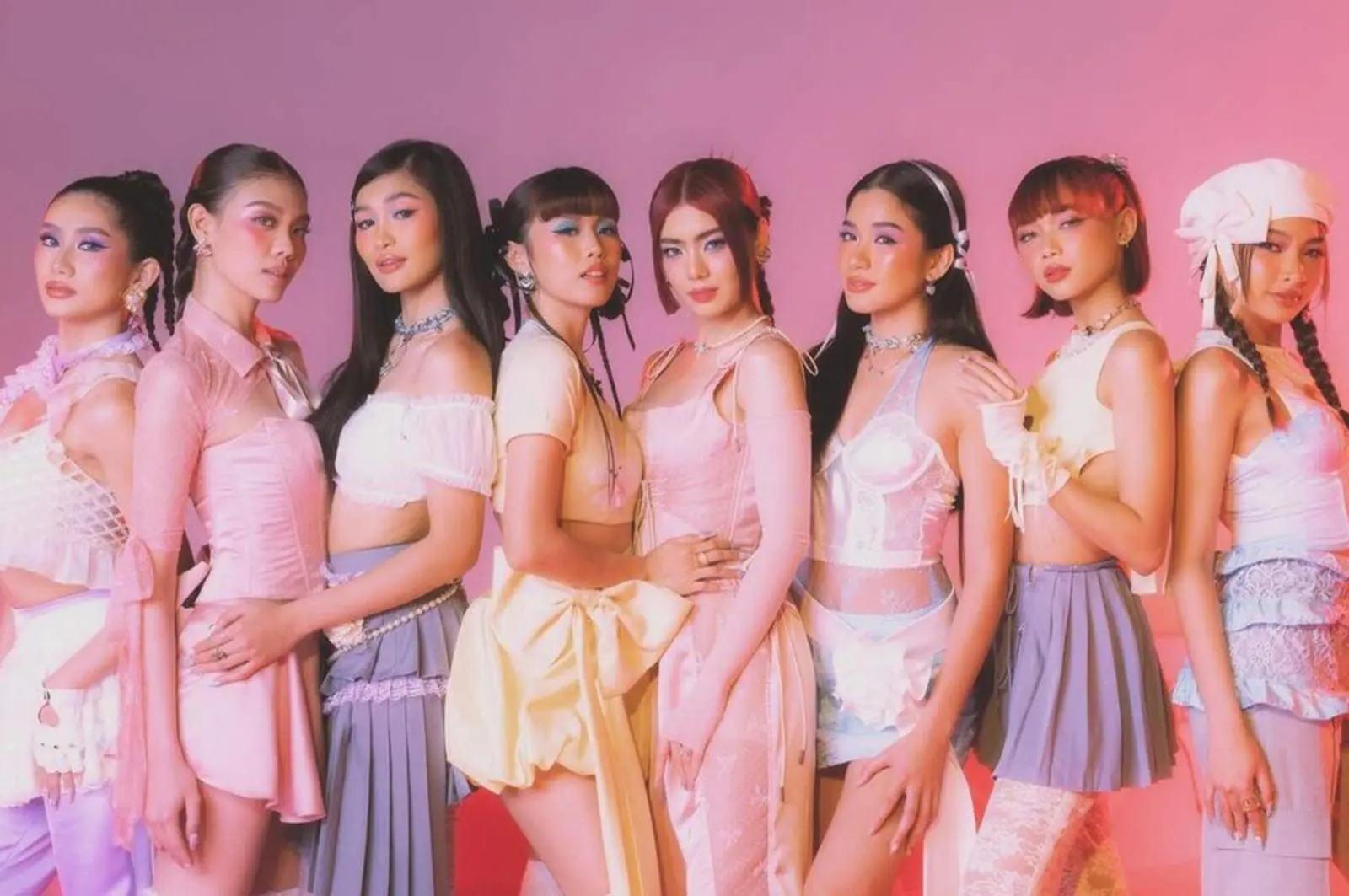
Geronimo’s label, Viva Records, tapped Flip Music to collaborate with the Popstar Princess on Expressions, which was to be her first album featuring mostly original songs, a departure from the biritera cover ballads that the singer had built her decade-long career on.
“Since we were doing the new sound, the fun stuff, we just infused what we do best, infused a little fun in it, a little relatability. All Filipino,” shares De Belen, Flip’s co-founder and CEO.
Expressions went on to become certified Platinum by PARI and was critically acclaimed for showcasing Geronimo’s vocal versatility and stylistic evolution. Despite these achievements, the change remained risky even a year later.
Composer Yumi Lacsamana shares that by the time they finished “Kilometro” in 2014, there was still some level of uncertainty attached to the reception of Geronimo’s “new sound.” “Sugal siya. Suntok sa buwan,” she says. “Pikit-mata lahat talaga kami, even the label. Na parang, ‘Let’s just trust the song and Sarah’s stature sa industry na sana pakinggan,’” she shares.
What “Ikot-Ikot” and “Kilometro” did for Geronimo was elevate the Filipino pop sound, proving that mainstream success could be achieved through experimentation. More than that, however, the songs are the building blocks that led to the highest level of commercial success that Geronimo has ever reached: the “Tala” dance craze. Produced by Flip Music’s De Belen and singer-songwriter Alisson Shore, the song came out in 2016 but went viral three years later by way of a TikTok dance challenge. While it was already a hit upon release, it was the mass appeal that propelled it to icon status. Suddenly, it was everywhere. You couldn’t escape “Tala” in 2019 because it was all over social media and in real life: on the street, at parties, and in classrooms and office break rooms — a phenomenon not unlike Sexbomb’s “Spageti Dance” in the 2000s.
Read the full story from the Rolling Stone Philippines Special P-pop Issue with SB19. Pre-order a copy from sarisari.shopping, or read the e-magazine now here.
Parts of this article were originally published on cnnphilippines.com/life
Frequently Asked Questions
Originally assembled in 1999 as a dance group of backup dancers for Eat Bulaga, the SexBomb Girls’ catchy novelty track called “The Spageti Song” sparked a nationwide dance craze in the 2000s.
In a way, they predated the arrival and rise of K-pop girl groups 2NE1 and Girl’s Generation, who came three to seven years after the success of the SexBomb Girls.
The same dance training system that developed the SexBomb Girls was similar (albeit significantly less rigorous) to what was also going on in South Korea’s SM Entertainment with first-generation K-pop groups like S.E.S. and H.O.T, who debuted in 1997 and 1996, respectively.
Oftentimes, budding stars were discovered through nationwide talent searches and televised competitions like GMA Supershow, Starstruck, and Star Circle Quest (Fun trivia: 2NE1’s Dara actually got her start from this very show, back then known as Sandara Park).
In 2008, Vicor founder and Viva Records CEO Vic Del Rosario wanted to herald change in the Filipino music landscape the way they did with Manila Sound. This led to the creation of the Viva Records sub-label called Ppop, short for Pinoy pop.
2016 saw an influx of pop groups, thanks to televised talent competitions such as ABS-CBN’s Pinoy Boyband Superstar, which produced BoybandPH, as well as TV5 and Viva’s Born to Be a Star, which produced the groups Nitro and UGG (U Go Girls). Meanwhile, ABS-CBN’s Star Music also followed through, with groups like Gimme 5 and the It’s Showtime dance-only groups Hashtags and GirlTrends, which were composed of Star Magic talents and Pinoy Big Brother alums.