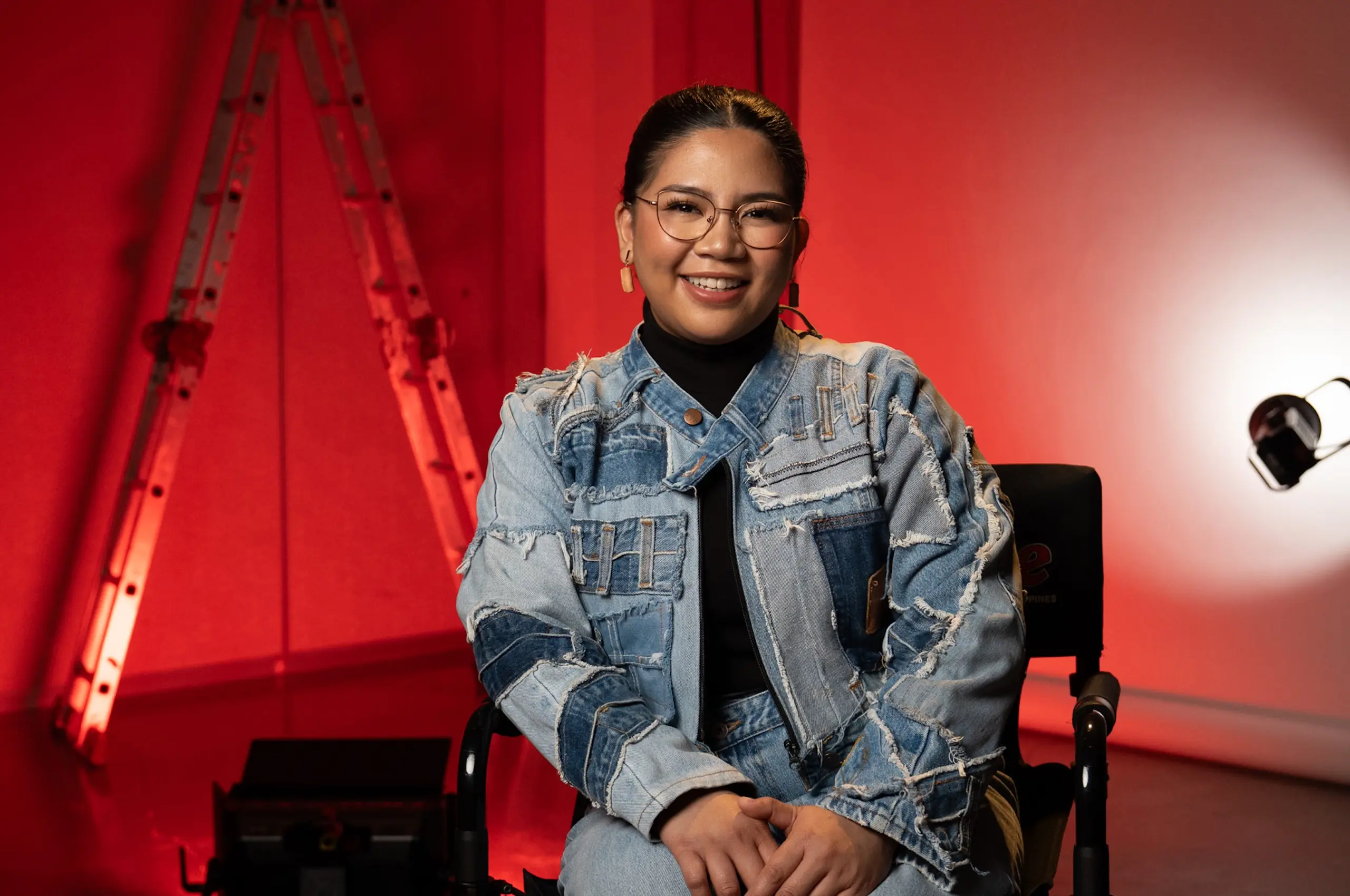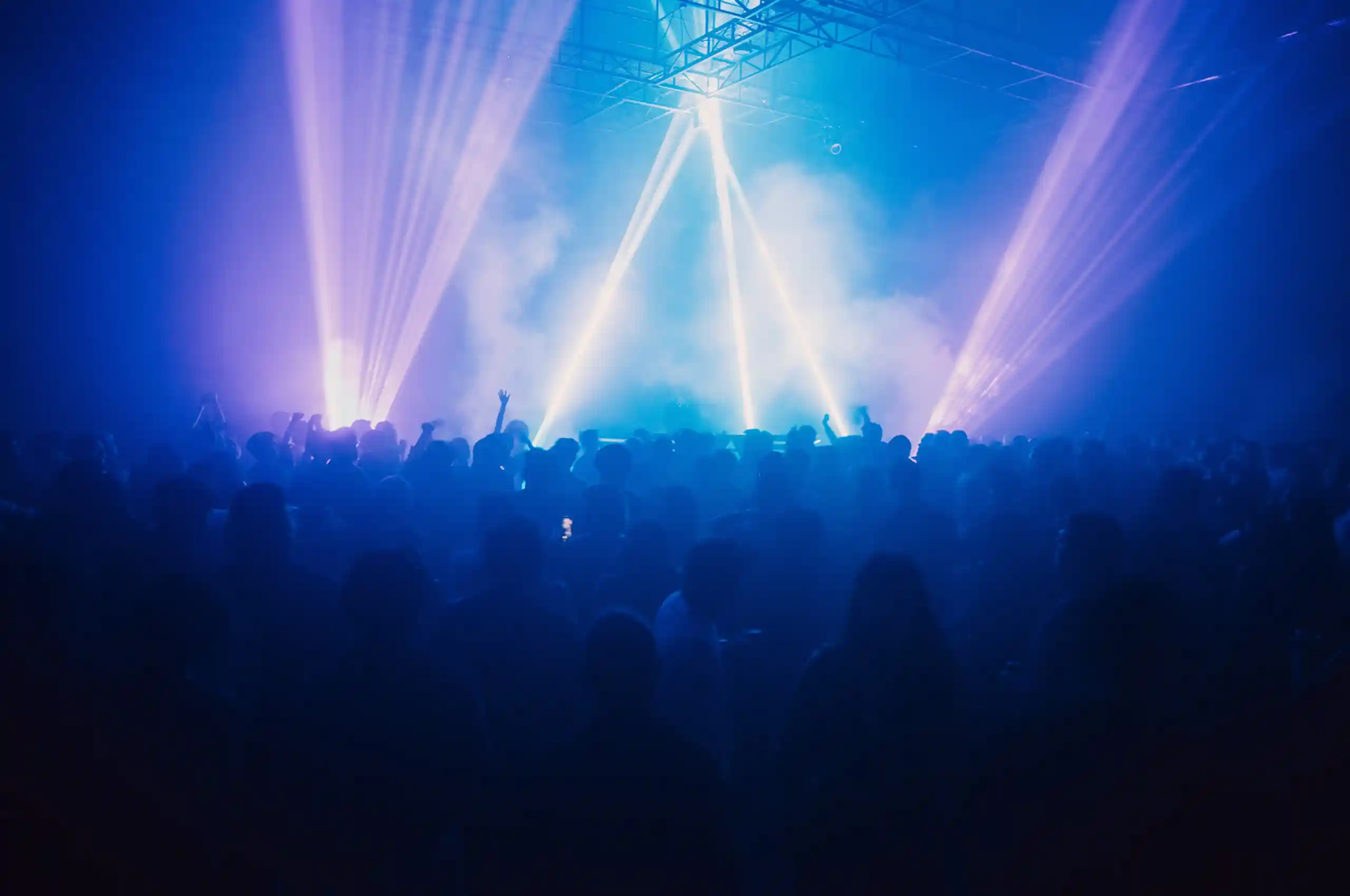
Japan dance music festival Rainbow Disco Club (RDC) made its debut in the Philippines on Saturday, January 31. The takeover, featuring a lineup of Filipino, Japanese, and Indonesian DJs, was co-hosted by Manila’s Thank You For The Music (TYFM) as the newly-minted dance collective celebrated their first party (though not the organizers’ first rodeo).
The collaboration sees the Philippines bolster its regional ties with the wider Asian nightlife circuit. Unlike popular Southeast Asian cities like Bangkok and Bali, Manila’s nightlife is largely attended by locals — something long-time partygoers, myself included, often attribute to the city’s dysfunctional transport system and few curation-focused nightclubs. This means parties are privy to the algorithm and word-of-mouth marketing, which could be why foreign travelers often skip Manila, seeing it as a pitstop to the country’s pearly white beaches. This, however, arguably makes it its virtue.
Since the pandemic, Manila’s pop-up party scene has grown to see crowds from the mid-hundreds to the lower thousands, stepping up its production with high-fidelity sound systems paired with local acts and regional headliners. With a long-running music festival from Japan trusting the Manila party community to host their event, it speaks positively about the experience Filipinos can foster as a dance music culture.
Filipino Hospitality
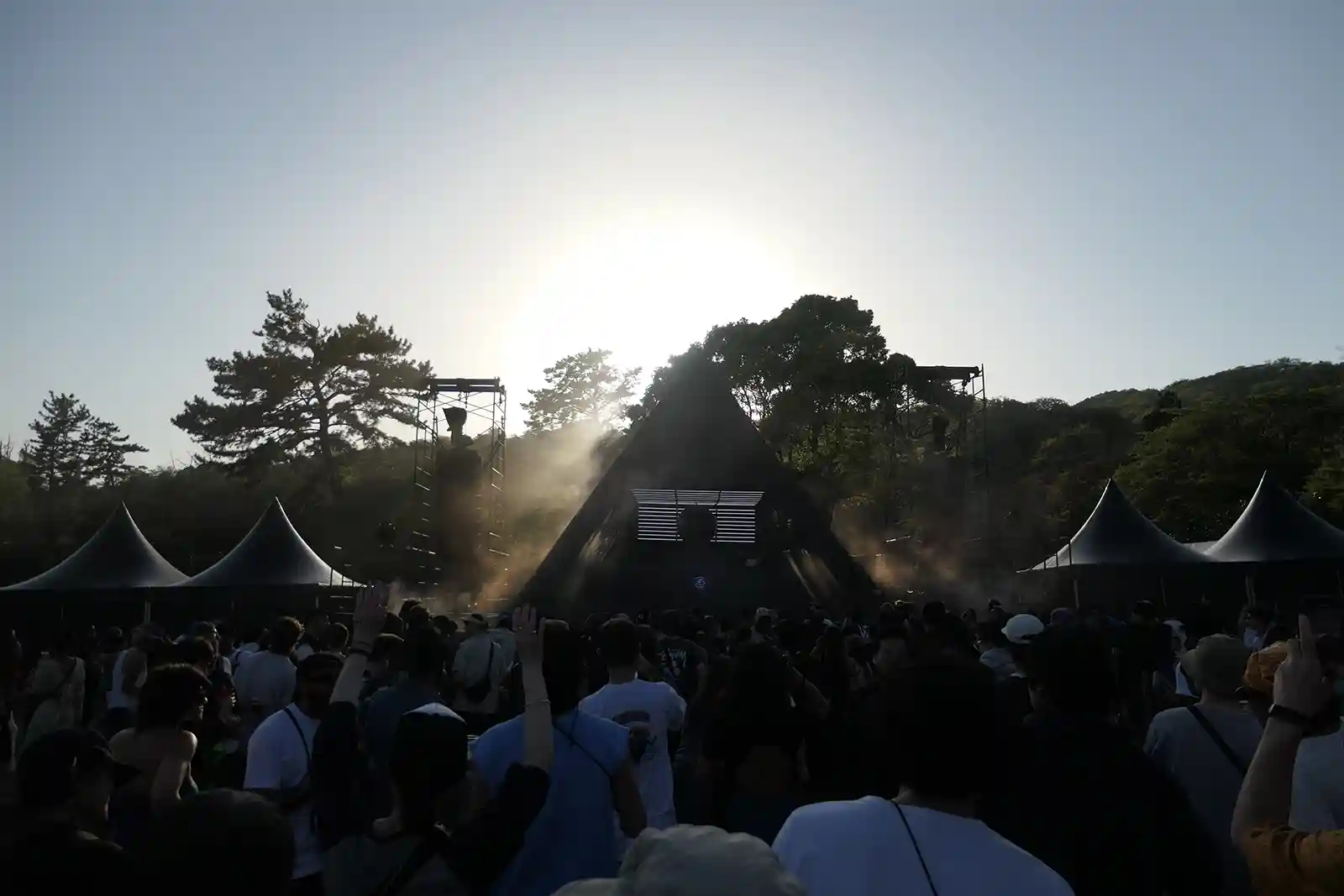
Two hours away from Tokyo, the idyllic Izu Peninsula is where RDC calls home. The festival is a stark contrast to Wonderfruit, a five-day gathering in Pattaya, Thailand, that is proving to be a destination for Asian dance music, attracting around 25,000 attendees per day. Arguably, scale is relatively correlated with how one feels at an event – and while having loads of people at a festival is neither good nor bad, the right crowd and context determine how intimately partygoers can connect with their surroundings.
There are no public records of RDC’s attendance figures, but it’s safe to say the festival draws a few thousand people. Its 15th edition, which I attended in 2024, featured two packed stages — one inside a gymnasium, and another on a grassy plot for the main floor and camping grounds. There, a triangular booth towers over DJs as they push uncompromising house, techno, and bass. Disco has a special place in RDC, being in its name, perhaps as an homage to the genre’s colorful heritage in Japan or what some might generalize today as “city pop.”
The Manila takeover felt like these two stages rolled into one: a disco showcase inside a Makati warehouse that recreated RDC’s effervescent atmosphere. Technicolored hues, controlled by Vietnamese light designer Kira, pulsed from above as two blue spotlights crossed over the DJ booth, echoing RDC’s iconic triangular setup. Other touchpoints — the shiny disco ball, the warm lamps at the bar, a fresh buko juice cart, and a “chill-out” room with analog projections by Filipino video mapper Vandy Pesarillo — helped create an ambience where partygoers didn’t feel heady, overwhelmed, or on edge, but chic and laid-back.
Time for a Disco Revival
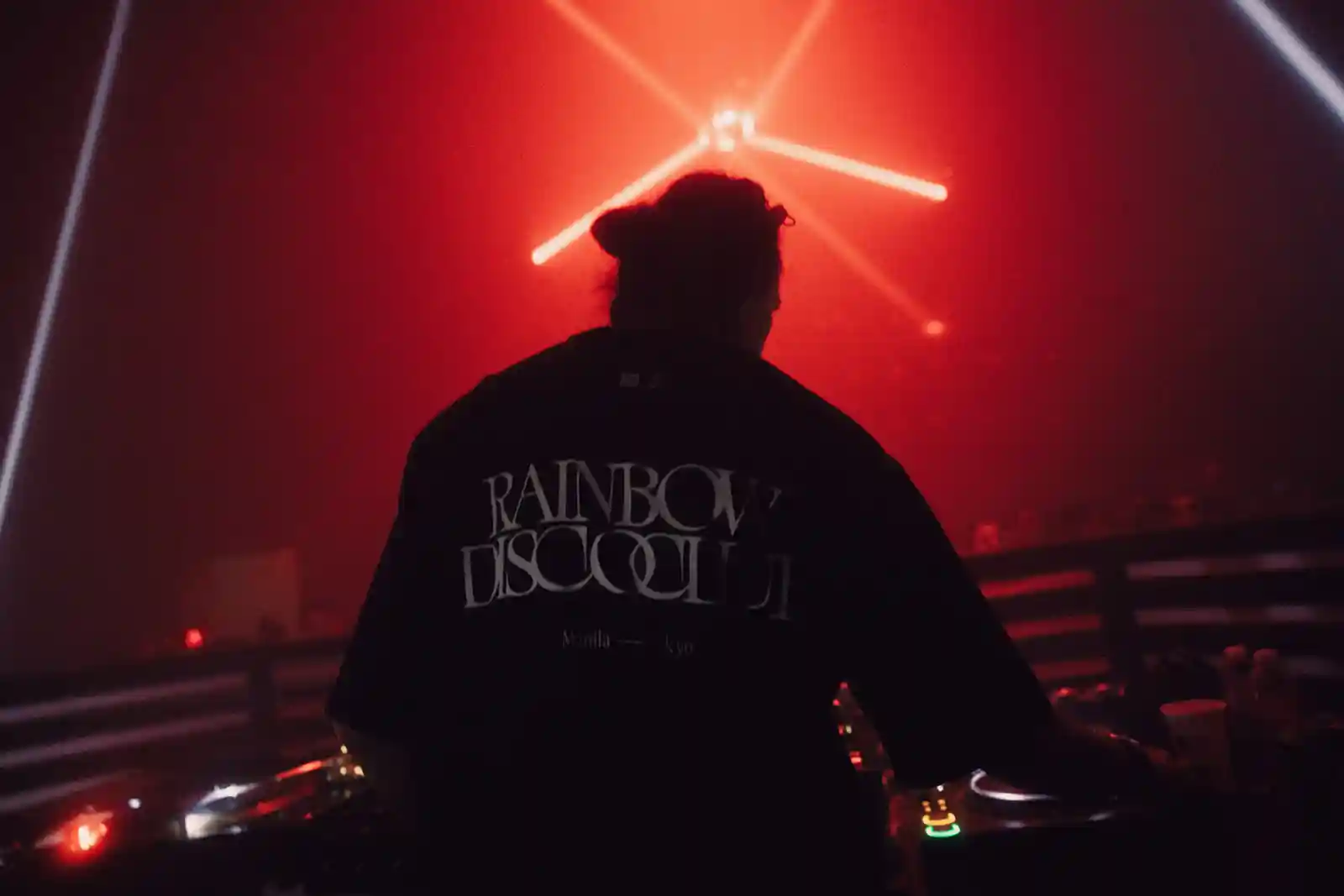
Of course, the main attraction was the music, blasting out from the German d&b audiotechnik sound system tuned by Adrien, a French-born Saigon-based sound engineer of The Observatory nightclub, where RDC has hosted a party. Filipino DJ and producer crwn opened the dance floor with deep and soulful cuts, while UNKNWN party series founder Emel carried the energy through with his signature flair for groovy Balearic.
Dita and Gero, residents of Klymax Discotheque inside Bali’s Potato Head resort, gave Pinoy dancers a lesson on how bands, not DJs, once controlled the dance floor, switching between edits of The Rolling Stone’s “Sympathy For The Devil” to Gorillaz’s “Feel Good Inc.” — the latter was played at Wonderfruit’s Solar Stage during Gero’s back-to-back set with Tokyo-based DJ Sisi at the festival’s fifth and final sunrise. It is a rare version of the song that many Manila dancers witnessed during their pilgrimage to Pattaya last December, and one they shared with a new crowd listening to it for the very first time. The night closed with Kenji Takimi, pioneer of Japan’s leftfield disco scene for over two decades, as he weaved vinyl and digital selections into one fluid set.
More than simply a meeting of Asia’s two party minds, RDC’s takeover of TYFM reminded Manila that disco — a genre born of well-intentioned dancefloors and joyful, carefree abandon — is hard-wired into the Filipino cultural consciousness. Once a champion of the “Manila sound,” Filipino disco still, at times, feels stuck in a time capsule among acts like Hotdog, VST & Company, and Boyfriends, even if the genre is quietly adapting to the present moment.
It’s high time disco becomes a stronger fixture in Manila’s party scene in the same way techno has, in the last five years, taken hold in the form of raves. Party organizers like Jasphonica, Divas, and It’s A Groove Thang! are leading the charge as Manila’s dedicated parties for disco music, with TYFM potentially joining the fold; venues like Nokal, Mono by Phono, and Kampai in Makati, alongside Treskul Records in Mandaluyong, also frequently spotlight DJs at the forefront of the genre.
But whether it’s a party, a rave, or a disco — terms that will undoubtedly fuel debates about what distinguishes one from the other — it’s important that dancers remember the core tenet of its most simple truth, which is to dance.
CORRECTION: On February 2, 2026, this article was edited to correctly refer to The Observatory nightclub as being in Saigon, not Hanoi. Likewise, the Gorillaz track that Dita and Gero played was “Feel Good Inc.,” not “On Melancholy Hill.”