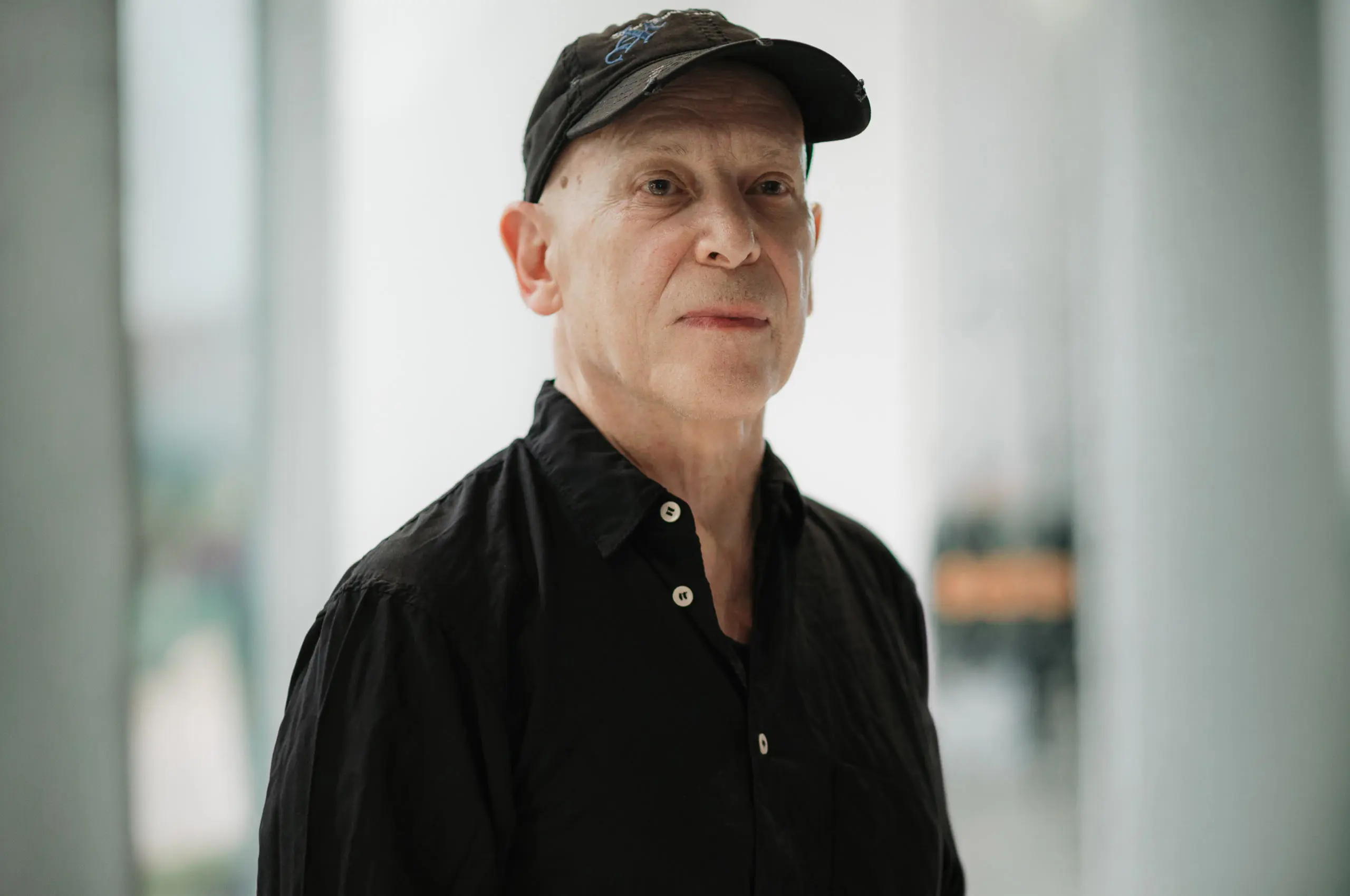
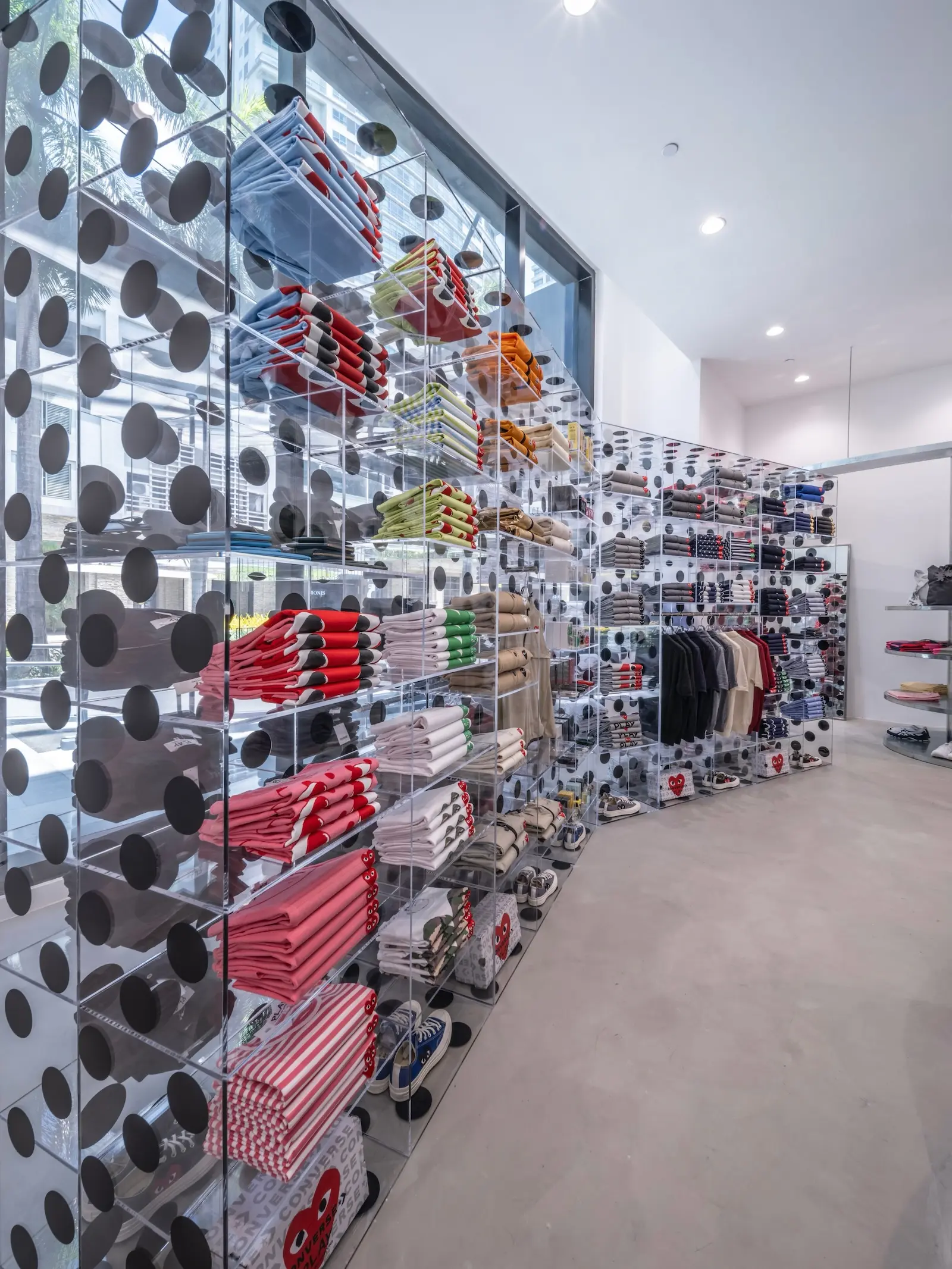
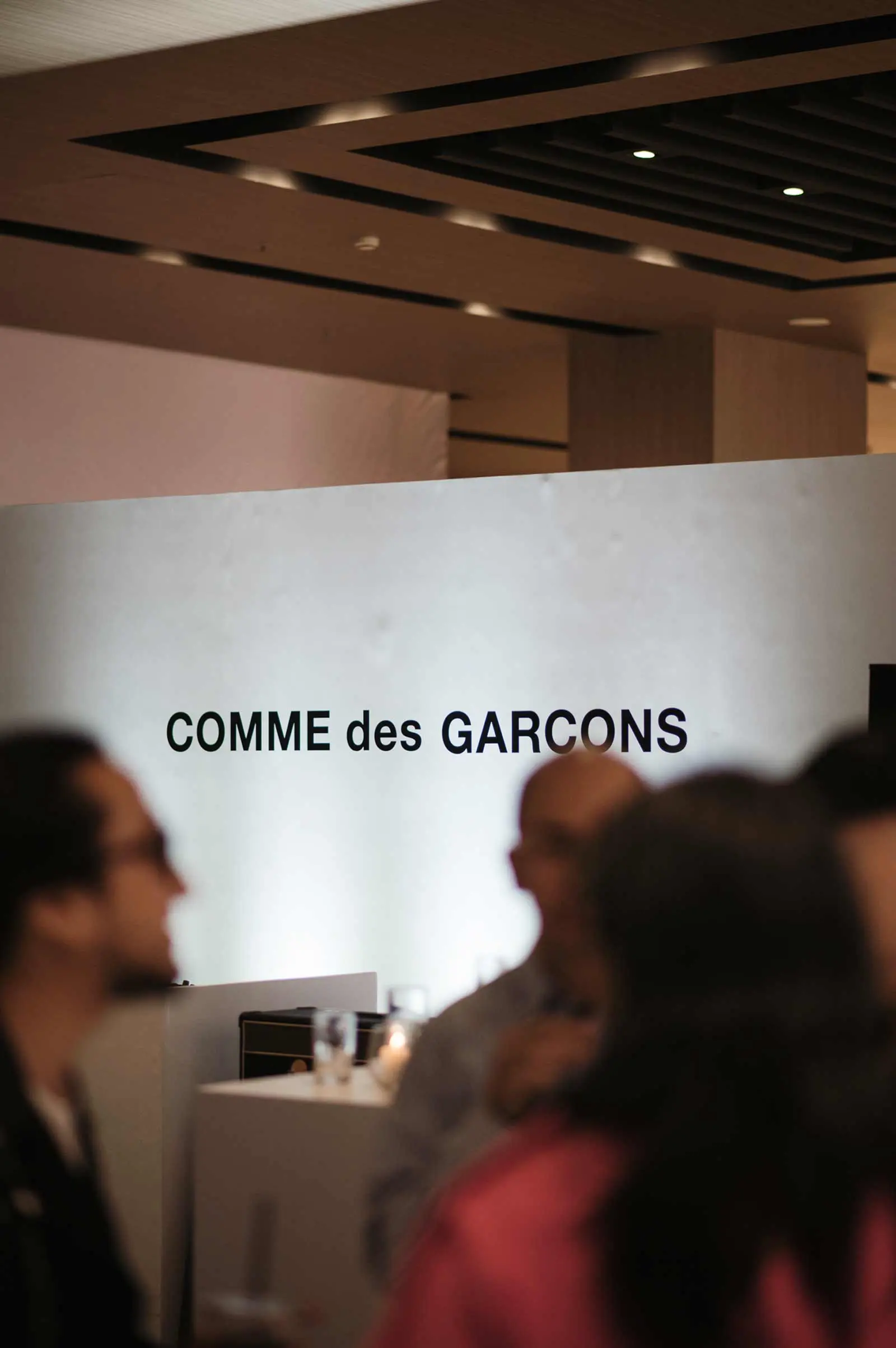
“Forget about your questions. Ask from the heart,” is what Comme des Garçons and Dover Street Market president Adrian Joffe supposedly told an interviewer before me. He sat down with a couple of local press for the opening of the new Comme des Garçons and CDG stores at Greenbelt 2.
Since joining Comme des Garçons in 1987 and becoming its president in 1993, Joffe has had the daunting task of verbalizing the inner workings of his business partner and wife Rei Kawakubo, who is famously averse to revealing much about her design process or motivations. “She doesn’t give more than what she thinks they need. She’ll use the least words possible,” he tells Rolling Stone Philippines when we finally met in the new space, whose ceiling is replete with metal sheet orbs that Kawakubo herself designed.
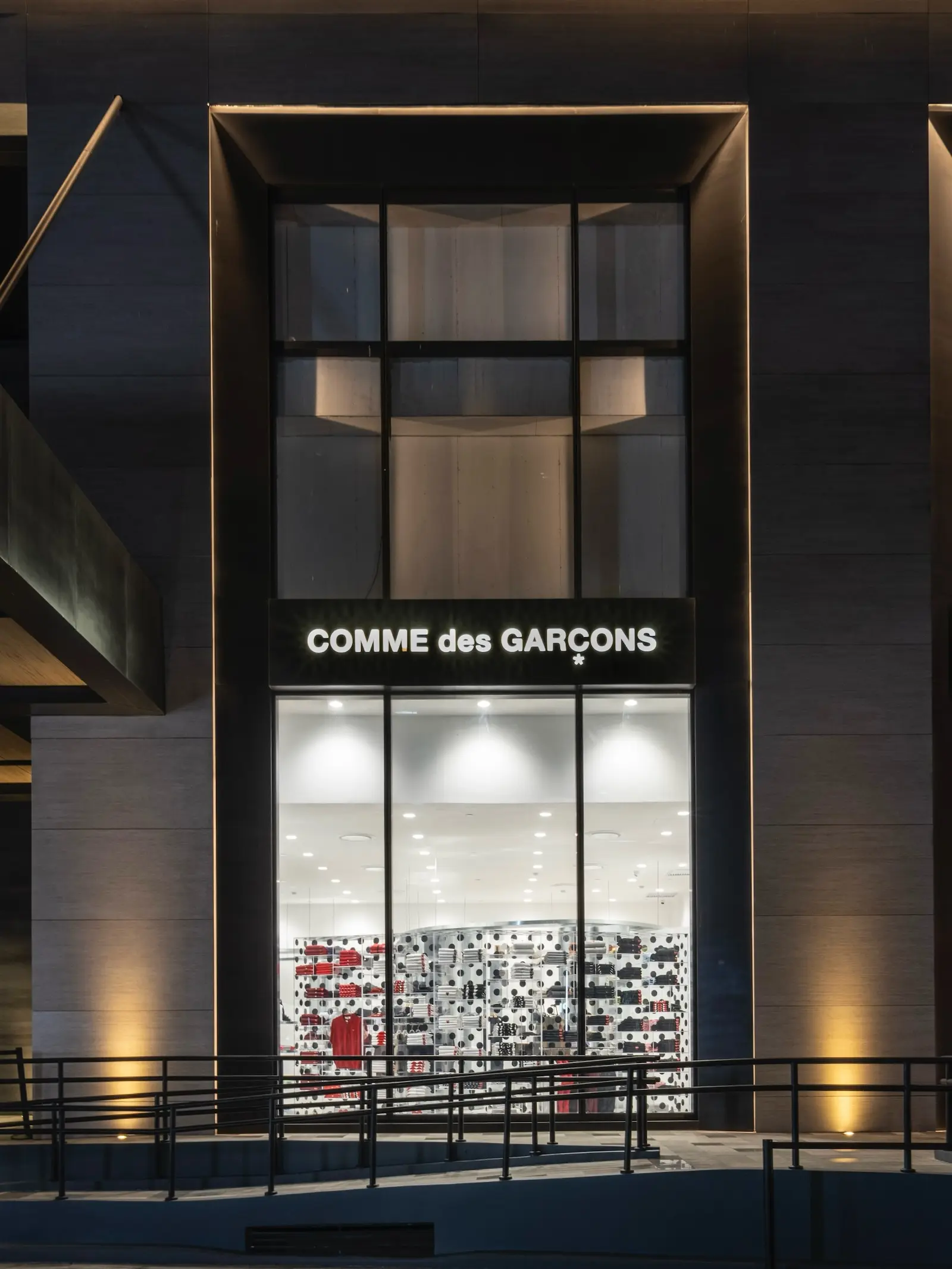

Jappy Gonzalez, the managing director of H&F Retail Concepts, Inc., which brought Comme des Garçons to the Philippines 15 years ago, told me Kawakubo’s husband and business partner is an intellectual who likes to philosophize.
This, Joffe admits to: “I always take the philosophical way. I think it’s the only way to approach abstract notions,” his shorthand for his wife’s notoriously scant responses during interviews.
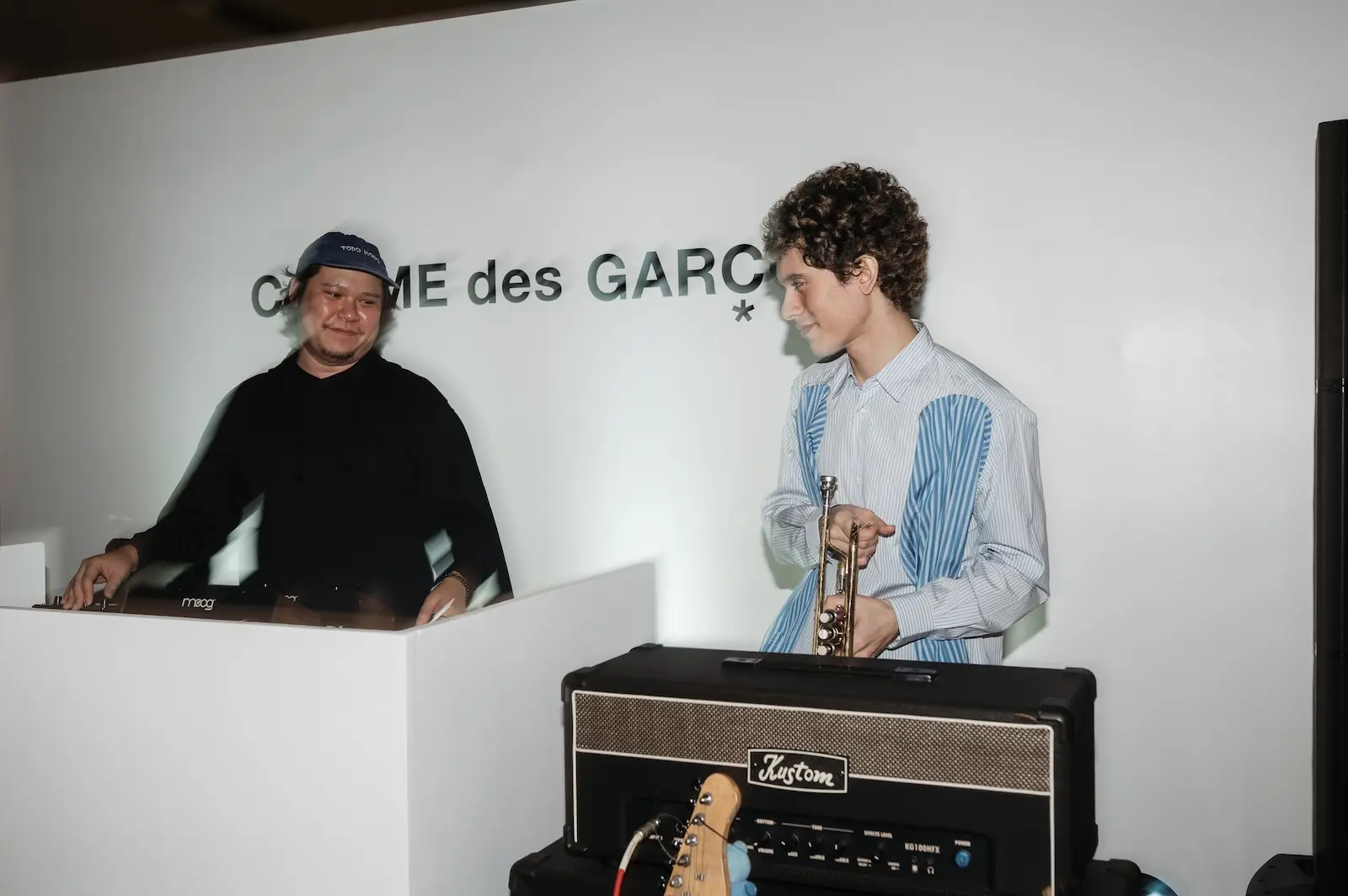
“I’m the exact opposite, right?” He is. Since 2 p.m. that day, he’s done one-on-one interviews and a few photos (never portraits, only incidentals, the H&F team says). By early evening, he’s out and about meeting ardent Filipino Comme fans as Gab Lazaro plays the saxophone alongside electronic musician Mario Consunji on deck. And even though he and his team are flying back to Tokyo early the next morning, he too sat down for dinner, followed by pizzas and some dancing at Karrivin for an afterparty.
“[Rei Kawakubo] doesn’t make it easy for herself, therefore, she doesn’t want to make it easy for everybody else.”
15 Years of Calculated Risk-Taking
One of the many times(!) Joffe traveled to the Philippines was in 2013, a year after Comme des Garçons first opened here. But Gonzalez tells Rolling Stone Philippines, Comme des Garçons SHIRT — one of the lines under Kawakubo’s business, wholly dedicated to rethinking, well, the shirt — has been around since the late ‘90s.
“That would span almost 30 years,” Gonzalez says. “Thirty years defines a whole generation already.”
Still, to bring in an avant-garde brand to a considerably conservative retail landscape then took some guts. Gonzalez responds modestly, “I’d like to think I calculate as much as I can as far as risks are concerned, while remaining unafraid to try something different.”
By the time Comme des Garçons arrived on our shores, it had already established roots in the region, setting up stores in Taipei, Hong Kong, and Singapore. It wouldn’t be far-fetched for its early Filipino adopters to fly overseas to sample Kawakubo’s unconventional genius that had shaken Europe a decade prior.

Joffe can’t remember how exactly the partnership came about. “I think maybe we found out about him (Gonzalez) because he seemed like one of the nicest operators here.” Nonetheless, he is happy the brand has been well-received since. A Comme staff told us at the afters that he was even delighted to see how easy it was for Filipinos to pull off Kawakubo’s designs.
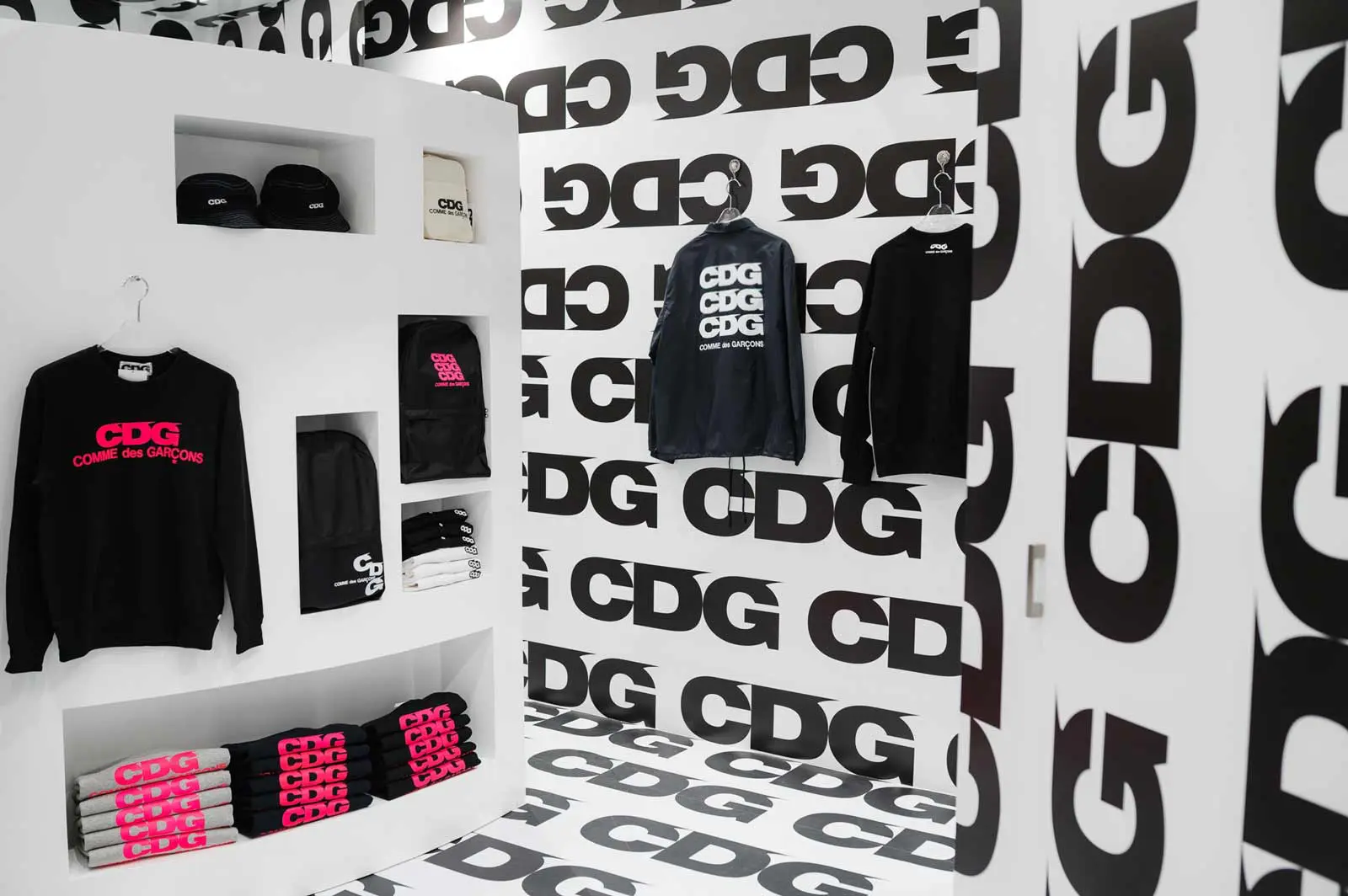
Her more accessible line, CDG PLAY, came to be embraced by Filipinos en masse in the 2010s, about the same time Comme des Garçons BLACK was introduced locally with a year-long pop-up at Univers.
Along with the new stores comes the return of Comme des Garçons BLACK, the brand’s more frugal but still conceptually sound label, conceived a year after the 2008 recession, one of Kawakubo and Joffe’s retail innovations, up there with the ephemeral guerrilla stores that ran from 2004 to 2009. What started as a way to move inventory by enlisting people outside of fashion to set up shop away from city centers with minimal budget created the blueprint for concept stores as we know it today.
Asked about the impetus to bring Comme des Garçons BLACK back in an equally precarious time, Gonzalez says it’s more of a gut feel. “It’s the same now, isn’t it? 2011 and 2026. No difference. Relevant then and still relevant now. And that’s the value of a Comme des Garçons product.”
Parallel Lives
Gonzalez’s multi-brand store, Univers, carries more than just Comme des Garçons and the designers Kawakubo has nurtured under its wings (Junya Watanabe, Kei Ninomiya, Tao Kurihara, Fumito Ganryu, Chitose Abe), in the same manner as Kawakubo and Joffe’s Dover Street Market has assembled small and big designers under one roof.
Of this parallel track, Gonzalez says, “There are several individuals in the world who live on parallel lines with us. Mr. Adrian Joffe and I exist on one of those lines.” He adds, “We may do the same job, but our contexts are different. The results may seem similar, but they are really not the same.”

In this interview, Joffe breaks down Comme des Garçons’ revolutionary approach to retail, from their guerrilla stores experiment that led to the rise of the “pop-up” (to his dismay), to finding more creative ways to do business in our algorithm-driven times. He also talks about why he hates how perfume is being sold now, and why Kawakubo doesn’t want to make it easy to shop at a Comme des Garçons store.
This interview has been edited for clarity and brevity.
You mentioned earlier that as a tourist when you were traveling here it was an “in-betweenness” that you liked about the country. But in terms of business, what do you think made Comme des Garçons such a resonant brand with Filipinos even after 15 years?
What I can surmise is maybe the Filipinos have their own individuality. I don’t feel that so much elsewhere, where people feel more like following trends more into the advertising, the algorithm.
But you can’t define what one Filipino is like. I’ve seen many different kinds. I think it’s more individualistic.
You’ve been around, so you would know. This is just Manila, and you’ve been to Baguio.
I’ve been to Baguio, where they filmed one of my favorite films by Peter Weir, The Year of Living Dangerously (1982). It was set in Indonesia, but they couldn’t film there because the regime wouldn’t allow it.
So when they filmed it about the revolution, the communist uprising, which was very badly crushed in Indonesia, they had to film in the Philippines. And they thought Baguio looked like Indonesia.
In quite a lot of your interviews, you said Rei likes to “make the consumer work” so that after they go around, there’s something for them, like a reward. Is that still something that you consider business-wise, given that most people want instant gratification?
I think we can’t change our ways. Rei doesn’t want to make it easy. And I think the reason is because she doesn’t make it easy for herself; therefore, she doesn’t want to make it easy for everybody else. It’s just fair.
She thinks if you discover it yourself, if you work at it, if you struggle and suffer and then work it out and then find something, it’s much more fulfilling, satisfying.
So, here again, even though it’s so simple, you cannot really get lost in it. It’s kind of small, but you still get to go around, you get to find [something].
I think it’s important — not necessarily to make them work so hard — but to give them their own sense of discovery.
“POS, they call it: Point of Sale. It’s really thinking that everybody’s an idiot. It’s demeaning people. It’s thinking that they’re all stupid and they need all this visual excitement in order to pay attention.”
Based on previous interviews, compared to Rei, you were more open to embracing e-commerce and social media. But it’s been a long time. Now, the problem is what? AI, homogenizing taste. Is that something that you take into account running the business for Comme des Garçons?
Yeah, of course. I try to on my level. I’m not a designer; only Rei is the designer. But there are many different kinds of ways to be creative, and the business itself has to be creative. So I try and do my best.
My role is to find new ways to do retail stores, new ways to sell. So we did guerrilla stores from 2004 to 2009, and there’s Dover Street Market itself.
And there are other ways we really want to try, for perfume, especially. I don’t like the traditional way of selling perfume, perfumery. It’s so bad. It’s a lot of fluff around the actual fragrance.
It’s “experiential”.
But what does that mean? Do you like the perfume or not?
It takes attention away from the product. It distracts you.
POS, they call it: Point of Sale. It’s really thinking that everybody’s an idiot. It’s demeaning people. It’s thinking that they’re all stupid and they need all this visual excitement in order to pay attention.
I like to treat people as equals.
So you still believe that they’re smart?
Yes, I’m still going to believe that. Even though it’s true, some people are stupid.
Especially now.
Especially now. And this is the problem also [points to the smartphone]. There’s too much information.
But I’m hopeful in the future. I think young people, even young people as young as you — or as old as you.
I’m not as young.
I’m not talking teenagers, but even people your age, I think, are realizing this [points to the smartphone] is maybe a problem and we should use it for the good things it can do. But we’ve got to be really careful about algorithms and information you don’t necessarily need.
Let’s look at it positively rather than passively.
I want to go back to something more recent. I watched your panel in Bucharest.
You did? How did you watch that?
It’s on YouTube. It was in May, right?
It’s on YouTube? What parts?
The whole thing. But they had to cut some parts, I think. You had a Romanian collaborator, right?
Yes. That’s why I was in Bucharest.
So you were talking to him, and you were saying your role is to make creative ways to do business.
Yes.
But you were saying you still have to abide by the principles, the values that Comme des Garçons has. But it’s not easy all the time. You said sometimes it’s very hard. What makes it so hard?
Well, you know, to survive, the financial aspect. Some ideas are very interesting creatively, to make like, different kinds of shops, but sometimes too creative or strong ideas wouldn’t survive, wouldn’t work. So the difficulty is always to make something that can keep its integrity and creativity, but also, you know, make enough money to survive and carry on.
This was the same with the guerrilla stores. I learned a lot from it. 41 guerrilla stores in the strangest places. But the beauty about those things is — even the ones which didn’t make any money, like Reykjavik — was that it was for the people to make their money.
It was just a way to stop storing dead stock because there’s so much. Let other people do something with it. So, often we get all of it back. But at least we tried. And the act of trying was good in itself.
But they were always artists, so they weren’t from fashion, right?
Yes, that’s one of your parameters.
So, Reykjavik was not a waste of time. It’s always a challenge. Sometimes it’s so good, they make so much money, like in Berlin, they made so much money, they didn’t want to stop it after one year.
But you had to just do it in that one year?
Yes. But then I made a kind of sub-rule. You know, you can always change the rules. The rules are there to be broken.
I said, “You have to leave,” but they went somewhere else in Berlin.
And four times they went somewhere else. They kept making too much money. But then each time it was in a different location, and it was always a harder and harder location, so you kind of can change everything to make it okay.
Right. You adapt to the new location.
Yes. Which is the way the whole of humanity has survived so far — or not. Well, some things that are disappearing. Some animals go extinct. And maybe next is human beings.
I mean, we’ve just had the pandemic.
But one of the realizations you had about the guerrilla stores is it’s something that you cannot do now partly because everyone started doing it, so it’s lost its novelty.
Yeah, then it was all “pop-ups.” So it got harder because I think you can feel, the people who like us can feel, if something is authentic or not. A lot of the pop-ups now, a lot of the collaboration is performative. We have to keep an eye on what’s performative.
I don’t think we can be performative. We haven’t got a performative bone in our body. I would hope. I don’t think so. It would feel wrong, you know?
But you can see it, you can smell it.
And I think people, as we said before, are not that stupid. And I think people can feel it. Some people can’t, but it’s okay. Let them.
We can’t all be smart. If we are all smart, no one is smart.
I think so, yes. True, true.
But you were also very optimistic in the same panel. You said it’s still the best time to make more new stuff, to take more risks, and to be strong. Why did you think that?
I think it’s because if times are scary, then relatively speaking, what you do doesn’t have to be as scary as the times are. Everything is relative.
So I think in disruption times and in insecure times, when you don’t know the future, what your children’s jobs are going to be, what your job is going to be, then I think it makes it easier to take risks and to be creative.
Great creation, great magic has always come out of dark times. Look at the Renaissance. It came out of the Dark Ages because people thought, “Fuck this, this is like so dark. Everyone’s dying. Let’s do something crazy.” I think it’s true in the 21st century.
How did the students react when you said that?
It was kind of a lovely time. I don’t normally like being in front of a crowd, but I thought it’s Bucharest, no one’s going to see.
Yeah. It was uploaded 12 hours ago or something when I checked last night. But it was nice.
Was it okay? Did I look okay? The artist [Dan Perjovschi] was fantastic.
They were more forgiving to him and the moderator. I think they had to cut a few parts.
Too political maybe?
“Some ideas are very interesting creatively… but sometimes too creative or strong ideas wouldn’t survive, wouldn’t work. So the difficulty is always to make something that can keep its integrity and creativity, but also make enough money to survive and carry on.”
I’m sure you’re aware that, especially in the beginning, Comme de Garçons was associated with being anti-prevailing taste.
And now taste is being thrown around like a buzzword, one, to humanize tech, like now they’re making the Meta sunglasses lifestyle. And then people on the internet want to differentiate themselves from the homogeneity of the environment, so they, as you said, “perform” taste. What is your take on how we use the word “taste” now?
It’s terrible. I’m not against it. I just don’t agree with that because it’s very manipulative. But it’s not only taste. Often there are many words that I’ve used and liked that now the people with lots of money and the advertisers are distorting and twisting.
I’ll give you one: “community.”
Yeah! I was going to say the same thing! They’re all using it not in a real way.
The first one was “luxury.” The way they talk about luxury is the exact opposite of what luxury is. “Community.” They’re all using that. It’s just fake.
“Taste.” “Niche”! It’s not fucking niche. It’s like everywhere. Why are they saying niche as a way to sell something, but it’s not niche? It’s not the meaning. It’s lost its meaning. But maybe that’s the nature of language. It’s a living thing. It’s not static.
It’s semiotic [satiation].
That’s why I like, personally, to invent words. Everybody has the right to, as long as you explain what you think it means. There’s this very amazing German poet, Paul Celan, who you should check out.
He basically was untranslatable because he would make up words in German, and German is a language that lends itself to making up words. Words become very big. And it’s mostly accepted that he made up words that don’t go along deliberately to imply some other notion of something.
But if we kind of do that in English, then we can do an amazing thing. Because we’re too restrained.
English is too grounded in rules.
Anyway, I say this because there’s a word I was trying to describe in our last perfume. And I wanted to say that it’s grounded. It’s very solid. It was from a plant that’s in the earth: vetiver. It’s called “To Vetiver”
It was an ode, a hymn. And I wanted to have it from the heart because when you’re grounded, it’s in the head. When you’re grounded, you’re a solid person. You know where you are, you know what you’re doing. It’s intellectual, it doesn’t come from the heart.
So I made up a word which was “heart-ground,” which means to be grounded by the heart, not by the mind. And it was impossible to explain to anybody. Some people got the feeling, because it’s emotive work.
It’s just an example of how people have to be open to not take into account only preconceived ideas.
“Often you give yourself restraints in order to break through. It’s important. Restraints are important. Otherwise, it will be chaotic.”
In most of her interviews, you’re there with Rei, interpreting everything that she said. Was there ever a time, especially in the beginning, when you were conscious of representing her thoughts?
Yes, it’s always a big worry that I do it correctly. Sometimes it’s very subtle, it’s very abstract. So I’m very conscious of getting it right. I often say to them, “If I find a better translation for what she said, I will send you later.”
But I think most people are used to her by now, even though it’s like an extremely painful process of interviewing her. I’m the exact opposite, right?
You are.
But I feel that we’re just different people. My most important job is to represent the brand properly and to translate exactly what she says. She doesn’t give more than what she thinks they need. She’ll use the least words possible. I try to say something and then I kind of say it in a different way. So it’s an interesting process. I’m very conscious to be correct in my interpretation.

I remember one of the most interesting interviews she’s done, if you can call it an interview. She was asked about [Body Meets Dress — Dress Meets Body collection in 1997] then she drew on a piece of paper a circle.
Yeah, that was Susannah Frankel. She loved it.
It became an allegory about emptiness, about Zen, which you also practice.
I keep it inside, but I don’t actually practice anymore. But it’s in my head. It’s pretty safe in here. I’m not sure she meant it as a Zen practice. It just means that there’s nothing inside.
See? You’re doing a great job of interpreting.
I always take that philosophical way. I think it’s the only way to approach abstract notions.
Because otherwise you run the risk of overinterpreting.
Yes, exactly. Exactly. I’m really aware of that. And you tend to want to do that. But I’ve learned to be fully aware not to do that.
It takes restraint, I guess?
It takes restraint. Restraint and also like… a yolk. What do you call that? “Sokubaku” in Japanese. Do you speak Japanese?
No. But I learned a new word from reading your interviews. “Kachikan”?
Kachikan. Sense of values.
Often you give yourself restraints in order to break through.
It’s important. Restraints are important. Otherwise, it will be chaotic. I think.
Now you have the job to write about it. Good luck.
Recommended Video