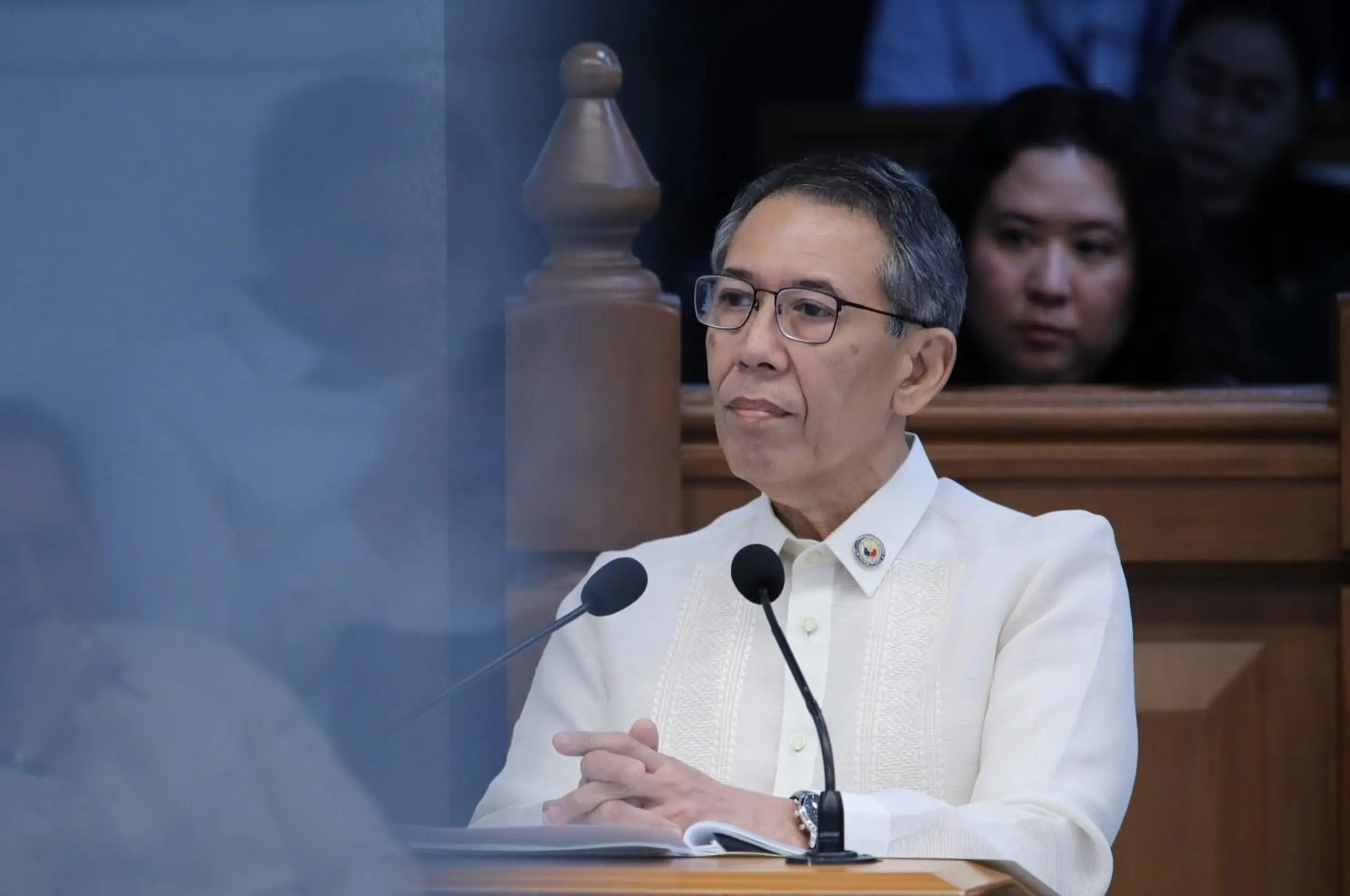
Akbayan Partylist Rep. Chel Diokno is taking on Artificial Intelligence (AI) with his latest proposed bill. The lawmaker filed House Bill 10362, or the National AI Governance Act, which aims to establish a national framework for AI use in the country. It is co-authored by Reps. Perci Cendaña, Dadah Ismula, and Kaka Bag-ao.
“Innovation and regulation are not incompatible. Responsible governance is necessary to ensure that AI technologies develop in a manner that strengthens democracy, public trust, labor rights, human dignity, and inclusive national development,” Diokno said in the explanatory note.
According to a nationwide study by Sprout Solutions, a local software company, 78 percent of Filipino employees across 13 various industries use AI in their daily work. The Philippine AI Report in 2025 further showed that over 92 percent of the organizations surveyed used AI in some capacity, with tools like ChatGPT reaching an 83 percent adoption rate. While some may argue that AI boosts productivity, concerns have arisen over its impact on a nation that is becoming increasingly dependent on the technology. AI misuse fueling misinformation with harmful deepfakes and AI-generated videos and images calls for the adoption of stricter ordinances.
How the AI bill can act as a safeguard
So how exactly does Diokno’s bill address this?
One of the provisions of the bill is that companies are obliged to give at least a six-month notice to their workers before implementing large-scale AI systems that may significantly affect their jobs. Employers would also have to discuss with labor groups and employees the system’s purpose and scope, the business processes it would affect, and how it could change work assignments. The Department of Labor and Employment, in coordination with relevant stakeholders, is also mandated to provide upskilling and reskilling opportunities, as well as job transition support to those displaced by AI automation.
The AI Bill also bars employers from relying solely on AI-generated outputs in employee evaluations or using AI systems to skirt existing labor laws. The bill ultimately seeks to give social protection to workers amid the growing use of artificial intelligence in the workplace by minimizing job displacement while ensuring that companies act fairly during automation changes.
Another major provision within the measure is the creation of the Artificial Intelligence Bill of Rights, which would give the people affected by AI systems or automated decision-making a set of protections, including the right to transparency, the right against discriminatory automated decisions, and the right to human review, to name a few.
There is also the right to the disclosure of synthetic media, which requires that any digital likeness be clearly labeled as AI-generated. Meanwhile, the right to be forgotten allows users to request the removal of their data through machine unlearning or model retraining.
The proposed bill also places stricter policies against the establishment of AI data centers. Agencies are required to consult with local communities that would be affected and ensure that their operations do not place excessive strain on the environment or the nation’s resources.
Diokno has been echoing related calls beyond the bill, particularly since President Ferdinand Marcos Jr. touted the creation of Pax Silica hubs in the country in his penultimate State of the Nation Address. “Tama bang minamadali ang Pax Silica? Kailangan muna ng tunay na konsultasyon sa mga lokal na komunidad, masusing pagsusuri sa epekto sa kalikasan, at kasiguraduhang hindi tataas ang presyo ng tubig at kuryente,” the lawmaker said in a Facebook post.
frequently asked questions
House Bill 10362, or the National AI Governance Act, is Rep. Chel Diokno’s proposed legal framework on the usage of AI in the country.
It aims to give social protection by minimizing job loss and making sure that companies act fairly during automation changes, give advance notice, and provide transition support.
The Artificial Intelligence Bill of Rights would give people affected by AI systems or automated decision-making a set of protections, including the right to transparency, the right against discriminatory automated decisions, and the right to human review, to name a few. It promotes transparency when AI systems interact with the public, highlights the importance of data privacy, and prevents discriminatory or harmful actions enabled by the tools.
It obliges companies to consult with local communities that would be affected by the establishment of AI facilities and ensure that their operations do not place excessive strain on the environment or the nation’s water and electricity resources.
AI misuse spreads through troll farms, harmful deepfakes, and AI-generated videos and images that intend to misinform the public.
Recommended Video
- In This Article:
- AI bill
- Chel Diokno
- National AI Governance Act