

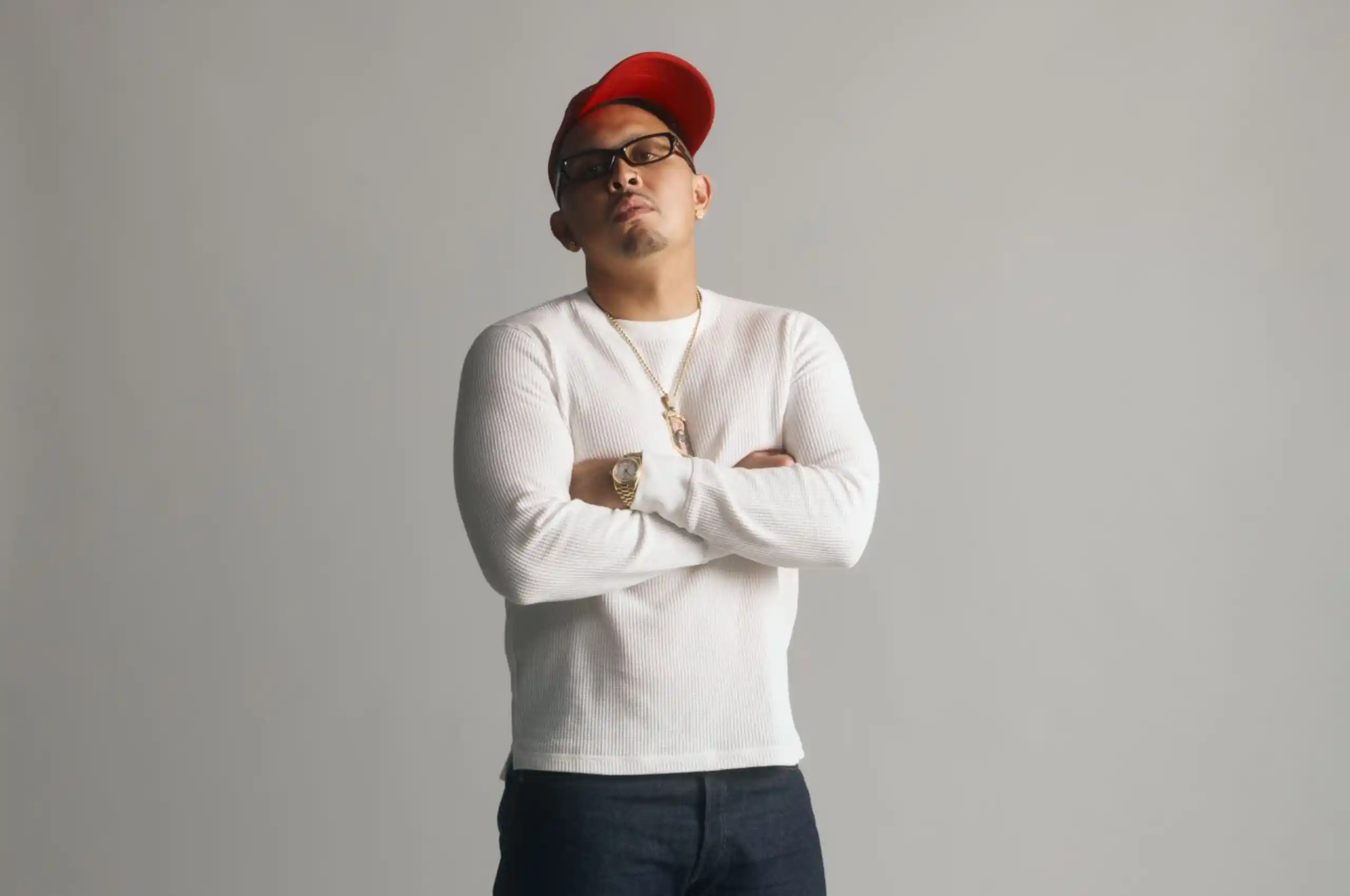
In the Bay Area, there lies a rich history of Filipino-American rappers and R&B artists fostered by the culture surrounding their hometowns, from rapper Ruby Ibarra, singer-songwriterSinger-SongwriterA musician who writes and performs their own songs, usually with just a guitar or piano. Singer-songwriters are valued for honest, personal storytelling, and many of the most beloved voicesGo to Singer-Songwriter Glossary H.E.R., and hip-hop artist and producer P-Lo. Born Paulo Rodriguez, P-Lo has been in the game for more than a decade. Since 2008, he has been one of the core members of legendary Bay Area hip-hop group HBK Gang alongside Iamsu!, Sage the Gemini, Kehlani, just to name a few. In 2012, P-Lo ventured into becoming a solo artist, releasing mixtapes online and several singles and albums over the years.
As a producerProducerThe person who shapes how a record sounds, from arranging and recording to guiding performances and making creative choices in the studio. A great producer can bring out the bestGo to Producer Glossary, P-Lo has made notable tracks for high-profile artists like Wiz Khalifa’s “Bout Me” and Yo Gotti’s “Act Right.” He has become a central figure in the post-hyphy sound in the California hip-hop scene with his full-length favorites such as his 2017 debut More Than Anything, 2018’s PRIME, and 2022’s STUNNA.
In time for the release of his latest album OUT OF THE BOX, P-Lo spoke to Rolling Stone Philippines about his growth in the Bay Area, the lessons he learned from producing for multiple artists, making beats for Drake’s ICEMAN, and what he hopes to become as a Filipino artist in the American hip-hopHip-HopA culture and genre built on rap, DJing, breakdancing, and graffiti, born in New York in the 1970s. Filipino hip-hop has grown into a powerful voice, with artists rapping inGo to Hip-Hop Glossary space.
The Bay Area has always had a distinct hip-hopHip-HopA culture and genre built on rap, DJing, breakdancing, and graffiti, born in New York in the 1970s. Filipino hip-hop has grown into a powerful voice, with artists rapping inGo to Hip-Hop Glossary identity and Fil-Ams have played a huge role contributing to it. Growing up in that environment, when did you realize that you were part of a much bigger cultural lineage?
Growing up in the Bay, there was such a rich history of Filipino-Americans making hip-hopHip-HopA culture and genre built on rap, DJing, breakdancing, and graffiti, born in New York in the 1970s. Filipino hip-hop has grown into a powerful voice, with artists rapping inGo to Hip-Hop Glossary and R&B, whether it was the Invisibl Skratch Picklz and their contributions to hip-hop. And then all the Pinoy, Pinay R&B groups that were in the late 1990s into the early 2000s. And just to be another iteration of that in another space, man, it really gave me a perspective of “Oh, this is something bigger than just myself.” And I realized a responsibility that I had to inspire the next generation to do the same and chase their dreams.
I’d like to think that you and HBK Gang were definitely pushing things forward, especially during the mid-2010s in the Bay Area. What was the most valuable lesson you learned from being in a collective or group of creatives like HBK?
I learned to just trust myself in my own creative choices, like being inspired by my friends and the people that I was with at the time. Just learning to trust myself and just really going for it. I’ve seen someone like Iamsu! come up and reach the top. I’ve seen someone like Sage The Gemini come from nothing and reach the top. I’ve seen someone like Kehlani come up from nothing. To reach the top, and just for them to always put themselves out there, and they put the work in to go for it. That was something that I always took. I was just like, “Man, you can just go for it, and you can do what you got to do.”
Were there moments where you felt overlooked, or did the Bay Area create a space where the Filipino-American was embraced from the very beginning?
I think the Bay Area always offered that just because we have such a large population of Filipinos in the Bay. Everybody in the Bay probably had a Filipino friend. If you grew up listening to hip-hop or whatever, you probably had a Filipino friend growing up. Something I felt was always special about the Bay is that it always offered that space. And I feel like the Bay Area always just embraced new ideas. And I think being just a Filipino rapper, on the outside looking in, it is a new idea to the spirit of music. Somewhere in the Bay is where new things come from and new ideas come from. So, like, “Why couldn’t it be me?” That’s kind of what I always thought about.
When you’ve spent more than a decade building this reputation of both a producerProducerThe person who shapes how a record sounds, from arranging and recording to guiding performances and making creative choices in the studio. A great producer can bring out the bestGo to Producer Glossary and a rapper, did you need to separate two roles: one for rapping and the other for producing? And was there a possibility to balance both as time went on?
Over time, it became more natural. I feel like when I first really came into the game, my first entry point was producing. I was able to get a lot more notoriety early on from producing. Just because I felt like I hadn’t necessarily found my voice yet and what I wanted to put out into the world. But I was always writing down raps and writing songs. I just knew at some point I wanted to be able to just do it all.
There’s a careful selection of collaborators in each of your albums. For instance, in 2017 for More Than Anything, there’s G-Eazy, Cool John, and you had Bay Area legend E-40. What is your process of picking a collaborator for a specific album?
I’m thinking of it from a producer standpoint. I’ll always attack a song from a producer standpoint first. For instance, Kreayshawn and the texture of her voice on the song “DUMBLR,” I really like her voice. Her voice is an instrument on that song. So, just figuring out what different textures I could add to each song to give them their own unique flavor is something that I was hella intentional on this project. I feel like I was more intentional on this project than any other project.
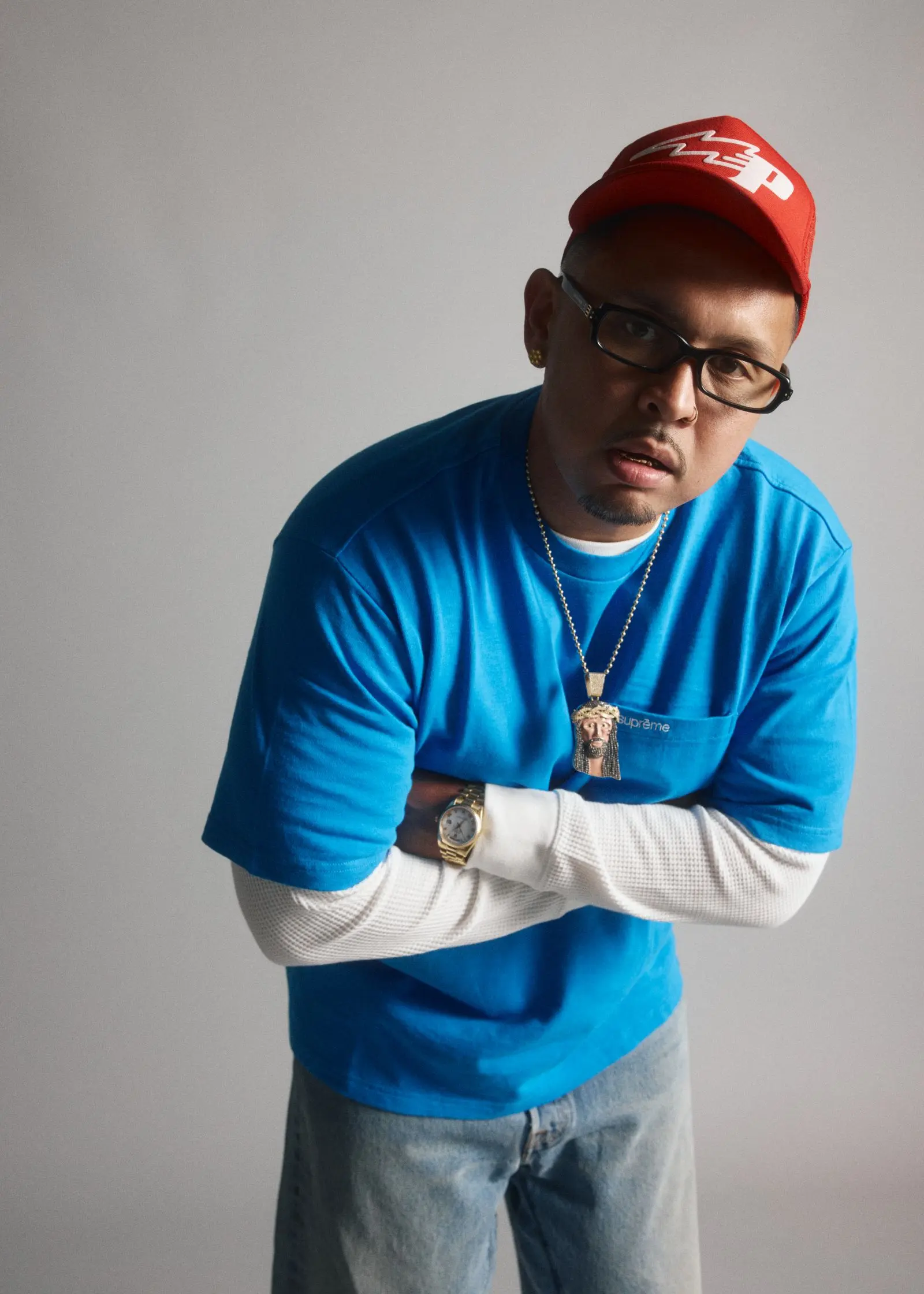
You recently joined the list of producers on Drake’s Iceman, specifically the track “2 Hard 4 The Radio.” How did that collaboration come together?
I had my homie Karri with me the entire time. He really is the one who helped put the records together he was working on. He’s signed to Chubbs’ label. So, you know, he works with Drake, and Chubbs works with Drake closely. And Drake had brought Karri in to work on some other stuff. He was like, “Yo, I’m trying to do something. I want to do a Bay record. Could you get some beats from P-Lo? Could we help put something together?” That’s pretty much how everything came, or at least the opportunity came from there. We were just sending hella beats over. And then nothing really stuck. And I was driving from L.A. to the Bay, and that’s like a six-hour drive. And I’m just driving, and I get a text like, “Hey, Drake really likes this sample. Could you throw some drums on it?” So I really had to, like, pull the car over. Me and my friends switched seats, and I was like, “Yo, bro, I got to make this beat right now.” I feel like it was something that spoke to me. I was like, “Yo, if you don’t do this right now, it’s not going to happen. You got to do it right now.” So shout out to Karri, shout out to Ben10k, shout out to OZ, shout out to all the guys that helped put it together.
What can you tell younger Filipino-American musicians about their music and their history?
In general, it is always trying to find something unique that is true to you, something that only you could do. That’s something that I always encourage people to look for. Find something that’s innately like you and whatever, and everything’s different for everyone. But also I think just finding something special, whether that’s style of music, some type of effects or trying to find something that’s unique, and trusting that if you’re doing something different, it’s good. It’s okay to be different, you know?
Frequently Asked Questions
P-Lo’s latest album is titled OUT OF THE BOX. It was released on August 14, 2026.
P-Lo has produced the track “2 Hard 4 The Radio” on Drake’s Iceman
P-Lo was a core member of the legendary Bay Area hip-hop collective HBK Gang.
P-Lo has produced for high-profile tracks including Wiz Khalifa’s “Bout Me” and Yo Gotti’s “Act Right.”
P-Lo’s solo albums include More Than Anything (2017), PRIME (2018), and STUNNA (2022), among others.
Recommended Video