

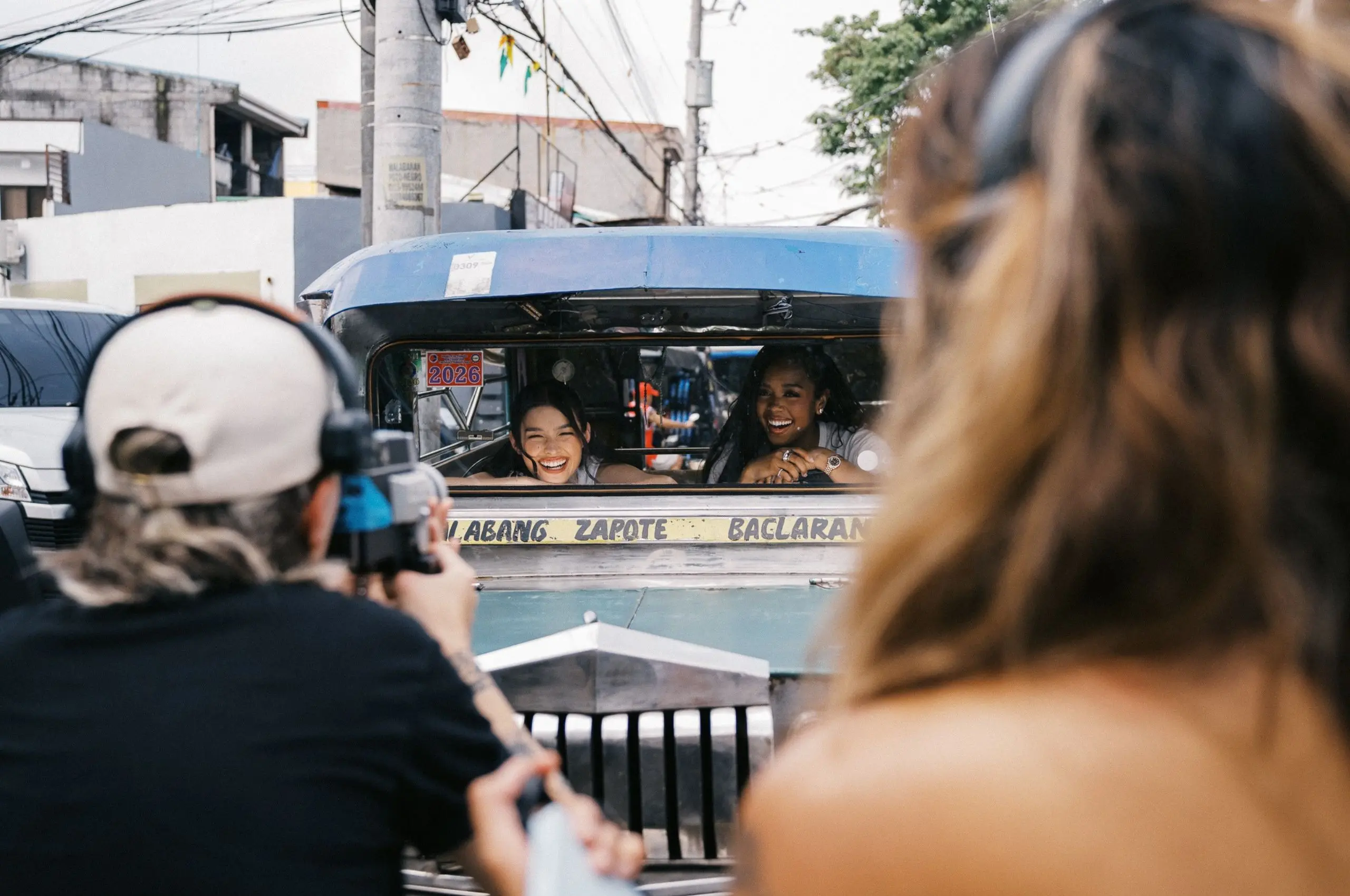
Ahead of the Forgotten Island’s worldwide theatrical release, H.E.R. and Liza Soberano dropped their original song “BRB” (a play on a recurring motif in the film) with a music videoMusic VideoA short film made to accompany a song, combining visuals, performance, and storytelling to reinforce the music. Since the days of television, music videos have been a space for creativeGo to Music Video Glossary, in which the two roam Manila streets to buy lakatan, play basketball, and sing karaoke. “The intention was to make a video that feels like a memory rather than a postcard,” music video director Bianca Catbagan tells Rolling Stone Philippines.
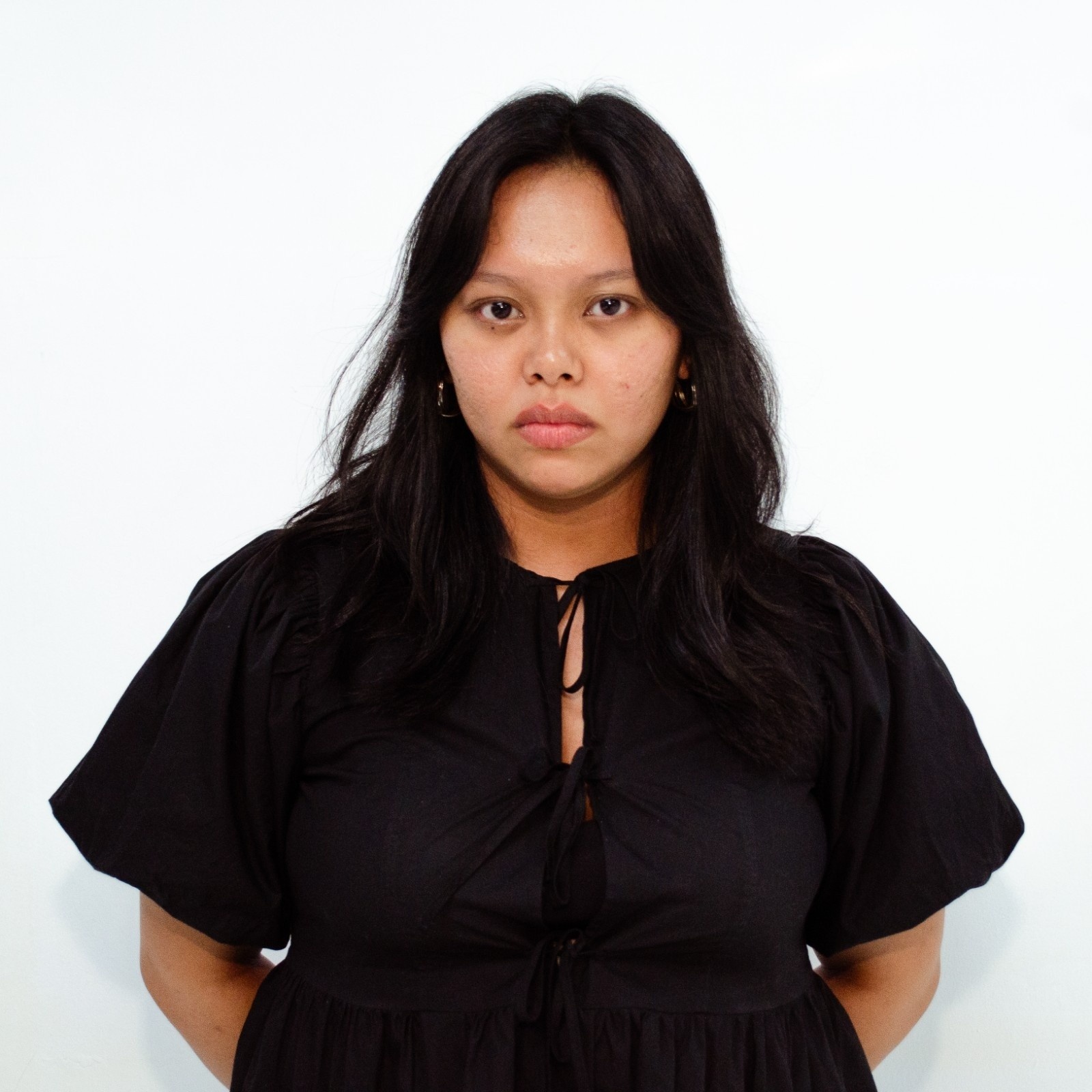
Catbagan, born and raised in the Philippines, has worked as a photographer and filmmaker in the U.S. for over a decade now, and was selected in March for the 2027 cohort of the American Film Institute (AFI) Directing Workshop for Women+ (DWW+). The year-long program supports emerging filmmakers with hands-on instruction throughout the production of their own short films. Maya Angelou, Ellen Burstyn, and CODA director Siân Heder are only some of the notable DWW+ alums.
While working on her short film Royal Blood — a queer reimagining of Jose Rizal’s Maria Clara — for the workshop, Catbagan was also enlisted to co-direct the “BRB” music video, the production of which she described as a “whirlwind.”
“I spent the days working with H.E.R. and Universal Music in order to figure out what we need and the nights working with my production team in Manila, Digitank Studios, to clarify the plan,” she says. “My favorite thing about the whole process was that I was able to shoot back home again.”
Catbagan also says that being an immigrant filmmaker in the U.S. is difficult, but finding supportive Filipino communities overseas has made it easier. “Being Filipino has opened doors for me because my fellow Filipinos hold them open.”
Here, Catbagan takes Rolling Stone Philippines behind the scenes of the “BRB” music videoMusic VideoA short film made to accompany a song, combining visuals, performance, and storytelling to reinforce the music. Since the days of television, music videos have been a space for creativeGo to Music Video Glossary and talks about what working with other Filipinos in the American film industry means for her.
How did you get involved in this project for Forgotten Island?
I have been taking photos for H.E.R. the last few months and she knows I am both a photographer and director, but we haven’t worked together in film production. So it came as a surprise when she told me about this music videoMusic VideoA short film made to accompany a song, combining visuals, performance, and storytelling to reinforce the music. Since the days of television, music videos have been a space for creativeGo to Music Video Glossary. She wanted to shoot in the Philippines and time it with the Forgotten Island press tour, and she asked if I could co-direct this music video with her. I was floored. She knew I grew up in Manila, but she really trusted me with this video only having known each other for a few months. She was so open during the production process. She was going to be walking around Manila under the sun, and there were threats of heavy rain too, but she was so down. And it was all fun for her, making it fun for the rest of the production team, too. It’s great when your artist emanates openness and collaboration; it trickles down to every person on the crew.
The directors, Joel Crawford and Januel Mercado, also came to our shoot and brought their families from the States. It was a really special time. They had been working on this film for six years and are the kindest directors. I loved being a small part of this historic film.
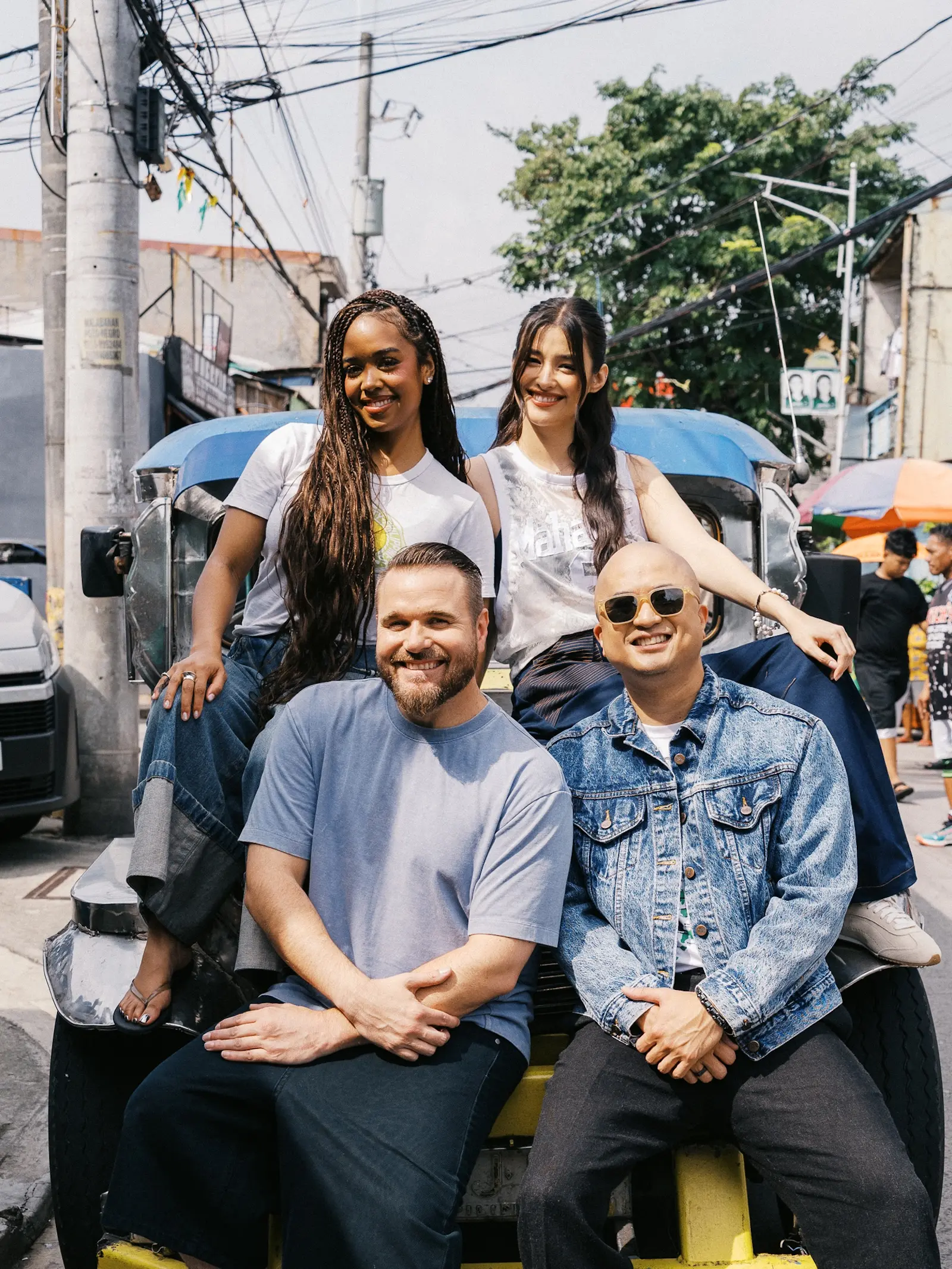
I’ve seen Filipinos on social media praise the music video for its more nostalgic, lived-in representation of the country, rather than an exoticized one. What did you and H.E.R., as your co-director, want the music video to look and feel like?
H.E.R. really wanted to shoot this video in the Philippines, and the intention was to make a video that feels like a memory rather than a postcard. Forgotten Island is a film about memory and remembering after all, and if you ask me what home is, it’s Manila streets. The drive, the food, the faces of people, the fun nights out, and the warm family reunions at home. It’s in the small details rather than picturesque locations: titas playing mahjong, a dinner spread, lolo and lola, busy telephone wires, a photo of Jesus. Of course, a lot of these are also mirrored scenes from Forgotten Island, and she and Liza Soberano are best friends in the film. So both of them were walking around Manila, as if they were also saying goodbye to the city. We captured that bittersweet sentiment through mixed media using Super 8, a camcorder, and cinema cameras. It brought a collage-like feeling to the video. The moments we cut into the video also weren’t so picture-perfect; they’re in-between moments, and it feels more real and lived-in that way.
Can you tell me more about the work that went into making the video?
There was a lot of coordination that went into it. I worked in film and commercial production in Manila before I left for the States, so I am lucky that my friends really came through for me on such a short timeline.
Producing a music video in Manila when you’re in LA is a real feat. I spent the days working with H.E.R. and Universal Music in order to figure out what we need and the nights working with my production team in Manila, Digitank Studios, to clarify the plan. The days leading up to the shoot were a whirlwind! We flew out on Thursday morning and arrived in Manila late Friday night, so we lost a day flying in. The next morning, we met H.E.R. for a location check and really hit the ground running. We had two shoot days, one with H.E.R. and Liza, another with the family having brunch at home. I rushed back to LA to get the video edited, and my post-production team really showed up.
My favorite thing about the whole process was that I was able to shoot back home again, bringing Filipino and Filipino-American artists together. The team on Forgotten Island has made a great effort to bring artists from the Philippines — like Liza, Lea Salonga, Dolly de Leon, BINI — into the film, and I really felt that in the process of making the music videoMusic VideoA short film made to accompany a song, combining visuals, performance, and storytelling to reinforce the music. Since the days of television, music videos have been a space for creativeGo to Music Video Glossary. There’s a warmth and a joy that I witnessed, and it was really rewarding to have been a part of all of it.
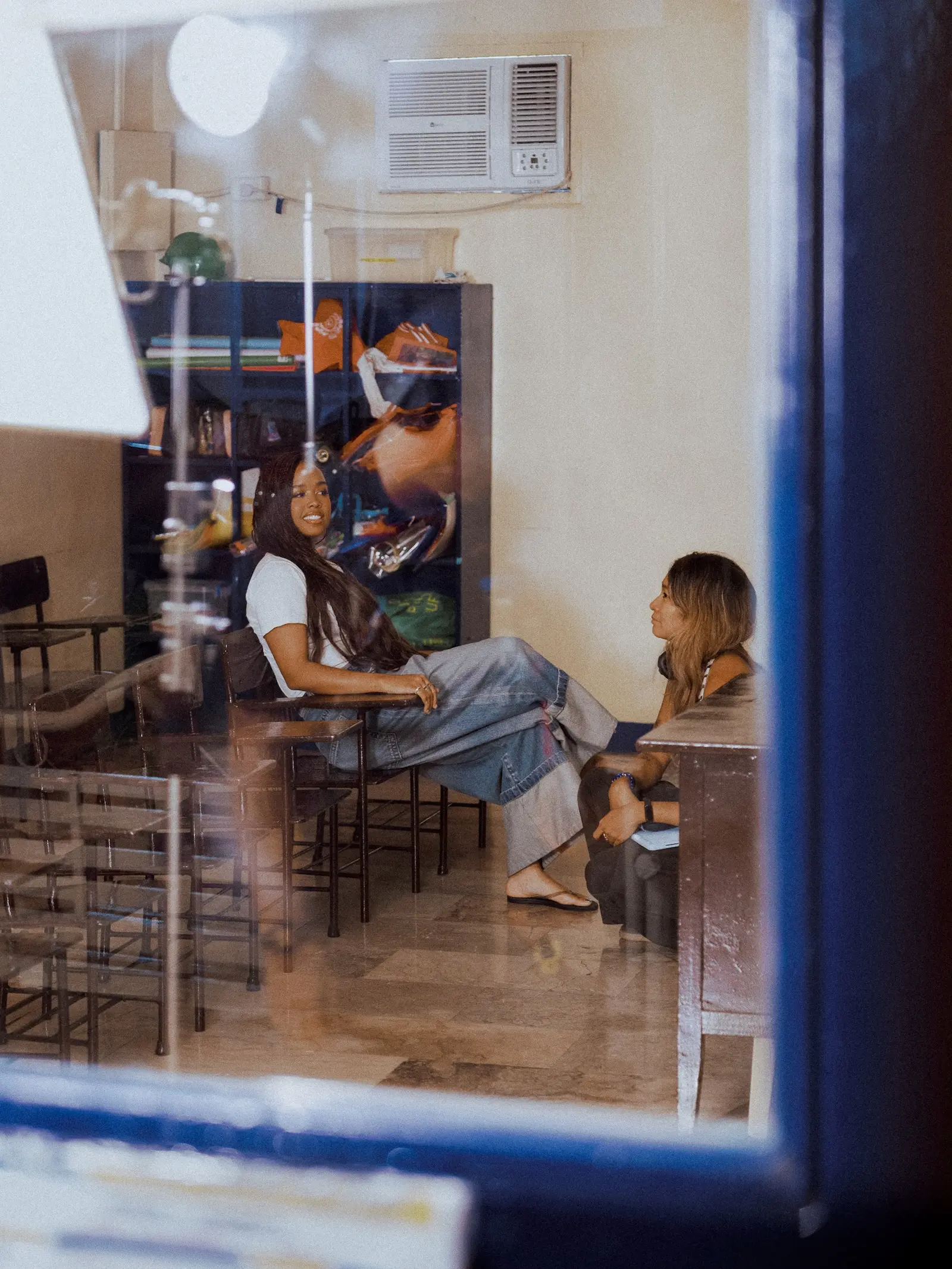
Aside from the “BRB” music video, you’re currently working on a short film, Royal Blood, as part of the AFI Directing Workshop for Women+. What have you learned about the differences between working independently and working with a company as big as Universal?
I found that working with Universal was easy. I attribute this to the excitement everyone had about a Filipino film, and the openness of producers to say that they are not the “experts.” They really trusted me and H.E.R. to fulfill the vision and guided us with a light hand.
That said, there are many people who need to look at a music video with a studio before it can be released to the world. I am also in post-production for my short film, Royal Blood, and I am fully in charge of that schedule. At the end of the day, I am the only person who needs to “approve” the short, and I can hone my instincts in that process. When you’re working with more people, there’s a chance that too many cooks in the kitchen can dilute the vision. It takes real focus and discernment in the process, so that the vision stays clear.
What are the challenges of being an immigrant filmmaker? What do projects as big as “BRB” and Forgotten Island mean to you?
I’ve been living in the States for more than a decade now and I think that it’s never easy to move to a different country to work. We all have family abroad, and the hustle and struggle are no joke. But to be Filipino means we have family wherever we go. I got to work with H.E.R. because I am Filipino. That’s the connection we had, and being Filipino has opened doors for me because my fellow Filipinos hold them open.
I am floored that I got to be a part of a historic film like Forgotten Island. I got to go home and work with an Oscar- and Grammy-winning artist on a music video that feels like home to her. I feel so lucky and grateful to have been part of it.
Frequently Asked Questions
The “BRB” music video was co-directed by H.E.R. and Filipino filmmaker Bianca Catbagan, who grew up in Manila and has worked as a photographer and filmmaker in the U.S. for over a decade. She had photographed H.E.R. for several months beforehand.
“BRB” is an original song by H.E.R. and Liza Soberano released ahead of Forgotten Island’s worldwide theatrical release. The video follows the two around Manila buying lakatan, playing basketball, and singing karaoke, framed as a memory of home rather than a tourist postcard.
The “BRB” video combines Super 8 film, a camcorder, and cinema cameras to create a collage-like look. Co-director Bianca Catbagan says the mixed-media approach, along with in-between moments rather than picture-perfect shots, was meant to make the video feel more real and lived-in.
Forgotten Island is a film about memory and remembering, directed by Joel Crawford and Januel Mercado, who spent six years on it. Filipino artists involved include Liza Soberano, Lea Salonga, Dolly de Leon, and BINI; H.E.R. and Soberano are best friends in the film.
Royal Blood is Catbagan’s short film, a queer reimagining of Jose Rizal’s Maria Clara, made through the AFI Directing Workshop for Women+. The year-long program gives emerging filmmakers hands-on instruction, and notable alums include Maya Angelou, Ellen Burstyn, and CODA director Siân Heder.
Recommended Video