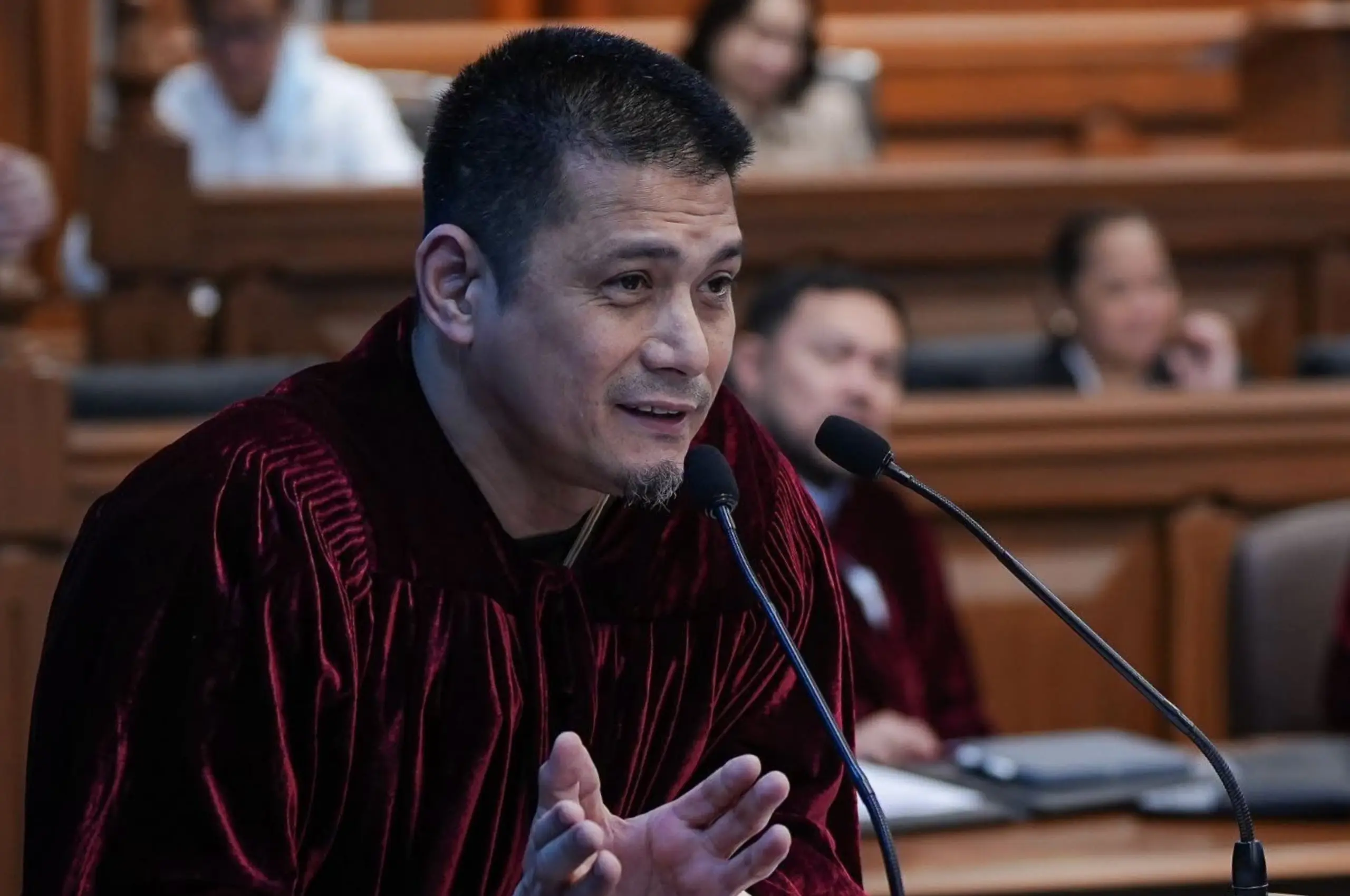


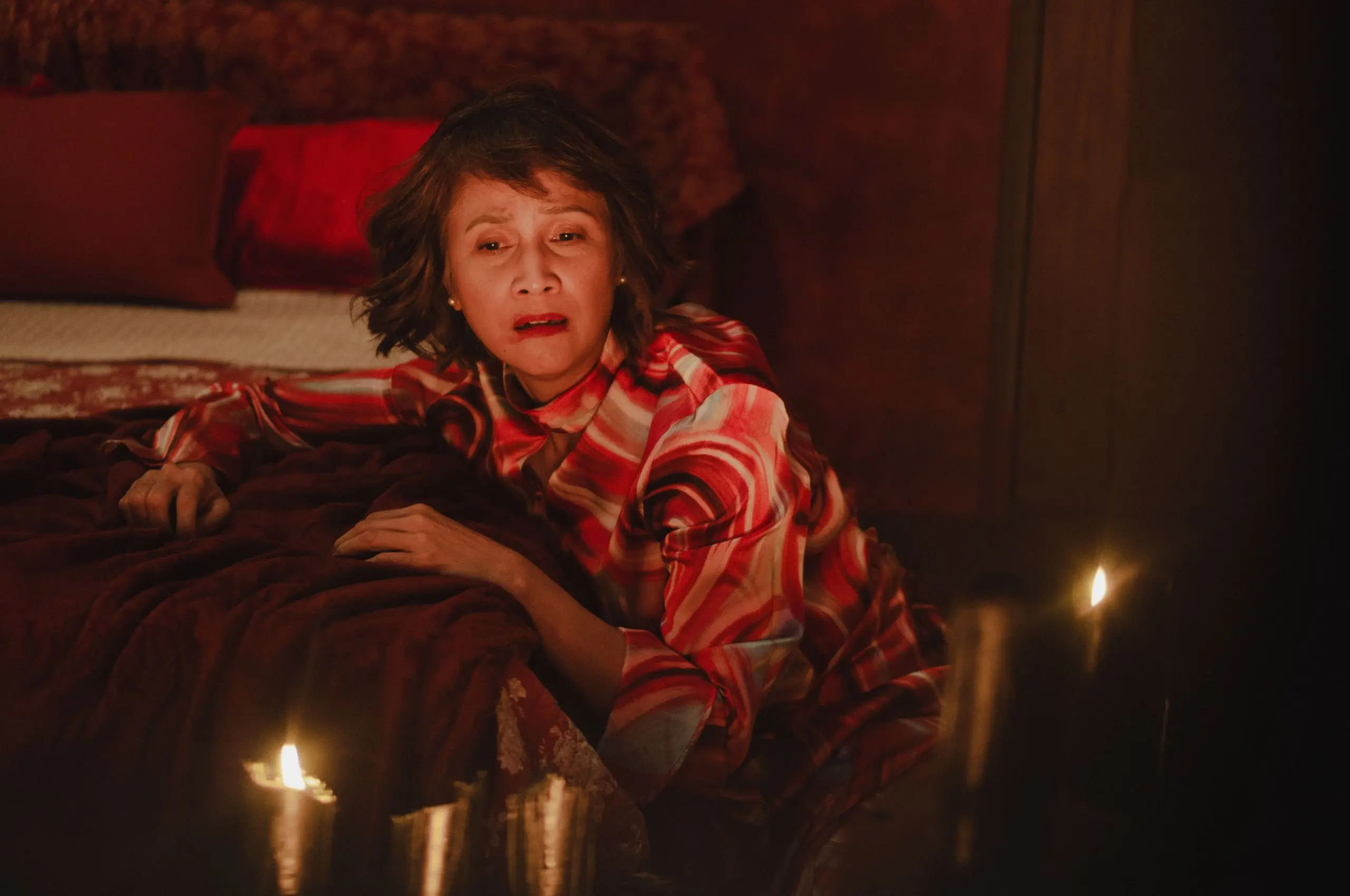
A week after Mag-iina swept the 22nd Cinemalaya Independent Film Festival, director Giancarlo Abrahan now hopes to give the trippy horror drama an extended run in cinemas.
Abrahan is no stranger to winning at Cinemalaya, having bagged Best Director and Best Screenplay in 2014 for Dagitab, which also earned Eula Valdez the award for Best Actress. This year, Abrahan’s project won six awards: Best Film in the full-length category, Best Direction, Best Original Music Score, Best Production Design, Best Screenplay for Guelan Varela-Luarca, and Best Supporting Actor for Lucas Andalio, the last of which is shared with Hand of God’s KD Omalin.
Mag-iina has been widely praised, emerging as a must-watch for its unconventional take on Filipino horror and the commentaries on generational and national trauma underpinning the film. But it’s also been met with confusion and — as Abrahan pointed out in his acceptance speech — disgust. “I don’t think the deliberate gesture is to alienate the audience,” he tells Rolling Stone Philippines. “I think it’s really just [about] listening to what the material wants itself to be.”
The film is adapted from Corridors, a play written by Varela-Luarca, who is Abrahan’s longtime friend and a fellow dramaturg. The two pursued their graduate studies in New York at the same time and had several conversations about how they’d adapt Corridors, which was originally written for an English-speaking audience, into a film for a Filipino audience.
“I was even asking if we could do long monologues of the characters just looking into the camera,” Abrahan says. “Obviously, we did not do that. But there were many explorations of how to bring in a language, other than what is just cinematic, to create something creepy but also familiar.”
A powerhouse cast also charges Mag-iina, with Janine Gutierrez, Agot Isidro, Cherry Pie Picache, Jackie Lou Blanco, Ness Roque, and Andalio playing the traumatized and dysfunctional members of the Abreu household.
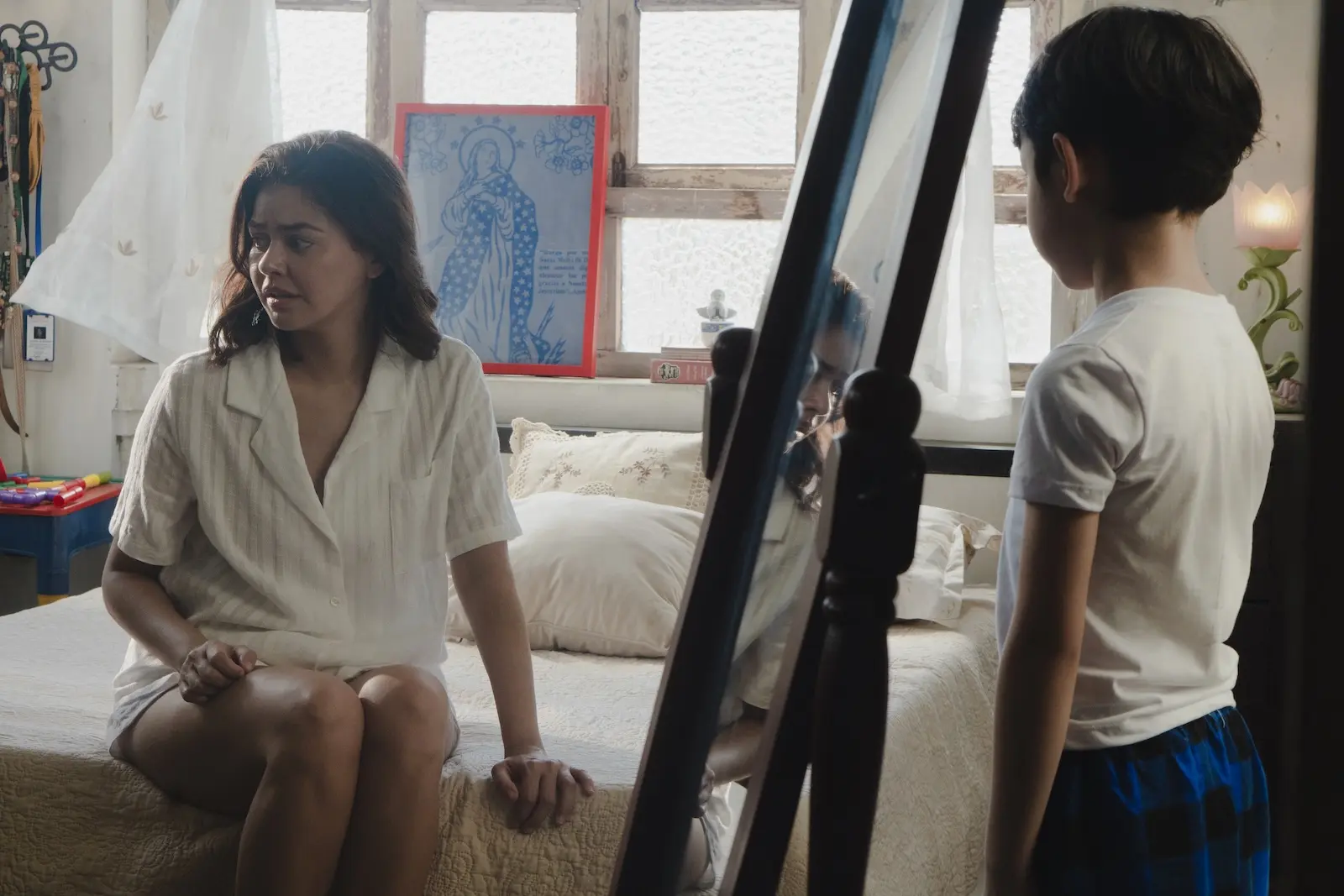
“I really think that casting is [the] majority of the work when it comes to acting,” Abrahan says. “It’s a pleasure to have such open actors who are just game, so ready to dive into the material and look at it from many different perspectives and try different things with roles they’ve never done before.”
In this interview with Rolling Stone Philippines, Abrahan talks more about working with the cast of Mag-iina, exploring theatrical and cinematic languages, and making an “un-Cinemalaya” film.
It’s not your first time winning awards sa Cinemalaya because you had Dagitab back in 2014. How do you feel winning this time around?
Impostor syndrome never leaves you as an artist, I think. Any form of validation, not just from juries but from audiences, always assures that you’re doing something valuable and important. Even if it’s not the most important thing, awards help you be more confident in putting out something, especially like Mag-iina, which to many audiences is a strange film, a film that’s not easy to digest.
But I think it’s important for me now because I want a longer life for the film. And it really encourages us as producers to find a way to make this film available to a larger audience. The award arrives as that nudge or push to search for wider distribution. This should not be the end-all. That’s how I feel right now.
Having sat with winning two days after [the awards night], the idea that’s sticking with me now is that I’m glad we have this award because we have more reason to keep the conversation going, and it gives us more reason to move forward with the film and not keep it within Cinemalaya.
“I know that it’s love-or-hate, and that’s telling of how difficult it is to place the film. That, to me, is where artistic excitement lies. When there’s no sense of danger, are you doing it right?”
Can you paint a picture of what making a film for Cinemalaya was like back in 2014, and what it was like this time around?
2014’s edition had a much shorter timeline than this year. Cinemalaya is evolving. [Back then,] you submit around September or October, then you’ll hear from Cinemalaya to be interviewed around November or December. You submit a screenplay after that, and then saka pa lang sila pipili [ng mga screenplays] around January or February. The festival was also held in August. And then eventually there was really clamor for a longer timeline. So nangyari ‘yung one year na in-a-announce [ang susunod na festival] during the [current edition of the] festival.
Dati, six months lang to make the film. So hindi ako alien to that experience. My first film was with Cinemalaya and in more dire conditions. We only had P600,000 for a single grant e, but also different economic and industry conditions ‘yung time na ‘yun.
Guelan Varela-Luarca directed the stage adaptation of Dagitab and Mag-iina is a film adaptation of his play, Corridors. What was the conversation like between you guys for making Mag-iina?
When you’re friends, it’s not just one conversation that sort of decides that. It’s a lot of different conversations, some of it happening even back when we were still in New York. We both did grad school in New York, Guelan for playwriting, I did one for contemporary theater and performance. I remember submitting the idea of Corridors sa isang grant somewhere else, looking for validation na parang “Is this something worth doing?” even before we submitted to Cinemalaya.
I was a witness to many different iterations of the script. When it was read for [Varela-Luarca’s] staged reading in New York as part of his thesis presentation, I saw excerpts of it being read. We also had a staged reading with CAST PH earlier this year. So, we’ve been looking at the film, and the realization is [that] it’s so architectural. You have to do it with a house. Much of how the film was transformed was affected by the actual house. Us going there together, to Quezon [province] — two people roaming this huge mansion — really defined what this film would finally look like.
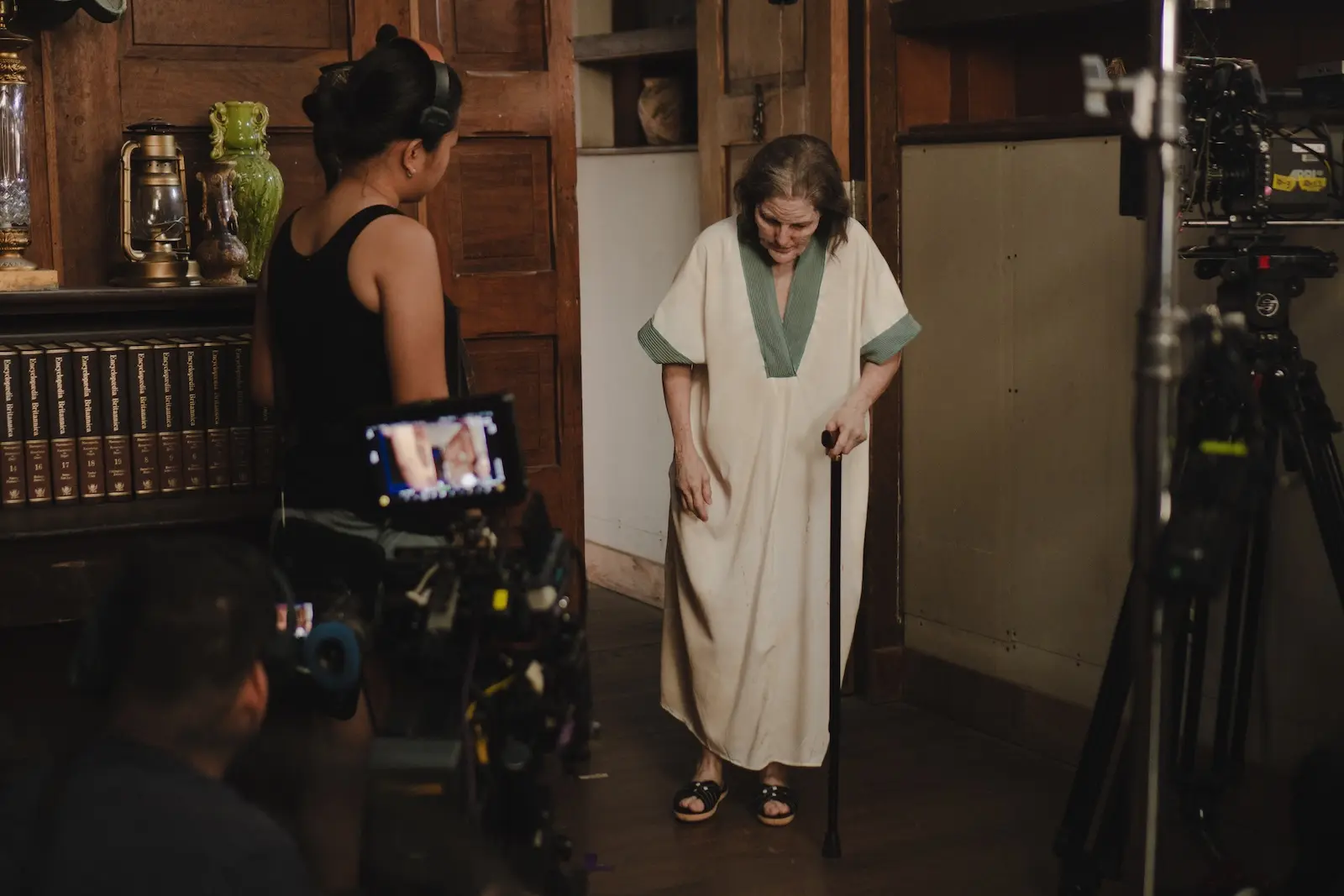
There were also moments when I wanted to do something else. I was even asking if we could do long monologues of the characters just looking into the camera. Obviously, we did not do that. But there were many explorations of how to bring in a language, other than what is just cinematic, to create something creepy but also familiar.
There’s also a thing about language. It was written all in English. But now that we can code-switch, now that we can use Spanish, we really explored [language]. [Varela-Luarca] would suggest more Spanish; I would suggest less of it. He would be playing with code-switching; I would be playing with code-switching differently. Because we’re both writers and translators, we’re very interested in how language shapes performance.
Sobrang mother convention ng cast mo. How did you get Janine Gutierrez, Cherry Pie Picache, Agot Isidro, Jackie Lou Blanco, and Ness Roque on board? And what was it like working with them?
I really think that casting is the majority of the work when it comes to the acting, and I’m really, really just so honored that they all said yes. I am a huge fan of all these great actors. Si Ness Roque, napanood na natin ‘yan sa Last Supper No. 3. She did this terrific performance in [Raya Martin’s] How to Disappear Completely, and I thought her eyes were perfect. Agot Isidro, we worked together in Scene Change dahil sa Dagitab. So that was an easy decision; some people, you just want to work with them.
Si Miss Pie [Picache], we had not worked before. Sobrang riot, and she brought so much to the set. Talagang she asks all these questions, keeps everything light, instead of us spiraling into the darkness of this family. She’s such a breath of fresh air.
Si Miss Jackie Lou Blanco, fan ako noong bata ako, noong napanood ko siya sa Magic Temple. And I think ‘yung parasocial relationship mo with certain people affects how you see them, so mayroon akong ganoong impression sa kanya. It was so exciting to bring her what I think is another indelible character, something as ravishing and menacing as Magic Temple’s Ravenal, in Doña Angela.
Janine Gutierrez naman, I was so excited, kasi we first met in New York. So when I was thinking about this film, gusto kong maka-cast ng tao na nakakita sa akin when I was there and bringing that trauma of coming home. It’s a pleasure to have such open actors who are just game, so ready to dive into the material and look at it from many different perspectives and try different things with roles they’ve never done before.
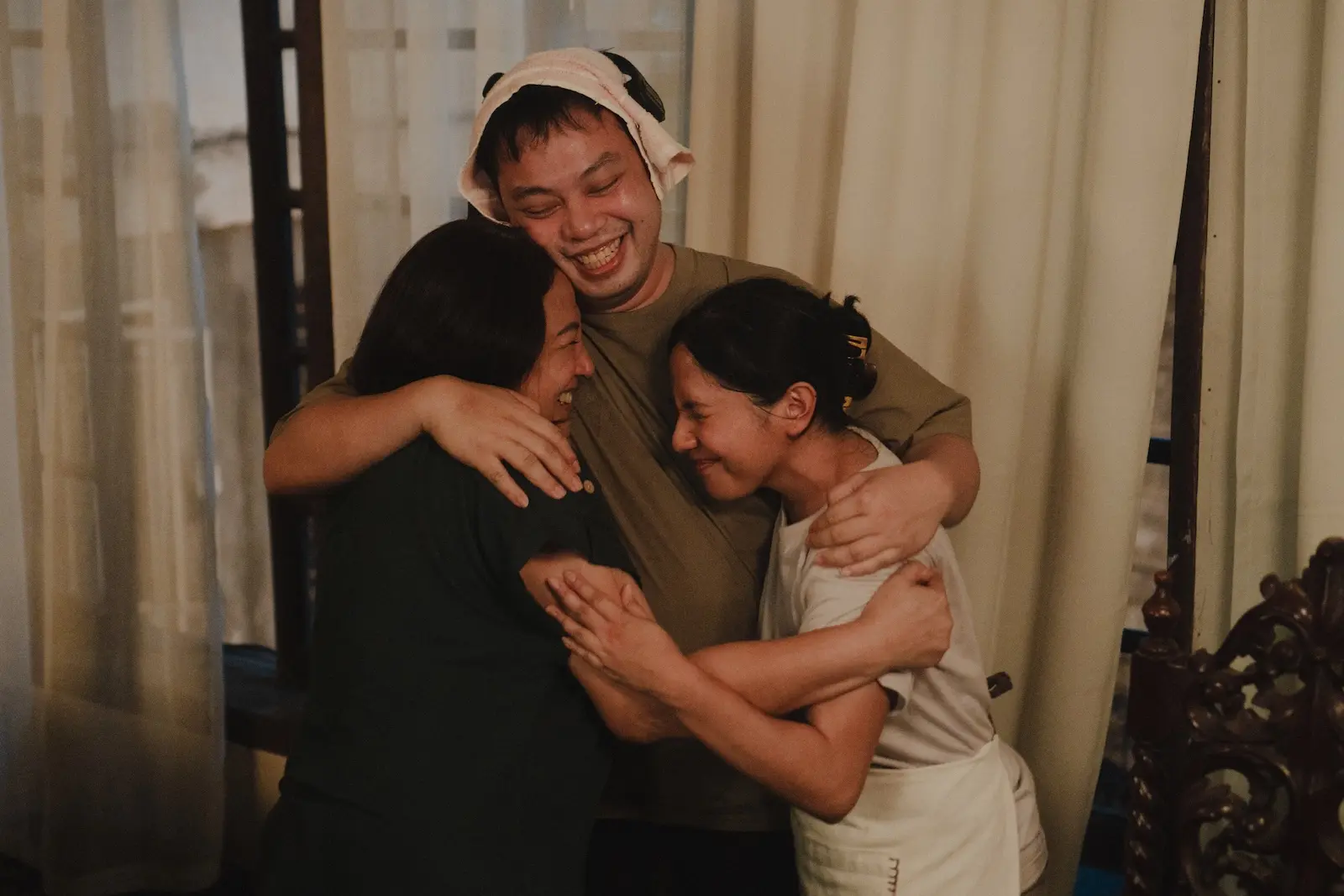
The film has received a lot of praise, but some audiences found it weird or confusing. As a filmmaker, what is the value of making something that the audience has to meet halfway, or of making something that people might not understand or appreciate immediately?
As an artist, I always try to explore ways that are both familiar and unfamiliar. I am a teacher, and the only way we can discuss things that are out of the box will always be in conversation with how we are already familiar with things. Even my first film was met with confusion. A lot of people accused it of being masturbatory, boring, navel-gazing, walang nangyayari. And when I think about it now, I don’t think the deliberate gesture is to alienate the audience.
‘Pag naglalabas ka ng kwento, gusto mong makita what is unique to it. I think it’s really just [about] listening to what the material wants itself to be. But it’s also about challenging what indie looks like. I am familiar with the landscape, specifically with Cinemalaya. As a screenwriter, I’ve done a film about migrant workers in Israel in 2013. Dagitab is medyo magical realist naman.
“It’s a pleasure to have such open actors who are just game, so ready to dive into the material and look at it from many different perspectives and try different things with roles they’ve never done before.”
I really wanted to come into Cinemalaya and deliver a film that’s very un-Cinemalaya. I wanted to shake our notions of what indie is, what indie could look like, and how we do indies. Maybe we can do genre films as well. We can bring in genre and make it talk about larger horrors. Maybe we can talk about how horrible this upper echelon of society could be.
May mga ganon talaga kaming nilalaro, at ang sarap-sarap niyang laruin with people who are just game to do it. I’m so lucky to be supported by people who, without fully understanding the vision, just jump into making this strange, hard-to-define film. Even now, I find it difficult to market the film, because what is it really?
I’m glad there are people on Letterboxd who both appreciate Mag-iina’s difference and also pan it. I know that it’s love-or-hate, and that’s telling of how difficult it is to place the film. That, to me, is where artistic excitement lies. When there’s no sense of danger, are you doing it right? Why spend so much money and all this effort trying to do something that’s been done before?
Frequently Asked Questions
Giancarlo Abrahan is a Filipino filmmaker and dramaturg who won Best Director and Best Screenplay at the 2014 Cinemalaya for Dagitab. His latest film, Mag-iina, earned six awards at the 22nd Cinemalaya Independent Film Festival, including Best Film in the full-length category.
Mag-iina is adapted from Corridors, a play by Guelan Varela-Luarca, Abrahan’s longtime friend and fellow dramaturg. The two developed the adaptation together, turning an English-language stage work into a Filipino-language horror drama shot inside a real Quezon province mansion.
Mag-iina blends trippy horror with themes of political and generational trauma. Abrahan describes audience reception as split between praise and disgust rather than universal acclaim.
Mag-iina stars Janine Gutierrez, Agot Isidro, Cherry Pie Picache, Jackie Lou Blanco, Ness Roque, and Lucas Andalio as members of the traumatized household. Andalio’s performance won Best Supporting Actor, an award shared with Hand of God‘s KD Omalin.
Mag-iina won six awards at the 22nd Cinemalaya Independent Film Festival: Best Film, Best Direction, Best Original Music Score, Best Production Design, Best Screenplay for Guelan Varela-Luarca, and Best Supporting Actor for Lucas Andalio.
Recommended Video