

This review contains spoilers for The Social Reckoning.
I rarely ever leave a screening feeling emotionally or existentially impacted these days. Sure, Forgotten Island made me sob (embarrassingly, in front of children), and Resident Evil was a good time. But after watching Aaron Sorkin’s The Social Reckoning, I found myself dealing with a visceral and unshakeable dread.
For a couple of days, I had to think about whether that dread can be attributed to effective storytelling or just the real-world fact that Facebook has become an inevitable evil. As of this writing, I lean towards the latter.
“We’re post-government,” comms head Teddy (Billy Magnussen) tells investigative journalist Jeff Horwitz (Jeremy Allen White) following the publication of The Wall Street Journal’s series of reports on Facebook.
Published in 2021, WSJ’s aptly-called “Facebook Files” found that Facebook exempted several high-profile users from platform rules, downplayed reports of Instagram worsening teen girls’ body image issues, and amplified ragebait and extremist posts to drive user engagement, among many other troubling findings. The Social Reckoning dramatizes the events leading up to publication, with Horwitz and former Facebook employee Frances Haugen (Mikey Madison) at the center of the story.
Plot Summary
We enter the film’s world, specifically Silicon Valley, through Horwitz, a political reporter who’s so green with tech, he doesn’t know how to use a GPS. When he meets Haugen for the first time, he asks her to explain all the words she’s throwing around. But he also gets the hang of the tech jargon as the investigation progresses, in the process, becoming more familiar with the ways social media shapes politics in the real world.
Haugen, on the other hand, works in Facebook’s civic integrity team, a unit that tackles the platform’s issues with political disinformationDisinformationFalse information created and spread on purpose to mislead people, often to sway opinion or win political advantage. In the Philippines, it travels fast through social media and troll networks,Go to Disinformation Glossary and inciting violence. The team’s job is to flag such issues and file reports for Facebook to address. Despite the platform’s myriad issues, Haugen believes Facebook is still capable of doing good. So when she contacts Horwitz through an encrypted email, it’s to “fix” the company, not destroy it.
At first, she’s hesitant to disclose her identity and give the WSJ’s stories credibility, opting instead to break non-disclosure and provide internal documents under a pseudonym. But she becomes disillusioned and, in the end, faces the U.S. Senate’s Sub-Committee on Consumer Protection, Product Safety, and Data Security in a hearing, which was held in October 2021 in response to the WSJ reports.
The film goes on to show how a declining user base leads Facebook to develop an algorithm where alt-right conspiracy theorists’ posts go unchecked because they drive engagement. In the name of free speech, the platform welcomes sentiment that the 2020 U.S. elections were rigged against Donald Trump, the spread of which culminates in the January 6 Capitol attack in 2021.
The Social Reckoning ends with an intense back-and-forth between Haugen’s October hearing and a scene in the Facebook headquarters several months before, where Mark Zuckerberg (Jeremy Strong) and his staff watch the riot unfold through posts and live videos on the website.
A Strong Cast, But Not So Strong Writing

The Social Reckoning makes a good case for casting actors in biographical dramas even if they don’t look like their real-life counterparts. While White is a convincing enough Horwitz, Madison and Strong don’t quite resemble Haugen and Zuckerberg, but the two also give the film’s strongest performances.
You can rely on White to deliver a dramatic performance with a few comedic beats, but his Horwitz, though accessible and easy to empathize with, isn’t as compelling as past performances, such as in Shameless and The Bear.
Madison, meanwhile, plays Haugen with a restraint previously unseen in Scream and Anora (for which she won the Oscar for Best Actress in 2024). I’d forgotten what Haugen looked like when I watched the film, but Madison managed to completely disappear into the role anyway, intelligent but antsy, always tugging on her arm warmers that help her deal with the side effects of celiac disease (“I thought it was a style choice,” White’s Horwitz says).
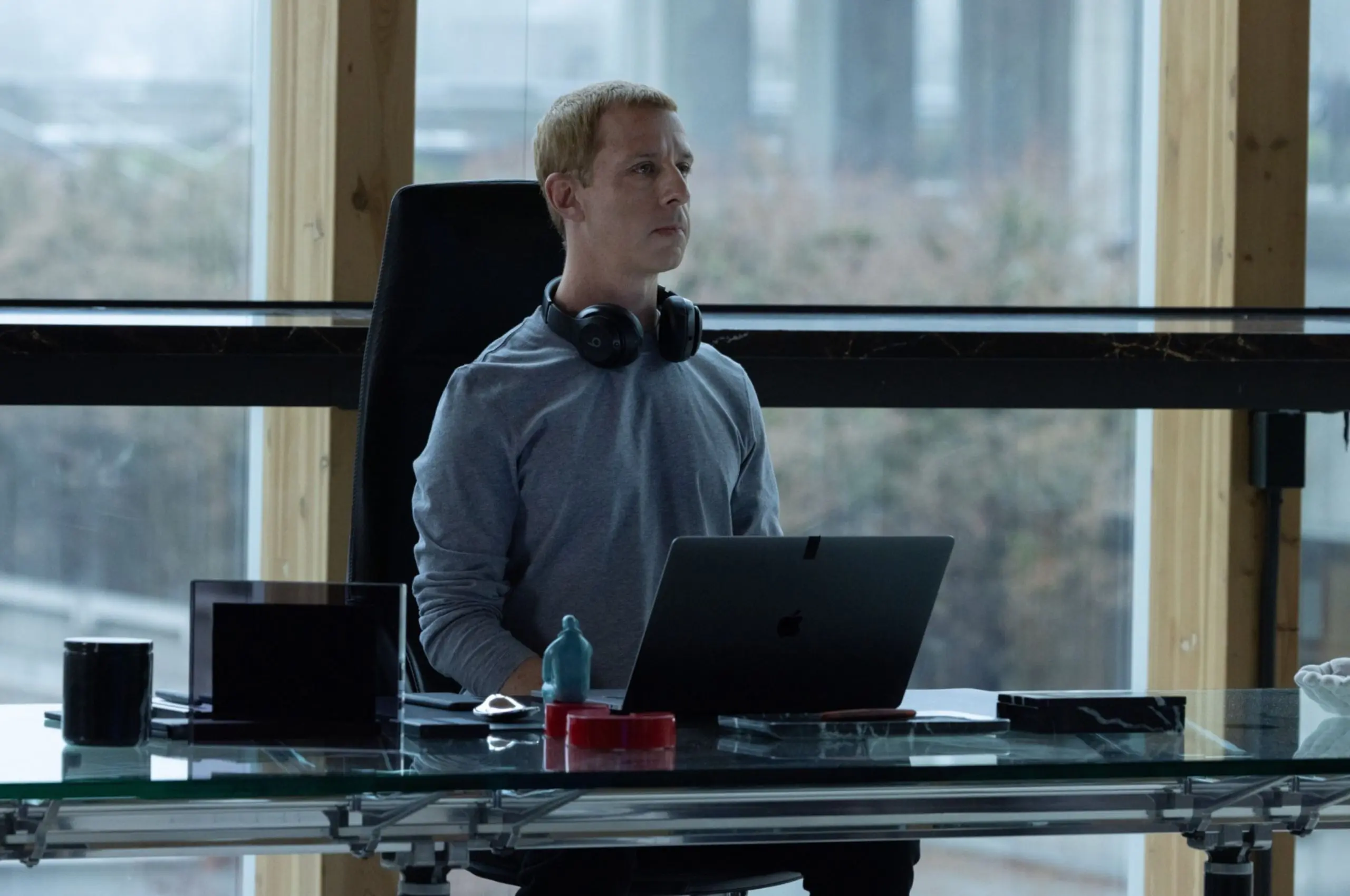
Strong doesn’t let the supporting role status deter him from embodying Zuckerberg. The actor nails the tech billionaire’s robotic cadence and stiffness, and even imbues that stiffness with a sort of duality: it’s what makes him awkward, but also impenetrable. It’s unfortunate that the film didn’t explore Zuckerberg’s character more, especially since he’s no longer the tech startup founder he was in The Social Network, which Sorkin also wrote.
On one hand, the case can be made that Zuckerberg’s billionaire status and greed have rendered him incapable of humanity, and therefore should not be humanized (in one of the film’s funnier parts, he’s coached on how to act more human by his legal counsel, Wunmi Mosaku’s Raya). On the other hand, the lack of material leads to a performance that is at once jaw-dropping and one-note. But I still think an award is in the pipeline for Strong.
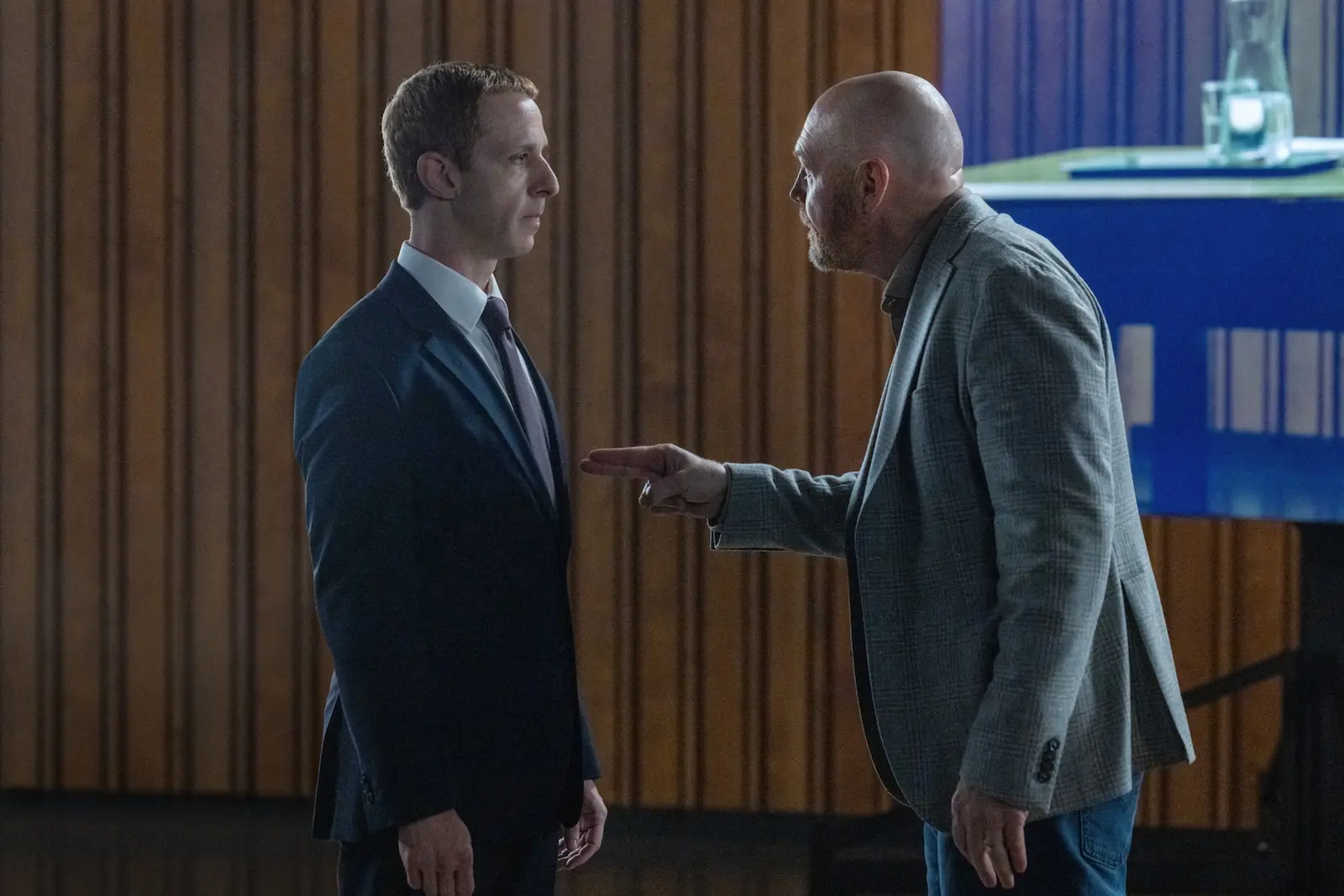
Sorkin’s decision to center the story on Horwitz and Haugen is a great way to ground such a large controversy in the experiences of ordinary, well-meaning citizens, and highlight the realities of exposing Facebook’s systemic disregard of ethics. The Social Reckoning’s ending promises that we can hold our culture’s Goliaths to account.
But the film is frozen in a time when Trump hasn’t returned to power. Even as The Social Reckoning ends on a hopeful note, I cannot help but think of Magnussen’s line as a foretelling of where Meta stands today. The tech giant emerged from the Cambridge Analytica scandal and the “Facebook Files” largely unscathed, even though a lot of people have come to hate Zuckerberg. Instead of tightening its policies on misinformation in political ads, Meta dropped fact-checking altogether. The film is eclipsed by the real-life aftermath of the events it portrays.
The Social Reckoning is a must-watch anyway. It doesn’t reveal anything new about Facebook or Zuckerberg, but it’s a good reminder of how social media platforms have ditched the promise of “connecting” people and instead fueled hatred and division. Maybe the reckoning here doesn’t really happen to Zuckerberg, whose fictional counterpart (at the very least) seems incapable of remorse. The title suggests that there is a larger reckoning happening on a societal level, and maybe it’s us coming face to face with all the evidence that Big Tech has willingly destroyed us and will continue to do so.
The Social Reckoning opens in Philippine cinemas on October 7.
Frequently Asked Questions
The Social Reckoning is about the 2021 Facebook leak by former employee Frances Haugen, as reported in The Wall Street Journal by investigative journalist Jeff Horwitz.
Aaron Sorkin wrote and directed The Social Reckoning, which came as the result of an earlier script about Facebook’s connection to the January 6 Capitol riot.
Yes, The Social Reckoning is a sequel to 2010’s The Social Network. While Sorkin wrote both films, David Fincher did not return to direct the second film.
Included in the cast of The Social Reckoning are Mikey Madison, Jeremy Allen White, Jeremy Strong, Bill Burr, Wunmi Mosaku, Billy Magnussen, and Betty Gilpin.
The Social Reckoning begins its theatrical release in the Philippines on October 7, two days ahead of the United States release on October 9.
Recommended Video