

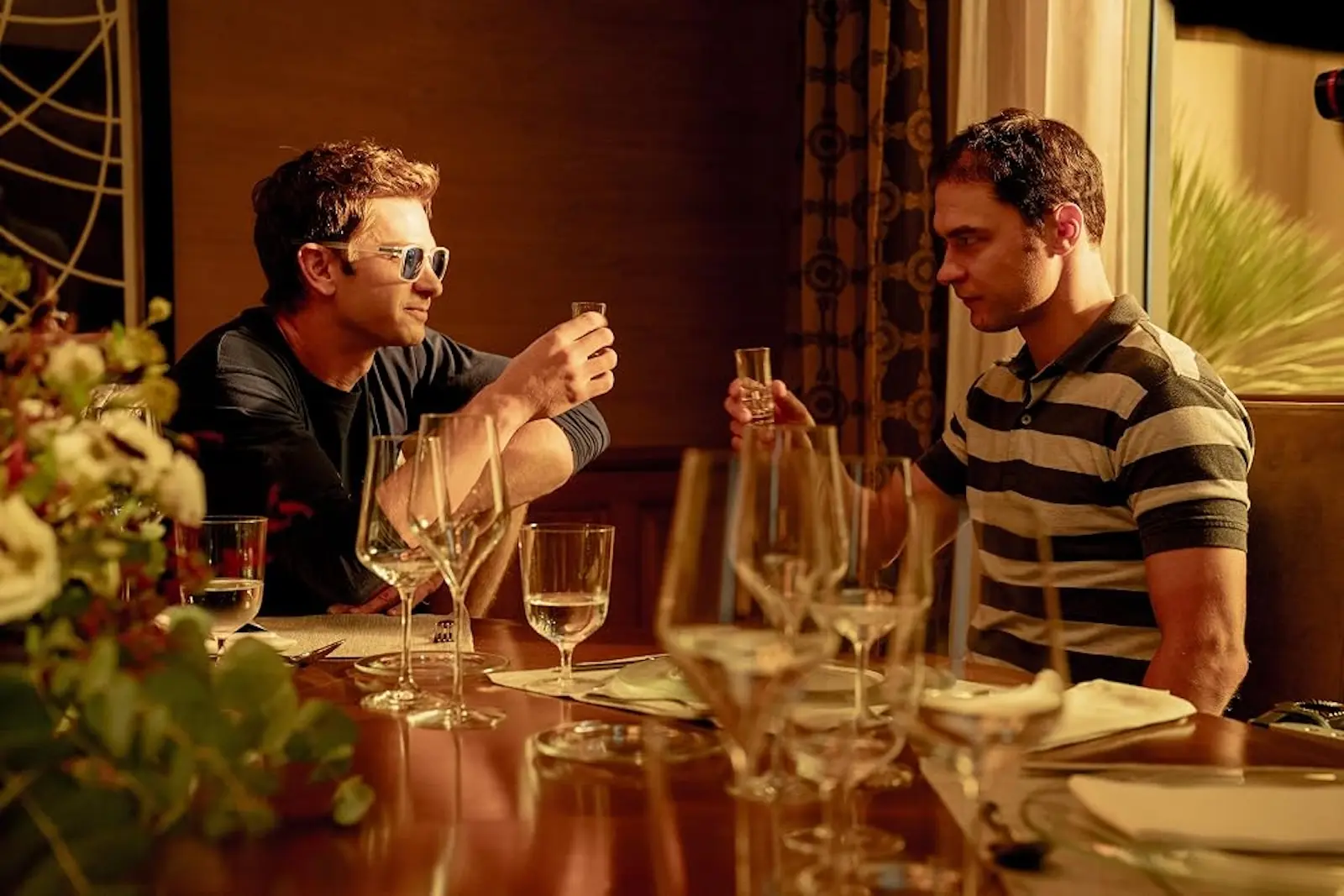
Andrew Garfield is back on the big tech reckoning acting pipeline. After playing Facebook co-founder Eduardo Saverin in the 2010’s The Social Network, the British-American actor now portrays OpenAI’s Sam Altman in Luca Guadagnino’s Artificial, a retelling of the 2023 firing and subsequent reinstatement of the artificial intelligence company’s co-founder and current CEO.
The Artificial trailer comes days after Nathan Fielder and Lance Oppenheim’s documentary about their time living with the disgraced Theranos founder Elizabeth Holmes, 34 days before her arrest for multiple counts of fraud in 2023, had a surprise screening at the Telluride Film Festival. Prior to its premiere, Fielder’s unsettling trailer had the Internet talking about a literal unblinking Holmes.
As for Guadagnino’s latest movie, written by Saturday Night Live alum Simon Rich, controversy started even before its first trailer was released, after Amazon MGM dropped it following its $50 billion investment in OpenAI earlier this year. Neon soon picked it up for an undisclosed sum, announcing that it will finance its awards season campaign. Artificial hits theaters Christmas Day, but not before premiering at New York and London film festivals starting in October.
A Tale of Two Egos
In Artificial’s first trailer, we see Garfield as Altman walking into a mansion, as his voiceover pronounces OpenAI’s salvo: “We have created a machine that will solve the world’s problems.” He continues as he walks inside the property, “We opened Pandora’s Box together. The future is inevitable — countries will fall, industries are gonna collapse.”
The slender figure makes his way into a blue-lit armoire and says, “We get to be the ones who get to shepherd people in to this new world.” In over a minute, the trailer encapsulates the kind of hubris long associated with the OpenAI founder, one that would eventually factor in his firing and reinstatement less than five days later.
One can also argue that the same kind of self-belief — touting in a 2024 blog post that “astounding triumphs — fixing the climate, establishing a space colony, and the discovery of all of physics — will eventually become commonplace” — has played out to OpenAI’s advantage. Its latest valuation is over $800 billion in March after a $122 billion funding round.
The same can only be said to an extent of the “immensely successful fraud,” as the U.S. Attorney’s Office of the Northern District of California called it, that Holmes ran at Theranos. “Projecting altruistic motives, Holmes raised hundreds of millions of dollars by duping investors of all experience levels to invest in Theranos,” the November 2022 press release uploaded on the U.S. Justice Department said.
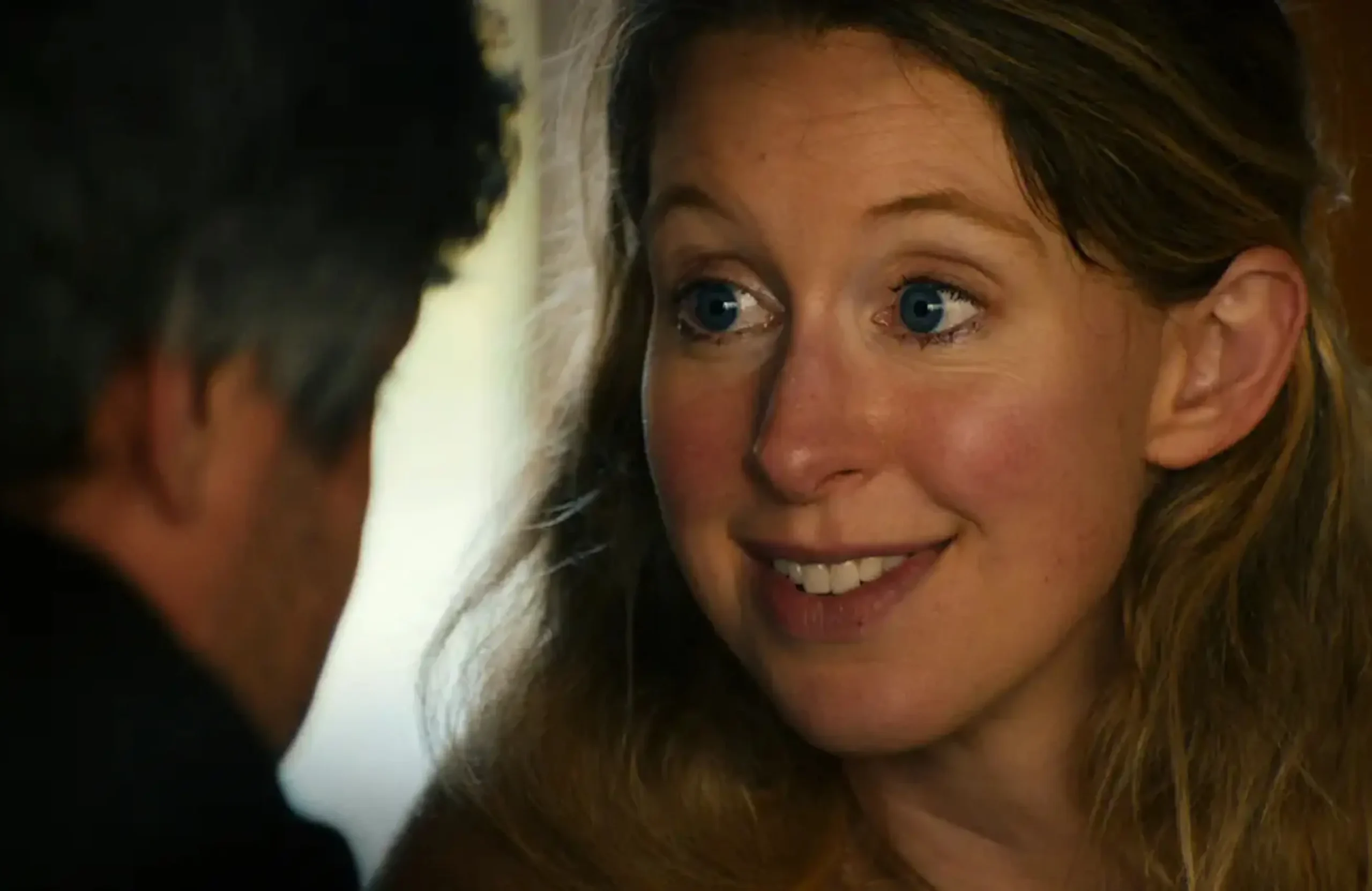
19-year-old Stanford dropout turned world’s youngest self-made female billionaire, like Altman, promised world-changing implications from a purported proprietary blood-drawing technology that could detect hundreds of diseases with just a pinprick’s worth of blood.
Intrinsic to both Altman’s ongoing AI crusade and Holmes’ conceit is this hubris that masks both their storied inability to explain just how their technologies can change the world for the better. As for AI, evidence to the contrary is mounting, with the latest warning coming from a former Anthropic employee, who reveals that the people behind AI “earnestly believe that it could kill us all by the end of the decade.”
Early reviews of Fielder’s You Can See Everything Now are out following its surprise screening at Telluride. Apart from Holmes’ unflinching gaze, Fielder and Oppenheim’s uncanny approach to documentary filmmaking, two things stand out for critics and those we were able to watch the nearly three-hour docu.
One is Holmes’ insistence on her innocence. Variety’s film critic Owen Gleiberman calls it “a strange kind of ignorance.” “She claims she did nothing wrong, and it’s clear she believes it. But how is that possible?” Despite Fielder’s attempts at trying to make her understand how her actions have been deceitful, she just won’t budge. The comic then shows her the Abbott and Costello segment “Who’s On First?” — which has started to resemble their dead-end exchange — still, even that, Holmes, fails to understand or find funny.
“It’s not just that she lacks a sense of humor (though frankly, she kind of does),” Gleirberman explains. “It’s that she’s got the malignant narcissist’s need to have words mean only what she decrees them to mean.”
Always a Role to Play
You Can See Everything’s dreaded conclusion — Holmes’ being sent to jail — brings forth a dilemma to Fielders and Oppenheim, as their subject is no longer present. To resolve this, they introduce a stand-in, which IndieWire describes as “a surprise subject who takes on a dual role of driving the narrative and playing Holmes in recreated scenes.” This, its critic Cortlyn Kelly argues, is when the film really starts to “speculate more than assert.”
But here’s another stand-in for Holmes: her husband, who becomes the de facto focus with his wife away. Once seen as a controlling figure on the side earlier in the doc, Billy Evans takes on the mantle of the central ego.
Kelly writes, “Evans’ true colors and motive, which shine brightest after Holmes is in prison, are so jarring and frightening.” The critic observes his “disdain for his involvement in the movie,” along with lapses, forgetting that everything is being recorded. “Yet he’s simultaneously aware of exactly when to cut the cameras any time the story goes somewhere that doesn’t fit into the future he’s trying to create for him and Holmes.”
We may lose sight of a focal point, a subject may be gone; a fraudulent, villain-esque subject may be caught, but, just as Garfield keeps finding himself playing the role of, or a part around, hubristic tech figures, one thing remains: egomania that takes the shape of another container, who will likely be fodder for more films to come.
Recommended Video