

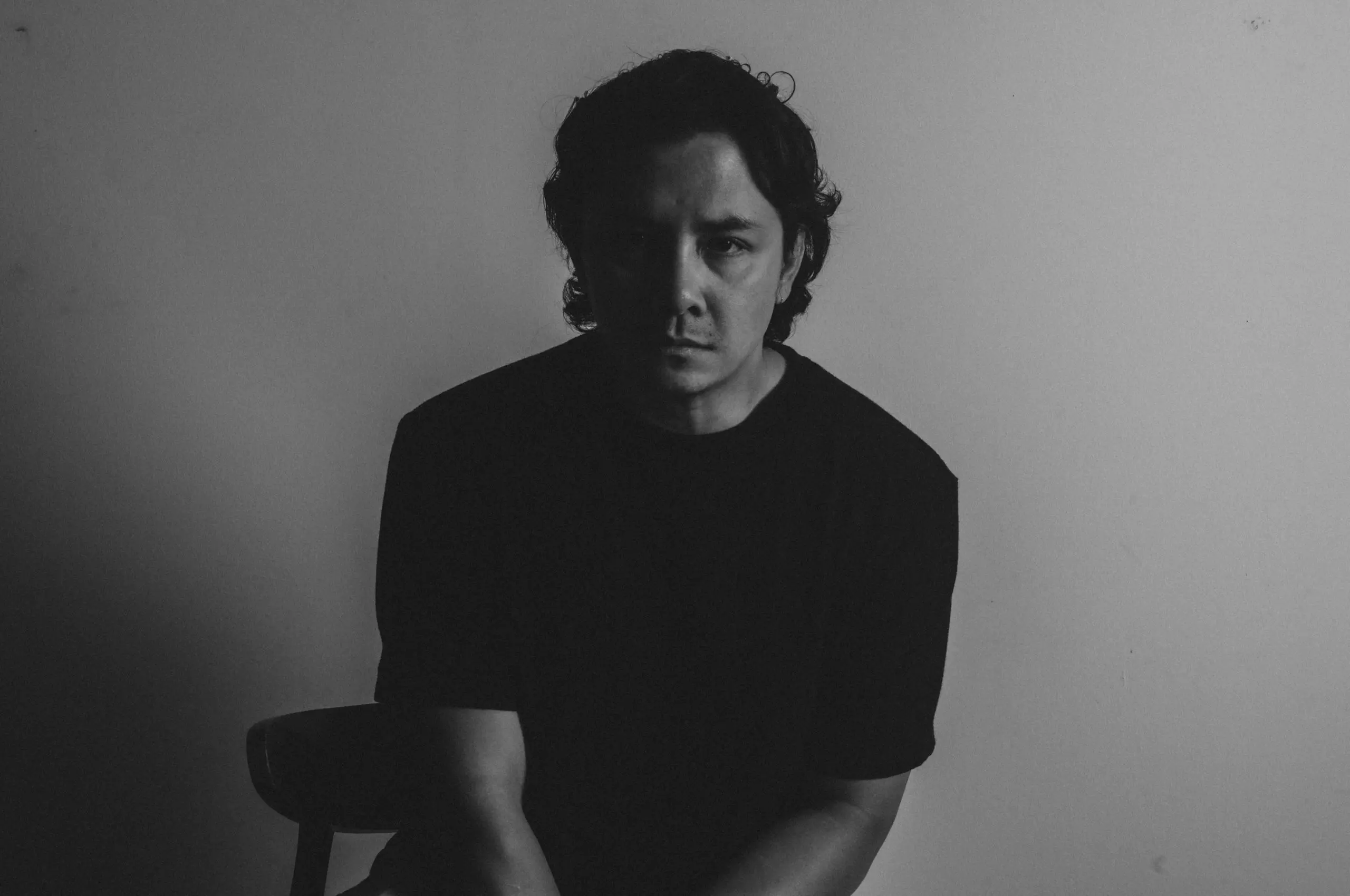
It’s been 24 years since British playwright Caryl Churchill’s A Number was first staged, and 13 years since JC Santos first read the play in a script analysis class at New York’s Circle in the Square Theatre School. But for the actor, there has never been a better time to stage it than now.
The play follows a man named Salter, who becomes wracked with guilt as he converses with three versions of his son, Bernard, whom he has cloned. The play was written at the height of debate surrounding the ethics of human cloning in the early aughts, a few years after associates of the Roslin Institute had successfully cloned a female sheep, Dolly, from an adult somatic cell.
A Number finds new context now, as tech giants like Anthropic, OpenAI, and Meta push for the development of generative artificial intelligenceArtificial IntelligenceComputer systems that generate or analyze text, images, and music, now reshaping how art is made and how media and work operate. In the Philippines, it raises live questions aboutGo to Artificial Intelligence Glossary (AI), which, at this point, could only riff off existing data and attempt to perfect (to varying results) what’s already been made by humans.
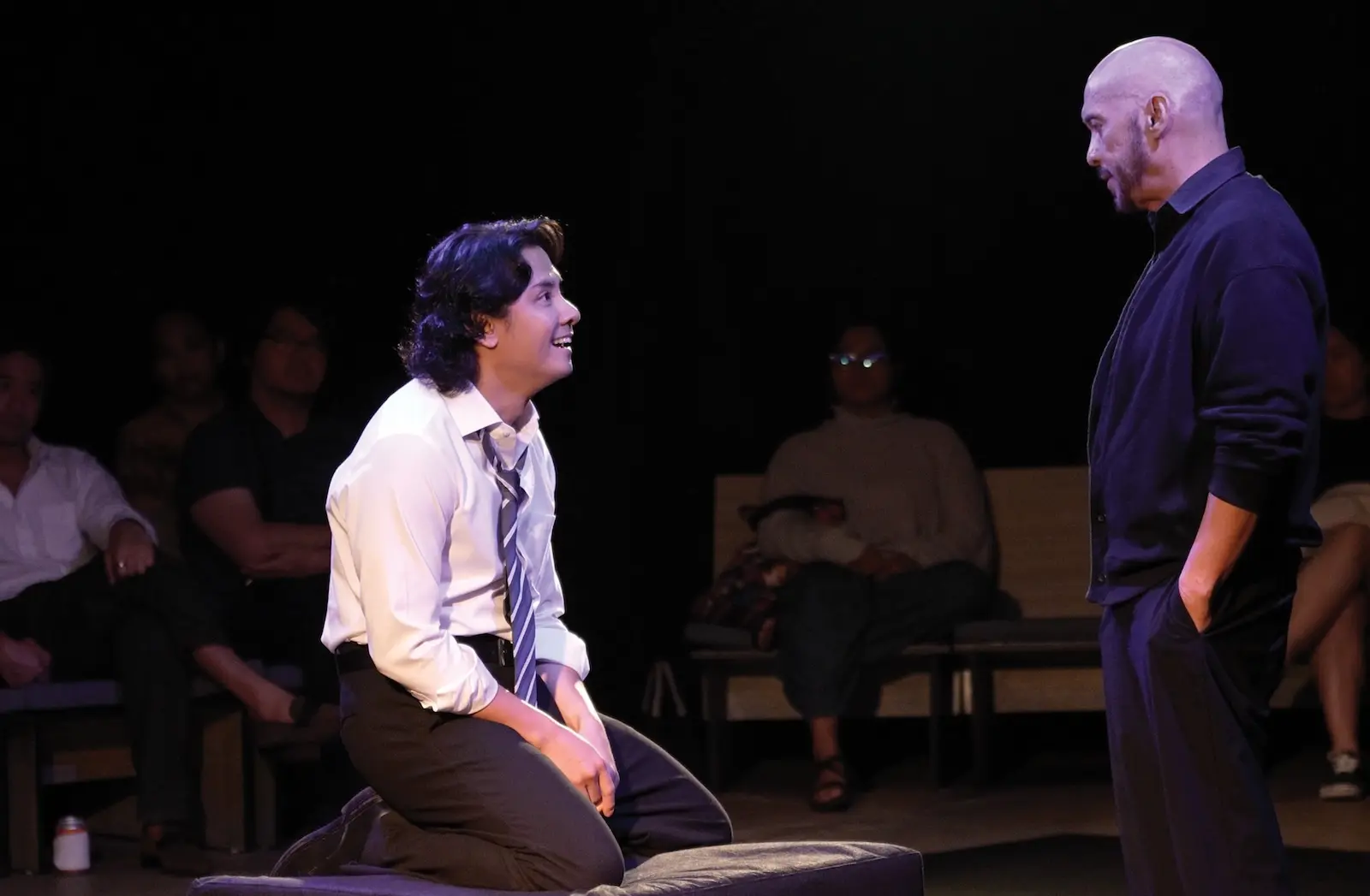
“I think there’s something very human about wanting a second chance and believing we can get it right this time,” Santos says of Salter, played in this production by seasoned thespian and The Necessary Theatre founder Bart Guingona.
But A Number emphasizes that there are drastic consequences for this sort of perfectionism. Each version of Bernard that Salter encounters carries a different kind of pain, no matter how the father tries to raise him. B2, the first clone we meet, is bewildered by the revelation that he isn’t the first version of himself; B1, the original Bernard, is angrier, shoulders tense with age and a deep-seated grudge against his father; and Michael Black, an unauthorized clone, lives happier, never having been raised by Salter.
Santos, who leads A Number as his directorial debut, switches between these versions of Bernard with a terrifying ease. His and Guingona’s performances are the highlight of a production characterized by an immersive but minimalistic stage and sound design, to which artists Miguel Uy and Frankie Lalunio contribute. A Number also serves as arts hub WHYNoT’s first foray into theatre production, with a section of the gallery space serving as an impromptu black box.
Though he’s had his time in film and television, most notably in Jason Paul Laxamana’s 100 Tula Para Kay Stella and the ABS-CBN TV series Till I Met You, Santos always returns to theatre, which he calls his home. He’s even found more value in it amid the rise of AI. “Dito lumalabas ‘yung value ng teatro, ngayong puro screen na halos ang kaharap natin,” Santos tells Rolling Stone Philippines. “Actors and audiences sharing the same space in real time? Sarap!”
Here, the actor and first-time theatre director talks to Rolling Stone Philippines about why he loves theatre, finding a mentor in Guingona, and what makes A Number and theatre so relevant in the age of AI.
How did you first come across Caryl Churchill’s play?
I first encountered this play when I was studying at Circle in the Square Theatre School in New York in 2013. It was the material for our script analysis class. I remember struggling with that class because the script had very few stage directions and minimal punctuation. I had a difficult time contributing to the discussions, so I just enjoyed listening to my classmates interpret the play.
But even then, the play stayed with me. I kept a copy of it. I think na-curious ako sa lalim ng play kahit ang bare ng pagkasulat. Looking back, I guess I just needed more time to understand it. And here I am, 13 years later, directing it.
What compelled you to stage it here and now?
I always knew I wanted to play the three versions of the son, but I just didn’t have the right opportunity or the right person to do it with. I wanted to work on this play now because I feel that it speaks directly to what’s happening in the world, especially with the rapid development of technology. AI is making so much noise today, in a way that reminds me of Dolly the sheep back in the ‘90s, when the possibility of cloning suddenly became a very real and public conversation.
And now, with AI, deepfakes, and digital life, how do we protect our identities? What happens when something can copy, imitate, or even create a version of us that other people might believe is real? For me, A Number is not a play about cloning. It’s about identity, ownership, and what makes us who we are. I think those questions are worth asking now more than ever.
What exactly does A Number have to say about artificial intelligenceArtificial IntelligenceComputer systems that generate or analyze text, images, and music, now reshaping how art is made and how media and work operate. In the Philippines, it raises live questions aboutGo to Artificial Intelligence Glossary? What does theater offer in the age of AI?
Technology can imitate voices, reproduce images, and create versions of us that are possibly difficult to distinguish from the real thing. But it can never fully capture what makes us human: our memories, relationships, experiences, and choices.
Dito lumalabas ‘yung value ng teatro, ngayong puro screen na halos ang kaharap natin. Naghahanap na ang mga tao ng organic feeling, at sa live performance mo lang iyon makikita at mararamdaman, hindi sa screen. Actors and audiences sharing the same space in real time? Sarap! Ang daming puwedeng mangyaring unexpected kapag live. Iba-iba ‘yan kada palabas at kailangan namin ang immediate response ng audience para makapag-perform.
Yes, technology can reproduce an image of a person, but theatre allows us to encounter people in the present. Reminder na ‘yun of what technology cannot do: our ability to feel, connect, empathize, and recognize one another as human beings.
You’ve been directed by Bart Guingona before. What’s it like directing him now? What do you like about working with him?
This is only our second time working together, and so far, it’s been a wonderful experience. We share the same passion for the stage. We simply love reading plays, talking about them, and finding ways to bring them to life. I’ve come to see Bart as a mentor. We often invite people to read plays with us, and that’s how we eventually landed on A Number. We can spend an entire night discussing the circumstances of the characters, their motivations, and all the possibilities within a script.
What’s interesting about working with him now is that I get to experience him from a different perspective. I’ve been directed by him, and now I’m the one directing him. It’s a different kind of relationship, but there’s a lot of trust and respect between us. As a director, I know how much I can learn from him. And as an actor, I know how much I can discover by working with someone who is just as curious and passionate about the play as I am.
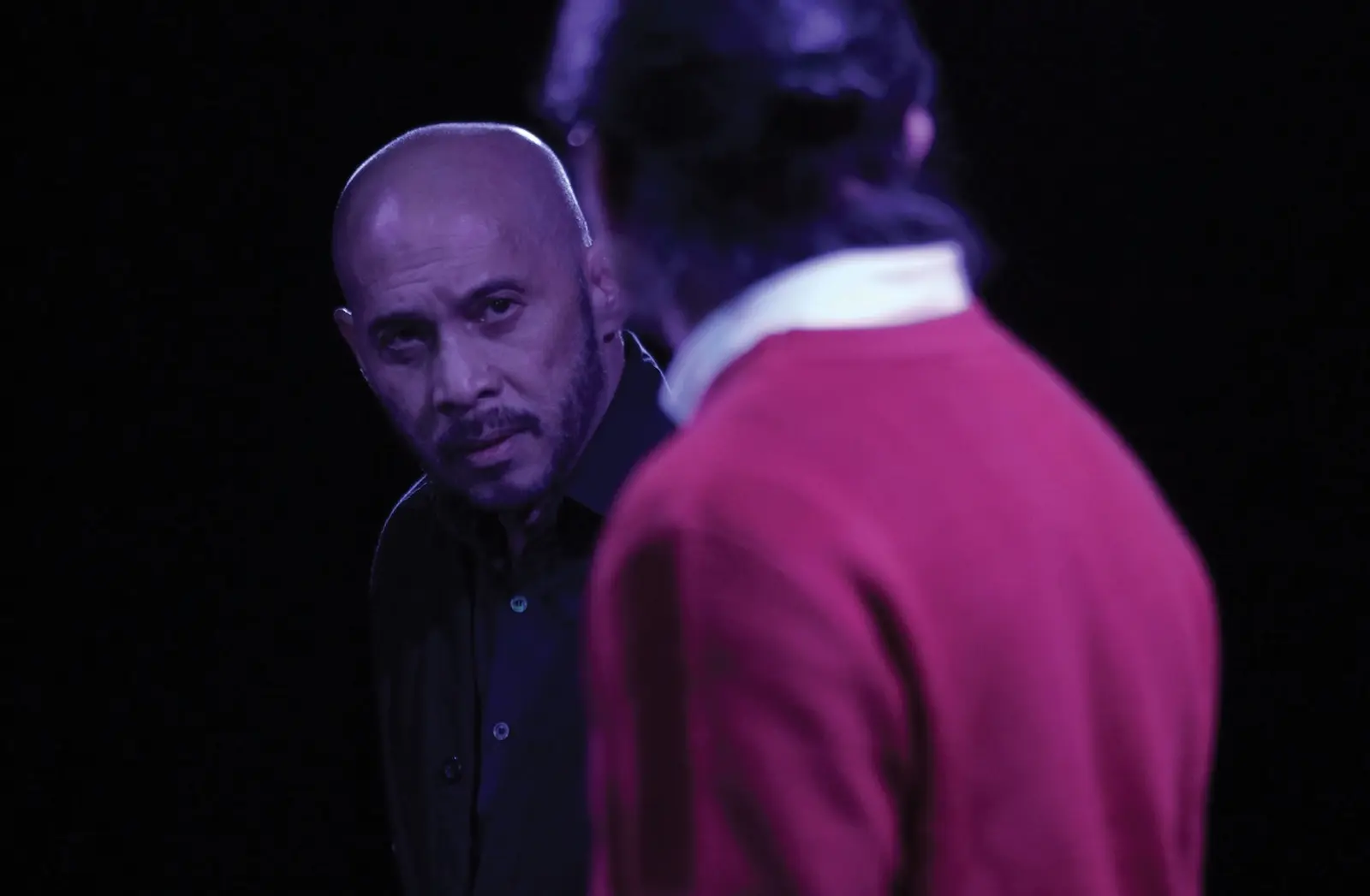
A Number is about a man facing the consequences of attempting to recreate his son and reset his fatherhood. Do you think the story’s themes or philosophy also apply to making art, or in this case, directing a play?
Absolutely. I think there’s something very human about wanting a second chance and believing we can get it right this time. As a director, I have my own interpretation of A Number, but theatre is collaborative. The actors, designers, and the play itself all bring something unexpected. I respect and love the rehearsal process, I love putting drama on words, I love discovering new skill sets from working with different artists. Ang saya.
Directing this play has taught me that you can guide the work, but you can’t control everything. You have to listen and allow something new to emerge. You can try to recreate something, but you can never completely control what it becomes.
In the past few shows you’ve done, do you find yourself wishing you’d done something differently?
Not really in the sense of regret. With every film or theatre project I’ve done, I feel like I’ve learned something and leveled up in some way. Syempre, when I look back at a performance, there are always things [like],“Sana ganito ‘yung ginawa ko,” or “I could’ve made it more convincing.” That’s part of being an actor. You keep discovering new things about a character, even after the show is over.
Pero those moments, hindi regrets e. I look at them as opportunities to learn more about myself, to become a better person, and to grow as a storyteller. I think that’s what I love about this profession. You never really arrive at a point where you know everything. Hirap din e. Every project gives you another opportunity to discover something new. So gawa lang ng gawa.
You have a rich background in theatre, on top of the work you do for film and TV. What do you like about being onstage?
Theatre is my home. A huge part of who I am as an artist was shaped onstage. It has taught me to appreciate life and understand people better. Through the characters I’ve played and the plays I’ve read, I’ve had the chance to inhabit different lives and explore human behavior in ways I might never experience myself.
I’ve been fortunate to work on plays by writers like Anton Chekhov, Bertolt Brecht, Shakespeare, and David Mamet. Each playwright offers a different way of seeing the world, and every character teaches me something about being human. That’s what keeps me coming back. Theatre continues to teach and challenge me, and reminds me why I fell in love with acting.
A Number runs a few more shows from October 16 to October 18 at WHYNoT, Karrivin Studios, Makati. Ticket details are available through WHYNoT’s social media channels.
Frequently Asked Questions
A Number is Caryl Churchill’s play about Salter, a man who confronts three clones of his son, Bernard, and the guilt of trying to reset his fatherhood. Written in the early 2000s amid cloning debates, it explores identity, ownership, and second chances.
JC Santos makes his directorial debut with A Number, also playing all three versions of Bernard opposite Bart Guingona as Salter. The production is arts hub WHYNoT’s first theatre project, running October 9 to 11 and October 16 to 18 at Karrivin Studios in Makati.
Though written about human cloning, A Number speaks to AI, deepfakes, and digital life by asking how identities are protected when something can copy or imitate them. Santos says the play is not about cloning but about identity, ownership, and what makes us who we are.
Santos argues technology can imitate voices and images but cannot capture memories, relationships, experiences, and choices. Live theatre puts actors and audiences in the same space in real time, offering an organic, unrepeatable exchange that screens cannot provide, and a reminder of human empathy and connection.
Bart Guingona is a veteran theatre actor and the founder of The Necessary Theatre. He plays Salter, the father in A Number, under Santos’s direction. Santos describes him as a mentor, having previously been directed by him, and says the two share a passion for reading plays.
Recommended Video