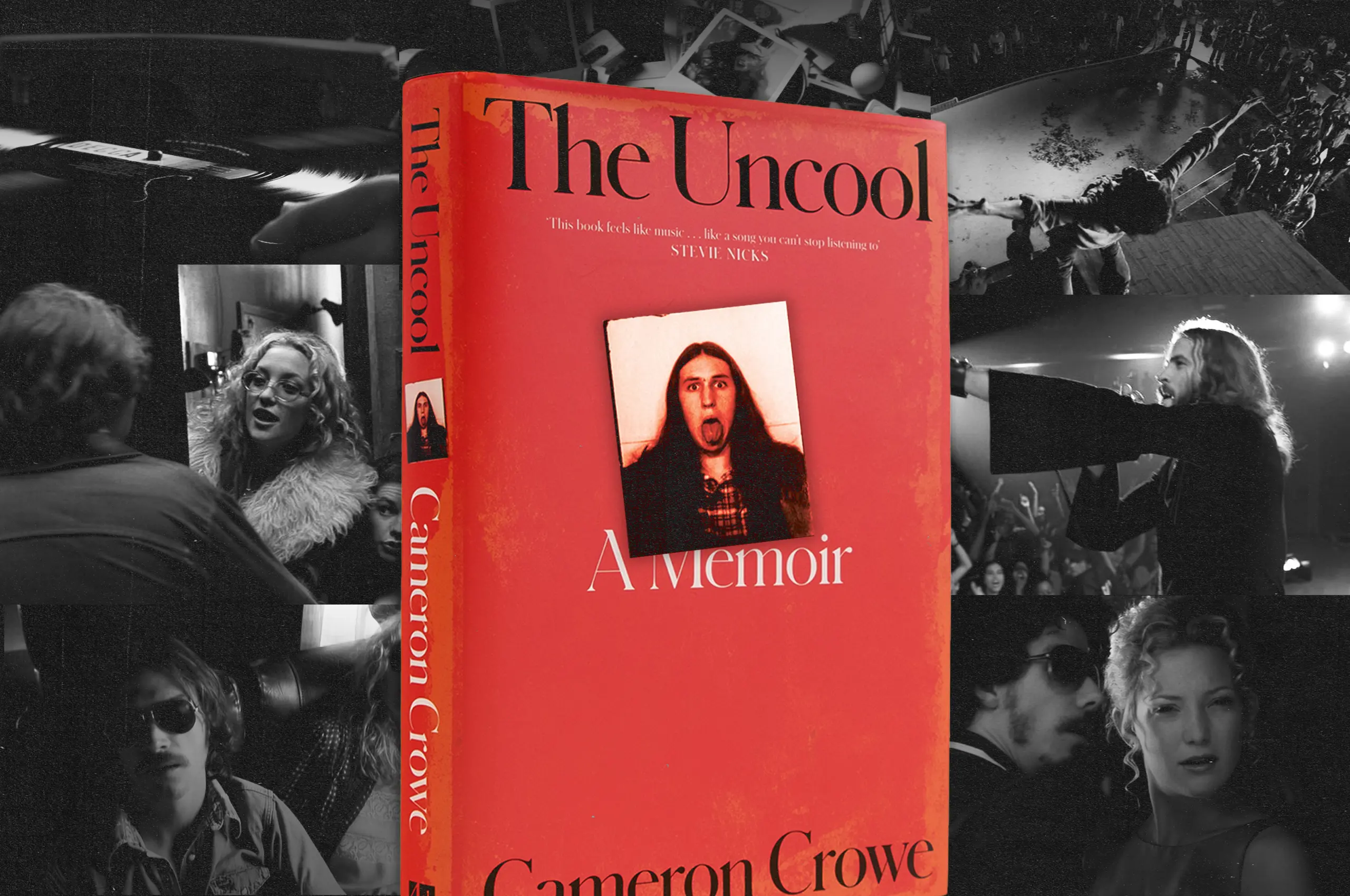
The Uncool, Cameron Crowe’s newly released memoir, marks his return to both writing and this formative part of his life.
Though the director has high-profile films such as Vanilla Sky, Say Anything, and Jerry Maguire (“Show me the money!”) in his filmography, he is best known for Almost Famous, which is loosely based on Crowe’s past life as a bright-eyed music journalist during rock’s heyday in the ‘70s, interviewing the biggest stars of his time for Rolling Stone all at the tender age of 16. Rubbing elbows with the likes of David Bowie, Lynyrd Skynyrd, and Led Zeppelin as a teen was one thing, but to be a catalyst for introducing them to a wider audience was another. Crowe’s tenure as a music journalist was the stuff of legends; as rock and roll embedded itself further and wider into pop culture, so did Crowe’s part in it.
Today, Crowe’s most famous subjects have made their way into the obituaries — Kris Kristofferson and Ozzy Osbourne, to name a couple — and Crowe himself is almost a septuagenarian. But the title of the memoir does not refer to a lost era losing its shine, but to Crowe’s position in relation to his subjects. “The only true currency in this bankrupt world is what you share with someone else when you’re uncool,” Lester Bangs, Crowe’s mentor, portrayed by Philip Seymour Hoffman in Almost Famous, shares over the phone in the 2000 film.
As much as the world would be fine with it, The Uncool does not just settle into a nostalgic portrait of rock’s golden age. We could have done away with the interesting minutiae surrounding the intimate lives of the rock stars we’ve come to love. Crowe’s razor-sharp attention to detail shines in chapters that look over the gloss and grime of the era with an honest eye. His knack for remembering the play-by-play details of an aged Elvis Presley (“Finally, signaled by a specific karate move, the song stopped. Over screams, the King solemnly thanked the crowd for coming and then offered, if I remember correctly, an imitation of John Wayne”) or that of his interview subjects (Crowe writes about Gram Parsons: “He spoke about country artists the way a planetary scientist discusses the cosmos”) lends to the intimacy he — and journalists of his time — were granted.
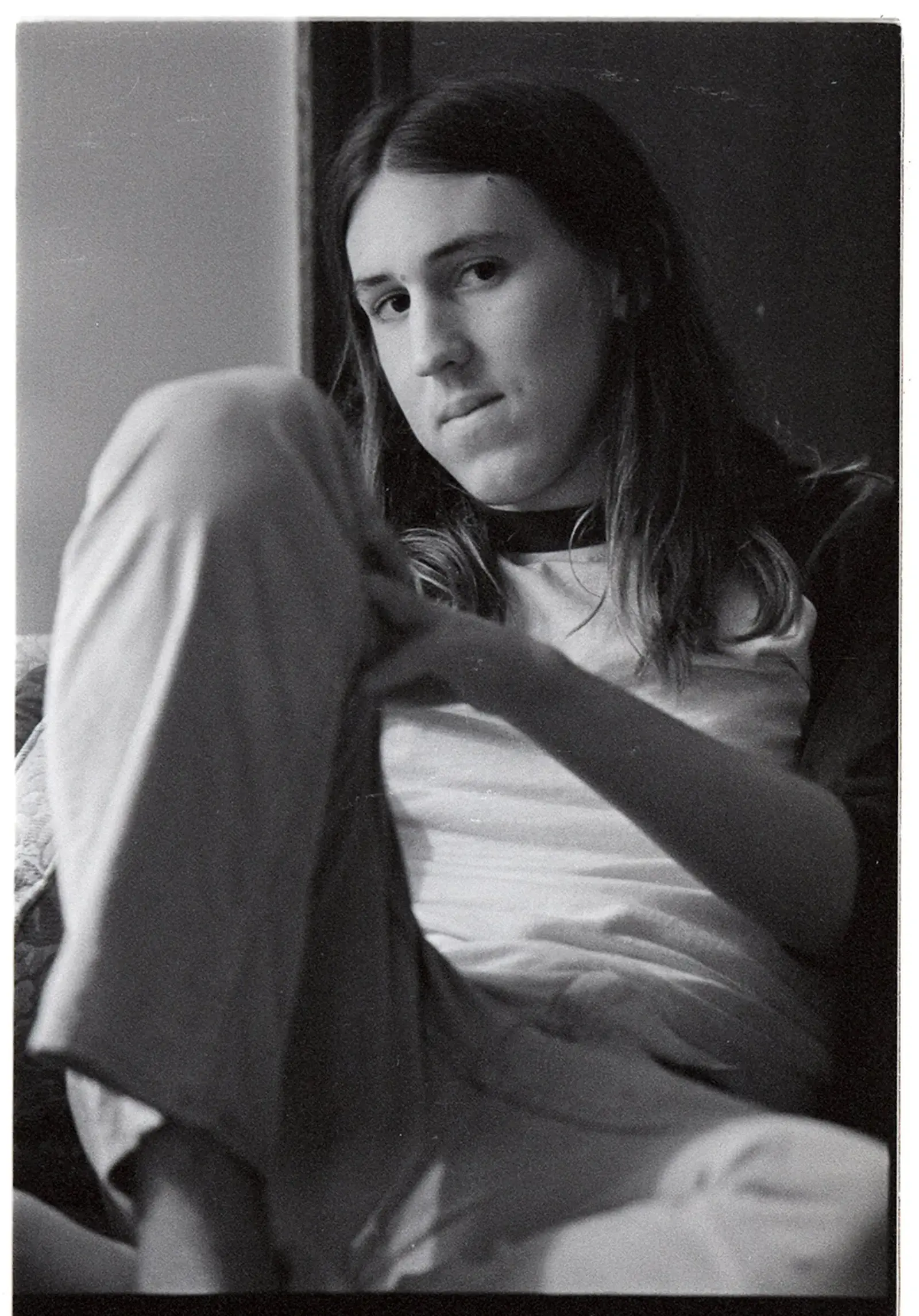
But The Uncool sets his eye not just on his subjects but also on himself. Skirting between intimacy and self-conscious observation, the memoir is a definite portrait of rock and roll in its most adventurous, but also that of a music journalist in a time when information came through the pages of the magazine instead of straight through the actual source, and without the control of a publicist.
“You missed the story. I mean, you clearly love Led Zeppelin, but what was your purpose here?” Jann Wenner, co-founder of Rolling Stone, asks Crowe after writing what became a legendary cover story on Led Zeppelin in a time when the band felt sour about a previous Rolling Stone review. Later, Wenner hands Crowe his copy of Joan Didion’s Slouching Towards Bethlehem. “Read this book,” Wenner says. “The best writing — the best music — is personal, and takes a stand. Did you take a stand?”
As much as the world would be fine with it, The Uncool does not just settle into a nostalgic portrait of rock’s golden age.
The Uncool is also a portrait of Crowe’s interior life — that of a brother and a son, born in Palm Springs, California, later moving to Indio, followed by San Diego. The memoir is bookended by chapters dedicated to his family, especially his mother, who passed in 2019. While Frances McDormand’s portrayal of Crowe’s fictionalized version of his mother in Almost Famous was memorable, The Uncool etches her impact on Crowe’s life as immeasurable. Alice Crowe’s decision to chaperone her son to a concert emboldened the music enthusiast in Crowe to emerge: “I understand your music,” she shares with the young Crowe after an Eric Clapton show. “It’s better than ours.”
Crowe does the same with his older sister Cathy, whose death by suicide was also eulogized. In navigating his family’s respective lives, Crowe unearths his own foundations as a person, including his aversion to drugs, his initial interest and subsequent hesitancy to be a lawyer, as well as his love for music. Much like his mother, the younger Crowe showcased a premonition of what’s to come next, to “look around the corner.”
Even when stripped of Crowe’s acolyte-like affection for rock, The Uncool reveals Cameron Crowe as his own person; sometimes serendipitously uplifted by his circumstances, but more often than not struggling and overcoming problems that felt all too real, all too human. The deep-seated love for life from his unbridled youth still remains.
Read the story in the Hall of Fame issue of Rolling Stone Philippines. Pre-order a copy on Sari-Sari Shopping, or read the e-magazine now here.