

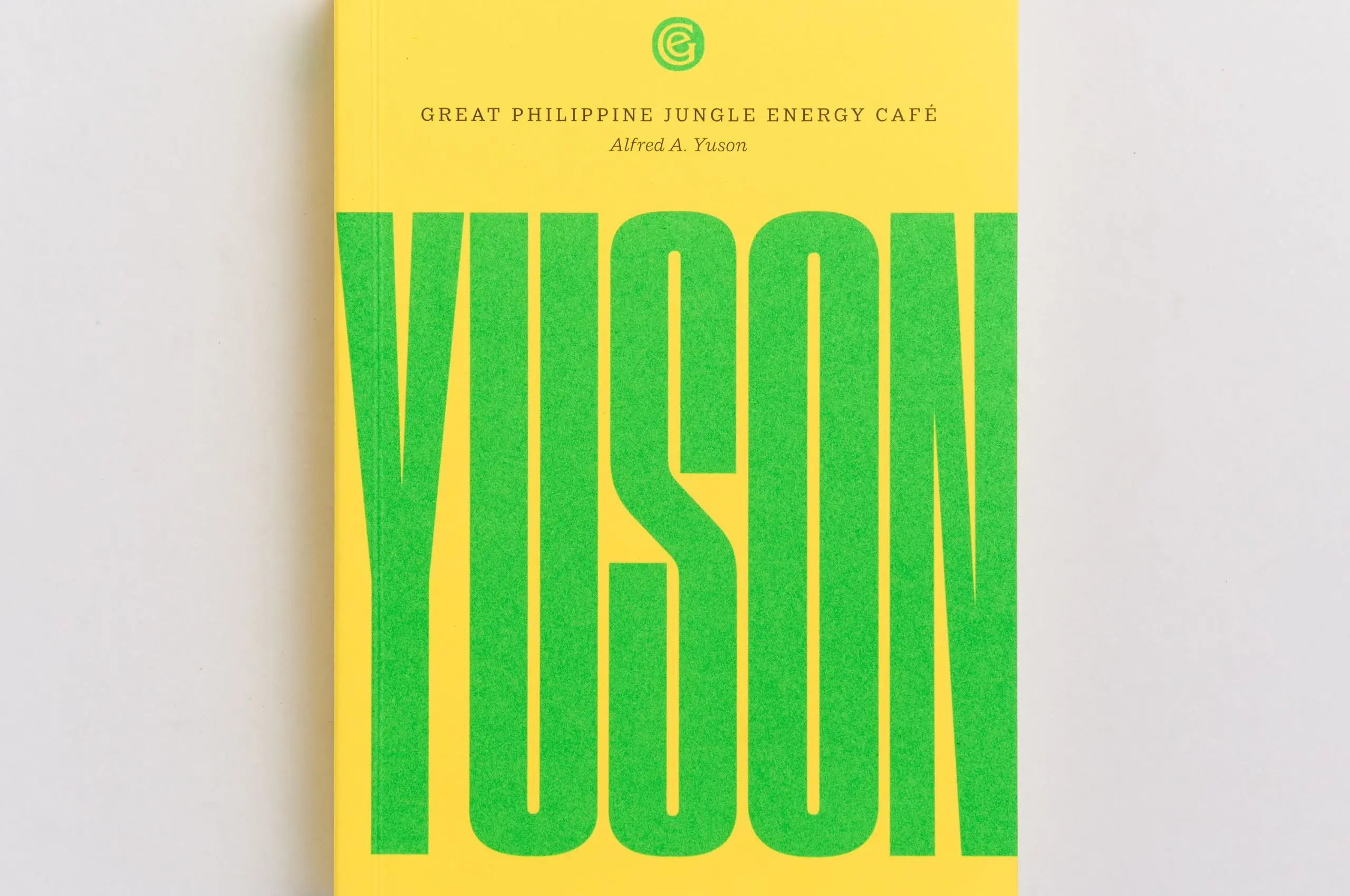
A new edition of Alfred “Krip” Yuson’s 1988 novel, Great Philippine Jungle Energy Café, is being republished by Exploding Galaxies, a small publishing house resurrecting out-of-print books.
Jungle Energy is Exploding Galaxies’ seventh title since re-releasing Wilfrido Nolledo’s But for the Lovers in 2023. When it was first released, literary luminary Nick Joaquin described Yuson’s debut novel as “avant-garde experimental,” as well as “rough, rude, delirious and electrifying.” In a preface written for this new edition, the author himself called it a “comic, comedic retelling of Philippine history.”
Its republication, Exploding Galaxies claims, is part of its mission “to bring significant works of Philippine literature back into circulation and into conversations with today’s readers.” For the publishing house, Yuson’s novel “stood out for its audacity, humor, and imaginative energy, and for the way it can still spark fresh reflection on Philippine history, culture, and creative discourse.”
Exploding Galaxies on Allegations Against the Author
Much has been said about the author and the publisher in recent days, especially surrounding allegations directed at the author. Ahead of the new edition’s launch, Exploding Galaxies issued a statement regarding those allegations, which include accusations of sexual harassment on social media.
“We republished Great Philippine Jungle Energy Café for its well-established literary merit, and we stand by our decision to publish the book,” Exploding Galaxies said. “We take allegations of sexual harassment seriously. However, to the best of our knowledge, allegations of this nature against the author have not been proven or independently corroborated.”
“Ultimately, republishing a book does not mean we endorse everything about the work or its author. It is an invitation to encounter the work on their own terms, to decide whether and how they wish to engage with it, and to form their own views.”
Exploding Galaxies’ statement asks readers to focus on the book itself, its merits, and what it can offer today’s culture. But given the allegations, both the publication’s and author’s critics argue that the two are inseparable.
Is there enough in the book itself to merit its resurgence, as the publisher suggests? We examine the book and question what it all means.
What is ‘Great Philippine Jungle Energy Café’ About?
Great Philippine Jungle Energy Café retells the story of real-life Visayan revolutionary Pantaleon Villegas, also known by his nom de guerre Leon Kilat. Highly fictitious and fantastical, the novel follows Leon in his later life, from swallowing a (psychedelic) banana heart charm to his resurrection at the titular café, where he meets icons from different points in history, like Jose Rizal, filmmaker Ishmael Bernal, literary figures Edith and Edilberto Tiempo, Tandang Sora, and Maricel Soriano, to name a few.
The story, as readers come to understand, is told by a fictional character, Robert Aguinaldo, who, amid Ferdinand Marcos Sr.’s dictatorship, is working on a novel about Leon and seeks to make a movie out of it.
What is Yuson’s Writing like in ‘Jungle Energy’?
The text is as mangled as Kilat was in his death, and meanders in the same way James Joyce’s writing does in Ulysses (Danton Remoto and Joaquin have both likened Yuson’s writing in Jungle Energy to Joyce’s stream-of-consciousness style).
Early in the novel, nearly a spread’s worth of text goes uninterrupted by a period or a paragraph break; each thought is appended to the next only by a comma or “and.” Towards the end, phrases are punctuated with ampersands. To some readers, this may pose a challenge. But as Joaquin suggests, “If you don’t read it for its narration but instead read it as a poem, then you will move from line to line with increasing awareness that you are enjoying each line as a separate experience.”
What Does the Novel Have to Offer Today’s Readers?
There is no definitive takeaway from Yuson’s erratic prose in Jungle Energy. Leon is lost, and at one point he thinks he’s finally arrived at the best understanding of “The Cause,” which is liberation. Still, when he tries to discuss it, it’s only an attempt to sound profound in the presence of his fellow Katipuneros.
Throughout the novel, there’s an offhandedness in the way its characters talk about the nation in its various states, whether it’s on the cusp of the Philippine Revolution or two years before EDSA I, and a passage at the very end of the book shows that best: “& someone else says ‘and why are we back in the revolution’ & someone else says ‘aren’t we always’ & someone else says ‘should we be’ & someone else says ‘who’s Sandra Dee?’”
To some, the book may read as nuanced in its depiction of history. To others, it may read as ambivalent, as unsure as its hero. There’s certainly a lot of humor in Yuson’s approach to the story and the character of Leon Kilat, but there’s some crudeness, too, that stokes discomfort in the wake of the allegations against the author.
Whether critics and readers like it or not, the book is here now for them to see if its discussions on revolution still resonate today, or if that resonance is beside the point when the man who wrote it still has questions to answer.
Frequently Asked Questions
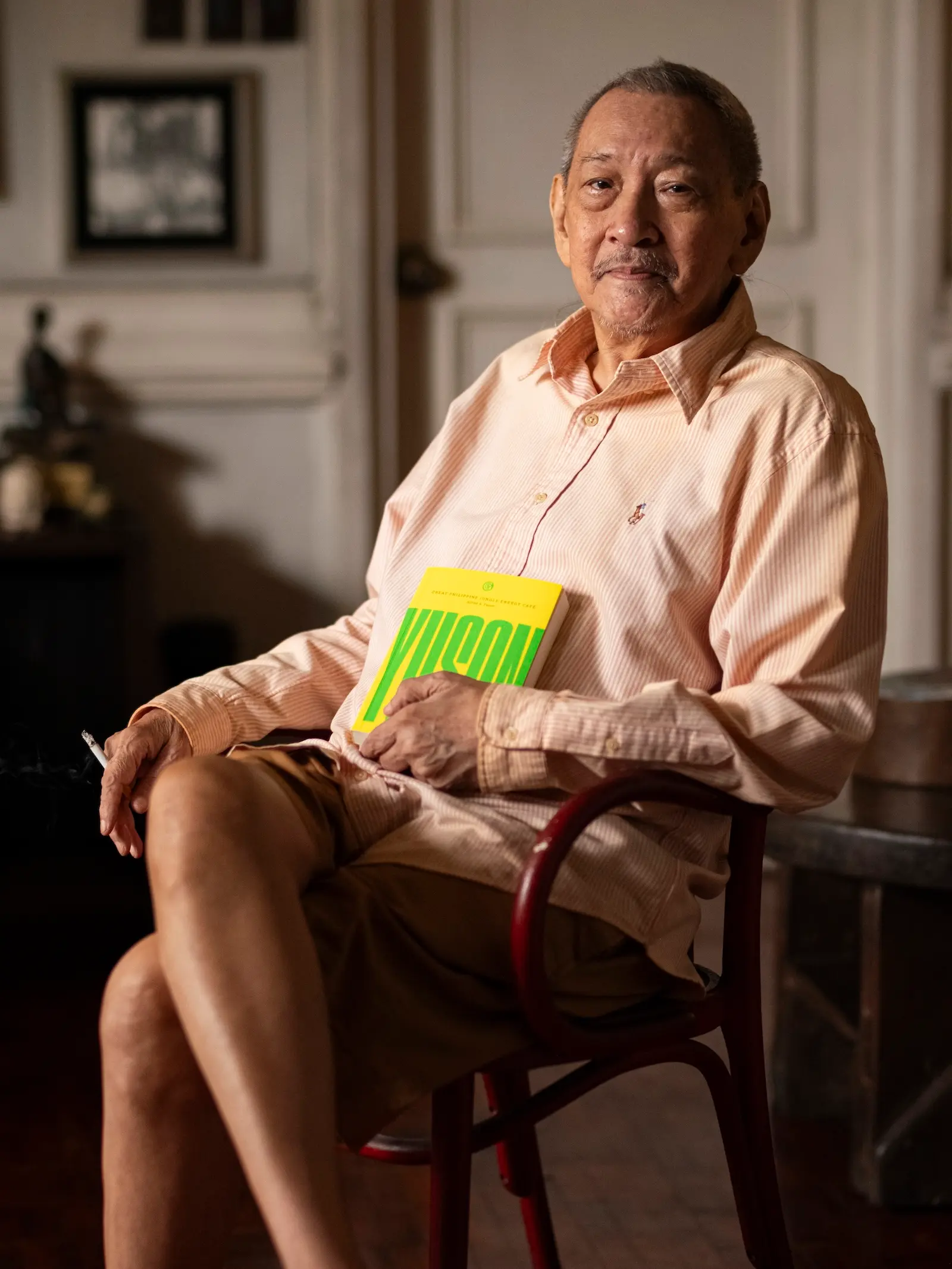
Alfred A. Yuson, nicknamed “Krip,” is a Filipino writer who has authored over fifty books, including novels, poetry collections, short fiction, essays, and children’s stories. He is a founding member of the Philippine Literary Arts Council (PLAC), Creative Writing Foundation, Inc. (CWF), and Manila Critics Circle, and previously served as Chairman of UMPIL and as a board member of the MTRCB.
The novel was first published in 1988 by the Book Development Association of the Philippines, with a second edition published by UP Press in 1996 and a third by Anvil Publishing in 2015.
Exploding Galaxies is a nonprofit publishing house established in 2023. It publishes “lost classics” and Filipino-authored books that have gone out of print.
Exploding Galaxies has published Wilfrido Nolledo’s But for the Lovers and Canticles for Dark Lovers, Linda Ty-Casper’s The Three-Cornered Sun, Erwin E. Castillo’s The Firewalkers, Doreen Fernandez’s Sarap and Palayok, and an anthology of original pieces by various contemporary writers.
In Great Philippine Jungle Energy Café, a banana heart charm drips into Leon’s mouth, kicking off an odyssey in 1890s Philippines. In between, writer Robert Aguinaldo parses historical research for his grant-awarded novel. The Jungle Café is a rest stop and watering hole for the likes of José Rizal, Rimbaud, Ishmael Bernal, Sandra Dee, Maurice Arcache, and Billy Ray Bates. But before Leon becomes a regular, he first has to be a bandit, a sewing machine salesman, a baker’s apprentice, and a revolucionario.
Recommended Video