

Days before Cinemalaya concluded this year, a link from the Twitter account @mayplottwistba began circulating. It led to a website made by an ordinary citizen that served as a guerrilla archive, more of a directory, of all featureFeatureA guest appearance by another artist on a song, usually credited as featuring or ft. in the title. Features introduce each performer to the other's fans, and they can sparkGo to Feature Glossary films produced through the Cinemalaya Independent Film Festival since its inception in 2005, compiling links to sites where they could be viewed. Called the “Cinemalaya Catalog,” the project was, according to the website, “intended solely as an archival and informational project” and was widely shared by budding cinephiles who previously had no access to the more than 200 other acclaimed titles produced by the festival.
The database, which only contained a handful of links from pirated and non-official sites, was swiftly criticized by filmmakers, including Ang Duyan ng Magiting (2023) director Dustin Celestino, who posted that links to his featureFeatureA guest appearance by another artist on a song, usually credited as featuring or ft. in the title. Features introduce each performer to the other's fans, and they can sparkGo to Feature Glossary as a site that circulated their works without permission and prevented them from properly earning from their films. What followed was a wave of online debate, with filmmakers and audiences trading arguments — and, at times, jabs — over the ethics and consequences of piracy within the structures of late capitalism.
The site has since gone through several revisions in an effort to remove illegal links and limit access to legal streamingStreamingListening to music or watching video on demand over the internet through platforms like Spotify and Netflix, rather than owning copies. Streaming has changed how artists earn and how audiencesGo to Streaming Glossary sites. While the site is now back up with additional notes and disclaimers, the ongoing conversation has made one thing increasingly clear: the relationship between piracy and filmmaking is far from homogenous, and cannot be reduced to questions of legality alone. Carl Chavez, founder of entertainment marketing agency Lunchbox and director of Cinemalaya short Sorry for the Inconvenience (2017), posted a high-resolution link to his short, urging everyone to support the film if it ever returns to theaters. Isabel Sandoval, filmmaker and star of Lingua Franca (2019), retweeted a gofile link to her feature Lingua Franca (2019). A 2024 post of Arden Rod Condez, the director of John Denver Trending (2019), resurfaced quote-tweeting another post sharing a bootlegged copy of his debut, saying (cheekily): “sige na nga, sa inyo na yan. Kahit papano naka-roi na kami.” After seeing a bootlegged copy of his film Bar Boys: After School (2025), director Kip Oebanda went even further, saying: “Pag ako nakakita ng reviews na “sayang pera ko dito” pero sa juna dibidi nanood ha!”
Meanwhile, in defense of the audience’s efforts, quotes from Lav Diaz’s 2013 interview with freelance film critic Michael Guarneri, where he expresses how “piracy is part of the cultural revolution in our country,” began circulating.
Motion Picture Preservation Specialist Heidi Holmstrom traces the difficulties of confronting piracy back to some of its earliest documented instances in 1902. More than a century later, these conversations have only become murkier as motion pictures have moved from physical media to television, streaming platforms, and increasingly fragmented digital ecosystems. The question is no longer simply whether piracy is legal or illegal, but what it means for films to circulate — and what happens when the systems designed to make films accessible fail to do so.
When I began writing this piece about filmmakers’ firsthand experiences with piracy in 2023, it was difficult to find people willing to speak freely and thoughtfully about the issue. Many outright refused, believing that a magazine writing about — and humanizing the ethical conundrums surrounding — piracy was somehow endorsing it. Several were unable or unwilling to go on the record about their pro-piracy stance because of current or former contracts with studios or schools, or because they feared it would make them pariahs among their peers and producers. Many who were anti-piracy were afraid it would turn their audiences away from their works. Others simply didn’t respond, later admitting that they didn’t know how to articulate their complex relationships with piracy.
But then there were others: filmmakers whose films had reached A-list festivals who shared that their work reached a wider audience — and, in some cases, mattered more — through piracy than in the top film festivals. Producers who saw value in piracy as a means of circulating important and socially relevant narratives and documentaries, particularly long after their return on investment had been recouped. Distributors and film historians involved in preservation, restoration, and circulation, meanwhile, expressed fear at losing titles forever to time, sharing that pirated copies help prevent this permanent erasure and, in some cases, make restoration and historical mapping possible.
The contradiction is difficult to ignore. If filmmakers can’t make a living from their films, while audiences can’t access the films they’re yearning to see, what, ultimately, is the point? The conundrum reveals something larger about the Philippine film ecosystem: distribution is often a negative-sum game, in which access and livelihood are treated as opposing interests rather than problems that should be solved together.
As scholars Anja Schwarz and Lars Eckstein extensively detail in their anthology book Postcolonial Piracy: Media Distribution and Cultural Production in the Global South, piracy “ducks and deranges the globalised designs of property, capitalism and personhood set by the North.” Written for the first issue of the print-only Southeast Asian film magazine MARG1N, this piece continues Schwarz and Eckstein’s conversation about circulation in the Global South by moving away from theory to the firsthand experiences of filmmakers caught between satisfying public demand and making a living in an increasingly inhospitable creative economy.
This story was originally published in Phnom Penh–based Southeast Asian film magazine MARG1N in 2024.
“Why would an artist prevent others from seeing their work, especially if the audience can’t afford it?”
In the Philippines, piracy is as ubiquitous as air. Pirated copies of Hollywood and commercial fare play in buses, restaurants, and offices on the daily. Families exchange DVDs of local and foreign films on holidays. Film schools show bootlegs and illegally downloaded shorts and featureFeatureA guest appearance by another artist on a song, usually credited as featuring or ft. in the title. Features introduce each performer to the other's fans, and they can sparkGo to Feature Glossary-length films to educate up-and-coming filmmakers. Before the digital revolution and the advent of internet piracy, physical copies were sold on the streets of every major city, often in areas of high human density such as wet markets, churches, and malls. Despite the crackdowns on physical stores in Quiapo and Greenhills in the early 2000s, piracy was one of the only ways lesser-known works were seen by an average consumer. In the absence of investment in physical releases from studios, piracy distributes and preserves older and independent films.
Most writing about piracy argues against it from a legal, religious, or business standpoint. The Optical Media Board has claimed that at its height, piracy in the 2000s and 2010s amassed hundreds of millions of pesos of losses yearly. But for a country as poverty-stricken as the Philippines, the gray areas arise from the affective domain — for both consumers and creators. How do we preach against piracy in the face of poverty and lack of ways to watch shows legally? How do we condemn pirates when it is their sociopolitical realities that filmmakers turn into fiction and profit from through film festivals and commercial releases? In a country where much of the remaining avenues for filmmaking rely on state-sponsored grants funded by the Filipino taxpayer, can piracy be considered stealing? With a COVID-addled world thrusting people into poverty and ticket prices and streamingStreamingListening to music or watching video on demand over the internet through platforms like Spotify and Netflix, rather than owning copies. Streaming has changed how artists earn and how audiencesGo to Streaming Glossary platforms soaring, piracy becomes one of the few ways films are still seen locally. How then must filmmakers feel and respond?
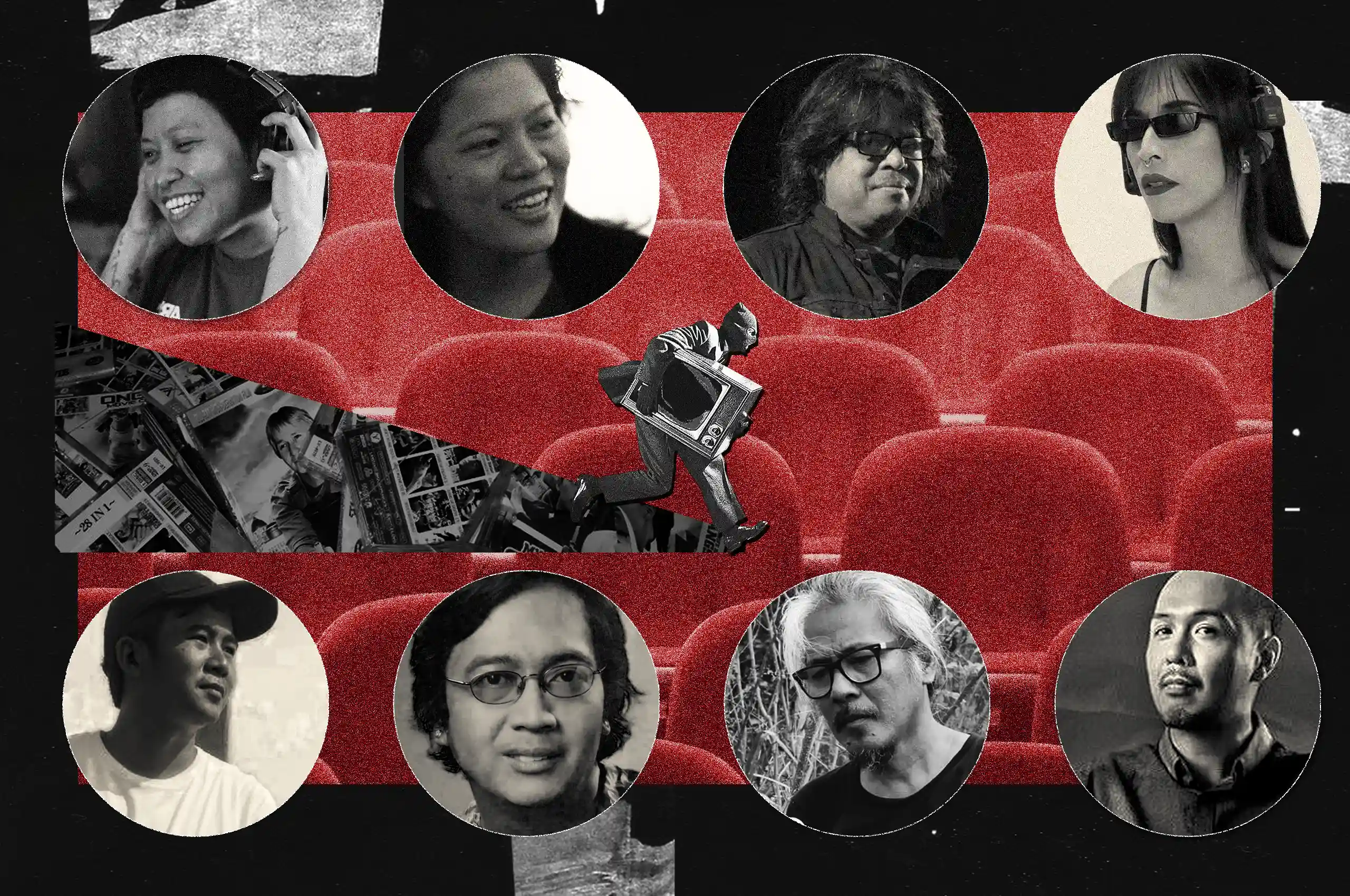
In late 2023, I spoke to eight featureFeatureA guest appearance by another artist on a song, usually credited as featuring or ft. in the title. Features introduce each performer to the other's fans, and they can sparkGo to Feature Glossary filmmakers (Rodina Singh, Irene Villamor, Dodo Dayao, Glenn Barit, Monster Jimenez, Jerrold Tarog, Lav Diaz, and Mac Alejandre) about their personal experiences of having their work pirated, how these have changed their relationship with piracy, and how it affects their work today, if at all.
Excerpts of the interviews have been translated from Filipino and edited for publication.
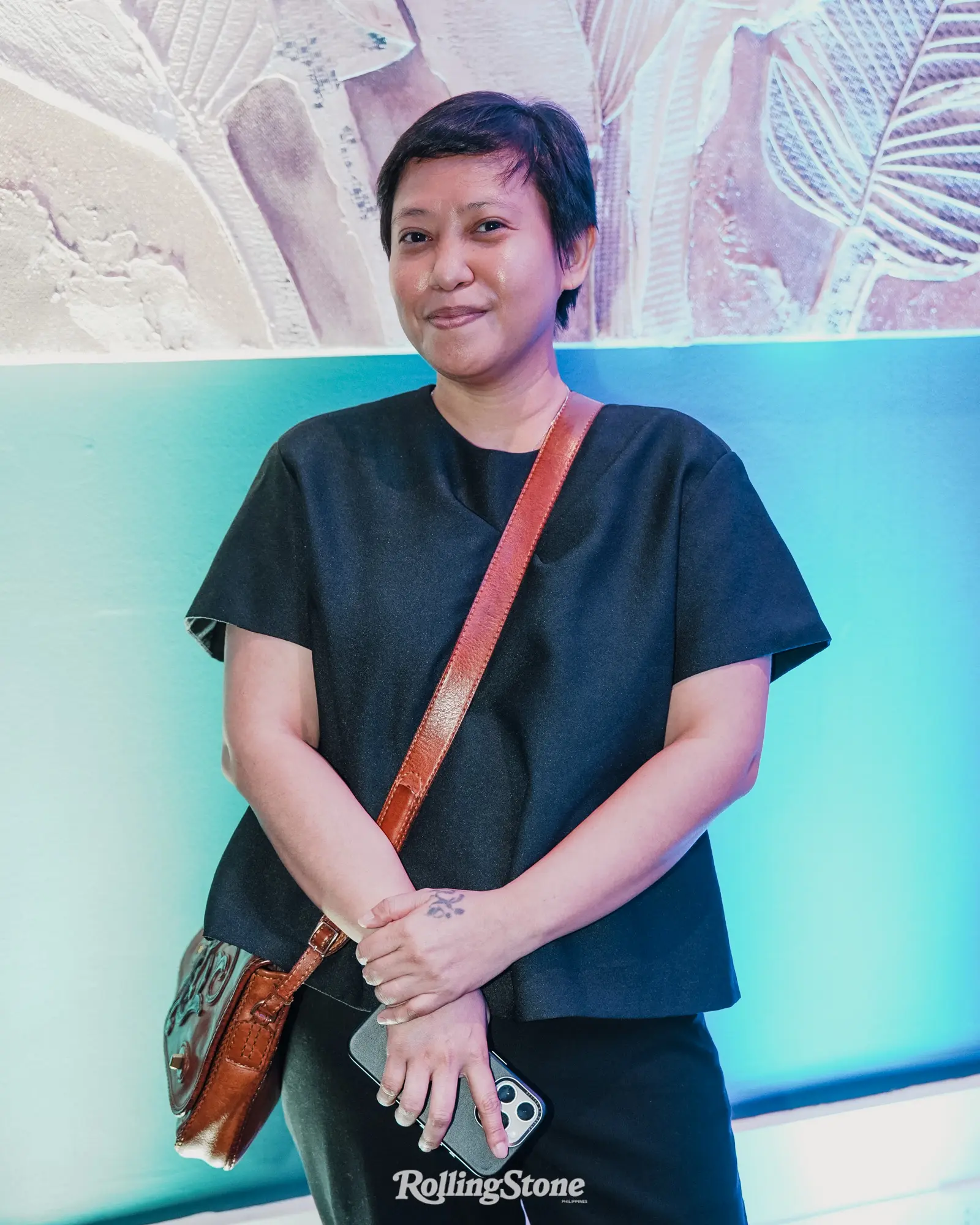
When was the first time you saw your own works pirated? Or what was the most memorable experience of finding out your work was pirated? Where were you and how did you feel? Could you describe the experience?
I can’t remember the first time I saw my work pirated. The most memorable was with Sid & Aya (2018). It was only a few days after the film’s commercial release, but we saw that the movie already had a Facebook link. I engaged by privately requesting the people who posted the link to take it down. Others were okay to do it and realize the effects of their actions. Or at least that’s what they said. But one commenter refused to do so and argued about him being an OFW who didn’t have access to recent Filipino films. He said piracy was more democratic. Why would an artist prevent others from seeing their work, especially if the audience can’t afford it? There’s an argument too about capitalism. So that definitely made me think. Though, of course, it hurts to see your work pirated.
IRENE VILLAMOR
Director of Ulan (2019), Sid & Aya: Not a Love Story (2018), and Meet Me In St. Gallen (2018)
Maybe Mar[io Cornejo] has forgotten about this. But it was in Quiapo or one of the malls in Pasig where they have poker near Greenhills. At the time, they were famous for selling 4-in-1 DVDs. The legitimate copies at the time were only being sold as VCDs. Big Time was made in 2005 and we were able to sell it [legitimately] as VCDs in 2006. This was a couple of years after and— of course, guilty as charged—we were also looking at stuff, for really hard-to-find arthouse DVDs. Then we saw a 4-in-1 DVD that had My Sassy Girl (2001), Big Time, Masahista (2005), and… I forget the last movie. I wanna say Kaleldo (2006) but I’m not sure. I think we kept that DVD, but I’m not sure where it is. My first feeling when we got it was that I was flattered. Everybody wanted to watch My Sassy Girl, so you know that at some point they were gonna watch our film if you bought it. So I bought it because, in my mind, why wouldn’t I? I also hadn’t seen Masahista anyway. Of course you’re thinking about your keep. But as an independent filmmaker, sometimes our objectives are different. If you put it to brass tax, it’s not a huge amount. What you want is for more people to see you.
But then I had my next experience: Respeto (2017). It was a hip-hop film. You know how active they are in the YouTube world. I was hoping that the super active hip-hop community would drive them into cinemas because we had a commercial run of Respeto. But as it turns out, they don’t go to the movies. At least the fans of Abra and Loony [don’t]. What they do like doing is pirating the damn thing. I’m not kidding. Especially after Cinemalaya. Treb [Monteras II] knew how active they were. It was a cultural thing. So we were very careful. We could trace where the movies were coming from that were being uploaded on Facebook and YouTube and almost every day, we had to report them. It almost became a hobby of mine and Treb’s.
From there, I think my relationship with piracy changed. It was affecting [us financially]. It didn’t do well at the box office. We did make some money, but even our trailer was pirated [by others]. You could see the movie cut up to their liking. That’s when it hits you that people think they can do whatever they want with the movie just because it’s been released. Without thought. The funny story there is that it got to the point that Treb got so frustrated about it that he would post them on our Facebook. “Pirata, wag gayahin.” [Laughs] At first, I told him not to do it. But then he was so frustrated because they were [repeat offenders]. It’s impunity. They did not care.
It still happens. We started tracing where it came from. I’m just going to say it because I hope they read it: It was really from the award-giving bodies. From all of them. You had to give them DVDs because a lot of them didn’t want links at the time. Maybe [some members] didn’t have fast internet. We put small watermarks on them, so we could tell where they came from. It’s not like they return the copies. So that’s what I learned. Especially with Leonor Will Never Die (2022). If an award-giving body demands a hard copy, we just say we can’t. If you don’t want to nominate our film, then okay. But there are ways for them to watch it. So we just went out of our way to give them a fast link, that wouldn’t be a hassle for the viewer. And I guess everyone should evolve anyway. So far, there haven’t been any violent reactions. They were just very… surprised that I was doing that now.
MONSTER JIMENEZ
Director of Kano: An American and His Harem (2010);
ProducerProducerThe person who shapes how a record sounds, from arranging and recording to guiding performances and making creative choices in the studio. A great producer can bring out the bestGo to Producer Glossary of Big Time (2005), Respeto (2017), and Leonor Will Never Die (2022)
What was your relationship to piracy before the incident(s)? Did having your own works pirated change your relationship with film piracy at large?
I’m pretty ambivalent about piracy, to be honest. On the one hand, I don’t think it’s my place to crusade against it. The only people who have any right to rally against its supposed ills are people who have never bought a single pirated DVD or downloaded a single torrent or never had a VPN. All it takes is one act of piracy in your past and you’re an automatic hypocrite if you go up on some sort of high-horse pulpit to condemn it. Here’s the quandary, though: I’m a full-time working filmmaker. I’d like my producers to earn revenue from my work. I’d like to make some cash from it, too. But both Violator (2014) and Midnight In A Perfect World (2020) never got a regular cinema run, never got a physical media release, never got on any streamer because not a single one was interested in picking them up. All the legal mechanisms for distribution tend to so far be prohibitive when it comes to getting my work out to its potential audiences. And if nothing else, I’d like for more people to see it, too, not least because every time I show it in special screenings, the response has been overwhelming. That’s why I tend to agree with [Werner] Herzog and Lav [Diaz] in that piracy may be the most successful form of distribution.
DODO DAYAO
Director of Violator (2014) and Midnight In a Perfect World (2020)
“I find it annoying when people who obviously can “afford” to pay are the ones who are at the forefront of pirating. I think they’re the problem. They use those who can’t afford it as a human shield.”
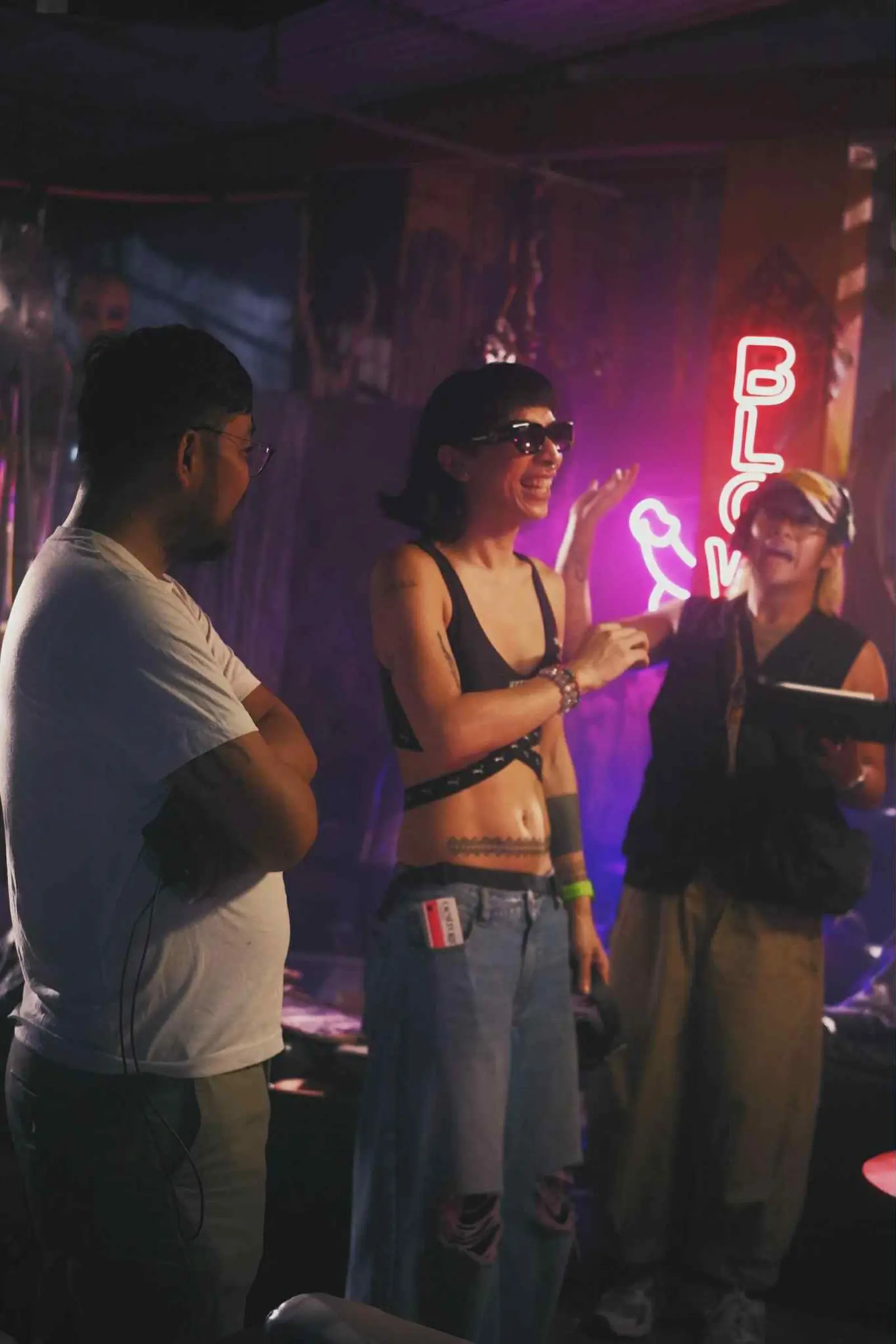
Of course, when I was a student, piracy was so helpful in allowing us to watch films that we couldn’t find in cinemas. This was during a time when paid streaming services weren’t available yet. Even if there were opportunities, I didn’t have the money to pay [for them]. But when my works started being pirated, I developed a different take and felt that it was still problematic in a business sense. To me, piracy is inevitable. Even if I know personally we shouldn’t pirate films, I settled for an alternative: “It’s okay to pirate as long as it isn’t locally produced.” People need to support [local filmmakers] for opportunities to multiply. With each film that performs at the box office, it gives birth to more films, more opportunities to tell stories. But when I think about how expensive it is to watch films nowadays — whether in theaters or through streaming — I develop these internal exemptions for those who are unable to pay. In truth, I do think people who can’t pay will pay. I find it annoying when people who obviously can “afford” to pay are the ones who are at the forefront of pirating. I think they’re the problem. They use those who can’t afford it as a human shield, a blanket. I think they’re ruining the future of production. They’re the ones who are truly stealing from us because it’s obvious they can afford it but simply choose to steal. This is different from people whose circumstances ask them to choose between watching a film in the theaters or eating several meals across several days. We make films for people who cannot always pay. We make films with their stories and experiences. So why should we punish them for pirating the work?
RODINA SINGH
Director of Mamu and a Mother Too (2018) and Drag Den (2022-2024)
I used to man my brother’s old computer shop when I was in high school. I’m the one who looks for music online and burns it on CDs for customers. In Cagayan, there are virtually no music stores and movies [screenings] are delayed for weeks, even months. Piracy was really the access for us, and it was free! So it was natural for me to pirate stuff through Limewire and Bearshare. Later on, it was so easy to rip from YouTube. And when I learned about torrents, the floodgates opened especially for world cinema. I still download stuff today.
This is a tricky subject for me. I’m sure every film/filmmaker is different. But in my perspective, now that I have a feature-length film made, Cleaners (2019), which was born out of the help from various people: like my parents who sponsored/cooked our food for our entire crew, my relatives who acted in it for free, my filmmaker friends who took their roles on a huge discount, and even strangers who supported it through crowdfunding. It was hard to see our film be shared so easily in unlisted YouTube links, untraceable websites, and in Telegram links. My film friends and I are now doing these stupid day jobs just to survive but this thing we poured our hearts out in 2019 doesn’t give as much to sustain us. And we also give bonuses to our crew if we can — it’s not all top-heavy.
The other side of the coin is that we really want our film to be seen. Who doesn’t? But our film is having difficulty getting into streaming or having proper distribution. A lot of people want to see our film, but we can’t really point them anywhere. One question that usually pops up is: “Why don’t you just upload it on YouTube?” My answer is we won’t gain much from that. Films have this sort of life, that when they get older, they get less valuable. So as much as we can, we’re still trying to sell our film on platforms, before its life/value ends. My timeline is around five years. After that, maybe we can upload it on YouTube for anyone to see. I’m still figuring out how to DIY and self-distribute it after trying the streaming options. But our film is heavily pirated now on different websites and Telegram groups. I watched it once on a site before. [Laughs]
So with these experiences, my personal compromise is to let local cinema breathe. I only download international stuff now. Hollywood especially, since their budgets are so huge compared to us. Piracy may not even be that much of an issue for them. But for local cinema, let them sell their films on streaming. Or let them try screening on big screens, especially for the independent ones. Of course, different films work on different business models too. Not all sales make their way to the makers. But if we have a simple general rule: let Philippine cinema earn a little. Sometimes it’s their fuel/energy to make more stuff that might be nice and pay the crew well. Also, a lot of directors give out screeners, if you ask them nicely. Lastly, I think of piracy as a symptom, not the disease.
GLENN BARIT
Director of Aliens Ata (2017) and Cleaners (2019)
Do these experiences inform your practice now?
My film Tagpuan (2022) was part of the 2020 Metro Manila Film FestivalFilm FestivalAn organized event that screens a curated selection of films, often with premieres, awards, and talks with filmmakers. Festivals are important launching pads for independent and international cinema, and inGo to Film Festival Glossary. The screening was online [for the first time] because we were still amid the pandemic. It was a huge risk. Because of the pandemic, there were almost no films being made. Then, as soon as the festival began, several online pages popped up and started selling films that were part of the festival. They were bundled to become cheaper if you watched three of the films. It was so cheap to get the link. It hurt a lot for the producers and everyone who was part of the festival. We were already struggling [because production had halted] and here we were, being robbed. I recall there was a coordinated effort from various agencies to end piracy. But pirates have a different level of strength and resilience. Even now, they’re very open on social media. I still see some films being sold for around P10. No film can really escape piracy. I don’t know how, but I do hope there’s a way to end it soon.
MAC ALEJANDRE
Director of Ang Panday franchise, Selina’s Gold (2022) and Tagpuan (2022)
“Piracy is a consumerist thing.”
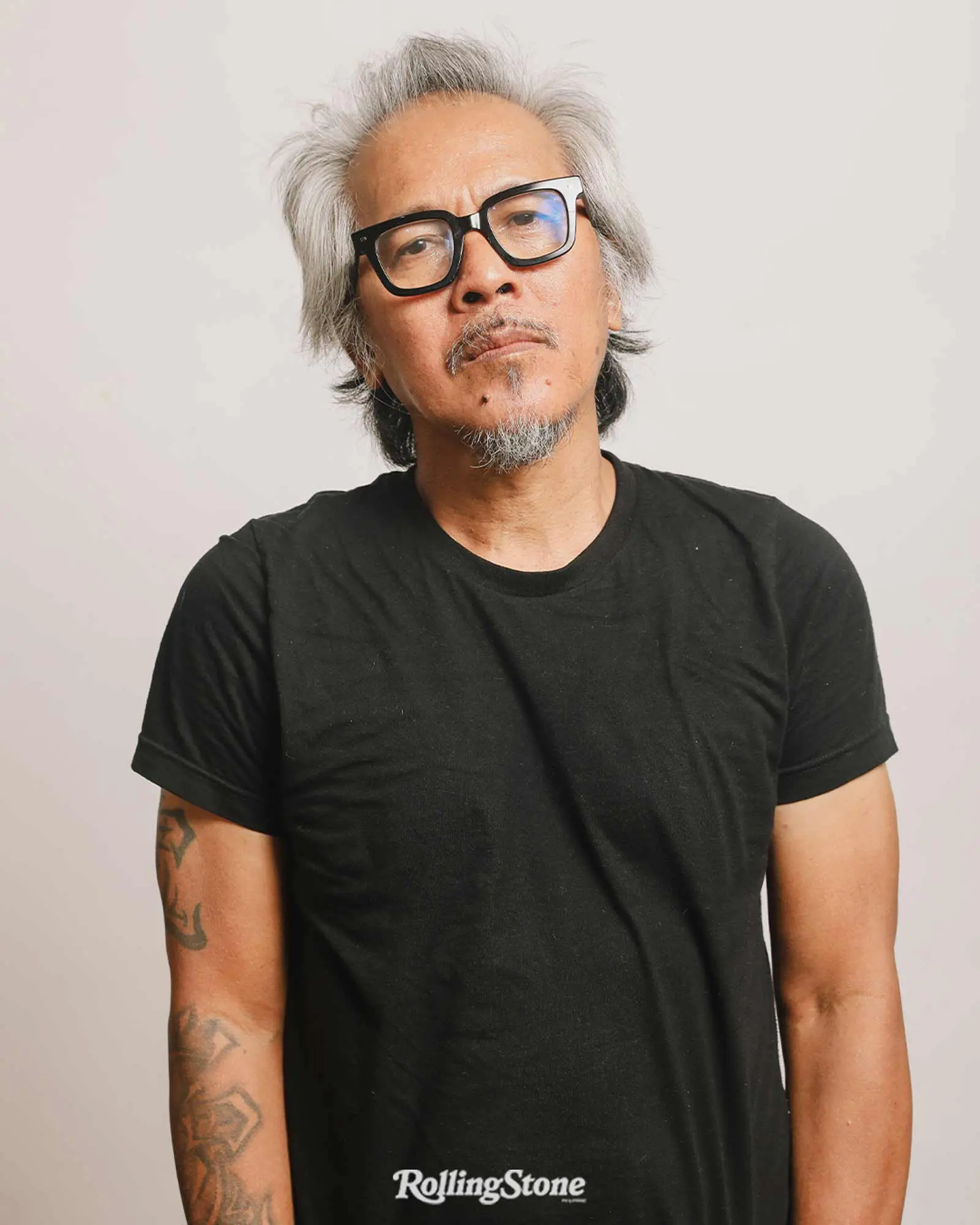
Of course. In Europe, sometimes they see Engkanto (2007) or Melancholia (2008). They sell my works. I remember walking in one of the Slavic countries [and seeing my works]. But they weren’t properly made. Some of them were copied or videoed during a screening and just slapped on a title and sold on the streets. I saw Perfumed Nightmare (1977) by Kidlat Tahimik there. [Laughs] You’ll be surprised. I saw it along the streets of Croatia too. I told Kidlat and he just laughed.
Piracy isn’t unique to us. It’s everywhere. I remember in Poland, I was with a filmmaker from Ukraine who was surprised to see all of his films being sold on the street. He said, “Wow, these are my films!” Some people are collectors of those kinds of films. If they know that there’s a market for your film, if there’s a niche, they’ll copy it. I think there’s an underground market but on the internet. You pay them and they send you a link or a physical copy. Or sometimes a drive that you send over and they transfer it and return it to you.
It’s an underground market. The collectors of VHS copies still have those. But it’s a unique collector system. They look for specific copies. There’s a collector of The Godfather who looks for DVD copies, Beta copies, etc. Hardcore collectors. I slept at a programmer’s house once. He’s that kind of collector. He has films that he really loves and he’ll collect all kinds of copies of that film, from miniDVs, CDs, to DVDs.
Piracy is a consumerist thing. But there are real collectors. They don’t care about the discourse on it. They don’t care if it’s illegal or unauthorized. They want something and piracy provides for that need to collect things, find things. The dichotomy of the seeker and the giver is a very psychological thing. It addresses the human’s yearning to see things and have things. If you want larger discourse on piracy, make it about that. Not just about the market, but the human needs. Some pirates who are producers of the unauthorized market… they’re not really thinking about these sociological and psychological needs of the person. All they know is that it sells. But if you dig deeper, it’s about fulfilling an unaddressed need. Maybe it’s even an addiction.
If you still remember Gino Dormiendo, the great critic during the era of [Lino] Brocka, he was my neighbor in Marikina, and he really collects things. His collection was expansive. But he got sick and had to sell things. From scraps of films to DVDs, that’s where he’d spend his money. It’s hoarding. He wouldn’t watch it. He’d leave it in boxes. Films by Brocka, [Ishmael] Bernal, [Martin] Scorsese, [Andrei] Tarkovsky. It’s collecting for the sake of collecting. I bought so many things from him then. When he was sick, he started selling them for cheap or even giving them away for free.
LAV DIAZ
Director of Batang West Side (2001), Norte (2013), and Ang Babaeng Humayo (2016)
If anything, all of this has convinced me that we should find ways to keep the tradition of watching movies in theaters alive. Give the film a window to earn outside of digital platforms. That has the added benefit of resisting the atomized experience of watching films through digital and strengthens the communal experience of cinema. But that brings about the question of what can be shown in theaters these days because the landscape is entirely different from how I started. Something — some movement or some film — has to reignite the filmgoing experience, particularly in local cinema. We need a film experience that stays with us beyond the transitory nature of memes and that can draw out deep emotions and long conversations in public. We need films that can actually change lives again.
JERROLD TAROG
Director of Sana Dati (2013), Heneral Luna (2015), and episodes of the Shake, Rattle & Roll franchise
This article was first published in the 2024 issue MARG1N, a print-only Southeast Asian film magazine based in Phnom Penh, Cambodia. The annual publication links two Southeast Asian countries, in this case Cambodia and the Philippines, under a single theme, and seeks to “introduce curious readers to the contemporary pulses, countercultural narratives, and overlooked histories found within the region.” Titled “MARG1N Issue 1: pirate.lov3r.2024.mkv,” the issue revolved around histories of piracy between Cambodia and the Philippines. Special thanks go to editor-in-chief Savunthara Seng and conceptual and managing editor Alyssandra Maxine for allowing this piece to be republished in its entirety.