

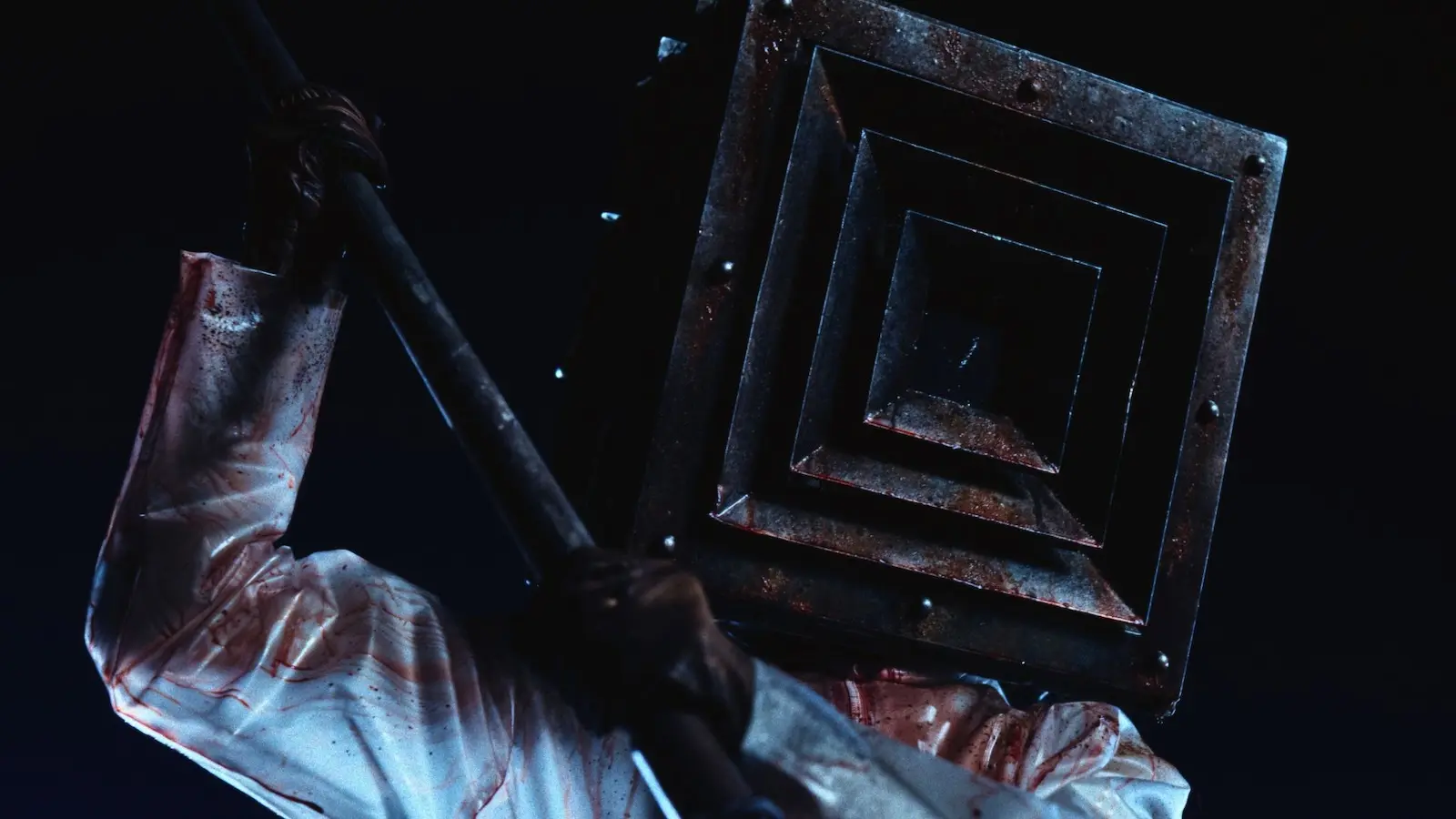
Minutes into Jane Schoenbrun’s Queer Palm-winning meta-horror comedy Teenage Sex and Death at Camp Miasma, a montage recounts the life, death, and endless resurrection of a fictional slasher franchise called Camp Miasma. Across fake trailers, newspaper clippings, botched posters, and failed promotional tie-ins, Schoenbrun chronicles how a once-successful Friday the 13th-esque horror film is repeatedly revived, repackaged, and resold across decades. At the center of Camp Miasma is Little Death, a Jason Voorhees-esque serial killer wearing a ceiling vent as a helmet whose continued existence feels less like a manifestation of some primal fear than a mascot for cultural exhaustion.
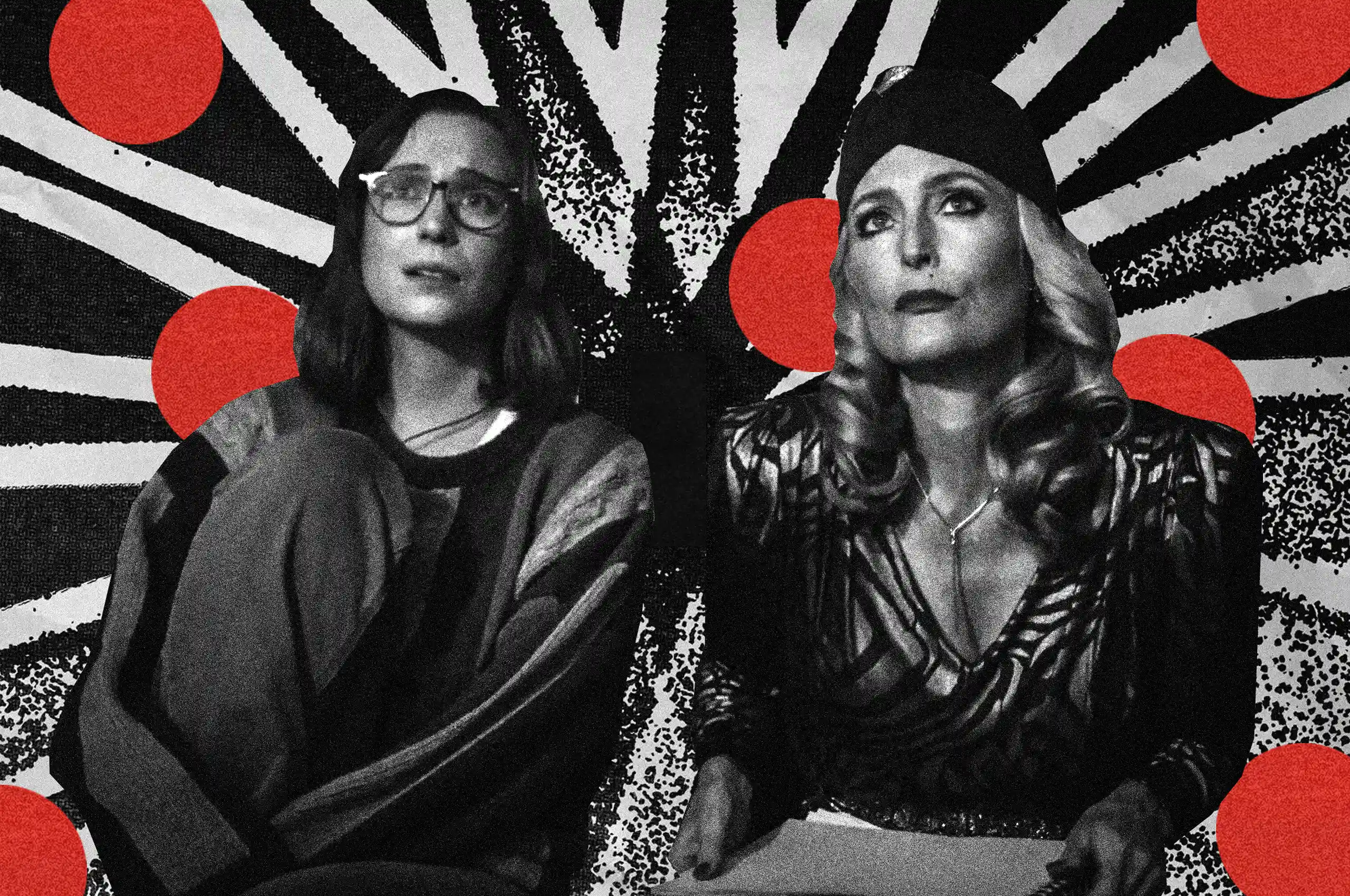
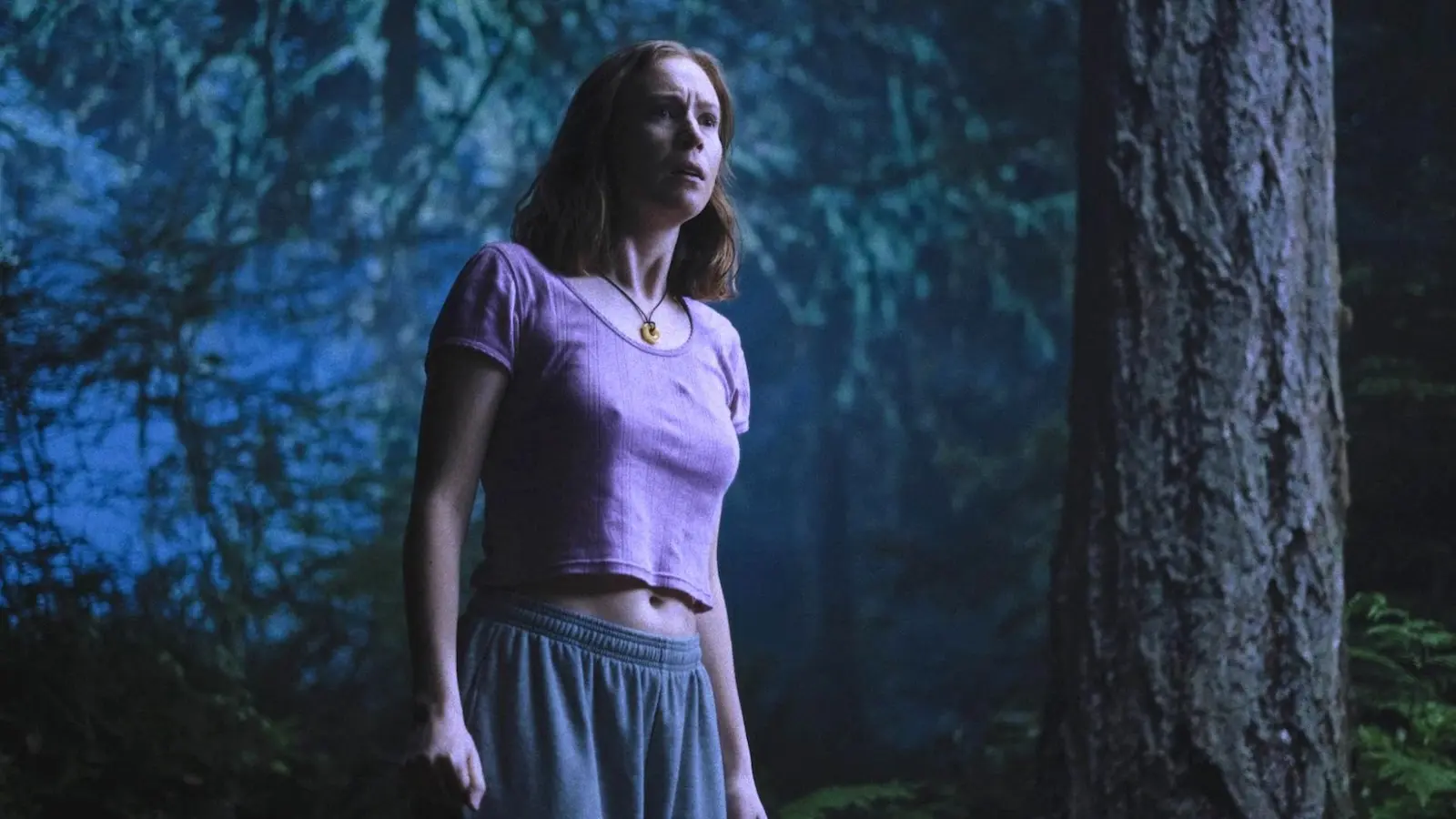
Soon after, we meet Kris (Hannah Einbinder), a filmmaker who, like Schoenbrun, broke through at Sundance before being recruited to direct a reboot of her favorite zombified franchise. Trapped in a passionless polyamorous relationship and struggling to find other work, Kris uses the assignment as an excuse to search for Billy Preston (Gillian Anderson), the elusive final girl of the original film and Kris’ queer and sexual awakening. When Kris finally locates Billy living beside the same lake where the original film was shot, not even she can be convinced Camp Miasma deserves to be revitalized — less so by a person whose intellectual interests in “the intersections of queerness and intellectual constructions of monstrosity” keep her at odds with a film about “flesh and fluids.”
What would it take for us to stop depending on resurrected intellectual property to keep the industry alive?
Schoebrun’s blood-soaked horror is closer to satire about the industry than a genuine slasher. Extended sequences of brutal beheadings, convoluted franchise mythology, and hot gratuitous lesbian sex emerge less from narrative impetus and function more as metatextual homage and autopsy of a dying genre. Teenage Sex and Death at Camp Miasma delights in the pleasures of genre signifiers while dissecting a form that is increasingly trapped by its own history.
It’s an insight that extends far beyond horror. Like the bodies repeatedly butchered and revived within the film, Camp Miasma is a Frankenstein’s monster assembled from the film and TV industry’s worst instincts: the endless sequels and reboots, the corporate retrofitting of old properties to accommodate contemporary liberal politics, and worst of all, the recruitment of emerging auteurs to lend legitimacy to aging intellectual property. It’s funny but it’s also fucking bleak and beneath every setup and punchline builds toward a question that haunts filmmaking today: What would it take for us to stop depending on resurrected intellectual property to keep the industry alive?
It’s impossible to watch Schoenbrun’s film, much less attend one of the most prestigious festivals in the world, without viewing it in the context of contemporary cinema’s broader fixation on the past. Even at this year’s Cannes, many of the most discussed films are modern retellings of other films. For instance, Asghar Farhadi’s Parallel Tales was widely panned as a pale reworking of Krzysztof Kieslowski’s Dekalog VI, while Andrey Zvyagintsev’s Grand Prix-winning Minotaur takes Claude Chabrol’s The Unfaithful Wife and transplants it into Putin’s post-pandemic Russia, creating a devastating political tour de force. The film’s successes don’t necessarily hinge on their source materials, but these facts hang over every screening like a guillotine.
Outside the festival circuit, this pattern becomes even more pronounced. The film and television industry has spent the last decade banking on familiarity to draw audiences into cinemas. The biggest box-office successes of the post-pandemic era have emerged from preexisting intellectual property and people’s nostalgia towards them: whether they’re toys (Barbie), video games (The Super Mario Galaxy Movie), musicians (Michael), long-awaited sequels (The Devil Wears Prada 2), live-action adaptations of animated classics (Lilo & Stitch), continuations of shared universes developed in television (The Mandalorian and Grogu), or crossovers of multiple franchises (Deadpool & Wolverine). Despite clamor from the public and producers for original work, contemporary film culture creates based on what has already succeeded.
Teenage Sex and Death at Camp Miasma homes in on the absurdity of this elliptical logic of filmmaking that demands originality while parsing horror’s peculiar position within it. Horror is perhaps the genre most guilty of self-cannibalization: it thrives on self-reference and metatextual reinvention. Franchises such as Scary Movie and Scream began as contemporary interrogations of the genre itself, poking fun at how the audience’s familiarity with rules and tropes classic to the genre can be weaponized against them, creating a unique theatrical experience. Yet the continued presence of these film franchises long after they have anything meaningful to say has only proven to audiences why they should have long died.
The newest intellectual property is no longer the monster or the franchise, it’s the filmmaker.
At the same time, horror is also one of the few genres capable of introducing genuinely new faces, directorial voices, and concepts on relatively low budgets. Danny and Michael Philippou transformed their YouTube virality as RackaRacka into two critically acclaimed features with Talk to Me and Bring Her Back. Markiplier’s Iron Lung opened on “2,500 screens without a distributor,” using the clout he amassed on YouTube to put seats into theaters. The 20-year old Kane Parsons transformed years of Blender-generated YouTube videos into a major studio production with Backrooms while the 26-year old Curry Barker’s Obsession first generated buzz at Toronto, later being acquired by Focus Features for $15 million and becoming one of the year’s global breakout successes.
Yet even these successes remain embedded within systems built to commodify. Backrooms might be touted as an original but it emerges from years of internet mythology cultivated through YouTube videos, Reddit threads, and online conversation. Barker has openly discussed how the seed for Obsession originated from a The Simpsons parody of The Chaser, a lesser-known episode of The Twilight Zone. Even Iron Lung’s success can’t be purely attributed to its origins in the 2022 submarine simulation horror game but in the ways it leveraged Markiplier’s existing fanbase.
Rather than discussing how artists transmute their cultural references into a film for contemporary audiences, the conversation immediately shifts towards sequels and expanded cinematic universes that expand the film’s market potential. The moment something succeeds, we stop considering it as work or art and start treating it as an investment. The pipeline from YouTuber to horror filmmaker might have become one of the most reliable entry points for a new generation of directors, but it is also indicative of a new problem that Schoenbrun seems to confirm within the lore of her film: the newest intellectual property is no longer the monster or the franchise, it’s the filmmaker.
The question is no longer whether we can create something original and compelling but rather what parts of ourselves we are willing to sublimate into the capitalist machine.
Like Barker, Parsons, Markiplier, and the Philippous, Kris is valuable not only because she “did a retelling of Psycho from the perspective of the shower curtain,” but because she has the makings of a brand. Her queerness, personal experience, and creative identity fuel the franchise and insulate its executives from critique. Viewed through this lens, Kris’s predicament of becoming assimilated into the fabric of Camp Miasma itself becomes less a joke about horror as a genre and more a nightmare about contemporary cultural production.
Perhaps it is this detail that makes Schoenbrun’s film deeply unsettling. The question is no longer whether we can create something original and compelling but rather what parts of ourselves we are willing to sublimate into the capitalist machine. In Schoenbrun’s vision of horror and the future, intellectual property no longer merely consumes stories. It assimilates the people who create them.