


You could say that my relationship with him existed only in the dark of a movie theater, sometimes in the glow of a TV screen, 10 p.m. on a random weeknight.
I found him three or four years ago when a friend emphatically said to me, “You have to watch Maynila sa mga Kuko ng Liwanag (1975),” leaving me no room for doubt. That’s how I met Lino Brocka.
After Maynila, I watched Insiang (1976), Bona (1980) and Cain at Abel (1982), one after another, mesmerized by how strangely persistent the themes and characters felt. They lived decades ago, clothed in polyester knits and impossible form-fitting, high-waisted pants in a physical landscape largely long gone. I never actually saw or experienced the specific worlds Brocka recreates in these films, but combined with the traces of collective cultural memory, they produced in me an uncanny recognition.
Brocka was also telling me something new. Through his films, he was making starkly visible the illusions and archetypes, hierarchies, and myths underpinning the structures of everyday life in the Philippines. Decades ago, we didn’t quite yet have the words to name what he was laying bare in such stark relief.
I began to search for more Brocka films. In just over two decades, Brocka had directed 64 films, six of which are now believed to be lost. You can find some on the Criterion Channel, and a few on Viva Films’ YouTube channel.
MainstreamMainstreamThe ideas, styles, and works that reach the widest audience and dominate popular attention, such as radio hits and blockbuster films. The word is often set against indie or underground,Go to Mainstream Glossary movie theaters in Manila were no help. I made vague plans to check Cine Adarna at the UPFI Film Center, or perhaps one of the Film Development Council of the Philippines (FDCP)’s Cinematheques. Why was it so difficult to find movies made by a “National Artist” in his own country, in the very city he recreated and rendered iconic so many times on screen?
Meanwhile, on the other side of the world, Lino Brocka was the subject of the most ambitious retrospective of his work to date at the 24th edition of the Doclisboa International Film FestivalFilm FestivalAn organized event that screens a curated selection of films, often with premieres, awards, and talks with filmmakers. Festivals are important launching pads for independent and international cinema, and inGo to Film Festival Glossary, held in Lisbon, Portugal, from October 15 to 25. Kill the National Artist, curated by Khavn, together with Luis Mendonça of Cinemateca Portuguesa and Cecilia Barrionuevo (Argentina) of Doclisboa, the retrospective featured 20 of Brocka’s films and included the world premieres of the restored versions of both Orapronobis (1989) and Gumising Ka… Maruja (1978).
The retrospective would include not just a pre-festivalFestivalA multi-act music event, often held over several days, where many artists perform across different stages. Festivals combine live music, food, art, and community, and they give audiences a chanceGo to Festival Glossary presentation of Bona, but also feature a formal opening event, a concert performance by Khavn, and a roundtable discussion of the Lino Brocka legacy. It wasn’t just a screening of several rare films: a deliberate space was being created so that Lino Brocka’s work would be reviewed, discussed, and reconsidered. The central irony of this was that he seemed to be far more accessible and in demand in Portugal than in the Philippines. Of course, the heavy censorship of Brocka during both the Marcos and Aquino regimes complicates this picture. I would learn later that some of these films in their exact versions at Doclisboa had never been shown in the Philippines at all.
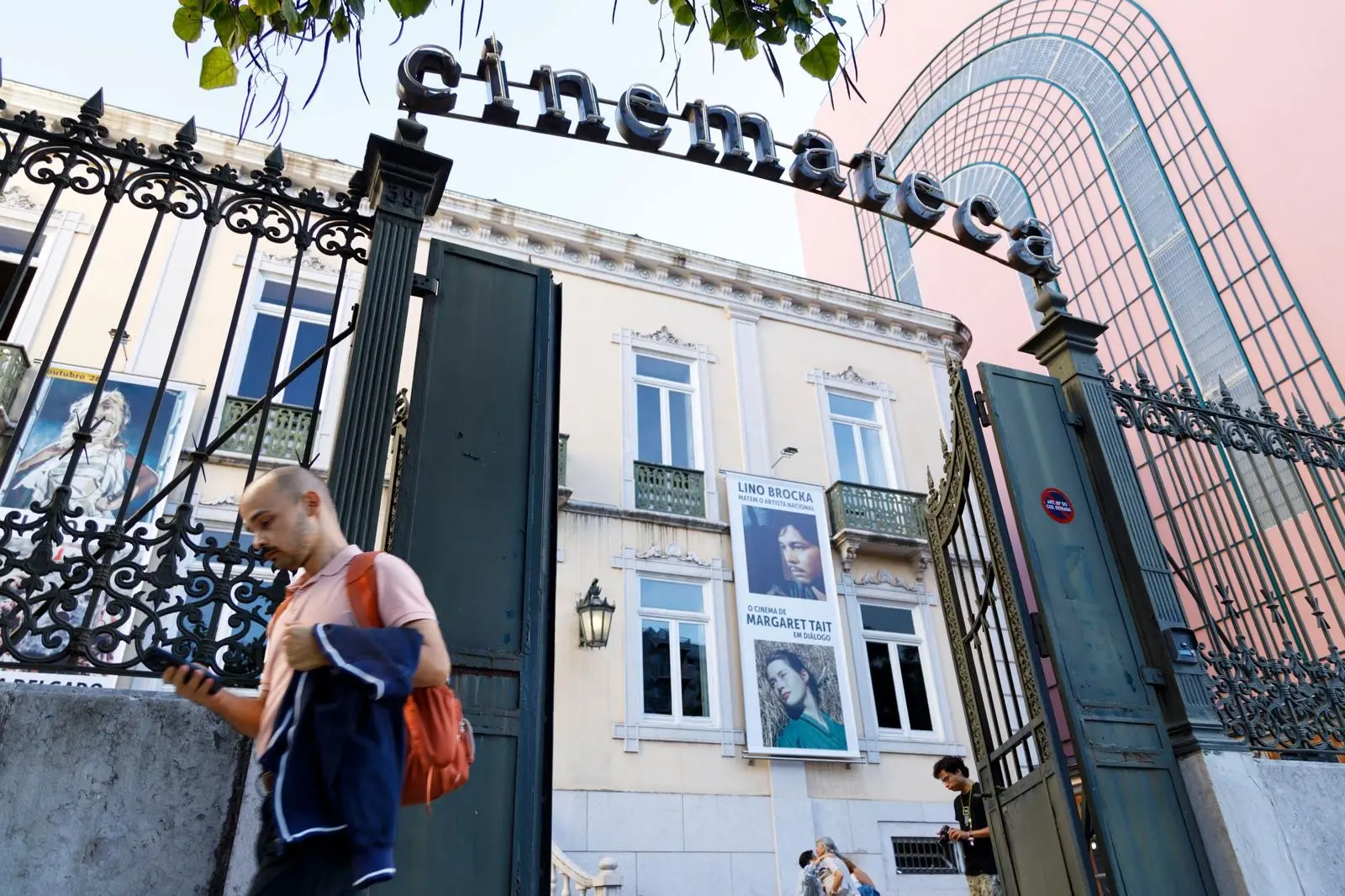
The retrospective’s title, Kill the National Artist, grabs your attention because of its inherent paradox. Look into the curatorial script reproduced below from the printed catalog, and its manifesto becomes clear. Khavn — whose recurring declaration, “This Is Not a Film by Khavn” calls to mind René Magritte’s painting “The Treachery of Images” (1929) with its famous inscription “, Ceci n’est pas une pipe (This is not a pipe”) — manages to be precise and poetic all at once. Characteristically, he begins with a negation:
In the Philippines, ‘national artist’ is not a compliment. It is an official title, conferred by the state, the highest honour the government can hang on an artist. Brocka received it in 1997, six years after his death. The same state had banned his films, jailed him without trial, cut his prints, and forced him to the Supreme Court to argue that his country had the right to see itself. He was decorated posthumously, which is to say he was not consulted. Consulted, he would have refused. He called himself an anarchist. So the title of this retrospective is not a provocation. It is a correction.
The first film I saw turned out to be Macho Dancer (1988). I paid €3.20 (about P230) for the screening at the Cinemateca Portuguesa. That’s over P100 cheaper than the ticket I paid to watch this year’s Cinemalaya lineup back in Manila in August, half of the regular ticket patrons pay to see a new Hollywood movie in Manila’s commercial theaters. Then again, this is Portugal’s state-supported national film archive, just 100 meters from the Philippine Embassy in Lisbon. Housed in a restored 19th-century residence, the institution was a historically resonant setting for this elusive, genre-defying film, which had premiered in its restored 4K version at the Museum of Modern Art in New York City in January.
Critics have sharply attacked Macho Dancer for its overt demonstration of homosexuality, with boys in the prime of their lives servicing purposefully unattractive clients for desperately needed cash — a portrayal of an ugly, exhaustingly repetitive, economic exchange. These macho dancers’ plight is often dismissed because it doesn’t line up with the aesthetics of conventional morality.
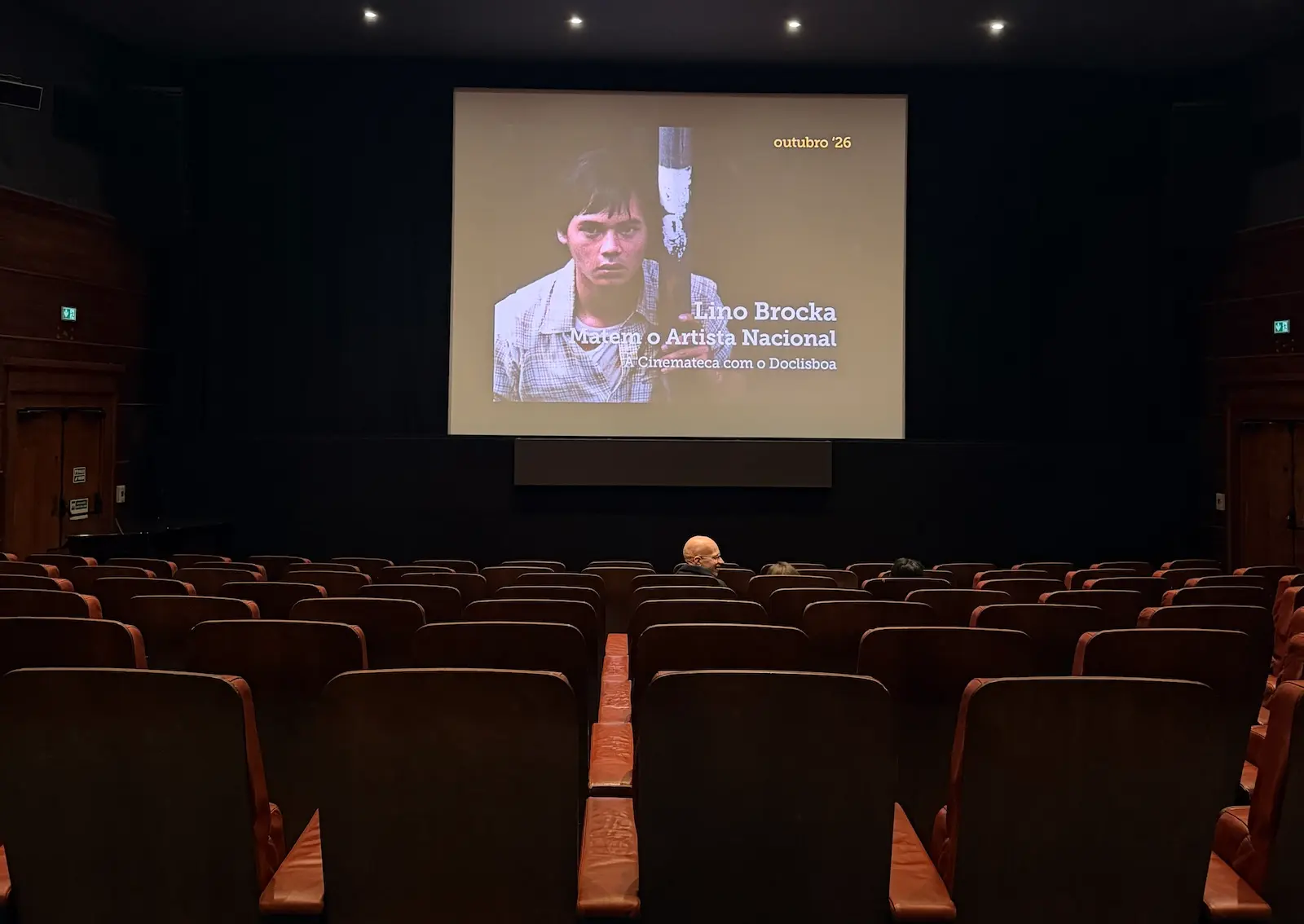
I saw Ina, Kapatid, Anak (1979), Wanted: Perfect Mother (1970), Sa Kabila ng Lahat (1991), Orapronobis/Fight for Us (1989), and Gumising ka… Maruja (1978) next.
Orapronobis upended most of my expectations because all the opening credits were in French, including a title card that misleadingly stated that the film was of actual happenings shot in a clandestine manner. Brocka had not agreed to this. The Latin title Brocka chose was also deemed too religious by his Paris-basedBasedBased is slang expressing approval for someone unapologetically stating their genuine opinion, regardless of whether it's popular, controversial, or conventionally acceptable within discourse. Originally associated with certain online political subcultures,Go to Based Glossary backer and didn’t appear on screen as far as I could see. To appeal to French audiences, it was titled Les insoumis, which can roughly be translated as “those who will not bow down.”
The version screened at the Cinemateca has never been seen in the Philippines, or in the United States for that matter. It was censored for scenes containing graphic violence, including cannibalism, but was moreover deemed an embarrassment for the Philippine administration due to the continued human rights violations and paramilitary killings it depicted during the Aquino administration.
I made it a point to watch films outside the political cinema too.
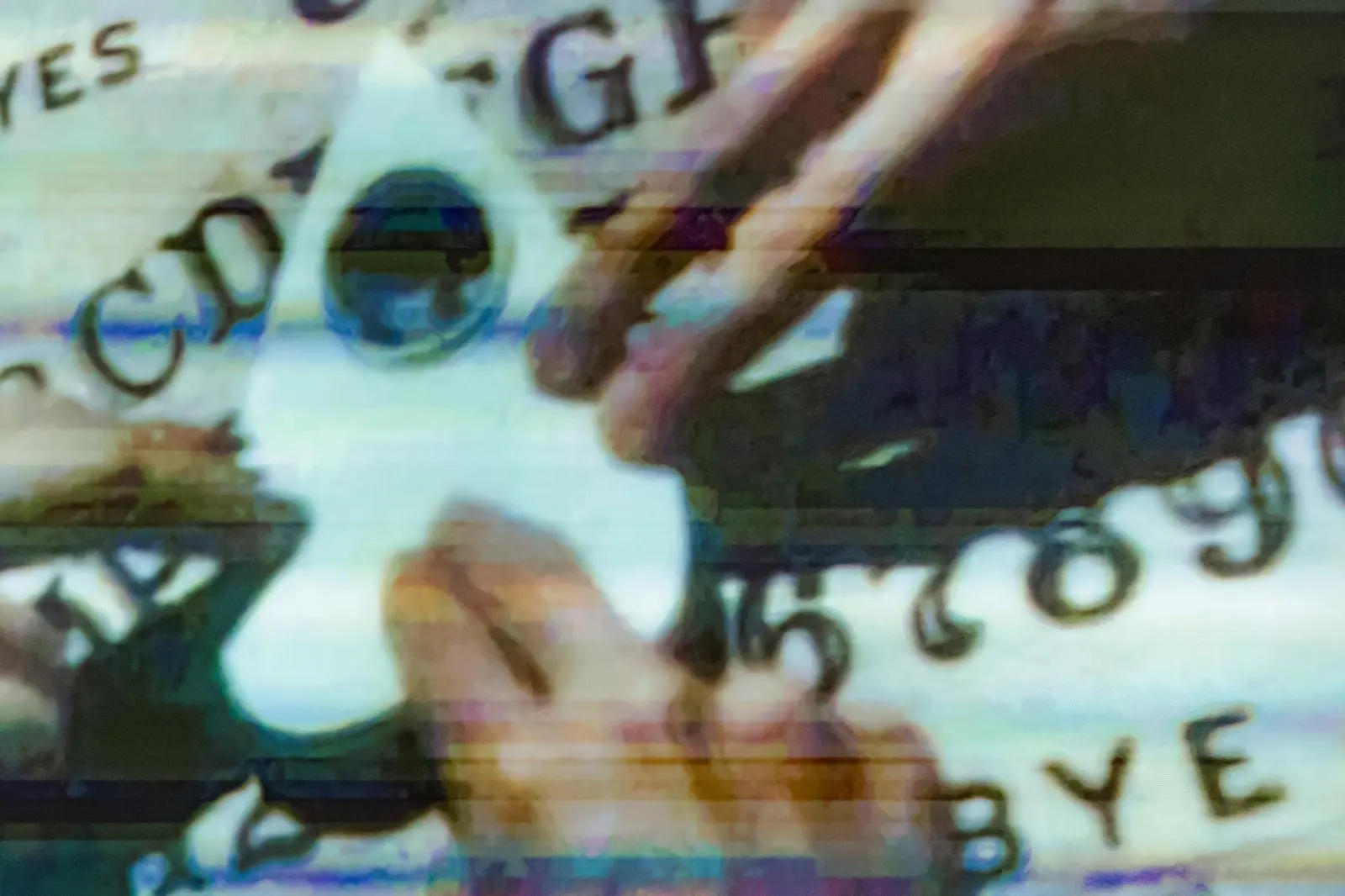
Philippine gothic film Maruja displayed a fascinating mix of influences, including a bit of Oscar Wilde’s The Picture of Dorian Gray tossed in with Federico García Lorca’s La Casa de Bernarda Alba, but it was the late director and actor Fritz Ynfante, who remains unforgettable in my memory as the apparently gay production director whose extensive knowledge of Philippine antiques and furniture was beyond impressive. His performance was a highlight, as was a scene where Mario O’Hara, who plays Freddie, speaks in Tagalog to Phillip Salvador, who plays the long-dead Rodrigo de Velazquez. The language of choice for the latter is Spanish, when he wants to say something he thinks is important, anyway. The irony is that they attempt to speak through the decades mediated by a Ouija board. Without a doubt, many things have been lost in translation.
Ina, Kapatid, Anak also dialogues and echoes García Lorca (even more than Maruja) within the Filipino favorite setting of the ancestral house. AuthoritarianismAuthoritarianismAuthoritarianism is a system of government that concentrates power in a leader or small group, limiting political freedoms, dissent, and independent institutions. It differs from democracy in lacking accountability, andGo to Authoritarianism Glossary is tyranny outside the home, but Ina, Kapatid, Anak, in the simultaneously banal and astounding display of matriarchal abuse and humiliation inflicted by Emilia played by Charito Solís, on her daughter Erlinda, played by Rio Locsin, begs the question: Is it not just as damaging, unchecked inside the home, cloaked in the impregnable costume of love and genuine concern?
Wanted: Perfect Mother, based partly on a Mars Ravelo komiks, turned out to be a favorite. Brocka’s portrayal of the “loyal servant” Lucia, played by Caridad Sanchez, is laugh-out-loud endearing. In his curatorial materials, Khavn says that the movie “says nothing about class but is about it entirely.” To see what “the perfect mother” looked and acted like in 1970, watch this film with Liza Lorenza as Elsa and Boots Anson Roa as Carla.
On the festival’s penultimate day, I watched Tinimbang Ka Ngunit Kulang (1974) and Jaguar (1979) in a five-hour stay at the theater. Tinimbang, which helped usher in the Second Golden Age of Philippine cinema, evoked for me Giuseppe Tornatore’s Cinema Paradiso (1988) in its portrayal of youth coming of age amidst the cruelties and absurdities of provincial life. Jaguar, to my surprise, was subtitled in Portuguese and French only. I had invited an English-speaking friend to join me at the screening and was mortified by this discovery. The movie title Jaguar is the inversion of the Spanish word “guardia,” which coincidentally follows the mechanics of both French verlan and some Tagalog street slang. The main character in this film is security guard Poldo Miranda. His image graces the cover of José Capino’s book, Martial Law Melodrama: Lino Brocka’s Cinema Politics (2020), his arms raised in surrender as he stands upon a mountain of garbage caught in a sona, an unannounced middle-of-the-night police raid that regularly occurred during the Marcos years. This sort of activity, reflective of the police state, is detailed in the book.
Dalaga si Misis, Binata si Mister (1981), Bayan Ko: Kapit sa Patalim (1984), Ang Tatay kong Nanay (1978), Oca (1990), and Ano ang Kulay ng Mukha ng Diyos? (1985) were also screened. Khavn originally had about 30 films he had hoped to show at the festivalFestivalA multi-act music event, often held over several days, where many artists perform across different stages. Festivals combine live music, food, art, and community, and they give audiences a chanceGo to Festival Glossary, but these, together with the ones mentioned above, the Christian Blackwood documentary, Signed: Lino Brocka (1987), and Gumapang Ka sa Lusak (1990), were the 21 that made up the official Doclisboa selection.
If I could, I would have liked to ask filmmaker and screenwriter Achinette Villamor more questions. She was one of the three panelists at the round table “The Legacy of Lino Brocka” on October 20, which included Khavn and filmmaker and Doclisboa juror John Torres, who was showing three of his films in the festivalFestivalA multi-act music event, often held over several days, where many artists perform across different stages. Festivals combine live music, food, art, and community, and they give audiences a chanceGo to Festival Glossary’s New Visions category.
Achinette confirmed that Europe has more access to our great film directors than we do. She added that a fee of about $1,000 USD would have to be paid to the ratings board for each film, raising ticket prices. Complicating the issues is that Brocka died, childless and without an estate. It turns out that the rights to many of the films are either in limbo or belong to foreign entities. Khavn described it as “another form of colonialism.”
Khavn also shared “Brocka spoilers” with the audience. It consisted of snippets of seconds-long excerpts of what seemed to me — in the moment — obscure Brocka creations. But I realized later that this is the work artists and academics do, resuscitating fragments of literature, film, or urban archaeology by studying them with a dedication that gives them new meanings in contemporary contexts, allowing them a way to survive. This kind of work is never fully appreciated until decades later — if at all. There is no doubt that Khavn’s work across music, literature, and film has helped expand the possibility of Philippine cinema both at home and abroad.
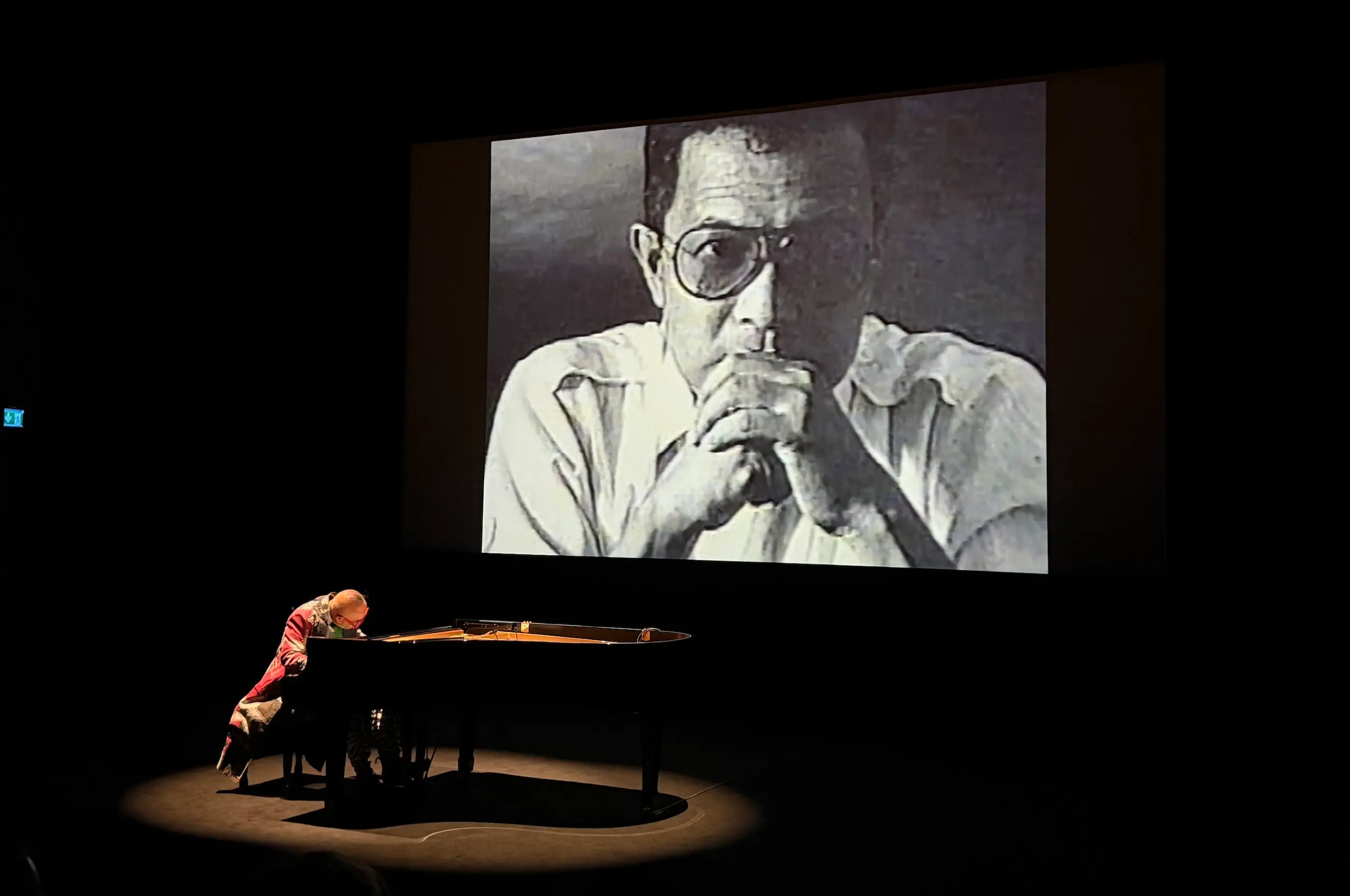
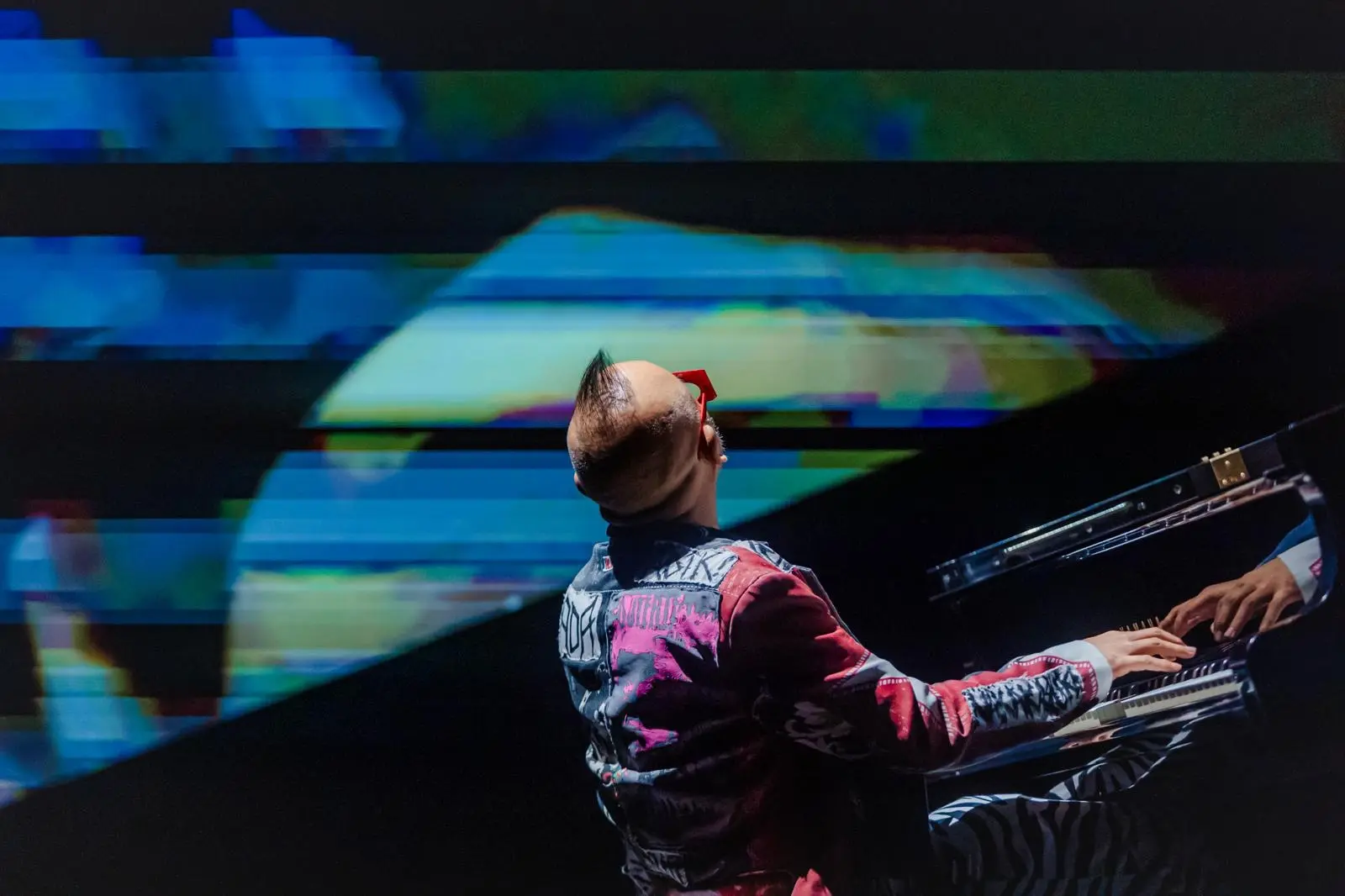
A 30-minute walk north of Lisbon’s historic center brings you to the Centro Arte Moderna (CAM) Gulbenkian, where, under its 100-meter-long undulating canopy clad in white Portuguese ceramic tiles, Khavn was given a standing ovation for his film and accompanying piano improvisation, Lino Brocka: National Anarchist (2023), on the evening of October 17th.
A scan of the people seated around me revealed a largely European audience. Introductions were read in Portuguese first, followed by Spanish and then English. The presenting curators told us to expect something spiritual, along the lines of a seance.
For 70 minutes, Khavn sat at the piano, improvising, transported to another time and place. He often turned his head, looking upwards to his left at the film he had created from archival images extracted from 64 Brocka films. Some images were decayed, found on VHS cassettes or otherwise resuscitated from degraded YouTube copies, then reassembled with fragments of text drawn from Brocka’s words. The film glitches with color bars and bleeds, test patterns and static, like an old TV screen. The effect is jarring, as if Brocka were addressing the present from beyond the grave, a lyrical public commemoration of Philippine political memory in a place far from home. The tone is not nostalgic, however. It’s one of outrage at a life cut short, an abruptly silenced voice that would have had plenty to say about the state in which the Philippines finds itself today.