

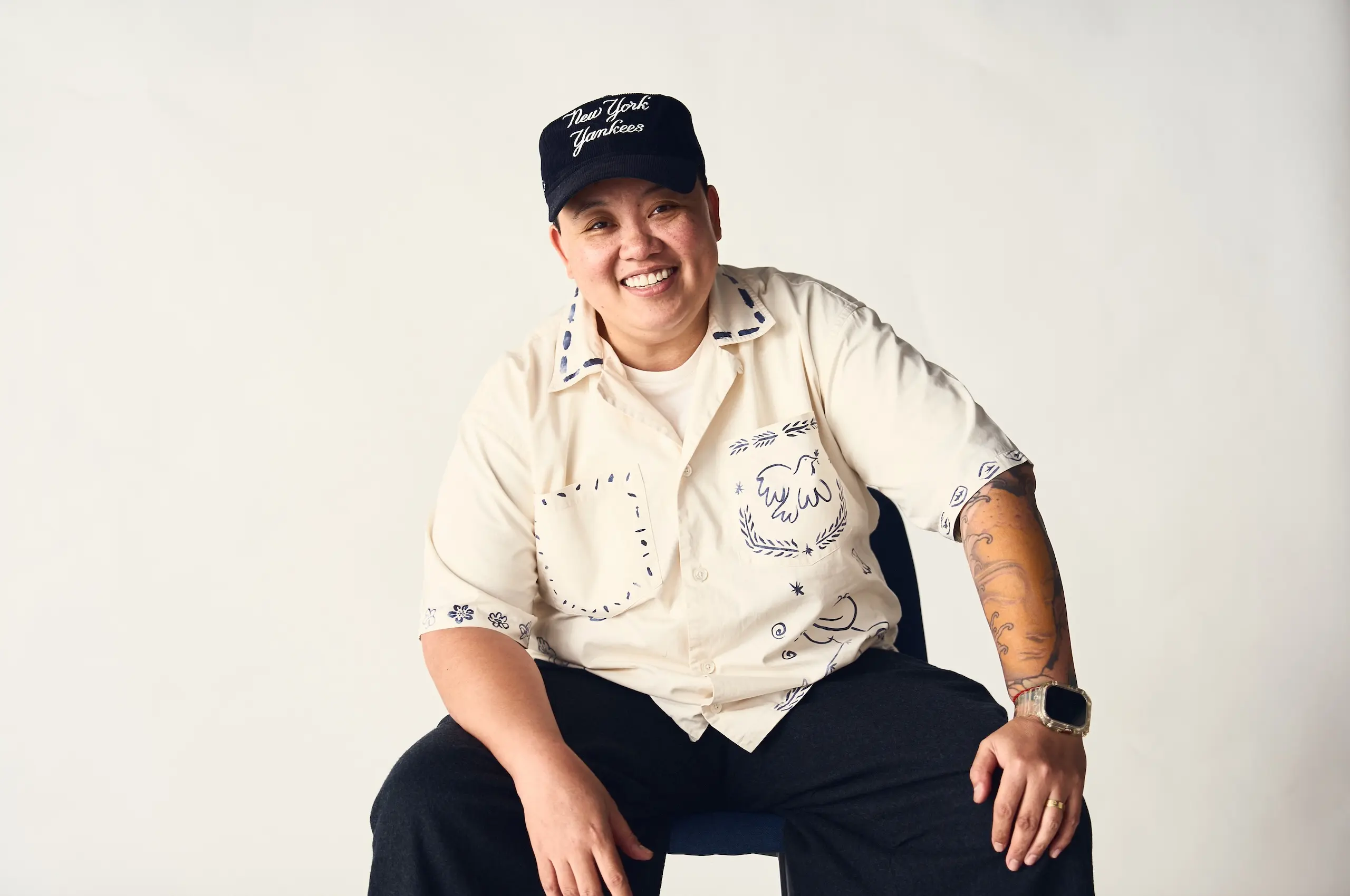
Chef Frances Tariga isn’t the type to waste time.
The Sampaloc-born chef has spent the past two decades building a culinary career outside of the Philippines. First, she left her mark on the United Arab Emirates, where she served the royal family as their private chef. Then, after making her way to the United States, Tariga opened multiple restaurants in New York, including her own Filipino fine dining joint, Tadhana. With its 16-course tasting menu and playful spin on Filipino staples, Tadhana found its way into the Michelin Guide just five months after it opened its doors on the Lower East Side.
When she wasn’t running her different kitchens, Tariga managed to find time to compete on shows like Chopped, Cutthroat Kitchen, Top Chef, and Morimoto’s Sushi Master, the latter of which she won by showcasing Filipino cuisine through modern omakase.
Now that Tariga has made her way back to the Philippines, she still shows no signs of slowing down. She recently opened her Manila location of Tadhana, where guests are currently treated to a 10-course menu that reflects Tariga’s personal journey. Standouts include her tinapay, a cubezoid tinigib cornbread paired with a tinapa mousse and a dalandan sherry marmalade. There’s her “kwek kwek,” the street food favorite transformed into an annato pie tee cup topped with smoked ikura and bagsik dust. Even Tariga’s desserts show how much thought she’s put into deconstruction, from a bite-sized, empanada-shaped turon to kamias candy melted into crushed ice.
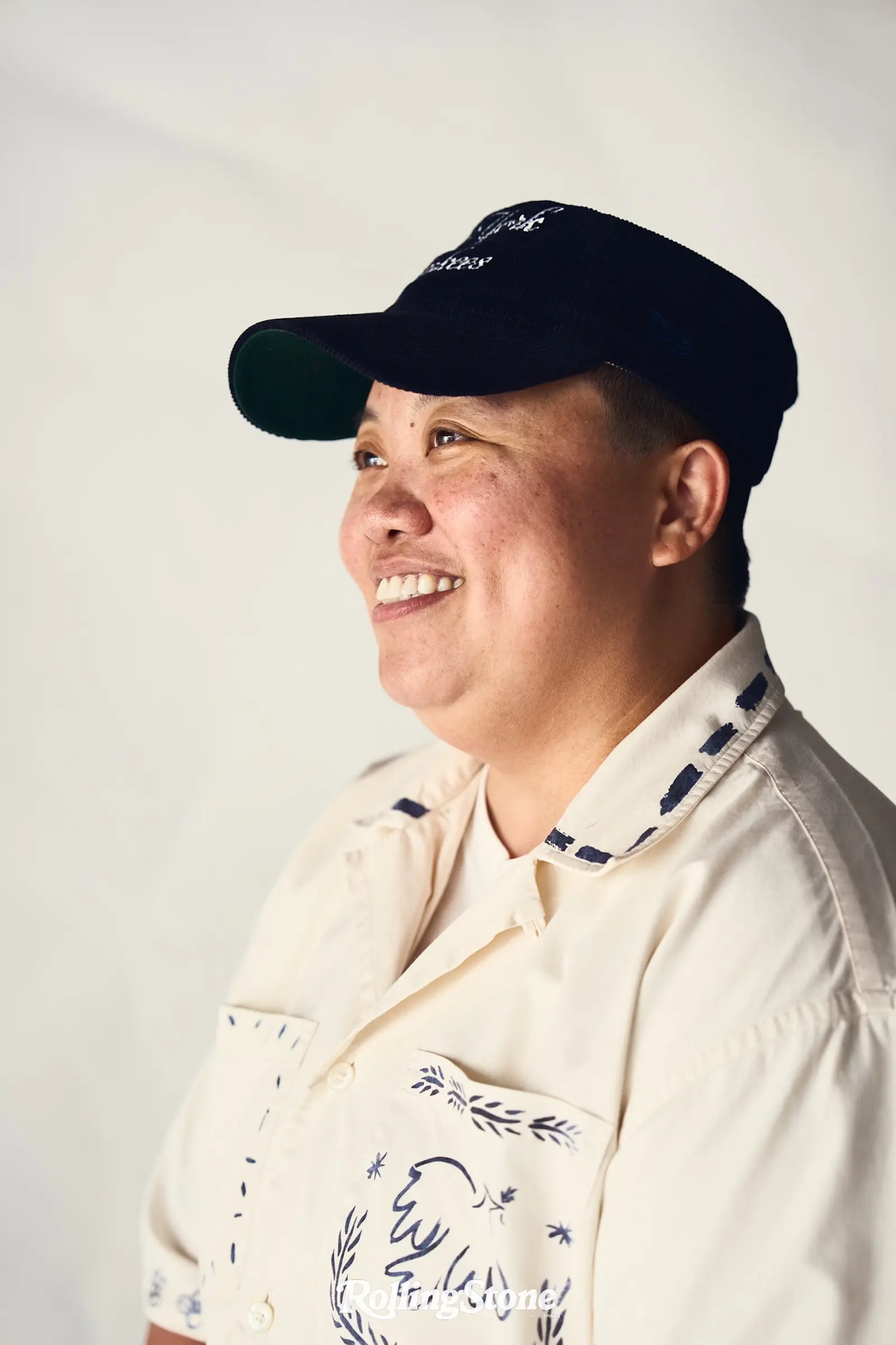
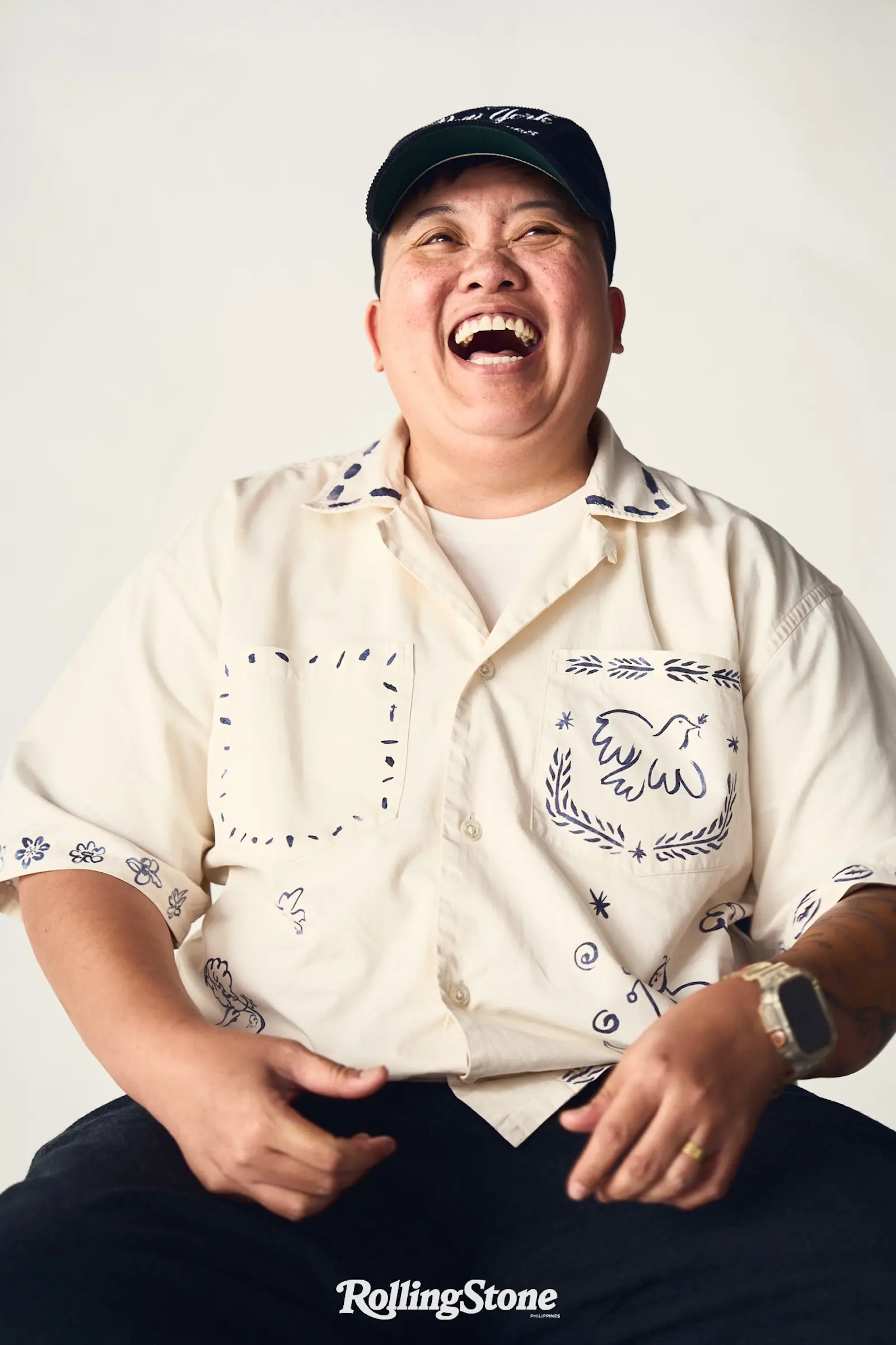
“Some of these come to me when I’m too high,” Tariga tells me jokingly at her Rolling Stone Philippines shoot. “Like with my sinigang… look, I just wanted my gabi mushed, and I wanted it to melt with the fish so that it coats my mouth. Then you want a creaminess, and that will come from the silkiness of a whipped potato, and the tanginess of the radish helps give it some bite. All these components, you’re building it in your brain.”
There’s a lot going on in that brain of hers than just recipes. Over the course of two hours, Tariga spoke to me about her hopes for her latest culinary stint in Manila, the struggles of growing up with drug and gambling addictions in the family, and how her childhood in Sampaloc helped prepare her for a career in the world of Filipino cuisine.
This interview was edited for brevity and clarity.
Before we sat down for our interview, we were talking about how we were both at the inaugural launch of the Michelin Guide in the Philippines. How did you feel about the Michelin selections last year?
‘Yung iba lang I noticed na medyo hindi pa polished, but they got a star. Like Linamnam. I mean he got the Young Chef award, and I get that. But I mean, the tasting menu is… parang pilit. You know, to get a star, especially in New York, you have to be fucking one of a kind. It needs to be polished. Siguro hindi ko pa natikman. But based on how I see him as a chef, hindi pa siya ganun ka-polished. But it comes with experience also. I mean, I’ve been cooking for 23 years. He’s 27.
What made you decide to open up a Tadhana location in Manila?
I think in America… Not a lot of Filipinos here know this, but in America, [Filipino cuisine] is having a moment. But then the question I hear is, “Okay, you say we’re having a moment, then why are you here in the Philippines?”
And I’m like, “Why the fuck not?” [Laughs] I can be burned out in New York, too, you know what I mean? This move, it’s my way of taking a fucking break from the world. It’s cutthroat out there!
But I also know that a small business like me… You know, a fine dining restaurant is a [vanity] project. It’s not profitable. Or well, maybe people think, “Ah, it’s luxury.” But it’s not. You’d earn more starting a fast food chain than a fine dining joint just because of all the elements and details you need to add.
By that, are you thinking about the cost of everything that goes into opening a restaurant like Tadhana?
Yes. Everything is mahal. When you open a fine dining restaurant and you’re telling your story through your menu, all the details need to be intentional. For example, the bread [at Tadhana]. How do I present fucking bread? I wanted to make it fun and relatable for me, so I remembered that, growing up, I’d play that color game sa perya. Growing up, I feel like… You know, children in Manila, ang laruan nila kasi ay pustahan, eh. You learn to be a freaking gambler.
But anyway, it’s supposed to be accessible. It’s not supposed to be serious, guys! It’s just a fucking dinner. And also, I’m here to sell an experience. I’m not here to teach you how to eat the food, that should be self-explanatory.
When we met at Tadhana, you mentioned how the current menu was inspired by your own personal journey. Can you tell me more about what you meant by that?
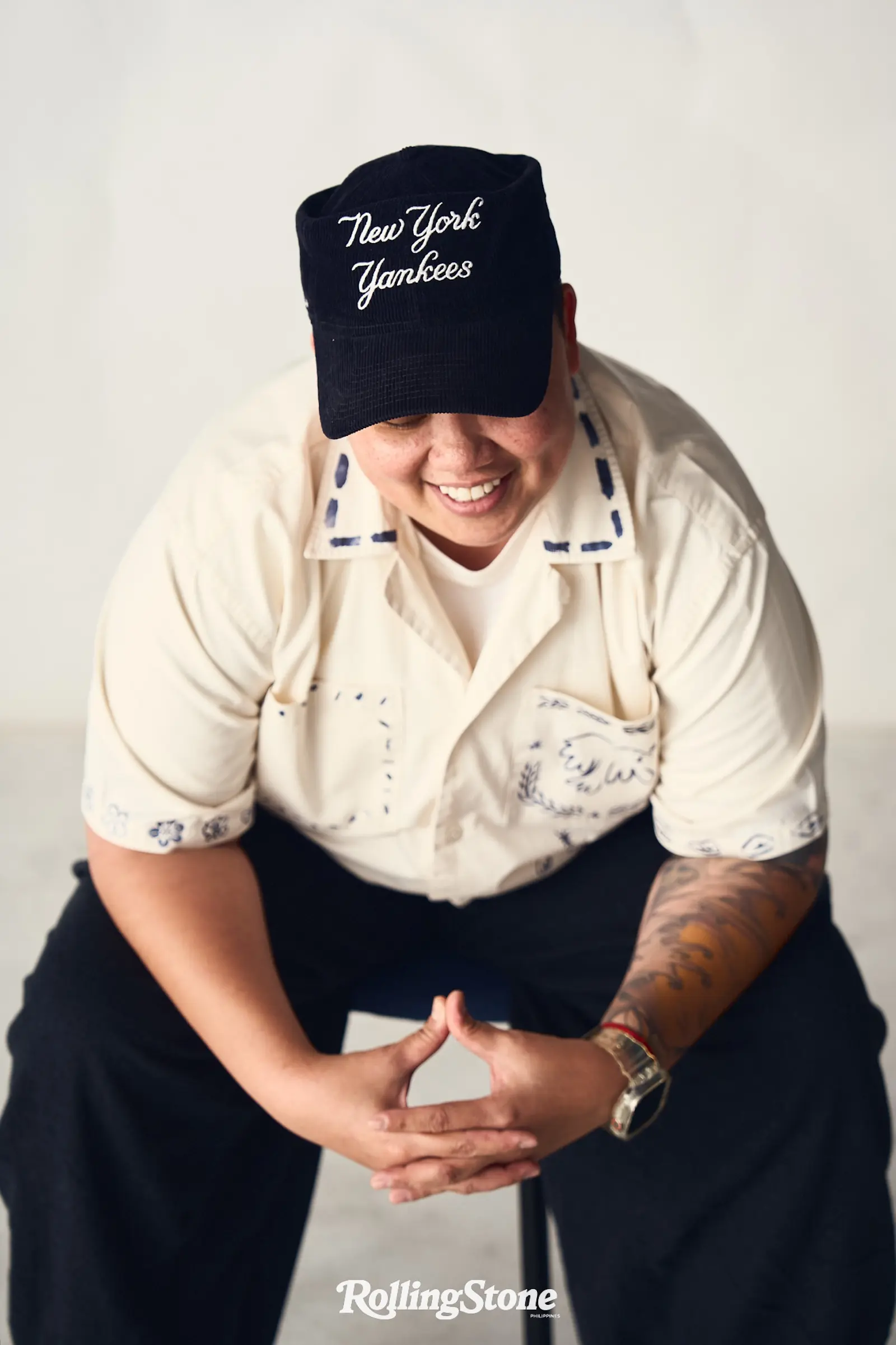
Medyo lumalim ako sa therapy, eh, seven years ago. I started doing counseling and therapy. It really healed a lot of childhood trauma… That sounds so dramatic, but coming from the hood in the Philippines with very crooked parents…
My dad was a cop. And back in the ‘80s… He was freaking crazy. I tell everyone in the States, and they look at me like I’m fucking crazy, but it was true. I don’t think I ever saw my dad pay fucking utilities. We had a big house, pero walang nagbabayad ng kuryente. He had his hustle. We all went to private school, but we lived in a place surrounded by poverty.
So I grew up very street smart, and it was all because of my dad. Our breakfasts were never like, “Oh, I love you, mag-aral kang mabuti.” We grew up paranoid. But you know, bata pa lang ako, nakakabasa na ako ng tao. I know when you’re full of shit.
Has that mindset helped you build your career as a chef abroad?
Yeah, especially now. I’ve probably handled thousands of cooks over the span of my career. Indians, Pakistanis, Arabs, Latinos, Africans. All walks of life. I had to really educate myself about everything, because if not, these chefs will talk mad shit about you if you don’t know how to talk to them. I don’t come to a battle if I’m not equipped.
“I think I created a brand that’s gonna be a legacy. Not just for me, but for the people working within it.”
And as an immigrant in New York, I really needed to… Like, say I’m applying for a big position. In the States, you don’t stay in one company lang. So when I got there, I was like, “Okay, I need to become a sous chef.” And then it’s chef de cuisine, then executive chef, then culinary director. I wanted to move fast.
But that was also the thing. I was chasing money. Immigrants in NYC, all you want is good pay and a good life. But like… when I first got there, parang ang isip ko was, “I need to make a lot of money.” Instead of honing my skills. So there was really a stage where I was just chasing money. And now, at this stage, people are giving me a lot of their money, but now I’m having a lot of fucking problems running their restaurants! [Laughs]
And you know, at this point, I’ve dealt with thousands of cooks. Magaling, hindi magaling, or pretentious. I know for a fact, kahit sa galawan pa lang, or sa hawak pa lang ng tongs o towel, alam ko na if they’re experienced or not. You can read their resumé, pero when you see them in real life, it does not match.
And has that experience helped you know who to hire as part of the staff in your restaurants?
Oh, I know how to pick people. Like, dito sa Pilipinas, I didn’t pick people with crazy talent or experience. I picked the ones [who] are team players, [who] want to be a chef. Kasi ‘pag may isang anay, dun kayo nasisira eh. I’ve opened 38 restaurants throughout my career — that’s a lot. Makakita ko nang red flag agad, hindi ko pinapatagal.
What happens when you meet someone who’s a red flag in your kitchen?
Well, I sit down with them for a talk. I’m like, HR-savvy now, you know? I learned a lot in the States. [Laughs]
Look, I’m an old-school chef. I still yell, I curse. But that doesn’t fly now. You can’t do that anymore! So now I’m all about documentation. After service, I’m gonna sit them down and say, “Yo, that’s not cool. This is a fucking team effort. If you fail, we all fail. This is not a you show.”
But don’t get me wrong, I’ll still get mad. I’m not saying that’s okay, but I’m still human. I know how to say sorry also. I think that was something I really learned in therapy. I’m still repairing myself… and I think it’s the same for a lot of chefs, actually.
You’ve been pretty open about your experiences with therapy. Do you feel like all chefs should go to therapy?
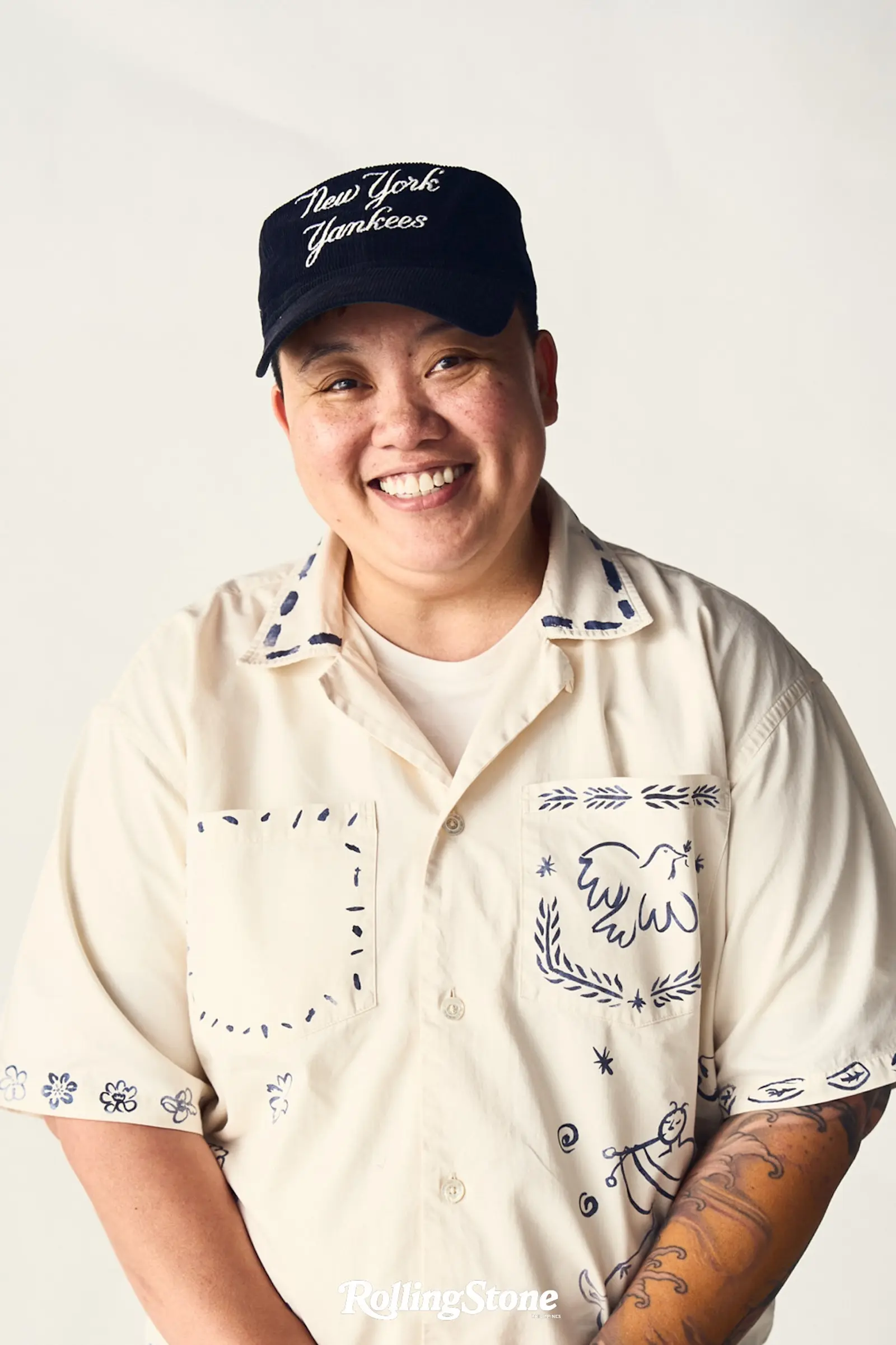
Well, therapy… It really helped a lot of old school and new school [chefs]. When you want perfection, or excellence in your craft, you really get into it. Sometimes you’re in your own world, and you don’t know what’s going on in the outside world. I go through a fucking dark hole, sometimes. As a chef, creating dishes… or anything original, it’s a form of art. But I overthink a lot.
People think I’m weird, but that’s okay. I don’t mean to be fucking weird. But I don’t care, because a lot of people will say anything about you, especially in the Philippines. Here, ‘pag may narinig silang pangit about you, they’re gonna fucking unfollow you. They’re so fucking judgemental.
Like dude! Okay, so sabi nila na I closed my restaurant in NYC. I can’t come back to NYC. Dude, I’ve been going back and forth to NYC.
Did they just make up that story?
Dude. There was this one person who ate at [Tadhana] and wrote, “This controversial Tadhana closure,” or “despite the controversial baduhduh.” Dude, you said masarap! Why can’t you just fucking write masarap?
This guy’s trying to get a reaction from me, but I’m not gonna give that to him, because you’re a fucking clout chaser. You don’t have a following… this fucking old guy. Whatever. A fucking restaurant closed because a restaurant closed. They said I did not pay my staff. My dude, if you don’t pay your staff in New York City, you’re gonna get sued. And if you get sued, you can’t come in and out of the country.
In the States, ang culture is like, “Show me! If you don’t have proof, then you don’t have fucking nothing.” But here, if a little fucking bird tells you something…
We do love tsismis.
But that’s the thing! We can be factual! Look, I’m unapologetic. I curse when I want to. But not because I hate you or wanna hurt you. It’s a fucking expression. Come on, we’re in fucking 2026.
But my God. At the start, I was like, “We’re staying here for good, me and my wife.” But now, one year later, I think the Philippines isn’t ready for us. It still feels we’re a lot fucking behind.
I mean, I’m still championing Filipino cuisine, but when it comes to personal experiences… Dude, they’re making it impossible for everyone to just live a normal life. Why does everything need to be difficult?
“I’ve dealt with thousands of cooks. Magaling, hindi magaling, or pretentious. I know for a fact, kahit sa galawan pa lang, or sa hawak pa lang ng tongs o towel, alam ko na if they’re experienced or not.”
At this point in my life, I just want to be comfortable. And I’m comfortable kind of, but me and my wife… we’re a fucking lesbian couple in the Philippines. Hindi nila kaya sabihing “wife.” I keep saying, “Oh, she’s my wife, we’re legally married in the States.” And then they keep saying “girlfriend,” and I can tell they’re very uncomfortable.
A lot of people here will say that they’re not homophobic, but they’re not used to someone like me, with such a strong personality, talking to them in an equal manner. But like, why the fuck would I say “po” or “opo” to you? We’re talking business. It’s so “ma’am/sir” culture.
Do you feel like after living in the States and the UAE, it’s been a little harder for you to move back home to Manila?
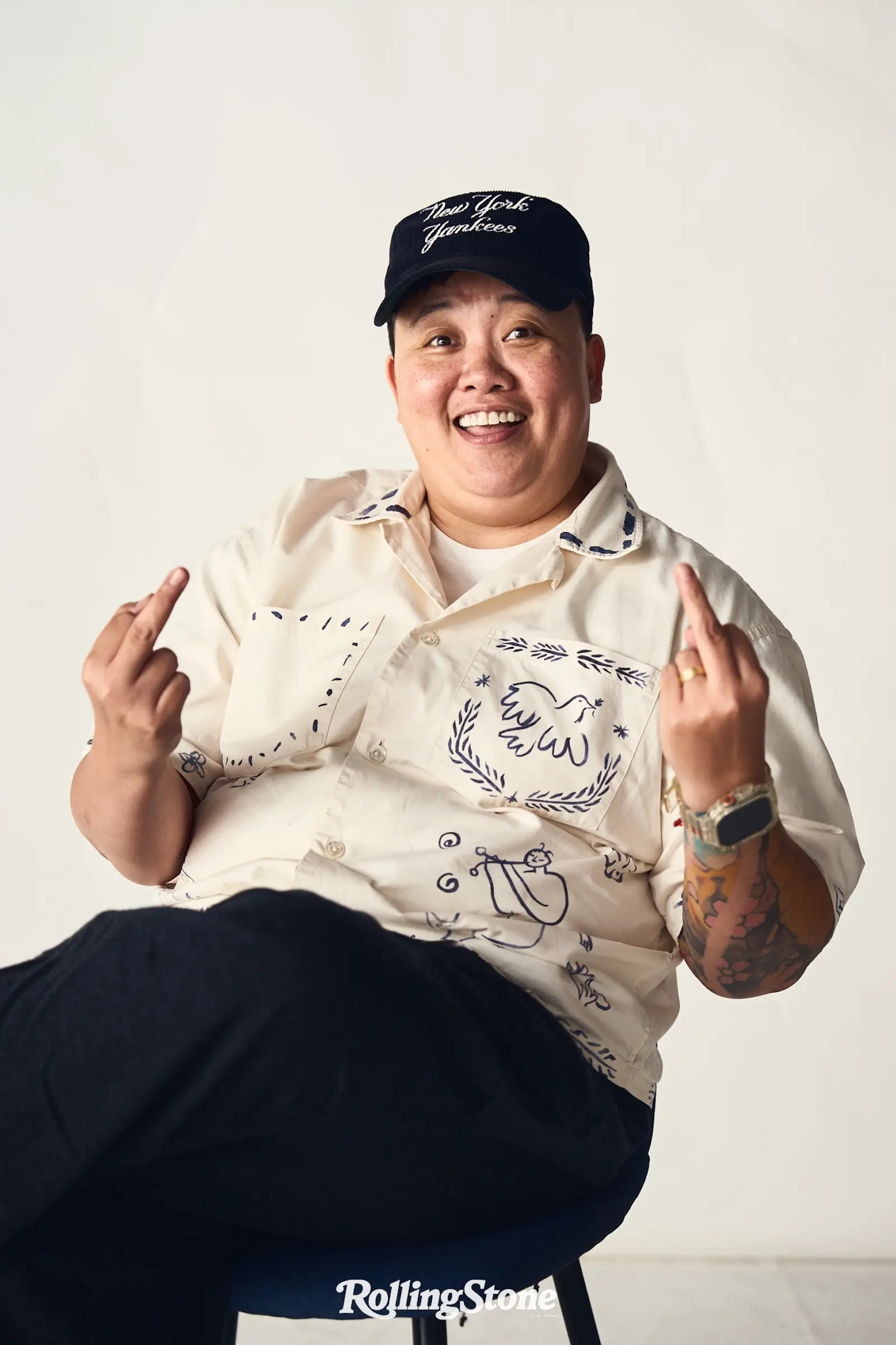
It’s just fucking life, man. The poverty levels… You know in New York, even if you’re a dishwasher, you can still live a normal life. You can still eat in a good restaurant. It’s liveable there. But here, it’s impossible for a line cook to live a normal life because the job doesn’t fucking pay.
The [pay] gap is so far here. And I’m not blind: I know my customer base here is mostly the five percent and balikbayans from around the world. That’s the reality. Like, if you have a minimum wage salary here, you can’t fucking eat Tadhana. Your bill for two people is gonna be what, P20,000? You can’t, it’s crazy.
I know my clientele. But then that’s the question, right? Am I excluding the middle class, but also putting middle-class [cuisine] at the center of my menu? I don’t know.
I wanted to ask you about that. Every dish at Tadhana is definitely fine dining, but they’re each based on more everyday Filipino food, like kwek-kwek, kinilaw, or sinuglaw. How do you explain bringing something like kwek-kwek to a fine dining setting?
That’s the thing, I don’t know! It’s a business, but at the same time… Look, I’m just doing what I do best. Because I hear the question: “Why am I empowering middle-class cuisine if the fucking middle class can’t even afford it?” Parang ako lang din ang nagtatanong sa sarili ko.
I remember my first competition, Chopped. My friend told me, “Yo, just stick to your roots, and you’ll be fine.” And fuck, until now, that stuck with me. So with [Tadhana]… I’m just representing what I know best: Manila, middle-class cuisine.
“When you want perfection, or excellence in your craft, you really get into it. I go through a fucking dark hole, sometimes. As a chef, creating dishes… or anything original, it’s a form of art.”
And it’s about my own life too, you know? Twenty years ago, I was doing a lot of drugs. We had an open tab sa tindahan, so I had to get creative with the food, you know? I’d get corned beef, which meant that I could make sinigang, nilaga, afritada, caldereta for me and my siblings. But it was hard.
But I was an ambitious kid. I had a lot of side hustles: I used to be a professional pool player, and I thought that was going to be my career. But even my parents were shitting on it: “Walang pera diyan!”
So I went to colleges, but nothing stuck… until the last one, because I heard about a culinary school on Today with Kris Aquino… Oh my god, I sound so fucking old, but I fucking remember it! I just really wanted to be cool, to belong. Nag-practice akong mag-English, nag-memorize ako ng kanta, para I could sound “conyotic.” [Laughs]
It must have been hard, though, growing up both with these ambitions and wanting to take care of your siblings.
I mean, fake it til you make it. Because… like fuck, how do you enroll your kids in a fucking private school, but then they’re always on promissory note because of their dad’s fucking addiction? You’re expecting me to be good in school when in reality, ‘pag nag-aaral ako, kinabukasan hindi rin ako makakapag-test kasi pinapapunta kami sa library. That’s fucking cruel. The school was fucking cruel.
I don’t know if that flies these days, but dapat hindi ginawa sa bata, eh. It was so traumatizing. I remember all the fucking time being like, “Fuck, paano ako mag-aaral?” Fourth grade na ako, hindi pa bayad… Shit. It just sucked for the kids. [Tariga tears up]
Sorry, it’s just a little emotional. But ngayon ko lang na-realize na it’s not about how academically good you are. It’s about how you fucking navigate your life after school, ‘di ba?
But it’s hard. You know, you think you’re a piece of shit all the time, because I was a drug addict, and I still see myself as the version of me 20 years ago. It took me a while to be like, “Yo, you’re not fucking poor anymore. That shit happened, but you’re not that anymore.” I’ve been in survival mode for my whole career. And I’ve always tried to be original. No one was championing Filipino cuisine [in New York], so I took the fucking opportunity.
Did you always know that Filipino fine dining was something you wanted to do?
If you asked me that 10 years ago, I would have been like, “Yo, I didn’t fucking work 20 years just to be a fucking Filipino cuisine chef.” But that was pre-therapy. Again: “Stick to your roots, and you’ll be fine.” And you can’t tell me when something’s not Filipino. I know my shit.
That’s another thing. People online are always saying I’m Fil-Am. Bitch, I was born and raised in Sampaloc! I left when I was 21, okay? Just because I talk like this… 22 years ago, I didn’t sound like this.
But in order for me to get here, I needed to educate myself. If I didn’t, especially in the States… I needed to be on the same level as the chefs in my category over there. But I think my thing was always na I’m gonna stick to what I know. And that’s Filipino food. But to do Filipino flavors in fine dining? That didn’t even cross my mind.
Did you worry that diners in New York wouldn’t understand Filipino fine dining, though?
That’s the thing! [Laughs] White people only see our food as exotic. When they go to Queens, it’s all fucking red flags for Americans. A whole health violation.
But you know… when we started [Tadhana], it ended up raising a lot more Filipino eyebrows. They’d be like, “Ay, Filipino food lang.” But my concept guideline with Tadhana was always this: I know my tita’s gonna say, “I can cook this at home.” So how do I make something so that I can say, “Yo motherfucker, you’re not gonna be able to cook this at home!” [Laughs] And now it’s like, ‘Okay tita, what are you gonna do, build a sphere? You’re gonna use an iSi gun? Ha!’
Now that you’ve opened Tadhana here, do you have new goals for Filipino fine dining?
Right now… I think I created a brand that’s gonna be a legacy. Not just for me, but for the people working within it. I have the most fucking amazing team, and in Tadhana, these people don’t sleep. They want to get better.
These people are so reliable. I wouldn’t be here, at this interview, at this early stage of the restaurant opening, if I couldn’t rely on them. I’m not saying it’s a cult, but everyone [at Tadhana] thinks the same and has one goal. The goal is to succeed. The goal is to champion Filipino cuisine. And you know, to get a star is to get a star. I don’t think that’s so impossible.
Would you want Tadhana to win a Michelin star?
It’s not impossible. I’m not the one making the decisions here. But look, there are only [nine restaurants with] stars in the Philippines. Of course, they’re gonna add a lot. There’s a big chance.
You’ve talked a lot about how different New York’s fine dining scene is compared to Manila’s. What are you hoping changes in our fine dining scene?
Everyone’s doing their own thing in Manila, and I mean, you do you. There are a lot of good people here. But I think they’re trying to be someone else.
The message is always mixed. You’re gonna see them saying they’re championing Filipino cuisine, but they’re like… I mean ako, I’m bringing New York to Manila, but it’s different, kasi it’s my own experience. We tend to fantasize about foreigners, Europeans, Americans, and sometimes we get lost.
There’s a lot of potential in the Philippines. But ang problema dito… it’s capitalism. In the States, I get a big stake when I open a restaurant. Here, they own you. I’m staying here for a little while more, but it’s getting harder and harder for me.
If the Philippines isn’t your final stop, where are you hoping to move to next?
I’d go back to Dubai. That was my first gig, working for the royal family, and I still have access to them. But my god, it needs to be perfect timing.
But what the team is doing right now… I’m not saying we’re different from everyone else. We’re just doing us, you know? And that’s important. Right now, I’m just celebrating Tadhana.
Frequently Asked Questions
Frances Tariga is a Filipino chef born and raised in Sampaloc, Manila. She built her career abroad as a private chef to UAE royalty before opening multiple restaurants in New York, including Tadhana, which entered the Michelin Guide five months after opening.
Tadhana is a fine dining restaurant offering a 10-course tasting menu rooted in Chef Frances Tariga’s personal journey, reimagining Filipino middle-class and street food staples through fine dining technique.
She is Filipino. Tariga was born and raised in Sampaloc, Manila, and left the Philippines at 21. She identifies firmly as Filipino despite her accent and decades spent abroad.
Not yet. The New York location entered the Michelin Guide five months after opening. Tariga has said earning a star in Manila is not out of the question, noting that the Philippines’ Michelin list is still growing.
Tadhana’s menu is built around Filipino middle-class cuisine — kwek kwek, sinigang, turon — elevated through fine dining technique. Each dish reflects Tariga’s personal history growing up in Manila.
Recommended Video