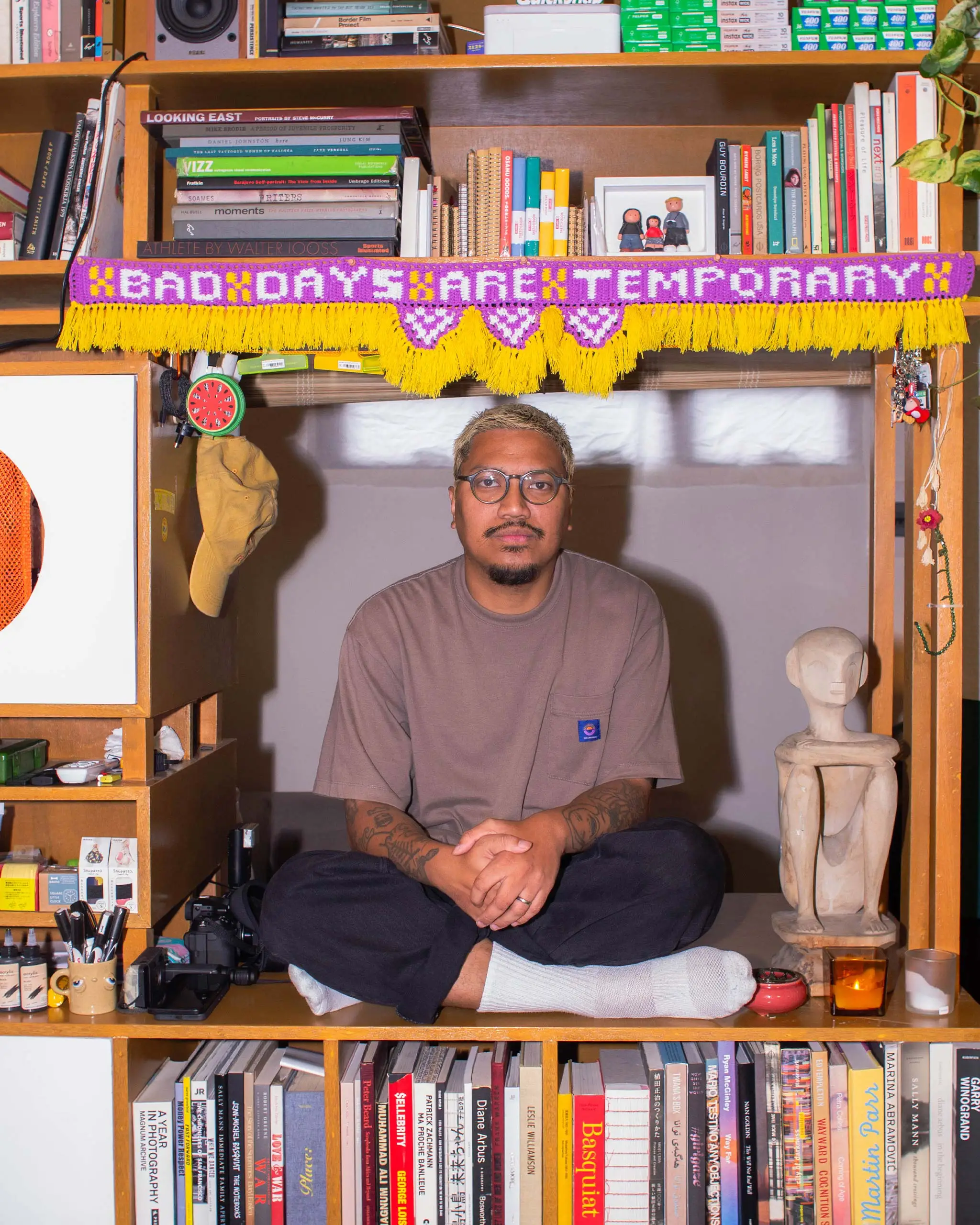
After years of cultivating a near-one-million online following with his diaristic photography practice, the Internet’s favorite confidant, Geloy Concepcion, is taking his art IRL. First came the bestselling book Things You Wanted to Say But Never Did: A Photographic Journal to Process Your Feelings in 2023, then the merch under the brand Bad Days Are Temporary, and now a studio of the same name in Diliman, Quezon City that is part residence and part “cutie” (only wholesome activities, no drinking. “Gusto ko natural state sila. Happy na walang tulong ng alak”) hangout for his photographer peers.
The Pandacan native has long dreamt of living in QC, “Kasi buong [buhay] ko sa Pandacan, talagang… ‘Let’s get it on!’ e. ‘Pag-gising mo, let’s go na.” Its relaxed environment and abundance of trees (and artists! he adds) made him decide to put up a studio in UP Village.
“Pero gusto ko talagang malapit sa maraming puno. Tsaka hindi binabaha,” the photographer says in an endearing, overly sincere manner that makes him amicable to most people — bouncers included, we found out days before our studio visit when he was Rolling Stone Philippines’ behind-the-scenes photographer at the first Filipino Music Awards.
“Community-based ‘yung ginagawa kong art madalas, so ang nag-su-support sa ‘yo ay community rin.”
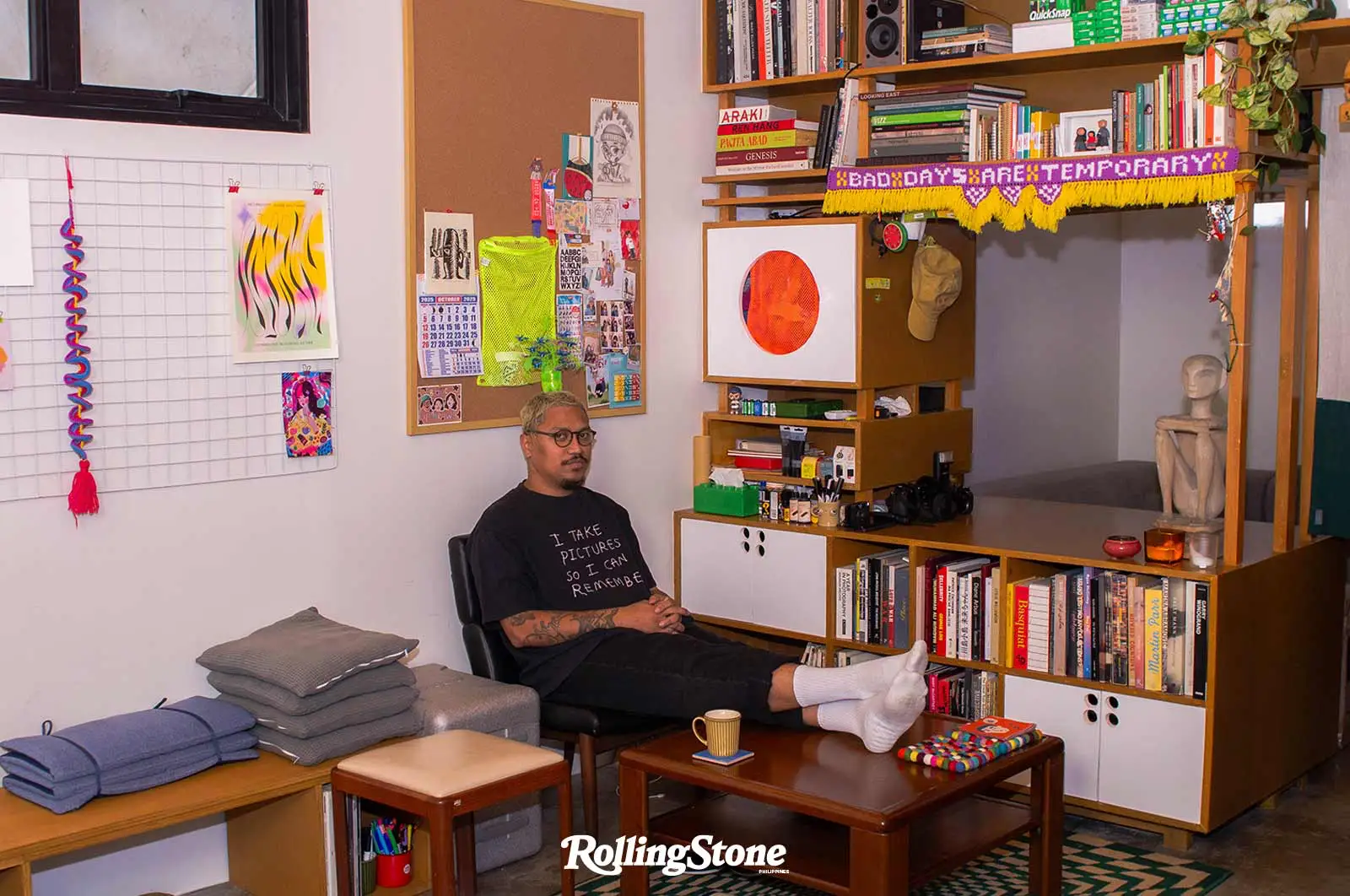
The 32-sqm space, with its high ceilings, white walls, and exhibition lighting, is patterned after the house in Berkeley, California, where Concepcion and his wife and daughter live. He wanted it to feel less jarring for her “namamahay” daughter whenever they go back to the Philippines, which has become increasingly frequent with his plethora of engagements in and out of Manila. The house, albeit smaller than its original blueprint in the U.S., feels adequate for Concepcion. “Gusto ko rin ‘yung liit niya e para hindi ka rin magkaroon ng tendency na mag-accumulate ng sobrang daming gamit.”
Concepcion’s day in the studio begins with him cycling around the University of the Philippines Diliman, then breakfast at a nearby karinderya. This is followed by chores — mostly cleaning the space — before starting work or heading out. By 10 p.m., the compound and its tenants close. This is the time he hangs around or has people over. The mornings after are generally peaceful until the stores reopen at 11 a.m.
The plan originally was to put up a physical store to sell his merch — caps, T-shirts, sweaters embroidered with sunny statements like “Better days ahead,” “Rest is part of the process,” and the brand’s mantra: “Bad days are temporary” — which, like his anonymous photographic confessionals, have become a massive hit. “Naisip kong merch na lang ang gawin kasi na-realize ko rin ‘yung audience ko e. Kumbaga, hindi ako artist na kayang magbenta ng isang artwork, kunwari, worth P300,000 tapos isa lang ‘yung bibili. Mas okay ako sa 300 pieces, P1,000 each, na 300 ‘yung bibili. Same lang rin naman ang gusto mong iparating na message pero mas accessible sa maraming tao. Community-based ‘yung ginagawa kong art madalas, so ang nag-su-support sa ‘yo ay community rin.”
But towards the studio’s completion, he realized he wanted to make it his own. “Ang galing nga e kasi nag-evolve lang siya pagdating ko dito. Parang, ‘Okay, iba pala ‘to hindi pala ito magiging tindahan.’”
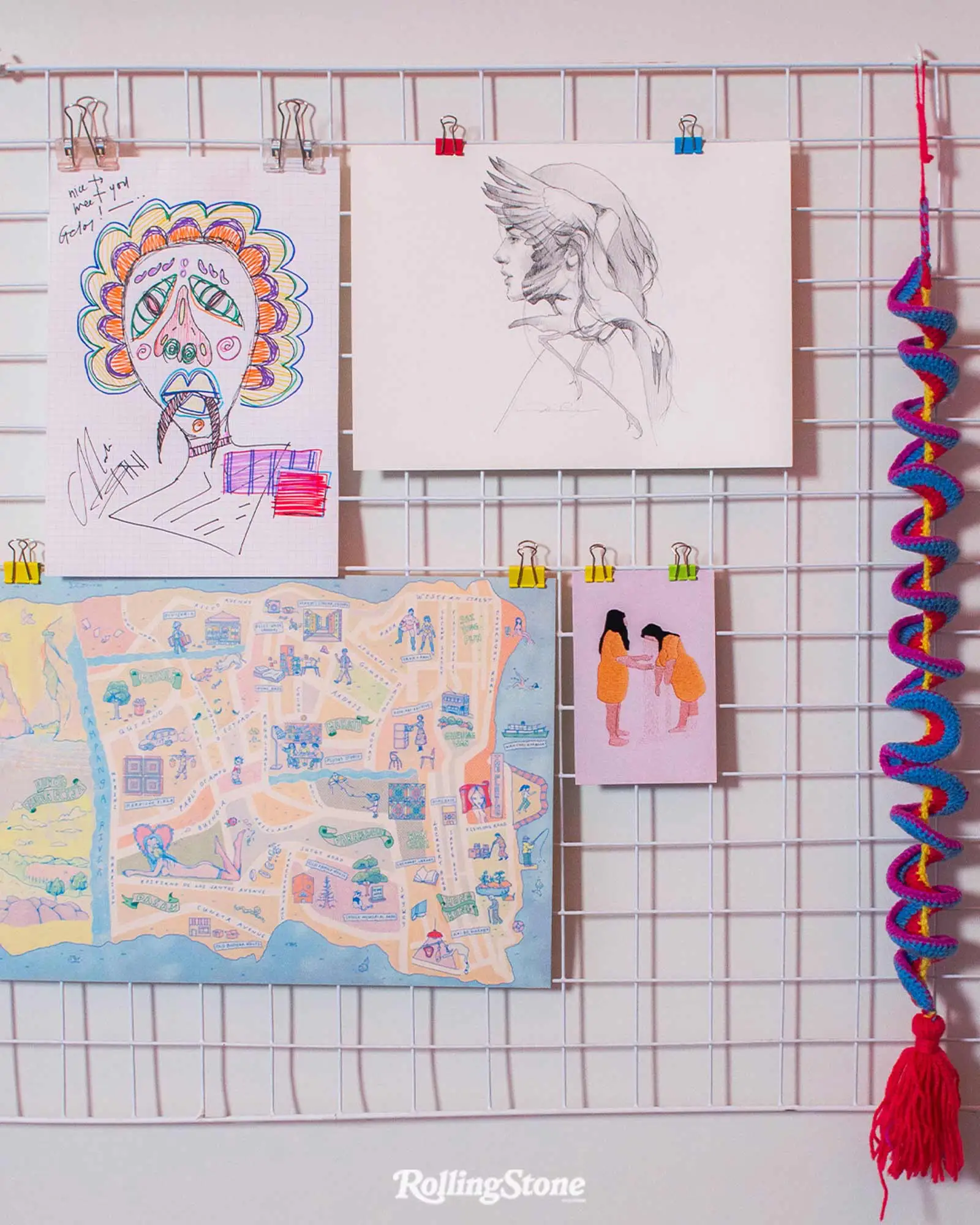
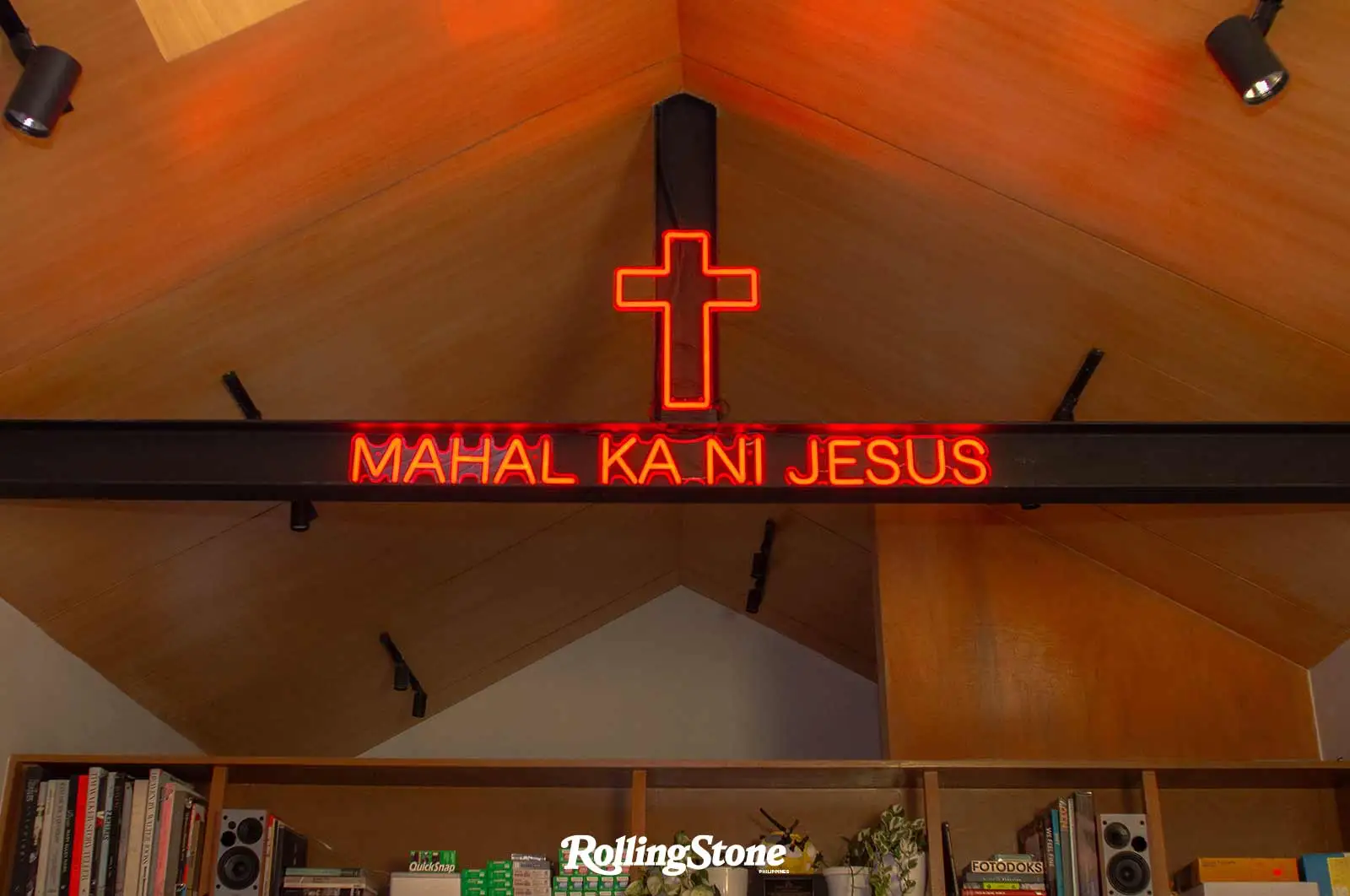
So now, the space is divided into two: a greater area that’s a photography studio slash library, and a personal quarters where he and his family could stay during their visits, which he made sure had its own bathroom (with a Japanese toilet he splurged on). The two areas are delineated only by a sliding door that cuts behind a bookshelf/divider, and buri blinds. The receiving area is illuminated by a sunroof and furnished with plywood floor shelves, a coffee table, and an assortment of seats, fitting Concepcion’s vision of a communal quarters.
“Isa sa main na reasons kung bakit ko ito ginawa kasi as photographers, dati noong bata-bata pa kami, wala kaming studio e. Hindi naman to libre pero magbabayad ka lang ng kuryente. So mura siya. Pati ‘yung headquarters lang ba na puwede kaming mag-meeting na hindi bahay ng ibang tropa.”
Here, his friends can use the space to shoot, use equipment like lights, take inspiration from hundreds of books Concepcion migrated from their family home, including tomes by Martin Parr, Diane Arbus, Ren Hang, Petra Collins, Nan Goldin, Sally Man, Guy Bourdin, Richard Avedon, Tim Walker, and more. He wants the studio to be a place where his tropa — a loaded borderline exclusionary term, he acknowledges but is nonetheless fine with — can create.
But not all days in the Bad Days Are Temporary Studio are productive. Since he officially took over the space, it has seen many days and nights with fellow photographers spent doing peer reviews, “work from home nights,” movie marathons, karaoke, and generally merrymaking (again, without drinking). “Cutie, cutie lang,” he reiterates.
“Sobrang [conscious] ko kasi about setting boundaries e. Masyado siyang personal para mag-papasok ng mga tao na ‘di mo masyadong kilala. Kasi para ko siyang cocoon e; para may sarili pa rin akong lugar.”
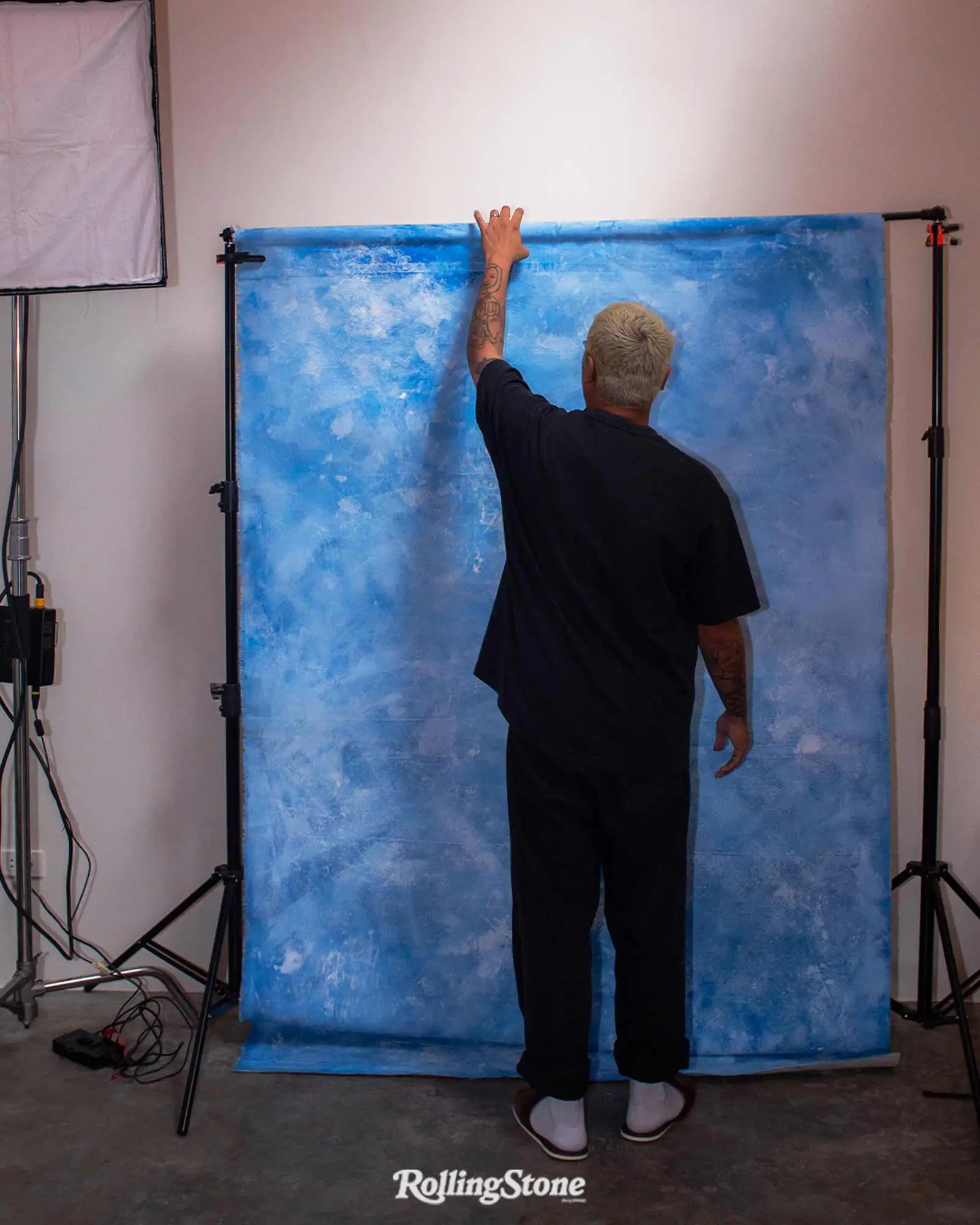
Concepcion, despite having built a creative communal space, is a bit sad. He only has a week before he returns to California. In the meantime, he’s taking more pictures so — to quote his first photography collection from 2021 — he could remember; portraits of friends and artists against a hand-painted backdrop reminiscent of ID photo day setups at school.
“Plano kong magkaroon ng sobrang daming portrait ‘yung backdrop na ‘yan ng kung sinu-sino hanggang umabot sa presidente.” Just days ago, he shot vocalist Raphaell Ridao of pop rock band Cup of Joe, which won Song of the Year and Album of the Year at the FMAs. He still wants to photograph Tito, Vic, and Joey, Vilma Santos (with Nora Aunor, had she not died this year), politicians, clowns, and Manny Pacquiao, a few years down the road, maybe.
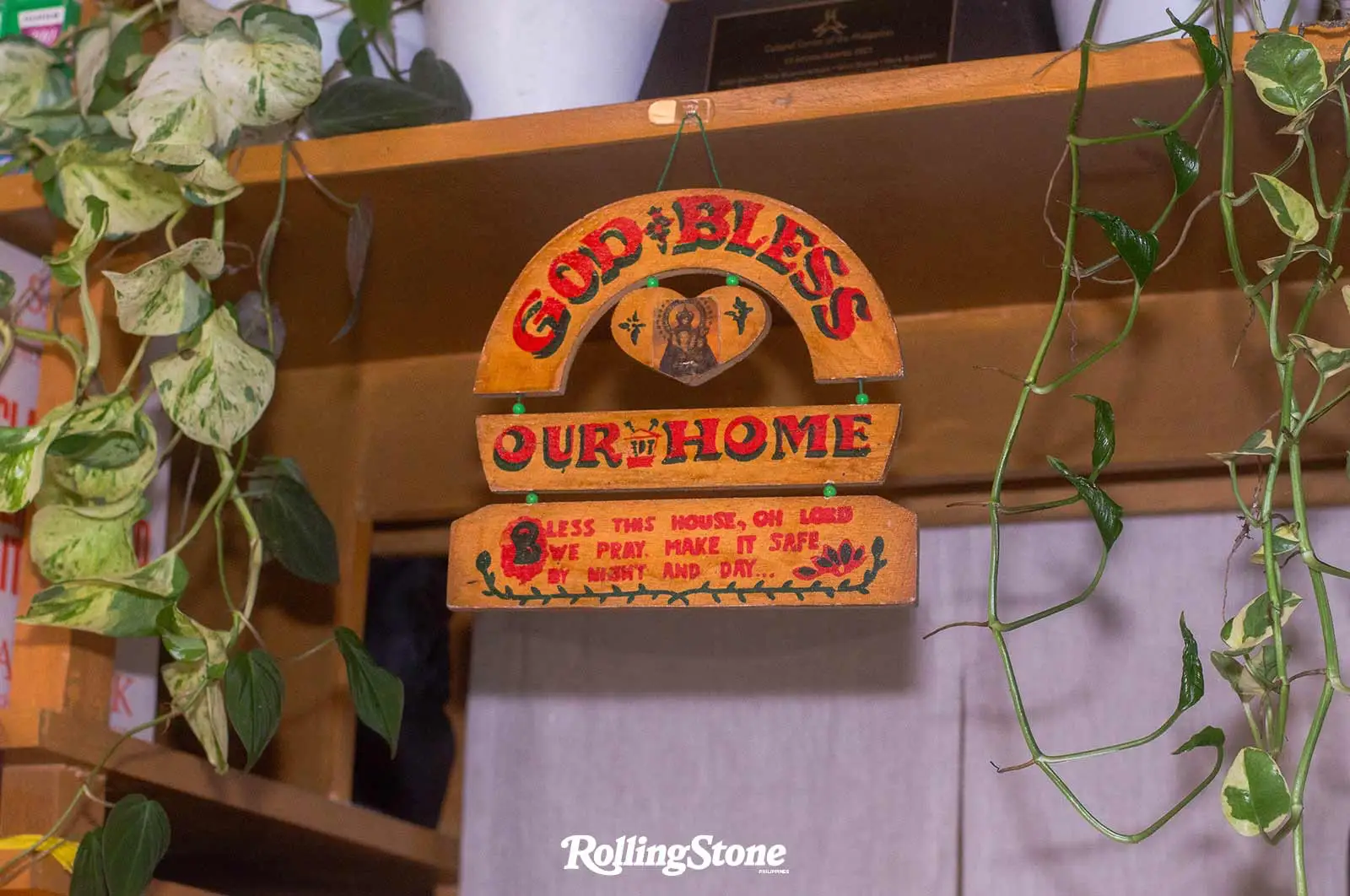
So what happens to the studio when he goes away for almost two months? “Plano kong maglabas ng calendar na pwedeng i-book ng mga tropa kung gusto nilang mag-shoot o mag-remote work. Kahit sino naman puwede, basta may mag-va-vouch [for them] na kakilala ko.” It is, after all, his second home, so he has final say on who gets to spend time there. “Open siya sa lahat pero dapat planado lagi ‘yung ganap. Sobrang [conscious] ko kasi about setting boundaries e. Masyado siyang personal para mag-papasok ng mga tao na ‘di mo masyadong kilala. Kasi para ko siyang cocoon e; para may sarili pa rin akong lugar.”
True to his analogy, his “cocoon” is separated from the outside only by a sliding window/door and a thin veil of white curtains (that surprisingly does a good job of concealing what’s inside from someone looking from the outside). Two steps out and you’re already in a small-scale food park. What’s more QC than that? But this is no disadvantage to him because Geloy Concepcion is a pal to everyone, even in the compound. He jumps into small talk with a shopkeeper the moment he steps out, before he takes us to lunch in the karinderya he frequents, two houses away. He wants to order a serving of bopis he saw earlier when he had breakfast there.
It is past 1 p.m. Bopis was a hit with the lunch crowd and has unfortunately sold out. He orders spicy adobo instead, jokingly urging the lunch lady to treat him to lunch since he leaves next week. He is, after all, a regular. The woman smiles, but not today. Perhaps Monday? It is her birthday then.
This story originally appeared in the Hall of Fame issue of Rolling Stone Philippines. Get a copy via Sari-Sari Shopping, or read the e-magazine now here.
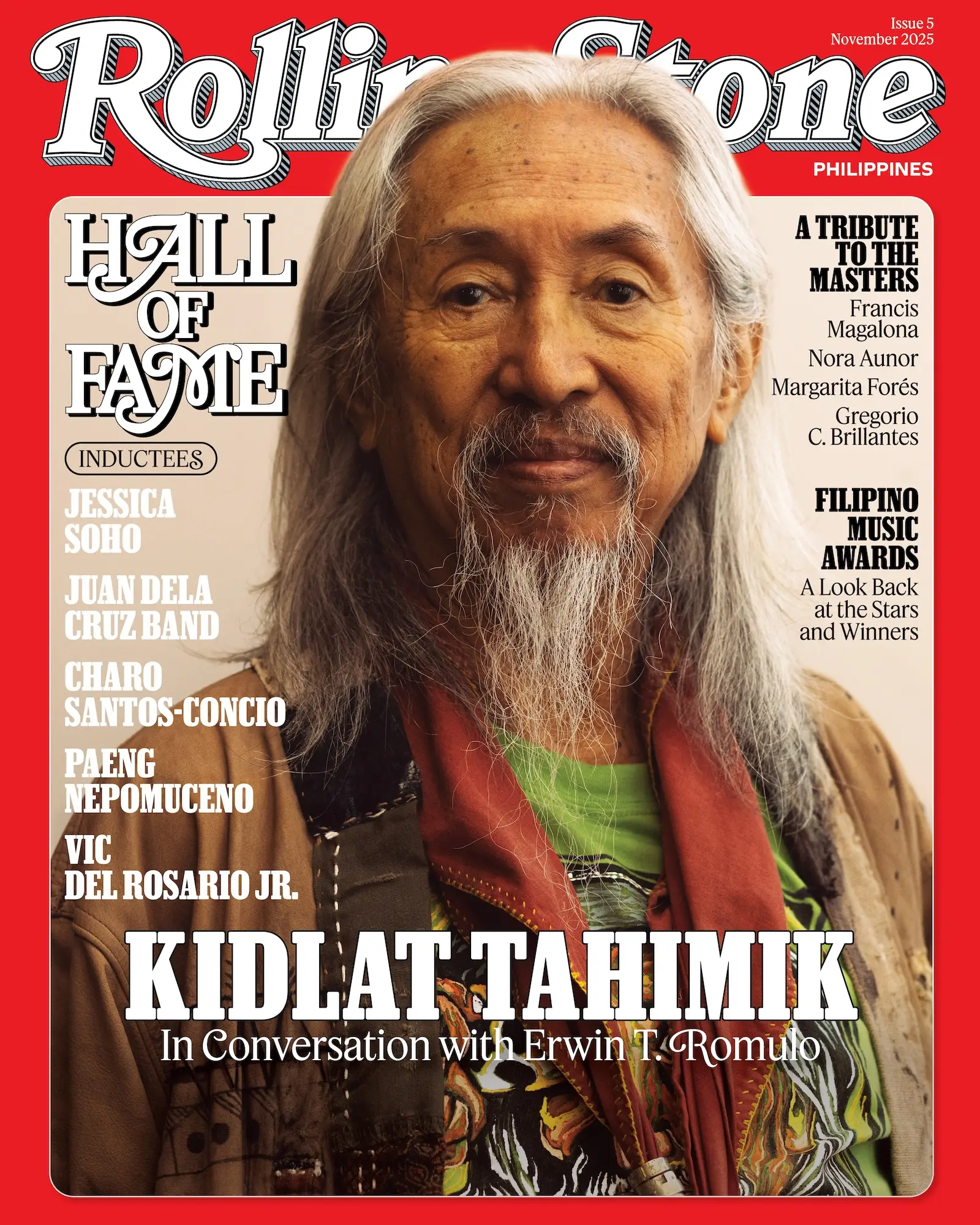
Rolling Stone Philippines November 2025 Issue, Now Available at SariSari Shopping