


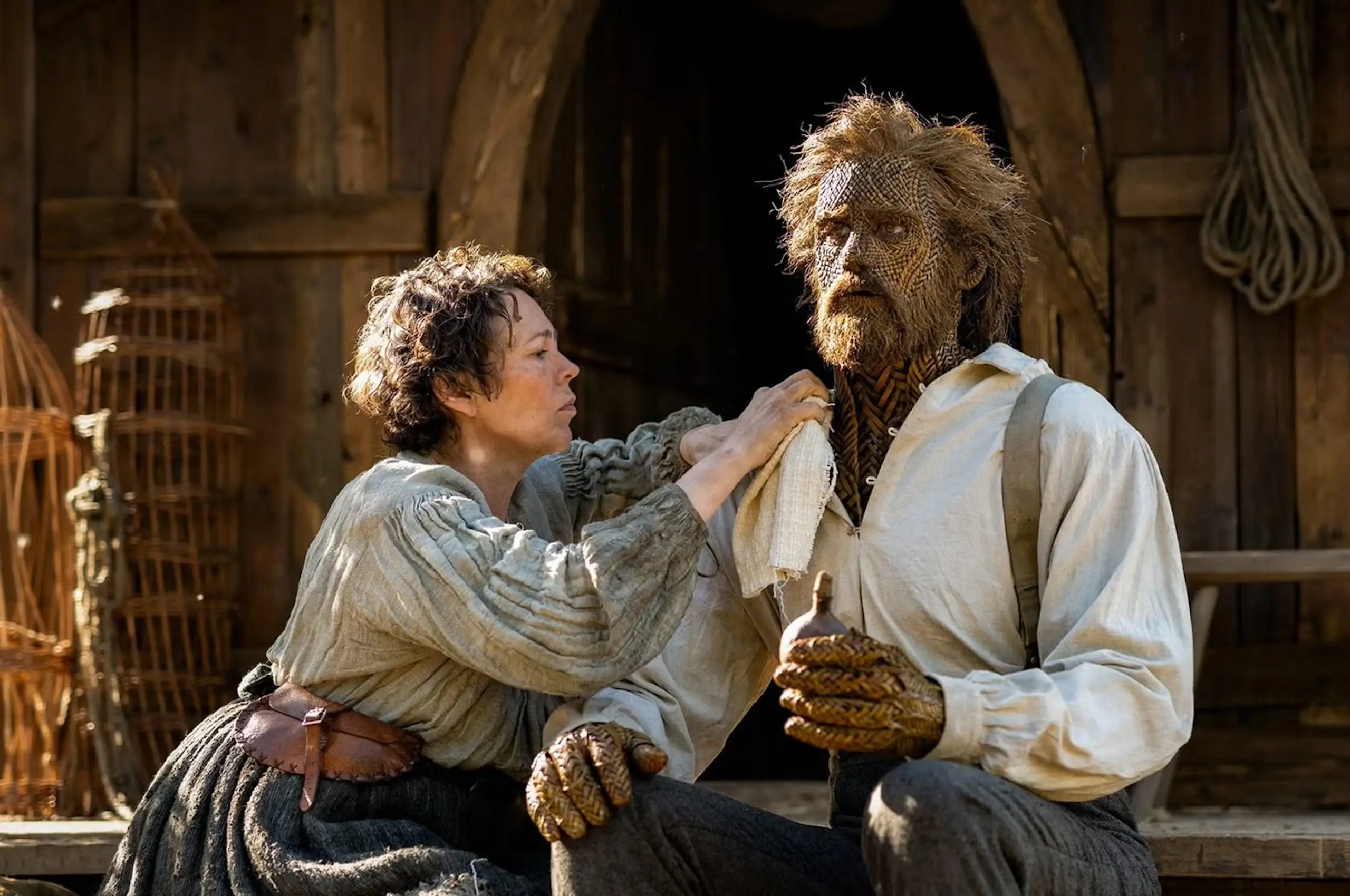
For a rom-com that’s had one of the horniest press tours of the year — see Alexander Skarsgård gifting Graham Norton a pair of wicker nipples, or distributor Black Bear organizing 4DX screenings across the United States, or audio erotica app Quinn running a fanfiction-writing contest in honor of the movie’s release — Wicker is surprisingly vanilla.
Directed by filmmaking couple Alex Huston Fischer and Eleanor Wilson, and basedBasedBased is slang expressing approval for someone unapologetically stating their genuine opinion, regardless of whether it's popular, controversial, or conventionally acceptable within discourse. Originally associated with certain online political subcultures,Go to Based Glossary on a short story by Ursula Wills-Jones, Wicker follows the Fisherwoman (Olivia Colman), who spends her days catching fish, being bullied by the townspeople who buy her wares, and going home to piss, alone, in the pot that she keeps under her bed. Fed up with the village housewives poking fun at her spinsterhood, the Fisherwoman enlists the help of the Basketmaker (Peter Dinklage) to make her a thick, woven sex god for her to take as her Wicker Husband (Skarsgård).
This premise alone is enough to excite the imagination (especially if you, like me, are a freak, and have nothing else to fantasize about while waiting for AO3 to come back online). I’ve spent weeks wondering about the Wicker Husband’s woven shlong. Is it bendy like a willow reed? Or thick and sturdy like an eel trap? Will it chafe, or is it more of a “ribbed for her pleasure” situation?
Alas, Fischer and Wilson don’t lean hard enough on their script’s inherent horniness. Yes, the Wicker Husband can break a bed, and yes, he and the Fisherwoman can stay stuck together from dusk til dawn, and yes, her moans can be heard all across town (as the Bottlewasher’s Wife wonders, “Is someone being murdered?”); however, these steamier bits are immediately revealed in the film’s first act. The sex is quickly put out of the way, which I must say is a bit of a letdown if we think about all the hype surrounding the movie — are they really only going to do missionary? Is the Fisherwoman never going to top? Is foreplay not sacred anymore?
What’s more, if you’ve been following the Wicker press tour, these same raunchy jokes have already made the rounds online to weave this illusion (pun intended) of peak freakiness. Perhaps, now that Wicker has finally made it to our cinemas (it just started screening in the Philippines on November 4, after screening in the U.S. in midMidMid is slang describing something as unremarkable, mediocre, or neither particularly good nor bad, often used dismissively toward music, movies, or cultural products. The term's blunt, casual dismissiveness reflects internetGo to Mid Glossary-October), the novelty of a Wicker Husband has lost some of its shine.
It’s A Romance, Really
But this lack of twiggy erotica may not be a bad thing, especially if you’re watching Wicker for the plot (I wasn’t, but I digress).
While the film may have shied away from being super horny, it made up for this by giving us one of the most sincere romances between a woman and her Wicker Husband to ever hit the silver screen. The chemistry between Colman and Skarsgård is palpable, and when their characters are not rolling around in bed, they’re doing the housework together and talking about their feelings. Their dance towards the second act could honestly be its own type of steaminess, with the couple caressing each other and swaying to their own rhythm, much to the horror of the townspeople. Plus, to hear a straight man so candidly say things like “I was made to be with you” is a refreshing change from the usual misogyny we see and hear on the daily (as The Cut so aptly put it in its write-up of the film, “Anything but a human man.”).
Colman and Skarsgård aren’t the only standouts of the film’s cast. Elizabeth Debicki (of The Crown fame) delights in playing the cold, critical, and strangely bloodthirsty Tailor’s Wife. Dinklage leans into the duplicitousness of his basketweaving auteurAuteurA filmmaker whose personal vision and consistent style are so strong that they are seen as the main author of their films. The term comes from French film criticism, andGo to Auteur Glossary, switching back and forth between a concerned citizen and a morally ambiguous capitalist. And the housewives, whether it’s the Bottlewasher’s Wife (Marli Siu), the Innkeeper’s Wife (Emily Lloyd-Saini), or the Bakerwoman (Ella Bruccoleri), all know how to stare, slack-jawed and in awe, as the Wicker Husband comes lumbering into town. Sigh, same.
The ensemble members add some much-needed layers to Wicker’s storyline, which, at its core, is a simple allegory. Just as the original short story was written as a fable, Wicker borrows many of these Aesopian elements to present us with a straightforward “good vs. bad” narrative (the Fisherwoman just trying to find love: good; the townspeople ruining her life: bad). The story unfolds linearly across five short parts, with the film wasting none of its 105-minute runtime. It has much to say about love, marriage, and trust between romantic partners, and even if you stepped into Wicker with the hopes of seeing a basket man have sex, you’ll stay for its earnest little romance.
Frequently Asked Questions
Wicker follows the Fisherwoman (Olivia Colman), who, fed up with the village housewives poking fun at her spinsterhood, enlists the help of the Basketmaker (Peter Dinklage) to make her a thick, woven sex god for her to take as her Wicker Husband (Skarsgård).
Directed by filmmaking couple Alex Huston Fischer and Eleanor Wilson, and based on a short story by Ursula Wills-Jones.
Elizabeth Debicki delights in playing the cold, critical, and strangely bloodthirsty Tailor’s Wife, and the housewives, whether it’s the Bottlewasher’s Wife (Marli Siu), the Innkeeper’s Wife (Emily Lloyd-Saini), or the Bakerwoman (Ella Bruccoleri), all know how to stare, slack-jawed and in awe, as the Wicker Husband comes lumbering into town.
Just as the original short story was written as a fable, Wicker borrows many of these Aesopian elements to present us with a straightforward “good vs. bad” narrative (the Fisherwoman just trying to find love: good; the townspeople ruining her life: bad).
Recommended Video