

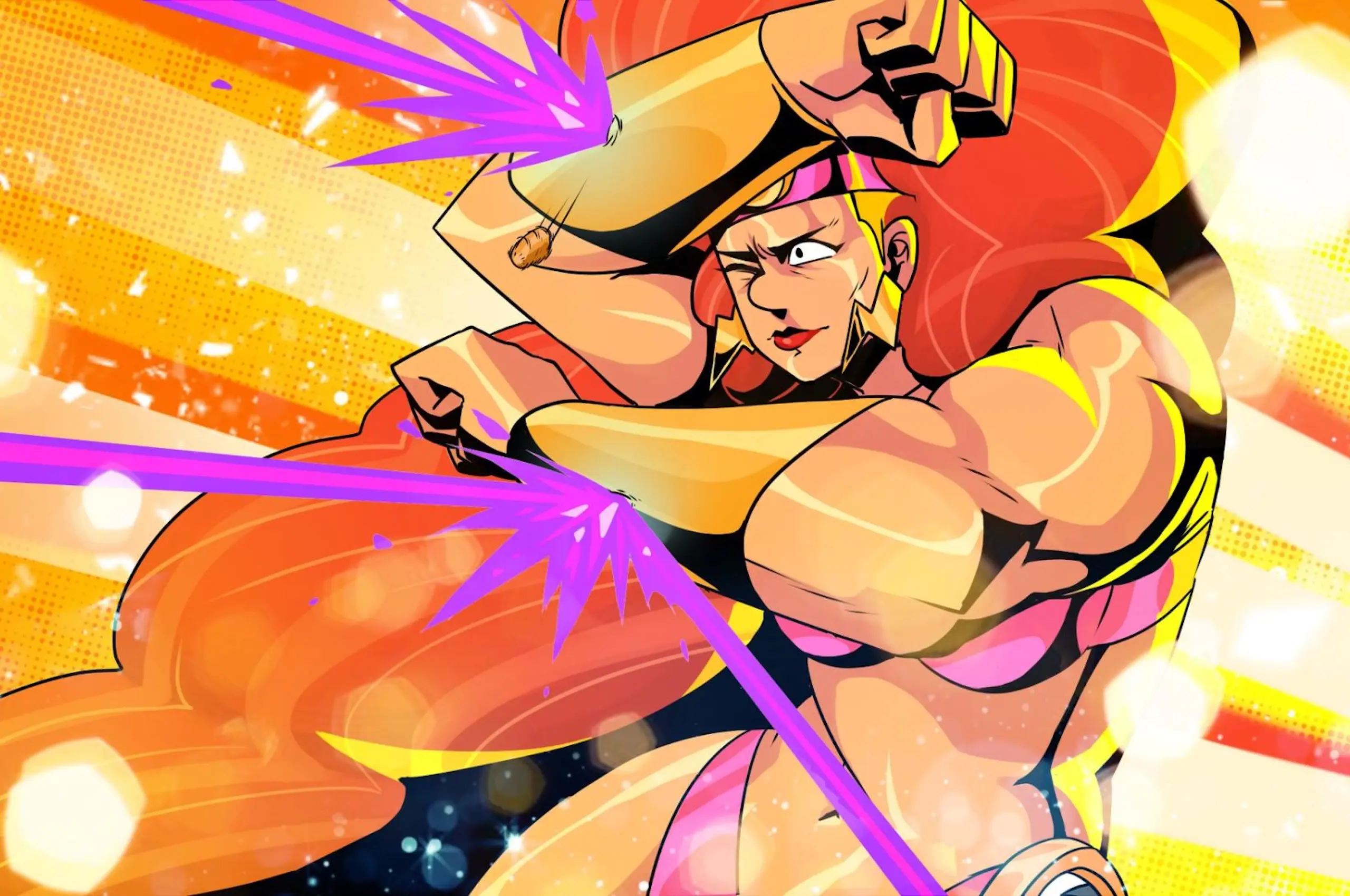
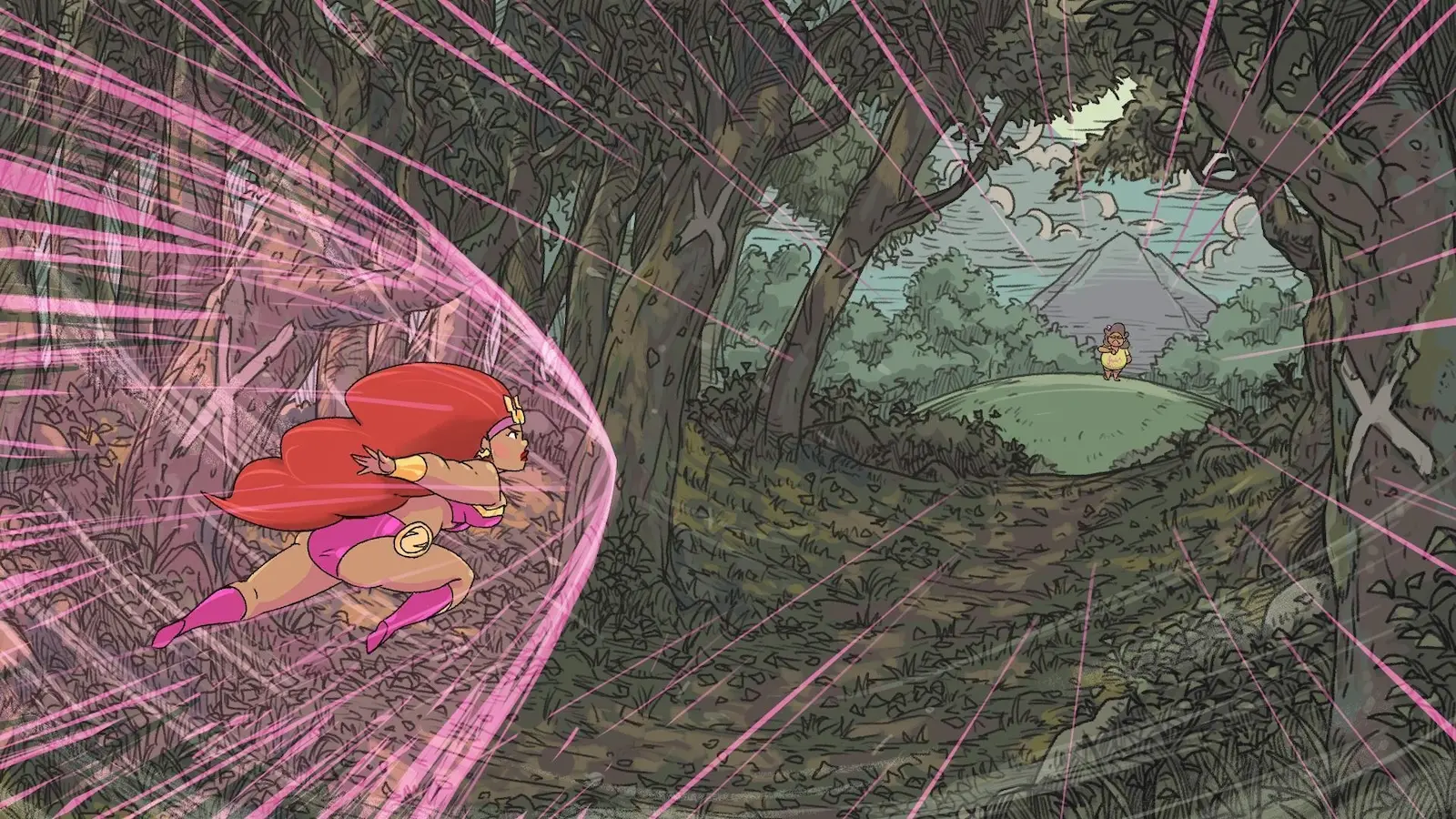
Like the titular character herself, Zsazsa Zaturnnah knows how to transform itself in more ways than one. Carlo Vergara’s 2002 graphic novel has taken on a life of its own, morphing into a musical that debuted in 2006, and then a live-action film released that same year. Across its many iterations it’s stayed true as a pop culturePop CultureThe everyday entertainment, trends, and media that large groups of people share, including music, film, television, fashion, and online content. Pop culture reflects what a society cares about at aGo to Pop Culture Glossary phenomenon that’s stood the test of time for more than two decades. Now, it’s an animated adaptation, and it’s making its grand debut at the prestigious Annecy International Animated Film Festival later this June.
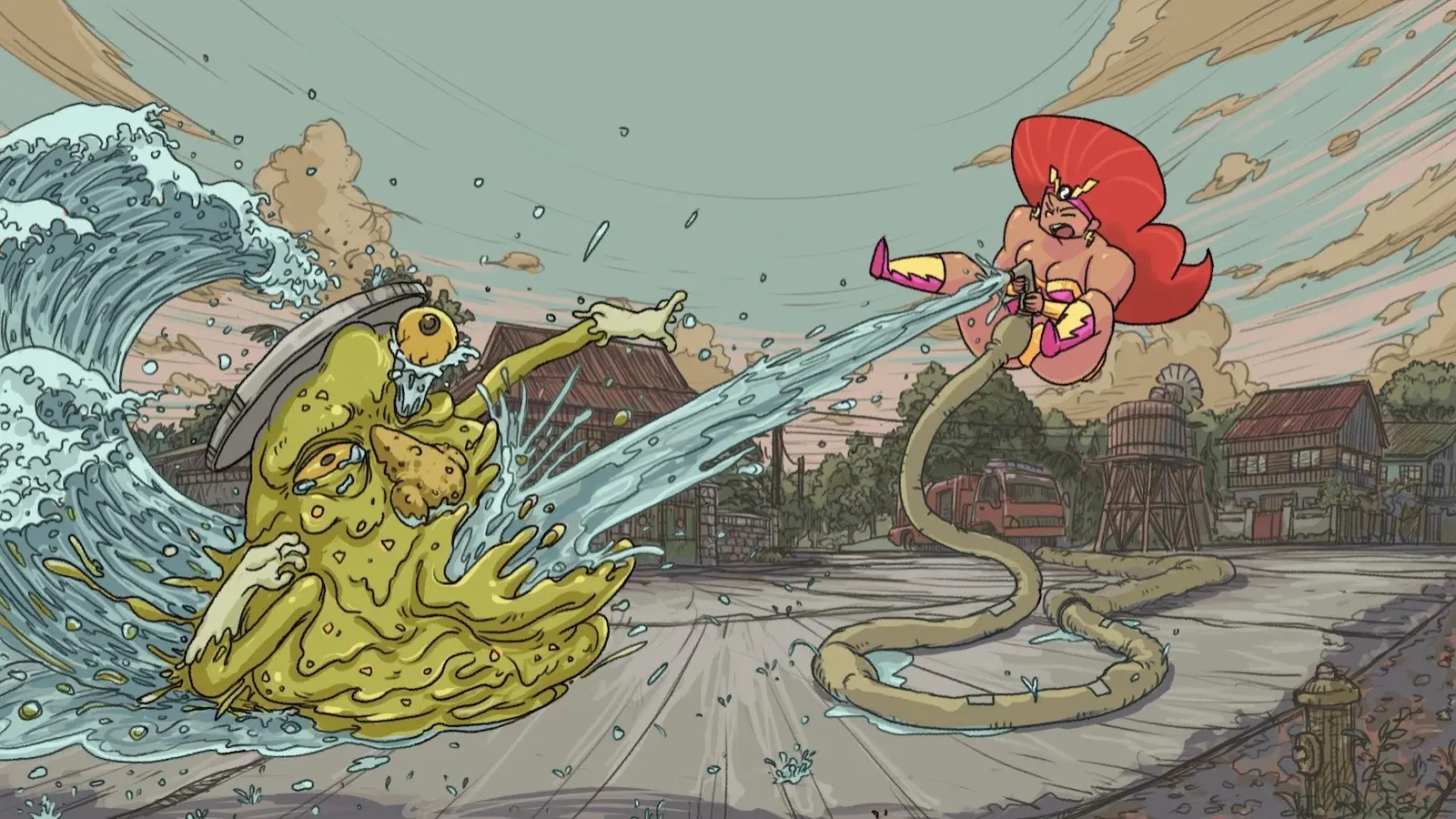
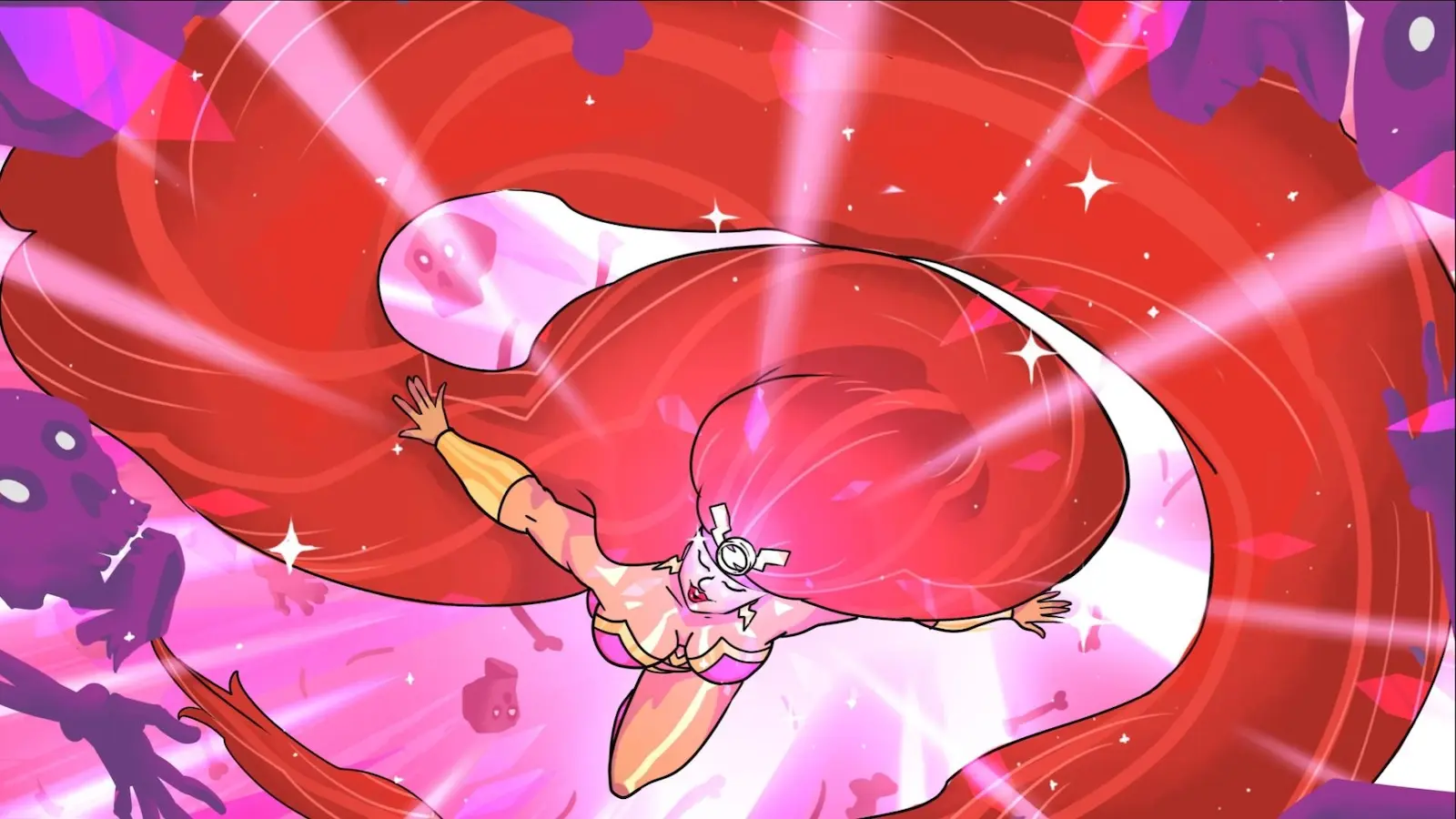
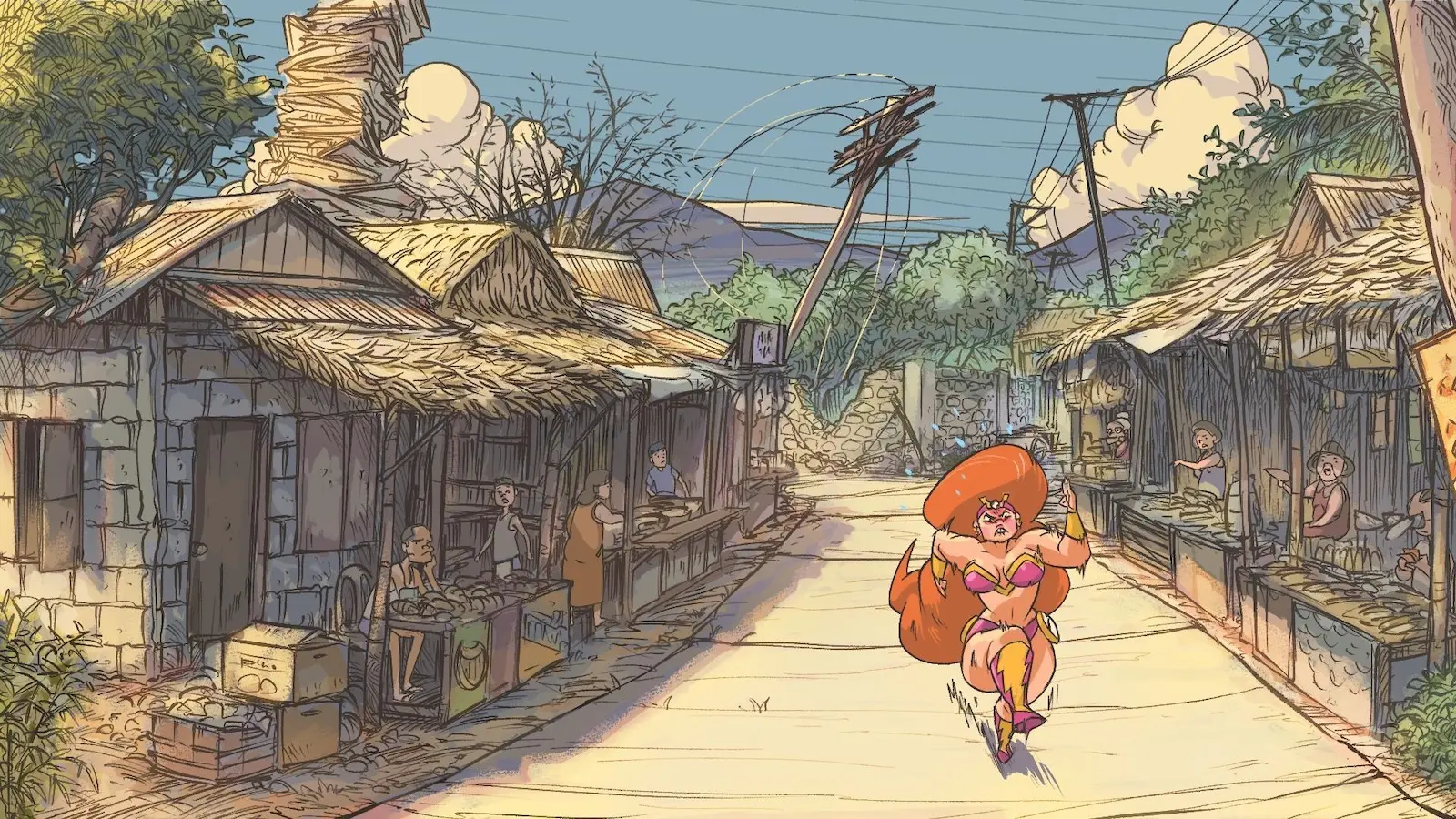
This adaptation, which features a screenplay written by Vergara himself, is a faithful adaptation: Ada, a shy hairdresser, suddenly gains the ability to transform into a Glamazon-esque superhero after eating a power-infused meteorite. It is directed by Rocketsheep Studio founder Avid Liongoren, and co-produced by CreaZion Studios, Inc. and Nathan Studios. An unfinished version of Zsazsa Zaturnnah was screened at the festivalFestivalA multi-act music event, often held over several days, where many artists perform across different stages. Festivals combine live music, food, art, and community, and they give audiences a chanceGo to Festival Glossary under its Work in Progress section last year.
I spoke to Liongoren in May, when no complete version of Zsazsa Zaturnnah existed yet. The filmmaker was deep in the final stages of animation as he rushed to meet the festivalFestivalA multi-act music event, often held over several days, where many artists perform across different stages. Festivals combine live music, food, art, and community, and they give audiences a chanceGo to Festival Glossary’s final deadline. While this isn’t Liongoren’s first rodeo (his studio, after all, produced Saving Sally and Hayop Ka!), he argues that the stakes feel higher this time around. Zsazsa Zaturnnah has been six years in the making, with Rocketsheep Studio self-funding most of production. “They’d already invited us last year,” Liongoren told me. “It would have been double the disappointment if they didn’t invite us back, like they didn’t like the final product.”
What’s more, it was unexpectedly difficult to get any external funding for this latest project. “Zsazsa Zaturnnah, it’s LGBTQ, but it’s also a superhero [story], but it’s also animated,” said Liongoren. “Iba-iba yung mga genre! Ang niche ya! So we’d get great opportunities, but the reality of producing a queer superhero film is that it doesn’t fall into anywhere mainstreamMainstreamThe ideas, styles, and works that reach the widest audience and dominate popular attention, such as radio hits and blockbuster films. The word is often set against indie or underground,Go to Mainstream Glossary.”
For our interview, Liongoren gave a blunt look at the challenges of self-funding an animated movie like Zsazsa Zaturnnah, the added complexities of pitching a multi-genre queer film to wary investors, and the “foolish” business of filmmaking.
This interview has been edited for brevity and clarity.
Could you tell me more about how this project started with Carlo Vergara?
Well, the simple reason is I just really loved the book. I read it 24 years ago when it first came out. Ang pagkakaintindi ko lang sa pagiging bakla ay gusto mong maging babae. So reading the book, it was like, “Okay, there’s so much more to this pala.” I had no idea an alphabet existed, and you know the main character, Ada doesn’t even really want to be a girl. There were so many things that were foreign to me when I first read the book.
And of course, the book made me laugh so much. More than anything, it was so much fun. It was greatly drawn. And then when I saw the musical, it was adapted so well! And when I learned it was going to be a film, I was so jealous, even though I knew I couldn’t be trusted to make a film at the time. And well, at least the film didn’t turn out so great. Sorry. [Laughs]
So 10 years ago, when Saving Sally was released, may isang mainstreamMainstreamThe ideas, styles, and works that reach the widest audience and dominate popular attention, such as radio hits and blockbuster films. The word is often set against indie or underground,Go to Mainstream Glossary studio that asked me what I wanted to work on next. I said, “May comment lang si Carlo na [we should do] Kung Paano Ako Naging Leading Lady.” It was this one-act play, then a comic, then a musical that he’d written. We were in development for two years: there was casting, press releases, storyboarding, everything. Sadly, the studio didn’t push through with it.
That sucked, so I said to Carlo, “Let’s just do Zsazsa Zaturnnah. You write it, I’ll produce it, and it’s gonna take years, but I’m sure we’ll get to the finish line because there won’t be any studio above us making decisions.” Kasi with [Kung Paano Ako Naging Leading Lady], the studio was excited but figured it might be too big a gamble for them. They weren’t used to spending this much.
What did you learn after self-funding an animated film like Zsazsa Zaturnnah?
It’s been a very, very hard journey kasi… you would think na because it’s such a fun project, madali lang makahanap ng investors. But what we quickly realized was… when you’re birthing a film, there are two routes to it. One is the way most people know of, which is going private. You go through the studio system. But we went the independent [route], which means going out there, finding co-productions in [places like] Europe, kasi in Europe especially, the way they make films is it’s all government-funded through grants. They like to assure that creative workers will find work. So you can present your project and the government will spend on it as long as you hire their people.
When we were talking to people who could potentially be our partners and put money into it, we realized na napaka-niche ng Zsazsa Zaturnnah. Number one, it’s an animated film, and automatically they wanted it to be something for children. Pero obviously, Zsazsa Zaturnnah is not a kiddie film.
Tapos, [kasi] LGBTQ siya, all of a sudden we felt like we were cut off from many major markets. Any film producer we met always laughed, they were so amused by the pitch. But the reality was them being something like, “Oh, I’m sorry, China has censorship against LGBTQ films.” So automatically the biggest market, wala na. In Southeast Asia, lahat ng Muslim countries, bawal din.
Ang funny lang, kasi we [won] a prize at the [Bucheon International Fantastic Film FestivalFilm FestivalAn organized event that screens a curated selection of films, often with premieres, awards, and talks with filmmakers. Festivals are important launching pads for independent and international cinema, and inGo to Film Festival Glossary] in South Korea, and that connected us to South Korean producers. Every Korean producer thought Zsazsa was great. But then they said, “We’re very sorry, but South Korea is still very homophobic.”
So again, back to Europe. We thought we’d have better chances of finding funding in Europe. Even my first film, Saving Sally, was partially funded by the French government. We applied for cultural grants in different European countries, pero it turned out na… if something is LGBTQ, the expectation is for it to be super serious.
And Zsazsa Zaturnnah is definitely not serious.
Yeah, comedy siya. Parang it’s a serious topic that they want, they were like, “If you are asking for our support, [Zsazsa Zaturnnah] doesn’t fit because we want our LGBTQ films to be very serious or tragic. May ganun na explain eh. Again, this isn’t prejudice. But film production has to fit neat boxes: if you’re horror, you’re horror, diba? But with Zsazsa Zaturnnah, it’s LGBTQ, but it’s also a superhero [story], but it’s also animated. Iba-iba yung genre! Ang niche niya! You can’t put it neatly into one [genre].
So yun, we’d get great opportunities, but the reality of producing a queer superhero film is that it doesn’t fall into anywhere mainstreamMainstreamThe ideas, styles, and works that reach the widest audience and dominate popular attention, such as radio hits and blockbuster films. The word is often set against indie or underground,Go to Mainstream Glossary.
Ganun ka volatile at hirap yung [pitching process]. I pitched in Hong Kong, Europe, Taiwan, and every time I presented, you could tell they were having fun. For audiences, maganda siya, pero for backers, takot sila. From a creative standpoint, we got a lot of support. But from a business standpoint, it was a hard sell.
Thankfully, though, the film survived, mainly because we got the support of the Film Development Council of the Philippines. So that’s our taxes working for us! [Laughs] We also have two Filipino studios here, CreaZion and Nathan Studios, who pitched in. And the whole project is a co-production with a French company called Ghosts City.
Of course, the biggest source of funding is still our studio. We sell our own content, we work on advertising projects and commercials, and everything we earn from that just goes into the film. That’s how we’ve survived six years of working on Zsazsa.
How’s the final stretch of production been going?
We have to finish this now. We have a commitment. Like, a literal deadline. It’s been six years of working on this! Not to say that we were lax in those six years, but we were really working constantly.
But now suddenly, there’s this deadline, so now it’s like a marathon. If you’re conserving your strength in those last six years, now you can see the finish line, so you’re in a mad rush to meet it.
We are literally projected to finish by June. Of course, there’s room for error, especially if you’re working with a lot of people. Nothing is ever safe. Two months ago, for example, meron kaming key staff who had to resign for personal problems. So you have to adjust to that. It’s never a machine that runs smoothly, so you’re constantly adjusting.
What have you been feeling as the deadline draws closer?
I don’t feel safe! [Laughs] But it’s not like we were going to decline the opportunity. Parang it’s nice to have your butt lit on fire. Now, there are stakes.
Those last six years, we were constantly running out of money. So then we’d say, “Okay, let’s scale down. Let’s not work with as many people.” But now that we’re almost there, it’s like, “Let’s use up all our budget.”
What plans do you have for Zsazsa Zaturnnah after Annecy?
So you don’t survive six years working on something like Zsazsa without becoming optimistic! Pero now that we’re towards the end, I have to manage my expectations. Nobody rewards effort, you know? I’ve experienced that before: I spent 12 years making Saving Sally, and we didn’t make any money. We got great reviews. We went to festivals. We got awards. But it never made enough to cover those 12 years. So I know na andyan na yung risk na hindi kami mag-uumdakan.
And with our second film, Hayop Ka!, it had all the ingredients, but when we finished it, it was in the middle of a pandemic. So that’s just how it is. The main thing I’ve learned is that you can make the most creative work, but the world might not be on your side.
Now, what’s tough is there’s a war. And appetite for sales is low. And we’re also up against generative AI. All of a sudden, our work is devalued. So wow, great! [Laughs]
Honestly, the business of filmmaking is so foolish. It’s so painful, because if we just used the money we spent making this film to franchise a Mr. Siomai or something, then we’d have made our money back. I saw somewhere that Mang Inasal was built from P2.6 million seed money — Zsazsa spent much more than that. So yun, it’s so stupid from a business standpoint. But we’re really gonna hope for the best. Again, we’re selected for Annecy, and we already have our next festivalFestivalA multi-act music event, often held over several days, where many artists perform across different stages. Festivals combine live music, food, art, and community, and they give audiences a chanceGo to Festival Glossary lined up after. So what I’m hoping is if people like Zsazsa in her rough state, they’ll like her more when she’s completed.
We’re also working on something. This version of Zsazsa is in English because it was always meant for festivals and international co-production. But of course, it’s Zsazsa! We had to make a pure Bekinese version. So after we finish it for Annecy, we’re going to make a Tagalog version, which will have all the jokes as intended by the comic. But maybe that’s for next year.
For now, we’ll try to earn our wings through the festivals. The process is really long. The sad and painful thing about making a film is that you think all that hard work is everything, but when you finish a film, that’s actually only half of the effort. The other half is trying to sell it.
Frequently Asked Questions
The Zsazsa Zaturnnah animated film is a feature-length adaptation of Carlo Vergara’s 2002 graphic novel, directed by Avid Liongoren of Rocketsheep Studio. It follows Ada, a shy hairdresser who transforms into a superhero, and makes its international debut at the Annecy International Animated Film Festival in 2026.
The film took six years primarily due to funding challenges. As a queer superhero animated film, it fell outside the neat genre categories required by most international co-production investors. Rocketsheep Studio self-funded much of production through commercial work, supplemented by the Film Development Council of the Philippines.
The film is directed by Avid Liongoren, founder of Rocketsheep Studio, the Philippine animation company behind Saving Sally and Hayop Ka!. The screenplay was written by Carlo Vergara, creator of the original 2002 graphic novel on which the adaptation is based.
The film’s LGBTQ content made it ineligible for major markets including China and several Muslim-majority Southeast Asian countries. European funders expected queer films to be serious or tragic, while the animation format narrowed it further to a perceived children’s category — neither fit Zsazsa Zaturnnah‘s genre-blending identity.
Yes. The Annecy version was produced in English for international festival and co-production purposes. Rocketsheep Studio plans to release a Tagalog-language version after the festival run, described by Liongoren as a “pure Bekinese version” restoring the humor and cultural specificity of Vergara’s original comic.
Recommended Video