

Little remains today of what used to be home to the largest Filipino community in Stockton, California, called Little Manila. This once-thriving enclave, with a handful of historic structures still standing, is now only kept alive by a few Filipinos trying to preserve what’s left of it.
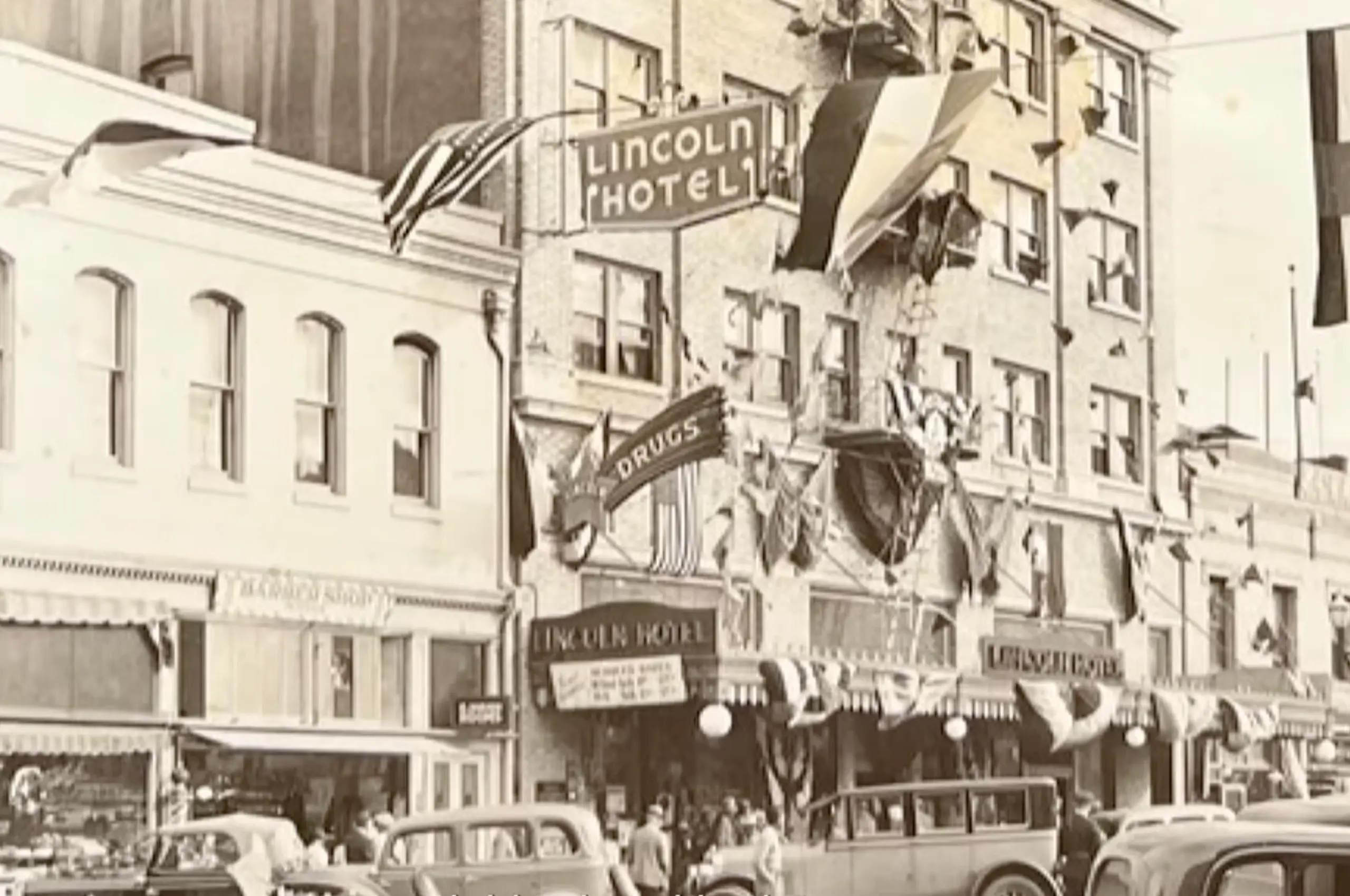
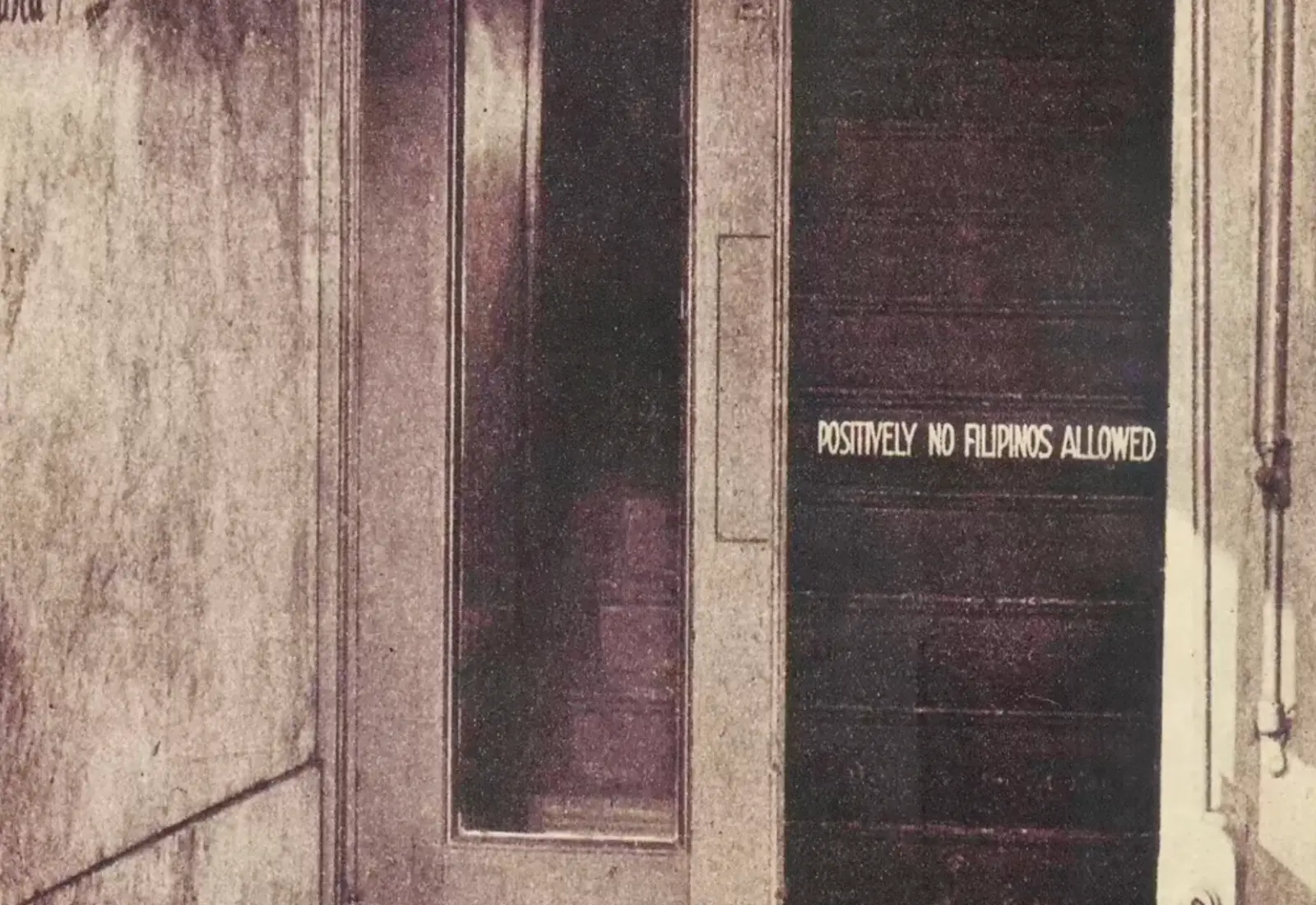
But from the 1920s to the 1960s, it offered the Filipino American community a home in a country that often treated them as outsiders. It was not just a “feeling” of being unwelcome; it was physically manifested in signs like the one on a local hotel just a few blocks away from the neighborhood that read, “Positively No Filipinos Allowed.”
What was inside Little Manila, and what happened then?
Little Manila’s Early Days
According to the National Museum of American History, Filipinos arrived in America in the 20th century, particularly after the country became a colony of the United States. Many of them came as migrant workers and farmers, and some joined minimum-wage or low-wage industries to survive. By 1930, there were already over 30,000 Filipino workers across other parts of the state.
Despite moving to America, however, their lives were far from easy.
This generation of early Filipino workers was called the “manong” and “manang” generation, terms coming from Ilocano titles of respect, with most of the workers being from the Ilocos and Visayas regions of the Philippines. Racial segregation was already rampant during that time; Filipinos were not allowed to become American citizens, were restricted from land or home ownership, and even from voting.
They were also not allowed to marry outside of their race, resulting in many of the workers remaining bachelors. Under California’s anti-miscegenation laws, marriages between Filipinos and white people were prohibited, while violence against Filipino communities continued throughout the period.
In 1926, Stockton documented the city’s first anti-Filipino attack, where white men stabbed and beat Filipinos at hotels and pool halls, causing the latter to run amok. A total of eight whites and Filipinos were injured during the fight. Then there was the bombing of a building owned by another Filipino organization, and then the riots in Watsonville, where hundreds of white residents attacked agricultural Filipino workers inside dance halls and in their homes after the Americans were angered over them dancing with white women. Fermin Tobera, a Filipino farmworker, was shot in the heart while hiding and died during the riot.
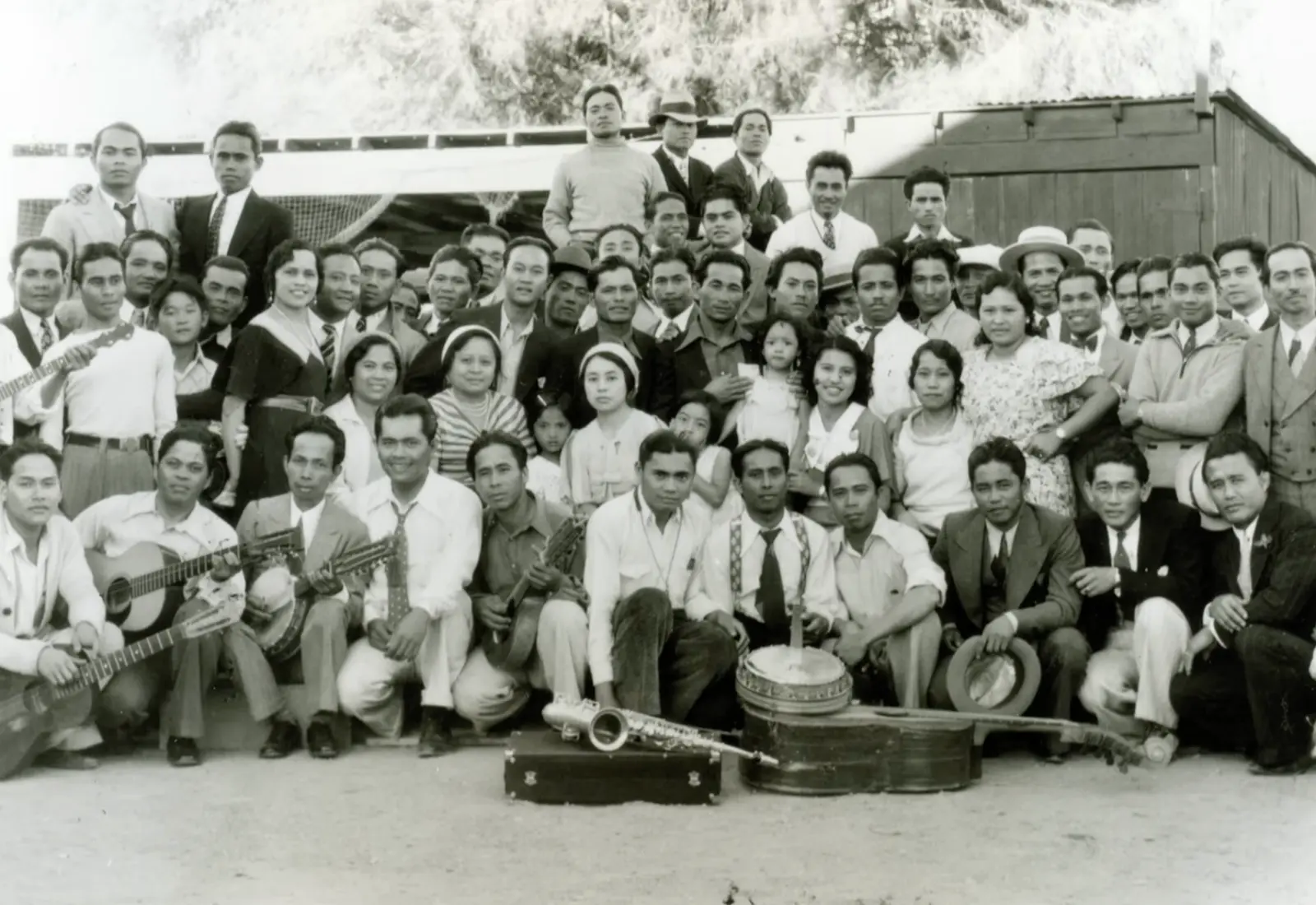
As the National History of American History narrated, Little Manila ultimately became a sanctuary against “anti-Filipino violence.” The area prospered as Filipinos found their own way and eventually became a self-sustaining community. Some of the manongs were able to build businesses centered around Lafayette and El Dorado Streets, such as a barbershop, a tailoring store, and a Filipino restaurant. It further blossomed after World War II, when the Filipinos who fought in the war were finally granted citizenship, giving them rights to vote and own property. The Filipino community later grew in size and influence throughout the city.
Demanding Social Justice in California
Of course, there also existed a labor movement that Filipino workers helped build in Little Manila.
One of the major leaders of this movement was Larry Itliong, a Filipino American labor organizer, who migrated in 1930. Itliong, along with other Filipinos, fought injustice and formed labor unions. In 1948, Itliong and other labor leaders participated in the Stockton asparagus strike, where they protested against unfair wages and their grueling working conditions. There was also the Delano grape strike, where they once again fought against the exploitation of farm workers.
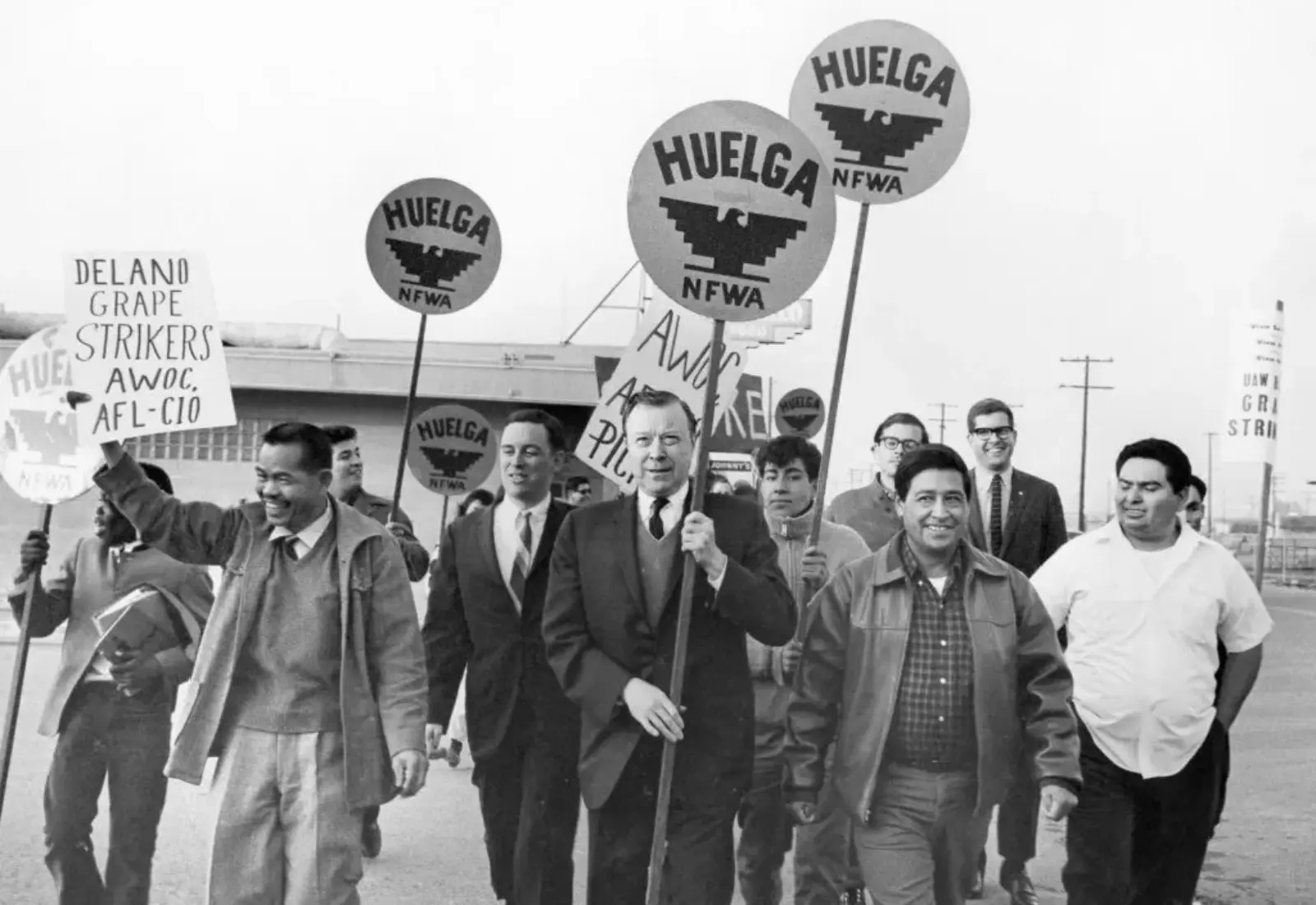
The five-year strike eventually led to the establishment of one of the largest social justice movements in American history: the United Farm Workers in 1962, a joint effort between a Filipino farm labor union led by Itliong and the Mexican farm labor union led by Cesar Chavez.
The Slow Demolition of Little Manila
The block did not see an abrupt demolition, but rather a slow one that began with the city’s urban development. The city officials began demolishing large portions of the neighborhood in the 1960s, but it was the construction of the Crosstown Freeway that ultimately became one of the major contributors to the demolition of the Filipino block, as well as the other neighborhoods of color. Their homes, businesses, and community centers were steadily displaced, chipping away at what once had been a flourishing area.
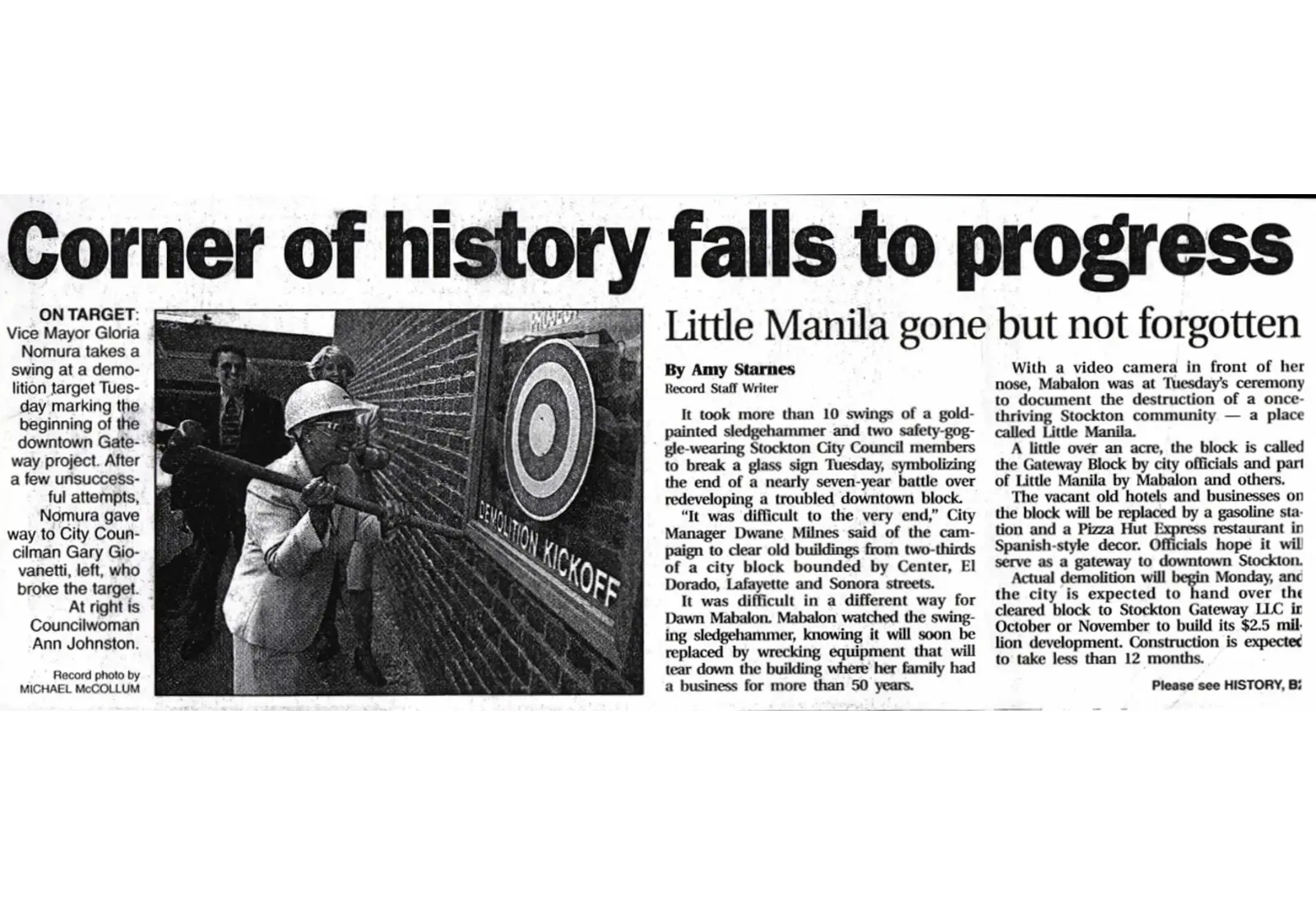
As the years went by, so did the construction. By the 1990s, some of Little Manila’s last remaining buildings were destroyed to make way for a McDonald’s and a gas station — a moment that two Stockton natives, historian Dawn Bohulano Mabalon and activist Dillon Delvo, witnessed firsthand. The experience helped propel their preservation work, the community-based, non-profit organization Little Manila Rising, in 2001.
How is Little Manila surviving now?
The memories of Little Manila now hang on through the preservation efforts of Mabalon and Delvo. The old buildings may be gone, but its history has not disappeared with it.
In 2001, the Little Manila foundation rallied the community together to have the City of Stockton designate the site as the Little Manila Historic Site, and by 2002, the designation was formally unveiled in the downtown area, with banners marking the site. The foundation was also able to further stop strip mall developers from paving over family homes, businesses, and the historic site. It was deemed “one of the eleven most endangered historic sites in America” by the National Trust for Historic Preservation in 2003.
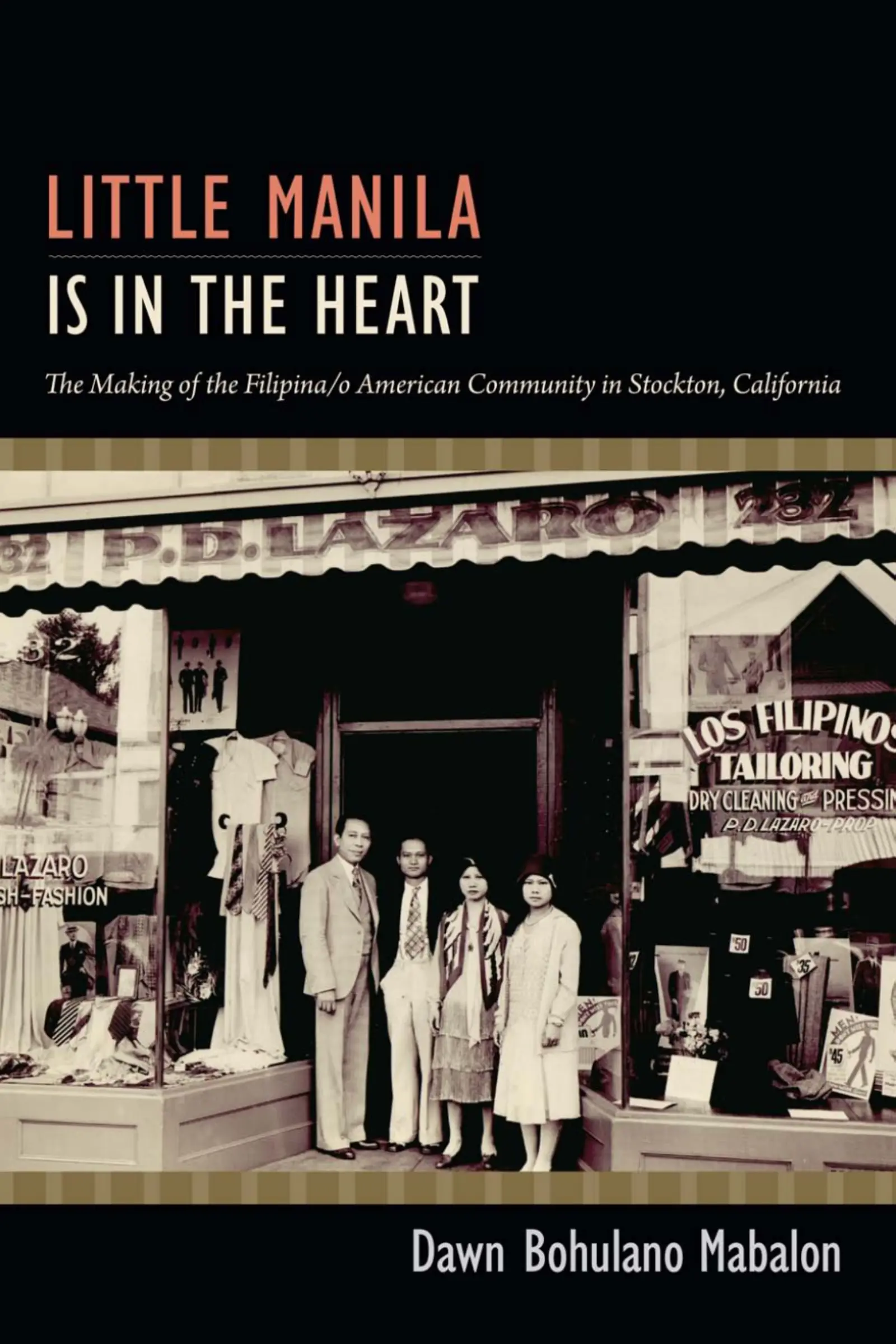
Mabalon spent much of her career as a historian documenting the Filipino community of Stockton, through her 2008 book Filipinos in Stockton, and, most notably, through her 2013 book Little Manila Is in the Heart. Her work helped bring national attention to a community that had been physically dismantled but remained deeply embedded in the memories of Filipino-Americans.
In a previous interview with Rolling Stone Philippines, Filipino-American entertainer Jo Koy has spoken about Little Manila and its disappearance, where he connected the history of the community to his very own identity. “I went to visit Little Manila. It’s completely gone. There’s nothing there to this day,” he said.
Jo Koy set his latest Netflix special, Blue in the House, in Stockton, to remember the resiliency and tenacity of the Filipino workers who lived through the racism in the city.
“If it wasn’t for those migrant workers and their tenacity, someone like me would have never been able to shine the way I did. I wanted to make a special where it’s like, ‘Here we are in a town where we all know what happened. But behind me, subliminally, is the Filipino sun. And here’s a Filipino on stage,” the comedian added.
Little Manila Rising was originally founded to save the story of the manangs and manongs. Since then, its work has grown beyond mere conservation efforts and has also become a full expression of its pursuit of equity, carrying the legacy of the small neighborhood forward.
FREQUENTLY ASKED QUESTIONS
Little Manila was a Filipino American enclave in Stockton, California, that thrived from the 1920s to the 1960s. It mattered because it served as a sanctuary from anti-Filipino violence and discrimination, giving migrant workers a self-sustaining community with businesses, labor unions, and social life.
The Crosstown Freeway, built starting in the 1960s, cut through the neighborhood and displaced homes, businesses, and community centers. City-led demolition continued for decades, and by the 1990s some of the last original buildings were razed to build a McDonald’s and a gas station.
Larry Itliong was a Filipino American labor organizer based in Little Manila who led the 1948 Stockton asparagus strike and later helped found the United Farm Workers in 1962 alongside Cesar Chavez, uniting Filipino and Mexican farmworker unions against exploitative labor conditions.
Little Manila Rising, founded in 2001 by historian Dawn Bohulano Mabalon and activist Dillon Delvo, preserves the neighborhood’s history. Their efforts secured the Little Manila Historic Site designation in 2002 and helped the site earn recognition as an endangered historic place in 2003.
Comedian Jo Koy has cited Little Manila’s manong generation as foundational to his own identity, staging his Netflix special Blue in the House in Stockton to honor the resilience and tenacity of the Filipino migrant workers who, he says, made his career possible.
Recommended Video