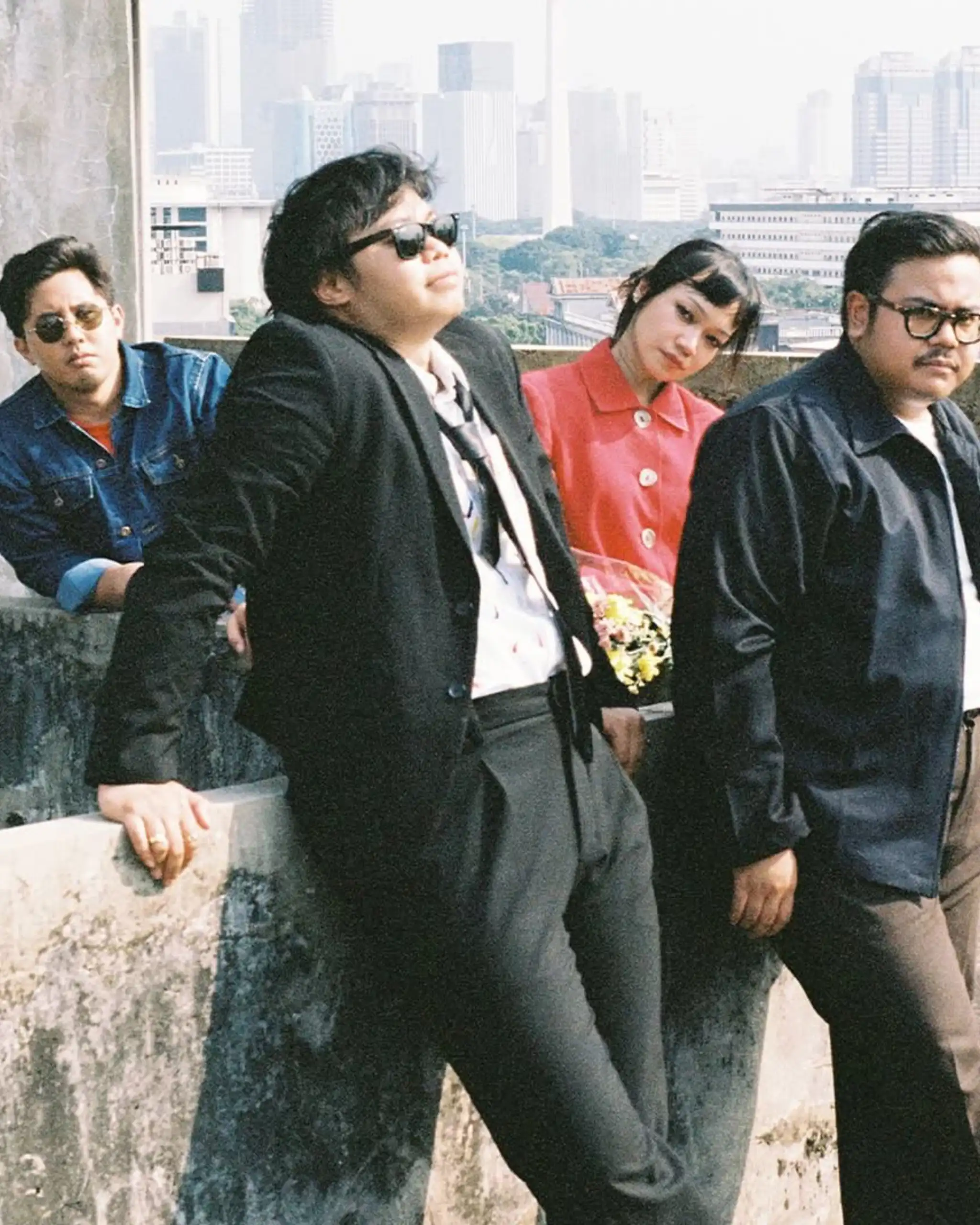
The members of Indonesian indie pop band Reality Club still remember the moment they walked offstage after opening for NIKI in Jakarta last February.
It was held across two nights with 20,000 people attending each night. It was the kind of reception most Indonesian bands only dream about. They felt like proud parents watching their kid graduate except the kid was Indonesia’s biggest global pop star, and they were just the band lucky enough to share the same stage. This is the dichotomy of Reality Club’s existence right now: a group simultaneously grounded in Jakarta’s tight-knit indie scene while eyeballing much bigger ambitions for Southeast Asian music as a whole.
The band, consisting of vocalist Fathi Izzati, guitarist Faiz Saripudin, bassist Nugi Wicaksono, and drummer Era Patigo, has become one of Indonesia’s most promising musical exports. With three albums under their belt and viral hits like “Am I Bothering You?” and “Anything You Want,” they’ve achieved a cross-border recognition that few regional acts have managed, all without compromising their distinctly Indonesian identity. Their solo Manila tour stop in 2023 was a of larger and strategic plan to strengthen Southeast Asia’s musical infrastructure.
Filipino and Indonesian Unity
What separates Reality Club from other regional acts isn’t just their music (though their blend of indie pop sincerity and razor-sharp songcraft certainly helps). It’s their deliberate approach to community building. When they first played the Philippines at 123Block, Mandaluyong City, the band immediately immersed themselves in Manila’s scene, forming genuine connections with artists like Toneejay, The Ridleys’ Benny Manaligod, and members of IV of Spades.
“I’ve always wondered why the music capital has to be Los Angeles. Why can’t it be here in Southeast Asia?”
This philosophy stems from Jakarta’s unique music ecosystem, where competition takes a backseat to collective growth. “In Jakarta, it doesn’t feel like a competition,” Izzati tells Rolling Stone Philippines. “Maybe the only competition is between managers booking show dates. For us artists, it feels like we’re chasing the same dreams and facing the same struggles.” The band cites local legends like Efek Rumah Kaca and their song “Pasar Bisa Diciptakan” (which translates to “You Can Create Your Own Market”) as foundational to this mindset. They insist that in Jakarta, a city of 10 million people, there’s space for everyone — from hardcore punk bands to psychedelic pop acts — provided they’re willing to put in the work.
Reality Club’s vision extends far beyond Indonesia’s borders. They see Southeast Asia’s fragmented scenes not as a weakness, but as an opportunity. “The regional ecosystem is there, but still very local,” Saripudin observes. “Each country has its own thing going on.” The band’s solution? More cross-pollination. More Manila bands playing Jakarta. More Bangkok artists collaborating with Singaporean producers. More of the organic connections they’ve experienced firsthand. “As for breaking into the West, I’ve always wondered why the music capital has to be Los Angeles. Why can’t it be here in Southeast Asia?”
Indonesian Pop
Musically, the band operates at an interesting intersection. Citing The Adams, as well as White Shoes & The Couples Company, as key influences, their sound springs from early 2010s Indonesian indie rock while incorporating a distinctly contemporary emotional vocabulary. Tracks like “Alexandra” and “Telenova” balance intricate arrangements with direct, conversational lyricism. “Songwriting is like having a conversation,” drummer Patigo says. “I have a story, and I want the listener to understand it, so I figure out how to tell it. Background, structure, everything.”
This approach has served them well as they’ve expanded their reach. Their third album, 2023’s Reality Club Presents…, sharpened their songcraft without sacrificing the vulnerability that made their earlier work resonate. Its lead single “Anything You Want” became a regional hit precisely because it sounded like nothing else coming out of Southeast Asia at the time: a sleek, melancholic pop song that could’ve dominated American college radio in 2005, if not for its unmistakably Indonesian perspective.
Southeast Asia as a Music Mecca
The band’s ambitions are as practical as they are grandiose as they aim to make Southeast Asia a self-sustaining musical hub. Because if any band is positioned to make that dream plausible, it’s Reality Club and everyone else who wants to follow their footsteps. Not through flashy gimmicks or calculated market plays, but through the slow, steady work of building something real.
“I’ve always dreamed about how Southeast Asia should be the mecca for music,” Saripudin says. “And honestly, it’s starting to happen. People are realizing Southeast Asia is one of the biggest markets in the world, in terms of numbers. Artists from abroad are trying to break in here [in the Philippines], while local artists are trying to break out [elsewhere].”
For now, Reality Club’s focus remains on the groundwork. More tours. More collaborations. More proving that a band from Jakarta can matter just as much as one from London or New York.
“We want to connect more with Southeast Asia and beyond,” Saripudin says. “[We’re not only here] just to infiltrate the Southeast Asian scene, but to unite [everyone in Asia in general].” He pauses, then laughs. “World domination!”
Rolling Stone Philippines November 2025 Issue, Now Available at SariSari Shopping