

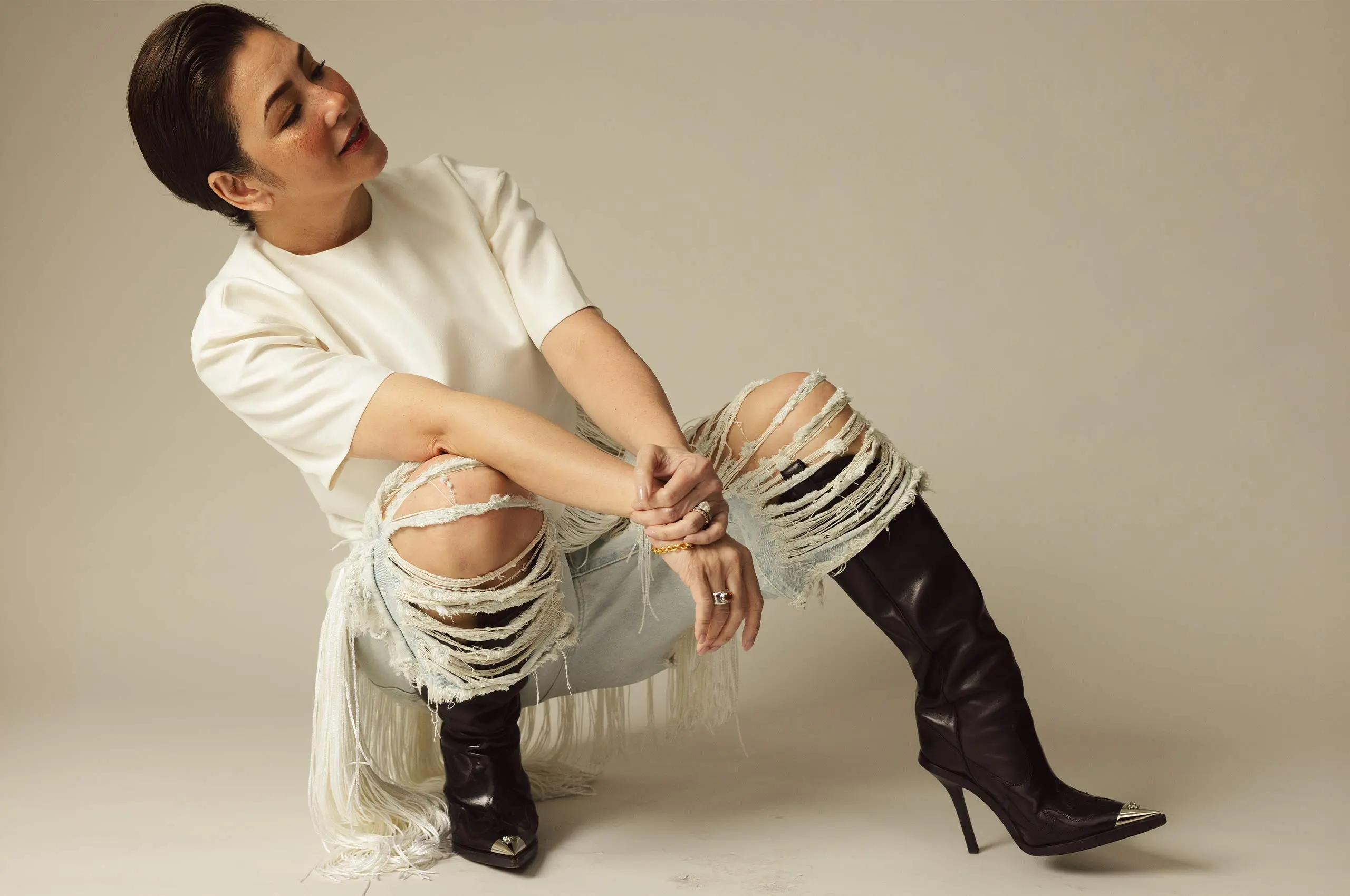
After 40 years in the industry, multiple sold-out concerts, performing on top of The Peninsula Manila to welcome the new millennium, and becoming the best-selling Filipino artist of all time, Regine Velasquez-Alcasid is coming to terms with the end of this chapter of her career. But that doesn’t mean she has to like it.
Blame it on age, the failures of the body, or the cost of constantly performing at the highest level; time comes for us all, even if you are the Greatest of All Time. “Aging is cruel,” Velasquez tells Rolling Stone Philippines. “We still have our voice but we just got old. Age is not just a number; it really is catching up on you.”
Weeks before her sold-out three-night concert, FINALE, at the SM Mall of Asia Arena, Asia’s Songbird is understanding what it all means. “I have been doing concerts since I was 16 or 17 years old.
I’m not really retiring yet, but doing big shows has been part of my life, and I love it. I love doing concerts, and I’ve gotten so used to it. So deciding that this would be it for me is like giving up a part of my life.”
Still, there is no denying that there will never be another Regine Velasquez. Her story, her accomplishments, and her dedication speak of her illustrious career and the impact she’s made on the industry.
In this highly candid interview, Velasquez looks back at her life from leaving school to pursue her career, to providing for her family, to being saved by her husband, fellow artist Ogie Alcasid, and leaving an undeniable mark in Filipino pop culturePop CultureThe everyday entertainment, trends, and media that large groups of people share, including music, film, television, fashion, and online content. Pop culture reflects what a society cares about at aGo to Pop Culture Glossary and beyond.
The following interview has been edited for clarity.
Because this is a very special Hall of Fame edition of Rolling Stone Philippines Interview, we really want to celebrate and explore your lore and get to know you a little more. So let’s start from the beginning. A lot of the fans really talk about how your training was so unique, especially learning to sing neck-deep in the ocean. How was that like growing up for you?
I didn’t know that my father was training me. I thought I was just swimming. I thought it was just part of playing. I love swimming. Our house in Leyte was very near the beach. So just after school, or if it’s a weekend, we would just go there. We would swim, and then my father just asked me to sing so I didn’t think he was training me.
And then later on, when I was a little bit bigger, he explained to me what it was all about: When you’re in the water, it was harder to sing because of the pressure of the body of water. But when you’re out of the water, it’s much much easier. So the pressure made my lungs, I suppose, ‘yung threshold kumbaga, parang na-develop ‘yung lung power. That’s why I could sing and breathe longer. I could hold the air in my lungs longer, which you need for singing.
But did you like singing even before all of that?
I always loved singing. Plus the influence of both my parents. I remember when I was really young, like about three years old, I would wait up for my father, after work, kasi hinehele niya ko. He would pick me up in his arms and would sing me to sleep. I remember that he would sing mga Jerry Vale songs, Frank Sinatra songs, even Elvis songs.
And speaking of your family, with your parents and even your sister, I would like to think, you grew up in a singing household.
My mom also sings. She plays the guitar and the piano. That’s actually how they met.
And you with your sister, Cacai, who also sings, was there any sense of learning together, singing together. Was there ever like a friendly sibling rivalry?
There was no rivalry ever. Hindi ko alam kung ako lang ba ‘yun pero in my head, I really wanted to sing. I didn’t really care if they also wanted to sing. [Laughs] In our household kasi, we didn’t have a TV. I think we had a radio at one point. That was our pastime: the whole family would sing. So we would each have our own turn.
You became a professional singer at such a young age. Looking back at it now, did you know when you realized or when you decided, “Okay, maybe I will stop with my proper education to do this full time”?
I never liked school.
So it was easy for you to give it up?
Well, first of all, I was dyslexic, which I didn’t know because I was never diagnosed. So school was very traumatic for me because I couldn’t read, I couldn’t spell, and I couldn’t understand. I was the only one who couldn’t read in school. In Grade 4, I was in Section 1 only because I was good at singing. I was supposed to be in Section 4, where the other kids cannot spell but I was put in Section 1 because I had a special ability.
So syempre, I was so delayed. I felt stupid because I couldn’t spell, I couldn’t read, and I remember this very clearly: they had to put me at the front [because] they thought malabo ‘yung mata ko. ‘Yung B and D ko baliktad. My mom would inspect ‘yung mga notes ko. Hindi niya mabasa and later on, I realized na that’s how you hide it pala. When you have dyslexia, pinapapangit mo ‘yung handwriting mo. I actually have a really nice handwriting but purposely pinapapangit ko to hide the fact that I cannot spell.
Even when I write autographs, it’s actually really embarrassing when they ask me to write their names. I would scribble it because I don’t know how to write their names. Or when they ask me, “Can you write us a message?” And I can’t because part of being dyslexic is when you get stressed out, the more you cannot spell. Not a lot of people, by the way, know that I have dyslexia. And I also found out later on in life na.
So I never liked school because, for me, it was very traumatic. But I’m highly creative. [Laughs]
That’s why you’re here.
I’m highly creative. This is how I would memorize my song: I would listen to my songs four times. Once to familiarize myself with the song. Twice to memorize the melody. Thrice to memorize the lyrics, and the fourth time to listen to the ad-libs. Four times. Now that I think about it, I think it’s amazing. It’s like a gift. That’s how I used to memorize my songs. Why? Because I had no choice.
“I didn’t know how to make friends with other people. I didn’t know how to be human. Actually, all I knew was singing.”
And that started even at an early age?
Yes, because I didn’t know how to read.
What were those early years like? Especially when you were still known as Chona Velasquez. What was it like when you got out of school and you’re figuring out who you were at a time when you’re not supposed to kind of know who you are yet, but you were put in that spot?
I only had one thing in mind: I just wanted to be a singer. I didn’t care about school. I didn’t care about anything else. Also, I wanted to be rich. [Laughs]
Because we were so poor, and when you’re poor, you only have one problem: you have no money. ‘Di ba, ‘pag mahirap ka, isa lang naman ‘yung problema mo e. ‘Pag na-ospital ka, wala kang pera. So lahat ng problema mo ‘yun lang ‘yung pagmumulan. You get mocked because you’re poor. You’re ugly. Your clothes are not maganda because you have no money. So, when I was younger, I just wanted to be rich. I didn’t even care about being famous. I just wanted to have money. I wanted to be rich para maiahon ko sa hirap ‘yung family ko.
When you’re rich, your problems become more complicated. When you’re poor, you only have one problem: you have no money. That’s it. You don’t think, “Oh I’m depressed” when you’re poor. You don’t think of that. Seriously! Utang na loob! Wala ka ngang pera e. Ganun ‘yun ‘pag purita ka. Kaming mga poor, ‘di kami nakakapag-isip ng depressed! Wala nga kaming pamasahe pauwi e! [Laughs]
Imagine if you’re poor or you’re working class, sweldo mo P20,000 a month. Kalahati nun napupunta sa Meralco. Tapos lahat ng pagsisikap mo, hirap mo, kalahati nun wala na. Tapos meron ka pang tax.
When you did become successful and rich, what were your problems then? Especially being the breadwinner at such a young age for your family.
I was, of course, very happy. I knew my purpose right away, and I didn’t mind because I wanted that. I wanted to help my family. I didn’t want my brother and my sisters… I didn’t want to see them having a hard time. I also didn’t want to see both my parents suffering.
Like my mom, for example, I saw her, watched her trying to budget what little money she has, or thinking, “What am I going to do for lunch? Where would the next meal come from?” My father was working as a construction worker, and he had really bad scoliosis. I didn’t want to see him work so hard working with that back? Imagine him doing construction stuff with that back? I couldn’t. And since I have this voice — this big voice — I thought I can use this. I was given this wonderful gift. And this must be my purpose.
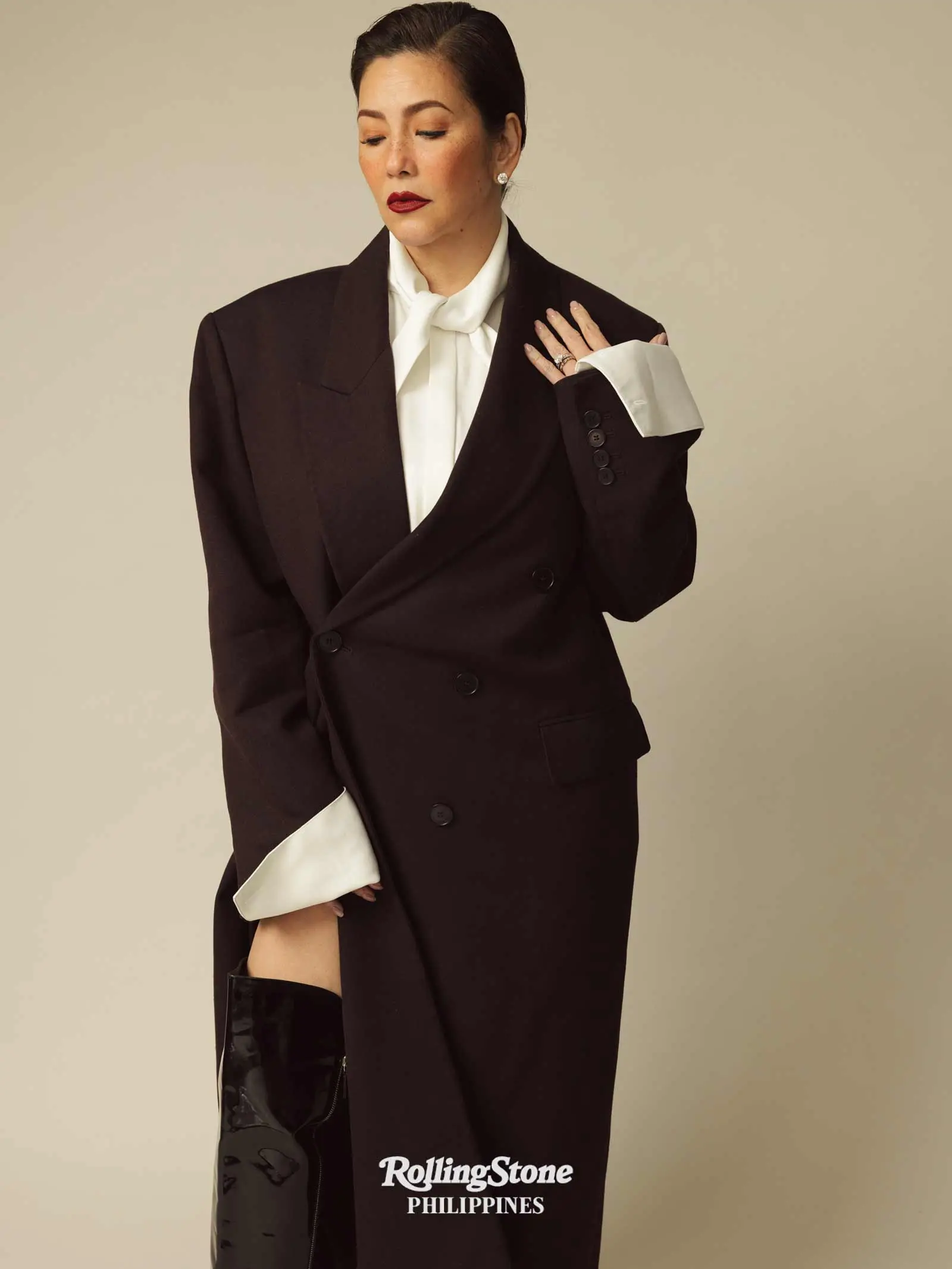
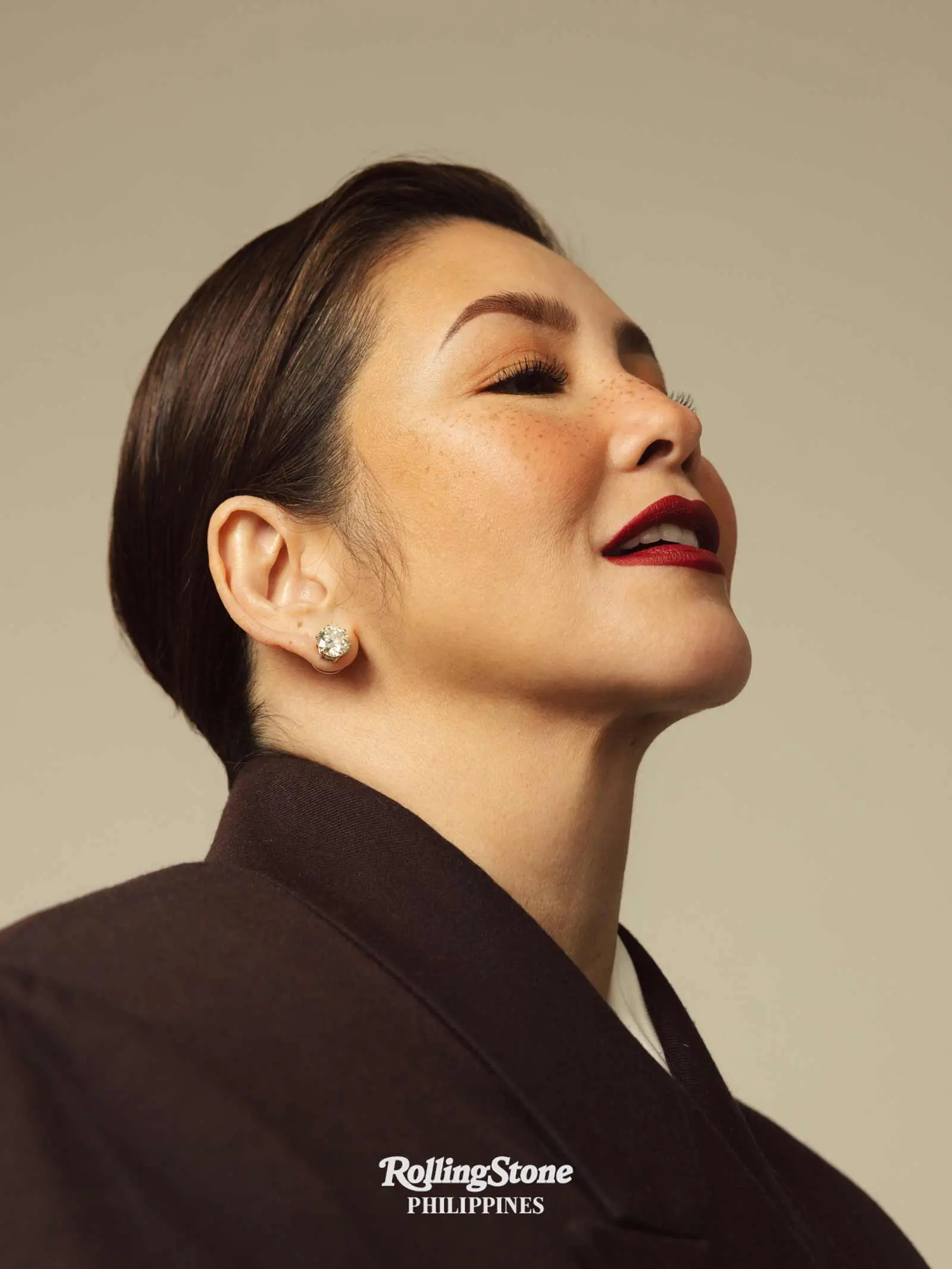
That sounds like a lot for someone no matter the age. I’m curious how much of it was you wanting to really live your dreams, and how much of it was because as you said, you didn’t want to see your parents suffer or toil night and day.
I didn’t see it that way. I mean, of course, I did later on in life. I realized that I also sacrificed a lot, but I didn’t see it that way early on because it was also a dream for me, not just for my family. It was also for me. Kasi I was like a horse with those [blinders]. That’s all I wanted to do.
Can you elaborate what you meant by “sacrifices”?
Well, I didn’t have a normal life growing up. My teenage life wasn’t really normal. I didn’t go to college. I finished high school, and I didn’t know a lot of things. I was very naive. I didn’t know how to make friends. Hindi ako nakapag-date. I also didn’t like dating. [Laughs] My father was like a shield. We kept saying before, “Ah, kaya sya hindi nakikipag-date kasi laging andyan si Mang Gerry.” But it wasn’t true. It was also me. I didn’t know how to make friends with other people. I didn’t know how to be human. Actually, all I knew was singing. I was like a singing machine. I was like a robot. You ask me to sing a song, I would study it for like two hours, and I would sing it. That’s all I know how to do — that’s all I need. I was like a jukebox, actually.
So if you think about it, I didn’t grow up like a normal person. I don’t know what that is, but in the beginning, I didn’t mind it.
When did you start realizing that, or when did you start questioning that?
I started realizing it when my sister, Cacai, got married, and then another one got married, and another one got married, and I realized I’m the only one that’s left. It’s like I’m the only one that got left behind. Parang, “Teka lang. Bakit iniiwan niyo na akong lahat?” But that’s what they mean by not having my own life because I didn’t learn how to. They were all having their own lives. They were very concerned about me because they knew I didn’t learn how to date, how to make friends.
“He (Ogie Alcasid) taught me how to be human. Because I think I wasn’t showing it, but I think I was very, very lonely.”
And it must have been so hard, even if you were feeling that, if you spoke up, it might come off as selfish.
No, it was a personal thing. Even if I dated, it wasn’t normal for me. My circle was different. I had friends amongst showbiz friends… sinong i-de-date ko dun? [Laughs] It’s so weird and I also developed this thing, where, when you’re in this business, you don’t know who to trust. So I develop this thing where alam ko na sinong i-ta-trust ko, alam ko na kung sino ‘yung mga… “Alam ko na ‘tong taong ‘to” and I would automatically put a wall. Kasi malakas ‘yung instinct ko na kung sino ‘yung chinichika lang ako. So automatically, i-ko-close ko ‘yung personality ko na ayoko na, hindi na ako magsasalita.
I can imagine that would take a toll mentally and emotionally.
Yeah, but don’t get me wrong, I’m actually a very positive person and very open, and I have this thing where I know these are my cheap friends and these are my real friends. These are just showbiz friends. Meron akong ganon, but it was still hard. It was still hard to trust people just like that. And again, I don’t know how to… papaano ko sasabihing, “I-date mo ko?” [Laughs] How do you do that? Marami akong friends na parang irereto nila ako pero parang ayoko. Natatakot ako. I don’t want to do that to myself because I would be pressured. I would be scared.
Alam mo anong nangyari sa ‘kin? I concentrated on my work, on my job. I was so into my job. I would produce my concert. I would direct my concert. I was so into it until one day I realized na parang tumatanda na ‘ko, isa-isang nawawala mga kapatid ko. And I realized I should have a life of my own. My career is not my life. I should have a life outside of this career.
If you don’t mind me asking, do you still have trust issues today, or if not, how did you let yourself…
When my husband [Ogie Alcasid] and I became “us.” He was the one who taught me how to not be too uptight. If you ask me, he actually saved me.
In what way?
Because he taught me how to be human. Because I think I wasn’t showing it, but I think I was very, very lonely. I don’t know. I didn’t know how to show it. But I think at that time, I was just really very alone because all my siblings were gone, and I felt very alone. And I think a lot of times I was just convincing myself I was happy, but I wasn’t really happy. And one day I prayed. I said, “God, I think I’m okay now as far as career is concerned, and I really want someone who will love me and whom I will love.” That was my prayer.
And then he came at the right time. It just so happened that he was married at that time. Our beginning was very, very difficult. It was really very, very difficult, and I had a hard time. But I have never wanted anything in my whole entire life as much as I wanted him.
Beyond learning how to trust, I’m sure it must have been so freeing, and to sort of see so many possibilities once you were with him. Was that the case?
Yes. He taught me how to share my feelings more. Like if I’m angry, then show that you’re angry because most of the time I would just keep it to myself. Ano kasi ako, non-confrontational. Even up to now, I’m very polite, and I really won’t show any kind of anger or emotions. He was the one who taught me how to at least show a little bit of emotion, whatever it is.
There’s an irony there because going back to how you are as a performer, even in your early days, you were praised for capturing the heart and the emotions of the songs you’d perform. How were you able to articulate so much emotion when you would sing?
It’s like acting. Maybe that’s how I do it. I would put all my emotions into singing. I’m acting it out because I’m not very experienced with love. I don’t experience a lot of these emotions. I remember before, my manager and ‘yung wife niya would explain to me what it feels like to be in love or what it feels like to be heartbroken, so that I can act it out. That’s how I’m able to sing it that way. And after a while, medyo meron na akong experience. I’m not very experienced until naging asawa ko ‘yung asawa ko.
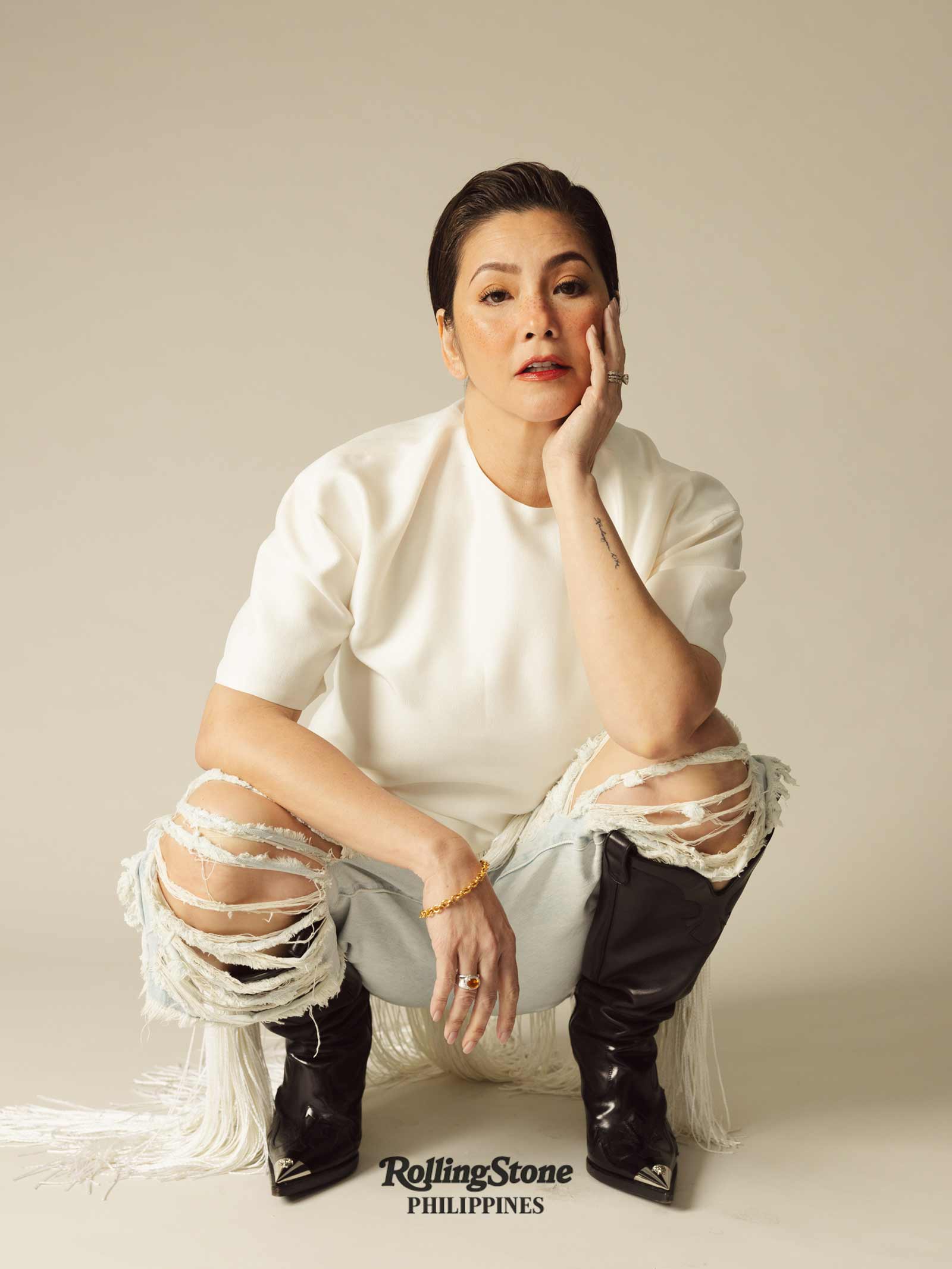
Since you mentioned acting, can you talk about that part of your life? Given that you were known as a singer, the moment you started doing it, success came easy and you would win awards even early on. I’m curious how that was for you.
It wasn’t very easy for me. I had to research that, actually. It’s not very natural for me. Although singing is also like acting, but I never considered myself an actor. As a matter of fact, whenever I have an acting gigGigA live performance, especially in a smaller, independent venue like a bar, café, or music hall. Gigs are where local scenes grow, letting bands test new songs, build loyal followings,Go to Gig Glossary, I would always ask, “Can you tell me when I’m gonna cry? Can you please tell me if I’m gonna cry?” kasi kailangan kong i-convince sarili ko na “iiyak ako, iiyak ako” and I hate my face when I cry because I feel like I’m so ugly when I cry. Mukha akong siopao. I hate it. I hate it. I hate it.
I don’t think I’m a good actor. I never considered myself an actor, but Boss Vic [Del Rosario] seems to believe that I am. So I did a couple of movies, and they became successful. So, meron akong mga nautong tao. [Laughs] But again, I’m very grateful kasi mahirap rin talaga ‘yung transition na ‘yun. Not a lot of singers can transition to that. And apparently there are only a few of us. So again, I’m very thankful that
I’m one of them. I only have a handful of movies, but I think all of them were quite successful.
Is it true you would say yes to a project or a role because you wanted to be the one to sing the theme song of that movie?
I always asked to produce an OST. Lagi akong “Gagawa ako ng OST. Gagawa ako ng OST.” I’m the producer of the OST kasi ‘yon lang ‘yung gusto kong gawin. Pakialamera kasi ako. [Laughs] So I already know that if I have a movie, I have to have an original soundtrack. Given na ‘yun.
Speaking of Boss Vic, and as someone who was with Viva then left and then came back to Viva, what did that relationship with Boss Vic mean to you over the years?
He is one of those people who really believed in me. He was the first one who gave me an album, and he was the first one who gave me my acting gig.
I [had] left Viva Recording Company. I did two albums, and then I left. I went to another recording company, and then he saw me doing Noli Me Tangere at the CCP. We saw each other in the lobby of CCP, and then I said “Hi, boss,” because he’s like a father to me. He’s like my second father. And he said, “Oh pwede ka nang mag-movie.” I did some movies with him already, like the best friend of the best friend. Nothing big. I said, “Oh, like the second lead, right?” “No, you’re gonna be the first. You’re gonna be the star.” And then two months later he gave me Wanted: Perfect Mother.
Let’s talk about what I think is perhaps your most defining era and how it came about. One of the things that I’m curious about is when you left PolyGram Records.
Wow PolyGram! I haven’t heard that in a long time. [Laughs]
One of the things that I really found so interesting is you left because you wanted full creative control
— which is understandable — but then, with that full creative control, you released arguably your two most influential albums ever in Drawn and R2K. Was that like a really nice sense of validation for you?
I didn’t mean it to be that way, like to have full creative control. It’s just that when I was younger, I used to get frustrated. First of all, I started when I was 16 or 17. I started recording at that age. I didn’t know what being a producerProducerThe person who shapes how a record sounds, from arranging and recording to guiding performances and making creative choices in the studio. A great producer can bring out the bestGo to Producer Glossary meant. I had no idea. They would choose the songs I would record. I told you, I was like a cassette recorder. I would just do what they tell me to do because I was young, I was a kid, and I believed them. But as I was getting older, I would get frustrated because even if I loved the song so much, I would go to the studio and end up not liking the arrangement, and I had no choice but to sing it anyways. Alam mo ‘yon?
The job kasi ng arranger is to arrange a song, but if you don’t guide them, they can arrange one song 10 million different ways. So a producerProducerThe person who shapes how a record sounds, from arranging and recording to guiding performances and making creative choices in the studio. A great producer can bring out the bestGo to Producer Glossary’s job is to guide the arranger. First of all, you have to have a theme in an album. Ano ba ‘yung theme natin? If you don’t have a vision for the song, then sila mismo, they can arrange it again how they want it to be, and most of the time, again, I would be frustrated because parang walang guidance from the producer. So I started to get involved, and the first album that I think I got very, very involved in — that I didn’t even know I was overstepping the producer’s job — was Retro. I didn’t even know that I was actually acting as a producer. I called the arrangers. And then I called the backup singers. I was there during the recordings, teaching the backup singers what to do, telling the arrangers what to do. I got so involved because I think I was very hungry. I was excited.
You felt invigorated.
Yes, and very excited that I was doing this job. And ever since then, I produced all my albums. And then Babsie Molina, who was a backup singer, I asked her, “Can I do all my backups? Can you teach me how to do backups?” ‘Cause I get so interested. Alam mo ‘yung kay Mariah Carey na siya ‘yung nag-ba-back up? Gusto ko ‘yung mga backups. So sabi ko, “Babsie, gusto ko ‘yung boses ko ganyan din.” So she would teach me how to do the backups until I got used to it and I learned how to also arrange my own backups.
Speaking of Mariah, what do you feel about those comparisons to her?
It’s an honor to even be compared to her. She is the world and she is one of my heroes. I hate it when people mock her, when people laugh at her. They have no right, really. Truly! I don’t understand why they do that to her.
It’s just that she got older, like me. We got older. We still have our voice but we just got old. Age is not just a number; it really is catching up to you. You’ll see when you get to this age. You’ll see. You’ll realize what we’re talking about. And you know when people say “Oh, when you get to this stage, it’s such a blessing”? It’s a whole lot of crap. It really is. You know why? Because I feel it’s cruel. It’s not a blessing for me. It’s cruel. Aging is cruel.
You see it as a punishment?
Blessing ba ‘yung may rayuma ka? Sabihin mo nga sa ‘kin. [Laughs] Or ‘yung brain mo nag-fe-fail na? ‘Wag na tayong magpaka-plastic.
If you don’t mind me asking, did you first feel that at Silver, when your voice gave out?
That whole experience really broke me. I never recovered from it. Me losing my voice in Silver. You see, I didn’t just lose my voice. I also lost my confidence.
I was actually very, very confident when I was younger. You know, I was told I was ugly to my face. I never cared. Okay, I’m ugly. Who cares? If you hear me sing, wait ka lang dyan. ‘Pag narinig mo ‘kong kumanta, wait ka lang dyan. Or even if they say na, “‘Di naman ako masyadong magaling kumanta.” Wait ka lang dyan. ‘Pag merong pumipintas sa ‘kin, para sa akin, challenge ‘yun. “Hindi ako magaling kumanta? Talaga ah! Wait lang. Bigyan mo ‘kong two days.” Gets mo ‘yon? I would practice it and learn it. “Anong sabi mo? ‘Di ko kayang kantahin? O sampalin kita ng note na ‘to. Wait ka lang.” [Laughs]
Mayabang ako don. Never ako na-insecure. Never talaga. But Silver was different because I never lose my voice. Sabi nga sa ‘kin ni Janno Gibbs, “Ikaw Reg, kahit mamamatay ka na lang, may boses ka pa rin.” I never lose my voice, and even if I don’t have a voice, I still can sing. Matutulog ako, gigising ako, may boses pa rin ako. My health would fail me, but never my voice. But when I lost my voice for the very first time ever in my whole entire life, I never recovered from it. Nawala ‘yung confidence even up to now. For the first time ever, I got insecure.
Maybe it also comes with age. As I get older and older and older, I get even more and more and more insecure.
“Deciding that this would be it for me is like giving up a part of my life.”
Either late last year or early this year, when you were talking about how these things come with age, you said maybe that’s a signal that it’s time. But then sold-out ‘yung concerts mo.
Eh kasi nga nag-announce ako na it’s going to be my last big concert. [Laughs]
But seeing that it was sold-out, was there any part of you that thought, “Oh, maybe I still got it.”
No. I think this is it for me.
Have you made peace with that?
Not really… May pinagdadaanan ba ‘ko? It’s probably menopause. [Laughs] I have been doing concerts since I was 16 or 17 years old, and it has been part of my life. I’m not really retiring yet, but doing big shows has been part of my life, and I love it. I love doing concerts and I’ve gotten so used to it. So deciding that this would be it for me is like giving up a part of my life.
But at the same time, I also know that I can no longer do it. I am too old for it. I can’t. I can’t anymore.
I also cannot deal with people’s expectations of me. When you do a big concert, there are certain expectations that you need to deal with. I don’t think I can deal with that anymore, and it’s also very tiring. I don’t think my voice can keep up with that kind of grandeur.
So I’m just happy that I’m given the opportunity to say goodbye. A lot of people, they just fade away.
Where are you finding that comfort now, as you’re coming to terms with it? You mentioned your family, but maybe it would be nice to hear from anyone who’s maybe going through a similar, maybe existential crisis, to know where you find your comfort?
It’s not a crisis. Not at all a crisis. It’s just that it’s something that I have to, I guess — I like your term kanina — I have to “come to terms with it.” I have to accept and deal with it. My husband said to me that retiring is not altogether stopping, like “no more, that’s it for you.” It just means maybe doing other things, opening another window, closing a door, but you’re opening another window, or windows, even. So that’s how I’m looking at it.
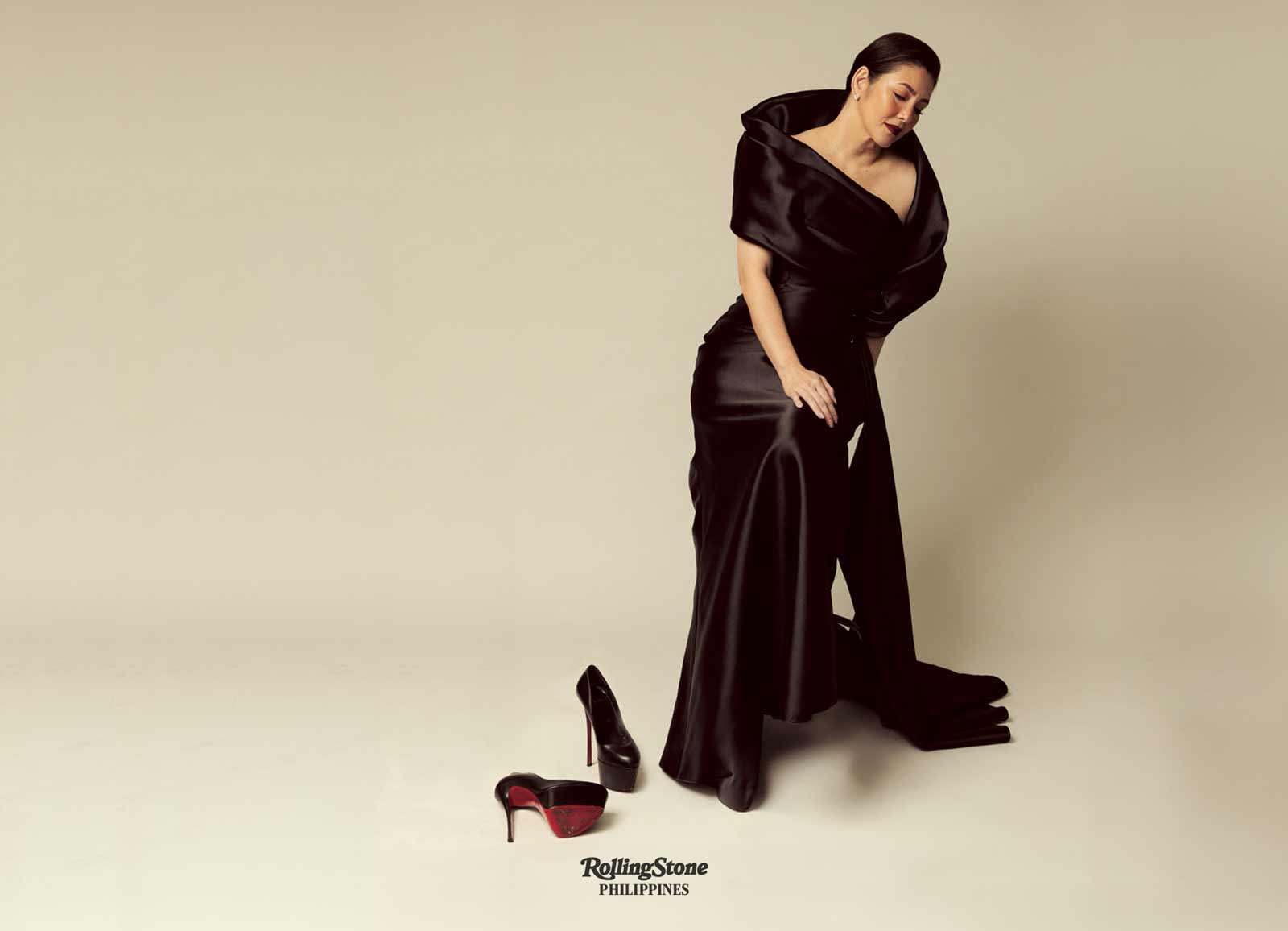
Is there anything across your very accomplished and illustrious career that, after so many decades, you’re still learning?
Now that I’m closing a door, I’m trying to figure out what to do next. Actually, meron na but I can’t say yet. But it’s so different from what I used to do. It’s really so different from singing. But there is something that I want to do. We’ve been wanting to do it for a long time, and my husband and I are so excited about it, and we’re trying to gather people so that we can do this project together.
I like that you use the word “exciting.” I felt it in the tone of your voice. You sound more excited than anxious about these new opportunities.
Yes, it’s exciting because it’s me. I would be involved in it, and the people that we’ve been talking to seem to be very excited about it also. I will be in the middle of the whole thing, and again, it’s different from what I usually do. And since it’s only the beginning, it’s probably not going to be as stressful.
This isn’t the documentary people have been waiting for, right?
No.
“I’m just happy that I’m given the opportunity to say goodbye. A lot of people, they just fade away.”
Because I wanted to ask you about that. How has that experience been like seeing yourself in
that way?
It’s very weird because I’m seeing it in a whole different way, in a whole different perspective that I didn’t even know [was possible]. I realized that I’m very critical pala of myself. I would never watch myself because I get very critical of myself. I would cringe even. Especially when I was younger, I would never watch myself. I would cringe like, “Ew! Why did I even do that?” “Yuck! Oh, I’m flat here.” I’m like the worst person. I’m so critical.
And then my producerProducerThe person who shapes how a record sounds, from arranging and recording to guiding performances and making creative choices in the studio. A great producer can bring out the bestGo to Producer Glossary asked me, you know, like how they usually would ask this question, “What would you say to your younger self?” And I said, “I think I would say, ‘great job, and I’m so proud of you.’” And I started crying, and I think the reason why I said that is because I never felt proud of myself. I think because, as an artist, I’m always a perfectionist. I think all of us are.
Like, this is how I am after a concert: I would actually rewind in my head what I did and where I made a mistake. I know where I made a mistake. I would nitpick. “I shouldn’t have done that. I shouldn’t have done this.” I would know even without watching the video. I hate my face when I sing. I hated my face. I think I’m ugly when I sing.
Where does that come from, because, especially as you mentioned, growing up, it felt like a warm environment?
I think most artists are like that. Most of us are like that. We just hate ourselves. We just don’t like our performance most of the time because we just want every performance to be perfect, and that’s impossible. We’re human beings. We cannot always be perfect. Hindi kami robot, at walang autotune. There’s always going to be imperfections, and in those imperfections that’s where you find the feelings. That’s where you find the authenticity. That’s the whole point of it. That’s why you watch a live concert. Otherwise, just listen to Spotify or a CD if you’re looking for perfection. But when you watch a concert, that’s the way it is: It’s the imperfections. That’s where you find the brokenness, all the hurt.
As I have gotten older, I’ve become more forgiving of myself. I think that a live performance will never be perfect. That’s how you touch your audience. That’s how you are able to entertain without you even knowing it. That’s how you’re able to make someone cry. That’s how you’re able to touch their soul, even. That’s how you sometimes even heal someone’s feelings without you even knowing. Kasi lahat naman tayo broken e.
So a lot of these questions were sourced from a lot of your fans, and most of them are from the LGBTQ+ community. What has their support meant to you, especially not just in terms of being fans, but in the sense of how they’re more than just preserving your legacy, they’re continuing it, whether through their own renditions of your songs, their own performances, or sharing old videos of yours online? Can you talk about that relationship and how they’ve affected your career?
Actually, hindi ko pa rin alam kung paano nagsimula ‘yan. [Laughs] I am so grateful to the LGBTQ+ community. Bakit ako ang naging idol ng community? Maybe it’s really my songs because, as they say, my songs are so baklang-bakla. My songs are always about being broken-hearted or about longing, about someone wanting to be loved. Maybe it’s about my outfits, my hair or my makeup. I have no idea.
You know the LGBTQ+ community started calling me “Ate”? Or that’s why I actually love my title, ‘di ba? My title is “Songbird.” I love my title because it was just a title, but it became a term of endearment for them because they would just call me “Songbird.” I didn’t like the term “Asia’s Songbird” because I don’t know who decided na tawagin akong “Asia’s Songbird.” Si Asia ba? Sino ba? [Laughs]
I am very honored, and I am very grateful. They see me as their Ate. They see me as their sweetheart. And I love that they actually listen to me when I speak.
You know, if they ask for advice, I would give it to them.
And apparently, you can no longer call them “bakla” — except for me. I’m the only one who’s allowed to call them bakla because, for me, it’s also a term of endearment sa kanila when I call them bakla. It’s apparently an honor for them. [Laughs] Again, it’s an honor for me that they have supported me all these years.
“There will never be another me. Because I’m the only one.”
So you mentioned how Ogie changed your life. How did being a mother also change your life?
It has changed my life in so many different ways. I realized that becoming a mother is one of the greatest joys. I’m so happy that I get to experience it. When I got married, I was already 40. I was 41 when I gave birth. I was just so thankful that I was given the opportunity to have one. I didn’t even actually ask for it, but it was in my heart. It was something that I really wanted, but I didn’t pray for it. But I know that God knew that this is what I wanted, and so He gave me one.
According to my mother, mabait akong anak, and I think I am? [Laughs] So Nate is the best. Mabait ang anak ko. But I realize I’m such a bruha mom. Oh my god! Kawawa ang anak ko. I correct everything because I didn’t want him to be a brat. But he’s such a joy. We named him Nathaniel because it means “gift from God.” He’s wonderful.
‘Pag pinapagalitan ko, hindi siya sumasagot. He’s such a good kid. He has changed my life in so many different ways. Being a mom has taught me so many things. First of all, wala namang manual to being a good parent. You just do your best. No one knows really how to be a good parent. You just really do your best and hope for the best, and hope that you don’t ruin someone’s life, right? You just actually learn from your kids. You let them teach you how to be a good mom.
So speaking of the younger generation, and since this is your Hall of Fame interview, do you have advice for the younger generation? Whether they’re singers, or artists, what would you like to tell them about how to not just succeed, but how to healthily survive the industry?
There’s just one thing that my husband would always say: just show up. That’s how we survived. Pagka tinatanong kami ng younger generations, “How did you last in this industry?” We just showed up, seriously. Kahit anong condition namin, we never canceled. We kept showing up. Ke libre, ke may bayad, ke cheap lang ‘yung bayad, we just showed up. That’s being a professional. Do you know the term, “The show must go on?” That’s showing up. Kahit anong condition mo: may boses, walang boses, may sakit, may namatayan, you show up. That’s owning up to when you say “yes” to a job. That’s what it is. You show up because you said “yes” to a commitment. You show up.
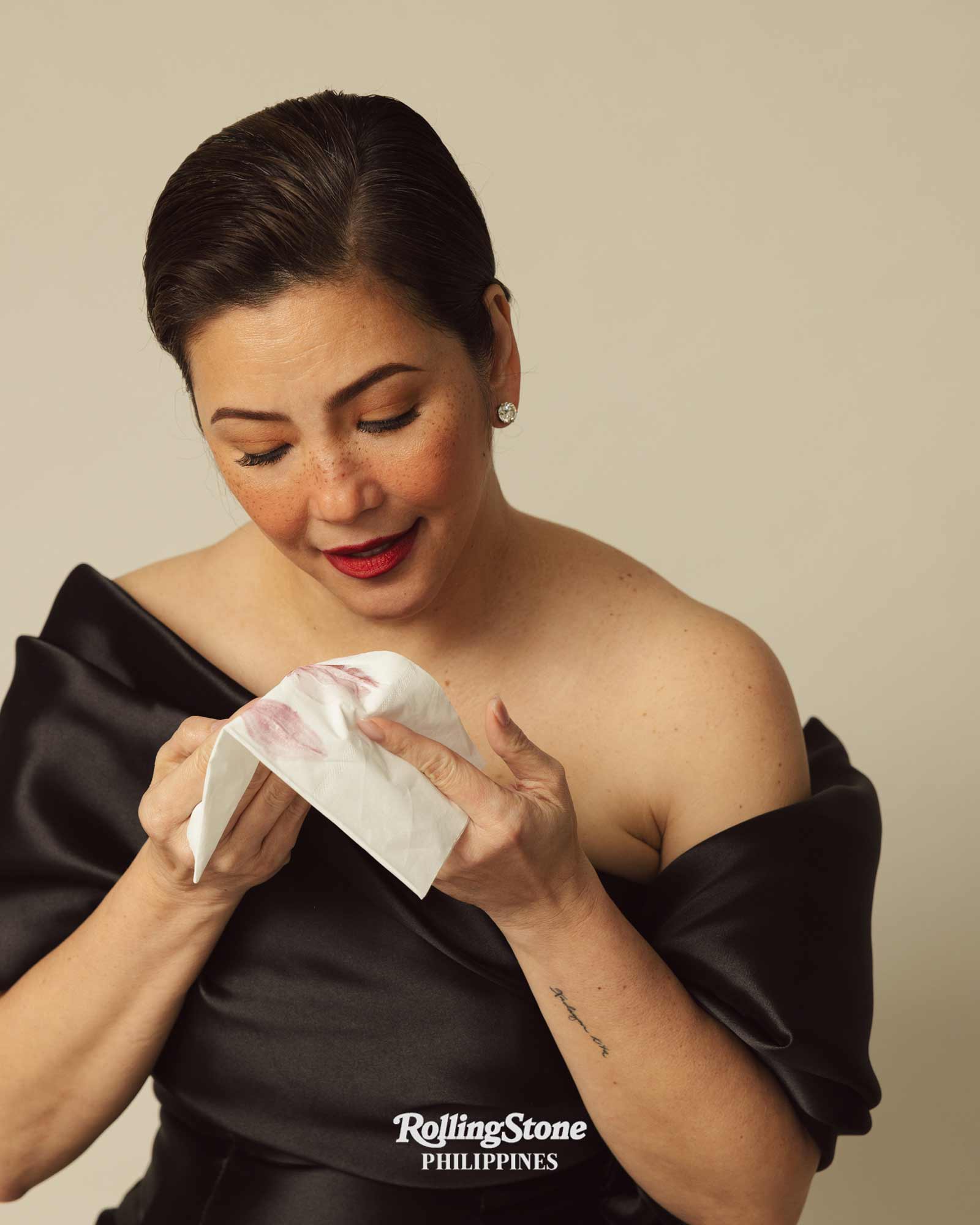
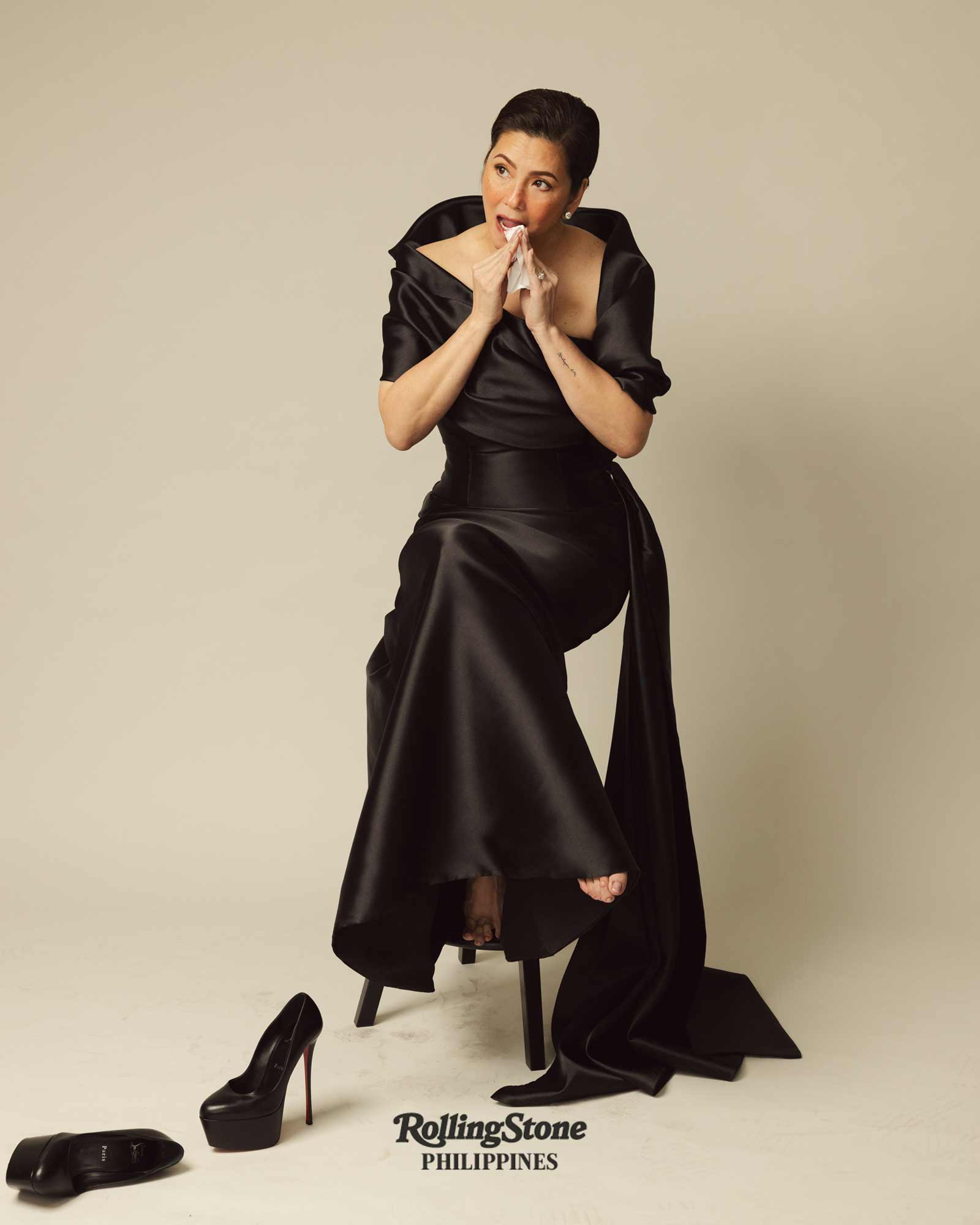
I hope that’s advice all young people will take.
Unless hindi mo na talaga kaya tapos lalangoy ka pa! [Laughs] No, but it’s important. And when we show up, we show up on time. Excuse me! You respect everyone’s time. You don’t waste anyone’s time. Kahit na PA pa ‘yan. At saka if ma-le-late ako — which is very rare — I would ask my assistant to call that we will be late. Hindi ‘yung talagang nag- mukhang tanga lahat. ‘Di ba, maraming ganun na you don’t even know what happened to them. Don’t do that. Don’t just be late as if nothing happened. I would always apologize because it’s my fault.
Last question: Given all your success, what do you think about when people say there will never be another Regine Velasquez?
Because there will never be another me. Because I’m the only one. I believe that you make a mark in the industry. No matter how small it is, you always make a mark. Parang Sharon Cuneta will always be Sharon Cuneta. There will never be another Sharon Cuneta because she made a mark in the industry. Just like me. Just like the Superstar, there can never be another one. Just like Vilma Santos, there can never be another Vilma Santos. Ganon talaga ‘yon. Why would you want to be another Vilma Santos, when you can be yourself, right?
Lagi nila akong sinasabihan na “you are the next ganyan.” But in my head, why would I want to be the next ganyan when I can make my own mark in the industry, right? So aim for that. Aim for your own throne. You can have that.
This cover story is from the Rolling Stone Philippines Hall of Fame Issue, now available for pre-order on Sari-sari Shopping and in major newsstands soon.
Get digital access to the latest issue here.
Stylist TEAM RAIN x EM
Hairstylist SHASHA TAGUD
Photographer’s assistant JOEY ALVERO
Regine wears Marlon Tuazon gown
Neric Beltran fringe top
Recommended Video