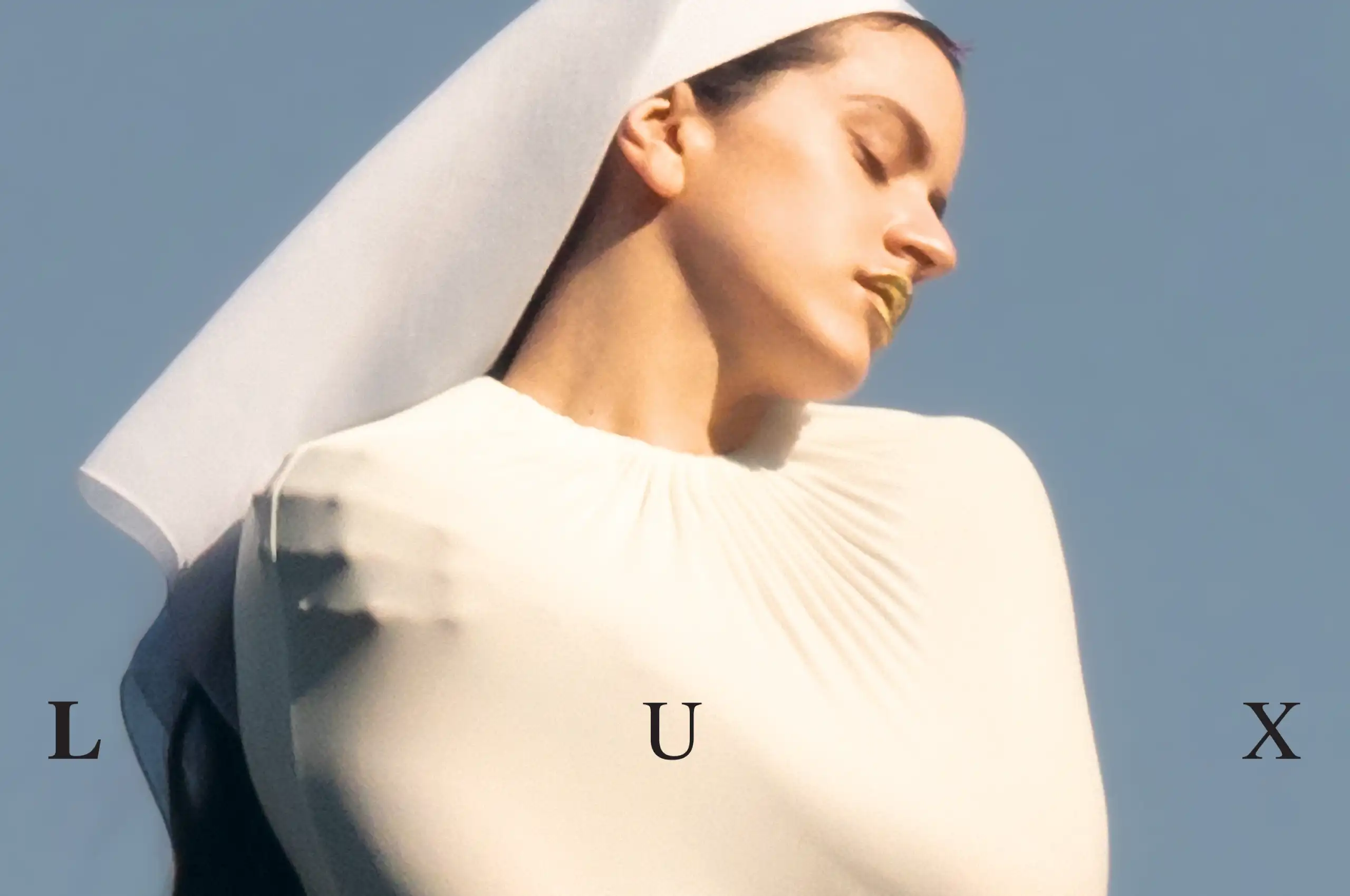
Spanish art-pop savant Rosalía returns with “Berghain,” the first single from her upcoming album LUX, featuring Icelandic pop icon Björk and American experimental artist Yves Tumor. The track marks a new high point in her sonic evolution, blending orchestral drama and avant-pop precision. Named after the infamous Berlin club, “Berghain” turns that image of hedonism into something almost sacred: a spiritual awakening wrapped in high art.
Produced in collaboration with the London Symphony Orchestra and conducted by Daníel Bjarnason, the track features sweeping arrangements that shift between moving intimacy and grandeur. Rosalia’s voice pierces through the symphonic layers, as if she’s trying to outsing the instruments themselves. By the halfway point, the track unravels into chaos: Björk enters with an otherworldly cry, while Yves Tumor delivers a haunting spoken word passage that abruptly stops by the very end of the single. It’s unsettling, disorienting, and yet magnetic — the kind of risk that defines Rosalia’s best work.
“Berghain” is part of the second movement of LUX, a nod to Rosalía’s classical training background and the album’s scale of ambition. According to a statement, LUX has “traces a widescreen emotional arc of feminine mystique, transformation, and transcendence — moving between intimacy and operatic scale to create a radiant world where sound, language, and culture fuse as one.” The single goes beyond her flamenco pop beginnings from Los Ángeles released back in 2017, pushing the boundaries of what pop music can contain with a full orchestral treatment. Where her last album Motomami fused reggaeton and experimental pop, the latest album seems poised to explore orchestral maximalism without losing her emotional trademark.
Being her first single since 2024, it acts less as a “comeback” and more of a “grand statement” from an artist unwilling to stay in one lane. As a Catalan (whose father is of Galician-Andalucian descent), she has courted controversy through her use of flamenco (which she specialized in music school) and other Spanish Romani references, raising questions around appropriation and authorship. Moreover, the lead single’s title is bound to stir discussion as the titular nightclub faces global boycott for allegedly censoring of Palestinian artists. But regardless of where you stand in that debate, “Berghain” successfully plays on the club’s enduring mythos of chaos and rebirth — a spirit Rosalía channels in the intensity and grandeur of her arrangements.
And if this is what LUX promises, Rosalía’s ambition appears to be in building her own cathedral, conducting her entire creative world from her fingertips.