


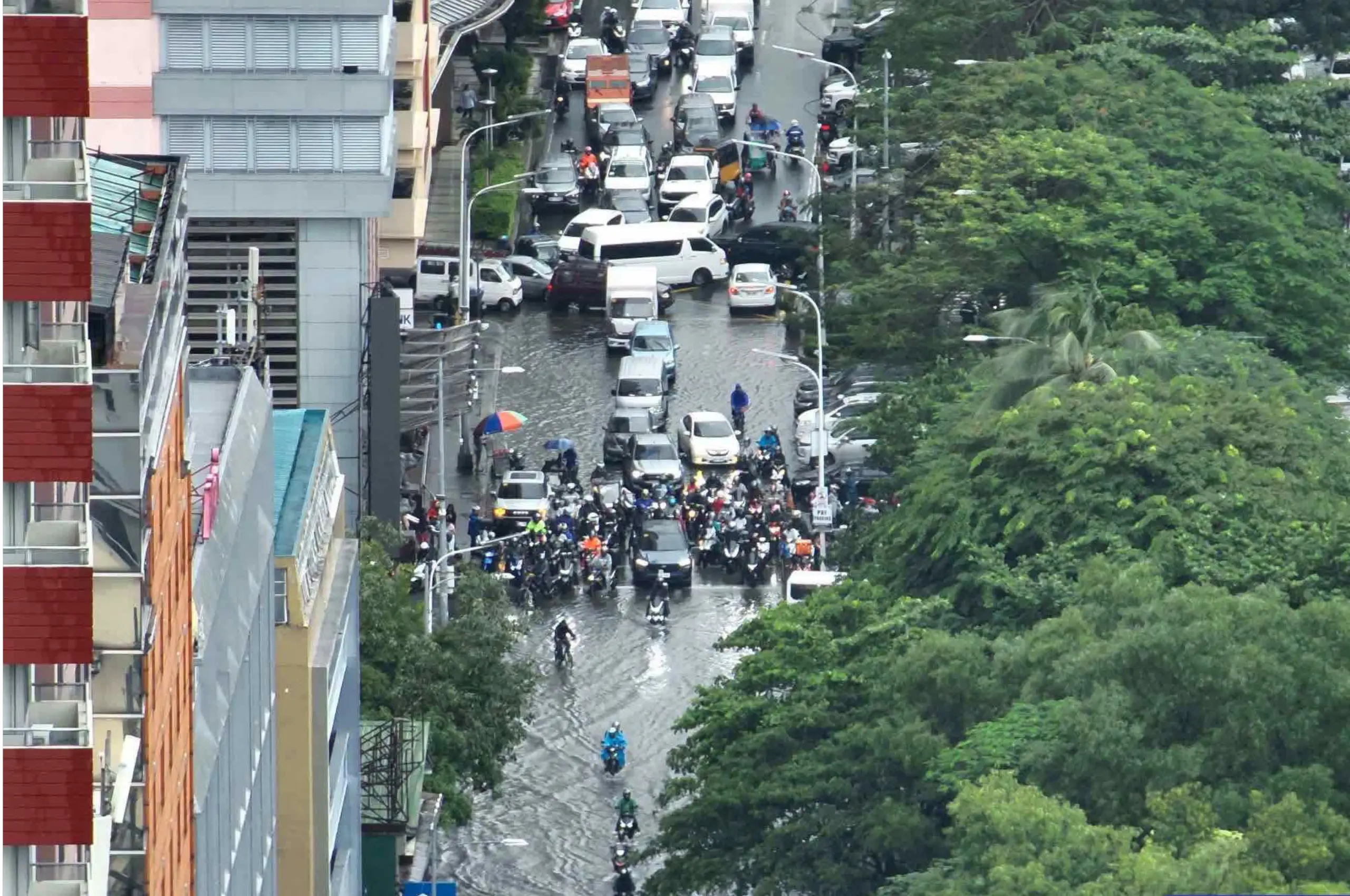
Metro Manila and nearby provinces have been soaking in the effects of the southwest monsoon or “habagat” for almost two weeks, with the amount of rainfall peaking yesterday and causing floods.
This is not natural. Nor should this ever be considered normal. On Monday, August 17, the Metropolitan Manila Development Authority (MMDA) said that 201.7 millimeters of rainfall was recorded in Metro Manila within six hours, 138.7 mm of which — or equivalent to roughly a week of rain — fell from 12 noon to 2 p.m. alone. According to PAGASA, the “habagat” is expected to persist until Wednesday, August 19.
Billion-peso-worth of failed flood control projects and pending corruption cases later, we are still here. The rain is still pouring, and it doesn’t seem like it’s ending; neither does this cycle of inaction by the government, as they expect our resilience to keep us afloat.
Across social media, videos showed Filipinos navigating knee- to neck-high floodwaters, scrambling for higher ground, and, in some cases, needing rescue via boats. In Sampaloc, Manila, motorists were caught in rising floodwaters as the torrential rain continued, while commuters, even those inside buses, watched murky floodwaters seep into their vehicles. Students likewise were seen evacuating to the higher floors of their universities.
When the infrastructure meant to protect people fails, ordinary Filipinos are left to improvise. Here’s how they stepped up to help one another when the government once again failed to keep the floods at bay.
A man clears drainage by hand
Manila Bulletin posted a photo of a man using his bare hands to remove trash blocking the drainage canal in Manila, with comments from people thanking him for his small act and calling him a hero.
A truck shields motorists from the flood
In a display of bayanihan, a truck was positioned across a flooded area to help shield and guide motorists as they tried to make their way through the swift-moving floodwaters.
A commuter gets a free ride to safety
A commuter received a free ride along Pedro Gil in Manila to help them evacuate amid the flooding.
@peonyrantado flood control ano na? padre faura and pedro gil baha lahi
♬ Upuan (feat. Jeazell Grutas) – Gloc 9
Volunteer firefighters rescue stranded students
A volunteer fire department used its trucks to rescue students who were stranded amid flooding along España Boulevard and nearby streets in Sampaloc, Manila.
Residents pushed a stalled car away from deep flood
In Timog Ave. in Quezon City, nearby citizens helped push a car back out of a deep flood after it stalled while trying to cross the road.
Stranded commuters get ferried across flood in a kalesa
One firsthand account described a kalesa being used to get stranded commuters through waist-deep flooding in Tayuman in Manila City, with people manually pushing the carriage through the water.
First time Kong nastranded dahil sa bahay and Makita Ang totoong resilience ng Filipino people.
by u/Makeshi7892 in FirstTimeKo
FREQUENTLY ASKED QUESTIONS
Days of intense habagat rains caused the flooding, overwhelming the city’s drainage and flood-control infrastructure.
The MMDA recorded 201.7 millimeters of rainfall in Metro Manila on Monday, August 17, 2026, 138.7 mm, an amount equivalent to roughly a full week’s worth of rain, fell within two hours, causing widespread flooding across the metro.
PAGASA projected the southwest monsoon, or habagat, would persist until Wednesday, August 19, 2026, meaning continued heavy rainfall and flood risk remained likely across Metro Manila and nearby provinces in the days following the initial deluge.
Critics point to years of unfulfilled flood-control promises, billions in public spending, and an ongoing scandal over misused funds, arguing that officials have normalized recurring disasters instead of addressing the infrastructure failures that cause them.
With flood infrastructure failing, ordinary residents have had to improvise relief efforts themselves — clearing clogged drainage canals, rescuing neighbors through makeshift rafts, moving belongings to higher ground, and wading through contaminated floodwater just to get home.
Recommended Video